The Source of True Godliness (1 Timothy 3:14-16)

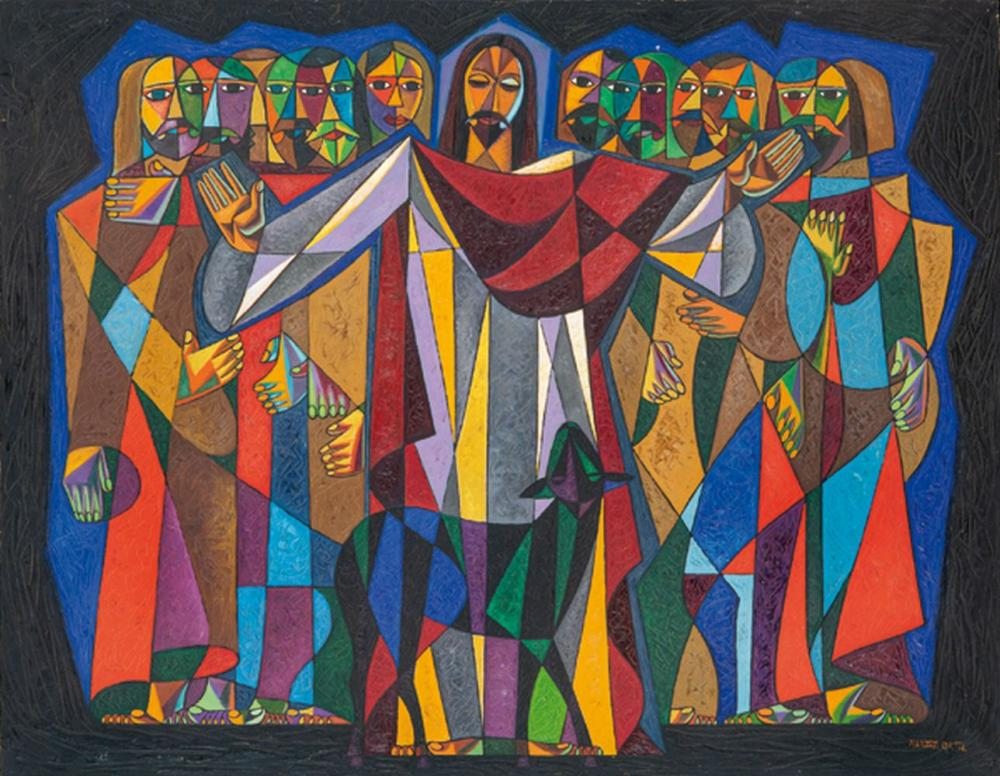
Jesus Christ and the Apostles, by Nicolás Martínez Ortiz (1907-1990)

Although I hope to come to you soon, I am writing you these instructions so that, if I am delayed, you will know how people ought to conduct themselves in God’s household, which is the church of the living God, the pillar and foundation of the truth. Beyond all question, the mystery from which true godliness springs is great:

He appeared in the flesh,
    was vindicated by the Spirit,
was seen by angels,
    was preached among the nations,
was believed on in the world,
    was taken up in glory. (New International Version)

Godliness is an important thing for those who seek to follow God.

So, the Apostle Paul wrote to his young protégé, Timothy, who was leading the church in Ephesus. Paul gave Timothy some sound practical instructions regarding how things ought to be conducted between pastor and people. Paul did this because he wasn’t quite sure how long it would be before he could show up in person, and he wanted to ensure that the ministry would go forward in a way that honored Christ.

Christian ministry is important because it doesn’t simply have to do with one’s private abilities and affairs. Rather, Christian leaders and pastors are entrusted with the household of God, the church. Believers are a holy sanctuary of the soul, the place where God dwells by means of the Spirit.

The Church is not a brick and mortar building, but the place of the living God, the pillar and foundation of the truth. Pastor and parishioners alike are to support the truth of the gospel, that is, the good news about the person and work of Jesus Christ.

Both believers and bishops who make up the Church support gospel truth by doing the following:

  1. Hear and heed the truth. “Whoever has ears to hear, let them hear… This is the meaning of the parable: The seed is the word of God. Those along the path are the ones who hear, and then the devil comes and takes away the word from their hearts, so that they may not believe and be saved. Those on the rocky ground are the ones who receive the word with joy when they hear it, but they have no root. They believe for a while, but in the time of testing they fall away. The seed that fell among thorns stands for those who hear, but as they go on their way they are choked by life’s worries, riches and pleasures, and they do not mature. But the seed on good soil stands for those with a noble and good heart, who hear the word, retain it, and by persevering produce a crop.” (Luke 8:8, 11-15, NIV)
  2. Handle the truth rightly. Make an effort to present yourself to God as a tried-and-true worker, who doesn’t need to be ashamed but is one who interprets the message of truth correctly. (2 Timothy 2:15, CEB)
  3. Hide the truth in your heart. I have hidden your word in my heart that I might not sin against you. (Psalm 119:11, NIV)
  4. Hold the truth as the Word of Life. Hold firmly to the word of life; then, on the day of Christ’s return, I will be proud that I did not run the race in vain and that my work was not useless. (Philippians 2:16, NLT)
  5. Ingest and digest the truth. Study, meditate, and devote yourself to God’s Word. Your words were found, and I ate them, and Your word was to me the joy and rejoicing of my heart. (Jeremiah 15:16, NKJV) You must not depend on bread alone to sustain you, but on everything that the Lord says. (Deuteronomy 8:3, GNT)
  6. Interest yourself in the truth, and defend it. “I have been put here for the defense of the gospel.” (Philippians 1:16, NRSV) I must write and ask you to defend the faith that God has once for all given to his people. (Jude 1:3, CEV)
  7. Impart the truth and disseminate it to others. The unfolding of your words gives light; it imparts understanding to the simple. (Psalm 119:130, NRSV) Teach these new disciples to obey all the commands I have given you. (Matthew 28:20, NLT)
  8. Indicate and demonstrate the power of the truth in the way you live your life. Let the message about Christ completely fill your lives, while you use all your wisdom to teach and instruct each other. With thankful hearts, sing psalms, hymns, and spiritual songs to God. Whatever you say or do should be done in the name of the Lord Jesus, as you give thanks to God the Father because of him. (Colossians 3:16-17, CEV)

The Church is a big deal because the head of the Church, Jesus Christ, is a big deal.

In many quarters of the world, the Church no longer has much influence or impact. For some, the Church is nothing more than an outdated antiquarian club that’s irrelevant to us today. For others, the Church is an abusive institution that looks to extend selfish power over others. And for many, the Church is simply not something they want to be a part of, having neither strong opinions one way nor the other.

Yet, the Apostle Paul, in his letters to all the churches, presents the Church as united to Christ and an extension of his person and work on this earth. Now, that’s a big deal!

Therefore, the Church is meant to confess Christ in its daily witness in all it says and does. In other words, the Church is to embody the words and ways of Jesus, and even Christ himself, by means of God’s Holy Spirit.

Everything about the Christian is to exude the very life of Christ.

How we can possess such a vital union and connection with Jesus is a mystery. Rather than trying to understand it, we embrace it and live it with all the energy the Spirit of God grants us.

We do, however, seek to know Jesus Christ ever more, every day. The more we know Christ, the better we will be able to know the height and depth of love, and to extend that love in all the places of this fallen planet that lack it. This is where true godliness and goodness spring from.

The Church everywhere and for all time confesses and proclaims that Jesus Christ descended to this earth, was visibly seen in a human body by both people and angels, proved right by the invisible Spirit, proclaimed among all kinds of peoples, believed in all over the world, and ascended into heavenly glory.

After two thousand years of church history, Christians are still unpacking the incredible richness and mystery of what all that means for us and for our salvation. And it is a spiritual journey worth taking for the rest of our lives.

May I walk this day, O Christ, in the realm of grace, walking with you, my feet firmly on your earth-path, my heart loving all as kindred, my words and deeds alive with justice. Amen.


Why Not Women? (Romans 16:1-16)

I commend to you our sister Phoebe, a deacon of the church in Cenchreae. I ask you to receive her in the Lord in a way worthy of his people and to give her any help she may need from you, for she has been the benefactor of many people, including me.

Greet Priscilla and Aquila, my co-workers in Christ Jesus. They risked their lives for me. Not only I but all the churches of the Gentiles are grateful to them.

Greet, also, the church that meets at their house.

Greet my dear friend Epenetus, who was the first convert to Christ in the province of Asia.

Greet Mary, who worked very hard for you.

Greet Andronicus and Junia, my fellow Jews who have been in prison with me. They are outstanding among the apostles, and they were in Christ before I was.

Greet Ampliatus, my dear friend in the Lord.

Greet Urbanus, our co-worker in Christ, and my dear friend Stachys.

Greet Apelles, whose fidelity to Christ has stood the test.

Greet those who belong to the household of Aristobulus.

Greet Herodion, my fellow Jew.

Greet those in the household of Narcissus who are in the Lord.

Greet Tryphena and Tryphosa, those women who work hard in the Lord.

Greet my dear friend Persis, another woman who has worked very hard in the Lord.

Greet Rufus, chosen in the Lord, and his mother, who has been a mother to me, too.

Greet Asyncritus, Phlegon, Hermes, Patrobas, Hermas and the other brothers and sisters with them.

Greet Philologus, Julia, Nereus and his sister, and Olympas and all the Lord’s people who are with them.

Greet one another with a holy kiss.

All the churches of Christ send greetings. (Romans 16:1-16, NIV)

The reason we have the “Captain Obvious” people in our lives, is that they simply point out something that is right under our noses we might miss. I’m playing the role of Captain Obvious. In today’s New Testament lesson are a group of women. Paul names, greets, thanks, and encourages several church leaders, and they are not all men:

  1. Phoebe is a deacon. She’s actually the representative who was sent to take Paul’s letter to the church at Rome and read it to the congregation.
  2. Priscilla is co-equal with her husband Aquila. Together they co-pastored a house church. She helped teach and mentor Apollos in Corinth.
  3. Mary
  4. Junia is an apostle. Paul states that she’s outstanding amongst them, of which also he is one.
  5. Tryphena and Tryphosa
  6. Persis is a dear friend of Paul.
  7. Julia

In the earliest church, within the New Testament Scriptures, women are mentioned as serving in every sort of capacity. And yet, women are the greatest and largest untapped resource in the church today.  

You might wonder why I would say such a thing, being that more women attend church than men. However, still in this day and age – removed 2,000 years from the biblical text – the reality for many churches around the world is that only men can hold positions of authority.  

The reasoning goes something like this: “The Bible says women can’t serve over men, so women can’t hold those positions.” Really?

So, a woman can serve as a CEO of a Fortune 500 company, can be elected as governor of a state, and can manage men on a factory floor, but that same woman cannot serve as an elder in many churches? I once asked a pastor that very question, and he answered with “Yes, because the Bible says so.”

I guess he never read Romans 16.

If you are of the belief that a church office is based on gender instead of the calling and gifting of the Spirit, then, methinks, it behooves us to ask these questions of the biblical text:

  • If women are not to exercise authority over men in the church, how do we account for actual women leaders in the Bible, such as Deborah, Huldah, Philip’s daughters, Priscilla’s role in Apollos’ life, not to mention the list of women leaders in Romans 16?  If our impulse is to say that these are exceptions because there were no men to “step up,” then what does that say about our theology? Is God not big enough to find a man to put into a position of leadership?
  • If we insist that women ought not to teach and be silent based on Paul’s letter to Timothy (1 Timothy 3:11-15) then why do we ignore Paul’s instruction that women are to publicly prophecy and pray? (1 Corinthians 11:5; Acts 21:9)
  • Doesn’t the prominence of women in the ministry of Jesus and Paul suggest something different than just having women tag along to teach children?
  • Just when does a boy become too old for a woman to legitimately teach him?  If women can’t teach men, why in the world would we ever think that they are the best teachers for boys?
  • How can we apply Galatians 3:26-28 (there is no male or female in Christ)? Are women the exception?
  • Does the Reformation doctrine of the priesthood of all believers only apply to men?  Doesn’t the absence of women in church leadership go against this?
  • Isn’t it weird and confusing that women have an equal vote in congregational decisions, even when a male leader is being elected and/or disciplined, when they aren’t supposed to exercise authority?

I could go on, but I think you get the picture; the absence of women in leadership is problematic, at best. It’s a problem because there are actually women leaders in the Bible. So, here is my unabashed, dogmatic, and biblical belief:  

All individuals are equally created in God’s image, and, therefore, have equal worth, privilege, and opportunity in Christ’s Church without any limitation, including gender.

In some churches and Christian denominations today, there are far too many wonderful Christian women who are exhausted and depressed because they are trying to live up to a certain expectation of being someone they are not. They suppress their gifts and calling because they believe they must prop-up the fragile male egos around them.  

They aren’t free to serve in leadership positions; and it’s eating them from the inside-out. These women think there is something wrong with them, but the reality is that there is something wrong with the whole system of male-only authority. And, what’s more, we are missing out on the blessing of God. It is high time we value all women, even those with gifts of leadership, by allowing them to serve without limitation.

I have a wife and three daughters. All of them are more intelligent, more gifted, and better leaders than me, the lone family male. To have them using their superior talents in the church by leading and serving is the least threatening thing to me on this earth. I love it that they can outdo me; it is my joy!  

Even more than that, I believe it is Christ’s joy, as well. We must be proactive in cultivating and nurturing the gifts and calling we see in women. They don’t need to be put in their place; instead, the good-old-boy system of the church needs to be put in its place so that men are practicing a leadership that sacrifices on behalf of making women’s leadership a priority.

Lord God, bless all women who daily strive to bring peace to their communities, their homes and their hearts. Give them strength to continue to turn swords into ploughshares. We pray for all women who face prejudice, inequality and gender disparities. Help us to see and to face the discrimination against women in all the many forms it may take.

Forgive all women and men who let differences breed hate and discrimination. Let your example of valuing all of creation help us to see that we are equal partners in the stewardship of your world. Help us to see the strength and goodness in all women and men. Amen.

Power in Weakness (2 Corinthians 13:1-4)

Way of the Cross, by Jyoti Sahi, 2009

This will be my third visit to you. “Every matter must be established by the testimony of two or three witnesses.” I already gave you a warning when I was with you the second time. I now repeat it while absent: On my return I will not spare those who sinned earlier or any of the others, since you are demanding proof that Christ is speaking through me. He is not weak in dealing with you, but is powerful among you. For to be sure, he was crucified in weakness, yet he lives by God’s power. Likewise, we are weak in him, yet by God’s power we will live with him in our dealing with you. (New International Version)

One witness is not enough to convict anyone accused of any crime or offense they may have committed. A matter must be established by the testimony of two or three witnesses. (Deuteronomy 19:15, NIV)

The missionary Apostle Paul had already visited Corinth twice. Citing his upcoming third visit in the context of establishing a crime, this was a warning to the Corinthian Christians: When I get there, it won’t be a pleasure cruise. Paul would flex his apostolic muscles toward the church.

The Apostle was accustomed to people opposing his ministry and generally making a stink of things against him. The Corinthians were being rather stubborn and unrepentant. They were unwilling to change their ways nor their attitudes.

In order to discredit Paul, his opponents labeled him as weak and ineffective. They challenged him as to whether Christ was actually animating his words, or not. But Paul was no weakling, nor was he a simpleton. He used their own language against them by pointing out that Jesus was accused of the very same things – Christ was crucified in weakness, but lives by the power of God.

Christianity is an inherently paradoxical religion. It’s not going to make sense to the ungodly and the unbeliever. The cross – the place of submission, torture, death, and apparent weakness – was actually the supreme demonstration of God’s power. This was proven by the resurrection of Christ from death.

In the same way, although Paul seemed weak, unimposing, always engaged in suffering service, these very things were the ultimate sign that God’s power was at work in his ministry. The Apostle shared in the sufferings of Christ and gloried in the reality that he was weak.

And since Paul also shares in Christ’s resurrection, he therefore shares in the power of Christ. He will use this power, given to him by Christ in the form of apostolic authority, and deal with the recalcitrant Corinthians forthwith.

The Corinthian Church, not knowing who they were really dealing with, had a tiger by the tail. There is a time for gentle and compassionate pastoral care, and then there is the time for using the shepherd’s crook for some tough loving discipline.

If the sin-busting strength of the cross, and the spiritual power of the resurrection, are truly fueling Christian ministry, then it is a fool’s errand to oppose it. Chastisement and a lesson in humility are in store for the haughty opponent working against authentic Christian service.

We really have to get this wrongheaded notion out of our noggins, that power and strength are all about an aggressive exercise of authority. If I see one more church put out an advertisement for a pastor who has “strong leadership” I think I’m going to puke. Because what they typically mean by strength is a command-and-control sort of stereotypical military Sargent type of person.

That’s diametrically opposed to the leadership and authority Jesus exercised, and the kind of values which characterize the kingdom of God. In God’s economy, humility and meekness are the true demonstrations of power. Real power in this world is the power of self-control – and not the control of manipulating others to get and keep power that won’t last.

Little wonder that pastors of churches these days can be some of the worst immoral and unsavory characters around. Congregations hungry for “strong leadership” inevitably hire narcissistic persons. And then when things go sideways, the church wonders what the heck happened.

But the signs were continually there, all along. When the church leaders pray, they’re not addressing God, but publicly telling those listening what they should be doing. In speaking, they tend to preface their comments with “The Bible says…” which is really a clue that they’re about to spout a bunch of opinionated nonsense cloaked in religious garb.

Until we embrace the mystery of the faith, expressed in paradoxical ways, with the weak displaying the real strength and power of the gospel, then we can expect Jesus to show up with a whip and give people what they’ve really wanted all along – and they won’t like it one bit.

Paul, a mentor to many first generation Christian pastors, encouraged them this way:

I solemnly call on you in the presence of God and Christ Jesus, who is going to judge those who are living and those who are dead. I do this because Christ Jesus will come to rule the world. Be ready to spread the word whether or not the time is right. Point out errors, warn people, and encourage them. Be very patient when you teach.

A time will come when people will not listen to accurate teachings. Instead, they will follow their own desires and surround themselves with teachers who tell them what they want to hear. People will refuse to listen to the truth and turn to myths.

But you must keep a clear head in everything. Endure suffering. Do the work of a missionary. Devote yourself completely to your work. (2 Timothy 4:1-5, GW)

Weakness, hardship, suffering, and opposition are part of the work of Christian ministry. In this, there is eternal power, which shall never be overcome.

Almighty God, may your grace be sufficient for me, and my power made perfect in weakness. Help me to rely upon and use my weaknesses, so that Christ’s power may rest on me. For Christ’s sake, I delight in weaknesses, insults, hardships, persecutions, and difficulties. For when I am weak, then I am strong, through Jesus Christ my Lord, in the enablement of the Holy Spirit. Amen.

Follow My Example (2 Timothy 1:12-14)

This is why I am suffering now. But I am not ashamed! I know the one I have faith in, and I am sure he can guard until the last day what he has trusted me with. Now follow the example of the correct teaching I gave you, and let the faith and love of Christ Jesus be your model. You have been trusted with a wonderful treasure. Guard it with the help of the Holy Spirit, who lives within us. (Contemporary English Version)

Offense and defense are both equally important in sports. And the same is true for Christianity. A good offense includes confident proclamation of the gospel in word and deed. And a solid defense involves holding our ground through following the example of apostolic teaching passed down to us.

The Apostle Paul set himself up as a both a model of Christian character and an example of Christian action. That isn’t pride or arrogance; it’s the confidence of knowing you have something of value to offer the church and the world.

Everyone needs training and mentoring – and that is especially true for the Christian life. Christianity is a team sport. Believers must work together to survive, thrive, flourish, and be faithful in daily life. We all need good models of faith to learn from. Paul was just such an example for Timothy. And the essence of spiritual formation and maturity is found in imitating sound teaching through trusted leaders.

Brothers, join in imitating me, and keep your eyes on those who walk according to the example you have in us.

The Apostle Paul (Philippians 3:17, NIV)

We do not want you to become lazy, but to imitate those who through faith and patience inherit what was promised. (Hebrews 6:12, NIV)

Remember your leaders, who spoke the word of God to you. Consider the outcome of their way of life and imitate their faith. (Hebrews 13:7, NIV)

It’s wise and necessary to imitate Christian leaders who have a proven character. They’ve demonstrated persevering in the faith through suffering; and have done it with great humility. Such leaders also have a track record of preserving the faith through consistent teaching of sound doctrine.

This does not necessarily mean that we emulate those who are erudite speakers, have superior gifts and abilities, and enjoy ministry success. What it does mean is that we ought to have as mentors in the faith those persons who imitate Christ and are not self-promoting peacocks who go after being admired and praised.

Paul chose Timothy as a mentee, and eventually as the leader of the Ephesian Church, because he had proven himself as being genuinely concerned for others, and not for making decisions that would simply further his ministry career. (Philippians 2:19-23)

Timothy learned from his mentor, Paul, how to cultivate a life of service to others rather than to be self-serving; and to teach others with sound instruction in love.

We are to imitate those who have proved themselves in hardship. A Christian leader who has not undergone the purgative fires of trials in this life may more easily become seduced by their own importance.

However, leaders who have seen their share of hard circumstances, pain, and suffering, and have come through it loving God and serving others out of grace and humility, are leaders worth imitating and listening to. 

Put in this light, the choosing and electing of church deacons and elders is important. Simply getting a warm body willing to serve is not really an option. Perhaps it could be that many young people are leaving the church, and even the faith, because they have not seen genuine Christianity lived-out with passion and integrity among those who hold leadership positions in the church.

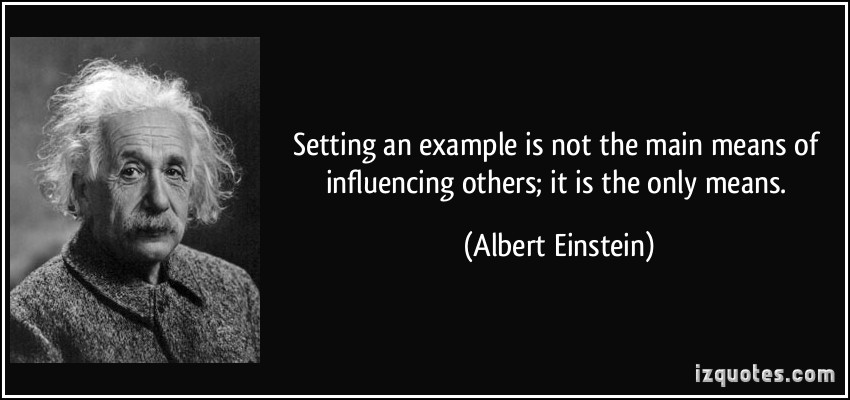
No matter who we are, people are watching; they see what you do, what you say, how you act, and your attitude toward most things. Maybe you don’t think of yourself as an example to others, or believe that ordinary people have much influence. Yet leadership isn’t really about having a position or possessing power; it’s about the actions and/or inactions you take.

All this is to say that we have to take responsibility for the quality of our Christian life. We need to be careful about which post we’ll hitch our horse to – which leaders we’ll follow – and what sort of teaching we will learn from.

It takes time and effort to learn anything, including how to live the Christian life. That life must be developed and honed. We can only guard the message and a particular way of life if we know what it is and how to communicate it to others. We’ve got to put the work in.

We don’t just get zapped by the Spirit like some divine magic trick and become automatically great Christians and church leaders. God calls, molds, develops, mentors, and shapes individuals of all kinds for his purposes. That’s why there are so many exhortations in Scripture to be an example, follow godly examples, and mimic sound doctrine. 

Making disciples isn’t like making microwave popcorn. It’s much more like the outdoor smoker; go low and slow and let the meat cook just right.

The Christian message of good news, and the Christian life, are learned. And living this life is both a skill and an art. Because of that, failure is inevitable. 

We practice anything to get better at it. That’s why we work on engrafting spiritual practices into our lives. We do it, blow it, learn from our mistakes then try it again – over and over and over again. Grace comes into the equation because we must allow people the freedom to try and fail without beating them up over their mistakes. 

No one wants to even try if they know they’ll get slapped if they fail. Of all the places on planet earth, the church really ought to be a place where folks can experiment, try, implement ideas, and learn from their failures. The fact that we don’t typically think of the church this way says a lot.

Intelligence is helpful; talking a good line never hurts; confidence is beneficial; but taking the time to practice the skill and art of Christian living takes having a model, a mentor, an example – and being an example to others.

Gracious God, you prepared your disciples for the coming of the Spirit through the teaching of your Son Jesus Christ: Make the hearts and minds of your people ready to receive the blessing of the Holy Spirit so that they may be filled with the strength of his presence, and empowered for service to the church and the world, through Jesus Christ our Lord. Amen.