Christ the King Sunday (Ephesians 1:15-23)

The 118 feet high Christ the King statue in Świebodzin, Poland

For this reason, ever since I heard about your faith in the Lord Jesus and your love for all God’s people, I have not stopped giving thanks for you, remembering you in my prayers. I keep asking that the God of our Lord Jesus Christ, the glorious Father, may give you the Spirit of wisdom and revelation, so that you may know him better. I pray that the eyes of your heart may be enlightened in order that you may know the hope to which he has called you, the riches of his glorious inheritance in his holy people, and his incomparably great power for us who believe.

That power is the same as the mighty strength he exerted when he raised Christ from the dead and seated him at his right hand in the heavenly realms, far above all rule and authority, power and dominion, and every name that is invoked, not only in the present age but also in the one to come. And God placed all things under his feet and appointed him to be head over everything for the church, which is his body, the fullness of him who fills everything in every way. (New International Version)

Christ the King Sunday is intended to help us see the cosmic reality that Jesus reigns over all creation as the only rightful Sovereign of the universe. This day always comes just before Advent so that we remember to anticipate both a baby and a king.

Christ as Lord of all exposes three problems humanity faces:

  1. Building our own petty kingdoms and setting ourselves up as masters over our own small worlds.  People who have been hurt may attempt to seize power for themselves in order to avoid ever being hurt again; or in the belief that if they had power, the could stop others from being hurt. Instead of submitting to Christ’s rule, they will seek to control their little end of the world, to protect themselves from pain.
  2. Bowing to other kings besides King Jesus. When distressed, some people may rely on another ruler to address their hard circumstances – thereby expecting another to give only what Jesus can provide.  Instead of running to God, they run to politicians or pastors to fix whatever is going on.
  3. Lacking awareness of the power possessed in Christ the King. Christians reign with Jesus Christ, and therefore can exercise authority over every dominion that exists, especially the dominion of darkness.

The Apostle Paul’s letter to the Ephesian believers provides God’s design for the church. It’s a plan for Christians to know their spiritual blessings and exercise the power they have being united to Christ. God wants us to understand this power and authority, and to actively use it.

We have a clear understanding in Ephesians of how to pray: To know Jesus better.  There is probably no higher prayer, according to the Apostle Paul, than to pray to know Jesus better – so that we will know the hope to which we have been called, and the incomparably great power for us who believe.

The word for “power” is where we get the English word “dynamite.” When I was a kid we had a neighbor who had a fondness for playing with dynamite (especially when he drank too much!). Even though he lived a mile down the road, when he blew up a tree stump or anything else on his property, it shook our house and felt like the windows were going to break. Yet, one stick of dynamite is nothing compared to God’s power.
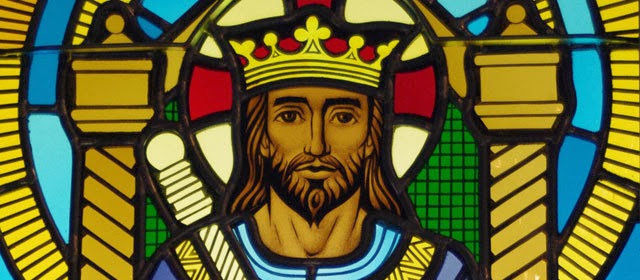
This divine power is for us who believe in Christ the King. It’s the same power used to raise Jesus from death, and which exalted Christ as Lord of the universe. The rule and reign of Jesus is far above any other existing authority – including powers of the dark domain.

Concerning dealing with the powers of darkness, we possess the authority of Jesus Christ. Because of Christ’s resurrection, ascension, and glorification, Christians therefore have a vital and inseparable union with Jesus.  Jesus redeemed us; we belong to God as adopted children. 

Since all earthly and spiritual powers are subject to Christ, they are also subject to us. The imagery of Jesus as Head, and Christians as the Body, means that we have an inseparable union together. Since we are united with Christ, we share his authority over all spiritual powers.

It’s one thing to know this information; it’s another to use it. We are to experience Christ’s power through exercising our authority as believers. We can link faith and knowledge together in a confident use of spiritual authority because we have rights as blood-bought children of God.

All the pronouns used by Paul in Ephesians are plural. This means that tackling the forces of darkness needs to be a communal activity; going it alone is dangerous. The following is a prayer we can pray together, that boldly exercises our authority in Christ:

Almighty God, we bow in worship and praise before you, and thank you that the Lord Jesus Christ is King over all creation, and the rightful Sovereign of the universe. We are grateful that we have power together with Jesus.  We therefore surrender ourselves completely in every area of our lives to You. 

Since Christ’s authority extends over every dominion, including the dominion of darkness, we take a stand against all the work of Satan that would hinder us in prayer. We address ourselves only to the True and Living God, and refuse any involvement of Satan in our prayers.

Therefore, Satan, we command you, in the Name of the Lord Jesus Christ, to leave our presence with all your demons. We bring the blood of Jesus Christ between us.

Sovereign God, we recognize you are worthy to receive all glory, honor, and praise. We renew our allegiance to you and ask the Holy Spirit to help us pray. You have loved us from eternity past; and you sent the Christ into the world to die for us. So, we are thankful for complete forgiven; for adoption into your family; for eternal life; and for your daily help and strength.

Glorious God, open our eyes so that we will see how great you are, and how complete your provision is for today. The victory of Christ’s cross and resurrection has given us a seat in heaven. We take our place with Jesus, and recognize by faith, that all wicked spirits and Satan himself are under our feet.

Thank you, gracious God, for the spiritual armor you have provided. Therefore, we put on the belt of truth, the breastplate of righteousness, the sandals of peace, and the helmet of salvation. We lift up the shield of faith against all the fiery arrows of the enemy; and we take in our hands the sword of the Spirit, the Word of God. We use your powerful Word against all the forces of evil, living and praying in complete dependence upon you, Holy Spirit.

Lord Jesus, we are thankful that you disarmed all power and authorities, triumphing over them by the cross. So, we claim victory for our lives today by rejecting all the insinuations, accusations, and temptations of Satan; affirming that the Word of God is true; living in the light of God’s Word; and choosing to obey you. 

Open our eyes, blessed God, and show us the areas of our lives that do not please you. Cleanse us from anything that would give Satan a foothold against us. We stand into all that it means to be your adopted children; we welcome all the ministry of the Holy Spirit in our lives today.

By faith, and in complete dependence upon you, we put off the old sinful person and stand into all the victory of the crucifixion where the Lord Jesus Christ provided cleansing from the sinful nature. We put on the new person and stand into the victory of the resurrection and the provision Christ has made for us to live above sin. We put off the old sinful nature with its selfishness and put on the new nature with its love.  We put off the old nature with its fear and deceit; and instead put on the new nature with its courage and righteousness.

We are thankful, mighty God, that you have blessed us with every spiritual blessing in Christ; and with new life into a living hope by the resurrection of Jesus from the dead, so that today we can live filled in the Holy Spirit with love, joy, peace, patience, kindness, goodness, gentleness, and self-control. Since we recognize and affirm that this is your will for us, we therefore reject and resist all the attempts of Satan and his demons to rob us of God’s will.   

We are thankful, blessed Holy Trinity, that our spiritual weapons have divine power to demolish demonic strongholds, arguments, and every pretention that sets itself up against the knowledge of God. We therefore take captive every thought to make it obedient to Christ; we tear down the strongholds and smash the plans of Satan that have been formed against us; we affirm that you have not given us a spirit of fear but a spirit of power, love, and self-discipline; and we choose to make right decisions of faith. 

Powerful God, show us the ways Satan is hindering, tempting, lying, and distorting the truth in our lives. Help us to be aggressive in prayer and faith; and to think rightly, and actively practice Your Word. We cover ourselves with the blood of the Lord Jesus Christ and pray that you, Holy Spirit, would bring all the work of Christ’s crucifixion, resurrection, ascension, and all your work of Pentecost into our lives today.

In the name of Christ the King, we surrender ourselves to you, O God; and we refuse to be discouraged because you are the God of all hope. You have proven your power by resurrecting Jesus from the dead. Therefore, we claim this victory over all satanic forces in our lives, our families, our neighborhoods, our workplaces, and our faith communities; through the blood of the Lord Jesus Christ with thanksgiving, we pray. Amen.

The Day of Pentecost (Acts 2:1-21)

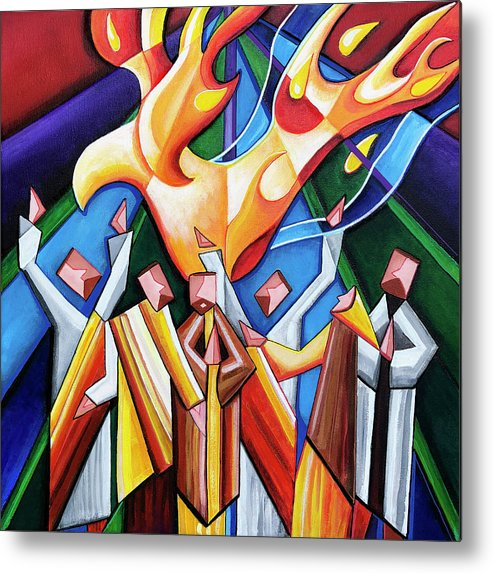
Pentecost, by Jennifer Allison

Now when the day of Pentecost had come, they were all together in one place. Suddenly a sound like a violent wind blowing came from heaven and filled the entire house where they were sitting. And tongues spreading out like a fire appeared to them and came to rest on each one of them. All of them were filled with the Holy Spirit, and they began to speak in other languages as the Spirit enabled them.

Now there were devout Jews from every nation under heaven residing in Jerusalem. When this sound occurred, a crowd gathered and was in confusion, because each one heard them speaking in his own language. 

Completely baffled, they said, “Aren’t all these who are speaking Galileans? And how is it that each one of us hears them in our own native language? Parthians, Medes, Elamites, and residents of Mesopotamia, Judea and Cappadocia, Pontus and the province of Asia, Phrygia and Pamphylia, Egypt and the parts of Libya near Cyrene, and visitors from Rome, both Jews and proselytes, Cretans and Arabs—we hear them speaking in our own languages about the great deeds God has done!”

All were astounded and greatly confused, saying to one another, “What does this mean?” But others jeered at the speakers, saying, “They are drunk on new wine!”

But Peter stood up with the eleven, raised his voice, and addressed them: “You men of Judea and all you who live in Jerusalem, know this and listen carefully to what I say. In spite of what you think, these men are not drunk, for it is only nine o’clock in the morning. But this is what was spoken about through the prophet Joel:

And in the last days it will be,’ God says,
that I will pour out my Spirit on all people,
and your sons and your daughters will prophesy,
and your young men will see visions,
and your old men will dream dreams.

Even on my servants, both men and women,
I will pour out my Spirit in those days, and they will prophesy.
And I will perform wonders in the sky above
and miraculous signs on the earth below,
blood and fire and clouds of smoke.

The sun will be changed to darkness
and the moon to blood
before the great and glorious day of the Lord comes.
And then everyone who calls on the name of the Lord will be saved.’ (New English Translation)

The Coming of the Holy Spirit, by Soichi Watanabe, 1996

Tornadoes are powerful. So is fire. They both have an immense potential for awe and destruction.  It’s interesting that when the little band of Christ’s followers experienced the Holy Spirit for the very first time, they likened what they encountered as wind and as fire. 

There is power in the Spirit – for both life and in destruction. It is the Spirit of God who dismantles and rearranges lives to make something different or new altogether. Most certainly, when the Spirit gets involved, nothing is going to be the same again.

On the Day of Pentecost, the Spirit upset the status quo and formed a new band of believers into the community of the redeemed (the Church). The presence of God’s Holy Spirit brings energy, strength, and ability to spread the good news of Jesus, heal broken lives, and bring an egalitarian way of life that sees no distinction based on race, class, gender, or ethnicity. 

The giving of the Spirit to the people of God is a whole lot more than a day set aside on a calendar, or a by-gone ancient thing that happened and has no significance for today. In fact, it is more than true to say that an authentic follower of Jesus Christ is a Pentecostal believer.  The New Testament knows nothing of a Christian who isn’t given the Spirit to accomplish the will of God on this earth.

Therefore, this time of the year is hugely significant when we attune ourselves to Holy Time because it is the age of the Spirit, the time of Pentecostal life and power. 

Ten days after recognizing Christ’s Ascension, and fifty days after our Lord’s resurrection from death, the Christian Calendar observes the day of Pentecost (which literally means “fifty” in Greek).  The day coincides with an established Jewish festival, the Feast of Weeks. Back in the day, Jerusalem would be filled with all kinds of different nationalities and ethnicities during the festival.

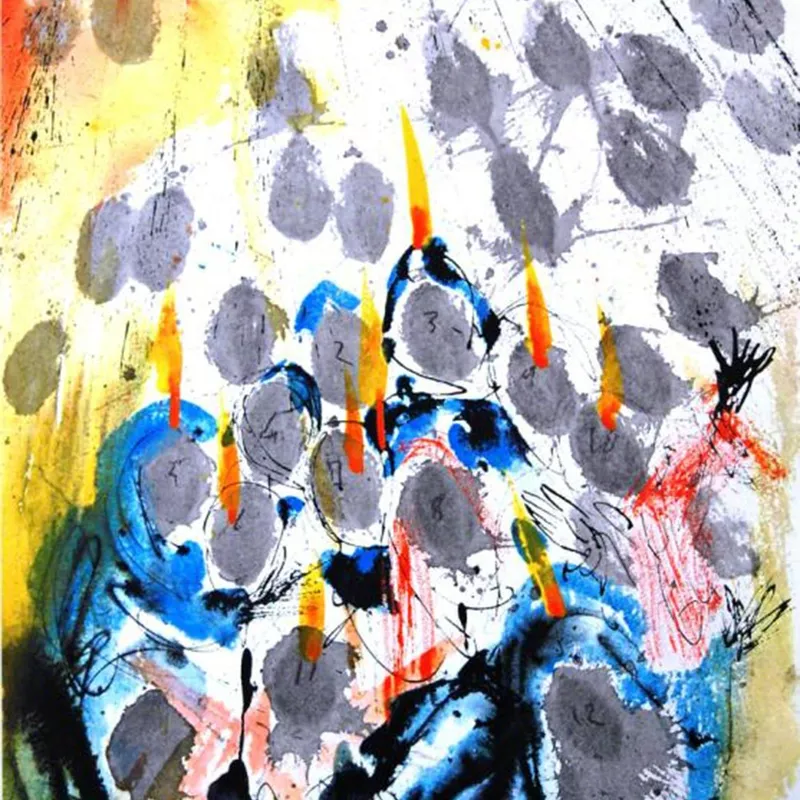
“There Appeared To Them Separated Tongues,” by Salvador Dali, 1967

Pentecost is often known as the birthday of the Church. It marks the time when the Holy Spirit came upon the fledgling believers in power. The disciple Peter, once a flaky up-and-down follower, was filled with the Spirit and spoke the Word of God boldly. His bold proclamation of repentance and faith in Jesus led directly to three-thousand persons added to the little band of one-hundred twenty.

And it didn’t stop there.

We live in an age where all believers in Jesus have the same Holy Spirit as our spiritual ancestors did. It’s an era of spiritual empowerment. The Church is called to reach the world with good news of forgiveness and grace through the person and work of Christ. 

So, then, the Church possesses confidence and security in knowing that the Spirit’s enablement and power is available for mission and spiritual care to the nations. It’s an immense calling that befits the bigness of God.

There are a wide range of Christian celebrations of Pentecost. Some churches do not recognize the holiday at all. Most churches at least mention it in prayer, song, or sermon. Other churches go all out, with worship focused on remembering the first Pentecost and praying for a similar outpouring of divine power. Churches that employ liturgical colors generally use red on Pentecost as a symbol of fiery spiritual power.

Pentecost reminds us that Christians are meant to live in the presence and power of the Holy Spirit, all the time. This day is a chance to confess our shortcomings and failures because of fear, apathy, and selfishness; and to ask for a fresh infusing and infilling of God’s wonderful Spirit. 

The Day of Pentecost flings every single believer into a congregational whole, the Church, and lets us know that we are not to be rugged individualists acting alone but are part of the Body of Christ. Therefore, we must renew our commitment to the Church for whom Christ died. 

The Spirit is ready to use us in forging spiritual bonds of kinship and solidarity. Pentecost throws disparate people together in a unified whole, made up of every kind of language, nationality, ethnicity, gender, and race.  We are all to use the gifts of the Spirit given to us for the benefit of building up one another.

We exist because of the Holy Spirit. Without the Spirit, there is no power source because the Spirit is the battery, the generator of the Christian life. We are to do all life and ministry through the power of the Spirit, equipping and encouraging each other, displaying the fruit of the Spirit, and worshiping the person of the Spirit in always being present with us.

Pentecost was (and is!) a watershed event. Worship, community, and outreach are the logical and collective responsibilities of each believer and every church around the globe.

Let us, then, recognize Pentecost and observe this day with heartfelt thanksgiving and a renewed impulse to exercise our spiritual abilities – graciously given to us by the Holy Spirit. Amen.

Epiphany of the Lord (Matthew 2:1-12)

After Jesus was born in Bethlehem in Judea, during the time of King Herod, Magi from the east came to Jerusalem and asked, “Where is the one who has been born king of the Jews? We saw his star when it rose and have come to worship him.”

When King Herod heard this he was disturbed, and all Jerusalem with him. When he had called together all the people’s chief priests and teachers of the law, he asked them where the Messiah was to be born. “In Bethlehem in Judea,” they replied, “for this is what the prophet has written:

“‘But you, Bethlehem, in the land of Judah,
    are by no means least among the rulers of Judah;
for out of you will come a ruler
    who will shepherd my people Israel.’”

Then Herod called the Magi secretly and found out from them the exact time the star had appeared. He sent them to Bethlehem and said, “Go and search carefully for the child. As soon as you find him, report to me, so that I too may go and worship him.”

After they had heard the king, they went on their way, and the star they had seen when it rose went ahead of them until it stopped over the place where the child was. When they saw the star, they were overjoyed. On coming to the house, they saw the child with his mother Mary, and they bowed down and worshiped him. Then they opened their treasures and presented him with gifts of gold, frankincense and myrrh. And having been warned in a dream not to go back to Herod, they returned to their country by another route. (New International Version)

The light exists; it’s there. But not everyone likes it.

While many celebrate the light, such as Christians on the day of Epiphany, others wrap themselves in the cloak of darkness. There are various responses to Jesus as the Light of the World; not all of them are the same.

King Herod responds with anger

Herod was distressed with the news of a potential King of the Jews being born; he saw this as a threat to his rule. Herod, ever the narcissistic person who always sought to wipe out any threat to his throne, went over the top in seeking destroy Jesus. 

At the time of Christ’s birth, Herod had been the reigning king for about 30 years. During that time, his paranoia about losing power led him to kill his wife and three of his own sons because he saw them as threats to his authority. Herod feigned a desire to worship Christ, but this was really a sinister façade in order to get rid of Jesus by any means possible.

Jerusalem responds with anxiety

The people of Jerusalem felt that Jesus was going to upset the status quo. He was, for them, a threat to their security; any change within the system might cause Herod to take it out on them (which he had done before). 

Although the people were looking for a deliverer, they did not want things to shake up too much and arouse the Romans to abuse them.

Whenever we get caught up in maintaining the status quo, out of fear, then we have no room in the inn for Mary and Joseph. 

Always trying to keep people happy and not upset them is a tenuous way to live. Such an agenda will typically result in missing Jesus when he shows up. That’s because we’re not really looking for him to start with. 

For example, if our task as parents is to just keep our kids out of trouble, they’re going to miss Jesus; and if they find him, it will be in spite of us and not because of us. Yet, if our truest desire for them is to know Christ, then our prayers, our words, and our actions will reflect the ethics of God’s kingdom.

Religious leaders respond with apathy

The chief priests and teachers of the law had all the right answers; and responded to Herod’s questions with the correct information.

The sad part is that the guys who knew the most about Scripture, who actually had a handle on God’s law, were simply satisfied with that knowledge and nothing more. They seemed  unconcerned with getting off their butts and getting on their knees to worship the Son of God.

If we know the truth, we must act on it. Jesus wants people to worship in spirit and in truth. He wants more than a mere recognition; Jesus desires us.

The Magi respond with adoration

The Three Wise Men by He Qi

The Wise men, or Magi, were Gentiles and pagan astrologers (not kings). They devoted themselves to studying the stars and discerning what was happening. Because of this, they were often advisors and counselors to kings.

Some may find it scandalous that God used such persons, but that’s okay. The Lord typically uses the folks we believe are (or should be) unusable. Turns out it is the people such as the Magi that demonstrate their devotion and adoration through actual worship and giving of costly gifts.

Epiphany

Each year on January 6 in the Church Calendar, after the twelve days of Christmas, is the celebration of Epiphany. Christ’s coming to this earth as a child and becoming like us is much more than a baby in a manger.  Epiphany of the Lord helps to bring a vision and understanding of God’s glory to all kinds of people of the world.

The word “epiphany” means “manifestation” or “appearance” – which is exactly what happened with the Magi in visiting Jesus. The season of Epiphany has a special emphasis on the teaching and healing ministry of Jesus. The focus of these weeks is that salvation is not limited to Israel but extends to the Gentiles, as well.

With Epiphany’s light, we see that one of the most scandalous truths of Christianity is that God graces common ordinary people, who seem far from God, with the gift of Jesus. 

God grants life for all kinds of people – no matter their race, ethnicity, gender, class, or background. It’s a wondrous and astounding spiritual truth that God’s gracious concern is not limited to a certain type of person or a particular group of people.

Grace

Grace is and ought to be the guiding factor in how we interact with people. 

Losing sight of grace leads to being critical and defensive. Like King Herod of old, a graceless person becomes enamored with earthly power and control. But embracing grace leads to the humility of seeing the image of God in people quite different from us. 

Like the Apostle Peter, who learned in a vision to bring the gospel to non-Jews, old legalisms begin to wear away so that people from all walks of life can have access to Jesus and his gracious saving and healing ministry. (Acts 10-11:18)

Grace topples barriers and clears away unnecessary distinctions between others. Our appropriate response to such a grace is to glorify God for this marvelous and amazing work.

Light

A light was provided to lead the Magi to Jesus. Apart from God’s gracious intervention, they would have remained in darkness. 

This old broken world is enveloped in spiritual darkness. All kinds of people have no light at the end of the tunnel of their lives for hope and new life. Christ brings that light to those unable to see. And Jesus, in his teaching ministry, exhorted his followers not to hide their light but to let it shine for all to see. (Matthew 5:14-16)

Sometimes, maybe oftentimes, the best way to bring resolution to our own troubles and problems is through helping others make sense of their lives through the gracious light of Christ. Then, they can see an appearance, an epiphany, of what their lives could be in the gracious and benevolent rule and reign of God. 

In this season of Epiphany, let us journey with Jesus through his earthly upbringing, walk with him in his gracious ministry to people; and keep watch with him so that our own light does not grow dim.

Merciful God of life and light, you have gifted the Church through the goodness of your grace to be your hands; to do your work; to be your voice; to share your words; and to bring healing for broken lives. You have graciously gifted your people with the blessings of your Spirit, the power to transform lives and make all things new.

Now may our hearts receive, our mouths proclaim, our hands prepare for compassionate service so that the love we have will overflow into the hearts of others. May they receive your grace, your renewing Spirit, and your love, through Jesus Christ our Savior. Amen.

I Was (Not) Glad When They Said, “Let’s Go to Best Buy” (Psalm 122)

I was glad when they said to me,
    “Let us go to the Lord’s house.”
And now we are here,
    standing inside the gates of Jerusalem!

Jerusalem is a city restored
    in beautiful order and harmony.
This is where the tribes come,
    the tribes of Israel,
to give thanks to the Lord
    according to his command.
Here the kings of Israel
    sat to judge their people.

Pray for the peace of Jerusalem:
    “May those who love you prosper.
    May there be peace inside your walls
    and safety in your palaces.”
For the sake of my relatives and friends
    I say to Jerusalem, “Peace be with you!”
For the sake of the house of the Lord our God
    I pray for your prosperity. (Good News Translation)

I am confident, on this Black Friday, that the vast majority of Americans are on a different pilgrimage than the type described by David. They’re singing an alternative song and reading a secular psalm:

When they said, “Let’s go to Best Buy,”
    my heart leaped for joy.
And now we’re here, O Circuit City,
    inside the walls of electronic heaven!

The gaming systems! The glorious computer firewalls,
    all built as a place for unceasing worship!
Sin City, er, I mean Sim City, to which the gamers ascend,
    allows us to build a New Jerusalem in our own image.

Give thanks to all the Skylines and Rimworlds—
   
 this is what it means to be master of a small world.
Game of Thrones is the righteous judgment in my petty kingdom,
    a Kingdom at War with me as sovereign.

Pray for the peace of Wal-Mart!
    Prosperity to all you Target-lovers!
Friendly insiders, get along!
    Hostile outsiders, keep your distance!

For the sake of my family and friends,
    I say it again: live in peace, once I conquer you all!
For the sake of Amazon sales,
    I’ll do my very best to land the best deal on this holy Black Friday.

It’s not my purpose to try and be a prude (but I’m clearly not above doing some parody!) I just like how my spiritual forebears have chosen to mark time, events, and seasons – instead of how corporate and secular America chooses to. And I’m convinced I have a better life because of it.

As for me, I’ll stick with the ancient and historic way of pilgrimage, not the secular liturgy of Black Friday, Cyber Monday, etc. I’m going to sojourn through the year, as I do every year, marking my calendar with the rhythms of Christ’s incarnation, life, ministry, death, resurrection, ascension, and glorification.

We have now entered the new Christian liturgical year. Whereas most of Western society is holding to all sorts of holidays, mostly centering around a market economy and past political events, I’m choosing to build my year around the person and work of Jesus Christ.

If you’d like to participate in the movement of seasons and events along with me, then this is what we will be observing in this next liturgical year:

Advent (November 27–December 24, 2022)

Nativity of the Lord, Christmas Eve: December 24

The Christian Year begins not on January 1, but four Sundays before Christmas Day and up to Christmas Eve.  The purpose of Advent is to anticipate Christ’s incarnation and prepare Christians to celebrate the coming of Jesus. We are also reminded during the season of Advent that Jesus will return again at the end of the age.

Christmas (December 25, 2022–January 5, 2023)

Christmas Day: December 25

Yes, Christmas is more than just a day on the Church Calendar and encompasses the “12 Days of Christmas”.  Christmas is a full twelve days of celebrating the birth of Christ.

Epiphany (January 6–February 21, 2023)

Epiphany of the Lord: January 6

Baptism of the Lord: January 8

Transfiguration of the Lord: February 19

Epiphany follows Christmas up to the day before Ash Wednesday. The term Epiphany means “manifestation.”  This is a celebration of God’s revelation, his manifestation to the entire world, not just to the Jews, but to the Gentiles, as well. Epiphany emphasizes Jesus Christ’s earthly ministry of teaching, healing, and preaching.

Lent (February 22–April 8, 2023)

Ash Wednesday: February 22

Holy Week: April 2-8

Palm Sunday: April 2

Maundy Thursday: April 6

Good Friday: April 7

There are forty days (not including Sundays) in the season of Lent, from Ash Wednesday to Holy Saturday. Lent is a time to recall Christ’s temptation, conflict, suffering, and death. It is a season to contemplate Christian discipleship through the light of Christ’s Passion, engage in repentance, and put deliberate focus on spiritual disciplines that connect the penitent with Jesus.

Easter (April 9–May 27, 2023)

Resurrection of the Lord, Easter Sunday: April 9

Ascension of the Lord: May 18

As with Christmas, Easter is not just one Sunday; it is a season of fifty days up to the day of Pentecost. Easter, or “Eastertide,” celebrates the resurrection of Jesus; helps believers recognize new life in Christ; and includes celebrating the Ascension of the Lord.

Pentecost (May 28–December 2, 2023)

Day of Pentecost: May 28

Trinity Sunday: June 4

This season runs from Eastertide to the Sunday before Advent. Pentecost celebrates the gift of the Holy Spirit, the birth of the church, acknowledges personal and communal spiritual power, and calls Christians to rejoice in receiving God’s power.

Ordinary Time (May 28–December 2, 2023)

All Saints Day: November 1

Christ the King Sunday: November 26

This is the same season as Pentecost. Ordinary time (also known as Proper Time) refers to the ongoing work of the church to spread the gospel of Jesus Christ, which is the typical, expected, proper and ordinary work of ministry that Christ’s followers are to do.

Everybody likes a good deal, which is why everyone ought to love the good news of grace and forgiveness. It’s free but not cheap, and wildly generous while being, at the same time, costly, but definitely worth it.

Journeying with Jesus throughout the Christian Year helps us to receive the gospel of grace, especially when our post-holiday budget begins judging us.