Filled with Divine Fullness (Colossians 2:6-15)

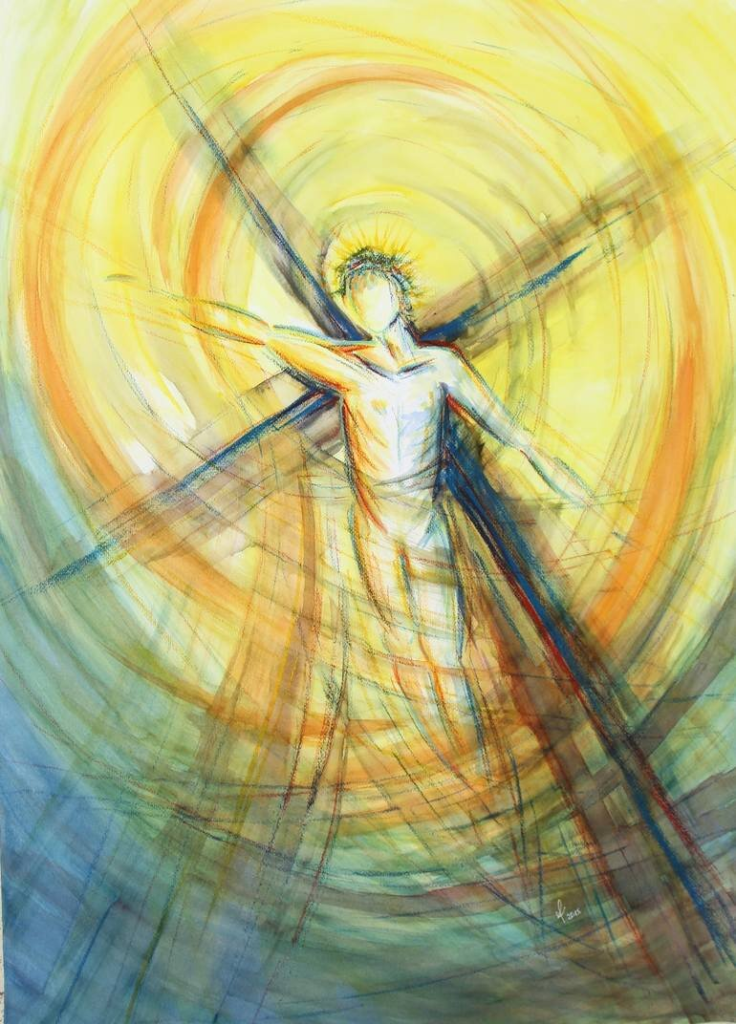
Resurrection, by Oliver Pfaff

As you therefore have received Christ Jesus the Lord, continue to walk in him, rooted and built up in him and established in the faith, just as you were taught, abounding in thanksgiving.

Watch out that no one takes you captive through philosophy and empty deceit, according to human tradition, according to the elemental principles of the world, and not according to Christ. 

For in him the whole fullness of deity dwells bodily, and you have come to fullness in him, who is the head of every ruler and authority. In him also you were circumcised with a spiritual circumcision, by the removal of the body of the flesh in the circumcision of Christ; when you were buried with him in baptism, you were also raised with him through faith in the power of God, who raised him from the dead. 

And when you were dead in trespasses and the uncircumcision of your flesh, God made you alive together with him, when he forgave us all our trespasses, erasing the record that stood against us with its legal demands. He set this aside, nailing it to the cross. He disarmed the rulers and authorities and made a public example of them, triumphing over them in it. (New Revised Standard Version)

On the television gameshow “Let’s Make a Deal,” selected members of the studio audience are offered something of value, and then given a choice of whether to keep it or exchange it for a different item.

The game’s drama is that the other item is hidden from the person until that choice is made. The participant does not know if the alternative item is of equal or greater value; or an item purposely chosen to be of little or no value.

The “deal” with Christianity is that Christians already have something of significant value. But they often lose it by going after something they aren’t even sure they actually want, or not.

Followers of Jesus have been given a valuable gift. And the Apostle Paul’s exhortation to the Church at Colossae was to go ahead and keep going with the prize you already possess.

Believers in Jesus have received him. Therefore, the believer is not to trade the words and ways of Jesus, and the redemption secured in Christ, for something else.

Having been redeemed by the Cross of Christ, believers are deeply rooted in Jesus. They are on a firm foundation of faith. Christians possess a faith full of hope and love.

So then, believers are encouraged by the Apostle Paul to take everything they have been taught, and everything they have received, and run with it.

It doesn’t matter what is behind another door, or what is on the other side of the curtain; grab ahold of what you possess in Jesus Christ. Stop considering a better way to live, and start living the life that’s been given to you.

Allow gratitude and thanksgiving to arise within you, and to come forth out of you. Quit looking how much greener the grass is on the other side of the fence. That pasture isn’t really greener; and there is not really a better way.

Many people have become disillusioned with institutional religion. They’ve had it with church. So, some of them end up throwing out the baby with the bath water, entertaining all sorts of ideas and approaches other than the grace-filled Christianity they once received.

Unfortunately, there are plenty of spiritual charlatans who seek to bedazzle people with fine sounding words. But it’s all nothing but a bunch of pseudo-intellectual philosophical babble.

Yet, because the messenger appears confident and makes grand pronouncements, they let themselves be captured, and go with it. And there are others who become enamored with endless theological talk, that has neither any real effect on one’s daily life, nor eternal life.

The Apostle was warning the Colossian believers about getting lost in the myriad traditions and superstitions that have an absence of Christ in the middle of them.

The way of Jesus has Christ directly and purposefully at the core of one’s life. Anything less is to make a deal and see what is behind another door.

The way of Jesus has very little to do with a particular theological tradition about the end times, or a certain literal interpretive stance, or a liturgical or non-liturgical approach to the Christian life.

Everything of God is right, just, and good. And according to Christianity, it comes through the person and work of Jesus, through Christ’s words and ways as expressed in the New Testament Gospels.

It seems to me that the Apostle Paul would be aghast today at how many supposed Christian believers worship him and his epistles! Instead of giving their full adoration to Christ.

The last word doesn’t come from Paul, but from Jesus. Keep in mind that Paul worshiped Christ, and did not point people to himself as the be-all-end-all of any philosophical approach.
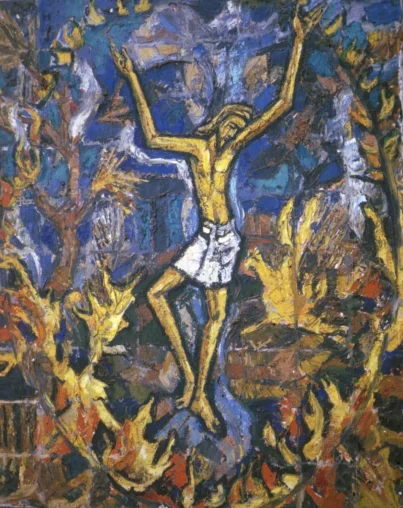
Jesus the Dancer, by Jyoti Sahi

Everything the Christian needs is within the fullness of Jesus Christ.

All things are empty without Christ, including the vast universe. The power and authority of Christ extends over all things and all people everywhere. Paul was insistent on this in all of the churches he established.

Thus, Christians must enter into the fullness of their Lord Jesus.

You can spend a lifetime, even an eternity after death, trying to figure out how God works, but you will never get to the end of it. God’s arm has that long of a reach. The fullness of Jesus is that big and filling. The strength of the Spirit is that powerful.

The heart and center of Christianity has nothing to do with circumcision, modes of baptism, keeping long lists of laws, or maintaining multiple spiritual practices. Because the Christian is already in, and already united with Christ.

This is why Paul prayed for believers to explore and realize what they already have in Christ, so that, with the eyes of their heart enlightened, they may perceive what is the hope to which God has called them, the riches of God’s glorious inheritance among the saints, and the immeasurable greatness of divine power for those who believe. (Ephesians 1:18-19)

The Christian has been spiritually raised from the dead, just as Christ was physically raised from death to life. And believers will also be physically raised, as Jesus was, if they have the spiritual eyes to see it.

Think of all those times in the past when you were stuck, and living a dead-end existence. Remember how God made you alive in Christ. All of your guilt and shame forgiven. All the stuff that kept you down and out, all that kept you from God, was nailed to the Cross of Christ.

The malevolent forces of this world have been stripped of their power, and can be seen as the sham they actually are.

It will not be nearly as valuable nor practical – not even close.

Being grounded in the person and work of Christ is where it’s at, my friend.

Watch out that nobody comes along and tries to sway you from Jesus. Don’t make any deals. You and I have Jesus. He is all we need.

Lord Jesus, you are worthy of our adoration, affection, and allegiance. Because of you, we don’t have to guess what God is like; there is no need to create our own image of God. Everything we need to know about God is revealed in and through you. Along with the Father and the Spirit, you have always existed in perfect relationship and unimaginable wonder.

Blessed Holy Trinity, the God whom I serve, may your divine dance of Father, Son, and Spirit pulsate within me, and flow out of me in a trust that you are enough. Then I will know that I, too, am enough as I avoid the false philosophies and promises of this world.

Almighty God, you fill the center of my being, so that I can let You be You, and so, be content and at peace, despite the alternative voices that chatter constantly around me. May your will be done, today and every day, to the glory of Jesus Christ my Lord. Amen.

To the Family of God (2 John 1:1-16)

St. John the Apostle, by sculptor Thomas Ball (1819-1911)

From the Elder—

To the dear Lady and to her children, whom I truly love. And I am not the only one, but all who know the truth love you, because the truth remains in us and will be with us forever.

May God the Father and Jesus Christ, the Father’s Son, give us grace, mercy, and peace; may they be ours in truth and love.

How happy I was to find that some of your children live in the truth, just as the Father commanded us. And so I ask you, dear Lady: let us all love one another. This is no new command I am writing you; it is the command which we have had from the beginning. This love I speak of means that we must live in obedience to God’s commands. The command, as you have all heard from the beginning, is that you must all live in love.

Many deceivers have gone out over the world, people who do not acknowledge that Jesus Christ came as a human being. Such a person is a deceiver and the Enemy of Christ. Be on your guard, then, so that you will not lose what we have worked for but will receive your reward in full.

Anyone who does not stay with the teaching of Christ, but goes beyond it, does not have God. Whoever does stay with the teaching has both the Father and the Son. So then, if some come to you who do not bring this teaching, do not welcome them in your homes; do not even say, “Peace be with you.” For anyone who wishes them peace becomes their partner in the evil things they do.

I have so much to tell you, but I would rather not do it with paper and ink; instead, I hope to visit you and talk with you personally, so that we shall be completely happy.

The children of your dear Sister send you their greetings. (Good News Translation)

The Pastor

Tucked away near the back of the Bible is a short little letter from the Apostle John, identifying himself as “The Elder.” This is meant to convey both his venerable leadership and his affectionate relation as the grandfatherly old man who has something important to say. In other words, John was, in our terms, a Pastor responsible for shepherding the church with care.

The Church and Christians

“The dear Lady” is a metaphor for the church. Through personifying the church, John was assigning worth, respect, and dignity to the mother with spiritual progeny.

“Her children” are the believers within the church, spiritual offspring with the church as their mother. This has been an important motif for most of Christian history – an understanding that has gotten lost over the centuries in much of the Protestant world. Yet, one of the magisterial reformers, John Calvin, retained this view of the church and its members:

“The Church is the bosom which God is pleased to gather his children… who are guided by her motherly care until they mature and at last reach the goal of faith…. How useful, indeed how necessary, it is that we should know her. For there is no other way to enter into life unless this mother conceive us in her womb, give us birth, nourish us at her breast, and keep us under her care and guidance… Our weakness does not allow us to be dismissed from her school until we have been pupils all our lives.”

(Institutes of the Christian Religion, 4.1, 4)

Indeed, Calvin was merely upholding the words of St. Cyprian, Bishop of Carthage (c.200-258, C.E.)  who stated 1,300 years earlier than the reformer:

“No one can have God as Father who does not have the church as Mother.”

St. Cyprian (On the Unity of the Catholic Church, ch.vi)

Love and Truth

The relationship between the mother and her children is to be always characterized by familial love. Everything within Christianity rises and falls with love because God is love.

God extends loving words and actions because love is the stuff that God is made up of. The very character of God is love, through and through. There is never a time when God is not loving.

In fact, God’s anger and wrath are expressions of love – for God is opposed to all which is unloving. Therefore, God extends justice and confronts sin so that love will freely flow once again amongst humanity and all creation.

God is not okay with deceit, not at all alright with errant understandings of his Son, Jesus Christ, being made out as a mere phantom without a real flesh-and-blood body. He had to be made like us in every way. Otherwise, there is no deliverance from the deceitfulness of sin, the sting of death, and the agony of hell.

John, as the Apostle of love, consistently espoused the primacy and permanence of love whenever he had the chance. Truth and love go together, always, insisted John. Love is only really possible when there is truth in the heart.

The true muster of mother church and of individual believing children is their love. No matter what is done – whether outreach, fellowship, or worship – it is all to be done in love and in truth. It’s not enough to be right; the rightness must be applied with the generosity, grace, and liberality of love.

The telltale sign of the deceiver, the false teacher, is that he proclaims only one without the other, either truth or love, but never both together.  

A profound lack of love is the litmus test that belies a faulty and heretical doctrine of Jesus. The absence of love is a red flag that impure teaching is happening. The real enemy of Christ is the one who claims Christianity but does not love, neither in word nor deed. If we really want to love God, we will love one another, and vice-versa.

Love and truth always go together. A mother is a mother because of her children; and a child is a child because of the mother. You cannot have one without the other.

To embrace truth is to love a group of people wherever they are. It is to see them, listen to them, then act on their behalf. Far too often Christians are known for their hubris in superimposing on others what those others need – believing they already know the truth of both Bible and them.

Love abides with the truth of a people. Genuine love seeks the truth and responds accordingly. Love is willing to find out what the issues are of a people. Assuming others need our money, our plans, our service, or our solutions, assumes we already understand their situation without hearing from them.

Love is longsuffering. It is willing to sit with folks for as long as it takes. Love finds itself by carefully applying biblical truth to the truth of a people. And that takes a great deal of time and effort. There are no shortcuts to love.

Love must have its way, or it isn’t love.

Since God is love, God must have his way in us first.

Hope and Happiness

Hope is a confident expectation that promises will be kept and realized.

Happiness is the result.

Hope and happiness go together like bacon and eggs, Tom and Jerry, the moonwalk and Michael Jackson, Friday and fish fry, Harry Potter and Hogwarts, salt and pepper, Adam and Eve, Jesus and the Spirit, and well, I think you get the picture.

Unhappiness is the inevitable result of feeling hopeless. Hope and happiness are both relational terms. They come from having good relations based in love and truth.

Love and truth are very much relational terms, being realized because of mother church’s nurturing.

And the chosen mother came into being because of the Father’s gracious will.

So, tell me, what is your takeaway from this quite brief reflection on John’s little letter?…

Hebrews 10:11-25 – Don’t Give Up!

Day after day every priest stands and performs his religious duties; again, and again he offers the same sacrifices, which can never take away sins. But when this priest had offered for all time one sacrifice for sins, he sat down at the right hand of God, and since that time he waits for his enemies to be made his footstool. For by one sacrifice, he has made perfect forever those who are being made holy.

The Holy Spirit also testifies to us about this. First he says:

“This is the covenant I will make with them
    after that time, says the Lord.
I will put my laws in their hearts,
    and I will write them on their minds.”

Then he adds:

“Their sins and lawless acts
    I will remember no more.”

And where these have been forgiven, sacrifice for sin is no longer necessary.

Therefore, brothers and sisters, since we have confidence to enter the Most Holy Place by the blood of Jesus, by a new and living way opened for us through the curtain, that is, his body, and since we have a great priest over the house of God, let us draw near to God with a sincere heart and with the full assurance that faith brings, having our hearts sprinkled to cleanse us from a guilty conscience and having our bodies washed with pure water. Let us hold unswervingly to the hope we profess, for he who promised is faithful. And let us consider how we may spur one another on toward love and good deeds, not giving up meeting together, as some are in the habit of doing, but encouraging one another—and all the more as you see the Day approaching. (New International Version)

The book of Hebrews was originally a sermon preached to a group of struggling Jewish Christians who were discouraged. They were a congregation in decline. The preacher’s approach throughout is to demonstrate that Jesus is better and superior to anything or anyone ever.

With this high view of the person and work of Christ, the preacher comes to the punch line of his sermon. He insists that what the believers need is perseverance to keep going – no matter what adversity they face. For without the ability to endure hardship, the sagging congregation would continue to decline and eventually give up.

Yet, giving up is not an option when it comes to the Christian life. The Christians may not have been going through a Job-like experience, but they needed to get some spiritual spine to them so that they could stand up for Jesus. 

Sometimes, because most of life is lived in the mundane, we can slowly drift from our spiritual moorings and just go through the motions of Christianity without really living for Jesus. Boring and repetitive work; the monotony of caregiving; the tedium of busywork; and the continual grind of it all can be an effective tool in the devil’s workshop. 

When we begin sleepwalking through life, we are in danger of wandering from faith. We then need some stout spiritual stamina. “I didn’t sign up for this!” can be the cry of both the person who is downtrodden with hard circumstances, as well as the person who is simply living a dull life. 

We all have our quitting point – that point where we say, “enough is enough” and we give up and cry uncle. Those times usually come when the pain or inconvenience of what is happening overcomes the resolve to persevere. The devil keeps detailed notes on everyone’s quitting points, and he tries to get us to that point of being ineffective and giving up on the Christian life. 

It easily begins with some minor irritation or complaint against from another. Then moves further along by the loss of someone close. Frustration mounts if financial hardship happens. After a while, if things do not markedly improve, living day in and day out with missed expectations and disappointing situations may lead to bailing out, blowing up, or binging on a sinful desire.

At the quitting point, we throw up our hands, wrongheadedly believing others don’t care and that God is indifferent to our situation.

The preacher of Hebrews knows that the one real measure of a person is the learned ability to push through the quitting points of life. We need endurance and perseverance. But how will we get it?  How can we endure, living for Jesus for the rest of our lives?

There are three indispensable elements of the Christian life, necessary to persevering. Perseverance is a privilege, and not some drudging duty to slog through. Following Jesus for a lifetime comes as we embrace our spiritual privileges.

Faith is the privilege of continually approaching the Lord with confidence

We possess the incredible privilege of approaching the throne of grace with confidence because Jesus has opened the way to God. No longer do we need the elaborate Old Testament sacrificial system in order to approach God. So, let us draw near to God with a sincere heart in full assurance of faith.

We need faith to keep going in the Christian life. Faith is more than doctrinal confession; it is something we experientially live by every day. By faith, we come to God through Jesus – not only soaking in more information but also drawing near to Christ.

Jesus, when on this earth, drew near to the Father. We are to follow Christ in his example. Jesus practiced solitude, silence, and extended times of prayer. Our Lord oriented his teaching and healing ministry around his relationship with the Father by engaging in basic spiritual disciplines that put him in a position to hear and listen so that he could then do the will of God. 

“We can all see God in exceptional things, but it requires the culture of spiritual discipline to see God in every detail.”

Oswald Chambers

A successful student orients her life around certain study disciplines in order to learn and reach graduation day. A winning athlete orients his life around certain daily practices in order to develop the skills needed to face the upcoming competition. Likewise, if we want to follow Christ and draw near to God, we need to reorient our time and commitment in order to take advantage of the privilege of growing and maturing in Jesus. 

The perspective of Hebrews is that we must orient our lives around basic disciplines of faith and put our hands out in order to receive the gift of faith God wants to give us.  Faith is a muscle that must be exercised, or it will atrophy and become useless. And with puny weak faith muscles, it is easy to give up because we have no “umpff” for the Christian life.

Hope is the privilege of living for Jesus with a confident expectation that God keeps divine promises

Perseverance requires hope. Hopelessness happens without the continuing practice of faith expressed in drawing near to God. Hope in Scripture is not wishful thinking; it is a confident expectation that God is good for his promises. 

Hope enables us to bank on the words and ways of Jesus. In those times when we feel hopeless; when there is negativity in the air that brings us to the quitting point; when we sense a season of blessing is not going to come; it is in those very times the preacher of Hebrews says to hold unswervingly to your profession.

We will not always squint our spiritual eyes, looking for the least little hope. Just as young mothers must remember that constant lack of sleep and caring for a needy infant is not always going to be the status quo; just as kids must remember that they will not be in school for the rest of their lives; in the same way, we must remember that God will accomplish everything he sets out to do; that there is an end and a goal to Christianity; and we will be richly rewarded if we keep going and do not give up.

Love is the privilege of encouraging fellow believers

We are to pay thoughtful attention to one another. Believers are to take an interest in each other’s welfare, and put some significant thought into how to spur, incite, cajole, and provoke others into keeping up with Jesus. 

A major opportunity for encouragement is corporate gatherings. Attendance is not an end in itself. Worship services, small group Bible studies, and other ministries of the Church are important because they are moments for us to encourage other people.

Let’s play good response/bad response to this. Bad response: “I feel guilty about what you just said, so I will try harder to love and encourage others.” That’s a prescription for frustration and failure. It ends in reaching the quitting point because we are focusing too much on the strength of our own will, or lack thereof.

Good response: “Wow!  God wants to use me to love other people! I’ll seek to know Jesus better so that I can learn to live and love, just like him. I can’t wait to encourage someone and build them up in the faith.”

Church is not optional equipment for the Christian life. We need each other. We need the Church.

“Love cannot exist in isolation: away from others, love bloats into pride. Grace cannot be received privately: cut off from others, it is perverted into greed. Hope cannot develop in solitude: separated from the community, it goes to seed in the form of fantasies. No gift, no virtue can develop and remain healthy apart from the community of faith. ‘Outside the church there is no salvation’ is not ecclesiastical arrogance but spiritual common sense, confirmed in everyday experience.”

Eugene Peterson

“No one can have God as his Father who does not have the Church as his Mother.”

Cyprian (210-258 C.E.) Bishop of Carthage

“May Christians be guided by the Church’s maternal care until they grow up to maturity and attain the perfection of faith…. To those whom God is a Father, the Church must also be a Mother.”

John Calvin

The Church:

  • Creates a unique presence with God. (Matthew 18:20)
  • Provides the nurture, guidance, and encouragement necessary for spiritual development. (Romans 12:4-5)
  • Helps form our identity as Christians. (Ephesians 2:19-20)
  • Enables endurance through suffering and brings comfort and encouragement in difficult times. (James 5:14-15)
  • Nourishes with the Word in preaching and sacrament. (Acts 2:46-47)
  • Lifts up godly examples to imitate. (1 Corinthians 4:16)
  • Intervenes when sheep go astray. (Colossians 3:16)
  • Fosters spiritual transformation. (Philippians 2:12)
  • Brings maternal care and help. (1 Thessalonians 2:7)

Conclusion

Let’s be encouragers – loving others with the grace of Jesus. The following are six types of encouragers displayed in the book of Hebrews for us to emulate:

  1. The Promoter. Cheering others on to endurance. We are surrounded by a great cloud of witnesses cheering us on and promoting us to push through the quitting points. They did it, and so can we (12:1).
  2. The Professor. Affirming others’ work as valuable and important. God will not forget your work and the love you have shown God’s people and how you continue to help them (6:9-10).
  3. The Preacher. Rebuking and admonishing in love (Proverbs 27:5). We must pay more careful attention to what we have heard, so that we do not drift away.  How shall we escape punishment if we ignore such a great salvation? (2:1-3).
  4. The Prayer Warrior.  Approaching the throne of grace with confidence, so that we may receive mercy and find grace to help us in our time of need (4:16).
  5. The Partner. Coming alongside one another daily so that no one may be hardened by sin’s deceitfulness” (3:13).
  6. The Pastor. Shepherding others through the confusing situations of life. Jesus suffered outside the city gate to make the people holy through his own blood. Together, let’s go to him outside the camp, bearing the disgrace he bore, as we look forward to the heavenly city to come (13:12-14).

It’s our privilege to persevere through the spiritual gifts of faith, hope, and love. Use them for building up one another so that together we can endure for a lifetime.

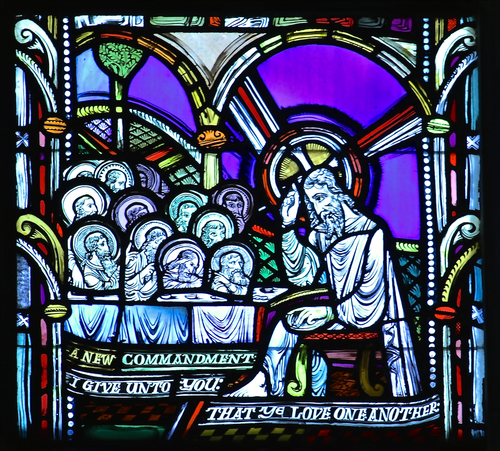
John 13:31-35 – Love One Another

Stained glass by Edgar Miller (1899-1993)

When he was gone, Jesus said, “Now the Son of Man is glorified, and God is glorified in him. If God is glorified in him, God will glorify the Son in himself, and will glorify him at once.

“My children, I will be with you only a little longer. You will look for me, and just as I told the Jews, so I tell you now: Where I am going, you cannot come.

“A new command I give you: Love one another. As I have loved you, so you must love one another. By this everyone will know that you are my disciples if you love one another.” (New International Version)

The Church was formed to represent Christ on earth. The Church is a new community of believers in Jesus, called and empowered by the Holy Spirit for mission.

Christianity was never intended to be just a personal faith; it was designed by God to be the community of the redeemed. Christian community is vital to every individual’s faith.

“No one can have God for his Father who does not have the Church for his Mother.”

John Calvin (1509-1564)

Loyalty and commitment to God translates to having a dedicated and devoted spirit to one another in the church. 

One of the last commands Jesus gave to his disciples before he went to the cross was to “love one another.” The Old Testament instructed the Israelites to love each other (Leviticus 19:18). Yet, Jesus gives new meaning to the command through four distinctions of loving one another.

A New Model of Love: Jesus

Our Lord’s life and teaching gave new meaning to the command to love each other. Notice what Jesus did in the Upper Room just before giving the command to love one another:

It was almost time for the Jewish Passover festival. Jesus knew that the time had come for him to leave this world and go back to the Father. Jesus had always loved the people in the world who were his. Now was the time he showed them his love the most.

Jesus and his followers were at the evening meal. The devil had already persuaded Judas Iscariot to hand Jesus over to his enemies. (Judas was the son of Simon.) The Father had given Jesus power over everything. Jesus knew this. He also knew that he had come from God. And he knew that he was going back to God. So while they were eating, Jesus stood up and took off his robe. He got a towel and wrapped it around his waist. Then he poured water into a bowl and began to wash the followers’ feet. He dried their feet with the towel that was wrapped around his waist. (John 13:1-5, ERV)

Jesus modeled a service-oriented love of compassionately meeting the need of another, regardless of who that person is. It is instructive to us that Jesus washed the feet of Judas Iscariot, along with all the other disciples. 

Christ died for us while we were still sinners. This demonstrates God’s love for us.

Romans 5:8, GW

We are to love everyone in the community of saints, and not just our friends or the ones we like. Loving one another also means we will be realistic in understanding that community is messy and downright hard work.  

A New Motive: Christ First Loved Me

Jesus has loved us with a love that took care of our brokenness once for all. Because of that love, we are now motivated to love each other. John would later say in his first epistle: 

God showed his love for us by sending his only Son into the world, so that we might have life through him. This is what love is: it is not that we have loved God, but that he loved us and sent his Son to be the means by which our sins are forgiven. Dear friends, if this is how God loved us, then we should love one another. (1 John 4:9-11, GNT)

Love is an attitude and a frame of mind. The motivation for the Christian is different than anyone else’s motive:  We are so thankful for Christ’s love to us, that we cannot help but extend that same love to one another in the church. 

This kind of love transcends human willpower. This is love as a grateful response for the grace shown us in Christ.

A New Motivator: The Holy Spirit

The Spirit energizes and enables us to love each other. Jesus also said in the Upper Room: 

If you love me, you will do as I command. Then I will ask the Father to send you the Holy Spirit who will help you and always be with you. (John 14:15-16, CEV)

There are times when we may lack the ability or spiritual energy needed for the work of loving each other. It is in those times that we need to check our spiritual electrical box to make sure we haven’t tripped a breaker by trying to live the Christian life on our own strength. 

We need the Spirit. The Spirit gives us the zeal we need to love one another. 

We typically don’t do anything in life unless we have the motivation for it. The Spirit is like the Christian’s personal trainer – encouraging, exhorting, getting in our face, comforting, and spurring us – toward the new way of love. 

A New Mission: World Evangelization

All people will know we are Christ’s disciples if we love one another. The way we treat each other in the church is foundational and fundamental to the mission of loving our neighbors who don’t know Jesus.

“Mission is putting love where love is not.”

St. John of the Cross (1542-1591)

When the church has a healthy and even supernatural dynamic of loving one another, they joyfully proclaim the good news to every person that Jesus is the answer to the terrible brokenness of this world.

Community is necessary to mission. Lesslie Newbigin (1909-1998) was a British missionary to India for forty years. After retiring and returning to Britain, he found his homeland was very different than when he left. He was astounded to find Britain had become very less Christian and was now predominantly un-Christian. It was clearly a post-Christian society. What to do about it? Here is Newbigin’s response:

“I have come to feel that the primary reality of which we have to take account in seeking for a Christian impact on public life is the Christian congregation.  How is it possible that the gospel should be credible, that people should come to believe that the power which has the last word in human affairs is represented by a man hanging on a cross? 

I am suggesting that the only answer, the only hermeneutic of the gospel [the only way society can discern who Jesus is] is a congregation of men and women who believe it and live by it. I am, of course, not denying the importance of the many activities by which we seek to challenge public life with the gospel – evangelistic campaigns, distribution of Bibles and Christian literature, conferences, and even books such as this one. But I am saying that these are all secondary, and that they have power to accomplish their purpose only as they are rooted in and lead back to a believing community.”

Conclusion

The implications of community for our faith are significant. If we keep other Christians at a distance and give them the stiff arm, we are really giving God the stiff arm. Jesus identifies so closely in love to his people, that to love them is to love him.

The late African-American preacher E.V. Hill told the following story about an experience with a white Christian leader in the 1950s:

“As a freshman at Prairie View College (part of the Texas A&M system) I was actively involved and was one of two students selected to go to our denomination’s annual meeting in Memphis. The trip through the South was by car—three whites and two blacks traveling together. I had no idea how we’d eat or how we’d sleep. So great was my anxiety and hatred over how the trip might turn out that I almost backed out entirely …. In all my experience I had never seen a white man stand up for a black man and never felt I would. 

But then Dr. Howard, the director of our trip and a white man spoke up. ‘We’ll be traveling together,’ he said. ‘If there isn’t a place where all of us can eat—none of us will eat. If there’s not a place all of us can sleep—none of us will sleep.’ That was all he said, but it was enough! For the first time in my life, I had met a white man who was Christian enough to take a stand with a Christian black man.” 

May the Spirit give us the courage together to love one another.

Gracious Lord, I pray for those who will believe in you through the good news of forgiveness in Christ. I pray that all of them may be one just as you are one. May they be brought to complete unity to let the world know that you sent the Son, Jesus, and have loved them even as you have loved us. Righteous God, may you help us make you known in the world so that the love you have for us may be in them through the cross of Christ. Amen.