The Severe Mercy of the Easy Yoke (Matthew 11:16-19, 25-30)

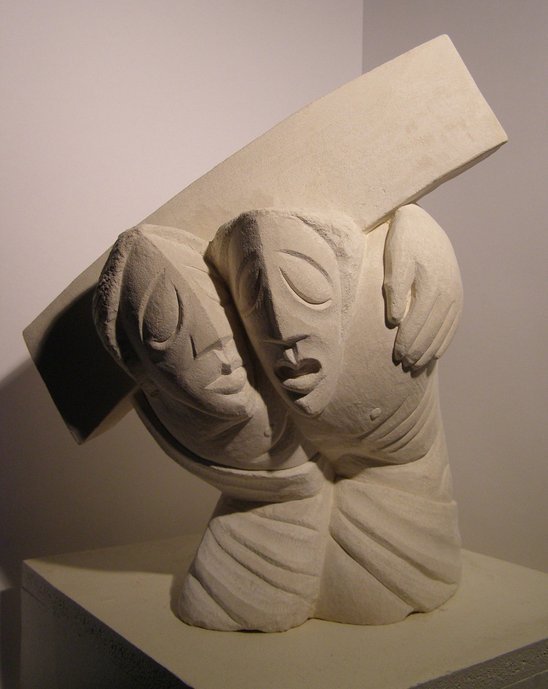
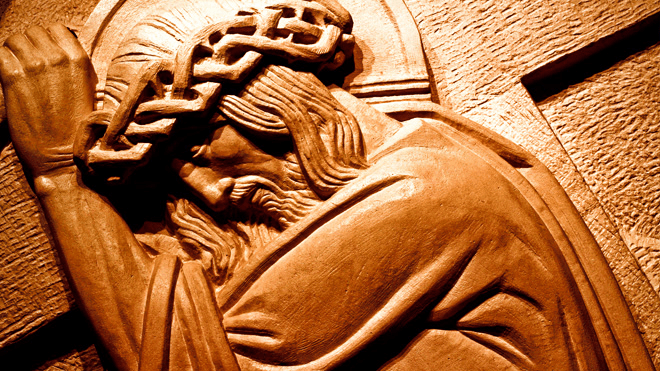
The Burden of Christ, a sculpture of Jesus Christ, in the Oratoire Saint-Joseph, Montreal, Quebec, Canada

“But to what will I compare this generation? It is like children sitting in the marketplaces and calling to one another,

‘We played the flute for you, and you did not dance;
    we wailed, and you did not mourn.’

“For John came neither eating nor drinking, and they say, ‘He has a demon’; the Son of Man came eating and drinking, and they say, ‘Look, a glutton and a drunkard, a friend of tax collectors and sinners!’ Yet wisdom is vindicated by her deeds….”

At that time Jesus said, “I thank you, Father, Lord of heaven and earth, because you have hidden these things from the wise and the intelligent and have revealed them to infants; yes, Father, for such was your gracious will.All things have been handed over to me by my Father, and no one knows the Son except the Father, and no one knows the Father except the Son and anyone to whom the Son chooses to reveal him.

“Come to me, all you who are weary and are carrying heavy burdens, and I will give you rest. Take my yoke upon you, and learn from me, for I am gentle and humble in heart, and you will find rest for your souls. For my yoke is easy, and my burden is light.” (New Revised Standard Version Updated Edition)

Exchanging one yoke for another is really a rather radical act. It is akin to dying to self, so that there can be new life in Christ.

In our anxiety-laden society, filled with multiple fears, worries, and frustrations, we are being invited by Jesus to lay it all down. In other words, every one of us must unequivocably die to self.

Perhaps this might best be illustrated by expressing my own struggle with the pharisaical yoke and the Jesus yoke:

A year-and-a-half ago, I abruptly had to leave my job as a hospital chaplain due to deteriorating health. I am now retired, not because I chose retirement, but because retirement chose me.

So, for the past eighteen months, I have struggled with this reality of no longer being a Chaplain. As hard as I thought and pondered, I’ve gained no understanding as to why I am no longer serving patients, their families, and hospital staff.

What’s more, I have no insight as to why – during my tenure as Chaplain – I experienced an awful time with a gaslighting boss for three of those years. This boss continually made nonsensical decisions, and defied any understanding, even though I sought it out. (I might add that it is super-creepy that the current U.S. President is so eerily like the former boss, as if I’m still under the abuse!).

If I was a good Chaplain doing good work (which I believe I was) then why was I treated so oppressively? Why did my employer turn a blind-eye to it all? Why would God almighty sideline me in such a loathsome health situation. Why must I keep experiencing the awful effects of incompetent political leadership? Why all of the nonsense? It is a terrible yoke for me to carry.

Likely, none of this has to do with me needing to understand any of it. It could be that it is more akin to Abraham being told to sacrifice the son of the promise, Isaac.

It was a completely nonsensical command from God. It defied any sort of understanding on Abraham’s part. And yet he quietly obeyed, with the text of Genesis 22 telling us nothing about any talk-back nor questioning from Abraham. Only obedience. It appears that Abraham was able to exchange yokes, from the oppressive one to the easy one.

In telling Abraham to sacrifice his son, the real death taking place was Abraham’s, not Isaac’s. Abraham was to die to anything that may compete or be likened to some sort of idolatry before God. For even the very good things, like families and jobs, can become idolatrous to us.

I don’t know about your situation, but maybe for me the point is that I must allow the old life to die, and to let a new life grow out of it. Maybe it’s time for a change of yokes. After all, one cannot have a new resurrected life without first experiencing a crucifying death to the old life.

Death is an integral part of life. To exchange yokes is to experience a death. I’ve wanted badly to return to chaplaincy in the hospital. But I am being commanded to sacrifice it on the altar of God. I am being told to die to myself, so that I may live a new life to God.

Any sort of mere earthly hope must die within us, that an unselfish and godly hope may arise anew. And that happens when we deliberately switch-out one yoke for another.

Chaplain Tim, in a way, is dead. I now accept that which is already true of me. It is a death to self. And I am now patiently awaiting my resurrection.

I do not understand this weird liminal space I’m inhabiting; and I need not understand it. I’m deprived of the object of my former job. And so, I let go of it. I will cling no longer to the old life.

What I seem to be currently experiencing is a severe mercy – the mercy from God to not make Christianity wholly understandable, nor boil it down to pharisaical laws of which I can clearly either follow, or not.

Instead, I allow following Christ and taking up his easy yoke to maintain it’s true mystery and grace. If I have died with Christ, I shall also live with him.

Only in hopelessness can we entertain hope. God loves me enough to let me feel the awful severity of Divine nonsense, so that I may experience the real nature of Christ.

I suppose, then, that I am really dead to having to understand everything, and am instead alive to hope. And hope will not disappoint me.

Through dreams and visions, O God, you broaden the horizon and hope of your people, so that they may discover the meaning of your covenant, even in the midst of trial and exile. Increase the number of those who believe in your word so that all people may joyfully respond to your call and share in your promises. Amen.

Following Jesus

Walking with Jesus

The disciple and evangelist Matthew, the former tax collector, purposefully arranged his Gospel of Jesus to emphasize what it means to truly follow Christ. Matthew knew a thing or two about discipleship and following Jesus, having walked away from a lucrative business because Jesus called him. However, the hardest thing for Matthew was likely not giving up the money, as it was daily facing people who knew his past and many who held it over his head – except Jesus. Only grace has the power to change our lives and make us willing to face anything, for good or for ill.

For Matthew, the first sermon of Jesus, The Sermon on the Mount (Matthew 5-7), was meant to move the massive crowd of people physically following Christ to spiritually, ethically, and with heartfelt devotion following Jesus as committed disciples embracing the true way of righteousness – mercy, purity, and peacemaking.

In chapters 8-10 of his Gospel, Matthew narrates amazing events of miracles and healing including: the blind receiving sight; the lame getting on their own two feet and walking; those with leprosy being cured; the deaf hearing; the dead raised to life; and, the good news of God’s benevolent reign preached to the poor. Jesus was not only inviting people to be disciples; he was developing disciples through the sheer force of mercy. This was no sign-up sheet Christianity. This was deliverance from physical and spiritual oppression to a life of walking in the gracious way of Christ, no matter what the cost.

This was beautiful and wonderful ministry. It was life-changing and earth-shattering. However, most of the crowd who followed Jesus around observing the divine interventions were unfazed. In my mind, I picture the crowd like a bunch of social media followers who troll through others stuff and offer little except criticism when they see something that they do not like or agree with.

Jesus had his own comparison. He asked the crowd: To what can I compare this generation? Christ was angling for his listeners to consider the current state of the people and the society. He answered his own question with a saying that the people were familiar with: “We played the flute for you, and you did not dance; we sang a dirge, and you did not mourn.” (Matthew 11:17)

The saying Jesus quoted pertains to weddings and funerals. He was saying that the crowd standing right in front of him, seeing him and seeing his works up close and personal, are like people who have their backs against the wall during a celebration dance at weddings. They are also like people who show no grief and don’t cry at funerals.  In other words, they are dull. They have Jesus right in front of their faces, and they do not see him because they are expecting someone else.

Most of the people could not get over the fact that Jesus hung-out with people who were not like them and kept focusing his ministry on folks who need it the most. Jesus was giving a stinging rebuke – and they knew it. Jesus was essentially calling the unmoved crowd a bunch of bratty little kids who sit around waiting for their idea of Messiah to come along.

Bottom line: Jesus had no acceptance for them simply because they were not willing to accept him on his terms and in his way. So, Jesus then clearly communicated who is accepted with him: Those who need him. They are accepted because the Father has revealed Jesus and truth to the least and the lost. Little children were always overlooked and forgotten people in the ancient world – low on the totem pole of human hierarchy and viewed mostly as potential adults who would someday contribute to society.

Kids need to be cared for. And that is the key to why Jesus spoke of becoming like little children: kids need the care of others or they will not make it. They know it. The plan of God is to bless those who are poor in spirit, not those who think they “already know all that stuff” and have no need for a Messiah who only meets the needs of immigrants, people of color, the aged and the infirm. Those who know their need for a Savior come to Jesus asking for help and find the open arms of God. Those who only know their spiritual pedigree and how much others need them, are glad they are not like people beneath them, and ask for nothing – these are the people who will find themselves looking at God’s back.

The needy are accepted because they humble themselves and come to Jesus and exchange their yokes. Christ’s invitation goes out to all those for whom religion and church has become a grind, for whom trying to always be a good Christian is like carrying a heavy burden. We are invited to replace our heavy yoke with the yoke of Jesus.

Simon and Jesus by Nicholas Mynheer
Jesus and Simon by Nicholas Mynheer

A “yoke” was a rabbi’s set of rules based in his interpretation of the Law. The disciples of a rabbi would follow him around everywhere and continually listen to his view of how to live the Scripture in everyday life. There were rabbis whose yoke weighed people down with endless rules on every detail of life. Jesus would later say about such teachers:

“They tell you to do things, but they themselves don’t do them. They make strict rules and try to force people to obey them, but they are unwilling to help those who struggle under the weight of their rules. They do good things so that other people will see them.” (Matthew 23:3-5)

Jesus, contrary to other rabbis, taught the Beatitudes and Sermon on the Mount as his yoke, which was a form of living from the heart, and not just to put on a good show for others.

Jesus said “learn from me” because he is gentle and humble in heart. Jesus is not going to turn us away when we sincerely and humbly come to him; in fact, he invites us to come so we might bask in God’s acceptance:

“Come to me, all of you who are tired and have heavy loads, and I will give you rest. Accept my teachings and learn from me, because I am gentle and humble in spirit, and you will find rest for your lives. The burden that I ask you to accept is easy; the load I give you to carry is light.” (Matthew 11:28-30, NCV)

If faith has become all too familiar, if you have lost your sense of awe and wonder about God, if you desire something more than just keeping up with the Christian Jones’s and fulfilling a checklist of Christian duty, then there is an invitation for you to come to Jesus – offered by Christ himself. We get to walk with Jesus.

3374b-thetable

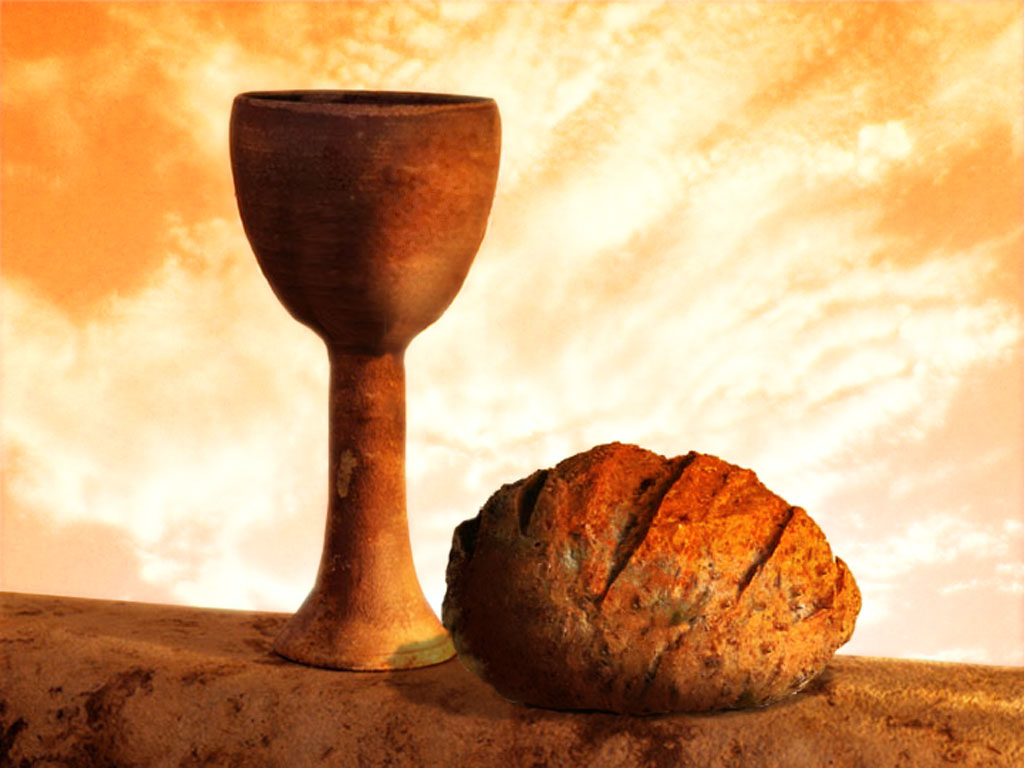
For Christians everywhere throughout the world for two millennia the Table is the place to come in remembrance, communion, and hope. We remember the once for all sacrifice of Christ which unburdened us of our heavy load of sin. We commune with this same Christ now in the present. We anticipate our future hope with confident expectation that Christ is coming again. The Table is an invitation for us to eat and drink of Christ. The words of Keith and Kristyn Getty and Stuart Townsend’s “Communion Hymn” capture Christ’s acceptance of us and our need to receive such grace:

Behold the Lamb who bears our sins away,
Slain for us – and we remember
The promise made that all who come in faith
Find forgiveness at the cross.
So we share in this bread of life,
And we drink of His sacrifice
As a sign of our bonds of peace
Around the table of the King.

The body of our Savior Jesus Christ,
Torn for you – eat and remember
The wounds that heal, the death that brings us life
Paid the price to make us one.
So we share in this bread of life,
And we drink of His sacrifice
As a sign of our bonds of love
Around the table of the King.

The blood that cleanses every stain of sin,
Shed for you – drink and remember
He drained death’s cup that all may enter in
To receive the life of God.
So we share in this bread of life,
And we drink of His sacrifice
As a sign of our bonds of grace
Around the table of the King.

And so with thankfulness and faith we rise
To respond, – and to remember
Our call to follow in the steps of Christ
As His body here on earth.
As we share in His suffering
We proclaim Christ will come again!
And we’ll join in the feast of heaven
Around the table of the King.

Amen.