Tussling with Trouble (Matthew 10:24-39)

“The student is not above the teacher, nor a servant above his master. It is enough for students to be like their teachers, and servants like their masters. If the head of the house has been called Beelzebul, how much more the members of his household!

“So do not be afraid of them, for there is nothing concealed that will not be disclosed, or hidden that will not be made known. What I tell you in the dark, speak in the daylight; what is whispered in your ear, proclaim from the roofs. Do not be afraid of those who kill the body but cannot kill the soul. Rather, be afraid of the One who can destroy both soul and body in hell. Are not two sparrows sold for a penny? Yet not one of them will fall to the ground outside your Father’s care. And even the very hairs of your head are all numbered. So don’t be afraid; you are worth more than many sparrows.

“Whoever acknowledges me before others, I will also acknowledge before my Father in heaven. But whoever disowns me before others, I will disown before my Father in heaven.

“Do not suppose that I have come to bring peace to the earth. I did not come to bring peace, but a sword. For I have come to turn

“‘a man against his father,
    a daughter against her mother,
a daughter-in-law against her mother-in-law—
    a man’s enemies will be the members of his own household.’

“Anyone who loves their father or mother more than me is not worthy of me; anyone who loves their son or daughter more than me is not worthy of me. Whoever does not take up their cross and follow me is not worthy of me. Whoever finds their life will lose it, and whoever loses their life for my sake will find it. (New International Version)

We can expect opposition and trouble from the world

Those who follow the words and ways of Jesus will experience hardship at the hands of others, because Christ’s values are often different than how the world’s systems typically operate. 

Being called the Devil (Beelzebul) isn’t exactly a term of endearment. There were those so upset with Jesus that they equated him with Satan. So, since Christ got this kind of verbal treatment, how much more will we be the brunt of false accusations, slander, and gossip? 

We are not above our Lord – we will be treated as he was. We cannot expect that we are above getting into trouble. Believers are promised deliverance from sin, death, and hell – and not from the meanness and ignorance of people in this present life.

Because of this reality, we need to be savvy to our situation of trouble and practice common sense, as well as have a mental disposition that thinks the best of people, and does not immediately judge and condemn others.

All of this requires us to avoid the two extremes of either simple assimilation into the culture, or rejection of the culture as evil. Both the blending into culture, and the separating from it, each share the same preferred outcome of trying to avoid opposition and trouble. 

Instead, there is a third way of being faithful to following the way of Jesus: Interact with and engage the culture as salt and light. (Matthew 5:13-16)

Assimilation causes us to lose our saltiness; and isolation hides our light. So, let’s find wise ways to understand truth and apply it in the concrete situations of life in this world. 

For example, we can discuss life issues about our jobs and school from a Christian perspective, so that we might speak into others’ lives, instead of just standing against something and complaining about it: How might we show both grace and truth in a particular situation? Are there ways we can give support without condoning something we oppose, and how?

We can expect that we are going to disrupt and upset our families and experience opposition from them

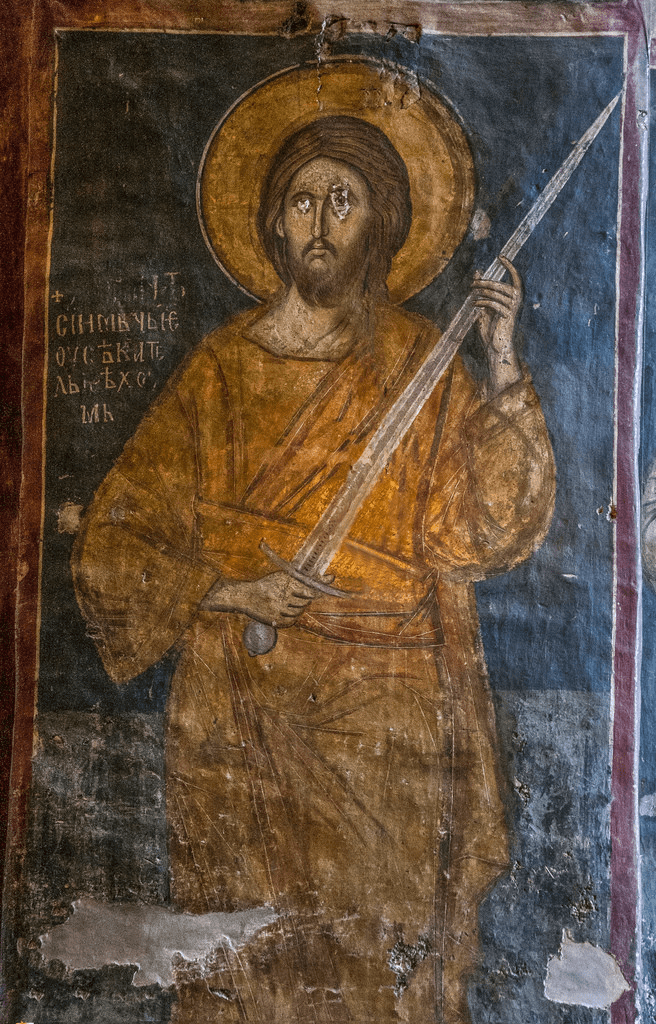
14th century fresco of Christ with a sword, in the Sacred Monastery of the Ascension of Christ Church, Kosovo

Unfortunately, opposition does not just come from the world, but within the very families and communities we love and rub shoulders with every day. Most persecution, hardship, and trouble for believers in Jesus come from family and those closet to us. 

Although I grew up in a church-going family, we never really discussed faith or Christianity. When I became serious about walking with Jesus, I faced a lack of support. I was often the brunt of teasing and verbal jabbing. My commitment to Christ had butted up against the family value of never rocking the boat. 

There was once a woman who experienced new life in Christ. When God grabbed ahold of her life, she had been on track to becoming the next Barbara Walters. But her newfound values of embracing the Beatitudes of Jesus rubbed the television broadcast world too much. 

So, she went into radio. Instead of looking toward a lucrative life on screen, she settled for less money and no fame behind the microphone of a Christian radio station. Her family didn’t understand this. And marrying a preacher didn’t help the situation any for her. To this day she still faces hardship and resentment for making decisions that did not get her the American dream.

Jesus said that anyone who wants to take the path of least resistance by not rocking the family boat with Christian love is not worthy of him. Anyone who does not take up their cross and follow Jesus in the way of trouble is not worthy of following him. 

We must die to self – which often means dying to avoidance of conflict – and become alive to the wonder of God’s mercy and love in the world.

We don’t need to be afraid of getting into trouble

Why? Because…

  1. Fear has to do with the unknown. So since we know opposition and trouble is expected, we will not live in dread of what might happen. The early Christians actually rejoiced in their suffering because they considered it a privilege to be walking in the way of Jesus. (Acts 5:27-42)
  2. You will receive special help. In times of persecution, we have a Helper, the Holy Spirit, given to us for such times as these. (John 3:34; 16:1-15)
  3. God isn’t surprised by your hardship. The Lord will eventually deal with all that is wrong in this world.
  4. The wrath of God is to be more feared than the wrath of people.
  5. God is watching over all the details of my life. If God cares for all the small details, how much more will the Lord take care of the big issues in my life?

Conclusion

It is a privilege to follow Jesus into trouble. This is what is called “upside-down” theology: 

  • In giving my life away to Jesus, I find it. 
  • In getting into trouble, I find peace. 
  • In serving and taking up our cross, there is happiness, not depression. 

Sometimes, things in the kingdom of God seem upside-down; and that is as it should be. Facing trouble is really not the worst thing to be experienced – being separated from God is. 

We are to expect opposition from the world, and from family. Yet, we need not be afraid, because tussling with trouble is part of what it means to follow Jesus – it is the way of the cross.

So, count the cost. Give your life away. In doing so, you will certainly not lose your reward from God.

Let Mercy Be Our Guide (Matthew 12:1-8)

At that time Jesus went through the grainfields on the Sabbath. His disciples were hungry and began to pick some heads of grain and eat them. When the Pharisees saw this, they said to him, “Look! Your disciples are doing what is unlawful on the Sabbath.”

He answered, “Haven’t you read what David did when he and his companions were hungry? He entered the house of God, and he and his companions ate the consecrated bread—which was not lawful for them to do, but only for the priests. Or haven’t you read in the Law that the priests on Sabbath duty in the temple desecrate the Sabbath and yet are innocent? I tell you that something greater than the temple is here. If you had known what these words mean, ‘I desire mercy, not sacrifice,’you would not have condemned the innocent. For the Son of Man is Lord of the Sabbath.” (New International Version)

I’ll just say it plainly: We people are quick to judge. All of us have been on the end of someone judging us for something we did or said; and also all of us have played the judge, telling someone they aren’t right, when we really don’t know what’s going on or don’t have the full picture.

In today’s Gospel lesson, the Pharisees take issue with Christ’s disciples doing something unlawful (that is, unbiblical). Since the Pharisees chose to respond to the situation using the ground of Scripture, Jesus responded to them on Scriptural grounds.

Jesus went back to the Bible, with three pointed biblical retorts: “Haven’t you read?” “Haven’t you read in the Law?” and “If you had known what these words mean….”

David and His Companions

The first example of Jesus, in reply to the Pharisees’ issue with the disciples picking heads of grain on the Sabbath, was to lift up David and his men. They had the audacity to waltz into the holy place, take the sacred Bread of the Presence, and proceed to eat it. And it was all done above board.

In a usual circumstance, it would be unlawful for anyone other than a priest to eat the bread. However, under unusual circumstances or extreme situations, it is very much permitted for the priest(s) to give the bread to others. This gets at the spirit and intent of the Law, not just the letter of it.

If we are unable to practice biblical injunctions with both knowledgeable skill and practical art, then we are failing to keep the Law. In other words, meeting the very real needs of people is a high priority – which is a major point of divine commands to begin with.

Priests on Sabbath Duty

The Pharisees had a problem with the disciples “working” on the Sabbath day. Rather than quibble about whether they were working by sowing and reaping, or not, Jesus went to the example and reality that the priests of God “work” on the Sabbath day – an argument which every Christian Pastor knows all too well, since we do a great deal of work on our Sunday of “rest.”

Jesus is merely making a simple observation that priestly work is done on the Sabbath without any guilt, sin, or shame behind it. In fact, it’s expected. Just as the priests are squeaky clean, then so are Christ’s disciples.

Christ brings it closer to his main point – that if the temple and all the ritual laws can validate Sabbath work – then it follows that Jesus has the freedom to “work” on the Sabbath because he is actually Lord of the Sabbath. It’s an argument from the lesser to the greater. If the temple is important, and Christ is greater than the temple, then there ought to be no constraints to Messiah’s work in this world.

If You Only Knew Your Bible

The lynchpin and hinge point of all Christ’s words hangs on the revealed biblical heart of God toward the very situation in which the disciples were in the field getting some heads of wheat. And it is the verse drawn from the prophet Hosea: “I desire mercy, not sacrifice.”

Again, the point of the Law, the aim of the biblical commands, is not self-sacrifice. It isn’t about going without eating because you would need to work in order to prepare food. Rather, it is having a big heart directed toward the needs of humanity. Human willpower, self-discipline, and right theology don’t mean much, at all, next to the weightier matters of empathy, compassion, and relational connection.

Religious duty is just that. But spiritual care which seeks to bring heartfelt compassion, responsible love, and social justice to a community is the sort of divine work that God is looking for in God’s people. Anything less than that is only hollow legalism.

So, instead of ignoring the Law, Jesus was actually upholding and fulfilling God’s Law. Christ was keeping the spirit, heart, and intent of divine instructions – even though it may have looked otherwise to a particular group of people.

Sabbath and the Reformation

In the Protestant Reformation, John Calvin understood this meaning, that the Sabbath is made for humanity, not humanity for the Sabbath, and that Jesus Christ is Lord of the Sabbath. Therefore, we are to observe the Lord’s Day (Sunday) in an intentionally non-legalistic way:

“The Lord’s Day was not established for us to hallow it before all others, that is, to count it more holy. For this is the prerogative of God alone, who has honored all days equally (Romans 14:15). But it was established for the church to gather for prayers and praises of God, for hearing the Word, for the use of the sacraments.”

John Calvin, Institutes of the Christian Religion (Book 1, Chapter 14)

Let mercy, not judgment nor sacrifice, be our interpretive guide through the whole of Holy Scripture and the Christian life, to the glory of God. Amen.

Mercy Is Why Jesus Came (Matthew 9:9-13, 18-26)

The Hem of His Garment, by Crystal White, 2018

As Jesus went on from there, he saw a man named Matthew sitting at the tax collector’s booth. “Follow me,” he told him, and Matthew got up and followed him.

While Jesus was having dinner at Matthew’s house, many tax collectors and sinners came and ate with him and his disciples. When the Pharisees saw this, they asked his disciples, “Why does your teacher eat with tax collectors and sinners?”

On hearing this, Jesus said, “It is not the healthy who need a doctor, but the sick. But go and learn what this means: ‘I desire mercy, not sacrifice.’ For I have not come to call the righteous, but sinners….”

While he was saying this, a synagogue leader came and knelt before him and said, “My daughter has just died. But come and put your hand on her, and she will live.” Jesus got up and went with him, and so did his disciples.

Just then a woman who had been subject to bleeding for twelve years came up behind him and touched the edge of his cloak. She said to herself, “If I only touch his cloak, I will be healed.”

Jesus turned and saw her. “Take heart, daughter,” he said, “your faith has healed you.” And the woman was healed at that moment.

When Jesus entered the synagogue leader’s house and saw the noisy crowd and people playing pipes, he said, “Go away. The girl is not dead but asleep.” But they laughed at him. After the crowd had been put outside, he went in and took the girl by the hand, and she got up. News of this spread through all that region. (New International Version)

The late Abigail Van Buren, better known as the newspaper columnist, “Dear Abby,” was the person who made famous the phrase: “The church is a hospital for sinners, not a museum of saints.” That quote is an accurate reflection of what Jesus was doing and saying. We occasionally need words like Dear Abby’s to remind and reorient us toward why the church exists.  

The church of the Lord Jesus does not remain on this earth solely for our benefit, any more than a hospital exists for the benefit of the doctors or insurance companies! Rather, the church lives to extend the mission of Jesus through proclamation of good news with the restorative touch of grace. The church’s calling is not to find others who can help them with their giving and attendance. Instead, the church is the community of the redeemed, the temple of the Holy Spirit, gathered and sent to be the continuing presence of Jesus on this earth.

Some of us are not healthy. Some are sick – sick with guilt and shame, heart-sick, or just plain sick-and-tired of being sick-and-tired. Jesus came neither to condemn nor heap a pile of unrealistic expectations on us. Rather, Christ points us to the source of healing and restoration; and invites us to admit our need and come to him. 

The question I want us to grapple with is this: Why did Jesus come to this earth? The answer to that question is to also answer the question of our own purpose and existence as followers of Christ.

Jesus came to forgive sin and transform sinners.Forgiveness, healing, and restoration are the three activities which bring about true spiritual and physical healing. There are two healings In today’s Gospel lesson: one is a spiritual healing; and the other a physical healing.

The Calling and Healing of Matthew

At the heart of the human condition is spiritual brokenness. And Jesus is all about taking away guilt and shame, creating a new person and a new community. It’s a radical vision which seeks to encompass and embrace all persons – which means Jesus touched many people overlooked by others.

Jesus came to call the despised people of society, the “sinners.” He called Matthew, a tax collector. Tax collectors were hated. They were corrupt characters who extorted money from innocent people just trying to make ends meet. Jesus not only called the despised Matthew, but he also had dinner with him and all his unsavory buddies. This kind of behavior by Jesus was deeply offensive to the upstanding citizens and religious leaders of the time.

Yet, Jesus did not back down. He responded by saying that it is not the healthy who need a doctor, but those who are sick. And he backed up his social actions with Scripture by encouraging offended folks to meditate on what this biblical phrase means: “I desire mercy, not sacrifice.” (Hosea 6:6)

It is possible to engage in outward rituals of worship, do all the right things, fulfill our duties, yet still miss the heart of God wants for humanity. Mercy is what God wants. Jesus knew this. So, Christ entangled himself with sinners to bring spiritual healing and restoration.

When Corrie Ten Boom sought to bring deliverance of the Jews from the Nazis during World War II, she had to entangle herself with Jewish refugees. When Christian missionaries seek to be the light of Jesus to people, they must entangle themselves with the people’s culture. If we want to see God deliver people from their situations, we must entangle ourselves with them, into complicated lives that are not pretty, with persons who have been tainted by sin. 

Lots of people are in awful predicaments. Christians, like their Lord, will need to get their hands dirty and their feet wet to extend Christ’s ministry of mercy and forgiveness. The gospel was never intended to be proclaimed from afar, but up close and personal through entanglement in people’s lives. If the merciful mission of Jesus is to occur, it requires the following three levels of intimacy with others:

  1. Intimacy with Jesus. Engaging in the spiritual disciplines of prayer, giving, fasting, reading, and meditating on Scripture are the activities which help us to know Christ better and know and how to respond with mercy.
  2. Intimacy with fellow believers. We are hard-wired by God for community. Superficial relationships can only provide superficial community. Christians need to help one another with spiritual growth. They must hold one another accountable for the mission of Christ.
  3. Intimacy with “sinners.” This world is filled with sick, needy, hurt, and lonely, people who are locked in unhealthy patterns of living. They need a merciful change of life that comes from the merciful Jesus acting through merciful Christians.

Mercy, not judgment, is at the heart of all change. If we desire others to be different, we will need to be acquainted with the mercy of God.

The Approach of a Grieving Father and Bleeding Woman for Healing

The dead girl being raised to life and the bleeding woman experiencing healing are, perhaps at the surface, unrelated. Yet, Matthew’s Gospel presents them together in a sandwich story. The dead girl’s father approaches Jesus, and in the middle of the story, while Jesus and the father are on the way to the deceased girl, a woman who had been hemorrhaging for twelve years approaches Jesus without saying a word.

In both cases, the father and the woman exhibited confident faith that their heartfelt desires would be met with Jesus. And, in both situations, two people were restored, not only to health, but to fully functioning members of the community.

And this is where the two of them are related to Matthew. With all three persons, the healings involved a restoration to society. When Jesus heals a person, that person is completely healed – both body and soul – and healed not only of traumatic physical ailments (even death!) but also healed of disordered or demented minds, of deep emotional wounds, and of spiritual neglect and/or abuse.

In the woman’s case, she had to contend with being separated from the community because of her bleeding. She was ritually unclean and could not participate like the others in worship and communal life. And in the case of the father and synagogue ruler with a dead daughter, he would have to put up with not only the severe grief of a lost daughter, but also the misguided cultural beliefs of an untimely death being the result of either the girl’s personal sin, or the sin of the father. Oy.

So, when Jesus heals, Jesus heals completely! It always involves forgiveness (if needed) and a restoration of the individual (and sometimes whole families) back into arms of the society which everyone is dependent upon for each other’s welfare.

And, also like Matthew, Jesus was willing to cut through any cultural barriers and existing societal norms in order to accomplish God’s will and purpose of restoring lost people. I want us to observe that Jesus asks us to follow him because he himself is also willing to do so.

A woman with a bloody discharge and a dead girl’s body were touched by Jesus, who reached across Israel’s purity laws in doing so. Two people who were ritually unclean and not to be touched were given a new lease on life through Christ’s willingness to follow God’s will. Notice that Jesus did not initiate the contact, but followed them in their requests and desires.

Sometimes the church needs to learn the art of following by observing how Christ followed.

Many churches today, including yours and mine, wonder how to draw people in rather than how to engage human beings where they live. Instead of waiting for people to come in, or trying to attract through marketing efforts, perhaps the church should follow our neighbors out into the world, responding to their needs as they emerge.

Maybe, just maybe, we might explore how to participate in what is already going on in the community and follow the leading of the Spirit, who is the continuing presence of Jesus on this earth. Maybe we could put our focus on how to show mercy, not sacrifice.

Lord Jesus Christ, you stretched out your arms of love on the hard wood of the cross so that everyone might come within the reach of your saving embrace. Clothe us in your Spirit so that we, reaching forth our hands in love, may bring those who do not know you to the knowledge of your love, for the glory of your Name. Amen.

The Truth About You (John 8:21-30)

Once more Jesus said to them, “I am going away, and you will look for me, and you will die in your sin. Where I go, you cannot come.”

This made the Jews ask, “Will he kill himself? Is that why he says, ‘Where I go, you cannot come’?”

But he continued, “You are from below; I am from above. You are of this world; I am not of this world. I told you that you would die in your sins; if you do not believe that I am he, you will indeed die in your sins.”

“Who are you?” they asked.

“Just what I have been telling you from the beginning,” Jesus replied. “I have much to say in judgment of you. But he who sent me is trustworthy, and what I have heard from him I tell the world.”

They did not understand that he was telling them about his Father. So Jesus said, “When you have lifted up the Son of Man, then you will know that I am he and that I do nothing on my own but speak just what the Father has taught me. The one who sent me is with me; he has not left me alone, for I always do what pleases him.” Even as he spoke, many believed in him. (New International Version)

Jesus was an interesting guy – both cagey and confrontational at the same time. He had a way (the way, in fact) that left those who longed for mercy and encouragement to receive it, while also giving rebuke to those satisfied with being stuck in their misguided lives.

This made Christ one of those persons whom you either loved or hated. The people that loved him, adored him; and those that hated him, sought to kill him.

It’s really a matter of self-perception. The ones who tend to self-loathe and wonder if they’re accepted, or not, are the ones who feel on the outside. These are the folks who discover themselves on the inside, accepted by God. And Jesus made it happen for them.

On the other hand, the ones who are enamored with themselves and their superior religion, looking down at others and feeling secure as insiders, are the people who will find they’re actually on the outside looking in; indeed, they will die in their self-delusion.

Our self-identification matters. If identity is tied to what we’re able to do for God, and/or how pious we look for others to see, then our inflated egos will eventually be popped with the pinprick of divine judgment. But if identity is tethered to belonging to God by divine grace and mercy, then we shall know true acceptance.

We need to know the truth about ourselves. Both truth and error are powerful. If we have misguided notions of self, we are like empty wells with no water to draw from. Many of our problems, failures, and shame are largely due to a misunderstanding of the kind of person we are. 

A profound result of this misunderstanding is a lack of self-worth. When we are in error about who we really are, we are severely limited in what we can do in our lives. We can neither solve the problem by comparing ourselves with others nor by trying to generate good feelings about ourselves. Only through accepting what the Holy Scriptures say about us, and responding in faith, can we be truly helped.

So, here are some bedrock truths about us:

  1. We are created in the image and likeness of God. (Genesis 1:16-17)  We begin to understand ourselves by beginning with the creation of the world. Since God is a Person of infinite perfection and goodness, to be created in God’s image means we are persons of great potential and value.
  2. We are special to God. The Lord treats us as persons; therefore, we may not treat ourselves any less than that. To be a person means that we are self-conscious and can make decisions. We also have inherent rights to know, to be heard, to feel, to have an opinion, to be honored, to develop potential, to assume responsibility, and to enjoy life and all creation.
  3. We are loved by God (John 15:9; 17:23) God recognizes us as persons, gives us our rightful place in the divine life, and will do what is right by us. In other words, God has our back. The Lord will not gaslight us.
  4. We are called to a relationship with the loving God (1 Corinthians 1:9) No greater honor could be bestowed on us than to be invited to interact with the Living God. As we do, the door is open so God can minister to us and lead us into the knowledge and practice of a good life.
  5. We are the recipients of divine revelation (Hebrews 1:1-3) Having the Holy Scriptures available to us is the greatest possession we could ever receive. There is nothing more powerful than the truth about God and God’s design for our daily life. Therefore, we commit a profound sin when we neglect and disobey what God has so graciously given us.
  6. We are the objects of divine redemption (Romans 5:8-9) The great evidence of our human worth is the reality that Jesus Christ has secured our redemption from sin, death, and hell. Jesus, the Son of God, has loved us and gave himself for us. (Galatians 2:20)
  7. We are the temple of the Holy Spirit (1 Corinthians 6:19-20) The actual physical temple of the Old Testament was filled with the glory of God. Today, through Christ’s redeeming love on the cross, every believer in Jesus is God’s temple. Therefore, God wants to work in us and through us for to bless and serve the world.

The conclusion to the matter is that the only way we will know true self-worth is to accept what God says about us and respond by faith and love to this loving and redeeming message. You are a person of infinite worth to God, so live into this wonderful truth.

Gracious Creator, blessed all-knowing God, be merciful to upgrade my opinion of myself and my vision for the future so I never feel the need to protect and preserve the past. Show me how to be a faithful steward of the greatness you have placed within me.

Loving Lord, you know everything about me and love me anyway! As I accept and experience your grace and mercy, help me to grasp the depth and perfection of your love as demonstrated by the sacrifice of your only Son, Jesus Christ my Lord, who with you and the Holy Spirit are one God, now and forever. Amen.