The Parable of the Mustard Seed (Mark 4:30-34)

Again he [Jesus] said, “What shall we say the kingdom of God is like, or what parable shall we use to describe it?It is like a mustard seed, which is the smallest of all seeds on earth. Yet when planted, it grows and becomes the largest of all garden plants, with such big branches that the birds can perch in its shade.”

With many similar parables Jesus spoke the word to them, as much as they could understand. He did not say anything to them without using a parable. But when he was alone with his own disciples, he explained everything. (New International Version)

Working with Seeds

I grew up on a rural Mid-West America farm. Working with seeds was our livelihood. Even though my farming father worried incessantly about the weather, there was one thing he was never anxious about: seeds.

My dad knew that when we planted seeds in the Spring, there would be a harvest in the Fall. That’s because he knew the seed already has within itself everything it needs to germinate, take root, grow, and produce a harvest. His role was simply to tend to it all by keeping the fields free of weeds, worms, and critters.

Since I was the youngest, I typically got the grunt work of our massive family garden. I was always excited when we planted things because I knew what was coming in a few months: some delicious veggies on my dinner plate which were fresh from the garden that I myself tended. I never wondered whether there would be food on the table, or not.

Seeds are, of course, small. If you think about it, they appear quite unimpressive. Yet, we know better. We understand that when planted, watered, and cultivated, those seeds turn into amazing plants. 

But it takes time. Even as dumb little kid, I clearly knew that my planting seeds would not result in seeing anything above ground the next day. I understood it would take a few weeks before new growth would break the ground.

Seeds and the Kingdom of God

The kingdom of God, Jesus told us, is like a mustard seed – a very small seed which can grow into a tree big enough for birds to nest. Unlike the mighty Roman Empire, or contemporary powerful national governments, the kingdom of God had humble beginnings. It grows, over a long period of time, to become a force greater than anything the world can produce.

While our world races forcefully on with the speed of the hare, Jesus is carefully and patiently building his Church at the pace of a tortoise. In the end, the kingdom of God will rule over all creation, while the kingdoms of this world shall no longer exist. 

Even though many of us now live in a society where quicker, faster, better, and stronger dominate everything, still the best things in life come as a result of tedious perseverance over an extended period of time. 

We are in such a hurry to accomplish our goals, make as much money as we can, and keep constant vigilance over our work. And for what purpose?

When we forget to slow down, or worse yet, believe slowness to be laziness and/or stupidity, there is a price to pay.

Lessons of the Seed

In graduate school, I typically read an average of 200 books per semester. Yes, you read that right. I had to keep up. I was on the clock with deadlines for papers and projects. In the factory, where I did a stent as a worker, I did piece work at the rate of 100 per hour for 8-10 hours. I had to go fast to survive and keep my job, let alone thrive. All of this, of course, impacted my mind, body, and emotions – in very uncaring ways. It was all done at the cost of my physical and mental health.

Indeed, our modern capitalist societies generate an unparalleled level of wealth and standard of living. But this has been achieved at the cost of devouring our planet faster than she can replenish herself. The stress we have put on mother earth we would never think of putting on our own mothers.

Even our attempts at leisure and self-care are anything but. We often end up racing to have as much fun and relaxation as we can cram into a few days or weeks of our “time off.” A return to the normal rat race has us telling each other, “I need a vacation from my vacation.”

There is such a thing as death by overwork. So, we desperately need to come back to the words and ways of Christ – to embrace the slow developing rhythms of grace. We need to age like a fine wine or an expensive bourbon, getting wiser as we get older.

Time is a precious gift given to us by a good and wise God. And that gift must be stewarded well. All the things that bind people together and make our lives worth living – family, faith, friendship, and community – all thrive on having copious amounts of time with each other (and God) in relational connection.

We are, I believe, in a pandemic of having no one to listen, of profound loneliness, and of incredible lostness of soul. The only real prescription for these debilitating maladies is slowing down and taking the time to be, and to be with each other.

Seeds are Slow

Instant gratification will not do the trick. We need to plant small seeds, and then take the time to nurture them and watch over them. While the rest of the world rages and roars on with their disease of speed, believers must carefully cultivate spiritual practices which foster healthy growth and development.

Whether we like it, or not, we serve a slow God. And what’s more, because slowness is built into the very nature of the world, decelerating our lives actually works. Life eventually becomes better, not worse.

You and I have the God-given right to determine our own pace and tempo – without anxious systems of power squeezing every ounce of speed and activity out of us, sucking our souls to serve a worthless idol.

I, for one, would not be opposed to creating a society known as “The Royal Order of Sloths,” or joining a group of slow walkers who label themselves as “Sauntering for Sanity,” or simply be straightforward with an organization known as “The Society for the Propagation of Slowness.”

That’s because the best things in life take time; and those things need us to slow ourselves enough to notice and enjoy them. Eventually, we shall find that the world is blessed because of our commitment to embracing the small and the slow.

Let us pray for all the world, and also for ourselves, knowing that what we ask in the name of the Lord, will be heard according to God’s mercy and patience.

Almighty God, we pray for faith, even as small as a mustard-seed, and for the love to nourish and nurture it, so that it may grow and flourish. We pray for the church throughout the world – that people of faith may work together in unity and in prayer to overcome evil and to promote true love among all people.

O Lord, you are the beginning of all our good, the wellspring of all our love and the source of all our freedom. Let your grace continue to work in us, that your will may be done through us, and that we may always rejoice in your presence. Lord, in your mercy, hear our prayer. Amen.

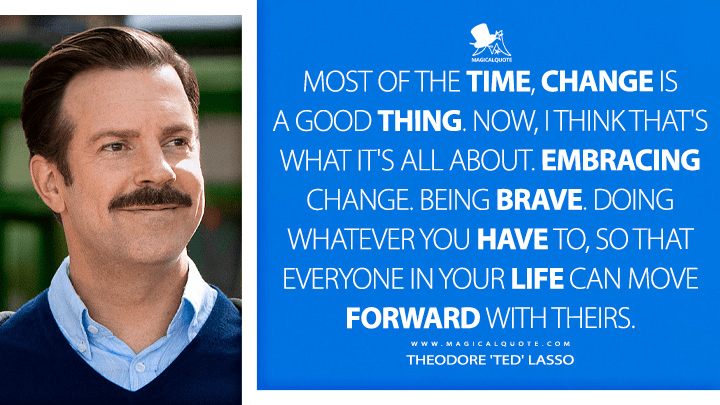
It’s Time for a Change (Matthew 12:38-42)

Later a few religion scholars and Pharisees cornered him. “Teacher, we want to see your credentials. Give us some hard evidence that God is in this. How about a miracle?”

Jesus said, “You’re looking for proof, but you’re looking for the wrong kind. All you want is something to titillate your curiosity, satisfy your lust for miracles. The only proof you’re going to get is what looks like the absence of proof: Jonah-evidence. Like Jonah, three days and nights in the fish’s belly, the Son of Man will be gone three days and nights in a deep grave.

“On Judgment Day, the Ninevites will stand up and give evidence that will condemn this generation, because when Jonah preached to them they changed their lives. A far greater preacher than Jonah is here, and you squabble about ‘proofs.’ On Judgment Day, the Queen of Sheba will come forward and bring evidence that will condemn this generation, because she traveled from a far corner of the earth to listen to wise Solomon. Wisdom far greater than Solomon’s is right in front of you, and you quibble over ‘evidence.’ (The Message)

I believe the greatest miracle and the best evidence of God’s work in the world is a changed life.

I’m not talking about rearranging a few things or tweaking some habits – but a wholesale renovation of the heart. A transformed life is a new life, and not a reconstituted life.

Far too many people put their focus on others changing. They’ve bought into the belief that other people need to see things how they seem them – that everyone else must bend their lives to how they believe things ought to be. But this is really nothing more than sinful pride and hubris, as if the world revolves around me.

Change is for everyone, not just a select few, or for others for whom we believe need to get right or get left. Jesus made a lot of waves with the religious establishment by hobnobbing with the least, the lost, and the lowly of society.

Christ actively sought out the marginal folks, healing many of them from sickness, disease, and sin so that they could be united with God and no longer remain on the fringes of society.

If you’re not in the transformation business, then healing a bunch of low-life people means nothing to you. For the religious leaders of Christ’s day, Jesus was not flexing any real Messiah muscle for them; he was not beating up Roman gentiles and kicking them out of Palestine. So, they wanted a sign from heaven that would authenticate the proper Messiah credentials of Jesus.

But a sign already exists: The sign of Jonah. As Jonah was three days and three nights in the belly of a big fish, so Jesus would be in the earth for three days and nights. The death and resurrection of Jesus is needed, and when faced with this information, the only appropriate response is to change, to do a complete U-turn in life.

Jonah was all but dead. But God caused the great fish to belch up Jonah onto the land. He went forth a changed man. The experience of having stomach fluids work on a person for three days and nights will certainly change you! Jonah was spiritually and physically different – bleached completely white and an incredible sight to see.

Yet another sign exists: The Queen of Sheba’s sign. When she encountered King Solomon, she was overwhelmed with the experience. It changed her. So therefore, how much more ought we to change when encountering Jesus?

The appropriate response to Jesus is a changed life. Jesus was looking for status quo malcontents, for a desire to change. The process of change is hardwired into creation – from seasons of the year to the seasons of people’s lives – all are designed for a sustained process of time to revolutionize us.

Jesus modeled this for us. He switched his address of heaven and moved into our neighborhood in order to bring us new life. Jesus continually extends the invitation to change. All he asks is to let God do the work of change within us, to be patient with the construction of the soul he is doing, and to persist with daily routines of faith.

Yes, it’s time for a change. But change for change’s sake is not the point. Change that reflects godly values is the point. And in order to realize this good sort of change, we must be attentive and hear Holy Scripture, seek the mind and heart of God, and be willing to let Jesus come and have the run of the house.

We must unlearn before we learn. We need to let go so that we can take up. Change involves the humility to admit when we are lost, ask for help, and go in a different direction. New life is not rebranding oneself but is akin to being born again.

Almighty God, we desire to be transformed by you and allow the life of Jesus to be expressed in and through us. We desire to walk in the light of your Spirit. Reveal to us those things in our lives that need to change. Allow us to discern between flesh and spirit so that we can choose a healthy holy path.

Continue to give us spiritual awareness. Transform us into something new altogether. May our old life and old ways disappear, and may new life emerge that will bless both the church and the world, through Jesus Christ our Lord, in the power of the Holy Spirit. Amen.

The Parable of the Weeds (Matthew 13:24-30, 36-43)

Jesus told them another parable: “The kingdom of heaven is like a man who sowed good seed in his field. But while everyone was sleeping, his enemy came and sowed weeds among the wheat, and went away. When the wheat sprouted and formed heads, then the weeds also appeared.

“The owner’s servants came to him and said, ‘Sir, didn’t you sow good seed in your field? Where then did the weeds come from?’

“‘An enemy did this,’ he replied.

“The servants asked him, ‘Do you want us to go and pull them up?’

“‘No,’ he answered, ‘because while you are pulling the weeds, you may uproot the wheat with them. Let both grow together until the harvest. At that time I will tell the harvesters: First collect the weeds and tie them in bundles to be burned; then gather the wheat and bring it into my barn….’”

Then he left the crowd and went into the house. His disciples came to him and said, “Explain to us the parable of the weeds in the field.”

He answered, “The one who sowed the good seed is the Son of Man. The field is the world, and the good seed stands for the people of the kingdom. The weeds are the people of the evil one, and the enemy who sows them is the devil. The harvest is the end of the age, and the harvesters are angels.

“As the weeds are pulled up and burned in the fire, so it will be at the end of the age. The Son of Man will send out his angels, and they will weed out of his kingdom everything that causes sin and all who do evil. They will throw them into the blazing furnace, where there will be weeping and gnashing of teeth. Then the righteous will shine like the sun in the kingdom of their Father. Whoever has ears, let them hear. (New International Version)

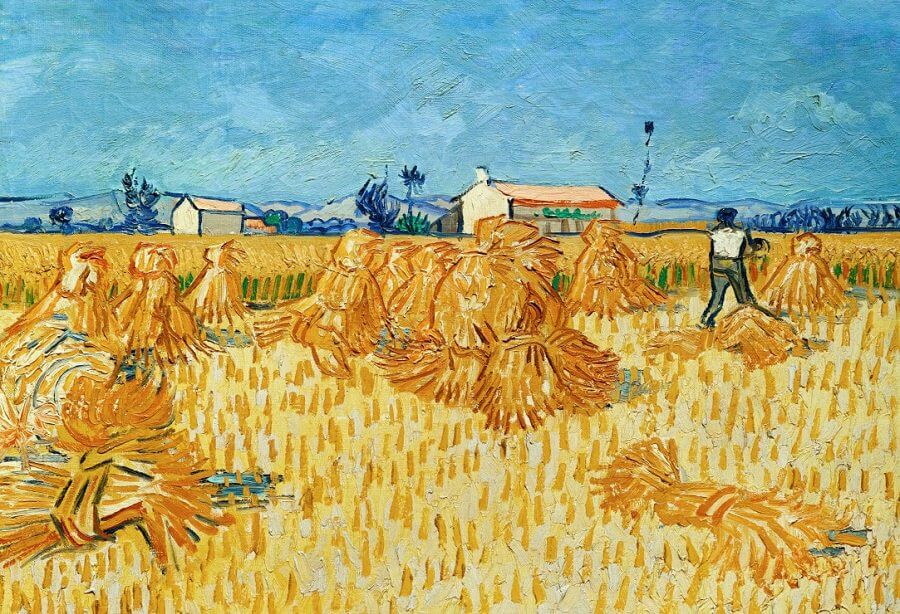
Harvest in Provence, by Vincent Van Gogh, 1888

People of every age struggle with the evil present in this world – and also within the church. For how do we make sense of those who profess Christ but have no fire and passion for their faith? How do we reconcile our own faith with folks in the church who seem to care more about getting their own way than about sacrificing themselves to reach people who do not know Christ. Jesus says, “He who has ears, let him hear.” In other words, listen!

Jesus has informed us that in this present evil age we live in, between his two advents of incarnation and Second Coming, not everything for Christians is going to be rainbows and unicorns.

There are competing pressures on the Church, and sometimes she will fail. The kingdom of God has broken into history and is present, but sin and evil is there, too. So, our focus must be on the hope we have when Christ comes again to judge the living and the dead.

In Christ’s parable of the weeds (or the parable of the wheat and the tares) the enemy of our souls seeks to distract the workers by overwhelming them with evil. If Satan cannot prevent God’s kingdom from being established in the human heart, the devil will try and corrupt the heart by throwing as much evil at it as he can. 

The devil has no problem with people saying they are Christians; the thing Satan has a problem with is people giving themselves unconditionally and unreservedly to God for kingdom business.

“Not everyone who says to me, ‘Lord, Lord,’ will enter the kingdom of heaven, but only the one who does the will of my Father who is in heaven.”

Jesus (Matthew 7:21, NIV)

Where did all these weeds come from?

I’ll frame this question in the modern form that many people have asked me over the years: “If God is a God of love, why is there so much evil in the world?” Or, “If this is Christ’s Church, why is it so messed up?”

Jesus is straightforward in his answer: An enemy did this. In other words, God didn’t plant evil – the source of evil comes from the devil, not God. God’s agenda is for the seed to take root in the human heart and grow into a full-fledged embodiment and commitment to the words and ways of Jesus.

When that growth doesn’t happen, the problem is not because God messed up; it’s because the devil has also done his own work of planting. And the devil wants the opposite of God: to have Christians nit-picking each other like a bunch of crazy chickens, and keeping a demonic pecking order; instead of being the continuing presence of Christ on this earth.

What do we do with all these weeds?

That is, how do we deal with wicked people?  The answer seems obvious: Pull the weeds up and get rid of them. Get rid of wicked people and their wicked behavior. Yet Jesus says in response to this line of reasoning in a clear and unequivocal answer of “No.” But why? Because doing violence to the weeds ends up doing violence to the wheat, as well.

Christ’s answer to the problem of evil is: Let God take care of it. Meanwhile, until that fully happens, we must co-exist with evil, rather than exterminate evil people.

There is always a temptation for believers to force people into the kingdom of God (e.g. the Spanish Inquisition). Yet, at the harvest (the final judgment at the end of the age) evil will be squarely dealt with. Judge Jesus will have the angels separate the wheat from the tares, and the weeds will be burned up.

This teaching from Jesus may open up a whole set of other questions, such as:

  • What am I supposed to do with evil? Just watch it happen? 
  • Am I to let that evil person just be evil? Shouldn’t I give them what they deserve?
  • Shouldn’t I at least tell evil people that they are no good rotten sinners? That they are going to hell because they are wicked?

This doesn’t mean we do nothing. Earlier in Matthew’s Gospel, Jesus has already said: Love your enemies and pray for those who persecute you. (Matthew 5:44)  We are to love and pray people into the kingdom, not force them in.

As for the evil, Jesus will decisively solve the problem of evil, not you, nor me! It isn’t our place to be judge, and if we make it our place, we’ll end up hurting and destroying our brothers and sisters.

Where is evil?

A sobering reality taught by Jesus in this parable is that it’s not a simple matter that we, the wheat are here, and they, the weeds, are over there. It is much more sinister than that; the enemy is within, not out there. 

We have no further to look than in our own hearts and within our own faith communities – which is why we need the lordship of Christ to completely overtake us. Evil is present in the Church, next to the good, seeking to:

  • discourage people in their commitment to Christ
  • offend and hurt others, particularly by overlooking and speaking ill of weaker people
  • step on others in order to get it’s way
  • be a stumbling block to those trying to do God’s will
  • promote ignorance of God’s Word, for no one can live by God’s will if they do not know what it is

The eventual end of sinister people is that, when Christ returns, they will be separated from the righteous and thrown into the fire, just like a harvester would do with a bunch of weeds. As the wicked went about their lives in anger, upsetting others in this life, so they will be tormented in the next.

Conclusion

We may expect God to handle evil in a hurry. But the kingdom of God doesn’t work that way; it’s intended to be planted in the ground, and takes time to grow. While it’s growing, evil is there, like a weed.

Whenever things go sideways because of wickedness, we might expect God to act quickly and drastically to uproot the evil. We may confuse God’s slowness as being uncaring, when in reality it means that God is patient, and desires people to change. And change always begins with you and me.

God Almighty, Creator of heaven and earth, we are a complacent people. While you desire us to be a beacon of light to a world in need, we are preoccupied with all the weeds in the field. We are sorry for the madness unleashed through our own selfish desires. May you plant the seed of love in our hearts for all people, not just our friends. And we shall commit to watering and nurturing that seed with your Word, through Jesus Christ our Lord. Amen.

Develop a Virtuous Ethic (Matthew 7:15-20)

“Beware of false prophets who come disguised as harmless sheep but are really vicious wolves. You can identify them by their fruit, that is, by the way they act. Can you pick grapes from thornbushes, or figs from thistles? A good tree produces good fruit, and a bad tree produces bad fruit. A good tree can’t produce bad fruit, and a bad tree can’t produce good fruit. So every tree that does not produce good fruit is chopped down and thrown into the fire. Yes, just as you can identify a tree by its fruit, so you can identify people by their actions.” (New Living Translation)

God has always been concerned for ethical virtue. And Jesus was always careful to take that ethic and help others identify it and apply it.

Virtuous ethics was well-known in the ancient world, especially thanks to the Greeks and Aristotle – who espoused that a person’s character is the determinative factor in discerning the extent to which that person is a good person.

For Aristotle, ethics includes moral virtues such as courage, temperance, compassion, generosity, honesty, and justice. The person in whom these moral virtues are to be found as steadfast dispositions can be relied on to exhibit a good character, and therefore, is able to make morally correct actions in moral decision-making situations.

For Jesus, religious legalism was a clear outward sign of the lack of inward moral virtue. Bad religion was a result of bad character. Therefore, everyone ought to beware of the religious leaders who exhibited stifling religious legalism.

Nothing can choke the heart and soul out of a person’s true spirituality, and hinder the development of virtue, like the legalist who teaches a precise extra-biblical list of do’s and don’ts.

For many folks, it seems easier to live by the list than to pursue the harder road of developing the character qualities needed for a solid and virtuous religious ethic. Christian discipleship involves growing into spiritual maturity and allowing a seasoned character to shape how we make decisions. 

To do so, we must patiently and consistently follow in the way of Jesus, which is the way of grace and of life.

Today’s Gospel lesson is Christ’s conclusion to his Sermon on the Mount. It is a sermon that sets forth the values of God’s kingdom and devalues the core of legalistic thought. 

I define legalism as a compulsion to spell out, in great detail, how everyone is to live a godly life; purposely going beyond the stated commands of Holy Scripture so that all persons can know exactly what they are supposed to do in any situation.

The problem with this approach to the Christian life is that godliness is merely an outward expression of our ability to hold to the list. It really has nothing to do with cultivating a virtuous ethic of life.

“Do not do what they do, for they do not practice what they preach. They tie up heavy, cumbersome loads and put them on other people’s shoulders, but they themselves are not willing to lift a finger to move them. Everything they do is done for people to see.”

Jesus on the legalist (Matthew 23:3-5, NIV)

The legalistic way of life and religion feeds human pride and boasting; it goes against the inner heart values of humility and meekness in Christ’s Beatitudes. The teaching of Jesus ends up getting lost in trying to do everything right or perfect.

Jesus, through the Sermon on the Mount, led the crowd to a point of decision, letting them know they are at a crossroads. There are two alternatives: Choose the way of life as expressed in Christ’s teaching, or else choose the way of destruction through the legalistic list. In order to press the crowd toward the necessity of choosing wisely, Jesus used metaphors to make his point.

False teaching in the form of legalism is like a wolf in sheep’s clothing. Be wary of people who seem pious and sincere, yet who do not quite pass the smell test. After all, Satan himself, the Apostle Paul once said, masquerades as an angel of light, appearing righteous, yet, is intent on deceiving many. (2 Corinthians 11:13-15)

So, how do we recognize a wolf who spiritually and emotionally devours people, and has no intention of helping but harming? Look at the fruit of the tree. 

Jesus is the good tree. Christ advocates for a searching of the heart. This leads to the result of righteous fruit. The bad tree is also seen by its fruit. Anyone who fails to live the Beatitudes of Jesus will be seen by the rotten fruit of boasting and pride.

False teachers tend to believe they are above others. After all, they are experts at keeping the list of do’s and don’ts! Yet, a false disciple will always be shown by their profound lack of grace, gentleness, and genuine humility. They inevitably advocate for holding to their brand of religion and keeping the unscriptural list. The absence of true righteousness and justice in their lives eventually results in their being cut down and thrown into the fire.

For Jesus, there is no riding the fence between the two alternatives presented – and it is a matter for him of life and death. The way of Jesus leads to life, good fruit, entrance into the kingdom of heaven, and stability. The other alternative ends in destruction, bad fruit and fire, exclusion from the kingdom, and being ruined.

The sobering reality of Christ’s teaching is that many people can be deceived with a devil’s bargain: “Take the nice handy legalistic list and you will become godly. Here are twelve principles to change your life. Follow these rules, pray this prayer, give your money to this, and all will be well.” It is, however, a highway to the grave.

The false teacher proclaims himself a “fruit inspector” and then goes on to judge everyone by his own contrived legalistic list. So then, there is a need to repent of religious lists, political agendas, and teachings which ignore and demean Christ’s Sermon on the Mount.

One of the telltale signs of holding to a conjured list is when we are not honest with one another about our struggles. The bald fact of list-living is that we cannot fulfill it. So, when we know we are not measuring up to the list, the temptation is to keep up appearances as if we are doing just fine. 

List-living eschews showing any weakness or imperfection:

  • I cannot admit my sin to anyone because the list pronounces me a failure if I do. 
  • I cannot enter a deep and prolonged grief over my loss because the list says I need to stay strong. 
  • I cannot profess my doubts about God because the list says if I doubt, I am not a real Christian.

My response and recommendation to legalistic list-living is this: To hell with the list! 

Instead, give praise to Jesus Christ who has given us the way of grace! For it is grace which transforms hearts, turns lives around, and provides genuine joy and satisfaction. If grace is not the answer, we are not asking the right question. The tree of life has an abundant supply of gracious fruit.

The greatest anti-legalistic prayer we can pray is the tried and true ancient prayer of the Church: “Lord Jesus Christ, Son of God, have mercy on me a sinner.”