


Then Jesus came from Galilee to John at the Jordan, to be baptized by him. John would have prevented him, saying, “I need to be baptized by you, and do you come to me?” But Jesus answered him, “Let it be so now, for it is proper for us in this way to fulfill all righteousness.” Then he consented. And when Jesus had been baptized, just as he came up from the water, suddenly the heavens were opened to him and he saw God’s Spirit descending like a dove and alighting on him. And a voice from the heavens said, “This is my Son, the Beloved, with whom I am well pleased.” (New Revised Standard Version)
Today is the Sunday on the Christian Calendar in which the baptism of Jesus is annually remembered. It also marks the first Sunday of the season of Epiphany – a celebration of God’s salvation being extended not only to Jews, but also to Gentiles. In other words, everyone on planet earth is within the scope of Christ’s work of deliverance.
Baptism is important. Remembering is important. Put together, remembering our baptism is highly important. Here’s why….
Baptism is important to Jesus
Baptism is the distinguishing mark or symbol of being a Christian.
The New Testament knows nothing of an unbaptized Christian – it’s biblically oxymoronic. That’s because baptism is tied to our identity as believers. Each individual baptism is based in the baptism of the Lord who, in his Great Commission, told us to baptize in the name of the Father, Son, and Spirit.
The absence of baptism is like a bride without a wedding ring; or a football player not wearing a uniform; or a motorcycle gang without tattoos; or like an Iowa farmer without a Pioneer seed corn hat!
Baptism is the outward sign that we belong to God. It is the distinguishing symbol that we have been adopted by God and will receive all the promises of salvation in Christ.
Christ’s baptism fulfilled all righteousness through identification with repentant people
John the Baptist was understandably hesitant to baptize Jesus; he knew Jesus had no need of repentance. Although Jesus had no sin to confess, his baptism is a powerful symbol of his humility. It anticipates his ministry to people who recognize their need for God.
It was necessary for Jesus to be baptized in order to communicate solidarity with people who are coming to God. “Righteousness” means having a right relationship with both God and other people. By being baptized, Jesus is proclaiming that a renewed and right relationship with God will become a reality through himself.
Baptism is the sign that we belong to God and that our righteousness is tied to our union with Jesus.
It was important for Jesus to identify with sinners; and so, it is important for us, as well. We remember our baptism – that we belong to God – by identifying with “sinners.” We do this by:
- Practicing hospitality (love of strangers)
- Using our spiritual gifts of speaking and serving on their behalf
- Getting to know people very different from ourselves
- Meeting people on their turf (not just ours)
- Showing respect and upholding dignity
- Asking thoughtful and caring questions
- Listening with focused attention
It isn’t what we “do” for people that’s as important as affirming our shared humanity with them. We thus lead folks to the ultimate person who can address the needs of their heart: Jesus.
Christ’s baptism fulfilled all righteousness through the affirmation of witnesses
Before Jesus began his ministry, it was necessary to receive validation of what he was about to teach and do. In ancient Judaism, one of the protections guaranteeing that Scripture would be taught according to the way of God, was through an ordination, of sorts. In order for a new rabbi to become a new rabbi, he needed the laying on of hands from two other rabbis who had authority to do so.
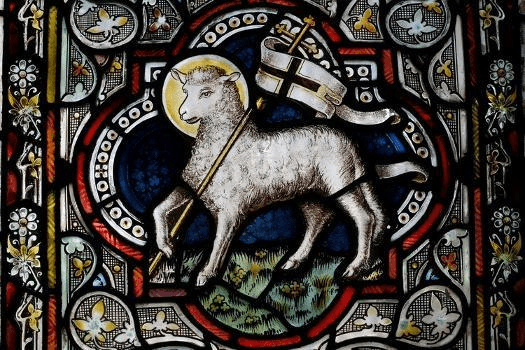
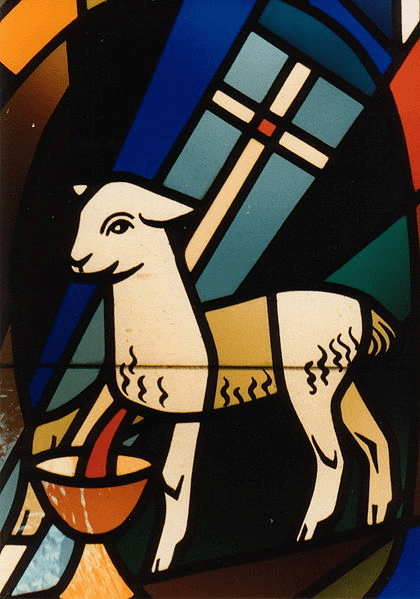
That’s why Christ’s baptism is important. John the Baptist was a powerful teacher and prophet who was recognized by the people as such. John publicly said he wasn’t worthy to carry Jesus’s sandals, that Jesus is the Lamb of God that takes away the sin of the world. So, a baptism by John validated Jesus and inaugurated his ministry.
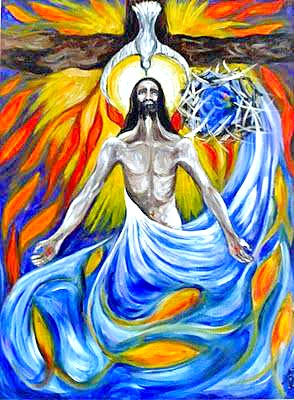
And a second voice – another witness from heaven – affirmed Jesus: “This is my Son, the Beloved, with whom I am well pleased.” Then, the Holy Spirit, in the form of a dove, came upon Jesus. This further affirmed that Jesus would save people, not through arm-twisting and great shows of power, but through humility and gentleness.
Baptism was Christ’s first recorded act as an adult. In some ways, it was his first miracle – the miracle of humility in identifying with sinners.
Remember your baptism
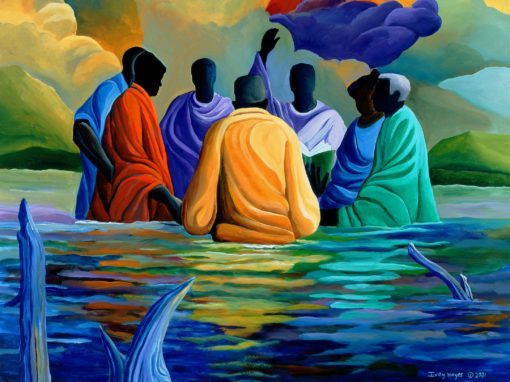
Baptism is a sign and a seal of God’s grace. Just as Christ’s baptism focused all the promises of God in salvation as being fulfilled in one person, so in our baptism we claim all the promises of God as found in Jesus. Water symbolizes new life, God identifying with us – Immanuel, God with us.
In baptism, God promises and seals to us our union with Jesus so that identity is not found in my past and my profession of faith, but in Christ’s past of bringing redemption to us. Baptism does not so much express faith as call one to a life of faith and sets us apart as belonging to God.
Baptism is a visible declaration of an invisible reality: union with Christ. Just as circumcision was the outward visible sign of the old covenant, so baptism is the sign of the new covenant in Christ – available to both male and female – thus opening the way for women to participate fully in the ministry of the gospel.
In particular, infant baptism confirms that salvation is not initiated by us, but by God. It affirms that one is betrothed to God. As a child, then an adult, grows into the faith, it is our task to remember our baptism, to be reminded that God’s mark is upon us, that we belong to the Lord.
God has set us apart to be a holy people, given to Jesus to live as he did. We must never forget that baptism is God’s identifying mark upon us; that our union and solidarity with Jesus is affirmed through this practice.
We are not solitary Christians; we belong to Christ and to one another. Baptism is the initiation rite that takes a lifetime to complete. Therefore, we must struggle together in working out our salvation.
Because of our union with Jesus Christ, we must remember:
- I do not belong to the world. So, I will not live selfishly, only seeking my own comfort agenda. Instead, I will give and serve others from a pure and humble heart.
- I do not belong to sin. So, I will not give myself over to shameful words or actions, to bullying or manipulating people, to throwing fits and pity parties to get my way, nor using my tongue to speak gossip, slander, or suck-up to others. Instead, I will use my speech wisely, building up others through thoughtful and heartfelt encouragement.
- I do not belong to the devil. So, I will not seek his agenda of lying, cheating, stealing, and being bitter.
I belong to Jesus, so therefore:
- I will uphold biblical justice by championing the cause of the fatherless and the widow, the poor and the needy, the least and the lost among us.
- I will love others with all the grace God gives me.
- I will forgive others because Christ has forgiven me.
- I will consider others better than myself by embracing the humility of Christ.
- I will hunger and thirst for righteousness by seeking and maintaining right relations with others.
- I will seek peace and pursue it.
- I will, give myself to my Lord and Savior Jesus Christ my Savior and Lord – completely and thoroughly, unabashedly and unreservedly.
- I will live into my baptism and remember it always, because I belong to Jesus!
Creator God, our soul’s delight, your voice thunders over the waters, liberating the future from the past. In the Spirit’s power and the waters of rebirth, Jesus was declared your blessed and beloved Son; may we recall our baptism, and be disciples of the Anointed One. Amen.




 Rev. Tim Ehrhardt