Jesus the Messiah (Matthew 1:1-17)

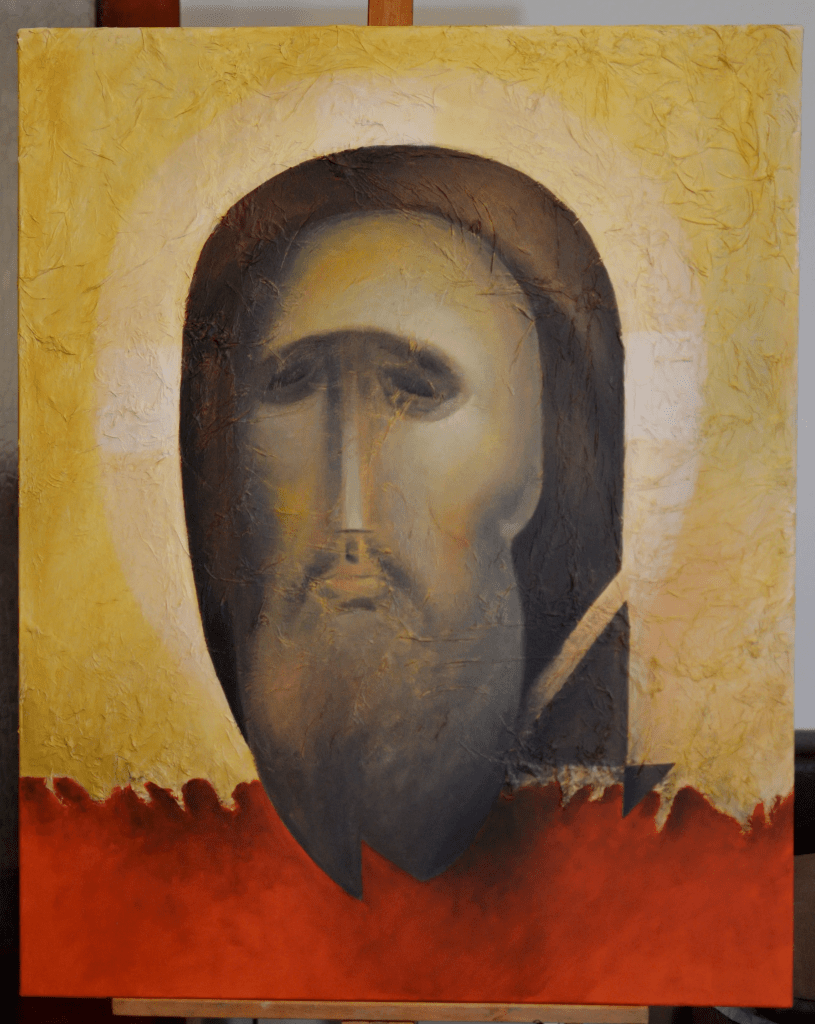
Jesus Christ by Liviu Dumitrescu, 2017

This is the genealogy of Jesus the Messiah the son of David, the son of Abraham:

Abraham was the father of Isaac,

Isaac the father of Jacob,

Jacob the father of Judah and his brothers,

Judah the father of Perez and Zerah, whose mother was Tamar,

Perez the father of Hezron,

Hezron the father of Ram,

Ram the father of Amminadab,

Amminadab the father of Nahshon,

Nahshon the father of Salmon,

Salmon the father of Boaz, whose mother was Rahab,

Boaz the father of Obed, whose mother was Ruth,

Obed the father of Jesse,

and Jesse the father of King David.

David was the father of Solomon, whose mother had been Uriah’s wife,

Solomon the father of Rehoboam,

Rehoboam the father of Abijah,

Abijah the father of Asa,

Asa the father of Jehoshaphat,

Jehoshaphat the father of Jehoram,

Jehoram the father of Uzziah,

Uzziah the father of Jotham,

Jotham the father of Ahaz,

Ahaz the father of Hezekiah,

Hezekiah the father of Manasseh,

Manasseh the father of Amon,

Amon the father of Josiah,

and Josiah the father of Jeconiah and his brothers at the time of the exile to Babylon.

After the exile to Babylon:

Jeconiah was the father of Shealtiel,

Shealtiel the father of Zerubbabel,

Zerubbabel the father of Abihud,

Abihud the father of Eliakim,

Eliakim the father of Azor,

Azor the father of Zadok,

Zadok the father of Akim,

Akim the father of Elihud,

Elihud the father of Eleazar,

Eleazar the father of Matthan,

Matthan the father of Jacob,

and Jacob the father of Joseph, the husband of Mary, and Mary was the mother of Jesus who is called the Messiah.

Thus there were fourteen generations in all from Abraham to David, fourteen from David to the exile to Babylon, and fourteen from the exile to the Messiah. (New International Version)
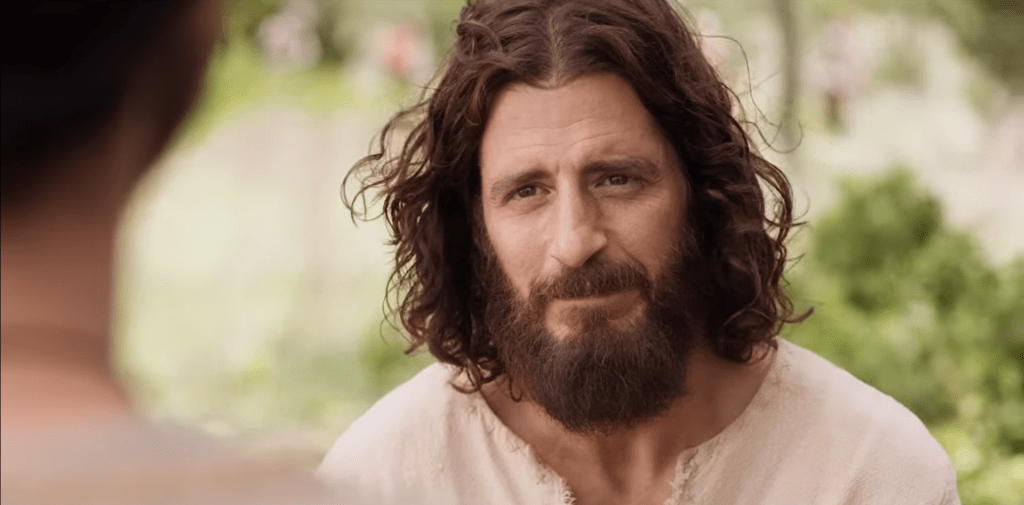
Jonathan Roumie as Jesus in the series “The Chosen”

You might be saying to yourself, “Really? You’re doing a reflection on this, a genealogy? Are you kidding?”

Why? Because all of Holy Scripture drips with grace, including genealogies.

The gospel of grace is the good news of Jesus; and, through the genealogy, we have the opportunity to understand and appreciate Christ better.

At the heart of Matthew’s gospel is a presentation of Jesus and Christ’s teaching which centers on the kingdom of God. Jesus is the King who fulfills all Old Testament promises. The genealogy is more than a chronicle of Christ’s lineage; it is a theological statement that Jesus is the promised Messiah, the anointed King of Israel, and the Savior of the world.

Who is Jesus?

Jesus is the Christ. The name “Jesus” means “God is salvation.” And “Christ” means “anointed one” (king). The name “Jesus Christ” communicates his person and his mission; he is the sovereign king who brings deliverance. 

Matthew, throughout his Gospel, takes pain to convey that Jesus is the King over an ethical kingdom of righteousness, and not a political kingdom. Therefore, Jesus is unlike King Herod or any other earthly king who seeks to have power and serve his own interests. Instead, Jesus uses his authority to serve others through love and grace; he doesn’t make subjects by coercion.

Jesus is the son of David 

Matthew establishes Christ’s pedigree by saying that Jesus was not some new kid on the block; he was anticipated for centuries. Jesus is the fulfillment of the covenant given to King David by God:

When the time comes for you to die, I will raise up a descendant of yours after you, one of your own sons, to succeed you, and I will establish his kingship. He is the one who will build me a temple, and I will establish his throne forever. I will become his father and he will become my son, and I’ll never withdraw my faithful love from him as I did from the one before you. I’ll install him in my house and in my kingdom forever, and his throne will be established forever. (1 Chronicles 17:11-14, CEB)

Jesus is a king in the same line and spirit of David. For example, when David became king, he didn’t immediately set out to annihilate all of the previous king’s (Saul) sons. That’s often how kings did it back then. Instead, David used his power to scan the land and show kindness to them. (2 Samuel 9:1-16)

Jesus is the son of Abraham

Matthew also establishes Christ’s pedigree as the rightful king of the universe by saying that Jesus is the fulfillment of the covenant given to Abraham:

I will make you a great nation,
I will bless you.
I will make your name great,
and you will be a blessing.
I will bless those who bless you,
and whoever curses you, I will curse.
Through you every family on earth will be blessed.” (Genesis 12:2-3, GW)
                 

Abraham was called by God because of sheer grace. There was nothing special about Abraham, other than the fact that God called him out of a pagan land to create a people for God’s own possession. Jesus is the fulfillment of that promise; all nations are blessed by coming to Christ the Lord and King.

From Abraham to David

Matthew made a statement about God through the genealogy: the Lord is merciful and full of grace. Grace is seen in the inclusion of four women: Tamar, Rahab, Ruth, and Bathsheba. 

The use of genealogy was a conventional form in the ancient world for establishing the credibility of a king’s right to rule. What was highly unconventional was including women. Matthew purposefully included them for two reasons:

  1. Women are central to the kingdom of God and play a pivotal role in the New Covenant.
  2. The women in the genealogy are Gentiles and were all notorious for their sexual exploits. 

Matthew highlighted a gospel of grace. No matter your gender, race, or even sordid past, the kingdom message is for everyone and is not an exclusive club. 

God is acting to redeem and reconcile the world. The gospel is not bound in any way by scandal, race, or gender. Jesus is the Savior and uses whomever he wants to extend his gospel of grace. 

From Solomon to the Exile

The men listed in this part of the genealogy are all kings; most of them not very good kings; and many of them downright evil. Because of this, God’s wrath was aroused, and the people were expelled from the land for following the unrighteous kings. 

However, grace overcomes everything. God’s purposes are still providentially accomplished despite human failure and sin. The lineage of Jesus was neither cut off nor thwarted because of powerful men who went in the wrong direction. In the end, God’s promises prevail.

Though the mountains be shaken
    and the hills be removed,
yet my unfailing love for you will not be shaken
    nor my covenant of peace be removed,”
    says the Lord, who has compassion on you. (Isaiah 54:10, NIV)

From the Exile to Christ

God is faithful, despite human unfaithfulness. Even though the people didn’t listen to the prophets during the reign of the earthly kings, the Lord quietly preserved a remnant who carried on the kingdom ethic. 

“I myself will gather the remnant of my flock out of all the lands where I have driven them, and I will bring them back to their fold, and they shall be fruitful and multiply.” (Jeremiah 23:3, NRSV)

Instead of extermination, God sent a Savior to settle the sin issue once for all. God’s grace and providence reign supreme in the universe.

Jesus is the Promised King

Matthew’s genealogy is presented with 3 sets of 14. The number 14 is symbolic: the name “David” has three consonants in Hebrew, and the number value of that name is 4+6+4=14. By modern standards, this doesn’t make much sense. However, by ancient standards, this was a conventional use of genealogy. And so, Matthew’s original readers got the point that David is the center of the genealogy; and Jesus is the promised king to come. It’s a creative way of pointing to Jesus, which connected to people accustomed to using numerology for making arguments.

It’s good to think about avenues of communication that speak to the people we want to reach. For example, in raising three girls, playing tea party with dolls was a way to love them and have a conversation on their level.  

In other words, we must ask: How do I need to change in order to reach the people I want to reach? (and not how others need to conform to what I’m doing).

Conclusion

God acted in history by sending Jesus, who is the rightful king of the universe. Christ is the Anointed One, sent to restore people to God. He is our peace, and our hope. To walk in the footsteps of Jesus is to walk in grace, not self-serving, but looking to use what has been given us to live as God’s subjects in the kingdom. 

May we make our own theological statement of who God is by the manner in which we live and speak, truly having Jesus at the center of all we do and say.

Soli Deo Gloria

A Testimony of Faith (John 3:31-36)

The one who comes from above is above all; the one who is of the earth belongs to the earth and speaks about earthly things. The one who comes from heaven is above all. He testifies to what he has seen and heard, yet no one accepts his testimony. Whoever has accepted his testimony has certified this, that God is true. He whom God has sent speaks the words of God, for he gives the Spirit without measure. The Father loves the Son and has placed all things in his hands. Whoever believes in the Son has eternal life; whoever disobeys the Son will not see life but must endure God’s wrath. (New Revised Standard Version)

I, personally, have found Jesus to be precisely whom he claims to be. 

I was raised in the church. But it didn’t stick. The most boring hour of every week for me was having to endure the Sunday morning worship service. It seemed like a major waste of my time. I could be reading the funnies (the comic strips in the Sunday morning newspaper), watching TV, or playing outside. I get a weekend off from school and I have to do this! Sheesh.

There is, I eventually discovered, often a difference between what we humans do in our lives and our institutions, and Jesus. That’s not necessarily a knock on the church. It’s just the observation that we sinful folk very often fall short of the glory of God – which is why we need Jesus in the first place.

We as people know how to love, yet we love imperfectly. We understand that kindness and compassion are needed, but we tend to withhold it from so many of our fellow humans. Jesus, on the other hand, as the divine/human figure who straddles between both heaven and earth, always loves consistently and perfectly; and demonstrates compassionate kindness in ways which connect deeply with us.

It took me a while to see this, but by God’s grace, I mercifully came to experience the love of God in Christ and the powerful enablement of God’s Spirit.

I have come to accept Christ’s enduring testimony as gracious, truthful, and life-giving. I have wholeheartedly embraced the New Testament Gospel accounts of his birth, life, teaching, death, resurrection, and ascension. This belief came neither quickly nor easily for me – it resulted from an honest straightforward reading of the Bible; and the patient wooing of the Holy Spirit.

Oh, I certainly could get quite cerebral and offer a Christian apologetic of the faith that gets down to the nitty gritty of theology, both historical and contemporary. But the older I get, the more I experience that when I get down, I can’t get back up again. There’s much more to Christianity than ideas and philosophical arguments.

Truth is, it really isn’t my job to convince you of Jesus Christ’s authenticity and trustworthiness. That’s the work of the Holy Spirit. Instead, it is my task to bear witness of the things I have seen and heard concerning Jesus. 

My life has been thoroughly turned upside-down because of Jesus. With Jesus, I have been invited into the very life of God. By the wounds of Jesus, I have experienced healing of damaged emotions and recovery from spiritual hurts inflicted by others. Through union with Christ, I have grace and forgiveness of things I have done and left undone. With Jesus as my Friend, I enjoy loving attention and am never dismissed by him, nor do I ever have my experiences and feelings invalidated by him.

For those who have not read the Gospel accounts and refuse Christ, then, for honesty’s sake, please have the integrity to give Jesus a hearing before you dismiss him with a slight of hand. It’s one thing to genuinely not know much about Jesus, and it is quite another thing to ignore him when you have knowledge about how to find out about him.

For those of us who have read the New Testament Gospels and accept the testimony of Jesus, we come back again and again to his life-giving words and seek continually to follow him in his way of mercy, purity, and peace. We bear witness to how Jesus has changed our lives and offers a life worth living.

Everyone with faith in Jesus has a life-giving connection with God. Those who don’t, don’t. If you disagree with this, then contend with Jesus himself. Give him a hearing. Watch him in action. Observe how he deals with people. See if he lives up to his words. Then, bear witness to what you have seen and heard.

In the power of the Spirit and in union with Christ, I pray to you, the God and Father of all:

For empowerment by the Spirit, that I may be a faithful witness

For those who wait on You, that they may find renewal

For all people, that they may acknowledge the kingdom of the ascended Christ

For all who are struggling with broken relationships

I commend myself and all for whom I pray, to Your mercy and protection through Jesus Christ, my Lord and Savior. Amen.

1 John 2:18-25 – Who Is the Antichrist?

Dear children, this is the last hour; and as you have heard that the antichrist is coming, even now many antichrists have come. This is how we know it is the last hour. They went out from us, but they did not really belong to us. For if they had belonged to us, they would have remained with us; but their going showed that none of them belonged to us.

But you have an anointing from the Holy One, and all of you know the truth. I do not write to you because you do not know the truth, but because you do know it and because no lie comes from the truth. Who is the liar? It is whoever denies that Jesus is the Christ. Such a person is the antichrist—denying the Father and the Son. No one who denies the Son has the Father; whoever acknowledges the Son has the Father also.

As for you, see that what you have heard from the beginning remains in you. If it does, you also will remain in the Son and in the Father. And this is what he promised us—eternal life. (New International Version)

Throughout Christian history there have been churches, ministers, and individuals who have advanced certain persons as being the “antichrist,” enemies of Christ and his followers.  

Attempting to identify a particular enemy comes from a theological disposition that believes an antichrist is the first link in a chain of end-times events. Typically, a ruthless or dictatorial ruler, like Mussolini, Hitler, or Stalin received the label of “antichrist.” 

For some Protestants, the papacy continually gets set apart as being the antichrist. Seems like, ever since the Reformation, the Pope has received the dubious title from anti-Catholics. Today, it is standard fare for some evangelical end-times watchers to bemoan the state of the world and lay the blame in a particular person who is outside their own little group. 

Yet, the term “antichrist” has not typically been used as a title for one enemy setting-off a bomb of world-ending trauma. The earliest church, following the teaching of the Apostle John, understood antichrist not as an individual, but as a class of people who deny Jesus is the Christ. 

Indeed, John plainly said the antichrist is anyone who forsakes the Father and the Son. What is so disturbing about John’s talk of antichrist is that these persons arise from within the church, not outside of it.   

It has become too vogue in some circles of Christian evangelicalism to identify and label enemies outside their small groups, leading to a xenophobic attitude of distrust and finger-pointing toward all kinds of people.  

The fingers, however, must first be directed within our own house. It behooves us all to take up the instruction of John to internalize and remember sound teaching. If what you heard from the beginning abides in you, then you too will abide in the Son and in the Father.   

We are to embrace basic core cardinal truth given us. Then we will not be deceived by some supposed enlightened teacher who detracts from Trinitarian theology.   

It is the last hour – but not because of some politician, tyrant, or even religious figure. It is the end-times because Jesus has accomplished redemption for us, and the only event left is the return of Christ to judge the living and the dead.   

Therefore, we must all live with the possibility and tension that it could be today. We are to be prepared. That preparation comes through proclaiming Jesus in all we say and do – not by obnoxiously foaming at the mouth, fearmongering, or pointing fingers at those we don’t like. Rather, we emulate our Lord in the way of loving God and neighbor. 

When a person or group gets labeled by us as “enemy” or “antichrist” then our hate for them seems divinely justified and sanctioned. God, however, is the judge; not us. We are to follow the ethical instruction of Jesus to love our enemies, not curse them through slapping a moniker of “monster,” “devil,” “animal,” or some other non-human label on them. 

Weaponizing words in a verbal war which supposedly defends Christianity only shifts the focus off Jesus and onto how horrible another is. One of the great problems of our world, including many corners of Christianity, is the assumption we already know what another believes. So, we fail to listen. We do not care as we ought because we’ve already formed our judgments. 

“The moment someone attaches you to a philosophy or a movement, then they assign all the baggage and all the rest of the philosophy that goes with it to you. And when you want to have a conversation, they will assert that they already know everything important there is to know about you because of that association. And that’s not the way to have a conversation.”

Neil deGrasse Tyson

Within Christianity, there is much more we have in common with one another across the various traditions than that which is different. Yes, spiritual charlatans exist. Let’s just make sure we have done our due diligence in listening to another and being curious before we form our opinions. 

Despite our differences, the exchange of ideas and debate among various Christian groups in the early centuries of the church helped to clarify and form orthodox Christology. While it may be difficult to avoid labeling individuals in an increasingly complex society, we must act in good faith. 

Mighty God, you sent the Son to this earth to fulfill all your good promises. Let me embrace Jesus so fully and completely that the truth of his reality comes pouring out of me in every area of my life.  In his name I pray. Amen. 

1 John 2:18-25 – Who Is Really the Enemy?

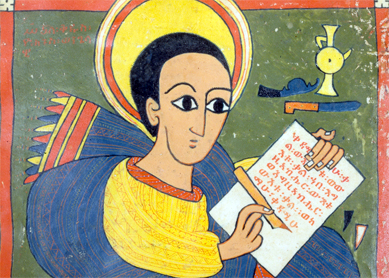
Ethiopian Orthodox Church depiction of St. John the Apostle and Evangelist, c.1540 C.E.

My dear children, the end is near! You have heard that the enemy of Christ is coming. And now many enemies of Christ are already here. So, we know that the end is near. These enemies were in our group, but they left us. They did not really belong with us. If they were really part of our group, they would have stayed with us. But they left. This shows that none of them really belonged with us.

You have the gift that the Holy One gave you. So, you all know the truth. Do you think I am writing this letter because you don’t know the truth? No, I am writing because you do know the truth. And you know that no lie comes from the truth.

So, who is the liar? It is the one who says Jesus is not the Messiah. Whoever says that is the enemy of Christ—the one who does not believe in the Father or in his Son. Whoever does not believe in the Son does not have the Father, but whoever accepts the Son has the Father too.

Be sure that you continue to follow the teaching you heard from the beginning. If you do that, you will always be in the Son and in the Father. And this is what the Son promised us—eternal life. (ERV)

Throughout Christian history there have been churches, ministers, and individuals who have advanced certain persons as being the “antichrist,” enemies of Christ and his followers.

Attempting to identify a particular enemy comes from a theological disposition that believes an antichrist is the first link in a chain of end-times events. Typically, a ruthless or dictatorial ruler, like Mussolini, Hitler, or Stalin received the label of “antichrist.”  For some Protestants, the papacy continually gets set apart as being the antichrist. Even recently, Pope Francis received the dubious title from a group of end-times watchers because they claimed he allowed people to treat him as if he were Jesus, accepting worship and praise.

Yet, the term “antichrist” has not typically been used as a title for one enemy setting-off a bomb of world-ending trauma. The earliest church, following the teaching of the Apostle John, understood antichrist not as an individual, but as a class of people who deny Jesus is the Christ. Indeed, John plainly said the antichrist is anyone who forsakes the Father and the Son. What is so disturbing about John’s talk of antichrist is that these persons arise from within the church, not outside of it.

It has become much too vogue in some circles of Christian evangelicalism to identify and label enemies outside their small groups, leading to a xenophobic attitude of distrust and finger-pointing toward all kinds of people. 

The fingers, however, must first be directed within our own house. It behooves us all to take up the instruction of John to let what we have heard from the beginning abide in us. If what you heard from the beginning abides in you, then you too will abide in the Son and in the Father. 

We are to embrace basic core cardinal truth given us. Then we will not be deceived by some supposed enlightened teacher who detracts from Trinitarian theology.

It is the last hour – but not because of some politician, tyrant, or even religious figure. It is the end-times because Jesus has accomplished redemption for us, and the only event left is the return of Jesus to judge the living and the dead. 

Therefore, we must all live with the possibility and tension that it could be today. We are to be prepared. That preparation comes through proclaiming Jesus in all we say and do – not by obnoxiously ginning up fearmongering through pointing fingers at those we don’t like. Rather, we emulate our Lord in the way of loving God and neighbor.

When a person or group gets labeled by us as “enemy” or “antichrist” then our hate for them seems divinely justified and sanctioned. God, however, is the judge; not us. We are to follow the ethical instruction of Jesus to love our enemies, not curse them through slapping a moniker of “monster,” “devil,” “animal,” or some other non-human label on them.

Weaponizing words in a verbal war which supposedly defends Christianity only shifts the focus off Jesus and onto how horrible another is. One of the great problems of our world, including many corners of Christianity, is that we assume we already know what another believes. So, we fail to listen. We cannot care as we ought because we’ve already formed our judgment.

“The moment someone attaches you to a philosophy or a movement, then they assign all the baggage and all the rest of the philosophy that goes with it to you. And when you want to have a conversation, they will assert that they already know everything important there is to know about you because of that association. And that’s not the way to have a conversation.”

Neil deGrasse Tyson

Within Christianity, there is much more we have in common with one another across the various traditions than that which is different. Yes, spiritual charlatans exist. Let’s just make sure we have done our due diligence in listening to another and being curious before we form our opinions.

Despite our differences, the exchange of ideas and debate among various Christian groups in the early centuries of the church helped to clarify and form a sound Christology. While it may be difficult to avoid labeling individuals in an increasingly complex society, we must act in good faith.

Mighty God, you sent the Son to this earth to fulfill all your good promises. Let me embrace Jesus so fully and completely that the truth of his reality comes pouring out of me in every area of my life.  In his name I pray. Amen.