The Motivation of a Christian (Acts 4:1-12)

The Great Sanhedrin (Jewish ruling council) by Edouard Moyse, 1868

The priests and the captain of the temple guard and the Sadducees came up to Peter and John while they were speaking to the people. They were greatly disturbed because the apostles were teaching the people, proclaiming in Jesus the resurrection of the dead. They seized Peter and John and, because it was evening, they put them in jail until the next day. But many who heard the message believed; so, the number of men who believed grew to about five thousand.

The next day the rulers, the elders and the teachers of the law met in Jerusalem. Annas the high priest was there, and so were Caiaphas, John, Alexander and others of the high priest’s family. They had Peter and John brought before them and began to question them: “By what power or what name did you do this?”

Then Peter, filled with the Holy Spirit, said to them: “Rulers and elders of the people! If we are being called to account today for an act of kindness shown to a man who was lame and are being asked how he was healed, then know this, you and all the people of Israel: It is by the name of Jesus Christ of Nazareth, whom you crucified but whom God raised from the dead, that this man stands before you healed. Jesus is

“‘the stone you builders rejected,
    which has become the cornerstone.’

Salvation is found in no one else, for there is no other name under heaven given to mankind by which we must be saved.” (New International Version)

What motivates you? What is it that moves you to speak and act? What is your motivation in life? 

The answer to the question of motivation says a lot about the person. 

People are motivated by all sorts of things: to prove someone else wrong; to make a lot of money; to become famous; to help underprivileged kids in the inner city; to take on the problem of the world’s sex trade; to quietly make God known in everything. 

As you well know, our motivations can be rather selfish, or quite altruistic. Or both.

In today’s New Testament lesson, the Apostle Peter offered to the nation’s leaders his motivation. Peter was moved to have a dedicated ministry of proclaiming Jesus and healing in his name. 

Whereas the ruling religious authorities thought Jesus just another man, Peter’s conviction was that Jesus has the power to save. The name of Jesus Christ is the one which saves.

Our words and actions – what we actually say and do in life – comes from our deepest motivations. 

Peter’s proclamation the gospel through both word and deed came from his deep wellspring of knowing Christ. Peter believed that Jesus could deliver on life’s most pressing problems of guilt, shame, and sin.

For Christians everywhere, motivation comes from knowing Christ Jesus as Lord and him crucified, died, risen from death, ascended, and coming again. This, ideally, is an intrinsic motivation – and not simply something we feel we “have to” believe.

Intrinsic motivation is an internal desire, inspiring us to perform particular tasks. When we are intrinsically motivated, we start enjoying even those tasks that we never thought of as bringing joy.

I’m not particularly fond of housework. I don’t get an internal kick out of pushing a vacuum, doing laundry, or cleaning the house. But because my dear wife is limited in what she can do, I find that I actually enjoy these tasks. You see, I clearly link what I’m doing with my love for her – which, for me, makes all the difference. My intrinsic motivation to love my wife works it’s way out in the loving service of doing the necessary mundane tasks around the house.

An intrinsic motivation allows me to connect the task at hand as the good and beautiful thing to do.

Extrinsic motivation, on the other hand, comes from external factors exerting themselves on our lives. This isn’t necessarily a bad thing. When someone holds us accountable for following through on expectations, this is a good thing. Laws exist, ideally, as positive extrinsic motivations to do the right thing.

Being motivated to get good grades, a better job, or a trophy can be a powerful means of acting and speaking for good in the world. It’s just that sometimes we lose sight of why we do what we do, In those times, we then fail to connect with our original intrinsic desires to make a difference.

Unfortunately, a lot of churches get stuck here – simply doing the same things over and over and forgetting why they’re doing it – maybe acting a lot like the religious leaders of Peter’s day. Churches can too easily stray from making disciples of Christ to making followers of tradition. And then they wonder why they aren’t reaching anyone.

If we lack motivation, then we need to run to Jesus. When the believer’s deepest needs are met in Christ, the supernatural by-product is being moved to make Jesus known in every sphere of life. 

May it be so, to the glory of God.

Saving God, you have made your glory and grace known to me through your Son, the Lord Jesus.  May I know him better and better so that the motivations that impel me in life are pure, holy, righteous, and, above all, gracious. Amen.

Be Generous (Mark 12:41-44)

The Widow’s Mite by James Christensen

Jesus sat down opposite the place where the offerings were put and watched the crowd putting their money into the temple treasury. Many rich people threw in large amounts. But a poor widow came and put in two very small copper coins, worth only a few cents.

Calling his disciples to him, Jesus said, “Truly I tell you; this poor widow has put more into the treasury than all the others. They all gave out of their wealth; but she, out of her poverty, put in everything—all she had to live on.” (New International Version)

Money. Can’t live without it; can’t live with it. *Sigh*

If there’s a litmus test of one’s true benevolence and spirituality, it’s how money is handled and/or mishandled. And it isn’t as cut-and-dried as giving large sums of it away.

In today’s short Gospel lesson, the offerings of rich people were unimpressive to Jesus. To him, their big donations are insignificant.

On the other hand, a poor widow’s measly offering is validated as a rich contribution. In giving everything, Jesus holds up the widow as an example for us to follow.

This raises a natural and interesting question: Does this mean everyone should give everything they have? Maybe. Maybe not. Yet perhaps the very question betrays how we tend to think about money – that it’s ours, we earned it, and we can do whatever we want with it.

But the fact of the matter is that we really own nothing. We are merely stewards, entrusted with using that which has been graciously given to us by God. The Lord is the owner of it all. It was never really ours to begin with.

Taken from this perspective, anything we hold onto and refuse to let go, no matter how large or small, is a form of theft. We have taken something that doesn’t belong to us. We aren’t satisfied with being stewards; we want to be owners and masters.

What you do with your money shows your allegiance to the true Owner of it. If it belongs to Caesar, well then, go ahead and give it to him. And if it belongs to God, then there isn’t an issue in distributing money in ways which benefit humanity and uplift the poor.

The widow knew that her money, what little of it she had, belonged to God. She seemed to understand that God’s values are very different from earthly values. The kingdom of heaven expects us to hold all things, money included, with open hands. Whereas the kingdoms of this world fully expect that people will hold their money with tight fists – which is why we have so many layers of cybersecurity around our assets.

Money is a means to an end and not the end itself. It is the means to ensure the welfare of the common good of all persons. It’s a tool to shape a better society, built not on the backs of the poor, but for the benefit of the needy so that everyone can participate fully in the community.

To build a petty kingdom and become master of a small world is nothing more than stealing from God and withholding resources where they are needed.

And to make things more complicated and challenging, in today’s world, time is money. It’s easy to write a check, transfer some funds, or allocate some resources for others. However, it is never easy to grace people with the gift of time. Relational connection takes time and effort – the kind of time many people believe they do not have. Yet, time also belongs to God, and it is to be stewarded with care, just like our money.

The Poor Widow’s Offering by Unknown artist

Let’s come back to the poor widow. After all, she is our example of true generosity.

In ancient Israel, those in poverty were not required to give. So, whenever the poor did so, they simply gave because they believed in the need to maintain all it took for the worship of God to happen. The widow was under no compulsion to give anything, let alone everything she had. She seemed to understand what the Apostle Paul discovered later:

The person who sows sparingly will also reap sparingly, and the person who sows generously will also reap generously. Each one of you should give just as he has decided in his heart, not reluctantly or under compulsion, because God loves a cheerful giver. And God is able to make all grace overflow to you so that because you have enough of everything in every way at all times, you will overflow in every good work. (2 Corinthians 9:6-8, NET)

A spirit of generosity is to be ubiquitous throughout Christianity. It is a spirit that doesn’t let the left hand know what the right hand is giving (Matthew 6:3). A generous spirit rightly discerns that where your treasure is, there your heart will be also (Matthew 6:21).

And the guide of altruistic giving is savvy to the reality that the accumulation of money often leads to the love of money. So, the generous person keeps temptation at bay by withholding love toward things so that love can be lavishly given to people. For some people, eager for money, have wandered from the faith and pierced themselves with many griefs. (1 Timothy 6:10)

Like the poor widow, we are to put our hope in God, who richly provides everything for our enjoyment.

Eternal God, we pray that stewardship will be our way of life. We acknowledge You as the source of all we have and all we are.

Loving Creator, help us to place You first in our lives by being prayerful, loving, and caring for our families neighbors in need, and by becoming less preoccupied with material things.

Sovereign Lord, help us to hear your call to be good stewards, caretakers, and managers of all your gifts by sharing them for your purposes. May Your priorities be our priorities. May we have an active and generous faith.

Blessed God, help us to serve the Church, our communities, and our world with Your good and gracious gifts; and with joyful and grateful heart, through Jesus Christ our Lord. Amen.

Overwhelming Victory in Overcoming Suffering (Romans 8:31-39)

What shall we say about such wonderful things as these? If God is for us, who can ever be against us? Since he did not spare even his own Son but gave him up for us all, won’t he also give us everything else? Who dares accuse us whom God has chosen for his own? No one—for God himself has given us right standing with himself. Who then will condemn us? No one—for Christ Jesus died for us and was raised to life for us, and he is sitting in the place of honor at God’s right hand, pleading for us.

Can anything ever separate us from Christ’s love? Does it mean he no longer loves us if we have trouble or calamity, or are persecuted, or hungry, or destitute, or in danger, or threatened with death? (As the Scriptures say, “For your sake we are killed every day; we are being slaughtered like sheep.”) No, despite all these things, overwhelming victory is ours through Christ, who loved us.

And I am convinced that nothing can ever separate us from God’s love. Neither death nor life, neither angels nor demons, neither our fears for today nor our worries about tomorrow—not even the powers of hell can separate us from God’s love. No power in the sky above or in the earth below—indeed, nothing in all creation will ever be able to separate us from the love of God that is revealed in Christ Jesus our Lord. (New Living Translation)

There is a way to overcome suffering; there’s a path you can follow, leading to the overcoming of your struggle.

That struggle with suffering comes in many forms:

  • Wrestling with guilt and shame;
  • Dealing with the meanness of others
  • Chronic physical pain
  • Continual financial trouble
  • Ongoing estranged relationships
  • Past bad decisions that keep coming up to bite you in the present
  • Constant feelings of angst about the state of the world’s great needs and problems
  • A crippling Anfechtung (spiritual oppression and depression)

These and a hundred other reasons for suffering in this broken old world can discourage and debilitate us.

I invite you to consider that the road ahead will likely be counter-intuitive to how you may currently be thinking about overcoming suffering. In fact, it might be so far off your radar that you might simply discard what I’m about to say to you.

But before I get to that, I’ll say first, that suffering is endemic to the human condition. Everyone suffers. Since we live in a fallen world, there is not one person who hasn’t suffered in some way, whether it is physical, spiritual, mental, or emotional. 

None of us will ever be immune to affliction. There is no way to insulate yourself from pain. If you are not currently suffering in some way, it means that you are either coming off a time of hardship or are about to enter a new period of distress.

Holiness and godliness don’t keep suffering at bay. Just the opposite. The Lord Jesus promised us that following him will involve suffering: 

“While you are in this world, you will have to suffer.” (John 16:33)

The Apostle Peter, who was part of Christ’s inner circle of followers, came to understand the reality of suffering. Peter understood that all Christians are not above their Lord.  If Christ suffered, his followers shall suffer, as well.

“Dear friends, don’t be surprised or shocked that you are going through testing that is like walking through fire. Be glad for the chance to suffer as Christ suffered.” (1 Peter 4:12-13, CEV) 

James, the Lord’s brother, wisely discerned that suffering could become a teacher for the Christian; all the adversity the believer faces are the means of producing maturity, strengthening faith, and developing patience.

“My friends, be glad, even if you have a lot of trouble. You know that you learn to endure by having your faith tested.” (James 1:2-3, CEV) 

The Apostle Paul was more acquainted with suffering than any follower of Jesus; he continually faced terrible circumstances. His reflections on the matter are sage and true:

“Anyone who belongs to Christ Jesus and wants to live right will have trouble from others.” (2 Timothy 3:12, CEV) 

“Suffering helps us to endure. And endurance builds character, which gives us a hope that will never disappoint us.” (Romans 5:3-5, CEV)

“It has been granted to you on behalf of Christ not only to believe in him, but also to suffer for him.” (Philippians 1:29, NIV)

The New Testament writers have a perspective on suffering which is very different than how we typically think of it. Although suffering is a part of being in the world, yet Jesus said:

“In this world you will have trouble. But take heart! I have overcome the world” (John 16:33, NIV)

Now, let’s wheel back around to the overcoming of suffering. Here is the truth and the practice we must adopt when it comes to suffering: 

The truth about overcoming suffering comes not from us, but through Christ; and the practice of overcoming suffering doesn’t come from fighting against it but by sitting with it and learning from it.

Stated a different way: Jesus has overcome the world through his death, resurrection, and ascension. On the cross, he absorbed all the sin and suffering of everyone. Your suffering, then, may hurt and it might be senseless; yet no matter it’s source, that suffering will always rule over you unless you invite it to take a seat with you and have a conversation with it.

More pointedly: Quit fighting against your suffering. Stop kicking and screaming long enough to look your suffering square in the face and learn from it.

Your suffering is trying to tell you something. 

If you keep taking the stance of a pugilist trying to punch it away, it will just keep moving forward at you. You can’t beat suffering. You can only learn from it. And you’ll only learn from it, even overcome it, when you embrace it. 

So, here’s the counter-intuitive, counter-cultural practice that you might not like and might think I’m off my rocker for suggesting: Submit to suffering.

Don’t hear what I’m not saying. I’m not trying to sanitize your troubles or trauma. Evil is evil, and no amount of saying otherwise will change the leopard’s spots. However, only through submitting to the process of what suffering teaches us will we ever have power over it.

Perhaps an illustration is in order. Let’s liken suffering to encountering a bear in the wilderness. The National Park Service gives us this advice if facing a bear while out hiking:

“Once a bear has noticed you and is paying attention to you, these strategies can help prevent the situation from escalating:”

  • Identify yourself by talking calmly so the bear knows you are a human and not a prey animal. Remain still; stand your ground but slowly wave your arms. Help the bear recognize you as a human. It may come closer or stand on its hind legs to get a better look or smell. A standing bear is usually curious, not threatening.
  • Stay calm and remember that most bears do not want to attack you; they usually just want to be left alone. Bears may bluff their way out of an encounter by charging and then turning away at the last second. Bears may also react defensively by woofing, yawning, salivating, growling, snapping their jaws, and laying their ears back. Continue to talk to the bear in low tones; this will help you stay calmer, and it won’t be threatening to the bear. A scream or sudden movement may trigger an attack. Never imitate bear sounds or make a high-pitched squeal.
  • Hike and travel in groups. Groups of people are usually noisier and smellier than a single person. Therefore, bears often become aware of groups of people at greater distances, and because of their cumulative size, groups are also intimidating to bears.
  • If the bear is stationary, move away slowly and sideways; this allows you to keep an eye on the bear and avoid tripping. Moving sideways is also non-threatening to bears. Do not run, but if the bear follows, stop and hold your ground. Bears can run as fast as a racehorse both uphill and down. Like dogs, they will chase fleeing animals. Do not climb a tree. Both grizzlies and black bears can climb trees.

Fighting suffering is about as useful as taking on a bear. Both bears and suffering can be dangerous. We don’t blame bears if they act like bears. Likewise, we ought not be surprised when suffering hurts. But we can learn a lot about suffering and even come to the point of oddly admiring it for its large ability to teach us things we would not learn otherwise.

Face suffering like facing a bear in the wilderness of trouble. Calmly identify yourself. Talk in low tones to your suffering. Speak to it. Remember who you are. You belong to God. Treat suffering as if it is curious about you. Stay calm. Freaking-out only encourages suffering to attack. 

If you’re alone, that’s not good. Walking with others in Christian community is one of the best practices of the Christian life. Suffering is intimidated by groups of people encouraging one another and showing hospitality to each other. Keep your eye on suffering. Don’t ignore it, or pretend it isn’t there. 

Don’t run. The Lord is with you. Face suffering. Keep it in front of you. It will pass, but you must be patient and calm. Once it is gone, then you can reflect on what happened and debrief with others about the experience.

The path to overcoming suffering is to acknowledge it, respect it, submit to it, and let it pass. Then, you will be able to consider it joy whenever you face various struggles, knowing that your faith is being exercised, and perseverance developed. (James 1:2-4)

Stop fighting. Stop going it alone. Don’t be a martyr. Be silent. Listen. Change suffering from an adversary to fight to a companion to learn from.

You and I have nothing to lose. For nothing can separate us from the love of God in Christ Jesus our Lord. Amen.

Get Along with Each Other (Romans 3:1-8)

So, what difference does it make who’s a Jew and who isn’t, who has been trained in God’s ways and who hasn’t? As it turns out, it makes a lot of difference—but not the difference so many have assumed.

First, there’s the matter of being put in charge of writing down and caring for God’s revelation, these Holy Scriptures. So, what if, in the course of doing that, some of those Jews abandoned their post? God didn’t abandon them. Do you think their faithlessness cancels out his faithfulness? Not on your life! Depend on it: God keeps his word even when the whole world is lying through its teeth. Scripture says the same:

Your words stand fast and true;
Rejection doesn’t faze you.

But if our wrongdoing only underlines and confirms God’s right-doing, shouldn’t we be commended for helping out? Since our lies don’t even make a dent in his truth, isn’t it wrong of God to back us to the wall and hold us to our word? These questions come up. The answer to such questions is no, a most emphatic No! How else would things ever get straightened out if God didn’t do the straightening?

It’s simply perverse to say, “If my lies serve to show off God’s truth all the more gloriously, why blame me? I’m doing God a favor.” Some people are actually trying to put such words in our mouths, claiming that we go around saying, “The more evil we do, the more good God does, so let’s just do it!” That’s pure slander, as I’m sure you’ll agree. (The Message)

The Apostle Paul’s letter to the Roman Church is a hefty sixteen chapters of dense material and extended arguments of intense reasoning. Likely,

Likely, Paul felt compelled to be so verbose because of the church’s situation.

The Roman Church, at the time of Paul’s writing, was made up of both Jewish and Gentile believers in Jesus. Jews and Gentiles have a complicated history together, to say the least.

The Roman Empire was firmly in control of Palestine and did not always treat the Jewish people well. In addition, the religious backgrounds of Jew and Gentile were as different as you can get.

Whereas the Jewish Christians had a long and rich history with God and the Old Testament, the Gentile Christians were green believers, fresh from centuries of paganism and esoteric rituals. Now, the two of them were together in one place, worshiping Jesus together.

Jews and Gentiles together made for a potentially combustible situation.

Throughout the letter to the Romans, Paul goes back and forth addressing the two groups of Jews and Gentiles. The overarching problem was this:

  • The Jewish believers tended to look down on the Gentile Christians and thought they needed to become Jewish to really be the kind of Christians God was looking for.
  • The Gentile believers tended to dismiss their Jewish brothers and sisters as backward and stuck in tradition.

Each group thought the other must become like them. So, Paul, bless his apostolic heart, had a hot mess in the making with these believers.

In our New Testament lesson for today, Paul is directing his comments toward the Gentile Christians. He wanted them to gain some appreciation for the Jewish people. After all, they were chosen by God to become a nation of priests and prophets for the world. Discounting that history would be to neglect and even invalidate their shared salvation.

For Paul, to have two churches, one Jew and the other Gentile, would be a complete travesty of Christ’s redemption for humanity.

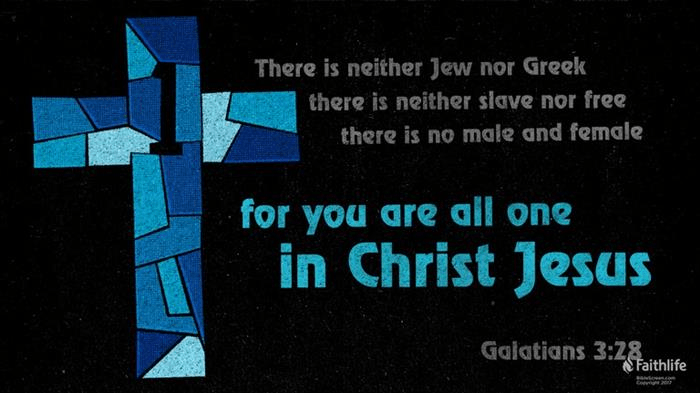
Jesus sought to bring disparate peoples together and not keep them divided. The cross freed us by eliminating the barriers which separate us. The Roman Church needed to work together at being one people under the lordship of Christ.

There was to be no ethnic, religious, or political one-upmanship on Paul’s watch.

Truth be told, both Jew and Gentile did not always do so well with their respective histories. So, there is no ground for boasting or trying to argue for their own way. In fact, the unfaithfulness of people simply shows the incredible faithfulness of God in greater relief. 

If there were no sin, grace would not be needed; no cross would have existed. Just because the foulness and degradation of sin brings out the gracious, faithful, and forgiving character of God in Christ, does not mean that sin is okay or that we can flippantly wave it off with uttering some mumbo-jumbo cheap grace which devalues the majesty of God.

For example, when antebellum southern slaveholders in nineteenth-century America argued for their peculiar institution by saying that snatching black Africans from their homes was a good thing so that they could get out of their religious animistic worldview and be exposed to Christianity, I am positively sure that the Apostle Paul rolled over in his grave and begged Jesus to resurrect him early and send him to tackle such an affront to the cross of Christ!

Sin is never to be excused through twisted human mental gymnastics.

Paul worked laboriously to unite the churches he established and bring differing people groups together under Christ.

  • This does not mean is that all cultural and personal distinctions are ignored or erased.
  • This does mean that we value one another’s differences and gather around the shared value of knowing Jesus Christ.

The Church was neither going to become Jewish nor Gentile but something altogether new – one new people out of the two. Paul framed the matter this way to the Ephesian Church:

Therefore, remember that formerly you who are Gentiles by birth and called “uncircumcised” by those who call themselves “the circumcision” (which is done in the body by human hands)— remember that at that time you were separate from Christ, excluded from citizenship in Israel and foreigners to the covenants of the promise, without hope and without God in the world. But now in Christ Jesus you who once were far away have been brought near by the blood of Christ.

For he himself is our peace, who has made the two groups one and has destroyed the barrier, the dividing wall of hostility, by setting aside in his flesh the law with its commands and regulations. His purpose was to create in himself one new humanity out of the two, thus making peace, 16 and in one body to reconcile both of them to God through the cross, by which he put to death their hostility. He came and preached peace to you who were far away and peace to those who were near. For through him we both have access to the Father by one Spirit. (Ephesians 2:11-18, NIV)

Solitary righteousness is an oxymoron. Righteousness can only be truly lived and expressed with other people.

Yes, there is freedom in Christ. Yet, that freedom must be continually applied through making every effort to keep the unity of the Spirit through the bond of peace.

So, get along with one another.

O God, the Father of our Lord Jesus Christ, our only Savior, the Prince of Peace: Give us grace to seriously lay aside all unhappy divisions. Take away all hatred and prejudice, and whatsoever else may hinder us from godly union and harmony: that, as there is but one Body, and one Spirit, and one hope of our calling, one Lord, one faith, one baptism, one God and Father of us all; so, may we be forever all of one heart, and of one soul, united in one holy bond of truth and peace, faith and love, with one mind and one mouth, glorify Jesus Christ our Lord. Amen.