Walk on Water? Why? (Matthew 14:22-33)

Jesus Walks on Water, by Konstantin Alexejewitsch Korowin, 1890 

Immediately Jesus made the disciples get into the boat and go on ahead of him to the other side, while he dismissed the crowd. After he had dismissed them, he went up on a mountainside by himself to pray. Later that night, he was there alone,and the boat was already a considerable distance from land, buffeted by the waves because the wind was against it.

Shortly before dawn Jesus went out to them, walking on the lake. When the disciples saw him walking on the lake, they were terrified. “It’s a ghost,” they said, and cried out in fear.

But Jesus immediately said to them: “Take courage! It is I. Don’t be afraid.”

“Lord, if it’s you,” Peter replied, “tell me to come to you on the water.”

“Come,” he said.

Then Peter got down out of the boat, walked on the water and came toward Jesus. But when he saw the wind, he was afraid and, beginning to sink, cried out, “Lord, save me!”

Immediately Jesus reached out his hand and caught him. “You of little faith,” he said, “why did you doubt?”

And when they climbed into the boat, the wind died down. Then those who were in the boat worshiped him, saying, “Truly you are the Son of God.” (New International Version)

In the New Testament Gospels, we see Jesus for who he is – Son of God and true Sovereign of the universe – seeking to reconcile people to God through his life, miracles, and teaching. In the Gospels we also see Christ’s disciples for who they are – a rag-tag bunch who express both belief and doubt, and experience both faith and failure.

The reality of the Christian life is that it is a sort of three-steps-forward and two-steps-backward kind of experience. The expectation that we will “succeed” and have everything go hunky-dory each time we step out in faith, is far from how things actually work in both the world and in God’s kingdom. Doubt and failure are important experiences for the believer in Jesus.

Without failure, there is no Christian life. Why? Because it means we are still in the boat.

It’s evidence that we never left the safety of established routines and responded to God’s command to step out of our comfort zone, and boldly go where we’ve never gone before.

Our failures may, like Peter, be colossal bellyflops. Yet, Jesus is there – extending grace to Peter and helping him, even in his failure of faith. Failure does not define us; it isn’t our identity. Jesus is Lord over everything, including storms, hardship, and trouble. 

Yes, there are a lot of scary things in life. Learning to ride a bike was scary. Driving for the first time on an icy road was scary. Getting married and having kids was scary. Admitting a fault, mistake, or weakness is scary. Being vulnerable with another person is scary.

It can even be scary to be at church. Why? Because we might fail, and it may crush us.

The fear of failure, however, need not control our lives. Why? Because grace overcomes everything.

We all find ourselves, at times, caught midway between faith and doubt. But to know this situation is to experience grace. If the worst scenario you worry about in your head would actually come to pass, it will still never change the reality that God loves you! And it will not stop Jesus from extending his hand to you in a life-saving grip of grace. 

Fear melts away when we keep our eyes on Jesus. So, we must focus on Christ, instead of fixating on the waves around us. The truth sets us free. Therefore, let’s notice five truths about Jesus that help us overcome the fear of failure and embrace a life of faith.

1. Jesus is a person of prayer

Jesus was deeply dependent on his heavenly Father. His life exhibited the necessities of simple prayer and obedience. If Jesus found the need for solitude and prayer for his life and ministry, how much more to we need it!? 

The Lord had his disciples get into the boat and go out on the lake. Jesus knew they were about to face a storm. The boat ended up getting thrown around by the waves. Even though the disciples were doing God’s will by going out on the lake, they were not spared from adversity.  

Jesus wanted his disciples to experience the storm. Why? Because it is through the storm that we learn faith.  

Faith is developed through experience and adversity. Faith that never endures distress, never grows and matures. Faith must be exercised – and if it isn’t, it atrophies and becomes useless. 

Show me a person with great faith, and I’ll show you a person that has gone through a boatload of adversity and hurt, having allowed Jesus to grace them with healing.

2. Jesus is present with us, and this presence brings an end to fear

Being in the middle of a lake during a storm did not prevent Jesus from being present with the disciples – he just walked on the water to be with them. Even though the disciples had just participated in the miracle of Jesus feeding the five thousand, another miracle was not on their radar – which is why they did not recognize Jesus and were afraid when they saw him.

While afraid, we don’t see Jesus, even when he’s right in front of our faces. Why? Because we don’t expect him to be there and mistake him for a ghost.  

When the disciples cried out in fear, Jesus responded. I used to have a factory job, training workers. When the training was completed, I had the trainees evaluate our time together. The top response I received is that my presence helped them to learn their job – the freedom to fail time and time again without judgment. Having me there to rescue them, when things got too much, built confidence that they could do it on their own.

3. Jesus desires those who follow him to imitate him

Jesus walked on water. Jesus invited Peter to walk on water. Peter was not chided by Jesus for getting out of the boat, but for doubting that he could continue in the miracle that was happening. 

Jesus isn’t merely interested in disciples being able to regurgitate his teaching. Why? Because he wants us to exercise our learning through actual deeds of faith.  

Once the command of Jesus was given to Peter, “Come”, then walking on water became only a matter of trust.

“Christianity has not been tried and found wanting. It has been found difficult and left untried.”

G.K. Chesterton

We understandably get nervous when a crazy Jesus and an unpredictable Holy Spirit call us to change by getting out of the friendly confines of the boat. Why? After all, we might fail. 

However, it is at those times that we bank on God’s Word and promises. The Apostle James said that if we find ourselves lacking wisdom to deal with the unpredictable and unknowable, we are to ask God who gives generously to all without finding fault and will be given to us. (James 1:5)

Christ Walking on the Sea, by Natali Fedorova

Peter responded to his predicament by crying out to Jesus, “Lord, save me!” Jesus immediately reached out and saved Peter from his own doubt and lack of faith. Jesus called Peter a “little-faith.”

Many people have lived too long with the notion that God is some stern angry deity who is constantly displeased with sinful people, and that only through perfection will God ever be happy with us. The truth is that Jesus wants us to imitate him; and, when we fail, he is there to pick us up. 

4. Jesus has the authority to settle the storm when he is ready to do it

Jesus is King. Christ is Sovereign of the world. He will bring the crisis to an end according to his own good pleasure and good timing. Rather than spending all our emotional capital by worrying or conniving to get out of a situation, we can trust God and keep our eyes on Jesus.  Our job is to believe; God’s job is everything else.

5. Jesus’ power led the disciples to acknowledge who he is

Worship happens when we see Jesus as he really is, the Son of God. Flat, dull, boring worship comes from flat, dull, boring Christians who are unable to see the power of Jesus in their lives. We discover the power of God when we are in a situation which requires God’s strength to deliver us. Grasping Jesus as the Son of God is more than a verbal confession of faith; it is being able to trust him, like getting out of a boat in the middle of a lake.

We are to live by faith in the Son of God who loved us and gave himself for us (Galatians 2:20). It doesn’t require much faith to pray that Aunt Mable’s bunions will feel better. It only requires a little faith to give a dollar when you have ten dollars. It takes no faith to discuss the weather and steer clear of hard conversations.

But it does require faith:

  • to pray for a miraculous healing every day without giving up for a little boy who is racked by epilepsy, and trust God to spare his life
  • to write a check for $100 to someone in need when you have exactly $100 in your checking account, and trust God to provide for you own necessities. 
  • to go off the grid of the routine schedule to have a difficult discussion about social justice, and trust God to act on Christ’s teachings. 
  • to live as though the mission of God in this world is the most important thing we could ever do, and trust God to step out and do it.

It would be great if we could pray and act without ever doubting or failing, yet the only way to do that is to never step out of the boat. Instead, live life. Trust God. And see what happens.

Holy God, help us, your people, to embrace the life that is truly life by stepping out of the boat.  May Jesus define our lives instead of letting failure define us. May we accept the grace that is ours in Jesus Christ our Lord, in whose name we are bold to pray. Amen.


Work Together (Acts 18:24-28)

Priscila and Aquila host Paul and train Apollos, Unknown artist

Meanwhile a Jew named Apollos, a native of Alexandria, came to Ephesus. He was a learned man, with a thorough knowledge of the Scriptures. He had been instructed in the way of the Lord, and he spoke with great fervor and taught about Jesus accurately, though he knew only the baptism of John. He began to speak boldly in the synagogue. When Priscilla and Aquila heard him, they invited him to their home and explained to him the way of God more adequately.

When Apollos wanted to go to Achaia, the brothers and sisters encouraged him and wrote to the disciples there to welcome him. When he arrived, he was a great help to those who by grace had believed. For he vigorously refuted his Jewish opponents in public debate, proving from the Scriptures that Jesus was the Messiah. (New International Version)

I really like this story. I like it for two reasons:

  1. Apollos, although a very learned and gifted guy, nonetheless had the humility to listen and accept the counsel of the couple, Priscilla and Aquila. He had a teachable spirit and a submissive heart.
  2. Priscilla and Aquila, a woman and a man, wife and husband, shared equally in taking the initiative to practice hospitality and make a significant contribution to the learning of Apollos. They had teachers’ spirits and caring hearts.

An intelligent mind doesn’t do much good if it isn’t accompanied by humility – a willingness to be taught, and a heart that is open to receive.

And instructing others accomplishes nothing if it isn’t directed by an egalitarian mindset – a desire to love strangers of all backgrounds and walks of life, and give, in any sort of way that is helpful to the other.

Who was Apollos?

Apollos was an educated man from the city of Alexandria in Egypt. He was well acquainted with Old Testament Scripture and familiar with John the Baptist’s teachings. In the middle of the first century C.E. he came to the city of Ephesus in Asia Minor (present day Turkey) where he began to teach in the Jewish synagogue.

Priscilla, and her husband Aquila, were followers of Jesus in Ephesus and they heard Apollos speaking. They hospitably took him aside and told him the rest of the story. After this, Apollos went to preach in Achaia, having been highly recommended by the Ephesian Christians. His effectiveness was unprecedented.

Apollos was in Corinth (Acts 19:1) where he was useful in watering the spiritual seed which the Apostle Paul had planted (1 Corinthians 3:6). He was such a skilled teacher and so much appreciated by the believers there that, unfortunately, many of the Corinthian believers became attached to him in an unhealthy way, creating schisms within the church, much to the chagrin of Apollos (and Paul). (1 Corinthians 1:12, 16:12)

Who were Priscilla and Aquila?

Priscilla and Aquila were tentmakers native to Rome. After the persecution of the Jewish people under the Emperor Claudius, they made their way to Greece, where they encountered the Apostle Paul and tutored Apollos. Their impact on these Christian leaders – and the bravery they demonstrated within the early church—became legendary, and Priscilla and Aquila are referenced in four different New Testament books.

What’s interesting about the references to this couple in Holy Scripture is the order in which their names are mentioned. In the seven references to the married couple, the wife is mentioned before the husband five times. This is somewhat uncharacteristic of the naming conventions in the Bible and suggests that Priscilla played a leading role in their ministry work.

It was in Corinth that Priscilla and Aquila first encountered the Apostle Paul. They welcomed him into their workplace, providing him with meaningful employment that facilitated his missionary activities. When Paul determined to return to Syria, they accompanied him across the Aegean Sea to Ephesus, where their ministry continued – and it was there that Priscilla and Aquila met Apollos.

In his catalog of greetings to the Roman church, Paul sent his regards to Priscilla and Aquila, indicating that they eventually returned to Rome – which was quite a risky thing to do considering the political climate of the time. Paul notes that Priscilla and Aquila stuck out their necks for him. (Romans16:3)

What do we learn from Priscilla, Aquila, and Apollos?

The story of Priscilla and Aquila holds out a cache of important truths. For one, it demonstrates the added value of men and women partnering over the long term for the cause of Christ. It’s important to collaborate and be willing to consult each other and accept instruction and even correction.

The interaction of these early believers points to the importance of true Christian hospitality. When Paul arrived in their community, they gathered in a worn-out traveler. They provided shelter, company, and income for him, advancing his missionary ventures.

In Ephesus, they followed the same template with Apollos, perhaps sharing what they had learned from Paul to strengthen the witness of this remarkable young preacher. Their table and living room became sources of encouragement and instruction for those who would teach the church at large.

Priscilla, Aquila, and Apollos are good models for all men and women called to Christian mission and service. They longed to serve Christ and the Church in whatever ways they could. They sought to help the next generations of believers in their walk with Christ. And they displayed the sort of qualities needed for the burgeoning church to work together and reach the world with good news.

God of grace and might, who gave to your servants Apollos, Priscilla, and Aquila gifts of zeal and eloquence to make known the truth of the Gospel: Raise up, we pray, in every country, heralds and evangelists of your kingdom, so that the world may know the immeasurable riches of our Savior Jesus Christ; who lives and reigns with you and the Holy Spirit, one God, now and forever. Amen.

Be Open-Minded (Acts 17:10-15)

That same night the believers sent Paul and Silas to another city named Berea. When they arrived there, they went to the Jewish synagogue. The people in Berea were more open-minded than those in Thessalonica. They were so glad to hear the message Paul told them. They studied the Scriptures every day to make sure that what they heard was true. The result was that many of them believed, including many important Greek women and men.

But when the Jews in Thessalonica learned that Paul was telling people God’s message in Berea, they came there too. They upset the people and made trouble. So, the believers immediately sent Paul away to the coast, but Silas and Timothy stayed in Berea. Those who went with Paul took him to the city of Athens. They returned with a message for Silas and Timothy to come and join him as soon as they could. (Easy-to-Read Verson)

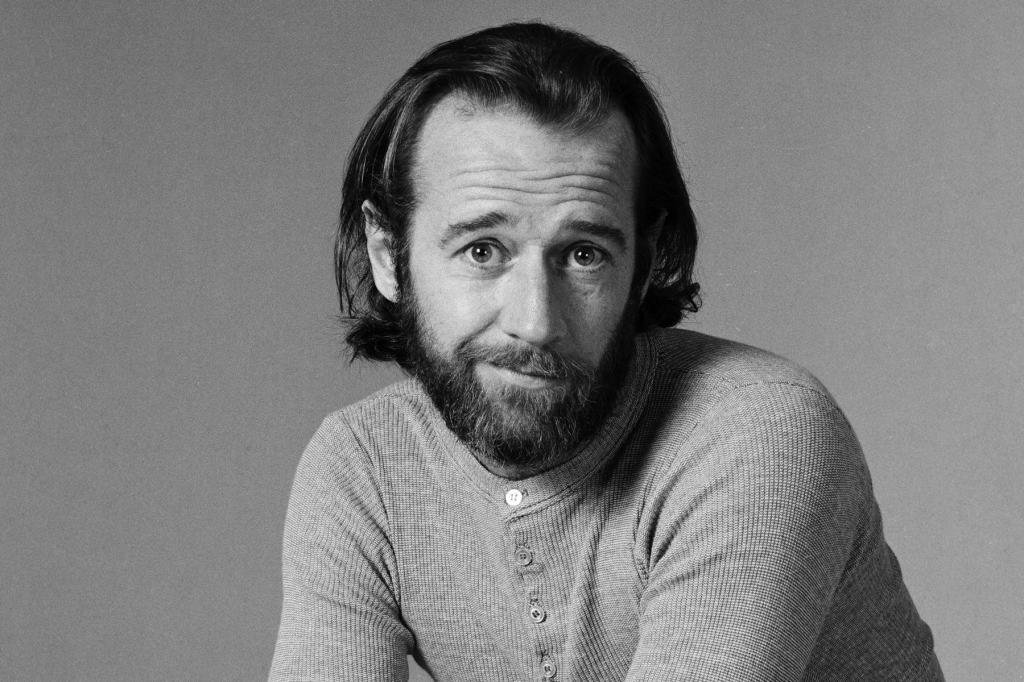
Sometimes it’s not you but the audience. The Apostle Paul was, at times, treated like Rodney Dangerfield (getting no respect) and, at other times, like George Carlin (causing people to think and listen without even knowing it).

Everywhere Paul went on his missionary journeys he experienced both acceptance and opposition. Determined to spread the good news of Christ’s redeeming work, Paul found a receptive audience and was able to establish churches.

Yet, Paul also upset the religious status quo wherever he went. As a result, there were times when he and his colleagues needed to steal out of town before an angry mob could get their hands on him. Sometimes, the furious cabal got ahold of Paul; and he forever carried the scars of those beatings on his body. Talk about no respect!

So, it must have been a refreshing experience for Paul to arrive in the city of Berea (located at the base of the Olympian Mountains in southwestern Macedonia) and discover a different spirit than he typically found in other places – a willingness to investigate, scrutinize, and grapple with the message presented. A receptive audience is a beautiful thing.

To spiritually thrive and flourish in this life we all must embrace the noble character of remaining open-minded with a teachable spirit. Just as the body grows, changes, and matures over time, so the human spirit does the same, and needs continual spiritual development. To become closed-minded and believe all questions are answered and settled, is to cut off oneself from truth and reality.

The Apostle Paul, I believe, is a good model of what it takes to be open-minded and a lifelong learner. The following are some ways he kept alive to spiritual truth:

Paul found his motivation. He went on missionary journeys because he wanted to make Christ known in places where he wasn’t. “It doesn’t matter if people are civilized and educated, or if they are uncivilized and uneducated. I must tell the good news to everyone. That’s why I am eager….” (Romans 1:13-14, CEB)

Paul went to new places and met new people. Getting stuck in a rut comes from never doing anything new or going to new places. We don’t have to be missionaries like Paul to do some movement and discover personally unexplored places, both literally and spiritually. Habits and routines are good. Sometimes we just need to create new ones so that we see a different perspective and have new experiences. The inability to see another’s viewpoint comes from an unwillingness to entertain any kind of change.

Paul avoided speculation. He did not superimpose his own experiences onto others. Paul was remarkably open to people everywhere he went, instead of being afraid and expecting trouble and/or abuse. The Bereans were open to Paul because Paul was open to them. Paul avoided looking at them as Thessalonians or Philippians; both were places where he got into loads of trouble just before coming to Berea. A contemporary way of stating Paul’s attitude and practice is that he was free of prejudice and discrimination.

Furthermore, notice the intellectual characteristics of the Berean people:

  • They were curious to hear what Paul thought.
  • They were able to have their ideas challenged.
  • They didn’t get angry when new ideas were presented.
  • They practiced both intellectual humility and mental empathy.
  • They believed Paul had a right to share his arguments, beliefs, and thoughts.

Today, in our intellectually and politically polarized world, far too many people are uncomfortable with uncertainty and ambiguity. So, they are unwilling to wrestle with spirituality by eliminating all mystery from their religion. When that happens, oppression is born. Those were the folks who could not tolerate Paul’s ideas and gave him such a hard time.

By rejecting alternative ideas that might challenge the status quo, people may be able to minimize uncertainty and risk – or at least their perception of risk – yet, the closing of their minds to other’s thoughts opens them to abusing the bodies of those same people.

When people are intellectually and spiritually proud, they wrongheadedly believe that they already know all there is to know, and so, they refuse to listen. At best, this limits the potential for learning; at worst, it forms a cognitive bias which blinds them to their own ignorance and blunts their ability for compassion.

It is, therefore, imperative that we be humble about our knowledge, understanding that there is always more to learn.

Almighty God, in you are hidden all the treasures of wisdom and knowledge. Open our eyes that we may see the wonders of your Word; and give us grace that we may clearly understand and freely choose the way of your wisdom. As the source of all light, enlighten our spirits. Pour out on us the spirit of understanding so that our hearts and minds may be opened. Amen.

Formed with Virtue (Romans 1:8-15)

First, I thank my God through Jesus Christ for all of you because your faith is being reported all over the world. God, whom I serve in my spirit in preaching the gospel of his Son, is my witness how constantly I remember you in my prayers at all times; and I pray that now at last by God’s will the way may be opened for me to come to you.

I long to see you so that I may impart to you some spiritual gift to make you strong—that is, that you and I may be mutually encouraged by each other’s faith.I do not want you to be unaware, brothers and sisters, that I planned many times to come to you (but have been prevented from doing so until now) in order that I might have a harvest among you, just as I have had among the other Gentiles.

I am obligated both to Greeks and non-Greeks, both to the wise and the foolish. That is why I am so eager to preach the gospel also to you who are in Rome. (New International Version)

Gratitude, service, prayer, encouragement, and duty. These are the qualities which defined the Apostle Paul; he sought to embody them every day of his life.

These virtues can define us, as well. If we seek to develop and exhibit each one, then we will find true community and satisfying relationships. And these very qualities were what Paul longed for in the Roman Church – because the believers were too often characterized by ingratitude, serving only those who were like them, a lack of prayer, discouraging others, and a warped sense of duty.

Jews and Gentiles were together in one church. It wasn’t going to be easy to get along and work side-by-side, but Paul was absolutely committed to it. Since the Apostle was both a Jew and a missionary to Gentiles, his heart deeply desired a mutual ministry in which the Christians thoroughly loved one another and had each other’s backs.

Gratitude

For that to happen, the practice of thanksgiving is needed.

We know that the one who raised the Lord Jesus from the dead will also raise us with Jesus and present us with you to himself. All this is for your benefit, so that the grace that is reaching more and more people may cause thanksgiving to overflow to the glory of God. (2 Corinthians 4:14-15, NIV)

In truth, gratitude is a spiritual practice which requires cultivation and attention. One of the best ways, in my opinion, of doing this is to keep a gratitude journal – actually hand writing what we are thankful for each day. And, when it comes to others, developing the habit of saying the words, “Thank you,” “I am so grateful,” and “You are so kind, I appreciate it.”

It’s hard to be a spiritual curmudgeon and grump through life whenever gratitude shapes our relationships. Gratitude has the practical effect of curbing our critical tendencies; it helps us as value people by thanking them often and clearly for who they are.

Service

To serve God and others is a way of offering resources, time, influence, and spiritual gifts for the betterment of humanity. This is how we love our neighbor as ourselves.

“Whoever serves me must follow me; and where I am, my servant also will be. My Father will honor the one who serves me.”

Jesus (John 12:26, NIV)

By orienting our lives around service, we begin to see other people’s needs and meet them – since we are taking the time and energy in getting to know them. As servants, we learn to “walk the talk” and embody what we profess. And, if we couple service with gratitude, we are able to whistle while we work and avoid bitterness.

Prayer

We all pray and pray for others. The real trick is to remember one another in prayer and persevere in it. For that to happen, we must allow God to heal our distracted selves and bring integrity to our fragmented lives.

“We should make a gift of our hearts, emptying them of ourselves, that they may be filled with God. Our almighty Father becomes one with us and transforms us, uniting Creator and creature.”

Teresa of Ávila (1515-1582)

By centering our identity firmly in Christ, we open ourselves to remember and intercede for others.

Pray in the Spirit on all occasions with all kinds of prayers and requests. With this in mind, be alert and always keep on praying for all the Lord’s people. (Ephesians 6:18, NIV)

Along with gratitude and service, our prayers take a focused shape of supporting others in need of healing, care, courage, patience, etc. And we replace any tendency to control or manipulate with a prayerful trust in God.

Encouragement

The Apostle Paul had a deep longing to help others grow into their God-given potential. He sought to empower others by sharing his life with them. Paul desired everyone to give themselves for the common good of all.

See to it, brothers and sisters, that none of you has a sinful, unbelieving heart that turns away from the living God. But encourage one another daily, as long as it is called “Today,” so that none of you may be hardened by sin’s deceitfulness. (Hebrews 3:12-13, NIV)

None of us can make it in life without the help and encouragement of others. So, we need authentic relationships for mutual help and support, to learn from each other, and garner wisdom from those who have walked with God many years.

Encouragement is greatly moved along when gratitude, service, and prayer accompany it, so that an encouraging community of people are a loving group of folks for whom others want to be around.

Duty

A sense of obligation is a good thing. It turns our privilege and power into a force for good in the church and the world. In reality, we are stewards of God’s gifts and resources given to us. This enables us to have a healthy practice of duty to our fellow humanity.

Jesus said, “Do not store up for yourselves treasures on earth, where moths and vermin destroy, and where thieves break in and steal. But store up for yourselves treasures in heaven, where moths and vermin do not destroy, and where thieves do not break in and steal.” (Matthew 6:19-20, NIV)

Through infusing our duty with gratitude, service, prayer, and encouragement, it becomes a delight to freely give of ourselves and our stuff, without a begrudging attitude. Generosity becomes a way of life, and we avoid becoming unhappy misers.

“If our charities do not at all pinch or hamper us, I should say they are too small.”

C.S. Lewis

Conclusion

In the Roman Church of Paul’s day, the relational dynamic had not yet broken down to the point of Schadenfreude, that is, actively delighting in another’s misfortune – but they were on their way. To mitigate and stop this from happening, Paul modeled a genuine spirit of thanksgiving, loving service, remembering prayer, healthy encouragement, and generous duty.

We would do well to follow his example of virtue, and be shaped by the gospel of Jesus Christ.

Generous God, I give thanks to you for the gifts you have given me – life, family, friends, time, talents, and possessions. All that I have comes from you. Help me to remember this and rejoice in your goodness.

Walk with me, my God. Help me on my spiritual journey, so that I may constantly renew my relationship with you and all the good people in our parish and beyond.

Renew in me your Spirit. Give me the strength and courage to become a better follower of Jesus, in whose name I am bold to pray. Amen.