Beautiful Feet (Romans 10:15b-21)

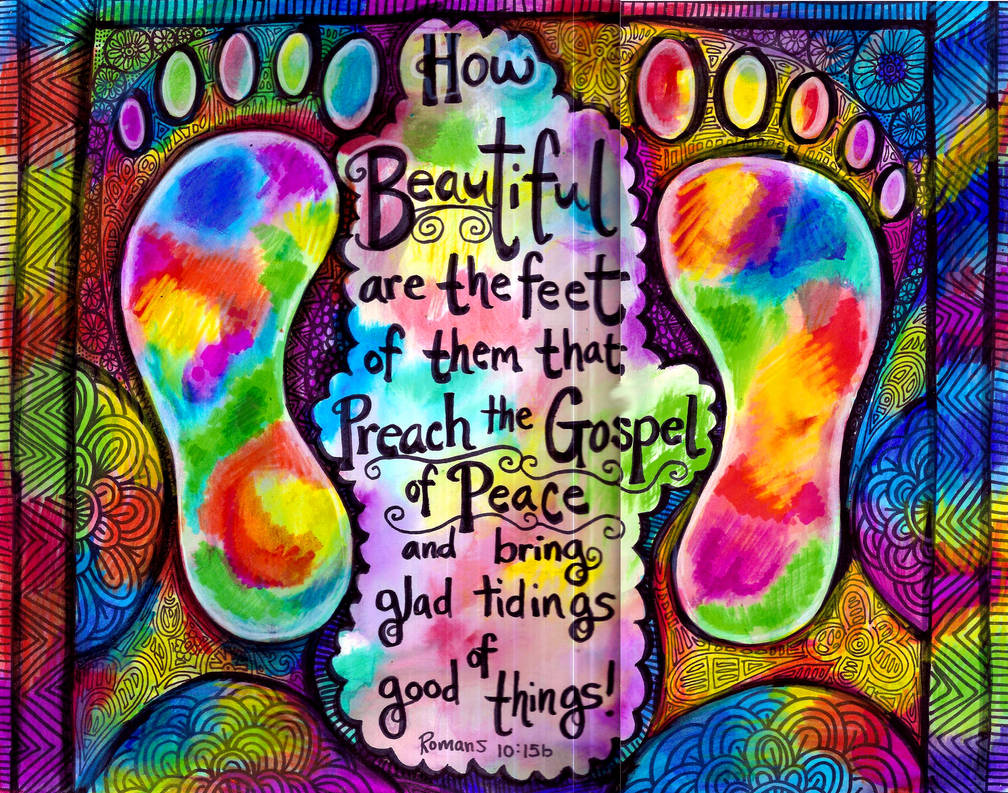
As it is written: “How beautiful are the feet of those who bring good news!”

But not all the Israelites accepted the good news. For Isaiah says, “Lord, who has believed our message?” Consequently, faith comes from hearing the message, and the message is heard through the word about Christ. But I ask: Did they not hear? Of course they did:

“Their voice has gone out into all the earth,
    their words to the ends of the world.”

Again I ask: Did Israel not understand? First, Moses says,

“I will make you envious by those who are not a nation;
    I will make you angry by a nation that has no understanding.”

And Isaiah boldly says,

“I was found by those who did not seek me;
    I revealed myself to those who did not ask for me.”

But concerning Israel he says,

“All day long I have held out my hands
    to a disobedient and obstinate people.” (New International Version)

“Beautiful” is not a typical description of anybody’s feet. That’s because feet are kind of gross. Feet stink. They get dirty and itchy; they’re often calloused and downright nasty looking. And no one comments that their feet feel good. People’s feet rarely feel that way.

It seems to me that feet are an apt metaphor for the bringing of salvation, of good news.

The Christian good news is this: There is salvation – forgiveness of sins – through Jesus Christ; and it is accessed by faith.

“Salvation” is a term which perhaps gets overused by Christians to the point that it becomes misunderstood and/or taken for granted. When that happens, it only becomes “meh” news and is no longer good news. For some, it’s a bit like feet – they’re there, but they hurt too much. We don’t think much about our feet until the corns, the bunions, or the toenails bother us. There’s a “meh” relationship to the foot.

In Christianity, the triune God has conspired within himself to bring us salvation. The good news is that God the Father has mercifully sent God the Son for the rescue of the entire world from sin, death, and hell; and Father and Son have further sent God the Holy Spirit to help us respond and live by faith.

Even back in the Old Testament, with the prophet Isaiah, such a merciful deliverance was predicted. Isaiah’s description of the life and rejection of the Suffering Servant wondered if faith would happen in response to salvation. Would they really see it as “good” news? Can feet really be beautiful?

Who has believed our message
    and to whom has the arm of the Lord been revealed? (Isaiah 53:1, NIV)

The Apostle Paul, knowing a thing or two about suffering, walking a lot of missionary miles with his feet, was confident that, indeed, faith is awakened in the hearing of the message. The message is good news, and it will be received. Good news has to be proclaimed before it can take hold.

So faith comes from what is heard, and what is heard comes through the word of Christ. (Romans 10:17, NRSV)

Good news has to be announced up-close and personal. It takes getting on our two feet, walking across the street, across the room, or across the world to bring it. That’s because salvation is relational. The message of salvation is there amongst people; it has always been deep within them, as those created in the image and likeness of God.

The heavens are telling the glory of God,
    and the firmament proclaims his handiwork.
Day to day pours forth speech,
    and night to night declares knowledge.
There is no speech, nor are there words;
    their voice is not heard;
yet their voice goes out through all the earth
    and their words to the end of the world. (Psalm 19:1-4, NRSV)

In the book of Romans, we see Jewish Christians and Gentile Christians together in one church. Historically, the Jews were God’s people – the insiders – and the Gentiles were not a people, the outsiders. Now the Gentiles are included and are no longer outsiders. Not all the insiders were okay with this situation.

In the Old Testament, Moses predicted insider Israel’s overall response to this situation of feet walking amongst the Gentiles and announcing the good news of salvation.

They have roused my jealousy by worshiping things that are not God;
    they have provoked my anger with their useless idols.
Now I will rouse their jealousy through people who are not even a people;
    I will provoke their anger through the foolish Gentiles. (Deuteronomy 32:21, NLT)

The prophet Isaiah also spoke of Gentile inclusion into God’s saving activity; and the Jewish response to salvation for them:

I was ready to respond to those who didn’t ask.
    I was ready to be found by those who didn’t look for me.
I said, “I’m here! I’m here!” to a nation
    that didn’t call on my name.
I extended my hands all day
    to a rebellious people
        walking in a way that isn’t good,
        following their own plans.” (Isaiah 65:1-2, CEB)

This in no way is meant to be hard on ancient Israelites and the Jewish people. It is really a commentary on including others who are different, what God thinks about it, and the challenge this poses to those holding onto the status quo.

Throughout all of biblical history, into the past two thousand years of church history, and even today, those who consider themselves as God’s people, the insiders, tend to be blinded by the privileges bestowed on them by a gracious God. And they usually think of only one thing: To preserve their status and their spiritual monopoly by excluding others who are different.

It is a hardening of the heart – or maybe the calloused feet – that does not want to recognize that certain persons and people groups can be saved and included as God’s people alongside the rest.

Fortunately, the Apostle Paul, a Jewish Christian, longed for all to be saved and to come to a knowledge of God. He himself wanted to know Christ and “be found in him, not having a righteousness of my own that comes from the law, but that which is through faith in Christ—the righteousness that comes from God on the basis of faith.” (Philippians 3:19)

Salvation is neither attained through strict observance of the rules, nor by being a good or nice person. It is graciously given by the God who came and whose feet walked amongst us. Deliverance comes through an acceptance by faith in the Son of God who loved us and gave himself for us – including people who others might consider as outsiders or unworthy of it.

From my vantage point, the feet that bring a gracious message of good news for all are truly beautiful.

Almighty God, Father of all mercies, we give you humble thanks for your goodness and steadfast love to all kinds of people. We thank you especially for your immeasurable love in the redemption of the world by our Lord Jesus Christ. And, we pray, give us such an awareness of your mercies, that with truly thankful hearts we may show forth your praise, not only with our lips, but in our lives, by giving ourselves to your service, and by walking before you in holiness and righteousness all our days. Amen.

Whoever Is Not with Me Is Against Me (Matthew 12:22-32)

Jesus casts out the devils, by Julius Schnorr von Carolsfeld (1794-1872)

Then they brought him a demon-possessed man who was blind and mute, and Jesus healed him, so that he could both talk and see. All the people were astonished and said, “Could this be the Son of David?”

But when the Pharisees heard this, they said, “It is only by Beelzebul, the prince of demons, that this fellow drives out demons.”

Jesus knew their thoughts and said to them, “Every kingdom divided against itself will be ruined, and every city or household divided against itself will not stand. If Satan drives out Satan, he is divided against himself. How then can his kingdom stand? And if I drive out demons by Beelzebul, by whom do your people drive them out? So then, they will be your judges. But if it is by the Spirit of God that I drive out demons, then the kingdom of God has come upon you.

“Or again, how can anyone enter a strong man’s house and carry off his possessions unless he first ties up the strong man? Then he can plunder his house.

“Whoever is not with me is against me, and whoever does not gather with me scatters. And so I tell you, every kind of sin and slander can be forgiven, but blasphemy against the Spirit will not be forgiven. Anyone who speaks a word against the Son of Man will be forgiven, but anyone who speaks against the Holy Spirit will not be forgiven, either in this age or in the age to come. (New International Version)

Binary thinking is rife in today’s world. It is a simplified mindset in which a person sees issues in one of two opposite and mutually separate ways. In other words, binary thinking reduces complex situations into a simplified either/or view that sees everything from a good versus bad, right versus wrong, and us versus them mentality.

Engaging in binary thinking elicits a tendency towards oversimplification where groups and sides are pitted against each other. And this is precisely what the religious leaders of Christ’s day wanted.

They engaged in a logical fallacy by attributing Christ’s ability to heal and drive out demons as itself demonic. Oversimplification is when someone does not look at a circumstance or situation with any understanding, but instead assigns it either a good or bad label. In this case, the religious leaders were simply saying Jesus was doing bad work because he himself is bad, and in league with the devil.

There is a big difference between the ability to take complex issues and explain them in terms that most people can understand, and refusing to know the complexity by immediately boiling it down to a right or wrong label. The religious leaders did not seek to know and understand Jesus; and in their ignorance, they simply called Christ’s work satanic.

It could be that the religious leaders wanted to create a polarization between Christ and the people. After all, their own authority, power, and hegemony were being threatened by this upstart healer. Jesus was gaining the affection of the people, and so, the leaders perhaps felt they were losing their influence. At the least, they certainly felt jealous.

I am always impressed by the way Jesus responded to people of all kinds. Christ generally entered the world of those in front of him and handled matters according to the way they thought and did things. In the case of the religious leaders, Jesus entered into their binary thinking world and took them on from that point of view.

Christ argued logically from the leaders’ own illogic. If black and white thinking is what they understood, then Jesus gave them that in a way they would grasp it. Jesus counters the accusations by simply stating that Satan undoing his own work is ridiculous. If Satan is wanting more and more control over people (like the religious leaders want!) then there is no way he is going to give Christ the power to set them free from that control.

Therefore, in binary terms the leaders could understand, Jesus declared that whoever is not with him is against him; whoever is not gathering with him is actually scattering. The tables are turned. Jesus is doing good work, of which the religious leaders are calling bad. Thus, they are bad.

And Jesus was not finished with them quite yet. He further stated a grim warning, aimed directly at the leaders. By seeing up close and personal the work of God’s Spirit, then declaring that work to be the devil’s doing, you cannot be forgiven.

What’s more, not only are such people not forgiven, but they also cannot be forgiven – because they have cut themselves off from the very power that could forgive them. Once a person declares in their binary thinking that the only remaining source of life is poisoned, then they just condemned themselves to death.

Cutting off oneself from God altogether cannot possibly bring forgiveness and grace to that same self. If we are mad at God and rage at him, we are still engaging and communicating with him – we are not cut off. Any sort of communication with God is still having some sort of connection with the divine. But if we sever the connection altogether, then there is not a way to receive any grace.

So, if we are concerned about committing the unpardonable sin, we most certainly have not – because we still are seeking connection with God. Hell is the place of separation from God – the very place where people who want nothing to do with God are. It isn’t that God put them there; they put themselves there.

Let us not, therefore, pit people against each other, but instead, foster relational connections, wholeness, integrity, and a just spirit of right relationships. We need not condemn others or assign to them demonic labels. If they truly are condemned, they have already done so to themselves.

O God and Father of our Lord Jesus Christ, we ask that you mercifully hear our prayers and spare all those who confess their sins to you; and may they be absolved by your gracious pardon of their guilty conscience and of any shameful deeds, through Jesus Christ your Son, our Lord, who with you and the Holy Spirit are one God, now and forever. Amen.

Love and Obedience (Revelation 3:7-13)

“Write this letter to the angel of the church in Philadelphia.

This is the message from the one who is holy and true,
    the one who has the key of David.
What he opens, no one can close;
    and what he closes, no one can open:

“I know all the things you do, and I have opened a door for you that no one can close. You have little strength, yet you obeyed my word and did not deny me. Look, I will force those who belong to Satan’s synagogue—those liars who say they are Jews but are not—to come and bow down at your feet. They will acknowledge that you are the ones I love.

“Because you have obeyed my command to persevere, I will protect you from the great time of testing that will come upon the whole world to test those who belong to this world. I am coming soon. Hold on to what you have, so that no one will take away your crown. All who are victorious will become pillars in the Temple of my God, and they will never have to leave it. And I will write on them the name of my God, and they will be citizens in the city of my God—the new Jerusalem that comes down from heaven from my God. And I will also write on them my new name.

“Anyone with ears to hear must listen to the Spirit and understand what he is saying to the churches. (New Living Translation)

In 1983, Chuck Colson, a former White House Counsel and founder of Prison Fellowship, wrote a timely and influential book entitled Loving God. In it, he presented a simple yet biblical premise concerning the life of every believer in Jesus: The way to love God is to obey God. 

Every door that opens, hinges on our listening to God, and then obeying what the Lord says to do. This is how we show our love for God.

Jesus himself communicated to the church at Philadelphia (not Pennsylvania, but ancient Asia Minor, now present-day Turkey) affirming their faithful obedience of the message. Because of their steadfast observance of the gospel, the Philadelphian believers would be protected and loved by Jesus. 

The church at Philadelphia did much more than offer a confession of loving God – they affirmed their confession through a steadfast loving obedience to Jesus. 

In some Christian traditions, this is described as “living into our baptism.”  It’s one thing to experience the waters of baptism through being set apart by the Holy Spirit for a relationship with God in the person and finished work of Jesus; and it’s quite another thing to “live into” this reality by learning and listening to God’s Word, and then dutifully obeying it.

Humans are complex creatures in their psychology, sociology, and history. However, there is at least one simple straightforward biblical truth we all can live into: To love God is to obey God. 

Therefore, it is quite necessary for us to spend extended times reading and knowing our Bibles, so that we can adhere and hold fast to what it says. 

“It is not what we do that matters, but what a sovereign God chooses to do through us. God doesn’t want our success; He wants us. He doesn’t demand our achievements; He demands our obedience. The Kingdom of God is a kingdom of paradox, where through the ugly defeat of a cross, a holy God is utterly glorified. Victory comes through defeat; healing through brokenness; finding self through losing self.”

Charles Colson, Loving God

When we truly love someone, we want to do what they say, to fulfill their wishes – whatever those desires are. And then, when we do it, there is joy in accomplishing it. We don’t think about how much it costs, or all the work that goes into it. Instead, we say to ourselves, “This person is worth it. I’m glad to do it.”

This is why love is at the center of all true obedience to God. Those without love eventually give up, fall away, and fail to persevere through the difficulties of doing the will of God. But those enamored with love for God consider it a privilege to endure suffering for the sake of Jesus Christ.

Just yesterday I met with a dear woman in the hospital who had endured many hard things in her life. She relayed all of this to me with a sincere smile – because she is so thankful for God’s grace in her life. The woman’s face was bright with the love of God in her life; and she was profoundly grateful that the Lord saw fit to send me to see her.

My friends, how our world would be so much different and better, if we Christians would but bask in the love of God through Jesus Christ our Savior and Lord! We have quite enough Christians in this world who appear as if they were baptized – not in the gracious water of life – but in the sour vinegar of pickle juice. They tend to only obey out of duty, and do so with the grumpy frown which no one wants to be around.

This old fallen world needs us – our love for God and our love for one another – a love which informs and guides our every word and action. Hard things become easy with the presence of love, which the patriarch Jacob knew so well:

Jacob worked seven years for Laban, but the time seemed like only a few days, because he loved Rachel so much. (Genesis 29:20, CEV)

People of God, we can do hard things. We can do them because of love.

What does the Lord your God ask of you? Only this: to revere the Lord your God by walking in all his ways, by loving him, by serving the Lord your God with all your heart and being, and by keeping the Lord’s commandments and his regulations that I’m commanding you right now. It’s for your own good! (Deuteronomy 10:12-13, CEB)

May it be so, to the glory of God, and for the blessing of the world, as well as our own lives.

Gracious God, thank you for the message of good news that in Jesus Christ I have forgiveness of sins. Help me to hold onto this gospel through all the vicissitudes of life so that obedience springs from my heart in all things by the power of the Holy Spirit. Amen.

Good vs. Evil (2 Thessalonians 2:7-12)

For the mystery of lawlessness is already at work, but only until the one who now restrains it is removed. And then the lawless one will be revealed, whom the Lord Jesus will destroy with the breath of his mouth, annihilating him by the manifestation of his coming. The coming of the lawless one is apparent in the working of Satan, who uses all power, signs, lying wonders, and every kind of wicked deception for those who are perishing because they refused to love the truth and so be saved. For this reason God sends them a powerful delusion, leading them to believe what is false, so that all who have not believed the truth but took pleasure in unrighteousness will be condemned. (New Revised Standard Version)

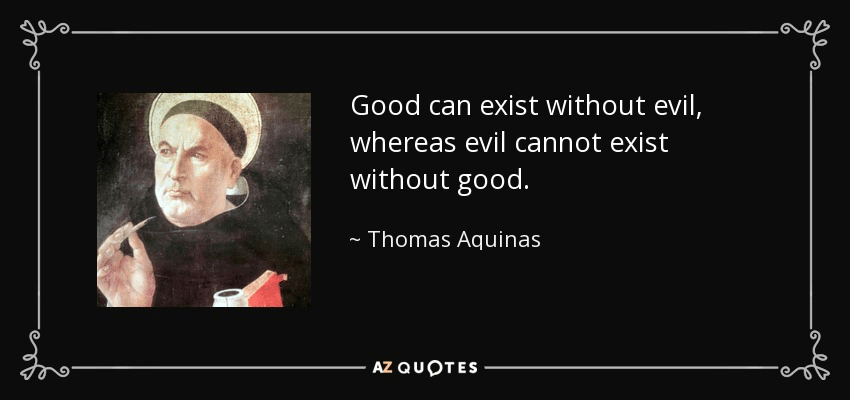
There are two opposing forces which are operating in this world. One is the power of evil, manifested through lawlessness, selfishness, and wickedness. The other power is good, and it is seen wherever there is a concern for the common good of all people. Labors of love for all humanity and right relations with everyone are a demonstration of the peaceable fruit of righteousness existing in the world.

To put it succinctly, a spirit of merciful grace and a spirit of careless judgment both exist throughout the world.

Hate what is evil; cling to what is good.

The Apostle Paul (Romans 12:9, NIV)

The Apostle Paul wrote his letter to the church in Thessalonica because the believers there were confused. Somebody had told them that the end of the age already happened. Paul sought to set the record straight, that we are still anticipating the return of the Lord and the final judgment of all things.

The great Day of the Lord will not come until the faithless one, the person of lawlessness, the son of destruction, is revealed. Such a person opposes God and has the force of evil behind them. So, who is this person?

The person is not a single individual. Paul was helping the Thessalonian believers understand the actual situation by wrapping the abstract concept of evil into human form, so that they could visualize its reality and sinister nature. In truth, there will be lots of individual humans who manifest themselves through evil intent and actions, until the Lord’s return.

Grace is the operative power which restrains all the evil. A lot of people have questions about God and evil. Why is there so much evil? How come God doesn’t snuff it all out? Is the Lord not able to do anything? What’s going on?

Those are honest questions. And they come from a place of limited human perspective. Let’s turn this on it’s head. It’s not that God is impotent or isn’t doing anything about evil. Think of it this way: When you scoop up a bunch of sand in your hands, there are a lot of sand grains which fall to the ground. If the sand is evil, and the hands are God’s, the reality of the situation is that the Lord has most of the evil kept at bay.

In other words, if God were not involved in this world, at all, we would be living in a real dystopian society – people staying up at night to guard their homes with guns, and anxious folks attacking each other with impunity. As bad as some things are, it could be infinitely worse than it is.

The grace of God is active in restraining evil and providing believers with what they need to not only survive, but also to thrive in this world.

His divine power has given us everything needed for life and godliness, through the knowledge of him who called us by his own glory and excellence. Thus he has given us, through these things, his precious and very great promises, so that through them you may escape from the corruption that is in the world because of lust and may become participants of the divine nature. (2 Peter 1:3-4, NRSV)

A reversal occurs because of God’s grace. The wickedness which exists, especially within the human heart, is dealt with and transformed into a force for good in the world.

Once we, too, were foolish and disobedient. We were misled and became slaves to many lusts and pleasures. Our lives were full of evil and envy, and we hated each other. But—when God our Savior revealed his kindness and love, he saved us, not because of the righteous things we had done, but because of his mercy. (Titus 3:3-5, NLT)

Grace is wonderful for those who believe. However, for those who are faithless, grace is inoperative – simply because the wicked consider virtues like mercy and grace as weak and useless; they have no intention of either giving or receiving such drivel.

From a certain angle, it may seem that God is harsh. The Lord hardens hearts, sends powerful delusions, and entertains mysteries which some people will never discover. Yet, from another point of view, these are all necessary divine tools in dealing with unjust humanity and their systems of oppression.

Justice and righteousness are championed by God, and therefore, injustice and unrighteousness will not be put up with by the Lord. And that is a good thing. Love not only gives, but it also protects and withholds. Evil will be dealt with according to God’s good grace and in God’s good time – and not according to a limited human perspective or any person’s impatience.

The time is short, and the time is near; everything shall not continue, as it presently is, forever. This is why the author of Hebrews exhorted people to pay attention to “Today” with a capital “T.” Today won’t be here tomorrow. Tomorrow is the Day of the Lord. So, while it’s Today, we must be responsive.

My friends, watch out! Don’t let evil thoughts or doubts make any of you turn from the living God. You must encourage one another each day. And you must keep on while there is still a time that can be called “Today.” If you don’t, then sin may fool some of you and make you stubborn. (Hebrews 3:12-13, CEV)

We must encourage each other with continued faith and patience until the end of the age. We can do this. We are all in this life together, so let us keep on holding up one another and carrying each other’s burdens. In so doing, we will not be lawless, but fulfill the Law of Christ. (Galatians 6:2)

Keep on being brave! It will bring you great rewards. Learn to be patient, so you will please God and be given what he has promised. As the Scriptures say,

“God is coming soon!
    It won’t be very long.
The people God accepts
will live because
    of their faith.
But he isn’t pleased
with anyone
    who turns back.”

We are not like those people who turn back and get destroyed. We will keep on having faith until we are saved. (Hebrews 10:35-39, CEV)

May it be so, to the glory of God. Amen.