The beginning of the good news about Jesus the Messiah, the Son of God,as it is written in Isaiah the prophet:
“I will send my messenger ahead of you, who will prepare your way”— “a voice of one calling in the wilderness, ‘Prepare the way for the Lord, make straight paths for him.’”
And so John the Baptist appeared in the wilderness, preaching a baptism of repentance for the forgiveness of sins. The whole Judean countryside and all the people of Jerusalem went out to him. Confessing their sins, they were baptized by him in the Jordan River. John wore clothing made of camel’s hair, with a leather belt around his waist, and he ate locusts and wild honey. And this was his message:
“After me comes the one more powerful than I, the straps of whose sandals I am not worthy to stoop down and untie. I baptize you with water, but he will baptize you with the Holy Spirit.” (New International Version)
The beginning of Mark’s Gospel lets us know what the entire account is all about: The good news of Jesus Christ, the Son of God. And, from the get-go, Mark embeds this beginning in a much older beginning, from the prophet Isaiah. None of this stuff was made up; it’s been there all along, for those with the spiritual eyes to see it.
It could be that it seems you aren’t seeing anything happen in your life that’s good right now. You know you’re now into this Christian Advent season, but not feeling at all as if it’s a time of good news – because all you have been hearing is bad news stacked on top of bad news. Devastation and despair, destruction and depression, are not only with those experiencing the harrowing circumstances of war or disease, but perhaps with you, as well.
Just because you can always point to someone else, or some other people group around the world, that has it worse than you, doesn’t mean that your own situation is necessarily good. The worst sort of grief is the grief that you yourself are experiencing. It’s likely that you may have your own unique brand of hopelessness, and might feel guilty for not being more happy or grateful in this time of year.
We all need good news – not just the ones with daily terrible and traumatic encounters. Maybe we could all tap into our collective humanity and realize our spiritual connection with everyone else in this topsy-turvy world. If we share bad news together, then it seems to me that we can also share the good news with one another, as well.
And there is always good news, if we have the spiritual ears to hear it: God is here. God knows. God cares. God loves. God is the Victor. Specifically, for Mark and for Christians everywhere, the incarnation, life, death, resurrection, and ascension of Jesus the Messiah is the dynamic proclamation of deliverance from all the guilt, shame, anxiety, and devastation that happens around us and even to us.
The consistent witness of the New Testament Gospels is nothing less than the Evangelists saying to us, “Look! God is here in the person of Jesus.”
Christ did not come to this earth in order to bring us some nice distractions from the crap we are enduring; but instead turns toward the crud and faces it down with divine power.
John the Baptist, by Anikitos Giannoudes
We possess good news of great joy for all the nations. And there is, I believe, no better messenger to let us know this than John the Baptist – a quirky man whose clothes look like they don’t fit right (or are even fit for a person to wear) and whose daily lunch makes all the girls squeal.
If a guy like John – on the margins of society – can help point us to good news, then we, too, have an important place in this world of making a difference with our own social eccentricities, spiritual foibles, mental disorders, and funny looks.
It appears obvious that John only cared about one thing: making sure everyone knew who the true and ultimate Messenger was, because this Messenger Messiah had the true message of good news that the whole world desperately needs.
The good news of God brings hope to those who find themselves in dire straits, on the peripheries of our world, and of wondering if things will ever get better, or not. God’s good news of grace announces God’s presence in all of our wonderings, in every place, and with each situation we find ourselves in.
God’s love goes wherever we are. Jesus is our Immanuel, God with us. In the person of Christ, we discover that God is for us; and if everyone else is against us, the Lord’s divine presence is enough for us. Thanks be to God!
“On that day a fountain will be opened to the house of David and the inhabitants of Jerusalem, to cleanse them from sin and impurity.
“On that day, I will banish the names of the idols from the land, and they will be remembered no more,” declares the Lord Almighty. “I will remove both the prophets and the spirit of impurity from the land. And if anyone still prophesies, their father and mother, to whom they were born, will say to them, ‘You must die, because you have told lies in the Lord’s name.’ Then their own parents will stab the one who prophesies.
“On that day every prophet will be ashamed of their prophetic vision. They will not put on a prophet’s garment of hair in order to deceive. Each will say, ‘I am not a prophet. I am a farmer; the land has been my livelihood since my youth.’ If someone asks, ‘What are these wounds on your body?’ they will answer, ‘The wounds I was given at the house of my friends.’
“Awake, sword, against my shepherd, against the man who is close to me!” declares the Lord Almighty. “Strike the shepherd, and the sheep will be scattered, and I will turn my hand against the little ones. In the whole land,” declares the Lord, “two-thirds will be struck down and perish; yet one-third will be left in it. This third I will put into the fire; I will refine them like silver and test them like gold. They will call on my name and I will answer them; I will say, ‘They are my people,’ and they will say, ‘The Lord is our God.’” (New International Version)
There’s likely a reason why so many Bible-readers have barely considered, or just never read, the minor prophets of the Old Testament: It’s difficult reading, on several levels.
Yet, the twelve books of the minor prophets, along with the four books of the major prophets, account for a lot of material within Holy Scripture. If we are to understand the whole of the Bible, as well as know God better, we need to contend with what the prophets have to say.
Impurity and cleansing, grace and judgment, idolatry and stabbing, prophets and visions, sheep and shepherds, faith and apostasy, are all part of what seems, on the surface, to be a confusing hodge-podge of verbiage from the prophet Zechariah. Yet, we can still observe the things God cares about.
The Lord promised to rid the land of idols (false gods), (false) prophets, and the spirit of impurity (false righteousness). If God takes out the false prophets, then the people can say good riddance to a false message of leading others toward idolatry and impurity.
The spirit and the message behind false prophets, unholy leaders, and unrighteous teachers, has to do with propagating lies and suppressing truth, so that they can deceive people and manipulate others for their own benefit – leading groups of people away from reality, and into commitments that go nowhere.
This insidious stuff is meant to be taken quite seriously – because it leads to a breakdown in community, a proliferation of injustice, and oppressive spiritual bondage. That’s why we have a rather dramatic picture of parents stabbing a child – not because God likes violence – but to demonstrate that false prophets and their message will damage and destroy a nation, if indulged.
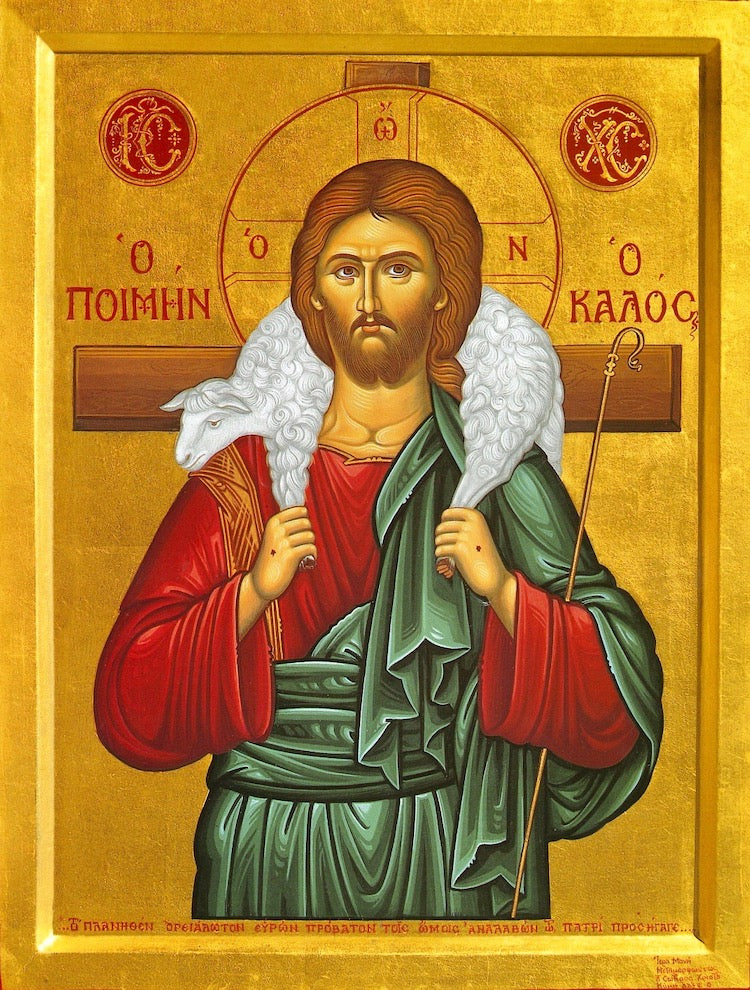
Orthodox icon of Jesus the Good Shepherd
We must always keep in mind and remember that injustice and unrighteousness must always be nipped in the bud (Deuteronomy 13:6-11). Sin, that is, those things which deceive and make false promises that result in a downward spiral toward death, is to be confronted. In the New Testament, Jesus put the matter this way:
If your right eye causes you to stumble, gouge it out and throw it away. It is better for you to lose one part of your body than for your whole body to be thrown into hell. And if your right hand causes you to stumble, cut it off and throw it away. It is better for you to lose one part of your body than for your whole body to go into hell. (Matthew 5:29-30, NIV)
Christ was not advocating a physical maiming of oneself, but rather for us to separate ourself from sin by whatever means necessary. In other words, Jesus was saying that sin isn’t something to be managed, but instead something to eradicate altogether.
Truth matters. Truth brings reality and beauty to light. Falsehood is terrible. To promote that which is false, and perhaps even worse, tolerate it, gives hate and injustice a platform from which to crawl out of the darkness and make the world blind. It would take an awful lot to undo error’s presence.
This is why the shepherd, or maybe, from the Christian perspective, the Christ, is stricken. The Good Shepherd, the one who is truth incarnate, would have to suffer. The injustice and unrighteousness is so foul and degrading that only the pure can undo the impure. And it is all set in motion, not by the forces of darkness, but by God.
God strikes the shepherd, and the sheep scatter. He is not struck because he deserves it – far from it – but because he assumes responsibility for the wrongdoing of others. Father God is the parent who stabs a spear in the side of God the Son.
The ultimate good shepherd of the sheep will die as a heinous offender; and God is the executioner.
In Christ, God put the wrong on him who never did anything wrong, so we could be put right with God.
2 Corinthians 5:21, MSG
This same great shepherd of the sheep, who became the Lamb of God that takes away the sin of the world, is coming again. And he will bring the refining and purifying fire of divine judgment upon the earth.
In this upcoming Advent season, we remember not only that Jesus has come to save the world. We also are reminded that there is yet a second Advent, in which Jesus will come to judge the living and the dead.
Behold, He is coming with clouds, and every eye will see Him, even they who pierced Him. And all the tribes of the earth will mourn because of Him. Even so, Amen.
“I am the Alpha and the Omega, the Beginning and the End,” says the Lord, “who is and who was and who is to come, the Almighty.” (Revelation 1:7-8, NKJV)
Blessed God and Father of our Lord Jesus Christ, preserve us from our own madness. Direct us away from dealing destruction to others; help us to steer clear of paths which lead to the ruin of ourselves and our world.
Protect us. Enable us to hear you. Beloved Jesus, show us your precious face in all others – you in us, and we in each other, from all places. Amen.
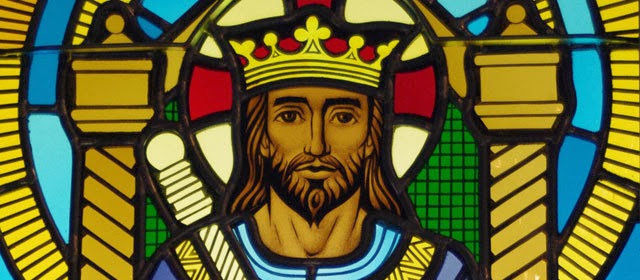
The 118 feet high Christ the King statue in Świebodzin, Poland
For this reason, ever since I heard about your faith in the Lord Jesus and your love for all God’s people, I have not stopped giving thanks for you, remembering you in my prayers. I keep asking that the God of our Lord Jesus Christ, the glorious Father, may give you the Spirit of wisdom and revelation, so that you may know him better. I pray that the eyes of your heart may be enlightened in order that you may know the hope to which he has called you, the riches of his glorious inheritance in his holy people, and his incomparably great power for us who believe.
That power is the same as the mighty strength he exerted when he raised Christ from the dead and seated him at his right hand in the heavenly realms, far above all rule and authority, power and dominion, and every name that is invoked, not only in the present age but also in the one to come. And God placed all things under his feet and appointed him to be head over everything for the church, which is his body, the fullness of him who fills everything in every way. (New International Version)
Christ the King Sunday is intended to help us see the cosmic reality that Jesus reigns over all creation as the only rightful Sovereign of the universe. This day always comes just before Advent so that we remember to anticipate both a baby and a king.
Christ as Lord of all exposes three problems humanity faces:
Building our own petty kingdoms and setting ourselves up as masters over our own small worlds. People who have been hurt may attempt to seize power for themselves in order to avoid ever being hurt again; or in the belief that if they had power, the could stop others from being hurt. Instead of submitting to Christ’s rule, they will seek to control their little end of the world, to protect themselves from pain.
Bowing to other kings besides King Jesus. When distressed, some people may rely on another ruler to address their hard circumstances – thereby expecting another to give only what Jesus can provide. Instead of running to God, they run to politicians or pastors to fix whatever is going on.
Lacking awareness of the power possessed in Christ the King. Christians reign with Jesus Christ, and therefore can exercise authority over every dominion that exists, especially the dominion of darkness.
The Apostle Paul’s letter to the Ephesian believers provides God’s design for the church. It’s a plan for Christians to know their spiritual blessings and exercise the power they have being united to Christ. God wants us to understand this power and authority, and to actively use it.
We have a clear understanding in Ephesians of how to pray: To know Jesus better. There is probably no higher prayer, according to the Apostle Paul, than to pray to know Jesus better – so that we will know the hope to which we have been called, and the incomparably great power for us who believe.
The word for “power” is where we get the English word “dynamite.” When I was a kid we had a neighbor who had a fondness for playing with dynamite (especially when he drank too much!). Even though he lived a mile down the road, when he blew up a tree stump or anything else on his property, it shook our house and felt like the windows were going to break. Yet, one stick of dynamite is nothing compared to God’s power.
This divine power is for us who believe in Christ the King. It’s the same power used to raise Jesus from death, and which exalted Christ as Lord of the universe. The rule and reign of Jesus is far above any other existing authority – including powers of the dark domain.
Concerning dealing with the powers of darkness, we possess the authority of Jesus Christ. Because of Christ’s resurrection, ascension, and glorification, Christians therefore have a vital and inseparable union with Jesus. Jesus redeemed us; we belong to God as adopted children.
Since all earthly and spiritual powers are subject to Christ, they are also subject to us. The imagery of Jesus as Head, and Christians as the Body, means that we have an inseparable union together. Since we are united with Christ, we share his authority over all spiritual powers.
It’s one thing to know this information; it’s another to use it. We are to experience Christ’s power through exercising our authority as believers. We can link faith and knowledge together in a confident use of spiritual authority because we have rights as blood-bought children of God.
All the pronouns used by Paul in Ephesians are plural. This means that tackling the forces of darkness needs to be a communal activity; going it alone is dangerous. The following is a prayer we can pray together, that boldly exercises our authority in Christ:
Almighty God, we bow in worship and praise before you, and thank you that the Lord Jesus Christ is King over all creation, and the rightful Sovereign of the universe. We are grateful that we have power together with Jesus. We therefore surrender ourselves completely in every area of our lives to You.
Since Christ’s authority extends over every dominion, including the dominion of darkness, we take a stand against all the work of Satan that would hinder us in prayer. We address ourselves only to the True and Living God, and refuse any involvement of Satan in our prayers.
Therefore, Satan, we command you, in the Name of the Lord Jesus Christ, to leave our presence with all your demons. We bring the blood of Jesus Christ between us.
Sovereign God, we recognize you are worthy to receive all glory, honor, and praise. We renew our allegiance to you and ask the Holy Spirit to help us pray. You have loved us from eternity past; and you sent the Christ into the world to die for us. So, we are thankful for complete forgiven; for adoption into your family; for eternal life; and for your daily help and strength.
Glorious God, open our eyes so that we will see how great you are, and how complete your provision is for today. The victory of Christ’s cross and resurrection has given us a seat in heaven. We take our place with Jesus, and recognize by faith, that all wicked spirits and Satan himself are under our feet.
Thank you, gracious God, for the spiritual armor you have provided. Therefore, we put on the belt of truth, the breastplate of righteousness, the sandals of peace, and the helmet of salvation. We lift up the shield of faith against all the fiery arrows of the enemy; and we take in our hands the sword of the Spirit, the Word of God. We use your powerful Word against all the forces of evil, living and praying in complete dependence upon you, Holy Spirit.
Lord Jesus, we are thankful that you disarmed all power and authorities, triumphing over them by the cross. So, we claim victory for our lives today by rejecting all the insinuations, accusations, and temptations of Satan; affirming that the Word of God is true; living in the light of God’s Word; and choosing to obey you.
Open our eyes, blessed God, and show us the areas of our lives that do not please you. Cleanse us from anything that would give Satan a foothold against us. We stand into all that it means to be your adopted children; we welcome all the ministry of the Holy Spirit in our lives today.
By faith, and in complete dependence upon you, we put off the old sinful person and stand into all the victory of the crucifixion where the Lord Jesus Christ provided cleansing from the sinful nature. We put on the new person and stand into the victory of the resurrection and the provision Christ has made for us to live above sin. We put off the old sinful nature with its selfishness and put on the new nature with its love. We put off the old nature with its fear and deceit; and instead put on the new nature with its courage and righteousness.
We are thankful, mighty God, that you have blessed us with every spiritual blessing in Christ; and with new life into a living hope by the resurrection of Jesus from the dead, so that today we can live filled in the Holy Spirit with love, joy, peace, patience, kindness, goodness, gentleness, and self-control. Since we recognize and affirm that this is your will for us, we therefore reject and resist all the attempts of Satan and his demons to rob us of God’s will.
We are thankful, blessed Holy Trinity, that our spiritual weapons have divine power to demolish demonic strongholds, arguments, and every pretention that sets itself up against the knowledge of God. We therefore take captive every thought to make it obedient to Christ; we tear down the strongholds and smash the plans of Satan that have been formed against us; we affirm that you have not given us a spirit of fear but a spirit of power, love, and self-discipline; and we choose to make right decisions of faith.
Powerful God, show us the ways Satan is hindering, tempting, lying, and distorting the truth in our lives. Help us to be aggressive in prayer and faith; and to think rightly, and actively practice Your Word. We cover ourselves with the blood of the Lord Jesus Christ and pray that you, Holy Spirit, would bring all the work of Christ’s crucifixion, resurrection, ascension, and all your work of Pentecost into our lives today.
In the name of Christ the King, we surrender ourselves to you, O God; and we refuse to be discouraged because you are the God of all hope. You have proven your power by resurrecting Jesus from the dead. Therefore, we claim this victory over all satanic forces in our lives, our families, our neighborhoods, our workplaces, and our faith communities; through the blood of the Lord Jesus Christ with thanksgiving, we pray. Amen.
Then I looked, and there before me was the Lamb, standing on Mount Zion, and with him 144,000 who had his name and his Father’s name written on their foreheads. And I heard a sound from heaven like the roar of rushing waters and like a loud peal of thunder. The sound I heard was like that of harpists playing their harps. And they sang a new song before the throne and before the four living creatures and the elders. No one could learn the song except the 144,000 who had been redeemed from the earth. These are those who did not defile themselves with women, for they remained virgins. They follow the Lamb wherever he goes. They were purchased from among mankind and offered as first-fruits to God and the Lamb. No lie was found in their mouths; they are blameless.
Then I saw another angel flying in midair, and he had the eternal gospel to proclaim to those who live on the earth—to every nation, tribe, language and people. He said in a loud voice, “Fear God and give him glory, because the hour of his judgment has come. Worship him who made the heavens, the earth, the sea and the springs of water.”
A second angel followed and said, “‘Fallen! Fallen is Babylon the Great,’ which made all the nations drink the maddening wine of her adulteries.”
A third angel followed them and said in a loud voice: “If anyone worships the beast and its image and receives its mark on their forehead or on their hand, they, too, will drink the wine of God’s fury, which has been poured full strength into the cup of his wrath. They will be tormented with burning sulfur in the presence of the holy angels and of the Lamb. And the smoke of their torment will rise for ever and ever. There will be no rest day or night for those who worship the beast and its image, or for anyone who receives the mark of its name.” (New International Version)
Throughout the book of Revelation (The Apocalypse of John) the Apostle John communicates visions of the end, of God’s wrath and human suffering. Yet John also pauses throughout his vision to offer encouragement for the faithful followers of Jesus in the present time who are undergoing suffering, even persecution.
The assurance believers have is that God sees their struggle, their devotion; the Lord will protect them – not from suffering and death – but from the effects of divine judgment and punishment on the earth. The Lord will not abandon the believers. Instead, they will share in God’s new realm.
The Lamb and the Redeemed
The ultimate destiny of Christ’s faithful followers is not in judgment but in triumph – even though many of them had to face extreme circumstances and died the martyr’s death. Christ, the Lamb of God, stands in the center of God’s kingdom with the 144,000, who sing a new song to God.
It could be that these 144,000 persons are representative and symbolic of all redeemed humanity. Or, they may likely be Christian martyrs, the ones who were the victims of evil (Revelation 13). Whoever they actually are, their description is figurative in order to convey that these faithful persons are morally and spiritually pure; they did not defile themselves with the wickedness of the world’s systemic and structural evil.
These redeemed persons are the first fruits, believers who have sacrificed their lives for God and maintained their witness to King Jesus, and not to Ceasar as Lord. In the Old Testament, every firstborn (both human and animal) belonged to the Lord. The first fruits (the initial yield of crops) were set aside specifically as a sacrificial offering to God.
In the New Testament, the concept and practice of first fruits is used as a metaphor for something given to God in advance. So, in the book of Revelation, this refers to the harvest at the end of the age; the first fruits are the 144,000, the ones who are the anticipation of Christian resurrection. In other words, there are many more converts to come – people redeemed by the Lamb and set aside for resurrection and new creation. A great harvest of souls comes; because of Christ’s resurrection, his followers shall also experience resurrection.
The Message of the Three Angels
The Apostle John spoke of three angels, each of whom proclaim a coming judgment of God. The first angel has a call to repentance and a warning of imminent judgment. The second angel announces the fall of Babylon (Rome). And the third angel pronounces judgment upon those who gave themselves to the powers of this fallen world, who participated in organizational wickedness through oppression, abuse, neglect, disrespect, and dishonor of others.
It is with the third angel that the “mark of the beast” upon a person’s forehead is the mark of judgment on them. Although the language and picture of this, and what happens to them, was (and still is for some) used to scare the hell out of people so that they would embrace heaven, we must very much distance ourselves from such disgraceful rhetoric.
Again, the vision is full of symbolism and is not to be taken literally; it is John’s attempt to convey an otherworldly experience he had, in terms which his readers could grasp. The big idea is that those who have become devoted members to the machinations of evil in its various forms on this earth will experience the judgment of God.
As they sought glory in this world by any means possible – including using people to keep and hold power – so, they will face an inglorious end when God holds them accountable for their wrongdoing and for letting their own hearts become shriveled and dry.
This is neither the time to participate in evil, nor to procrastinate in making things right – while you still have time to do so.
For those holding on to bitterness, it is time to forgive.
For the ones giving in to their anger through hating others, it is now time to humble yourself, repent, and turn to right and healthy ways of dealing with that anger.
For the persons allowing themselves to be used by others for perpetuating evil in their workplace, neighborhood, or church, it is high time to find your voice, renounce the damaging practices, and speak truth to power.
We all must suffer. What it is we suffer for, is up to us.
Almighty and everlasting God, the rightful Judge of all things and all people, help us, your people, to be rightly prepared for Christ’s coming, through a right confession and right practices in this life. Enable us to walk in a manner worthy of our calling so that we might cast the bright beams which radiate from the approaching day of glory into those dark days and nights of suffering.
Sovereign God, draw us, we pray, near to Christ and in union with him. May we taste and see the goodness of the Lord; be strengthened in faith for the trials and tribulations which lie before us; bask in the love of Jesus; and hold fast to divine promises, and our confession, especially since the end of all things is at hand. Amen.