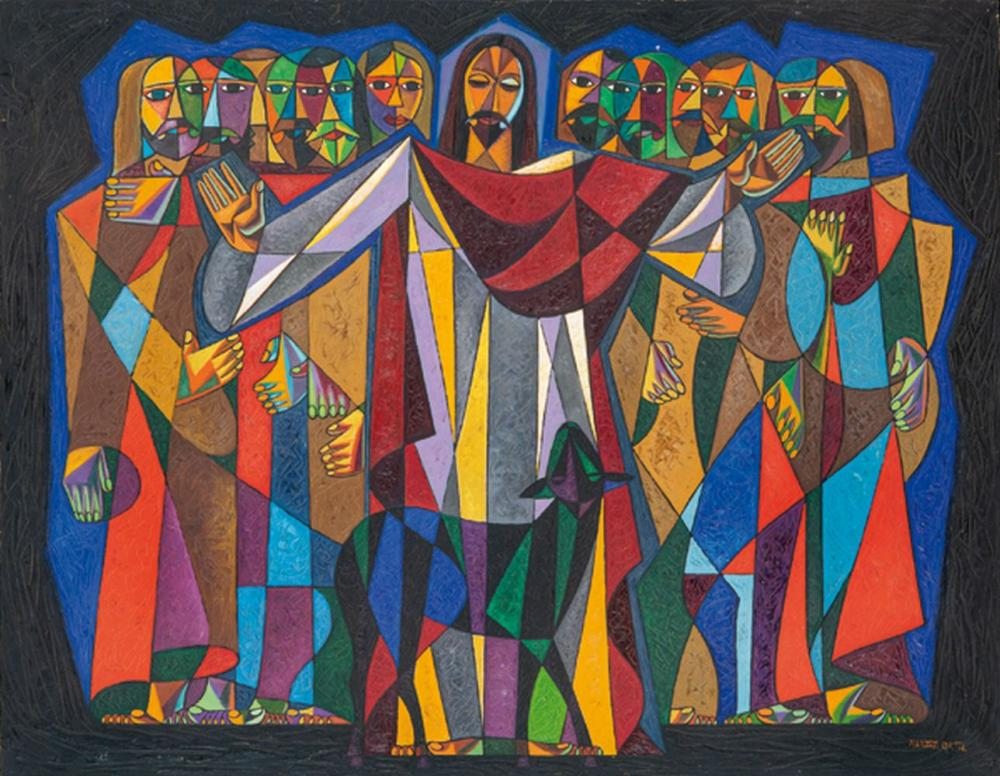
Why Are We Here? (Matthew 9:2-13)

Jesus heals and forgives a paralyzed man

Some men brought to him a paralyzed man, lying on a mat. When Jesus saw their faith, he said to the man, “Take heart, son; your sins are forgiven.”

At this, some of the teachers of the law said to themselves, “This fellow is blaspheming!”

Knowing their thoughts, Jesus said, “Why do you entertain evil thoughts in your hearts? Which is easier: to say, ‘Your sins are forgiven,’ or to say, ‘Get up and walk’? But I want you to know that the Son of Man has authority on earth to forgive sins.” So he said to the paralyzed man, “Get up, take your mat and go home.” Then the man got up and went home. When the crowd saw this, they were filled with awe; and they praised God, who had given such authority to man.

As Jesus went on from there, he saw a man named Matthew sitting at the tax collector’s booth. “Follow me,” he told him, and Matthew got up and followed him.

While Jesus was having dinner at Matthew’s house, many tax collectors and sinners came and ate with him and his disciples. When the Pharisees saw this, they asked his disciples, “Why does your teacher eat with tax collectors and sinners?”

On hearing this, Jesus said, “It is not the healthy who need a doctor, but the sick. But go and learn what this means: ‘I desire mercy, not sacrifice.’ For I have not come to call the righteous, but sinners.” (New International Version)

“The church is a hospital for sinners, not a museum of saints.”

Abigail Van Buren (“Dear Abby”)

Why does the Church exist? Why did Jesus come to this earth? What are we supposed to be doing? Does Christianity make any difference in this world? Why are we here?

The Church is not on this earth solely for the benefit of Christians, any more than a hospital exists for the benefit of the doctors or insurance companies.

Rather, the Church is designed to extend the mission of Jesus through proclamation of good news with the restorative touch of grace. The Church is the community of the redeemed, gathered together for worship and encouragement, and then sent into the world to be the continuing presence of Jesus on this earth.

This mean that the Church’s calling is not to find others who can help them with their tithing and budget, or to keep the pews warm with fresh bottoms.

Some folks are not healthy. Some are sick physically, and others spiritually. Even more are emotionally brokenhearted. And then there are those who are sick-and-tired of being sick-and-tired.

Please know that Jesus came neither to condemn nor heap a pile of unrealistic expectations on us. Christ points us to the source of healing and transformation, and invites us to come to him. 

Conversely, there are many other people today who are healthy, spiritually alive, and have a good well-being. And they possess the opportunity to participate in ways that bring holistic healing to the world as Christians. The mission of Jesus is our mission, as well.

Jesus came to bring forgiveness and transformation. In today’s Gospel healing, it was a case where the person’s paralysis was both physical and spiritual. The paralytic found in Jesus healing of both body and soul.
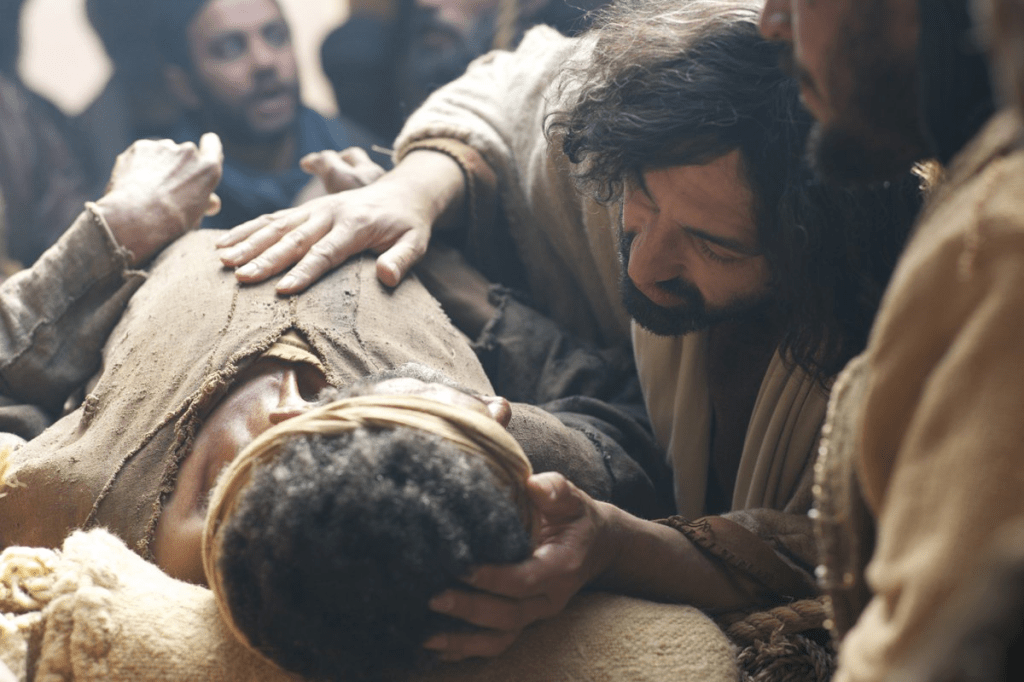
The religious insiders observed the healing of the paralytic. Yet, they didn’t rejoice over it. Instead, they were hung up on Jesus claiming to be God. Although this may have been a hard truth to accept, Jesus labeled their response as evil – because of an inability to perceive the situation as a divine intervention. Since the religious insiders wrongly discerned who Jesus is, they wrongly interpreted the situation. 

It’s important to see Jesus as the Human One who extends compassion and forgiveness. If we fail to see this about Christ, we will get caught up in all kinds of silly matters concerning personal preferences and power plays, based in how we think things should go, rather than how God is shaking out things.

Jesus came to forgive our guilt and shame. Healing the body is good, but it’s not enough. Christ came to heal both the body and the spirit. At the heart of the human condition is spiritual brokenness, and Jesus wants to remove the obstacle of sin and create a new healthy society. This is a radical vision which seeks to encompass all persons – which means Jesus touched many people overlooked by others.

Jesus came to call the despised people of society, the “sinners.” He called Matthew, a tax collector. Tax collectors were hated. They were corrupt characters who extorted money from innocent people. And furthermore, Jesus had dinner with Matthew, along with all of his unsavory buddies. This kind of behavior by Jesus was deeply offensive to upstanding citizens.

However, Jesus did not back down, saying that it’s not the healthy who need a doctor, but the sick. And he backed up his social actions with Scripture by encouraging offended folks to meditate on what the biblical phrase, “I desire mercy, not sacrifice.” (Hosea 6:6)

It is possible to engage in outward rituals of worship, do all the right things, fulfill duty, yet still miss the heart of what God wants for humanity. Mercy is what God wants. Jesus knew this. So, Christ entangled himself with sinners to bring spiritual healing and restoration.

If we want to see God deliver people from their unhealthy situations, we must entangle ourselves with them, into complicated lives that are not pretty, with persons who have been tainted by sin. 

Lots of people are in awful predicaments. Christians, like their Lord, will need to get their hands dirty and their feet wet to extend Christ’s ministry of mercy and forgiveness.

The gospel was never intended to be proclaimed from afar, but up close and personal. The merciful mission of Jesus requires the following three activities:

  1. Intimacy with Jesus. Engaging in the spiritual disciplines of prayer, giving, fasting, reading, and meditating on Scripture. These practices help us to know Christ better and how to respond with mercy.
  2. Intimacy with fellow believers. We are hard-wired by God for community. Superficial relationships only provide superficial community. Christians need to help one another with spiritual growth, and to hold one another accountable for the mission of Christ.
  3. Intimacy with “sinners.” This world is filled with sick, needy, hurting, and lonely people who are locked in unhealthy patterns of living. They need a merciful change of life that comes from the merciful Jesus acting through merciful Christians. 

Mercy, not judgment, is at the heart of all change. For things to be different, we must be acquainted with mercy.

Most merciful God, we confess we have sinned against you in thought, word, deed, and neglect. We have not held fast to your commandments and have strayed from your teachings. We turn away from self-centered actions and pride. For the sake of your Son, Jesus, have mercy on us and forgive us so that we are released from all sinful obstacles. Empower us with your wisdom, revelation, and discernment so that we might be your merciful hands, feet, and words to one another and those who do not yet know you. Amen.

Speak the Good Word (2 Timothy 4:1-5)

St. Paul the Apostle, Unknown artist

I’m giving you this commission in the presence of God and of Christ Jesus, who is coming to judge the living and the dead, and by his appearance and his kingdom. Preach the word. Be ready to do it whether it is convenient or inconvenient. Correct, confront, and encourage with patience and instruction. 

There will come a time when people will not tolerate sound teaching. They will collect teachers who say what they want to hear because they are self-centered. They will turn their back on the truth and turn to myths. But you must keep control of yourself in all circumstances. Endure suffering, do the work of a preacher of the good news, and carry out your service fully. (Common English Bible)

This letter from the Apostle Paul to Pastor Timothy was the last writing he ever crafted. Soon after sending this, according to historical tradition, Paul was martyred for his faith in the city of Rome, having been imprisoned there for two years. The letter contains some final words the Apostle wanted his young protégé to know that were important to him.

Paul left Timothy with a sacred charge to proclaim the gracious message of God – no matter the time nor circumstance – with all the divine patience and spiritual exhortation that the Lord gives.

A Word of Christ

The simple commission of Paul was to preach the word, proclaim the message, spread the good news. Paul called on Timothy to speak the word that God has spoken – the word passed on to him, first through his devout mother, then from his mentor, and finally from all the apostles. It’s a unified message of sound teaching concerning the person and work of Jesus Christ – God-breathed and committed to all God’s people who respond to the message in faith.

The responsibility is to not only hear the message, obey it, and guard it’s truth; the charge is to speak, to lift one’s voice and proclaim the message with confidence and without fear – because it is always open season on the proclamation of the gospel.

I don’t know what sort of picture this evokes for you to “preach the word.” Maybe you envision a preacher behind a pulpit in a church; or a guy with a bullhorn on a street corner; or an obnoxious coworker who takes any opportunity to puke the gospel onto another person; or some other picture which may be foreign to you.

Paul preaches in Athens, Unknown artist, 19th century

Please let me assure you that the Apostle Paul was not talking about any of those sorts of scenarios. The image is one of letting out something which is already inside of you, burning to come out and be heard.

It is to be so full of the life of Christ, that the words which come out of you are filled with that very life – a message of grace, redemption, hope, forgiveness, and love. And communicated in a way that also reflects the person of Jesus – an affect, gestures, posture, and tone of voice that resonates with another and is winsome, not annoying.

A Relevant Word

The person who proclaims the message of Christ does so in order to convince, encourage, rebuke, inform, and love. The messenger tells what another needs to hear, and not necessarily what they want to hear. This is a word that speaks to anyone in any situation within any sort of context or culture.

To speak with relevance in no way waters down the message of Christ. Rather, it means that the speaker takes great pains to talk in such a way as to help another in their own circumstance. Utilizing the mind and emotions, as well as the spirit, the preacher presents ideas, ethics, and feelings in order to announce good news.

And we are to always be patient with others. One must never resort to pressurized sales tactics to force another into the kingdom of God. The Word of God is a gracious message that provides life; and is not a big thick Bible that is used to smack somebody upside the head with condemnation.

Our responsibility is to be faithful in handling the message and proclaiming it with mercy. It is the Holy Spirit’s job to woo people to Jesus and purify them.

Don’t throw all over somebody a bucket of judgment, as if you are acting for God. Impatience, impertinence, impoliteness, and being impetuous, all belong to the devil’s imps, and have nothing to do with announcing good news of great joy for all the people.

An Uncompromising Word

Timothy lived in a society that was difficult in proclaiming the message of Jesus Christ. He lived in a city that had a grand temple to the goddess Artemis. He walked around seeing unethical practices and dubious living. Any of us would likely understand if Timothy shrunk back from having a bold proclamation of Christianity.

Paul speaking in the synagogue, a 12th century Byzantine mosaic

But the Apostle Paul was calling Timothy to preach good news without shrinking or shirking the message. One might be tempted to simply tell others what they’d like to hear and not stir the pot and cause any sort of conflict. Not everyone wants to hear the truth. For everyone who genuinely responds to a truthful and merciful message, there are four more persons who want none of it. They want what they want, and if someone says different, they’ll make their life hell.

These are the conspiracy theorists who would rather entertain spicy nuggets of opinion and speculation, than listen to evidence-based research and professionally peer reviewed material. They ground their ideas according to subjective taste and forsake objective documentation and witness.

Paul did not want Timothy coddling such persons or giving into them in any form whatsoever, because they have a severe hearing problem. People who won’t listen, constantly interrupt others, and believe they are always right, need a good dose of the uncompromising word of Christ.

In the face of those who refuse to listen and use their ears for good, Timothy was exhorted by Paul to be a steady teacher who keeps presenting the truth in intellectually and emotionally responsible ways. Timothy may have to endure suffering and put up with a bunch of simpletons giving him a hard time, but he was never to back down from sound and solid apostolic teaching.

It’s important that we all maintain a sense of emotional calm and intellectual soundness amidst all the crud within a given society. The believer is to avoid a discouragement that leads to abject silence.

Let us not be deterred from saying and doing what is right, just, and good. And let’s make sure that in the words we say and the behavior we display, there is the very life of Jesus Christ oozing out of us.

There are more than enough bad words being spoken every day; let’s instead speak the good word, full of grace and truth.

Soli Deo Gloria

The Source of True Godliness (1 Timothy 3:14-16)

Jesus Christ and the Apostles, by Nicolás Martínez Ortiz (1907-1990)

Although I hope to come to you soon, I am writing you these instructions so that, if I am delayed, you will know how people ought to conduct themselves in God’s household, which is the church of the living God, the pillar and foundation of the truth. Beyond all question, the mystery from which true godliness springs is great:

He appeared in the flesh,
    was vindicated by the Spirit,
was seen by angels,
    was preached among the nations,
was believed on in the world,
    was taken up in glory. (New International Version)

Godliness is an important thing for those who seek to follow God.

So, the Apostle Paul wrote to his young protégé, Timothy, who was leading the church in Ephesus. Paul gave Timothy some sound practical instructions regarding how things ought to be conducted between pastor and people. Paul did this because he wasn’t quite sure how long it would be before he could show up in person, and he wanted to ensure that the ministry would go forward in a way that honored Christ.

Christian ministry is important because it doesn’t simply have to do with one’s private abilities and affairs. Rather, Christian leaders and pastors are entrusted with the household of God, the church. Believers are a holy sanctuary of the soul, the place where God dwells by means of the Spirit.

The Church is not a brick and mortar building, but the place of the living God, the pillar and foundation of the truth. Pastor and parishioners alike are to support the truth of the gospel, that is, the good news about the person and work of Jesus Christ.

Both believers and bishops who make up the Church support gospel truth by doing the following:

  1. Hear and heed the truth. “Whoever has ears to hear, let them hear… This is the meaning of the parable: The seed is the word of God. Those along the path are the ones who hear, and then the devil comes and takes away the word from their hearts, so that they may not believe and be saved. Those on the rocky ground are the ones who receive the word with joy when they hear it, but they have no root. They believe for a while, but in the time of testing they fall away. The seed that fell among thorns stands for those who hear, but as they go on their way they are choked by life’s worries, riches and pleasures, and they do not mature. But the seed on good soil stands for those with a noble and good heart, who hear the word, retain it, and by persevering produce a crop.” (Luke 8:8, 11-15, NIV)
  2. Handle the truth rightly. Make an effort to present yourself to God as a tried-and-true worker, who doesn’t need to be ashamed but is one who interprets the message of truth correctly. (2 Timothy 2:15, CEB)
  3. Hide the truth in your heart. I have hidden your word in my heart that I might not sin against you. (Psalm 119:11, NIV)
  4. Hold the truth as the Word of Life. Hold firmly to the word of life; then, on the day of Christ’s return, I will be proud that I did not run the race in vain and that my work was not useless. (Philippians 2:16, NLT)
  5. Ingest and digest the truth. Study, meditate, and devote yourself to God’s Word. Your words were found, and I ate them, and Your word was to me the joy and rejoicing of my heart. (Jeremiah 15:16, NKJV) You must not depend on bread alone to sustain you, but on everything that the Lord says. (Deuteronomy 8:3, GNT)
  6. Interest yourself in the truth, and defend it. “I have been put here for the defense of the gospel.” (Philippians 1:16, NRSV) I must write and ask you to defend the faith that God has once for all given to his people. (Jude 1:3, CEV)
  7. Impart the truth and disseminate it to others. The unfolding of your words gives light; it imparts understanding to the simple. (Psalm 119:130, NRSV) Teach these new disciples to obey all the commands I have given you. (Matthew 28:20, NLT)
  8. Indicate and demonstrate the power of the truth in the way you live your life. Let the message about Christ completely fill your lives, while you use all your wisdom to teach and instruct each other. With thankful hearts, sing psalms, hymns, and spiritual songs to God. Whatever you say or do should be done in the name of the Lord Jesus, as you give thanks to God the Father because of him. (Colossians 3:16-17, CEV)

The Church is a big deal because the head of the Church, Jesus Christ, is a big deal.

In many quarters of the world, the Church no longer has much influence or impact. For some, the Church is nothing more than an outdated antiquarian club that’s irrelevant to us today. For others, the Church is an abusive institution that looks to extend selfish power over others. And for many, the Church is simply not something they want to be a part of, having neither strong opinions one way nor the other.

Yet, the Apostle Paul, in his letters to all the churches, presents the Church as united to Christ and an extension of his person and work on this earth. Now, that’s a big deal!

Therefore, the Church is meant to confess Christ in its daily witness in all it says and does. In other words, the Church is to embody the words and ways of Jesus, and even Christ himself, by means of God’s Holy Spirit.

Everything about the Christian is to exude the very life of Christ.

How we can possess such a vital union and connection with Jesus is a mystery. Rather than trying to understand it, we embrace it and live it with all the energy the Spirit of God grants us.

We do, however, seek to know Jesus Christ ever more, every day. The more we know Christ, the better we will be able to know the height and depth of love, and to extend that love in all the places of this fallen planet that lack it. This is where true godliness and goodness spring from.

The Church everywhere and for all time confesses and proclaims that Jesus Christ descended to this earth, was visibly seen in a human body by both people and angels, proved right by the invisible Spirit, proclaimed among all kinds of peoples, believed in all over the world, and ascended into heavenly glory.

After two thousand years of church history, Christians are still unpacking the incredible richness and mystery of what all that means for us and for our salvation. And it is a spiritual journey worth taking for the rest of our lives.

May I walk this day, O Christ, in the realm of grace, walking with you, my feet firmly on your earth-path, my heart loving all as kindred, my words and deeds alive with justice. Amen.

The Mediator and Leader (Psalm 110:1-4)

The Lord said to my lord,
    “Sit here at my right side
    until I put your enemies under your feet.”
From Zion the Lord will extend your royal power.
    “Rule over your enemies,” he says.
On the day you fight your enemies,
    your people will volunteer.
Like the dew of early morning
    your young men will come to you on the sacred hills.

The Lord made a solemn promise and will not take it back:
    “You will be a priest forever
    in the priestly order of Melchizedek.” (Good News Translation)

This is the most quoted psalm in the New Testament (twenty-four times) with the reason being that the apostles discerned Jesus as the messianic ruler of Psalm 110. The author of Hebrews purposed to highlight the superiority of Jesus Christ over everyone and everything. So, he went to this psalm, and used it early in his letter for the beginning of his argument:

In the past God spoke to our ancestors through the prophets at many times and in various ways, but in these last days he has spoken to us by his Son, whom he appointed heir of all things, and through whom also he made the universe. The Son is the radiance of God’s glory and the exact representation of his being, sustaining all things by his powerful word. After he had provided purification for sins, he sat down at the right hand of the Majesty in heaven. So, he became as much superior to the angels as the name he has inherited is superior to theirs….

But about the Son he says,

“Your throne, O God, will last for ever and ever;
    a scepter of justice will be the scepter of your kingdom.
You have loved righteousness and hated wickedness;
    therefore God, your God, has set you above your companions
    by anointing you with the oil of joy.”

He also says,

“In the beginning, Lord, you laid the foundations of the earth,
    and the heavens are the work of your hands.
They will perish, but you remain;
    they will all wear out like a garment.
You will roll them up like a robe;
    like a garment they will be changed.
But you remain the same,
    and your years will never end.”

To which of the angels did God ever say,

“Sit at my right hand
    until I make your enemies
    a footstool for your feet”? (Hebrews 1:1-13, NIV)

In Christianity, Jesus is the ultimate Mediator between God and humanity. Neither angel nor any other human can fill such a role. The author of Hebrews wanted to make it clear that Jesus is the rightful Ruler of all creation.

Christ’s authority is far and above all others. So, Christians are never defenseless in this world. Believers have a caring mediator, and a powerful sovereign, knowing that Jesus has the authority to back up his words of love and assurance toward us.

Jesus has the unique combination of being both a king and a priest; he intercedes for us and provides us with compassionate leadership. Again, in the middle of his argument, the author of Hebrews used Psalm 110 to emphasize this:

Every high priest is selected from among the people and is appointed to represent the people in matters related to God, to offer gifts and sacrifices for sins. He can deal gently with those who are ignorant and are going astray, since he himself is subject to weakness. Therefore, he has to offer sacrifices for his own sins, as well as for the sins of the people. And no one takes this honor on himself, but he receives it when called by God, just as Aaron was.

In the same way, Christ did not take on himself the glory of becoming a high priest. But God said to him,

“You are my Son;
    today I have become your Father.”

And he says in another place,

“You are a priest forever,
    in the order of Melchizedek.”

During the days of Jesus’ life on earth, he offered up prayers and petitions with fervent cries and tears to the one who could save him from death, and he was heard because of his reverent submission. Son though he was, he learned obedience from what he suffered and once made perfect, he became the source of eternal salvation for all who obey him and was designated by God to be high priest in the order of Melchizedek. (Hebrews 5:1-10, NIV)

Christ demonstrated and proved that he is qualified to be the rightful priest and king because of his obedient suffering. Therefore, Jesus is perfectly suited and able to help us. He is neither a detached nor an aloof priestly king.

The Lord Jesus knows exactly what it’s like to be a human in this broken and fallen world. Such divine empathy translates into solid emotional and spiritual support because, as the Christian tradition holds, Jesus has taken care of the sin issue once for all through the Cross.

The Messiah’s enemies – whose eventual and final defeat is certain – are not Gentile kingdoms or human institutions. Christ’s ultimate foes are the hostile and evil principalities and powers of this dark world, including death itself. The universal reign of Jesus, the exalted Son of David, brings deliverance from guilt, shame, and injustice as the unique God-Man.

In this unabashed Christian view of Psalm 110, Jesus is our perfected high priest who is able for all time to save those who approach God, since he always lives to make intercession for us (Hebrews 7:25). The appropriate response to such a great king and priest is submissive loyalty and eternal praise.

O Lord our God: Reign in power over us, through your Son, Jesus Christ – for he is exalted over all governments and authorities, all ideologies and creeds, and all human hearts and souls. King Jesus: Be enthroned in our lives, in all people everywhere, as our mediator and atoning sacrifice. Spirit of God: Reign in power over us through Jesus Christ and give us the victory over all the enemies of our souls, within and without, for the glory of your Name. Amen.