Burt Ward as Robin, and Adam West as Batman, in the 1960’s TV show
In some Christian traditions, Holy Week – observing the last earthly week of Christ’s life on earth – is either forgotten or neglected. And those that do recognize and observe it, this week can too easily become just something we do every year, without much meaning behind it. The following is a tongue-in-cheek way of reminding us of it’s importance, and recapturing it for the life of the Church…
“Robin, there is something seriously sinister afoot. It seems the people of Gotham have lost their sense of the story of Christ’s life, death, and resurrection.”
“Holy Holy Week, Batman! It must be the work of that arch-villain the Joker who has turned the narrative of Jesus into a by-gone joke… or maybe the Riddler who has made the redemptive events of Jesus into a complicated riddle that no one can solve… or maybe that fiend, Cat Woman, has finally found the purr-fect way to foil attention to the Lord Jesus.”
“I fear, Boy Wonder, that you have stumbled upon who is behind the loss of Holy Week… they are all conspiring together not just to create a spin on the life and death of Jesus, but to form a new narrative that doesn’t even include Christ at all.”
“Those dastardly demons of disaster! Let’s go get them, Batman! How could they have done such an ugly underhanded umbrage as that!?”
“Let’s use the Bat computer to analyze the evidence found at the crime scene churches…. Look, Robin, it seems a feculent film of gross gas has rendered the believers prone to the noxious notion that the Christian observance of Holy Week is optional, as if the journey with Jesus to the cross doesn’t need special attention. They are attempting to rewrite it all so that Christians will pass through this week without even a thought about Jesus… until it’s too late. Then they will sweep in and make all of Christianity into something that’s merely an accessory to life, like a petty plastic purse.”
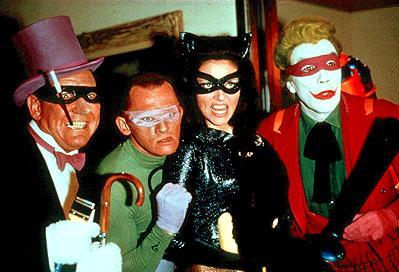
Burgess Meredith as the Penguin, Frank Gorshin as the Riddler, Lee Meriwether as the Catwoman, and Cesar Romero as the Joker, in the 1960s TV show Batman.
“Holy evisceration, Batman! They’re trying to do away with the Christian life and the story of Jesus altogether and replace it with their fiendish focus on the foul festering faith of fecund followers!”
“That’s right, Robin. It’s our job to stop them from following through with their platitudinous plot before it’s too late.”
“But how, Batman? Their vile villainy has already voiced a vacuous votum of veneered viciousness to any observance of the last week of Christ’s life on this earth.”
“Yes, Robin, but you are forgetting the one “v” word which has already spelled doom for our culprits of crime… “victory.”
“Holy resurrection, Batman! You’re right! All we need to do is voice the victory of Jesus and those bungling bandits of belief will get another “v” word: “vanquished!”
“Holy Week and all the major Christian seasons of the Church Year are meant to help us remember Jesus and follow Christ in our daily life. When strayed souls begin berating believers for observing obedience to Palm Sunday, Maundy Thursday, Good Friday, Holy (or Black) Saturday, and Easter Sunday then you can bet, Boy Wonder, that the gangsters’ gross gas of gullibility has fumigated their faith.”
“So, you’re saying, Batman, that the forgetting of faith festivals can be reversed through setting our sites on the contempt of the cross and the resplendence of the resurrection?”
“The cross is the mid-point of history, Robin, the very center of faithful followers. From it flows the flowering of all faith.”
“Holy forgiveness, Batman. I see it now. The sin issue has been taken care of once-for-all through the death of Jesus Christ. And his rising again has enabled us ignorant idiots of ignominy to live a new life of love through the words and ways of Christ.”
“And, don’t forget, Boy Wonder, that we get our faith focused through walking into those ways and words by highlighting holidays as eminently important to our crowded calendars.”
“Holy, holy, holy, is the Lord God Almighty, creator of heaven and earth; and, Jesus Christ his only Son, our Savior; who, with the Holy Spirit lives and reigns forever and ever!”
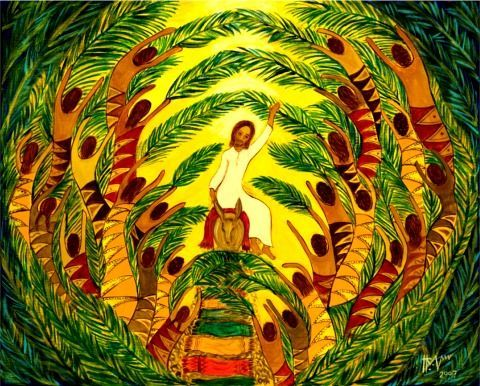
Christ enters Jerusalem, by Hanna-Cheriyan Varghese
The next day the great crowd that had come to the festival heard that Jesus was coming to Jerusalem. So they took branches of palm trees and went out to meet him, shouting,
“Hosanna! Blessed is the one who comes in the name of the Lord— the King of Israel!”
Jesus found a young donkey and sat on it, as it is written:
“Do not be afraid, daughter of Zion. Look, your king is coming, sitting on a donkey’s colt!”
His disciples did not understand these things at first, but when Jesus was glorified, then they remembered that these things had been written of him and had been done to him. (New Revised Standard Version)
Here are two questions to keep in mind as we consider Palm Sunday, the day we remember Jesus coming into Jerusalem during the Feast of Passover (Holy Week):
Is Jesus really enough for me, just the way he is?
Or, do I think he ought to be different than he is?
Many of the people who gathered to give Jesus praise at the beginning of the week, shouted to the Roman authorities to have him crucified at the end of the week. So, what changed? Why the big turn around?
The change in attitude came because Jesus did not fit the crowd’s expectations of who the Messiah is, and what he should do. Jesus, just as he is, was not enough for them. They did not accept him for who he was.
Let’s be aware and in touch with our own expectations for God, and for what we believe Jesus ought to be and to do. Because missed expectations create either hurt, anger, or both.
How we view Jesus determines how we view the Christian life and the Christian Church. If we see Jesus like an earthly king or politician, and emphasize his war chest, while downplaying his meekness, we will then have a triumphalist view of Christianity. We’ll be disappointed when there is no practical victory taking place.
The crowd wanted assurances that in Christ’s first 40 days in office, he would put the big hurt on the Roman authorities. The people had expectations of strong leadership, making things happen now, and accomplishing big hairy audacious goals of upending the establishment.
But if we view Jesus as the Gentle King and the Humble Sovereign – viewing him as lowly royalty – giving due emphasis to both his authority and his humility, then we will likely worship Jesus as he truly is, and not as we want him to be.
Most of the crowd was following Jesus with misguided expectations
Jesus did some incredible miracles, especially the one where he raised Lazarus from the dead. Over a million people came to Jerusalem every year during the week of Passover, and word had spread about a man who just might be the hope of Israel. They heard about his power and authority, and wanted to check him out.
And this is a good thing, not a bad thing. It’s important that people investigate Jesus and see for themselves who he is and what he’s all about.
Just because there are people who do not respond immediately to Jesus, doesn’t mean they won’t in the future. After all, even the disciples who were closest to Jesus did not fully understand who he was or what he was doing. Only later, after the resurrection and ascension, did they put it all together and “get it.” So, cut others (and yourself) some slack.
Let’s give a lot of latitude to people who seek Jesus. They need the good news of forgiveness and new life in Christ. They don’t need immediate pressure to follow Jesus, or given a set of moral rules to follow, right now, as if clean living brings salvation from sin, death, and hell.
People need room to investigate Jesus, and plenty of helpful guides along the way to point them in the right direction. So, let’s encourage honest questions and real conversations about Jesus.
However, some of the crowd checking out Jesus already had their minds made up about who they thought he should be. They had no room for a suffering servant and a humble savior, seeing only the sins of others, and not their own faults.
Those with closed minds believed Jesus should be a political liberator from the Gentile Romans. The crowd was understandably weary of being dominated by non-Jews. But what many wanted was some serious payback and a new establishment with Messiah in charge.
This would be like, in our own day, getting completely jazzed-up about a particular presidential candidate who did some incredible things on the campaign trail and is now entering Washington D.C. to a ticker-tape parade and lots of flag-waving.
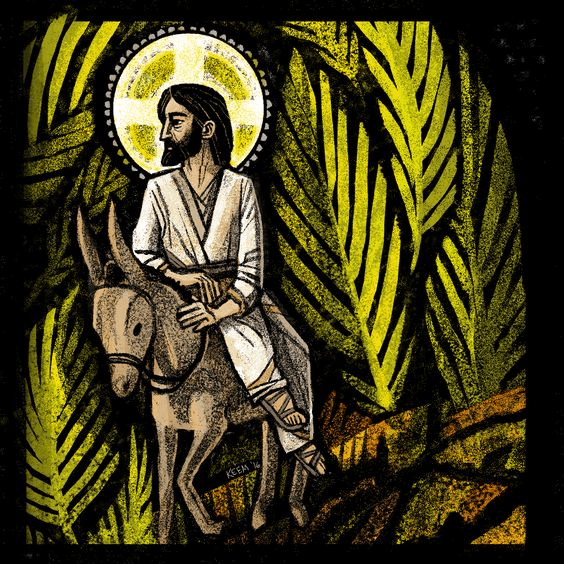
Art by Kris Miller
Palm branches were the national symbol for Israel, like our flag displays. There was no question about what the crowd of people wanted: A strong leader-king who was going to change the establishment and inaugurate a new administration of peace and prosperity that put the Romans in their place and give prominence to the Jews, like King David of old.
But Jesus made it evident he was not going to submit to what the crowd wanted. Christ had a different idea about what needed to take place.
Jesus did not ride into Jerusalem on a war horse, but on a donkey
An enthused crowd. People anticipating Jesus… and then he shows up! “What in the heck is he riding on…? Is that a donkey!?” It was an anti-climactic moment.
Jesus purposely chose a donkey to ride into Jerusalem – serving notice to everyone that he was not going to capitulate to the crowd’s agenda for him and become the political savior they were looking for. The establishment was not going to be overturned.
Christ was giving balance to the people about who he was. Yes, he actually is a king, and the sovereign Lord of all – but a gentle King, a humble Sovereign, a meek Messiah. Those adjectives were not in most people’s vocabulary for a king. But Jesus is a king on his terms, not anybody else’s.
Because Jesus is a gentle king, we need not be afraid
Sometimes, what we think we need, and what we actually need, are two different things. Jesus uses his royal authority and power to help, not hurt. Although he might not meet all the expectations of the crowd, that doesn’t mean he will avoid giving them what they really need.
The crowd was too hung up on their hardships and expecting deliverance from a human government. But what they received was something better: salvation from the dark powers of sin, death, and hell.
Jesus will certainly come and right every wrong, but he will do it in God’s timing, not ours.
In the meantime, when evil seems to be winning the day, we can be assured that God’s judgment will deal with each and every sin committed against God’s people. Jesus is attentive to his followers; his grace and power combine to give us what we truly need.
Conclusion
Ironically, Jesus ended up not being enough for his own people; they wanted something different than what they got. Here is the timeless point today’s story emphasizes:
We must adjust to who Jesus is, and not the other way around.
In truth, Jesus came to take on the establishment – just not the Roman one. Jesus came to overturn the ruling establishment of Satan and his wicked spirits; to upend the principalities and powers of this dark world.
Jesus came to take back the people of this earth for God, and he would not do it through a political revolution, but by a spiritual one. Jesus would seize power by becoming a sacrifice for sin, making it possible for people to live a new life without the world, the flesh, and the devil dogging them at every turn.
Jesus is the rightful Ruler of both the church and the world. And he rules in humility, meekness, gentleness, and love. Jesus calls his followers to serve him by living in that same way. Just a few days after the entrance into Jerusalem with palm branches waving, Jesus told his disciples exactly what he wanted from them:
“Now that I, your Lord and Teacher, have washed your feet, you also should wash one another’s feet. I have set you an example that you should do as I have done for you. I tell you the truth, no servant is greater than the master, nor is a messenger greater than the one who sent him (this is Jesus’ way of saying that they all must adjust to him, and not the other way around). Now that you know these things, you will be blessed if you do them.” (John 13:13-17, NIV)
Jesus went on to give them a clear command:
“Love one another. As I have loved you, so you must love one another (this is Jesus’ way of emphasizing what is to be the priority of his subjects in the kingdom of God). By this all men will know that you are my disciples if you love one another.” (John 13:34-35, NIV)
Jesus is engaging in a revolution, but not in a worldly sense. Christ sends his followers to spread the message of forgiveness and new life for individuals, families, workplaces, neighborhoods, and nations. It is a revolution that will be ushered in through love, not hate; through the violence of a singular sacrifice, and not through the violence of wars and political coups.
Is Jesus really enough for me, just the way he is? Or, do I believe he ought to be different than he is?
I daily strive to say, no matter the circumstance, that the grace of Jesus Christ is enough for me. If all were stripped and taken from me, if all the world were against me, if nothing went right and all was upside-down, I would still have the love of God in Jesus Christ. Amen.
A 10th century depiction of Christ healing a blind man
The disciples were confused as Jesus led them toward Jerusalem, and his other followers were afraid. Once again, Jesus took the twelve disciples aside and told them what was going to happen to him. He said:
We are now on our way to Jerusalem where the Son of Man will be handed over to the chief priests and the teachers of the Law of Moses. They will sentence him to death and hand him over to foreigners, who will make fun of him and spit on him. They will beat him and kill him. But three days later he will rise to life….
Jesus and his disciples went to Jericho. And as they were leaving, they were followed by a large crowd. A blind beggar by the name of Bartimaeus son of Timaeus was sitting beside the road. When he heard that it was Jesus from Nazareth, he shouted, “Jesus, Son of David, have pity on me!” Many people told the man to stop, but he shouted even louder, “Son of David, have pity on me!”
Jesus stopped and said, “Call him over!”
They called out to the blind man and said, “Don’t be afraid! Come on! He is calling for you.” The man threw off his coat as he jumped up and ran to Jesus.
Jesus asked, “What do you want me to do for you?”
The blind man answered, “Master, I want to see!”
Jesus told him, “You may go. Your eyes are healed because of your faith.”
At once the man could see, and he went down the road with Jesus. (Contemporary English Version)
“Irony” and “ironic” are terms describing when an outcome of an event is contrary or different from what would be expected.
Here are a few examples of irony: The firehouse burnt down. The police officer got arrested. When I was a kid, my family physician’s name was Dr. Fail (really!). There is an overarching ironic lesson to our Gospel story today:
The people following Jesus with 20/20 vision were spiritually blind.
Their great need is the same as blind Bartimaeus: To have their eyes opened to Jesus and to what God was doing around them. Bartimaeus was marvelously and miraculously given sight by Jesus – the others, however, remained unchanged and in the dark.
Irony #1: Many followed Jesus, but only a few were his followers.
All kinds of people physically followed Jesus around for various reasons while he was here on this earth. Some wanted to bask in the latest celebrity buzz that Jesus generated. Others wanted to see the cool stuff Jesus did, like healing people. Some were plain curious. And a few were interested in being like Jesus by showing selfless compassion.
Jesus continually sought to press the crowd following him into spiritual seekers who would learn to follow his teaching.
Many people conform to the group and go with the flow. That’s great if the crowd is good, and not so good if they’re going in a bad direction.
In the Old Testament, a few unruly complainers got the Israelites stirred up. The result was making a golden calf and turning away from God. Sometimes it is right and necessary to go against the crowd.
Irony #2: Out of all Christ’s followers, it is a blind man that sees Jesus for who he is: The Son of David.
Bartimaeus discerned it was Messiah who was walking by him. So, he went against the crowd and shouted to Jesus. Blind Bartimaeus didn’t care how he looked to others; it didn’t matter to him that he stuck out like a sore thumb to all the spiritually blind people.
Jesus often avoided crowds. Most of his earthly life occurred away from the centers of power and influence. Jesus swam upstream of the prevailing notions of righteousness. Christ did not cow-tow to the crowd. Instead, he paid attention to the needy and forgotten.
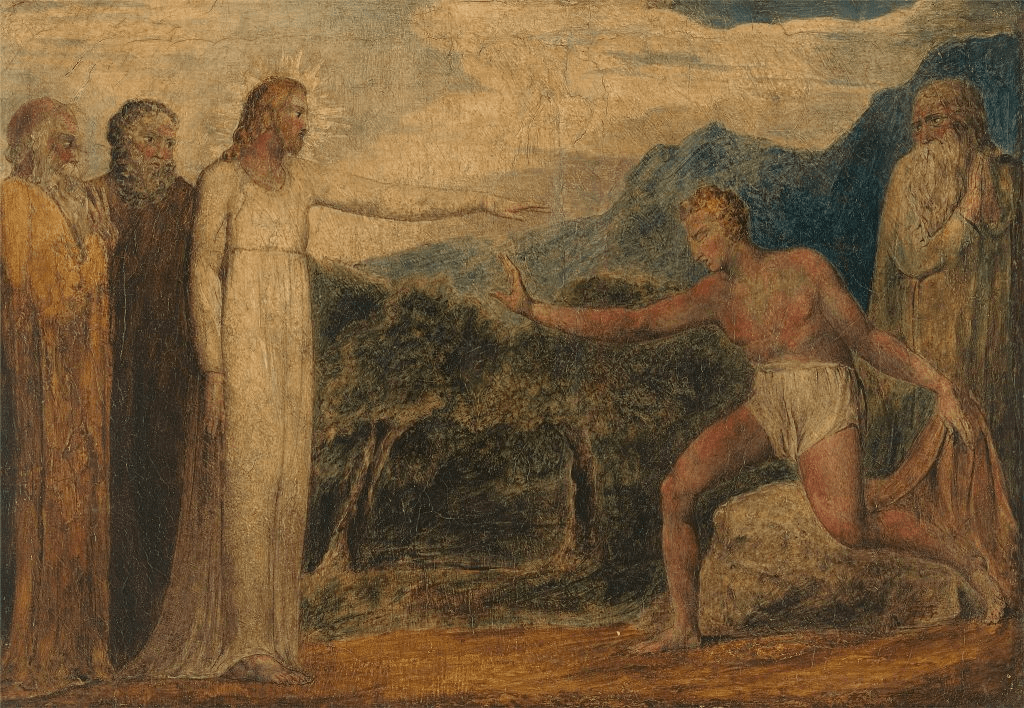
Christ Giving Sight to Bartimaeus, by William Blake (1757-1827)
And while in a large group of people, Jesus did not “work the crowd” to get ahead and further his agenda. He did not cozy-up to the rich and powerful. And Christ deliberately avoided celebrity status. Jesus showed extraordinary love to an overlooked person. He used his immense power for one powerless person.
Irony #3: The ones following Jesus were the ones trying to keep a blind man from Jesus.
One irony of the church is that Christ’s own followers can be the biggest obstacle to others following him.
I can just imagine a group of gossipy church folk shushing Bartimaeus: “Don’t bother Jesus, he is such a busy man! He has important work to do!” I can also picture them standing next to blind Bartimaeus saying, “Just stop, man, you’re embarrassing yourself.”
But Bartimaeus would not stop. He shouted all the louder. That’s because true and genuine faith is a needy person crying out in desperation for Jesus to help.
Jesus asked a beautiful question: “What do you want me to do for you?”
“I want to see,” Bartimaeus responded. So, Jesus had compassion on him, and gave him his sight. Here we have two men, Jesus and Bartimaeus, ignoring all the people around them, and having a divine encounter.
This encounter raises my curiosity as to why it is so hard for us to simply say what we want.
It could be that we don’t want to buck the crowd, or to look different. Maybe we don’t want to admit our need in front of others. So, we simply stick to superficial conversations and insist that everything is okay, when it isn’t.
Jesus said, concerning the crowd, “Although they see, they don’t really see.” (Matthew 13:13)
If we are concerned about how we are seen by others, we will not be seen by God; we will miss Jesus when he walks by, right in front of us.
Conclusion
How might we raise our ability to see Jesus and truly follow him as he desires us to?
Listen to Jesus
Jesus was headed to Jerusalem and had a lot on his mind and heart with anticipating his passion and death. Christ became attentive to Bartimaeus, out of all the people around him, because he was listening.
If we want to see Jesus and follow him, we must be listeners, and be attentive to compassion, like Jesus, to the needy and lowly among us.
I recently read a story from a Christian who lived during Nazi Germany. He said:
“I considered myself a Christian. We heard stories of what was happening to the Jews, but we tried to distance ourselves from it, because what could anyone do to stop it? A railroad track ran behind our small church, and each Sunday morning we could hear the whistle in the distance and then the wheels coming over the tracks.
“We became disturbed when we heard the cries coming from the train as it passed by. We realized it was carrying Jews like cattle in the cars! Week after week the whistle would blow. We dreaded to hear those wheels because we knew we would hear the cries of the Jews in route to a death camp. Their screams tormented us.
“So, when we heard the whistle blow, we began singing hymns. By the time the train came past our church, we were singing at the top of our voices. If we heard the screams, we sang more loudly, and soon we heard them no more.
“Years have passed, and no one talks about it anymore. But I still hear that train whistle in my sleep. God forgive me. Forgive all of us who called ourselves Christians yet did nothing to intervene.”
Respond to Jesus
Once Jesus listened, he responded by asking a question. Christ took the time to heal Bartimaeus.
Jesus could have simply healed him without even stopping. He could have started a healing factory where everyone with a need just moved through a line and got healed. But Jesus was doing more than giving sight; he was giving a blessing – the blessing of time and relationship.
The gospel is personal, which is why we ought to resist being non-relational in ministry to others.
Christian ministry is about blessing other people with the gift of relationship. It begins with recognizing self as the one who needs Jesus; and it starts with having our own eyes opened to see our own need, and then the great need of people around us.
God of all compassion, I confess that it is natural for me to do things my way. I recognize that I am limited, but that you know all things. I yield my spiritual eyesight to you so that my spiritual vision will be clear. Jesus Christ came to give sight to the blind and to open our eyes. I commit my ways to you so that I can see your ways and not just my own. Amen.
Such confidence we have through Christ before God. Not that we are competent in ourselves to claim anything for ourselves, but our competence comes from God. He has made us competent as ministers of a new covenant—not of the letter but of the Spirit; for the letter kills, but the Spirit gives life.
Now if the ministry that brought death, which was engraved in letters on stone, came with glory, so that the Israelites could not look steadily at the face of Moses because of its glory, transitory though it was, will not the ministry of the Spirit be even more glorious? If the ministry that brought condemnation was glorious, how much more glorious is the ministry that brings righteousness! For what was glorious has no glory now in comparison with the surpassing glory. And if what was transitory came with glory, how much greater is the glory of that which lasts! (New International Version)
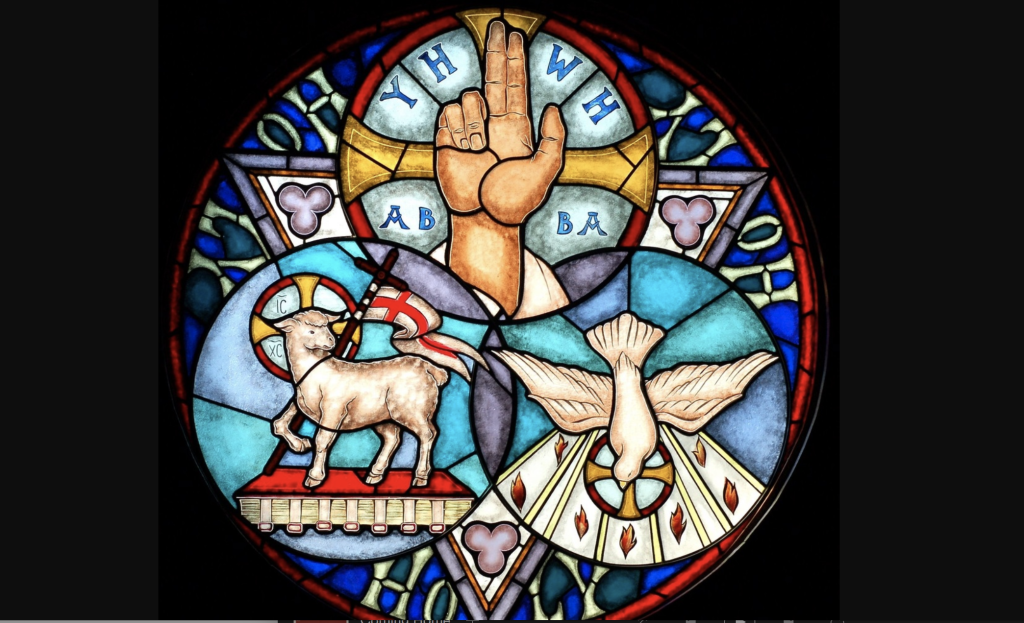
The Christian religious tradition holds to the great Three-in-One of God – God is indivisibly One, and at the same time, a Trinity of Father, Son, and Spirit. Christians typically have no problem expressing their prayers and devotion to the Persons of the Father and the Son, as well as connecting their ministry efforts to them.
However, when it comes to the Spirit, this Person of the Holy Trinity is often referred to as an “it” or a “force.” Yet, the Holy Spirit is as much God and a Person as the heavenly Father and the Savior, Jesus Christ. The Spirit is the One who provides the guidance and energy for Christian ministry – and not the Law.
We very much need the Holy Spirit of God. Without the Spirit’s help, Jesus is merely looked at as one person out of thousands of individuals crucified in history; and only an example of one who was martyred for his faith. But Jesus is infinitely more than that.
Christ is the Son of God, the Savior of the world. Through Jesus Christ’s life, death, resurrection and ascension, people can be redeemed from empty lives, saved from destructive life-patterns, and given the kind of security and purpose in life that God intended from the beginning for people to possess.
And the Spirit of God is the One that takes these redemptive events of Jesus and applies them to our lives. Apart from the Holy Spirit, we are lost, because we are unable to see the genuine spiritual truth about the cross of Jesus Christ unless God the Holy Spirit breaks into our lives and does an intervention – showing us our denial about how we are really doing and our delusions about who we really are (1 Corinthians 2:1-16).
This, then, is the basis for spiritual confidence. And this sort of confidence does not and cannot come from obedience to the Law.
Admitting that we absolutely need the Holy Spirit of God means that the power of Christianity does not reside with me or you; power for the Christian life rests upon Jesus Christ and him crucified, with the Spirit witnessing to us of this truth.
In other words, we are largely powerless.
Now, I realize this is not a popular message, especially in Western society. That sounds ridiculous to a particularly can-do kind of people, like most Americans. We believe we’ve done fairly well on our own, thank you very much. A couple of cars, a house, a job, and a family. I work hard. I’ve earned my stuff and my accomplishments.
But the thing is, any worldly success may lead us to the delusion that we have the power to do what we want – as if I am the sole captain of my soul. I did it. And I did it my way.
“Oh, sure,” many a person may reason, “we have problems just like everybody else. After all, I can’t control everything!” Yet, we are not powerless just because we have difficult circumstances and a few problem people in our lives. “God will step in a take-over where I leave off, right?” Wrong.
It’s all wrong, because it’s based in one’s effort to obey a personal creed, the rules of the game, or even the Law and the Ten Commandments. But if we could really do it on our own, there’s no need for any of this spiritual stuff.
In truth, apart from the Holy Spirit of God, we are unable to be Christians and live the Christian life. If we think we manage our lives just fine, with a bit of help from God, then we are likely in denial. We are probably placing ourselves at the center of the world; and believe we should be able to deal with whatever comes in life.
Whenever the consistent response to adverse situations, or the realization that we are not handling something well, is to try and fix ourselves, then we are surely living in the delusion that we hold the power to change – independently without anyone or anything helping us.
If our first reaction to adversity or problems is:
Searching Google for more knowledge
Dealing privately with personal issues
Expecting that willpower should be enough
Then, we are feeding the delusion that we do not really need the Holy Spirit of God; we are actually believing that we need more effort, or information, in order to find the power to overcome whatever is in my life that needs overcoming.
Unfortunately, it typically takes a tragedy or crisis to break our delusions of power. Let me ask: How bad must we hurt before we admit that we are not managing our lives well at all, and that the real power to change resides with the Holy Spirit?
Our spiritual power and confidence resides in the cross of Jesus Christ, with the Holy Spirit testifying to us of God’s great grace.
The Apostle Paul believed this with all his heart. Although he was a very intelligent and learned person, he did not rely on his abilities, but on God’s.
The cross of Jesus is not just an historical event, but an ongoing reality for us to experience victory over all the brokenness of this world, and all the mess we have made of things by putting ourselves at the center of the universe.
We need the Holy Spirit of God to intervene and apply Christ’s finished work to us.
None of this means that the Law, or that you, are bad. Both you and the Law are good. It’s just that we, by ourselves, and the Law by itself, are inadequate to save, deliver, and overcome. For that, we need God’s Spirit, and to tap into the spiritual reality that exists.
If the Ten Commandments were introduced with glory, and we ourselves were created with glory, then how much more glory and life is there through an intimate relation with the Spirit?
O God of peace, who has taught us that in returning and rest we shall be saved, in quietness and confidence shall be our strength: By the might of your Spirit lift us, we pray, to your presence, where we may be still and know that you are God; through Jesus Christ our Lord. Amen.