Luke 13:18-21 – What is the Kingdom of God Like?

A mustard seed

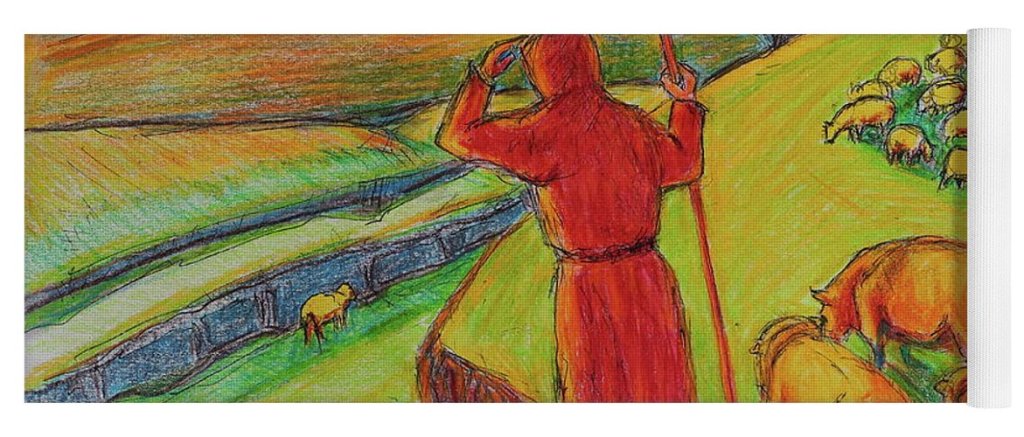
Jesus asked, “What is God’s kingdom like? What can I compare it to? It’s like a mustard seed that someone planted in a garden. It grew and became a tree, and the birds nested in its branches.”

He asked again, “What can I compare God’s kingdom to? It’s like yeast that a woman mixed into a large amount of flour until the yeast worked its way through all the dough.” (God’s Word Translation)

I grew up on a rural Mid-West America farm. Working with seeds was our livelihood. And making bread was second nature to us. Even though my parents worried incessantly about the weather and the price of groceries, there were two things they were never anxious about: seeds and yeast.

My dad knew that when we planted seeds in the Spring, there would be a harvest in the Fall. That’s because he knew the seed already has within itself everything it needs to germinate, take root, grow, and produce a harvest. His role was simply to tend to it all by keeping the fields free of weeds, worms, and critters.

My mom knew that when she put the bread in the oven, it would bake and rise into a glorious loaf. That’s because she had full confidence that the little bit of yeast she worked into the dough would do it’s job. Her role was simply to ensure the proper amount of ingredients and oversee the time and temperature of baking.

Since I was the youngest, I typically got the grunt work of our massive garden. I was always excited when we planted things because I knew what was coming in a few months: some delicious veggies on my dinner plate which were fresh from the garden I tended. I never wondered whether there would be food on the table, or not.

Seeds are, of course, small. If you think about it, they appear quite unimpressive. Yet, we know better. We understand that when planted, watered, and cultivated, those seeds turn into amazing plants. 

But it takes time. Even as dumb little kid, I clearly knew that my planting seeds would not result in seeing anything above ground the next day. I understood it would take a few weeks before new growth would break the ground.

The kingdom of God, Jesus told us, is like a mustard seed – a very small seed which can grow into a tree big enough for birds to nest. Unlike the mighty Roman Empire, or contemporary powerful national governments, the kingdom of God had humble beginnings. It grows, over a long period of time, to become a force greater than anything the world can produce.

While our world races forcefully on with the speed of the hare, Jesus is carefully and patiently building his church at the pace of a tortoise. In the end, the kingdom of God will rule over all creation, while the kingdoms of this world shall no longer exist. 

Even though many of us now live in a society where the quick, the fast, and the strong dominate everything, still the best things in life come as a result of tedious perseverance over an extended period of time. 

We are in such a hurry to accomplish our goals, make as much money as we can, and keep constant vigilance over our work. And for what purpose?

“What an unspeakable comfort it is to know that in the midst of humanity’s mischief, in the midst of their scheming and bad speculations, their shaping and misshaping, their activism and their failures, there is still another stream of events flowing silently on, that God is letting divine seeds grow and achieving divine ends.” 

Helmut Theilicke

Quiet, humble submission to King Jesus is at the heart of the kingdom. God is working-out good purposes in and through us with all the care of the farmer expecting to eventually reap a harvest. To get ourselves into the groove of God’s unforced rhythms of grace, we must learn to slow down, so as to not miss Christ’s benevolent kingdom. So, how do we do that?

  • Listen to yourself. Our bodies send us signals all the time, telling us what we need. There is a time for work and a time for rest, a time to hurry and a time to slow down. If we continually stressed, it could be that we are trying to force God’s kingdom into our lives or the lives of others.

But if you listen to me,
you will be safe and secure
    without fear of disaster. (Proverbs 1:33, CEV)

  • Practice gratitude. Count your blessings. Keep things in proper perspective. Sit with joy and happiness. Whenever something really good happens, slow down and savor the moment – don’t just quickly move on to the next thing. The kingdom of heaven revolves on thankfulness, not criticism.

O give thanks to the Lord, for he is good,
    for his steadfast love endures forever.
O give thanks to the God of gods,
    for his steadfast love endures forever.
O give thanks to the Lord of lords,
    for his steadfast love endures forever. (Psalm 136:1-3, NRSV)

  • Use breath prayers. Take some deep breaths. While inhaling, pray, “More of you, Lord.” And exhale saying, “Less of me.” Or inhale, praying, “Fill me with your Spirit,” then exhaling, “So that I may be a blessing.” Go ahead and develop your own prayers, as well.

“Speak, Lord, for your servant is listening.” (1 Samuel 3:10, NRSV)

  • Say, “no.” If we are in the habit of helping others, it can be hard to say “no.” But if we are working to understand how to slow down, learning to say “no” is a skill we need to develop. We must set boundaries and manage our time responsibility. That means leaving plenty of time to slow down, rest, observe, and relax.

Just say ‘yes’ and ‘no.’ When you manipulate words to get your own way, you go wrong. (Matthew 5:37, MSG)

  • Walk outdoors. Nature walks are an opportunity to stroll through God’s creation and notice the wonder that is all around us.

The heavens proclaim the glory of God.
    The skies display his craftsmanship.
Day after day they continue to speak;
    night after night they make him known.
They speak without a sound or word;
    their voice is never heard.
Yet their message has gone throughout the earth,
    and their words to all the world. (Psalm 19:1-4, NLT)

  • Ask for help. To ask for what we need and want is neither selfish nor a sign of weakness. Rather, piling on responsibilities only causes us to run ragged and never get around to slowing down. Asking for help requires humility, which is the very thing needed to enter the kingdom of heaven.

Jesus said, “Ask and it will be given to you; seek and you will find; knock and the door will be opened to you. For everyone who asks receives; the one who seeks finds; and to the one who knocks, the door will be opened.” (Matthew 7:7-8, NIV)

Spiritual formation and development are dependent upon slow growth over a long period of time. Don’t short circuit the process through accumulating more and more responsibility and constant busyness. Let God’s grace do its work and sense the kingdom of God near you.

Lord God, everlasting Father, you have brought me to this point in time.  Preserve me according to your unassuming power so that I might not be seduced by worldly might, nor be overcome by the rantings of politicians, but in all things daily direct me to the fulfilling of your purpose, through Jesus Christ, my Lord.  Amen.

Romans 2:12-16 – Doing, Not Just Hearing, Makes the Difference

If you sin without knowing what you’re doing, God takes that into account. But if you sin knowing full well what you’re doing, that’s a different story entirely. Merely hearing God’s law is a waste of your time if you don’t do what he commands. Doing, not hearing, is what makes the difference with God.

When outsiders who have never heard of God’s law follow it more or less by instinct, they confirm its truth by their obedience. They show that God’s law is not something alien, imposed on us from without, but woven into the very fabric of our creation. There is something deep within them that echoes God’s yes and no, right and wrong. Their response to God’s yes and no will become public knowledge on the day God makes his final decision about every man and woman. The Message from God that I proclaim through Jesus Christ considers all these differences. (The Message)

Every single person on planet earth has been created by a good Creator in the image and likeness of God, without exception.

Because we are all stamped with the Lord’s divine image deep within us, there is a universally inherent sense of justice, rightness, fairness, integrity, morality, and love. Particulars of ethics may differ from culture to culture, yet all persons and societies have a broadly similar innate understanding of right and wrong.

Within the ancient Roman Church were a mix of Jews (the historical people of God who were given the law and the covenant through Moses) and Gentiles (non-Jewish persons). The Apostle Paul wrote his lengthy and probing letter to them because the two groups of Jew and Gentile were at odds with one another.

The Gentile Christians could not understand the Jewish Christian fondness and insistence on ancient rules and particular commands, and so, they looked down on their brothers and sisters in the faith as being hopelessly locked into outdated traditions and practices.

Conversely, the Jewish Christians could not understand the Gentile Christian affinity for a freedom that seemed to not care about the religious importance of food and eating, seasons and holy days, and outward signs of Christianity, and so, they tended to look down on their brothers and sisters in the faith as ignorant, immature, and in need of ritual practices.

We are made right with God by placing our faith in Jesus Christ. And this is true for everyone who believes, no matter who we are.

Romans 3:22, NLT

The Church back then was almost like putting a group of people with O.C.D. (Obsessive-Compulsive Disorder) with a group of people with A.D.D. (Attention-Deficit Disorder). At the least, it’s going to very interesting to watch them try to live and worship together; at the worst, it’s going to spark an all-out battle for supremacy.

Paul was intervening somewhere in the middle between the interesting situation and the pitched battles so that the Church would not turn into total war. The last thing he wanted was two churches: one Jewish and one Gentile. No, there is one church, just as there is one God. Paul was determined that these knuckleheads are going to have to learn to get along.

Since Paul himself was a Jewish Christian, he tended to get pretty testy with his fellow Jews. Although Paul often went back-and-forth throughout his letter to the Romans, addressing Jews, then Gentiles, he most often had more to say to the Jewish brothers and sisters.

And that is what’s happening in today’s New Testament lesson. The Apostle Paul is directing his words chiefly toward the Jewish believers. He is lifting the Gentile believers and placing them on the same level as the Jews. Although the Gentiles weren’t the ones who received the law, they’ve always had that law deep inside them.

God is not only the God of the Jews. He is also the God of those who are not Jews. There is only one God. He will make Jews right with him by their faith, and he will also make non-Jews right with him through their faith.

Romans 3:29-30, ERV

Not only ought the Gentile Christians to be respected because of their inherent sense of God’s law, but this also makes them accountable for their own words and actions. In other words, there’s no excuse for any sinful talk or behavior.

What’s more, the real issue isn’t whether one group has the law, or not. The rub is whether one actually obeys and does the will of God. It doesn’t matter whether one hears the law read aloud in a Jewish synagogue or whether one hears the law spoken in the individual conscience. All are responsible for acting on that voice and engaging in deeds of justice, peace, and love. All must connect with the stamped image of God within us.

I’m not sure what is worse: committing overt sins or observing the sin and doing nothing about it. Indifference is at the core of most sin – both for the perpetrator and the passive spectator seeing it. Each one is living against both their conscience and by what they’ve heard and been taught.

The Word of God has not been truly received until it is put into practice. This is a consistent theme in the New Testament: 

Jesus said, “The people who are really blessed are the ones who hear and obey God’s message!”

Luke 11:28, CEV

Obey God’s message! Don’t fool yourselves by just listening to it. If you hear the message and don’t obey it, you are like people who stare at themselves in a mirrorand forget what they look like as soon as they leave. But you must never stop looking at the perfect law that sets you free. God will bless you in everything you do, if you listen and obey, and don’t just hear and forget. (James 1:22-25, CEV)

Listening to the Word without obedience is just that – it is mere hearing.

Profession of faith in Jesus means nothing without a practice of that faith.

Learning the Bible is useless without living it.

Acceptance of the Word is nothing more than a mental exercise without action to back it up.

Profession, knowledge, and acceptance alone does not satisfy God’s plan for our lives. 

The danger is that we have the potential to deceive ourselves into thinking we are okay just because we know the right things and believe the right things. Christianity is a vital love relationship with Jesus, and, so, is not merely a matter of hearing and affirming orthodox truth; it also involves orthopraxy, that is, having right practice, the doing of truth.

Whenever the Gentile Christians in Rome refused to love the Jewish Christians, they were not hearing God and doing his will.

Whenever the Jewish Christians listened to law and gospel, but then had no intention of changing to accommodate the Gentile Christians, they were being disobedient.

And whenever we hear about how God forgives us in Jesus’ name, but then we insist on not forgiving another person, we are not being doers of the Word.

So, let’s take a lesson from the ancient Roman Church: Live by faith. Be attentive to all persons in the Body of Christ. Include them and care for them. Pay attention to God’s Word. Include it and engraft into your life. Because care of the Body and care of the Word go hand-in-hand together.

May the God who created a world of diversity and vibrancy,
Go with us as we embrace life in all its fullness.

May the Son who teaches us to care for stranger and foreigners,
Go with us as we try to be good neighbors in our communities.

May the Spirit who breaks down our barriers and celebrates community,
Go with us as we find the courage to create a place of welcome for all. Amen.

Jesus Will Have None of It

Welcome, friends. As we journey with Jesus through this Lenten season, Christ is challenging four false assumptions about sin and guilt. Through parable and direct teaching, he insists we all must change – rather than simply looking for others to do so. Click the videos below, as we discover together that, when it comes to scapegoating and blame-shifting, Jesus will have none of it.

Pastor Tim Ehrhardt, Luke 13:1-9

Almighty and ever living God,
you invite us deeper into your world, your people, your Lent.
May this time be one of outward focus;
seeking you in those we often ignore.
Help us live a Lent focused on freedom, generosity, and encounter.
Give us hearts hungry to serve you
and those who need what we have to give. Amen.

Luke 13:1-9 – Jesus Will Have None of It

Now there were some present at that time who told Jesus about the Galileans whose blood Pilate had mixed with their sacrifices. Jesus answered, “Do you think that these Galileans were worse sinners than all the other Galileans because they suffered this way? I tell you, no! But unless you repent, you too will all perish. Or those eighteen who died when the tower in Siloam fell on them—do you think they were more guilty than all the others living in Jerusalem? I tell you, no! But unless you repent, you too will all perish.”

Then he told this parable: “A man had a fig tree growing in his vineyard, and he went to look for fruit on it but did not find any. So, he said to the man who took care of the vineyard, ‘For three years now I’ve been coming to look for fruit on this fig tree and haven’t found any. Cut it down! Why should it use up the soil?’

“‘Sir,’ the man replied, ‘leave it alone for one more year, and I’ll dig around it and fertilize it. If it bears fruit next year, fine! If not, then cut it down.’” (New International Version)

Jesus stood in a crowd of thousands of people. They peppered him with questions about all kinds of issues and situations. Christ responded with a combination of direct exhortations and pointed parables, designed to leave the people reflecting and thinking about what he said.

Christ’s direct exhortation is this: Repent. Change your mind. Christ’s pointed parable message is this: Bear fruit. Change your behavior.

The two go together. A fruitless life points to the need for repentance; and repentance results in bearing the fruit of love, joy, peace, patience, kindness, goodness, gentleness, and self-control.

Jesus, throughout his earthly ministry, relentlessly went after the fruitless dead religion of his day. Jesus believed that such religion needed to be cut out and thrown away. 

Therefore, the Lord exposed the assumptions that people have about sin, faith, and judgment. Jesus challenged four false assumptions or presuppositions that people often hold. In dealing with them, Jesus wanted to foster a change of heart which would lead to a change in behavior.

First Wrong Assumption: Other people’s sin is more serious than mine.

It’s a common human tendency to focus on the bad things in the world what other people do, rather than focus on our own heart and life. We can always identify people who are worse sinners than us! 

The crowd believed Pontius Pilate was a terrible sinner who needed to be dealt with, and they wanted Jesus to get on board to their way of thinking. The people wanted to talk trash about the Romans.

“Repentance is nothing else but a reformation of the whole life according to the Law of God.”

John Calvin

We must beware of people who constantly bemoan the state of the world and the sins of others, while ignoring their own issues or how they might be contributing to the problem. It’s so much easier to scapegoat a person or group of people, believing that if “those people” change, then everything will be okay.

But Jesus will have none of it.

Christ steered the discussion to personal repentance. Although you and I cannot control, change, or fix anyone, we can practice self-control, change our personal habits, and be the solution to our own problems.

Everywhere we go, the world is rife with criticisms and accusations of others. It’s always somebody else’s fault for the ills of the world and even the church.

Republicans blame Democrats. Democrats blame Republicans. Anti-vaxers blame the government. The vaccinated blame the previous government. Everyone thinks that if the other changes, all will be well. 

In the church, when things aren’t right, Christians might ask things like, “Who sinned, the pastor or the congregation, the church or the denomination?” With the decline of religion in the land, we look for a scapegoat. 

But Jesus will have none of it.

Christ cut through all the scapegoating and blame-shifting by saying that every single person needs to repent, without exception. Then, Jesus upped the ante with a parable by challenging us with a very probing thought: 

Are we bearing fruit, or just taking up space? 

Whenever we howl for judgment on others, but insist on grace for ourselves, we are the ones in need of repentance.

Second Assumption: My sin isn’t that serious.

When King Frederick II, an eighteenth-century King of Prussia, was visiting a prison in Berlin, the inmates insisted they had been unjustly imprisoned – all except one. That one sat quietly in a corner, while all the rest protested their innocence. Seeing him sitting there oblivious to the commotion, the king asked him what he was there for:

“Armed robbery, your Honor.”

The king asked, “Were you guilty?”

“Yes, Sir,” he answered. “I entirely deserve my punishment.”

The king then gave an order to the guard: “Release this guilty man. I don’t want him corrupting all these innocent people.”

We may concede that we are all sinners, but then struggle with believing that our personal sin really deserves imprisonment. So, we see no need for repentance. It isn’t that bad.

But Jesus will have none of it. 

Here are some questions raised by today’s Gospel lesson: 

Do I continually locate sin outside of my life, or do I discern the sinfulness of my own heart? 

Do I believe people in hardship are more sinful than me? 

Can I envision that I must change for the church and the world to change? 

Is my life fruitful, or fruitless? 

How can I become fruitful? 

What must I repent of? 

What will happen if I don’t repent?

Third Assumption: God will not judge me.

Some might concede we are all sinners, and my own sin is bad. “But is it really so bad that God would judge me?”  Again, the two big ideas Jesus is working with here is that everyone needs repentance, and everyone needs to bear spiritual fruit in keeping with such repentance. 

Jesus alerts us that the future involves a Judgment Day. All shall be held accountable for fruit-bearing, or the lack thereof. No fruit on the branch means it will be cut down and thrown into the fire.

Jesus was talking to a crowd of people who were quite religious. They were faithful temple worshipers, and had weekly practices of giving, fasting, and prayer. But they needed to repent of trusting in self and stuff. 

They believed God would judge the evil Romans and everyone else who did not live or think like them. They were God’s people; the Lord would not judge them!

But Jesus will have none of it.

The Lord almighty looked for justice, but saw bloodshed;
    for righteousness, but heard cries of distress. (Isaiah 5:7, NIV)

Learn to do right; seek justice.
    Defend the oppressed.
Take up the cause of the fatherless;
    plead the case of the widow.

Isaiah 1:17, NIV

Jesus wants spiritual fruit in keeping with repentance. Believing the right things and doing the right service never justifies indulging in hate, rage, anger, discord, selfish ambition, envy, impatience, unkindness, and ungraciousness. Doing a particular set of religious duties never gives one a license to use their attitude, their tongue, or their life in whatever way they want.

Fourth Assumption: I have plenty of time.

Okay, other people’s sin is not worse than mine. My sin is serious. God will deal with my sin if I do not repent. But I have time to deal with it, right? I will get around to it when I get a chance. 

But Jesus will have none of it.

Jesus was establishing a sense of urgency into the crowd. Repentance is not something to put off until tomorrow. Today is the day to deal with sin. If a lack of fruitfulness persists, judgment is imminent. Jesus was not trying to scare people into repentance; he was just letting them know that procrastination puts us in a precarious position. We don’t have unlimited time. We are on the clock.   

Just because God is gracious, merciful, kind, and patient does not mean that he won’t cut the dead religion tree down.

Today is the day of repentance, the day to quit looking for everyone else to repent and change, the day to take our own sin seriously, the day to discern that God does not show favoritism and will judge all persons equally and fairly. 

Today is the day because the hour is almost here when Jesus will return to judge the living and the dead.

Conclusion

So, we must repent of a lack of fruitfulness. The spiritual fruit God is looking for is love, joy, peace, patience, kindness, goodness, faithfulness, gentleness and self-control. 

When an apple trees bear fruit, some of those apples do not just bear the apple’s skin, some the apple’s core, some the apple’s meat. No! When an apple tree bears fruit, it bears apples – whole ones with all the things that make an apple an apple. 

There is no leg to stand on with the notion that I have love, but no patience; or display a lack of peace, but practice self-control. We either have the fruit of the Spirit, or we do not! If we have some of these, but not others, we have genetically modified fruit which has not been raised in the soil of the gospel.

Each one of us needs to look in our heart in this season of Lent and accurately assess the current state of our lives before God. Then, we need to repent, to change those things which the Spirit of God identifies. And, like a farmer, we are to cultivate, fertilize, and tend to our hearts in ways that will produce a crop.

Gracious God, our sins are too heavy to carry, too real to hide, and too deep to undo. Forgive what our lips tremble to name, what our hearts can no longer bear, and what has become for us a consuming fire of judgment. Set us free from a past that we cannot change; open to us a future in which we can be changed; and grant us grace to grow more and more in your likeness and image, through Jesus Christ, the light of the world. Amen.