Matthew 2:1-12 – Epiphany of the Lord

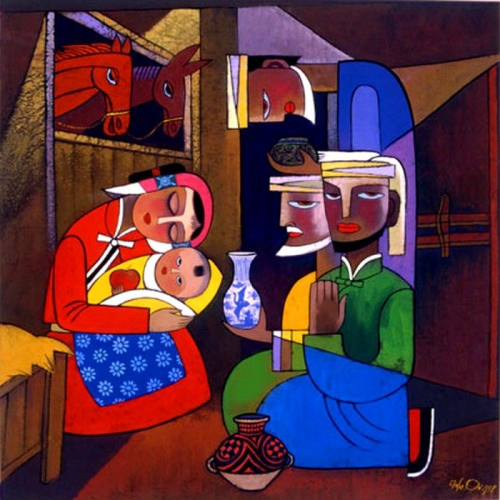
The Three Wise Men by He Qi

In the time of King Herod, after Jesus was born in Bethlehem of Judea, wise men from the East came to Jerusalem, asking, “Where is the child who has been born king of the Jews? For we observed his star at its rising and have come to pay him homage.” When King Herod heard this, he was frightened, and all Jerusalem with him; and calling together all the chief priests and scribes of the people, he inquired of them where the Messiah was to be born. They told him, “In Bethlehem of Judea; for so it has been written by the prophet:

‘And you, Bethlehem, in the land of Judah,
    are by no means least among the rulers of Judah;
for from you shall come a ruler
    who is to shepherd my people Israel.’”

Then Herod secretly called for the wise men and learned from them the exact time when the star had appeared. Then he sent them to Bethlehem, saying, “Go and search diligently for the child; and when you have found him, bring me word so that I may also go and pay him homage.” When they had heard the king, they set out; and there, ahead of them, went the star that they had seen at its rising, until it stopped over the place where the child was. When they saw that the star had stopped, they were overwhelmed with joy. On entering the house, they saw the child with Mary his mother; and they knelt down and paid him homage. Then, opening their treasure chests, they offered him gifts of gold, frankincense, and myrrh. And having been warned in a dream not to return to Herod, they left for their own country by another road. (New Revised Standard Version)

“Truth, by which the world is held together, has sprung from the earth, in order to be carried in a woman’s arms.”

St. Augustine

Each year on January 6 in the Church Calendar, after the twelve days of Christmas, is the celebration of Epiphany. Christ’s coming to this earth as a child and becoming like us is much more than a baby in a manger.  Epiphany helps to bring a vision and understanding of God’s glory to all kinds of people of the world.

Epiphany means “manifestation” or “appearance.”

The event associated with this season is the visit of the Magi to Jesus. The season of Epiphany has a special emphasis on the teaching and healing ministry of Jesus. The great celebration and focus of these weeks is that salvation is not limited to Israel but extends to the Gentiles, as well.

Every season in the Christian Year has its unique angle of grace. With Epiphany, we see that one of the most scandalous truths of Christianity is that God graces common ordinary people who seem far from God with the gift of Jesus. 

God grants repentance that leads to life for all kinds of people no matter their race, ethnicity, gender, class, or background. It is a wondrous and astounding spiritual truth that God’s gracious concern is not limited to a certain type of person or a particular group of people.

Grace is and ought to be the guiding factor in how we interact with people. 

Losing sight of grace leads to being critical and defensive. Like King Herod of old, a graceless person becomes enamored with earthly power and control. But embracing grace leads to the humility of seeing the image of God in people quite different from ourselves. 

Like the Apostle Peter, who learned in a vision to bring the gospel to non-Jews, old legalisms begin to wear away so that people from all walks of life can have access to Jesus and his gracious saving and healing ministry. (Acts 10-11:18)

Grace brings down barriers and causes us to do away with unnecessary distinctions between others. Our appropriate response to such a grace is to glorify God for his marvelous and amazing work.

It is a merciful reality that the Magi, or Wise Men, pagan astrologers, were directed to the Messiah. A light was provided to lead them to Jesus. Apart from God’s care and intervention they would have remained in darkness. 
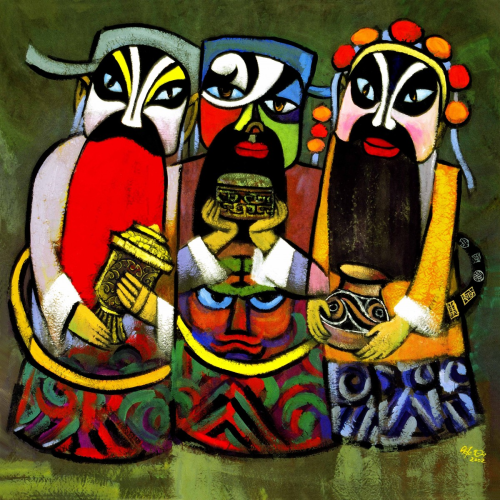
Adoration of the Magi by He Qi

It is still true for people today. This old broken world is wrapped in darkness. All kinds of people have no light at the end of the tunnel of their lives for hope and new life. The gospel of Jesus Christ brings that light to those unable to see. Jesus, in his teaching ministry, exhorted his followers not to hide their light but to let it shine for all to see. (Matthew 5:14-16)

Sometimes, maybe oftentimes, the best way to bring resolution to our own troubles and problems is through helping others make sense of their lives through the gracious light of Christ. Then, they can see an appearance, an epiphany, of what their lives could be in the gracious rule of the kingdom of God. 

As we celebrate Epiphany and journey with Jesus through his earthly upbringing and into his gracious ministry to people, let us keep vigilance to not let our light grow dim. Instead, let us hunger and thirst after Christ’s righteousness so that our joy is full, and our light is bright.

God of mercy, Lord of all, you have gifted the Church through the goodness of your grace to be your hands and do your work, to be your voice and share your words, to bring healing to broken lives. You have graciously gifted your people with the blessings of your Spirit, the power to transform lives and make all things new.

Now may our hearts receive, our mouths proclaim, our hands prepare for compassionate service so that the love we have may overflow into the hearts of others. May they receive your grace, your renewing Spirit, and your love, through Jesus Christ our Savior. Amen.


Acts 7:44-53 – Don’t Be a Church Curmudgeon

Muppets Statler and Waldorf

“Our ancestors carried the Tabernacle with them through the wilderness. It was constructed according to the plan God had shown to Moses. Years later, when Joshua led our ancestors in battle against the nations that God drove out of this land, the Tabernacle was taken with them into their new territory. And it stayed there until the time of King David.

“David found favor with God and asked for the privilege of building a permanent Temple for the God of Jacob. But it was Solomon who actually built it.However, the Most High doesn’t live in temples made by human hands. As the prophet says,

‘Heaven is my throne,
    and the earth is my footstool.
Could you build me a temple as good as that?’
    asks the Lord.
‘Could you build me such a resting place?
    Didn’t my hands make both heaven and earth?’

“You stubborn people! You are heathen at heart and deaf to the truth. Must you forever resist the Holy Spirit? That’s what your ancestors did, and so do you! Name one prophet your ancestors didn’t persecute! They even killed the ones who predicted the coming of the Righteous One—the Messiah whom you betrayed and murdered. You deliberately disobeyed God’s law, even though you received it from the hands of angels.” (New Living Translation)

On this eleventh day in the twelve days of the Christmas season, perhaps there are people who have moved on from the yearly celebration to daily complaints. A big reason why I personally hold to the Christian Calendar with its liturgical seasons is that it helps shape me spiritually so that I can avoid being a cranky old church curmudgeon.

It seems like some believers have been baptized in pickle juice. They have something negative to say about everything. And even when they acknowledge they don’t really understand something, they’ll still give a stony faced retort of “I’m against it.”

The liturgical calendar, when properly observed, keeps us grounded in faith, hope, and love. There are plenty of things in this old fallen world which can take our eyes off our calling as Christians. Pandemics, politics, poverty, and pain can mess with us. If we aren’t on solid spiritual ground, all the misfortunes of this life can take a significant toll on us. Then, like a stubborn old mule, we just sit down and don’t budge.

Like the ancient Israelites for whom Stephen railed against in our New Testament lesson for today, we might become hard-headed, and inflexible. We get lost in doing things our own way to the neglect of what God wants. 

Whenever that happens, there is damage to God’s people, God’s name, and God’s law. Rather than tongues being used for praising the Lord and encouraging others, God’s prophets who are calling us to holiness are verbally decapitated. Ironically, those who speak and act in the name of the Lord are resisting him.

“Pettiness of mind, ignorance and presumption are the cause of stubbornness, because stubborn people only want to believe what they themselves can imagine, and they can imagine very few things.”

Madeleine de Souvre

Anytime someone believes they have piously figured out everything, they will soon find themselves fighting against God. The Lord of All has not called us to figure out every mystery and nail down each uncertainty. Those who claim to have done it are living in a delusional world. Perhaps they will eventually discover how large and immense God really is – much bigger than our puny thoughts and misguided practices. 

How then shall we live?

Quit digging your heals in.

Let go of your illusions of power and privilege. Walking around like you’re King Lactose the Intolerant only looks weird and causes too many trips to the bathroom.

Submit afresh to the Lord for whom we must bow in all things. If we can do that, then we are well on our way to seeing the only true God in all his immensity. Humble ourselves under the mighty hand of God and set aside self-righteous pride so that he may exalt and honor us at the appropriate time of his choosing, not ours (1 Peter 5:6).

Take up our holy calling as Christ’s ambassadors, having become new people and knowing the reconciling power of the cross, through the proper spiritual tools of faith, hope, and love (2 Corinthians 5:17-21; 1 Corinthians 13).

The following practices can help us become more spiritually flexible and open to the Spirit’s work:

  • Stretch. If we are rarely or never in positions which work our faith, then that faith will diminish and eventually atrophy. Faith is not static, but dynamic. It needs to be worked ands stretched. And your face won’t break if you crack a smile now and then.
  • Breathe. Fear, worry, and anxiety cause us to have shallow breathing and unable to think straight. When we are amped-up about something, focus on doing some breath prayers, i.e., breathing in saying, “More of you,” and breathing out saying, “Less of me.”
  • Relax. A hyperextended faith will not support extreme positions which alienate people and put God to the test. Some folks just need to get off their high horse before God knocks them off. Nobody is helped by another’s forced beliefs.
  • Move. Faith is mostly lived in the mundane daily decisions of life. Consistently taking small steps of faith each day will go a long way toward our spiritual health and vitality – not to mention helping us see a big God at work.
  • Listen. Two ears. One mouth. Get the clue. Many people would be better served if they would just listen rather than incessantly talking. Behind all the bluster is typically an issue of wanting the kind of control God possesses.

To do the will of God, we must have a growing awareness and knowledge of a big unlimited God, and a small, limited self. This will take loosening up on the stubbornness and opening to greater flexibility.

If you are not in the habit of following the Christian Calendar through the year, now is a good time to start. After all, nobody wants to smell like they just crawled out of a pickle barrel.

Holy God, heaven is your throne and the earth your footstool. You cannot be kept within any one church or any single place.  You are much too big for that!  Forgive me for my small thoughts of you and my weak faith. I humble myself before you so that you can live in and through me for the sake of Jesus. Amen.

The Christian Year

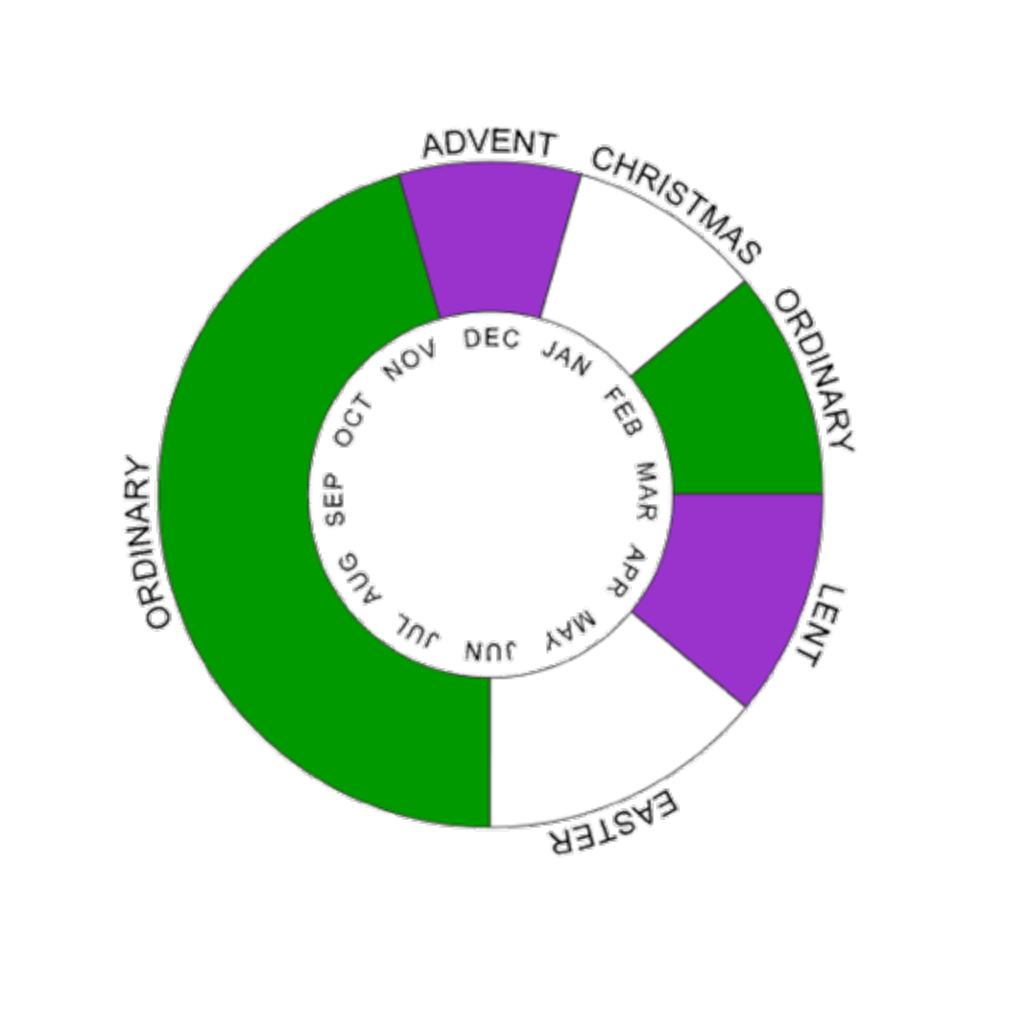
There are, in reality, two reasons to celebrate today. Not only is it right to say, “Happy Thanksgiving,” it’s also appropriate to say, “Happy New (Christian) Year!” That’s because, for the past two-thousand years, Christians have marked time differently than their secular culture.

The “Christian Year” (or “Church Calendar”) refers to a yearlong calendar that marks time according to God’s activities rather than ours. It is to live life in a rhythm with Christ at the center of worship.

Time is referenced in the Bible as both chronological (Chronos) and seasonal (Kairos). The Christian Year is a co-mingling of both these kinds of time. Liturgical Christians celebrate events in which God acted in history for the benefit of his people. In order to remember those moments, dates have been assigned on the Christian Calendar so that we will not forget these significant events and praise God for what he has done.

So, then, to observe The Christian Year helps Christians as God’s people to recall and retell the story of God, especially the redemptive events of Jesus. In doing so, it provides a guide for spiritual growth. The Christian Calendar is arranged in such a way as to proclaim the gospel of Jesus Christ over the course of a year. 

One of the ways this helps followers of Christ to remember distinct seasons is through the liturgical colors: 

  • Purple signifies a time for preparation and penitence.
  • White represents celebration, joy, and victory.
  • Green lets us know it is time to focus on spiritual growth and mission.
  • Red helps us recall the Passion of Christ and the fire of the Holy Spirit.

The Christian Year is organized and arranged with these seasons:

Advent The Christian Year begins not on January 1, but four Sundays before Christmas Day and up to Christmas Eve.  The purpose of Advent is to anticipate Christ’s incarnation and prepare Christians to celebrate the coming of Jesus.  We are also reminded that Jesus will return again at the end of the age.

Christmas Yes, Christmas is more than just a day on the Church Calendar and encompasses the twelve days from December 25 to January 5 (you may recognize the “12 Days of Christmas”).  Christmas is a celebration of the birth of Christ.

EpiphanyEpiphany follows Christmas from January 6 to the day before Ash Wednesday.  The term Epiphany means “manifestation.”  This is a celebration of God’s revelation, his manifestation to the entire world, not just to the Jews, but to the Gentiles, as well.  Epiphany emphasizes Jesus Christ’s earthly ministry of teaching, healing, and preaching.

Lent There are forty days in the season of Lent, from Ash Wednesday to Holy Saturday.  Lent is a time to recall Christ’s temptation, conflict, suffering, and death.  It is a season to contemplate Christian discipleship through the light of Christ’s Passion, engage in repentance, and put deliberate focus on spiritual disciplines that connect the penitent with Jesus.

EasterAs with Christmas, Easter is not just one Sunday; it is a season of fifty days up to the day of Pentecost.  Easter celebrates the resurrection of Jesus; helps believers recognize new life in Christ; and includes celebrating the Ascension of the Lord.

Pentecost This season runs from Eastertide to the Sunday before Advent.  Pentecost celebrates the gift of the Holy Spirit, the birth of the church, acknowledges personal and communal spiritual power, and calls Christians to rejoice in receiving God’s power.

Ordinary TimeThis is the same season as Pentecost.  Ordinary time (also known as Proper Time) refers to the ongoing work of the church to spread the gospel of Jesus Christ, which is the typical, expected, proper and ordinary work of ministry that Christ’s followers are to do.

God of all time, you make all things new, bring hope alive in our hearts, and cause us to be born again. Thank you for this new Christian Year of following Jesus and all the potential it holds. Come and kindle in us a mighty flame so that in our time, many will see the wonders of God and live forever to praise your glorious name. Amen.

Psalm 150 – Praising God

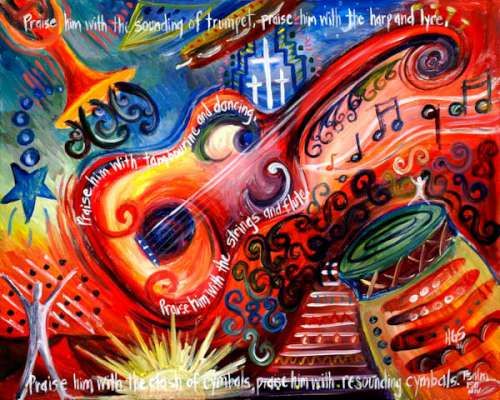
Psalm 150 by Hope G. Smith

Shout praises to the Lord!
    Praise God in his temple.
    Praise him in heaven,
    his mighty fortress.
Praise our God!
    His deeds are wonderful,
    too marvelous to describe.

Praise God with trumpets
    and all kinds of harps.
Praise him with tambourines
    and dancing,
    with stringed instruments
    and woodwinds.
Praise God with cymbals,
    with clashing cymbals.
Let every living creature
praise the Lord.
    Shout praises to the Lord! (CEV)

There is a time for quiet reflection and contemplation, and there is a time for jubilant shouts of praise. The biblical psalms mirror the full range of human emotion. Having moved through the ups and downs of doubt, curiosity, anger, lament, and trust, it is appropriate that the psalter ends with lots of joyful noise.

I grew up in a generation where children were expected to be quiet in church. Not surprisingly, as a child, I found the church worship service on Sunday to be the most boring hour of my week. After a Saturday of morning cartoons, sugary cereal, All-Star Wrestling, and playing outside in the dirt with my brother, Sunday morning was typically a big letdown.

All I have to say about that, and about cranky old women shushing kids in church, is that the adults somehow forgot to read Psalm 150. Maybe if us big people were better about encouraging our little people to dance in the aisles, blow a kazoo as loud as they can, and freely give a shout to the Lord, then perhaps there would be a lot fewer defections from church worship services.

“Praise is the rehearsal of our eternal song. By grace we learn to sing, and in glory we continue to sing. What will some of you do when you get to heaven, if you go on grumbling all the way? Do not hope to get to heaven in that style. But now begin to bless the name of the Lord.”

Charles Haddon Spurgeon

But don’t think I’m advocating going all out noise, all the time. Just as it is neither necessary nor appropriate to always shout everything you say, and skip everywhere you go, so the worship of God needs to encompass the broad scope of the human condition. Silence, meditation, and stillness have their important place. In a desire to make church fun, some Christians have created imbalanced experiences of only victory in Jesus.

One of the reasons I follow the Christian Year with its liturgical movements is that it holds and maintains the balance of worship and the theological tension of both crucifixion and resurrection. We need healthy rhythms of sorrow and joy, stillness and movement, quietness and shouting.

The Church is currently in the Christian season of Eastertide. It is a focused time of celebration – which is why we have biblical sections in this time of year like Psalm 150. This is the appropriate time to lift loud praise to God for the risen Christ and celebrate salvation and new life in Jesus.

I’m not really a numbers kind of guy, yet its easy to notice the word “praise” occurs 10 times in a psalm of just 6 verses. And 7 musical instruments are mentioned. Methinks we’re supposed to not miss something here.

“Through Jesus, therefore, let us continually offer to God a sacrifice of praise—the fruit of lips that openly profess his name.”

hebrews 13:15, NIv

Praise is to happen in heaven and earth, in all creation, out in the world as well as inside the walls of the church building. It is to be done with voice, dance, drums, horns, woodwinds, and stringed instruments. Because God has done wonderful and marvelous acts throughout the earth, people are to respond with profuse gratitude expressed with lots of emotion.

Just so you know, that means sourpuss Christians who wrongheadedly believe human feelings ought to be stuffed and suppressed, need some remedial theological education about who God is and exactly what he expects from people. Somebody, please dispense the laxative of Psalm 150 to loosen their spiritual constipation!

God gave us our breath, and we are to use it for praise. If we see the entire book of Psalms as a life, then it is fitting the final psalm ends with sanguine praise. Indeed, when a person is at end of life, do they have reason to praise? A life of walking with God through thick and thin will inevitably end with recounting the ways in which the Lord has shown up and delivered. They want musical praise filling their last days and minutes.

That is exactly what Duke Ellington did in the twilight of his life. On January 19, 1968, Ellington performed a concert of sacred music at St. John the Divine cathedral in New York City. Among the original songs he performed and later recorded was his musical interpretation of Psalm 150. He called it “Praise God and Dance.”

Duke Ellington said that this praise music, and the two other albums of sacred music he recorded, were “the most important thing I have ever done.” When Ellington performed “Praise God and Dance” at the ancient Church of Santa Maria del Mar in Barcelona, Spain, the congregation spontaneously burst into the aisles with dancing and singing.

The whole person is to be involved in praise – mind, body, emotions, and spirit – because God is Lord of all of us, not just the spiritual dimension.

Make a joyful noise to the Lord, all the earth; break forth into joyous song and sing praises. Sing praises to the Lord with the lyre, with the lyre and the sound of melody. With trumpets and the sound of the horn make a joyful noise before the King, the Lord. (Psalm 98:4-6, NRSV)

I will bless you every day. I will praise your name forever and always. The Lord is great and so worthy of praise! God’s greatness can’t be grasped. (Psalm 145:2-3, CEB)

Praise the Lord! My whole being, praise the Lord. I will praise the Lord all my life; I will sing praises to my God as long as I live. (Psalm 146:1-2, NCV)

Shout praises to the Lord! Our God is kind, and it is right and good to sing praises to him. (Psalm 147:1, CEV)

Amen.