

Tussling with Trouble (Matthew 10:24-39)

“The student is not above the teacher, nor a servant above his master. It is enough for students to be like their teachers, and servants like their masters. If the head of the house has been called Beelzebul, how much more the members of his household!

“So do not be afraid of them, for there is nothing concealed that will not be disclosed, or hidden that will not be made known. What I tell you in the dark, speak in the daylight; what is whispered in your ear, proclaim from the roofs. Do not be afraid of those who kill the body but cannot kill the soul. Rather, be afraid of the One who can destroy both soul and body in hell. Are not two sparrows sold for a penny? Yet not one of them will fall to the ground outside your Father’s care. And even the very hairs of your head are all numbered. So don’t be afraid; you are worth more than many sparrows.

“Whoever acknowledges me before others, I will also acknowledge before my Father in heaven. But whoever disowns me before others, I will disown before my Father in heaven.

“Do not suppose that I have come to bring peace to the earth. I did not come to bring peace, but a sword. For I have come to turn

“‘a man against his father,
    a daughter against her mother,
a daughter-in-law against her mother-in-law—
    a man’s enemies will be the members of his own household.’

“Anyone who loves their father or mother more than me is not worthy of me; anyone who loves their son or daughter more than me is not worthy of me. Whoever does not take up their cross and follow me is not worthy of me. Whoever finds their life will lose it, and whoever loses their life for my sake will find it. (New International Version)

We can expect opposition and trouble from the world

Those who follow the words and ways of Jesus will experience hardship at the hands of others, because Christ’s values are often different than how the world’s systems typically operate. 

Being called the Devil (Beelzebul) isn’t exactly a term of endearment. There were those so upset with Jesus that they equated him with Satan. So, since Christ got this kind of verbal treatment, how much more will we be the brunt of false accusations, slander, and gossip? 

We are not above our Lord – we will be treated as he was. We cannot expect that we are above getting into trouble. Believers are promised deliverance from sin, death, and hell – and not from the meanness and ignorance of people in this present life.

Because of this reality, we need to be savvy to our situation of trouble and practice common sense, as well as have a mental disposition that thinks the best of people, and does not immediately judge and condemn others.

All of this requires us to avoid the two extremes of either simple assimilation into the culture, or rejection of the culture as evil. Both the blending into culture, and the separating from it, each share the same preferred outcome of trying to avoid opposition and trouble. 

Instead, there is a third way of being faithful to following the way of Jesus: Interact with and engage the culture as salt and light. (Matthew 5:13-16)

Assimilation causes us to lose our saltiness; and isolation hides our light. So, let’s find wise ways to understand truth and apply it in the concrete situations of life in this world. 

For example, we can discuss life issues about our jobs and school from a Christian perspective, so that we might speak into others’ lives, instead of just standing against something and complaining about it: How might we show both grace and truth in a particular situation? Are there ways we can give support without condoning something we oppose, and how?

We can expect that we are going to disrupt and upset our families and experience opposition from them
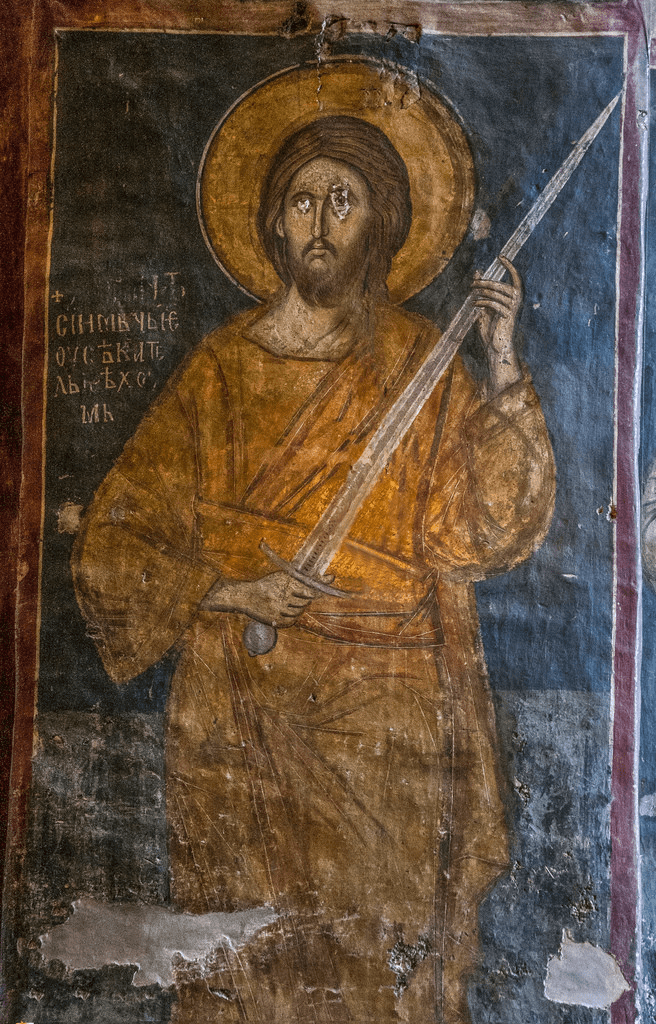
14th century fresco of Christ with a sword, in the Sacred Monastery of the Ascension of Christ Church, Kosovo

Unfortunately, opposition does not just come from the world, but within the very families and communities we love and rub shoulders with every day. Most persecution, hardship, and trouble for believers in Jesus come from family and those closet to us. 

Although I grew up in a church-going family, we never really discussed faith or Christianity. When I became serious about walking with Jesus, I faced a lack of support. I was often the brunt of teasing and verbal jabbing. My commitment to Christ had butted up against the family value of never rocking the boat. 

There was once a woman who experienced new life in Christ. When God grabbed ahold of her life, she had been on track to becoming the next Barbara Walters. But her newfound values of embracing the Beatitudes of Jesus rubbed the television broadcast world too much. 

So, she went into radio. Instead of looking toward a lucrative life on screen, she settled for less money and no fame behind the microphone of a Christian radio station. Her family didn’t understand this. And marrying a preacher didn’t help the situation any for her. To this day she still faces hardship and resentment for making decisions that did not get her the American dream.

Jesus said that anyone who wants to take the path of least resistance by not rocking the family boat with Christian love is not worthy of him. Anyone who does not take up their cross and follow Jesus in the way of trouble is not worthy of following him. 

We must die to self – which often means dying to avoidance of conflict – and become alive to the wonder of God’s mercy and love in the world.

We don’t need to be afraid of getting into trouble

Why? Because…

  1. Fear has to do with the unknown. So since we know opposition and trouble is expected, we will not live in dread of what might happen. The early Christians actually rejoiced in their suffering because they considered it a privilege to be walking in the way of Jesus. (Acts 5:27-42)
  2. You will receive special help. In times of persecution, we have a Helper, the Holy Spirit, given to us for such times as these. (John 3:34; 16:1-15)
  3. God isn’t surprised by your hardship. The Lord will eventually deal with all that is wrong in this world.
  4. The wrath of God is to be more feared than the wrath of people.
  5. God is watching over all the details of my life. If God cares for all the small details, how much more will the Lord take care of the big issues in my life?

Conclusion

It is a privilege to follow Jesus into trouble. This is what is called “upside-down” theology: 

  • In giving my life away to Jesus, I find it. 
  • In getting into trouble, I find peace. 
  • In serving and taking up our cross, there is happiness, not depression. 

Sometimes, things in the kingdom of God seem upside-down; and that is as it should be. Facing trouble is really not the worst thing to be experienced – being separated from God is. 

We are to expect opposition from the world, and from family. Yet, we need not be afraid, because tussling with trouble is part of what it means to follow Jesus – it is the way of the cross.

So, count the cost. Give your life away. In doing so, you will certainly not lose your reward from God.


How Jesus Prayed (John 17:1-11)

After Jesus said this, he looked toward heaven and prayed:

“Father, the hour has come. Glorify your Son, that your Son may glorify you. For you granted him authority over all people that he might give eternal life to all those you have given him. Now this is eternal life: that they know you, the only true God, and Jesus Christ, whom you have sent. I have brought you glory on earth by finishing the work you gave me to do. And now, Father, glorify me in your presence with the glory I had with you before the world began.

“I have revealed you to those whom you gave me out of the world. They were yours; you gave them to me and they have obeyed your word. Now they know that everything you have given me comes from you. For I gave them the words you gave me and they accepted them. They knew with certainty that I came from you, and they believed that you sent me. I pray for them. I am not praying for the world, but for those you have given me, for they are yours. 

All I have is yours, and all you have is mine. And glory has come to me through them. I will remain in the world no longer, but they are still in the world, and I am coming to you. Holy Father, protect them by the power of your name, the name you gave me, so that they may be one as we are one.” (New International Version)

Prayer can be described in many ways. Yet, at it’s heart, prayer is simply talking to God. Jesus had taught his disciples early in his ministry about how to pray (The Lord’s Prayer). Now he demonstrates the way to pray, also revealing the heart of God in the process. Our prayers reflect our values and what is truly in our hearts. As Jesus offers his petitions to the Father, let’s notice what they are, and so, align our own hearts with the heart of God.

First Petition: Glorify God

Jesus prayed that he himself would be glorified, so that then he might turn right around and glorify the Father in heaven. This is a great lesson for all who pray – that we seek to receive in order to give.

All of life is dependent upon rhythms of receiving and giving. We breathe in and breathe out in a consistent flow. If that doesn’t happen, we have major health issues. Jesus promised that he would send the Spirit of God to help us breathe spiritually.

And so, it’s important that we routinely inhale the Holy Spirit so that we may exhale the virtues of love, joy, peace, patience, kindness, goodness, faithfulness, gentleness, and self-control for the benefit of the church and the blessing of the world.

Please never forget that we are stewards of the grace given to us by God. That means our purpose is not for avarice (to hoard the spiritual resources so generously given to us) but to receive, so that we can give. And God’s grace is inexhaustible; we shall never run out of offering peace and reconciliation to the world. That, my friends, is how we glorify God and show God’s Name as holy. (Matthew 6:9)

Two Groups and Three Givings

            Jesus mentions two groups: The Father and Son; and the World and Church. And he prays that the Father will give in three distinct ways:

  1. The Father gave the Son authority over all humanity. Jesus truly has the whole world in his hands. And when the Son has a hold of people, there’s no snatching them out. Jesus is not a hired hand; he is the hand of God. Since Jesus is in charge, we can be fully confident that every single member of the human race will be treated with respect in this life and with fairness on Judgment Day.
  2. The Father has given Jesus a second group of people out of the whole of humanity: the Church. Both the World and the Church are in Christ’s hands. Jesus has other sheep who are not yet in the fold. He is presently, by means of the Holy Spirit, gathering them into his divine sheep pen. There are two groups and three givings; but there is only One Shepherd and one Flock. And this one Flock of Christ is to be a kingdom of priests to serve the interests of the entire world. (1 Peter 2:9-10)
  3. The Church has been given the gift of Jesus by the Father. The Flock has received life – abundant and everlasting life. This by no means implies that we are in some sort of holding pattern until Christ returns to take us to be with him. Rather, now we are to be busy giving the world the gift of grace we ourselves have received. Life – real life, true life – is to know the Father and the Son.

God is glorified when we take up the mission given to us by Jesus:

  • We are called by God for a reason: to do justice, to love mercy, and to walk humbly with our God (Micah 6:8)
  • We are given a purpose of bearing witness to what God has done for us in Christ Jesus (Acts 1:8)
  • We are commissioned to make disciples from all nations, all ethnicities, and every sort of people (Matthew 28:19)
  • We are commanded to do it all through love of God and neighbor (Mark 12:28-31)

Second Petition: Protect the Church

Why does Jesus pray for our protection? So that we might be one as the Father and Son are one – and will not fragment and be scattered without any relation to each other.

Here are a couple of simple observations: this prayer of Jesus is not yet answered; and if Jesus can have unanswered prayer for two thousand years, maybe we ought to cut ourselves (and others!) a bit of slack on not getting our own prayers answered.

When we consider the Church throughout the world, we see that various Christian traditions just plain don’t like each other, and even accuse one another of not being Christians at all! And, what’s more, a chunk of the Church seems to be abusive.

Whether it’s Roman Catholicism and the sad story of the priest sexual abuse, or the steady stream of stories about Protestant Evangelical pastors who do the same and use their authority for personal and selfish advantage, there is plenty of awful crud out there.

And what the world sees, far too often, is a profound lack of grace – which brings us back to what we need to be doing to begin with: receiving grace so that we can give it to others. If this is not at the heart of our prayers (and apparently isn’t for many Christians) then we ought not be surprised whenever the world wants nothing to do with Christianity.

Unity is important to Jesus; it ought to be important to us. We need to work at it and work toward it. As God is One, so are God’s people to be one.

Unity does not mean:

  • one cultural expression (i.e. American)
  • the same personality (i.e. extroverted)
  • Christendom (i.e. the Church holding political power)

Unity does involve:

  1. being one in our basic mindset (humble, merciful, holy, peaceful)
  2. being one in purpose (glorifying God)

Therefore if you have any encouragement from being united with Christ, if any comfort from his love, if any common sharing in the Spirit, if any tenderness and compassion, then make my joy complete by being like-minded, having the same love, being one in spirit and of one mind. Do nothing out of selfish ambition or vain conceit. Rather, in humility value others above yourselves, not looking to your own interests but each of you to the interests of the others. In your relationships with one another, have the same mindset as Christ Jesus. (Philippians 2:1-5, NIV)

The Church, the people of God, are to be protected and kept safe from fragmenting into mere special interest groups who only care about their particular pet convictions or projects. Instead, we are to take a step back and see the big forest of Christianity and appreciate all the various trees within it. The Gospel of Jesus Christ is preserved and secured whenever we keep this unity of Christ in the middle of everything, and let go of everything else as being a test of Christian unity (e.g. personal convictions, church dogma and confessional statements).

Conclusion

So, what does this all mean for us? Pray. Talk to God. And talk to God about the same things that Jesus prayed about while he was here on this earth. We might discover that many of the issues we care about will resolve themselves if we simply pray as Jesus has modeled for us.

O God, the Father of our Lord Jesus Christ, our only Savior, the Prince of Peace: Give us grace to set aside and let go of all dissension and division in Christ’s Church. Take away all hatred and prejudice, and everything that hinders us from unity and harmony.

As there is but one Body, and one Spirit, and one hope of our calling, one Lord, one faith, one baptism, one God and Father of us all; so may all your people be of one heart, and of one soul, united in one holy bond of truth and peace, and of faith and love, with one mind and one mouth glorifying you, through Jesus Christ our Lord. Amen.

Encouragement to Be Faithful (2 Timothy 1:3-7)

Orthodox icon of St. Timothy
Orthodox icon of St. Paul the Apostle

Timothy, I thank God for you—the God I serve with a clear conscience, just as my ancestors did. Night and day I constantly remember you in my prayers. I long to see you again, for I remember your tears as we parted. And I will be filled with joy when we are together again.

I remember your genuine faith, for you share the faith that first filled your grandmother Lois and your mother, Eunice. And I know that same faith continues strong in you. This is why I remind you to fan into flames the spiritual gift God gave you when I laid my hands on you. For God has not given us a spirit of fear and timidity, but of power, love, and self-discipline. (New Living Translation)

Every individual person I meet is interesting. Everyone has a story. Each person has values which are important to them.  

The Apostle Paul had quite the story of conversion to Christianity. And so, he understandably had a high value of passing on the faith to reliable and competent persons who would then do the same. Timothy was one of those persons, a protégé of his mentor Paul.

Paul reminded Timothy of his identity, rooted in a faithful family, and encouraged him to tap into that robust spirit which resides within him. The Apostle encouraged him to fully express that spirit without fear or timidity.

For example, I care about kids. Children are a high value to both me and my wife. When meeting and engaging a family for the first time, we will inevitably talk to the child before addressing the parents. We care about any issue in the world which has to do with children – and we have a strong sense of morality concerning children because we love kids.

Be faithful to your calling, and to the values and ethics which undergird it. Whatever is important to us is where our sense of morality and ministry lie.

“Wherever your treasure is, there the desires of your heart will also be.”

Jesus (Matthew 6:21, NLT)

Everyone is moralistic because everyone cares about something. And we will live and die by our code of ethics, grounded in the values we most cherish.

In Holy Scripture, although there are hundreds of laws in the Bible, the highest standard of ethics and morality is contained in just a few chapters: The Ten Words (Commandments) found in the Old Testament chapter of Exodus 20; and Christ’s Sermon on the Mount found in the New Testament chapters of Matthew 5-7. 

These few chapters can be distilled into a few short ethical phrases:

“Love God with all your heart, soul, mind, and strength.” And “Love your neighbor as yourself.” (Matthew 22:37-39)

This means that every teaching found in the Bible comes down to love. (Mark 12:30-31)

Throughout the history of the church, the highest ethical values have always had to do with knowing and loving the Creator, Sovereign, and triune God – Father, Son, and Spirit – and the majesty of people who are created in the divine image and likeness.

The movement and trajectory of Holy Scripture is that a good and benevolent God makes and keeps promises to people. Even when they fall and try to create small petty worlds of their own, a gracious God is active, wooing lost people to return to the spirit which resides within them.

Therefore, the Bible is an unfolding drama of redemption in which a loving God goes out of the way to bring back straying, hurting, helpless people. (Luke 15)

Which is why, for me, attending to the inner soul, teaching people the words and ways of Jesus, and providing spiritual care to others is a very high value. I love God, and I love people. It’s easy to understand, then, why I treasure the following:

  1. Practicing solitude, silence, and other spiritual disciplines.
  2. Connecting with God daily in contemplative prayer and meditative Bible reading.
  3. Paying attention to hurting people and bringing them grace, mercy, faith, hope, love, and gentleness.
  4. Seeking to act with civility and respect toward others I disagree with, or just don’t like very well.
  5. Engaging others who don’t share my values of faith in God.
  6. Praying and hoping for people to be healed and whole.
  7. Pursuing the common good of all people, no matter who they are.

My deep conviction is that the care of the soul is just as important as the care of the body; that attention to exercising the mind with Holy Scripture is just as important to overall health and well-being as cardio workouts and sensible eating; and that the hope of the world resides with knowing Jesus Christ (and not with a lesser hope that wishes things will work out in the end if I’m sincere to my personal ethical beliefs).

Paul wanted Christians to engage in the care of souls, to fan into flame the spiritual gifts which already lie within us, even if they may seem dormant or non-existent.

So, be faithful to who you are, to what you have been called to, and especially to the good news:

For there is one God and one Mediator who can reconcile God and humanity—the man Christ Jesus. He gave his life to purchase freedom for everyone. This is the message God gave to the world at just the right time. (1 Timothy 2:5-6, NLT)

Great God and Father of all, remember the multitudes who have been created in your image but have not known the redeeming work of our Savior Jesus Christ; and grant that, by the prayers and labors of your Church, they may be brought to know and worship you as you have been revealed in your Son, who lives and reigns with you and the Holy Spirit, one God, now and forever. Amen.

Faith Helps Us Take the Long View of Life (Hebrews 11:23-28)

Moses is saved from the water by Pharaoh’s daughter, by Marc Chagall, 1966

It was by faith that Moses’ parents hid him for three months when he was born. They saw that God had given them an unusual child, and they were not afraid to disobey the king’s command.

It was by faith that Moses, when he grew up, refused to be called the son of Pharaoh’s daughter. He chose to share the oppression of God’s people instead of enjoying the fleeting pleasures of sin. He thought it was better to suffer for the sake of Christ than to own the treasures of Egypt, for he was looking ahead to his great reward. It was by faith that Moses left the land of Egypt, not fearing the king’s anger. He kept right on going because he kept his eyes on the one who is invisible. It was by faith that Moses commanded the people of Israel to keep the Passover and to sprinkle blood on the doorposts so that the angel of death would not kill their firstborn sons. (New Living Translation)

Sometimes we can’t see beyond the end of our nose. We get lost in the here-and-now worries of the moment. We need a better view.

Taking a long view of life happens whenever we place our faith in permanent and ultimate realities, and not merely live by what feels good or drives our anxiety in the temporal moment.

To have faith is to possess an indefatigable and unflagging trust in someone’s ability to achieve a desired outcome. The author of Hebrews describes it this way:

No one can please God without faith, for whoever comes to God must have faith that God exists and rewards those who seek him.

Hebrews 11:6, GNT

Faith looks ahead and sees as clearly as whatever is right now in front of your face. People of faith have the ability to take the long view of life, knowing that God has their backs. The mature person of faith can set aside temporary pleasure to attain a future hope. 

Moses, held up by the writer of Hebrews as an example of such faith, refused to identify himself as the daughter of Pharaoh. He chose to be mistreated in solidarity with his fellow Israelites, instead of having a good time with his high position in the most powerful empire of its day. Moses knew that the treasures of Egypt were not as wonderful as what he would receive from suffering for the sake of Messiah, and he looked forward to his reward.

It’s an understatement to say that our contemporary society embraces instant gratification. We want to feel good, and we want it now. Impulse control may just be one of the best life skills that kids (and adults!) need to learn in society. And one of the most effective ways to distract ourselves from a tempting pleasure we don’t want to indulge, is by focusing on another pleasure.

For the Christian who desires to follow Jesus in all things, looking ahead to better days is a confidence booster, namely because Jesus is better and superior to all things. This isn’t some wistful fanciful notion of positive thinking; this faith is based in the person and work of Christ. Spiritual endurance and perseverance through difficulty will have a reward – and it will be shared along with all of God’s people. 

But if we only consider today and what’s in it for me right now, there are scant resources for responding to the temptations and fluctuations of life. We must put some planning and energy into clarifying and embracing our most cherished values. Then, those values shall inform everything we do, or not do. In the scope of eternity, suffering a bit now is nothing compared to what Christ has yet in store for his people.

Deferred gratification causes us to live differently. In a twist of irony, folks who orient themselves toward the unseen world to come are able to effectively impact and change the visible world they currently reside within – whereas those who focus solely on this present world find themselves falling woefully short with their truncated view of life. We need the wisdom which faith provides us:

We are always confident, because we know that while we are living in the body, we are away from our home with the Lord. We live by faith and not by sight. We are confident, and we would prefer to leave the body and to be at home with the Lord. So, our goal is to be acceptable to him, whether we are at home or away from home. We all must appear before Christ in court so that each person can be paid back for the things that were done while in the body, whether they were good or bad. (2 Corinthians 5:6-10, CEB)

Future hope, fueled by faith, gives shape to how we live today. It enables us to live in solidarity with those who suffer and are mistreated. It ennobles us to live above short-sighted desires and act on behalf of the common good of all persons in the here-and-now.

Lord God Almighty, the One who is and was and is to come, may we, along with your servant Moses, see the plight of all those who suffer in our midst. Give us courage and compassion to live in solidarity with the poor, the oppressed, the forgotten, and all who live with misfortune and misery. May our hearts, burning with love, bear the burdens of all in our care. And may our loving example ignite the hearts of others to accompany the vulnerable in their affliction. We ask this in the gracious name of Jesus through the power of your Holy Spirit. Amen.