Luke 12:13-21 – The Parable of the Rich Fool

The angel of death surprises a rich man by Jim Janknegt

A man in a crowd said to Jesus, “Teacher, tell my brother to give me my share of what our father left us when he died.”

Jesus answered, “Who gave me the right to settle arguments between you and your brother?”

Then he said to the crowd, “Don’t be greedy! Owning a lot of things won’t make your life safe.”

So, Jesus told them this story:

A rich man’s farm produced a big crop, and he said to himself, “What can I do? I don’t have a place large enough to store everything.”

Later, he said, “Now I know what I’ll do. I’ll tear down my barns and build bigger ones, where I can store all my grain and other goods. Then I’ll say to myself, ‘You have stored up enough good things to last for years to come. Live it up! Eat, drink, and enjoy yourself.’ ”

But God said to him, “You fool! Tonight, you will die. Then who will get what you have stored up?”

“This is what happens to people who store up everything for themselves but are poor in the sight of God.” (Contemporary English Version)

Let’s be honest before God because there’s no way we are going to fool him. The truth is, we all worry. 

And the more stuff we accumulate, the more worried we get. And the more worried we get, the stingier we become – to the point where we encase ourselves around more stuff, which requires bigger places to store all our stuff.

Here’s a bit of a reality check: We are not self-sufficient independent automatons who are meant to function by themselves without ever needing help.

The Rich Fool by Rembrandt, 1627

If we have some success in this independence venture, we then expect that others ought to be able to do it, too. Such thinking leads to a lack of generosity, believing that others just need to work harder or smarter or better. They’re lazy, we may reason. So, I’ve got no responsibility to share any of my largess with slackers.

We seek after whatever it is we desire. If we seek the kingdom of God, we will pursue the Lord Jesus and aim our love toward knowing him. But if we seek materialism, wealth, and the accumulation of stuff, we will never have enough because worry and fear shall always overwhelm the voice of God. 

I make it sound easy, as if the choice were so clear. On one level it is, but, like most things, it’s complicated because we are all a weird hybrid of competing loves and desires.

So, let’s make a few distinctions that might help us clarify our kingdom calling. Materialism is not the same thing as hard work. 

Materialism:

  • Is a shield we lug around to protect us from failure and poverty
  • Puts us on a performance treadmill, and is tied to our self-worth
  • Is a never-ending quest for security and protection
  • Seeks to avoid the criticism of others by seeking their approval with stuff
  • Believes that money will take away feelings of hurt, pain, and discomfort

Whereas hard work:

  • Is about healthy achievement and a patient growth of assets
  • Seeks to improve and is satisfied with a job well done
  • Takes away fear and worry 
  • Brings gratitude and joy

Any worldly fool can make money; but the wise and righteous person is able to manage resources in a way that glorifies God, builds up the church, and blesses the world. 

And it all begins with knowing the difference between depending on God versus depending on self and stuff.

The rich farmer in Christ’s story is a fool not because he is wealthy or because he saves for the future, but because he lives only for himself, and because he believes he can secure his life with his abundant possessions.

In the parable, the rich guy only talks to himself – not to anyone else. The man doesn’t express any gratitude to God. There is neither any thanking the workers who have helped him plant and harvest this bumper crop, nor any sharing his wealth through giving them a bonus.

The farmer has more than he could ever hope to use, yet he seems to have no thought of sharing it. And there is clearly no thought of what God might require of him. The rich man is outright blind to the fact that his life is not his own to secure, that his life belongs to God, and that God can demand it back at any time.
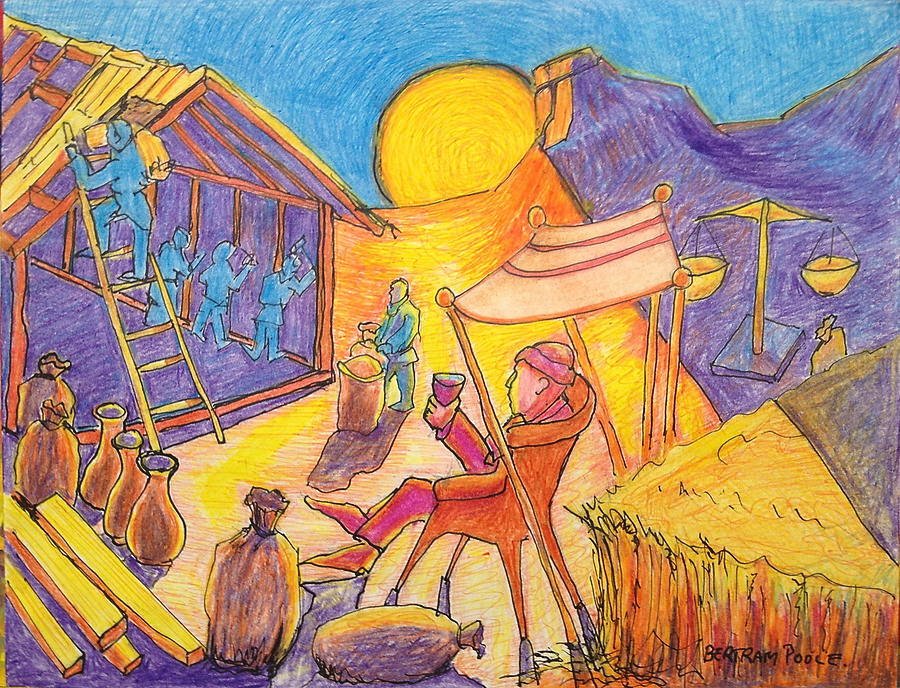
The Rich Fool by Bertram Poole

No amount of wealth can give any of us what we need most in life: healthy relationships, the love and enjoyment of friends and family, or eternal life. Nobody can buy their way into heaven or eternal bliss. What’s more, money cannot provide protection from disease and disaster.

Here’s another reality check: The rich and the poor all die, just the same. And the one who is wealthy cannot take a bit of it with him.

At issue here, for Jesus, is neither saving for retirement or for future needs, nor enjoying the good things in life. In fact, that’s wisdom.

The issue, for Jesus, is about what’s most important to God. It’s about priorities. God cares deeply about how we invest our lives and use the gifts given us. The Lord is vested in us, so he cares about how we love God and neighbor. God wants us to orient our lives toward the divine mission to bless and redeem the world.

In other words, God cares about whether we care, or not, about others.

As a hospital chaplain, I’ve seen my share of death. And I have never once heard anyone say, “Gosh, chaplain, I sure wish I hadn’t given so much money and stuff away. I wish I had kept more for myself.” But I’ve sure heard plenty of the opposite.

A spiritual reality check: We, and our resources, all belong to God.

We are merely stewards of everything we own. God gave it to us. God can take it away. Including our life.

The good news is that, since we, and everything we have, belongs to God, our future is secure in Christ.

Merciful God, thank you for giving me everything I need for life and godliness in this present world. Forgive me for ever doubting your goodness and ability to provide for me. Let my life bless the name of Jesus, and may I steward all that you have given me with care and compassion. Amen.


An Embodied Spirituality

By Unknown artist

It is normal to feel guilty at this time of year about our bodies. Some of the more common goals for a new year are to lose weight, stop smoking, get in shape, have better sleep hygiene, and generally learn better self-care.  I am not going to add to the burden of guilt but emphasize something important: Our bodies are the vehicle given to us to glorify God. Our spirituality is quite embodied. (1 Corinthians 6:19-20)

One of the reasons we fail our bodies is that we do not always make the biblical connection of seeing our material selves with the same importance as the immaterial.  The Apostle Paul brought up a discussion about the body to the Corinthian Church because Corinth was a Greek city thoroughly imbibed with a Platonic philosophy of life.  At the core of Plato’s view of humanity was that the immaterial and the spiritual were of higher value than the body.  For Plato, the body is a necessary evil.  He referred to our souls as being imprisoned within the flesh.  When we die the soul is released and is freed from its bodily prison.

Western civilization has been significantly influenced, even today, by Plato’s view of humanity. Yet, that is not a biblical view of the body.  Instead of being a prison, the body is a temple, a sacred place which is no better and no worse than the soul.  When we die, we will not be disembodied souls, but will experience a bodily resurrection at the end of the age.  Eternity will be spent existing in a real glorified body free from sin. (1 Corinthians 15)

Since the body is sacred, and we glorify God with our bodies, then we must steward them just like we would steward any other physical material possession we own.  We have bought into Platonic philosophy when we treat our cars better than we treat our bodies.  If a warning light comes on in our cars, we get it checked by the mechanic.  He fixes the issue and tells us what we need to do to prevent it from happening again, and we listen to him. 

Far too often, when warning lights go off in our bodies, we ignore them until our bodies literally break down and we must go to the doctor.  And even then, the doctor tells us to do something, and we do not do it.  We never avoid the advice of our mechanic, and yet we do it with our doctor.  We need to adopt the biblical wisdom of glorifying God on this earth through our bodies. 

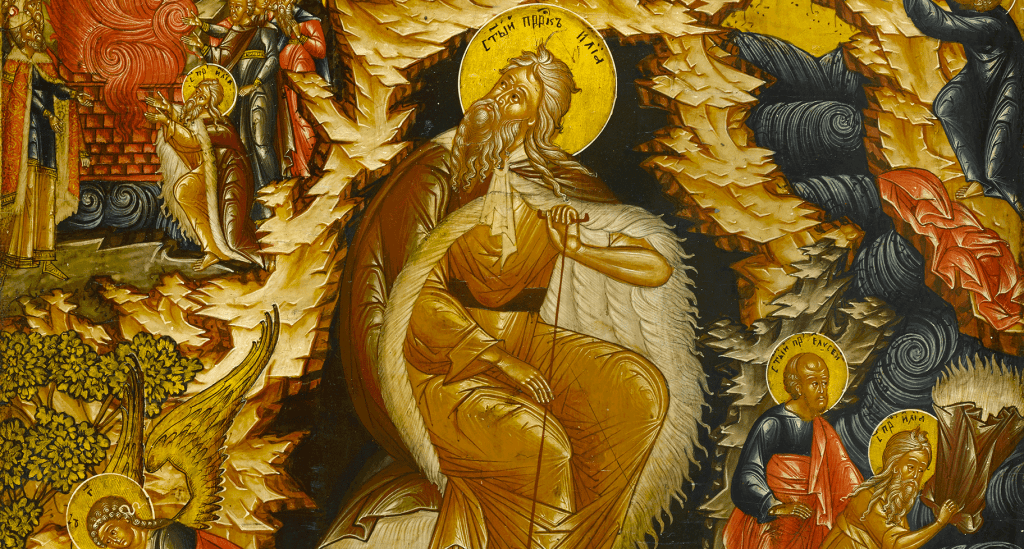
God’s care for our bodies can be found, for example, in the Old Testament prophet, Elijah. After Elijah experienced a great spiritual victory, he became the target of evil Queen Jezebel.  Elijah ran for his life and was severely burned-out from intense spiritual struggles with the queen’s prophets of Baal (1 Kings 19:1-3).  At that point, God did not come to Elijah and give him a sermon or exhortations about getting over it.  No, God restored Elijah’s body. And the Lord wants to restore our bodies, as well.

19th century Russian Orthodox icon of the prophet Elijah in the wilderness

First, Elijah needed sleep (1 Kings 19:5-6).  Millions of Americans are sleep deprived and live with a significant sleep debt (thus being continually cranky and out of sorts).  Insurance companies know this is a major issue because improper sleep habits have caused various auto accidents and fatalities. I once kept a crazy schedule with not many hours for sleep.  One day, during rush hour, I drove through a downtown expressway in bumper-to-bumper traffic and fell asleep.  I woke up about two minutes later and was still alive driving down the highway.  I sincerely believe God graciously drove the car for me.  That was my “wake up” call to change the way I was treating my body.

Second, Elijah needed to eat well (1 Kings 19:6-8).  For us, that means eating healthy.  One source of being overweight is failing to make the connection that eating is a spiritual activity.  Food is important to the kingdom of God.  It was eating that got us into trouble to start with and resulted in the fall of humanity.  Eventually, we will come full circle with eating being the activity we engage in at the end of the age – a redeemed view of food and eating together with Jesus at the marriage supper of the Lamb (Revelation 19:1-10).  God cares about food – what we eat and how much of it we consume.  He cares because we do not own our bodies – we steward them for God.

Third, Elijah needed some vigorous exercise (1 Kings 19:8-9).  He walked all the way to Mount Horeb, which was over a month’s travel.  But that exercise was essential to his well-being, both physically and spiritually.  It was only after he slept, ate well, and walked that Elijah was ready to meet with God in a powerful experience.

Our physical fitness is a spiritual issue, and so, needs prioritization.  I am under no illusions or delusions about the difficulty of this. I prefer brownies to broccoli and rather like sleeping instead of exercise. Yet, I work at being physically fit and caring for my body.  I am personally motivated toward health because I love God and want to please the Lord with my body. After all, my body was important enough to be redeemed through the Cross of Christ.

This is not about willpower – it is about Christian stewardship. I look at my body the same way I look at borrowing something from another person: I return it in the best condition I can. When the Lord takes me someday, I do not want it to be because I hastened my own death through disregard of my God-given body.

If I were God, donuts would be health food, sitting back in the recliner would build muscle, and two hours of sleep at night would be sufficient. But I am not God, so I submit to doing what it takes to have an embodied spirituality. We are to enjoy life through making the connection between the spiritual and the physical because that is the way God created us.

It is never too late to be a proper steward of the body.  Our physical anatomy is an amazing work of God and incredibly receptive to healthy choices. Here are a few of the choices we can make…

Remember the positives

Remember that care of the body is worth it.  Being fit feels great and equips us for the will of God.  Keep the long view in mind.  Sacrificing a temporary pleasure is worth the eventual gain.

Start small

I will not be doing any triathlons anytime soon, or ever. We need to be realistic and set appropriate goals without comparison to others. Start small and build up over time with slow incremental change. The place to begin is by rearranging our schedules so that our bodies become a priority.  Maybe it is time to make that doctor’s appointment you have been putting off.

Join others

Accountability and fun can and ought to go together. For example, preparing meals together is a chance to connect with a friend or family member. Discover and maintain a consistent rhythm of health that works for you and is enjoyable.

Reframe it

People often give up their best laid plans because they are disconnected from the rest of their lives. Reframing our view of the body as a spiritual activity helps connect and align our mind, body, and spirit in the wholeness God designed for us.

Start today

It takes time for something to become a habit. All good things are a process of realization. Consider and plan today, asking for God’s direction. Get the Lord in on it from the beginning and let it be an offering to him.

May you find the joy, contentment, and satisfaction of living with a body properly cared for and ready for use to the glory of God.

Matthew 25:14-30 – The Parable of the Talents

Welcome, friends. Although we are socially distanced, let us be spiritually connected through our worldwide communion with all the saints. Click the video below and, by God’s grace, we will be linked with the blessing of Christ…

The following is an animated take on Christ’s parable of the talents…

Jesus’ Parable of the Talents. Completed 2012 from http://www.max7.org.

And consider this song as we consider our own gifts…

We All Have Gifts to Share by Susan Kay Wyatts

May each of you use whatever gift you have received to serve others, as faithful stewards of God’s grace in its various forms.