Luke 11:24-28 – Human Nature Abhors a Vacuum

Photo by Rene Asmussen on Pexels.com

“When an evil spirit leaves a person, it goes into the desert, searching for rest. But when it finds none, it says, ‘I will return to the person I came from.’ So, it returns and finds that its former home is all swept and in order. Then the spirit finds seven other spirits more evil than itself, and they all enter the person and live there. And so that person is worse off than before.”

As he was speaking, a woman in the crowd called out, “God bless your mother—the womb from which you came, and the breasts that nursed you!”

Jesus replied, “But even more blessed are all who hear the word of God and put it into practice.” (New Living Translation)

You have likely heard the old adage, “Nature abhors a vacuum.” This idiom is used to express the idea that empty or unfilled spaces are unnatural as they go against the laws of nature and physics. Jesus expressed a similar statement, not about physical nature but human nature.

People experience emptiness whenever something, or someone, has been expelled from our lives, creating a vacuum. In today’s Gospel lesson, the expulsion is that of an evil spirit. The bad spirit is kicked to the curb, so it goes looking somewhere else to settle, with no success. Then, the spirit decides to go back, check, and see if the person is occupied, or not.

Everything in nice, neat order. Cleaned up, looking good. But empty. For the spirit, this is ideal. So much space in such an organized environment that it becomes the ideal spot for a party of peers to turn the order back into chaos.

Yet, if there had been something to fill the void, the spirits could never have come and occupied the space.

It’s a pointed lesson about truly hearing. There’s the kind of hearing that goes in one ear and out the other. There’s also a type of hearing which listens yet does nothing to act on what is being heard. That seems to be the kind of hearing Jesus was talking about.

To hear God’s Word is one thing. To make it stick by putting into practice, is another thing altogether. It’s akin to the difference between having an attractive and expensive goatskin leather Bible adorning a coffee table in the center of the house. Looks great. Problem is, it never gets a genuine hearing because the cover rarely gets cracked open.

Once, in my first church as their Pastor, a man had a bevy of family issues which seemed endless. At first, I didn’t understand it. He seemed like a really nice guy. Every Sunday he was there, without fail, and always brought his Bible.

Then, one Sunday, after everyone had left, I found a Bible sitting in the pew where the man always sat. I opened it, and sure enough, it was his, his name written inside the cover. It appeared to be a brand spanking new one, until I looked at the publication date and inscription from when it was given to him: 1949.

In returning the Bible to the man the next day, I discovered that he indeed never read it. In fact, I quickly found out that in the thousands of sermons he had heard over the decades, none of them seemed to ever stick. He heard but didn’t really hear. Instead, he spent most of his life trying not to be involved in much of anything as a means of protecting himself from hurt.

Hearing God’s Word without putting any of into practice isn’t ever going to end well.

Obey God’s message! Don’t fool yourselves by just listening to it. If you hear the message and don’t obey it, you are like people who stare at themselves in a mirror and forget what they look like as soon as they leave. But you must never stop looking at the perfect law that sets you free. God will bless you in everything you do, if you listen and obey, and don’t just hear and forget. (James 1:22-25, CEV)

The Word of God has not been truly received until it is put into practice.

The person who only hears is like a Mr. Potato Head that is only ears. He can’t stand because he has no feet.  He cannot do anything because he has no hands. Mr. Potato Head needs some feet so that he can follow Jesus wherever he goes.  And he needs hands so he can do God’s will.

Listening to the Word without obedience is just that – it is mere hearing. 

Profession of faith in Jesus means nothing without a practice of that faith.

Learning the Bible is useless without living it.

Acceptance of the Word is nothing more than a mental exercise without action to back it up. 

Christianity is a vital love relationship with Jesus, and, so, is not merely a matter of hearing and affirming orthodoxy; it also involves orthopraxy, that is, having right practice, the doing of truth.

Good hearing leads to a good response.

When my firstborn daughter was still in her mother’s womb, I constantly talked to her. I was in seminary at the time, and I would come home and read her fairy tales in Hebrew. I spoke to her when I got up in the morning and when I went to bed. I told her all about how God was going to bless her and do great things through her. I told her of Jesus and his love for her. I practiced my sermons and Sunday School lessons on her – all before she was born.

When the day finally came of her birth, the nurses took her, and she cried and cried. She cried so much and so hard that I finally said to them, “Let me hold her.” The minute I held her, I began speaking to her, and what happened next got the attention of everyone in the room: my little baby daughter immediately got quiet. It was like that the entire time she was in the hospital. The only time she was happy was when I was speaking to her.

We respond to God’s voice when we recognize it. If we are not in the habit of responding to God’s Holy Word, it is likely that we do not know the Divine voice. My baby daughter didn’t need a lesson on how to respond to me. She knew exactly who I was: her father. 

Do we know our heavenly Father? Can we distinguish God’s voice?

We need to be servants who hear and respond to the voice of God, and not soakers who just sit and hear without any response at all.

Human nature abhors a vacuum. Our own inner emptiness needs to be filled with practicing the words of life we hear. This is the true path of blessing.

Gracious Lord, you have caused Holy Scripture to be written for our learning: help us so to hear, read, mark, learn, and inwardly digest the Word so that we may do what it says and embrace the joyful hope of everlasting life, which you have given us in our Savior Jesus Christ. Amen.

1 Peter 1:17-2:1 – Real Love Is…

Since you call on a Father who judges each person’s work impartially, live out your time as foreigners here in reverent fear. For you know that it was not with perishable things such as silver or gold that you were redeemed from the empty way of life handed down to you from your ancestors, but with the precious blood of Christ, a lamb without blemish or defect. He was chosen before the creation of the world but was revealed in these last times for your sake. Through him you believe in God, who raised him from the dead and glorified him, and so your faith and hope are in God.

Now that you have purified yourselves by obeying the truth so that you have sincere love for each other, love one another deeply, from the heart. For you have been born again, not of perishable seed, but of imperishable, through the living and enduring word of God. For,

“All people are like grass,
    and all their glory is like the flowers of the field;
the grass withers and the flowers fall,
    but the word of the Lord endures forever.”

And this is the word that was preached to you.

Therefore, rid yourselves of all malice and all deceit, hypocrisy, envy, and slander of every kind. (New International Version)

Love makes the world go round. The cycle of life brings an end to all things. Yet, the permanence of love has always existed, and will never cease to exist. (1 Corinthians 13:8-13)

Biblical godly love comes not because we first loved God, but because God first loved us and gave his Son, Jesus Christ, as an atoning sacrifice for our sins. (1 John 4:7-12)

So, the Christian’s faith and hope are completely grounded in the person and finished work of Jesus. People are so valuable to God that we were purchased from the slavery auction block with the costliest price ever: the precious blood of Jesus. 

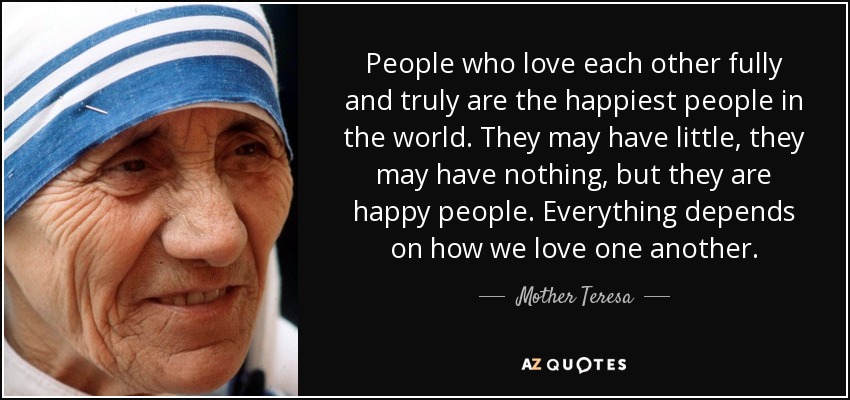
To know this love of God in Christ, to be thoroughly captured and enraptured by it, results in a profound and deep love for others. And I’m not just referring to a nice touchy-feely love, but also a steadfast love which is committed to love regardless of what another person says or does.

Love is wonderful. But that doesn’t mean its easy. Being on the receiving end of love is a beautiful thing. Giving love, however, can sometimes get dicey.

You see, although we Christians really do believe that everything in life and ministry centers around the grace and love of God in Christ, our boots-on-the-ground loving sometimes seems compromised and conditional. That’s because it’s easy to love those who love us back. Yet, what if our love is not reciprocated or requited?

This situation brings us face-to-face with our own selves. The painful reality is that we all discover that our love is sometimes, maybe oftentimes, dependent on an assurance that we will be loved in return.

There is perhaps no more transcendent and glorious thing than mutual love. However, what happens when only one of the persons is able to give love? What do we do when grace is our only option, when we must choose to love, knowing that love won’t have a response?

Christians everywhere must come to the point of giving the same kind of love that God shows to us in Christ. We need to decide that grace is going to be our lifestyle. It comes down to this: It simply doesn’t matter what condition the other person is in. It doesn’t matter what another is going to say, or not say. Nothing on the other party’s side doesn’t matter. It…just… doesn’t… matter.

What really matters is our own loving another person deeply from the heart, regardless and in spite of everything else. That, my friends, is real Christian love.

“Love your enemies. Let them bring out the best in you, not the worst. When someone gives you a hard time, respond with the supple moves of prayer, for then you are working out of your true selves, your God-created selves. This is what God does. He gives his best—the sun to warm and the rain to nourish—to everyone, regardless: the good and bad, the nice and nasty. If all you do is love the lovable, do you expect a bonus? Anybody can do that. If you simply say hello to those who greet you, do you expect a medal? Any run-of-the-mill sinner does that.”

Jesus (Matthew 5:43-47, MSG)

Since we are redeemed people; since we have acknowledged the truth of Christ’s redemptive events of crucifixion and resurrection; since we are recipients of God’s great love to us in Jesus; we all must make the decision to live our lives full of grace and love, no matter what.  As God’s redeemed people, purchased by the precious blood of Christ, we will love one another unconditionally.

Unfortunately, over time, many Christians slowly become disconnected from this fountain of grace and love. It is likely that, at some past point, they were deeply touched by a gracious encounter with Jesus Christ. They found peace, love, and joy. Minds were swept up in the awe and wonder of God. Hearts were deeply moved for a few hours, days, or weeks. 

But then, there was a return to the routine grind of daily existence. Gradually, the demands of work and family took over. Jesus began to be treated like some old friend from another town whom we dearly loved in years past but have just lost track of. 

Of course, it was unintentional.  We simply allowed circumstances to drift us apart. We became preoccupied with something else. Now, we find ourselves with a low level irritation, frustrated with others and unable to love as we ought. We become what the late author Brennan Manning called “Christian agnostics” – people who do not deny Jesus, but just ignore him.

If your days are trivial and hectic…

If the clock determines what you do…

If you are numb to the news and headlines around you…

If you are all jangled and jittered by life’s circumstances…

If phones and computers and gadgets rule your day…

If there is little room for responding to humanity humanely…

If you have settled into a comfortable piety and a well-fed virtue…

If you have grown complacent and lead a practical life…

Then you need to be touched again by the grace and love of God in Christ by treating Jesus as if he were your very best friend as well as the awesome Son of God.

We are all still here walking on this earth because none of our failures and lack of faith have proved terminal.  We are here today because of God’s radical grace. 

The forgiveness of God is a gratuitous liberation from guilt and regret. It is an extreme amnesty. Through looking in the mirror, and seeing personal sinfulness, we amazingly end up encountering the merciful love of the redeeming God. 

The grace of God says to us, “Hush, child, I don’t need to know where you’ve been or what you’ve been up to; just let me love you.” 

When we have experienced that kind of love, we are then finally able to love one another deeply from the heart.  It is a new life of love, the kind of love that comes from God – an unconditional love that is permanent and will never go away – it is imperishable.

Therefore, as Christians loved by Christ and belonging to God:

  • We will not just show love when we are assured that we will be loved in return.
  • We will not just wait for others to show love to us first.
  • We will not expect to reach some higher level of knowledge or spirituality in order to be gracious and loving.
  • We will simply love with the love given to us by Jesus.
  • We will love with a gracious, sacrificial, vulnerable, and desperate kind of love. 

It is the kind of love that is like the waiting room in a hospital burn unit. Many years ago, I spent some time with a person in such a waiting room after her brother had been severely burned in a farm accident. In the waiting room we were all strangers. Yet, there was a loving vulnerability to our being together. I sat watching and waiting with anguished people, listening to their urgent questions: Will my husband make it? Will my child walk again even she survives? How do you live without your companion of thirty years? 

The burn unit waiting room is different from any other place in the world. And the people who wait are different. They can’t do enough for each other. No one is rude. The distinctions of race and class melt away. Each person pulls for everyone else. Vanity and pretense vanish. No one is embarrassed about crying or asking tough questions. In that moment their whole world is focused on the doctor’s next report. If only it will show improvement.

Everyone intuitively knows that loving someone else is what life is all about. 

By God’s amazing grace we will all learn to live like that without having to learn it the hard way in a place of intense anxiety and suffering.

Christ’s resurrection is not some flash-in-a-pan – it has staying power – it is real and permanent. Christ is the Christian’s hope of living a new life of gracious unconditional love. 

Jesus actually expects more failure from you than you expect from yourself. And he gives grace. So, all of our failures to love as we ought can be laid before Jesus because there is grace that covers it all – a deep love that forgives, redeems, and makes new.

Hallelujah. Thank you, Jesus.

Luke 4:42-44 – Holding onto Jesus

Journey with Jesus by He Qi

At daybreak, Jesus went out to a solitary place. The people were looking for him and when they came to where he was, they tried to keep him from leaving them. But he said, “I must proclaim the good news of the kingdom of God to the other towns also, because that is why I was sent.” And he kept on preaching in the synagogues of Judea. (New International Version)

A domesticated Jesus is nothing more than a fictional character, part of the panoply of old classic literature, and just another person in the Christian writings of the New Testament.

Many so called Christians want to control Jesus, to have him serve their purposes. Like some magical entertainer, they want to hold onto him, keep him around, trotting him out occasionally to impress friends and family.

Such persons have not yet come to terms with the spiritual reality that Jesus belongs to others, to everyone, not just me or people I like.

Whenever we grab hold of Jesus to keep him from going to others, we play the role of Mary Magdalene, who did not recognize her Lord when he was standing in front of her face. Then, when realizing who he was, did not want Jesus going anywhere. Yet, the Lord responded:

“Do not hold on to me, because I have not yet ascended to the Father. But go to my brothers and say to them, ‘I am ascending to my Father and your Father, to my God and your God.’” (John 20:17, NRSV)

Mosaic of Jesus and Mary Magdalene, Washington National Cathedral

Jesus did more than proclaim good news; he was the good news itself, embodied, for the life of the world – and not only for the life of a particular race or ethnicity or gender, or even religion. As the Lord of Life, there is enough Jesus for everyone.

Maybe the true mark of a Christian is not having bumper sticker messages or a bobblehead Christ or an impressive Bible on the living room coffee table or erudite theological ideas. Maybe its in telling others about Jesus from our own mouth, from a heart that overflows with the gospel of grace.

We must let God be God. Yes, there is a very important place for us to ask, seek, and knock on the door of heaven. And there is also an equal necessity for solitude, silence, and patience, in waiting for the Lord to say, “Come here to me.”

The wisdom to know when to practice solitude, and when to actively seek, arises by purposely engaging in both. We must have an action/reflection model in which we seek to do the will of God, then step back and reflect upon the experience and learn from it. And, at the same time, we are to practice a contemplation/response model that communes in solitude with God, then responds with active involvement of just and merciful acts toward others.

Our Gospel lesson today highlights the need for solitude as a Christian spiritual practice because our Lord practiced it. The solitude, however, is not to be unending. At some point, we must descend from the mountain peak and enter the valley, just as we ascended it from the activity below.

Good news needs proclamation. And for that to happen, it must be proclaimed from both the top of the mountain, as well as the lowest valley. The gospel cannot be chained so that it is tethered for only my group of cronies. No, Jesus is for all, and so, good news is meant to spread to every corner of the earth.

Perhaps we need to sit still long enough, without allowing our inner anxiety to rule the day, to let Jesus call to us and invite us to come. Then, maybe we will be able to hear the gracious words of the Lord:

“Come to me, all you who are struggling hard and carrying heavy loads, and I will give you rest. Put on my yoke and learn from me. I’m gentle and humble. And you will find rest for yourselves. My yoke is easy to bear, and my burden is light.” (Matthew 11:28-30, CEB)

Come Unto Me by Wayne Pascall

There’s no need to break down doors, trying to squeeze ourselves into the kingdom of God. We need only respond to the gracious invitation of Jesus and let him invite others. Truly receiving amazing grace changes us, and we then do not seek to keep Jesus from leaving.

“How amazing, amazing that the one who has help to bring is the one who says: Come here! What love! It is already loving, when one is able to help, to help the one who asks for help, but to offer the help oneself! And to offer it to all! Yes, and to the very ones who are unable to help in return! To offer it, no, to shout it out, as if the helper himself were the one who needed help, as if he who can and wants to help everyone were nevertheless in one respect himself a needy one, that he feels need, and thus needs to help, needs those who suffer in order to help them!”

Søren Kierkegaard, Practice in Christianity

Coming and going, silencing and proclaiming, holding and letting go. We allow Jesus to do it all. And we simply follow in his footsteps.

Lord Jesus Christ, Son of God, Son of Humanity, your presence here on earth never becomes a thing of the past – thus never becoming distant. Our faith and experience of you is very present and very much real in the here and now.

Might all people see you in your true form and in the way you walked this earth – not in an empty or meaningless way of mere thoughts or distortions. May all people see you as you are, a lowly man, yet the Savior and Redeemer of humanity – who out of love came to earth to seek the lost, to suffer and die, to call the straying soul, and to absorb the opposition of others without raising a hand in defense.

Would that we might see you in this way, and not be offended at you and your gracious gathering of all kinds of people into your glorious kingdom. Amen.

Luke 19:41-44 – Theological Tears

As Jesus approached Jerusalem and saw the city, he wept over it and said, “If you, even you, had only known on this day what would bring you peace—but now it is hidden from your eyes. The days will come upon you when your enemies will build an embankment against you and encircle you and hem you in on every side. They will dash you to the ground, you and the children within your walls. They will not leave one stone on another, because you did not recognize the time of God’s coming to you.” (New International Version)

There are Christians who believe in withdrawing as much from the world as possible, this side of heaven. There are yet others who believe in accommodating to the world, its structures and society. And there are yet others who believe the world and the church are simply two distinct realms which Christians move back and forth within, like doffing one hat and donning another.

For the moment, let’s just leave all that aside. Instead, observe the pathos of Jesus. Christ came to Jerusalem, a city with deep roots in both religion and the world. He stopped and gazed affectionately at the ancient place with a heart full of longing for what she could be, as well as a heart profoundly sad for what she presently is.

And as Jesus stood and looked at the city in all of its religious piety, as well as its worldly pungencies, he wept.

This was not a quiet shedding of a tear. No, the word “wept” means that Jesus openly cried aloud over the city. This is the kind of crying which happens when a person is in the throes of grief and lament. Jesus was expressing great emotional heaves of loud weeping.

The reason Jesus was lamenting with so much feeling was that the city did not recognize they had a gracious visit from God. The Lord looked at the city and saw all the future disaster which was coming. He knew it could be different, and he was completely undone by the city’s inability to see God, right in front of their own face.

That Jesus wept over a city is more than a deep emotional response; it is also a profound theological statement of subversion against the present order of things. Tears and crying are ways of pronouncing that the status quo of human oppression and indifference is not okay – that there is an alternative path, The Way, which leads to peace and life.

Contrary to many contemporary forms of Christian spirituality, theology and tears are not antithetical nor foreign to one another. They are related, and when practiced well, they inform each other in a full-orbed Christianity that is both holistic and holy. We can no more separate the two anymore than we can divide the humanity and divinity of Christ into parts, as if Jesus were some weird schizophrenic God-Man.

A dispassionate follower of Jesus is really no follower, at all.

Now, let’s return to our view of the world and our involvement in it. Taking some cues from our Lord Jesus, the first and foremost posture we are to take toward the worldly city is not separation, accommodation, or dual citizenship – it is, rather, to weep, to grieve and lament, to sit with and feel the immense sadness of a society askew and awry of God.

The longing Jesus had in his heart was to see the city of Jerusalem annexed and incorporated into the kingdom of God. The way of peace, of shalom on this earth, is to bring all things and all the world under the benevolent reign of God. It’s as if there are Twin Cities, like Minneapolis and St. Paul, which exist side-by-side but have different municipal structures. 

The kingdom of this world and the kingdom of God exist next to each other. Jesus wanted to bring the earthly kingdom into the peaceful and gracious realm of God’s kingdom. But the people would have nothing to do with it. Both the religious establishment and the secular authorities of the city wanted their own municipal conceptions of how things should go – and they both rejected the Christ who could bring everyone true harmony.

King Jesus is our rightful benevolent ruler. Yet, there are so many who do not, or will not, acknowledge that grace and mercy is among them if they would but only look and see.

Let us lament this world, which is chocked full of both religious and secular people who do not recognize the time of God’s visitation. May we journey with Jesus and follow him in his Passion for this world and all its inhabitants. May we sit at the feet of Jesus and imbibe his deep love for all who are estranged from God.

Blessed Father, Son, and Holy Spirit, the holy Trinity whom I serve – the world and even sometimes the church is estranged from grace – they have not recognized your gracious coming and presence. I lament such a state of things, and ask you, blessed Spirit, to draw all people to the Savior, Jesus Christ, in whose name I pray.  Amen.