Broken and Poured Out (Matthew 26:6-13)

Jesus was in Bethany at the house of Simon the leper. While he was there, a woman came to him. She had an alabaster jar filled with expensive perfume. She poured the perfume on Jesus’ head while he was eating.

The followers saw the woman do this and were upset at her. They said, “Why waste that perfume? It could be sold for a lot of money, and the money could be given to those who are poor.”

But Jesus knew what happened. He said, “Why are you bothering this woman? She did a very good thing for me. You will always have the poor with you. But you will not always have me. This woman poured perfume on my body. She did this to prepare me for burial after I die. The Good News will be told to people all over the world. And I can assure you that everywhere the Good News is told, the story of what this woman did will also be told, and people will remember her.” (Easy-to-Read Version)

It seems that much of the world’s default response to events right in front of their eyes is to be judgmental, binary, and negative – as if everything is a simple sum of right and wrong, good and bad – and all adjudicated by our perceptions and perspectives on it.

The disciples reflexively moralized the actions of the woman and her jar of expensive perfume. What a waste, they believed. They thought they knew better and could do better.

But there was more going on in today’s Gospel lesson than what meets the eye. In the Apostle John’s account, the woman in the story is identified as Mary, a woman with a sordid background who had her life transformed through meeting Jesus. (John 12:1-11)

Near the end of Christ’s life, as he was about to enter Jerusalem and be arrested, tried, tortured, and killed, this woman, Mary, is aware of what is happening when others are not, even the disciples of Jesus. Her own brokenness cracked open to her the true reality of life.

The surface event itself is a touching and tender moment in history. This woman, whom everyone knew was a damaged person, took a high-end perfume and broke the entire thing open. She then proceeded to anoint Christ’s feet with it. You can imagine the aroma which filled the entire house with expensive perfume for all to smell. 
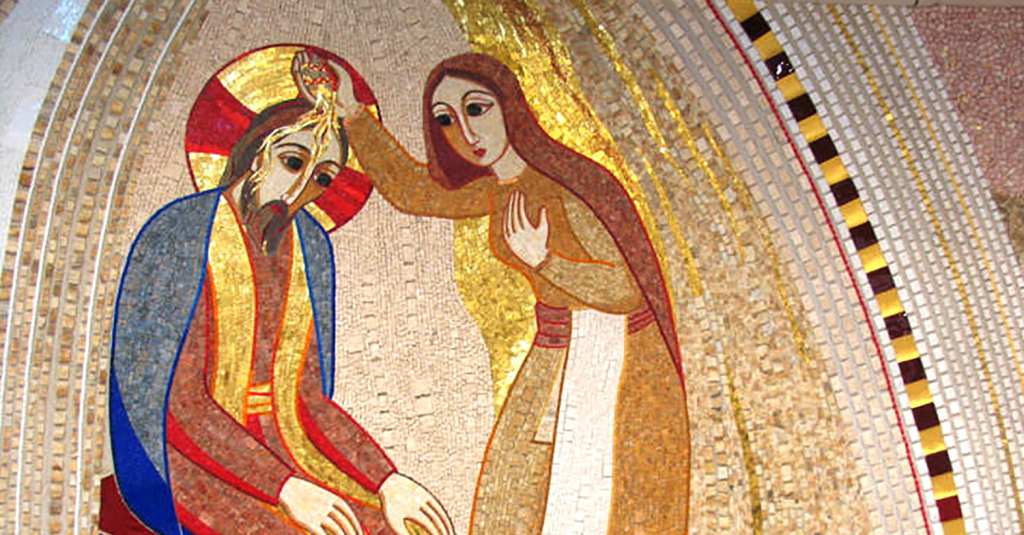
The woman, Mary, was affirmed by Jesus for seeing the situation as a possibility and opportunity of loving her Lord. Mary alone had the vision amongst all the disciples, and the accompanying action, to enter through the door of risk in order to connect intimately and lovingly with Jesus.

Mary’s love, radiating outward for all to see, reflected the genuine love of God for the world – a love so great that Jesus would soon experience death and burial because of that love for humanity.

The disciples were grumping and cursing about the right way to do things; whereas Jesus blessed the woman with no reference whatsoever to morality or ethics. Mary had no concern for playing the numbers game and counting money, but instead focused on the ultimate value before her.

Giving what she had to Jesus, Mary demonstrated the path of true discipleship. She helps open our eyes to the realities which are right in front of us:

  • The broken jar of perfume shows us her brokenness and our need to be broken. (Matthew 5:3-4)
  • An extraordinary and extravagant amount of perfume was used, picturing her overflowing love for Jesus. (John 20:1-18)
  • The perfume was poured on the head of Jesus, and she herself used her hair as the application (according to John); hair is a rich cultural symbol for submission and respect. (1 Corinthians 11:14)
  • The perfume directs us to the death of Jesus. (John 19:38-42)
  • The perfume highlights for us the aroma of Christ to the world. (2 Corinthians 2:15-17)
  • There is more to the disciples’ response than mere words about perfume; the Apostle John specifically names Judas as questioning this action – the one who is not actually concerned for the poor. (Matthew 26:15)
  • The woman and the disciples (specifically, Judas and Mary) serve as spiritual contrasts: Mary opens herself to the sweet aroma of Christ; Judas just plain stinks.
  • The perfume presents a powerful picture of the upcoming death of Christ, for those with eyes to see; he was broken and poured out for our salvation. (Luke 23:26-27:12)

Christianity was never meant to be a surface religion which only runs skin deep. The follower of Christ is meant to be transformed, inside and out, so that there is genuine healing, spiritual wellness, and authentic concern for the poor and needy. 

Keeping up appearances is what the Judas’s of this world do. However, the Mary’s among us dramatically point to Jesus with their tears, their humility, their openness, and their love.

In this contemporary environment of fragmented human ecology, our first step toward wholeness and integrity begins with a posture of giving everything we have – body, soul, and spirit – to the Lord Jesus. In receiving the love of God, we can then freely give that love to a world locked in the shackles of tunnel vision, judgmentalism, and incessant moralizing.

To take the risk of breaking ourselves open and becoming vulnerable, we find love. In finding love, there we see intimacy. And where there is intimacy, there is the relational connection which transforms the dark and the negative to possibility and light.

Loving Lord Jesus, my Savior, and my friend, you have gone before us and pioneered deliverance from an empty way of life and into a life of grace and gratitude. May I, and all of your followers, emulate the path of Mary and realize the true freedom which comes from emptying oneself out for you. Amen.

Inclusion vs. Exclusion (Acts 15:1-21)

Certain people came down from Judea to Antioch and were teaching the believers: “Unless you are circumcised, according to the custom taught by Moses, you cannot be saved.” This brought Paul and Barnabas into sharp dispute and debate with them. So Paul and Barnabas were appointed, along with some other believers, to go up to Jerusalem to see the apostles and elders about this question. The church sent them on their way, and as they traveled through Phoenicia and Samaria, they told how the Gentiles had been converted. This news made all the believers very glad. When they came to Jerusalem, they were welcomed by the church and the apostles and elders, to whom they reported everything God had done through them.

Then some of the believers who belonged to the party of the Pharisees stood up and said, “The Gentiles must be circumcised and required to keep the law of Moses.”

The apostles and elders met to consider this question. After much discussion, Peter got up and addressed them: “Brothers, you know that some time ago God made a choice among you that the Gentiles might hear from my lips the message of the gospel and believe. God, who knows the heart, showed that he accepted them by giving the Holy Spirit to them, just as he did to us. He did not discriminate between us and them, for he purified their hearts by faith. Now then, why do you try to test God by putting on the necks of Gentiles a yoke that neither we nor our ancestors have been able to bear? No! We believe it is through the grace of our Lord Jesus that we are saved, just as they are.”

The whole assembly became silent as they listened to Barnabas and Paul telling about the signs and wonders God had done among the Gentiles through them. When they finished, James spoke up. “Brothers,” he said, “listen to me. Simon has described to us how God first intervened to choose a people for his name from the Gentiles. The words of the prophets agree with this, as it is written:

“‘After this I will return
    and rebuild David’s fallen tent.
Its ruins I will rebuild,
    and I will restore it,
that the rest of mankind may seek the Lord,
    even all the Gentiles who bear my name,
says the Lord, who does these things’—
    things known from long ago.

“It is my judgment, therefore, that we should not make it difficult for the Gentiles who are turning to God. Instead we should write to them, telling them to abstain from food polluted by idols, from sexual immorality, from the meat of strangled animals and from blood. For the law of Moses has been preached in every city from the earliest times and is read in the synagogues on every Sabbath.” (New International Version)

The Council of Jerusalem, by Franz Mayer of Munich, 1883

What happens when new people come into a group who are different? How does any church or faith community deal with long time members alongside new ones? Is there a way to work through differences without becoming like the Borg, trying to make others to be just like me? (“Prepare to be assimilated. Resistance is futile.”)

Differences of thought, opinion, and practice are inevitable. Conflict cannot (and should not) always be avoided. Anyplace there’s people, conflict eventually happens. Put a bunch of sinners together in one place (like in a church), add a few grumpy old people, a few know-it-alls, then sit back and watch the fireworks. 

It seems to me that every church is about one or two good fights away from being non-existent. It’s a miracle that more congregations don’t call it quits every year, especially after their annual congregational meetings! I myself have a long resume of handling ornery folks, family squabbles, and cantankerous curmudgeons that could make your head swim – or just get you downright angry.

What is the source of conflict among you? What is the source of your disputes? Don’t they come from your cravings that are at war in your own lives? You long for something you don’t have, so you commit murder. You are jealous for something you can’t get, so you struggle and fight. You don’t have because you don’t ask. You ask and don’t have because you ask with evil intentions, to waste it on your own cravings. (James 4:1-3, CEB)      

Within the church there are expectations, whether they are reasonable or not. If those expectations are not fulfilled, people feel unfulfilled. So, they look to put unnecessary burdens on those entering the faith – to make them pay their dues by observing rules that they themselves aren’t even able to keep.

Conflict begins with some kind of desire. If unmet, it becomes a demand. And demanding something usually leads to judging other people. After all, if you really care about me and my group, you will meet these demands (desires). If left unchecked and unresolved, the progression ends in trying to punish others by simply withdrawing from a relationship with the intent of hurting another.

A focus on reaching out, on rebuilding and restoring lives, puts our efforts where they need to be – and puts us on the same page together, acting out of a sense of purpose, not preservation.

Today’s New Testament lesson deals with the conflict and debate surrounding gentile inclusion into the family of God. The success of Paul’s missionary journeys in reaching non-Jewish peoples and establishing churches, created tension as to whether these new believers ought to become Jewish in order to be Christian.

This question was at the heart of why the Council at Jerusalem was convened. Those who believed that Gentiles need to become Jews, demanded that the they be circumcised and observe the Law of Moses. Others, including Paul and Barnabas, believed that sort of thinking and approach was contrary to the gospel.

The Apostle Peter was there and gave his own experience of observing God work among Cornelius, a Gentile. Peter’s story was more than personal testimony; it was a powerful theological argument about what God was doing and what God is up to with all people, not just the Jews.

Peter’s story demonstrated that God (and not Paul or anybody else) is responsible for including Gentiles among God’s people without making them Jewish. It was God who called and cleansed Gentiles – making no distinction between them and Jews.

People are justified and made right by God’s grace, and not by human judgments of who can be in or out. The upshot of the whole thing is this: We believe that we will be saved through the grace of the Lord Jesus, both Jew and Gentile. Period.

The only thing needed from Gentiles is to believe, because salvation is an act of God’s grace, and not the result of human effort.

What’s more, the inclusion of non-Jewish persons as the people of God is nothing new; it has always been there in the Old Testament Scriptures. And they were never called to become just like Jews in order to be the people of God. (Amos 9:11-12)

This is instructive for all contemporary faith communities. Our mission is not to make followers of me or you or of a particular faith tradition, but to make disciples of Jesus Christ. Grace brings us in, grace keeps us in, and grace will lead us home.

Our focus is to be on openness, connection, and inclusion, and not in seeking to be closed-minded and closed-hearted – separating from those different from us and practicing exclusion. The following ways may be helpful in fostering a more generous gospel:

Talk less, listen more. Don’t interrupt. Do give focused attention. Use respectful language. Ask how others prefer to be addressed and how they refer to themselves. Asking is a sign of care and respect for the person you are talking to, and is also a way to help them feel safe and comfortable.

Be open. Don’t stereotype. One person doesn’t represent an entire group of people. There are different Christian traditions throughout the world. And there are also different traditions and ways within all major religions, as well as within all people groups, institutions, organizations, communities, races, ethnicities, and genders. Seek to learn, rather than superimpose what you think onto someone else.

Become self-aware. Understand that, although all persons are created in the image of God and are equal before the Lord, there is not equity in human organizations and systems. Being aware of our own privileges is a crucial first step to adopting a more inclusive attitude.

Stay curious. To remain curious means to seek people and situations that allow us to challenge (both in a positive and negative way) our beliefs and our cultural and personal patterns of thinking, worshiping, working, and living.

Generally speaking, exclusion creates conflict, whereas inclusion gives space for others to explore and discover what it means to live into their faith and spirituality.

Loving Lord, give us strength so that we can build places of belonging: To create a community for all to share their gifts, to know that each of us is loved, to help us to see the light of Christ in all that we serve. Help us remember that each of us is loved and important. Amen.

The Parable of the Mustard Seed (Mark 4:30-34)

Again he [Jesus] said, “What shall we say the kingdom of God is like, or what parable shall we use to describe it?It is like a mustard seed, which is the smallest of all seeds on earth. Yet when planted, it grows and becomes the largest of all garden plants, with such big branches that the birds can perch in its shade.”

With many similar parables Jesus spoke the word to them, as much as they could understand. He did not say anything to them without using a parable. But when he was alone with his own disciples, he explained everything. (New International Version)

Working with Seeds

I grew up on a rural Mid-West America farm. Working with seeds was our livelihood. Even though my farming father worried incessantly about the weather, there was one thing he was never anxious about: seeds.

My dad knew that when we planted seeds in the Spring, there would be a harvest in the Fall. That’s because he knew the seed already has within itself everything it needs to germinate, take root, grow, and produce a harvest. His role was simply to tend to it all by keeping the fields free of weeds, worms, and critters.

Since I was the youngest, I typically got the grunt work of our massive family garden. I was always excited when we planted things because I knew what was coming in a few months: some delicious veggies on my dinner plate which were fresh from the garden that I myself tended. I never wondered whether there would be food on the table, or not.

Seeds are, of course, small. If you think about it, they appear quite unimpressive. Yet, we know better. We understand that when planted, watered, and cultivated, those seeds turn into amazing plants. 

But it takes time. Even as dumb little kid, I clearly knew that my planting seeds would not result in seeing anything above ground the next day. I understood it would take a few weeks before new growth would break the ground.

Seeds and the Kingdom of God

The kingdom of God, Jesus told us, is like a mustard seed – a very small seed which can grow into a tree big enough for birds to nest. Unlike the mighty Roman Empire, or contemporary powerful national governments, the kingdom of God had humble beginnings. It grows, over a long period of time, to become a force greater than anything the world can produce.

While our world races forcefully on with the speed of the hare, Jesus is carefully and patiently building his Church at the pace of a tortoise. In the end, the kingdom of God will rule over all creation, while the kingdoms of this world shall no longer exist. 

Even though many of us now live in a society where quicker, faster, better, and stronger dominate everything, still the best things in life come as a result of tedious perseverance over an extended period of time. 

We are in such a hurry to accomplish our goals, make as much money as we can, and keep constant vigilance over our work. And for what purpose?

When we forget to slow down, or worse yet, believe slowness to be laziness and/or stupidity, there is a price to pay.

Lessons of the Seed

In graduate school, I typically read an average of 200 books per semester. Yes, you read that right. I had to keep up. I was on the clock with deadlines for papers and projects. In the factory, where I did a stent as a worker, I did piece work at the rate of 100 per hour for 8-10 hours. I had to go fast to survive and keep my job, let alone thrive. All of this, of course, impacted my mind, body, and emotions – in very uncaring ways. It was all done at the cost of my physical and mental health.

Indeed, our modern capitalist societies generate an unparalleled level of wealth and standard of living. But this has been achieved at the cost of devouring our planet faster than she can replenish herself. The stress we have put on mother earth we would never think of putting on our own mothers.

Even our attempts at leisure and self-care are anything but. We often end up racing to have as much fun and relaxation as we can cram into a few days or weeks of our “time off.” A return to the normal rat race has us telling each other, “I need a vacation from my vacation.”

There is such a thing as death by overwork. So, we desperately need to come back to the words and ways of Christ – to embrace the slow developing rhythms of grace. We need to age like a fine wine or an expensive bourbon, getting wiser as we get older.

Time is a precious gift given to us by a good and wise God. And that gift must be stewarded well. All the things that bind people together and make our lives worth living – family, faith, friendship, and community – all thrive on having copious amounts of time with each other (and God) in relational connection.

We are, I believe, in a pandemic of having no one to listen, of profound loneliness, and of incredible lostness of soul. The only real prescription for these debilitating maladies is slowing down and taking the time to be, and to be with each other.

Seeds are Slow

Instant gratification will not do the trick. We need to plant small seeds, and then take the time to nurture them and watch over them. While the rest of the world rages and roars on with their disease of speed, believers must carefully cultivate spiritual practices which foster healthy growth and development.

Whether we like it, or not, we serve a slow God. And what’s more, because slowness is built into the very nature of the world, decelerating our lives actually works. Life eventually becomes better, not worse.

You and I have the God-given right to determine our own pace and tempo – without anxious systems of power squeezing every ounce of speed and activity out of us, sucking our souls to serve a worthless idol.

I, for one, would not be opposed to creating a society known as “The Royal Order of Sloths,” or joining a group of slow walkers who label themselves as “Sauntering for Sanity,” or simply be straightforward with an organization known as “The Society for the Propagation of Slowness.”

That’s because the best things in life take time; and those things need us to slow ourselves enough to notice and enjoy them. Eventually, we shall find that the world is blessed because of our commitment to embracing the small and the slow.

Let us pray for all the world, and also for ourselves, knowing that what we ask in the name of the Lord, will be heard according to God’s mercy and patience.

Almighty God, we pray for faith, even as small as a mustard-seed, and for the love to nourish and nurture it, so that it may grow and flourish. We pray for the church throughout the world – that people of faith may work together in unity and in prayer to overcome evil and to promote true love among all people.

O Lord, you are the beginning of all our good, the wellspring of all our love and the source of all our freedom. Let your grace continue to work in us, that your will may be done through us, and that we may always rejoice in your presence. Lord, in your mercy, hear our prayer. Amen.

Life in the Spirit (Romans 8:1-11)

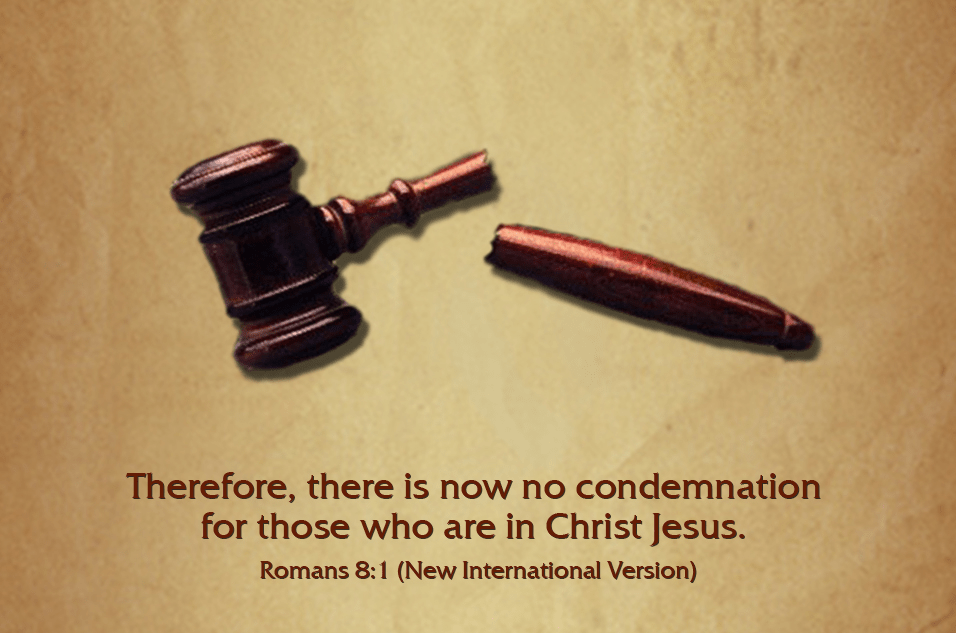
Therefore, there is now no condemnation for those who are in Christ Jesus, because through Christ Jesus the law of the Spirit who gives life has set you free from the law of sin and death. For what the law was powerless to do because it was weakened by the flesh [sinful nature] God did by sending his own Son in the likeness of sinful flesh to be a sin offering. And so he condemned sin in the flesh, in order that the righteous requirement of the law might be fully met in us, who do not live according to the flesh but according to the Spirit.

Those who live according to the flesh have their minds set on what the flesh desires; but those who live in accordance with the Spirit have their minds set on what the Spirit desires. The mind governed by the flesh is death, but the mind governed by the Spirit is life and peace. The mind governed by the flesh is hostile to God; it does not submit to God’s law, nor can it do so. Those who are in the realm of the flesh cannot please God.

You, however, are not in the realm of the flesh but are in the realm of the Spirit, if indeed the Spirit of God lives in you. And if anyone does not have the Spirit of Christ, they do not belong to Christ. But if Christ is in you, then even though your body is subject to death because of sin, the Spirit gives life because of righteousness. And if the Spirit of him who raised Jesus from the dead is living in you, he who raised Christ from the dead will also give life to your mortal bodies because of his Spirit who lives in you. (New International Version)

I feel tremendously privileged to be a Christian and to enjoy the very Spirit of God. The people of God are spiritual people, possessing God’s own Spirit. The Apostle Paul wanted Christians to know the privileges of life in the Spirit, as believers in Jesus.

No Condemnation

There is now no condemnation, no judgment, for us who are in Christ. God has pronounced a verdict, and that decision is final. We have been united to Christ by means of God’s Spirit. Since God condemns neither you nor I, there is no need whatsoever to condemn ourselves or other believers.

Since no condemnation is our reality as Christians, we are to believe this promise of God and swim in its wonderful privilege. Believe that the sin issue has been taken care of once for all through the life and death of Christ. And if you do not feel forgiven, then put yourself in a position to believe. 

It would be silly to go into the bathroom, turn on the shower, and then just stand in the middle of the bathroom without getting under the showerhead. It would be weird because you did not put yourself in a position to actually become clean. You may believe that a shower and using soap and shampoo will make you clean, but if you do not actually avail yourself of the privilege of actually taking the shower, but just stand there and look at it, you will not really be clean. 

We must put ourselves in a position to experience the privilege of knowing our wonderful state of cleanliness (no condemnation) by actually reading the Word of God on a regular basis; by praying in the Spirit on all occasions; by practicing the silence and solitude and other spiritual disciplines necessary to receive the cleansing work of the Holy Spirit.

Two people are declared “married” in a formal wedding ceremony. The couple then works out their shared union together over a lifetime. The minister does not pronounce condemnation at the ceremony; he declares a blessing. Yet, from that point forward, the two people must work on their marriage. They must believe their relationship is important enough to warrant putting themselves in a position to grow together. They will intentionally create date nights and conversations on the couch. They’ll seek to learn, appreciate, and participate in the other person’s interests and life. 

“Grace is not opposed to effort; it is opposed to earning. Earning is an attitude. Effort is an action. Grace, you know, does not just have to do with forgiveness of sins alone.”

Dallas Willard, The Great Omission

Just as we do not marry ourselves and pronounce ourselves a married couple, so we do not save ourselves. However, having a marriage license does not mean there is no effort to be done in the relationship. A marriage is both a legal reality, and a kind of mystical union between two married persons.

It’s a beautiful thing to be in a relationship where there is no condemnation. Because of Jesus Christ we are free to be the people God created us to be – forgiven and no longer burdened by the condemning voices of guilt and shame.

Freedom from Sin and Death

In Holy Scripture, sin is not only a personal struggle but a present ubiquitous reality in the world. The power and presence of sin is found everywhere. There is personal sin, institutional sin, and systemic sin. Because sin is everywhere, death is everywhere. Biblically, death refers to more than physical death because it is also a relational term. Death means relational separation from God. Conversely, life is relational connection with God. 

God did all the action necessary to make the union possible. God sent the Son. God became incarnate. God’s Son became a sin-offering, an atoning sacrifice for our sins. God condemned sin in sinful humanity. God met the righteous requirements of the law. God effects holiness in us by means of the Spirit. 

Rather than saving us from this terrible plight of sin, and then simply telling us to live a holy upright life, God the Father and God the Son sent God the Holy Spirit to indwell us so that we can live like Jesus. Therefore, we must put ourselves in a position to experience life through dwelling in the Scriptures and letting the Spirit and the Word work together to effect practical change in our lives (sanctification, that is, becoming holy). 

Having the Mind of Christ

A problem we all face is that we inhabit a fallen world. Our mindset can easily get screwy. If we want life and peace, we need the mind of Christ and the Spirit. Whatever our minds are occupied with is what determines whether we will have life and peace, or not. 

If the objects of our thoughts, interests, and affections are continually away from Christ and the Spirit, we will experience death, not life. If we put ourselves in a position to indulge the sinful nature (the “flesh”) we will miss real life. An undisciplined mind only leads to relational separation.

The addict knows there are two choices: either life or death. The first of the twelve steps of Alcoholics Anonymous is to admit that I am powerless over alcohol and that my life has become unmanageable.  The second step is to believe that a Power greater than myself can restore me to sanity. The third step is to turn my life and my will over to that Power. So, it is the same for us. 

We are powerless over sin, which will, if left unchecked, lead to death. But in the Spirit (not the alcoholic spirits!) we have life. Sin, like alcohol, is a daily possibility, even after giving my life and my will to God. Yet, there is also the possibility of life. And that hope of life comes with possessing the mind of Christ and the Spirit. 

We have hope that through the Spirit’s power we will overcome the power of choices that lead to death; and instead, embrace choices that lead to life. So, whatever we put into our minds is vitally important. 

The Spirit Indwelling Us

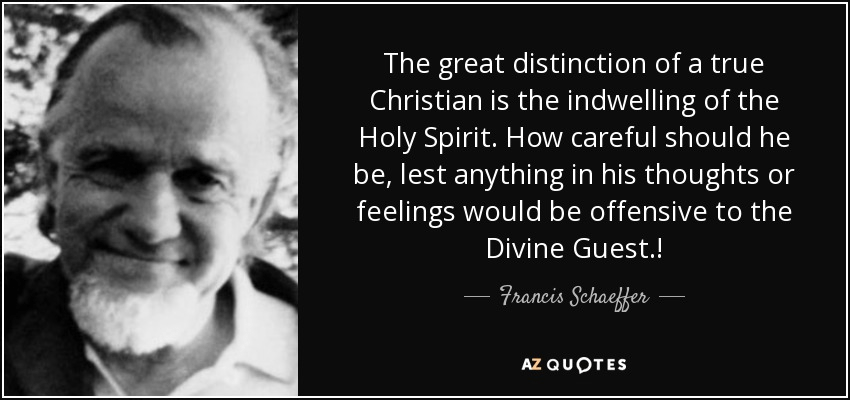
The Spirit is the distinguishing mark of the believer in Jesus. The Spirit opposes the sinful nature and expects us to do the same. There’s no need to try and live the Christian life on our own power when we possess spiritual power. There exists an internal struggle within us that desires to do right but has a compulsion to do otherwise. Yet, the indwelling Spirit gives us victory. Jesus lived the life for us that we could not live. His life, as much as his death, achieved salvation from sin for us. The very same Spirit that helped Jesus live his life, and raised him from death, is the same Spirit whom we possess.

When I was a kid, I remember my grandmother canning preserves. I would sit on a stool in the kitchen and watch her, looking forward to having some grape preserves on my next piece of toast. I once asked her, “Why are you always melting that wax over the fruit?” I didn’t understand how wax could make my toast taste any better. Grandma answered, “The wax seals the jar tightly so the fruit can’t be contaminated. If I didn’t seal it, the fruit would eventually rot.” As an amateur in the canning business, I could see the importance of picking grapes, boiling them, and canning them. But I now know how important sealing and preserving are.

You and I are God’s preserves. God not only chose us, redeemed us, and called us to life in the Son – God also had a plan for preserving us as heirs of eternal life. God gave us the indwelling Spirit so that we can live as we ought, free from sin and doing the will of God through spiritual power working within us. 

I hope today that you have a deep appreciation for the privileges of no condemnation, freedom from sin, possessing the mind of Christ and the power of the indwelling Spirit. And more than that, that you will avail yourselves of this tremendous gift of the Spirit and experience life and peace.

Gracious God, fill us with the knowledge of your will through all spiritual wisdom and understanding. May we live lives worthy of the Lord Jesus and please him in every way; bearing fruit in every good work, growing in the knowledge of God; being strengthened with all power according to your glorious might so that we may have great endurance and patience, joyfully giving thanks to you. For you have rescued us from the dominion of darkness and have brought us into the kingdom of the Son you love, in whom we have redemption, the forgiveness of sins. Amen.