Ephesians 4:7-16 – Be Mature

Christ has generously divided out his gifts to us. As the Scriptures say,

“When he went up
    to the highest place,
he led away many prisoners
    and gave gifts to people.”

When it says, “he went up,” it means that Christ had been deep in the earth. This also means that the one who went deep into the earth is the same one who went into the highest heaven, so he would fill the whole universe.

Christ chose some of us to be apostles, prophets, missionaries, pastors, and teachers, so his people would learn to serve, and his body would grow strong. This will continue until we are united by our faith and by our understanding of the Son of God. Then we will be mature, just as Christ is, and we will be completely like him.

We must stop acting like children. We must not let deceitful people trick us by their false teachings, which are like winds that toss us around from place to place. Love should always make us tell the truth. Then we will grow in every way and be more like Christ, the head of the body. Christ holds it together and makes all of its parts work perfectly, as it grows and becomes strong because of love. (Contemporary English Version)

The Body of Christ, without love as its skeletal structure, would be as ridiculous and silly as a boneless chicken ranch. 

The Apostle Paul, a concerned spiritual father, was encouraging the Church toward maturity, to act as adults in the faith and not like immature children.

Just as the physical body begins small, then grows and matures over time, so the spiritual body (the church) is to focus on incremental slow growth across the years so that it realizes maturity. And the consummate evidence of that spiritual development is strong bonds of love.

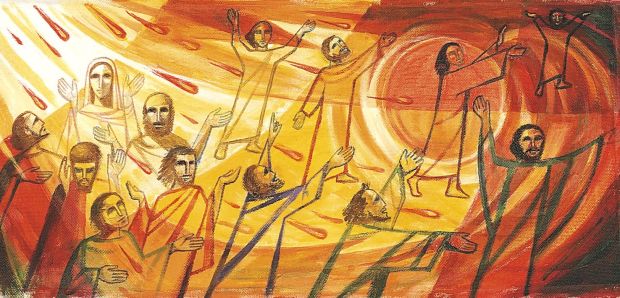
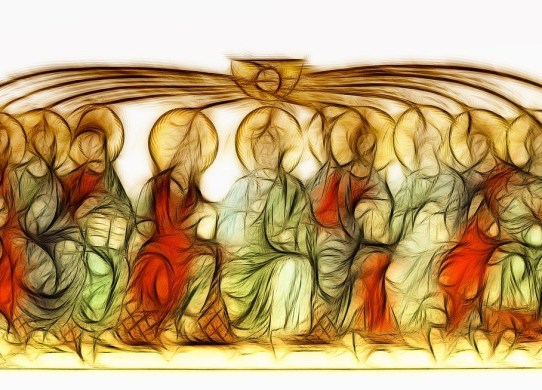
Ten days after the Lord Jesus ascended to heaven, the Day of Pentecost occurred. On that day, the Holy Spirit came upon the small band of believers and the church became a full-fledged phenomenon, growing and expanding. (Acts 2:1-47)

The gracious gifts of the Spirit are given to each and every Christian so that growth and strength will come to the Body of Christ through love. Each spiritual gift might be different from person to person, but every one of them is meant to be used in love for the benefit of the entire church.

Without any bones or skeleton, the church will be weak and ineffective. It might look like a church but will not be able to do anything in the world. 

For spiritual maturity to happen, it is necessary for every single Christian in the church to discover their spiritual gift, and then, use it in love to build up the entire Body. This is the God-ordained means of realizing a healthy functioning church. 

It may appear that you and I, as believers in and followers of Jesus, have the luxury of pursuing other interests rather than providing loving and gifted service to Christ’s Church. After all, church attendance, Christian mission and service are all voluntary, right? A volunteer can choose to sit out, right?

Uh-hem (clearing of throat). Wrong. That sort of thinking is based in the goofy notion that the Church is a voluntary society which we choose to become a part of, or not. It isn’t. The Body of Christ, the Church, the people for whom Christ died, was chosen by God – and not the other way around.

Before we chose God, God chose us. We can no more choose to decline Christian mission and service anymore than a physical heart or bodily organ can decide it needs to go do something else – as if they could simply leave the Body or just stop doing what they’re doing without consequence.

No, my friends, for the Body to function, it must work in concert, paying attention to the unique parts which keep it alive and thriving, while at the same time, maintaining the overall health of all the Bodily systems.

Bottom line: We need one another. Going off and continually doing my own thing or picking up my marbles and going home because I’m mad or frustrated, is what children do. When adults act like children, we rightly discern they are immature and need to grow up.

So, instead of lacking self-awareness or being pouty about my blog post, focus on the following questions:

What is your passion and desire for Christ’s church? 

What issues stir you emotionally? 

What group of people do you feel most attracted to reach? 

What area of Christian mission or church ministry would you most like to influence? 

Are there people whom you notice that others seem to ignore? 

Will you step out in faith and learn how God has wired you for ministry? 

Will you speak and serve in the name of Jesus through the enablement of the Spirit?

Loving God, I ask you to give me a heart of faith to trust the Spirit and the Spirit’s work in my life. I ask for a heart that desires the gifts of the Spirit for the common good of all persons. I ask you to help me be open to the gifts of the Spirit in others. I ask for jealousy of others’ gifts to be quieted in me. I pray that my gifts would build up the church. Most of all, I ask for the gift of love. Use me for the strengthening of Christ’s church, and for a positive influence in the world. Amen.

Acts 2:1-21 – The Day of Pentecost

When Pentecost Day arrived, they were all together in one place. Suddenly a sound from heaven like the howling of a fierce wind filled the entire house where they were sitting. They saw what seemed to be individual flames of fire alighting on each one of them. They were all filled with the Holy Spirit and began to speak in other languages as the Spirit enabled them to speak.

There were pious Jews from every nation under heaven living in Jerusalem. When they heard this sound, a crowd gathered. They were mystified because everyone heard them speaking in their native languages. They were surprised and amazed, saying, “Look, aren’t all the people who are speaking Galileans, every one of them? How then can each of us hear them speaking in our native language? Parthians, Medes, and Elamites; as well as residents of Mesopotamia, Judea, and Cappadocia, Pontus and Asia, Phrygia and Pamphylia, Egypt and the regions of Libya bordering Cyrene; and visitors from Rome (both Jews and converts to Judaism), Cretans and Arabs—we hear them declaring the mighty works of God in our own languages!” They were all surprised and bewildered. Some asked each other, “What does this mean?” Others jeered at them, saying, “They’re full of new wine!”

Peter stood with the other eleven apostles. He raised his voice and declared, “Judeans and everyone living in Jerusalem! Know this! Listen carefully to my words! These people aren’t drunk, as you suspect; after all, it’s only nine o’clock in the morning! Rather, this is what was spoken through the prophet Joel:

In the last days, God says,
I will pour out my Spirit on all people.
    Your sons and daughters will prophesy.
    Your young will see visions.
    Your elders will dream dreams.
    Even upon my servants, men and women,
        I will pour out my Spirit in those days,
        and they will prophesy.
I will cause wonders to occur in the heavens above
    and signs on the earth below,
        blood and fire and a cloud of smoke.
The sun will be changed into darkness,
    and the moon will be changed into blood,
        before the great and spectacular day of the Lord comes.
And everyone who calls on the name of the Lord will be saved. (Common English Bible)

The Holy Spirit is the distinguishing mark of the believer in Jesus Christ.

Therefore, since the Spirit is given, the main responsibility of Christians is to receive. 

Christianity is distinctive in this sense – it is primarily a religion of receiving. The Christian life is lived by the power of the Holy Spirit, and not in our own strength. The function of faith is to receive what grace offers. 

We are saved and sanctified by grace alone through faith. God lives in and through us by means of the Spirit. The miraculous and the supernatural cannot, obviously, be done by any human person.  It can, however, be accomplished through the power of the Holy Spirit.

People tend to put a lot of pressure on themselves to be a certain way and to do certain things. The result? Tiredness. Discouragement. Imbalance. Lots of giving. Little receiving.

Christianity is not chiefly about giving but receiving. The Christian life is about putting oneself in a position to receive through prayer and humility. In Christianity, the opposite of receiving is not giving – it’s pride. 

Maybe this kind of talk makes you uncomfortable. I’m not talking about being passive or lazy. I’m highlighting the need of receiving grace from God by means of the Holy Spirit. Then, the Spirit to work in and through us. 

Jesus said we would do greater works than even he himself with the advent of the Spirit! (John 14:12-14)

The question then becomes: Will we let God be God? Will we allow the Spirit to do work in us?

The Spirit is elsewhere described in Holy Scripture as a gentle presence, an encourager, counselor, and comforter. Yet, not here at Pentecost – the Spirit is portrayed like a violent wind and an unusual fire.

The Holy Spirit on the Day of Pentecost was not some gentleman caller entering politely when invited. Instead, the Spirit appears more like a drunken sailor who bursts into the room and causes a big ruckus. There’s nothing subtle about the Spirit at Pentecost. The Spirit is electric, bombastic, and volcanic, causing a huge scene and upheaving the status quo.

Because of Pentecost, Christians are marked and defined by God’s Spirit living within them and being full of the Spirit. God wants to pour out the Spirit on all kinds of people to overflowing so that what comes out of them is “prophecy.” 

The prophet Joel and the Apostle Peter do not intend the word “prophecy” to mean predicting the future. Rather, they are referring to inspired speech coming from a heart overflowing with the Spirit. 

Just as an inebriated person says and does things they would not typically say or do because they are filled with alcohol, so the person filled with God’s Spirit says things and does things they would not typically say or do because their inspiration and courage come as a result of God within them.

Thus, we must cast off the unholy spirits of inebriation and receive the Holy Spirit of God.

Descent of the Holy Spirit at Pentecost mosaic by Anna Wyner

God sobered-up the little band of Christ followers from learners to practitioners, sending them into the world with a mission.

Being on a mission from God is not really about ability; it’s about being filled and sent. 

First time parents may read and learn all they can about parenting before their child is born. Yet, when that little bundle comes into the world, and the hospital puts this kid in your arms and sends you out, you feel inadequate for the task. Parenting becomes a kind of supernatural affair where you pray and learn on the fly, finding out that you need something beyond yourself to get anywhere in raising this screaming, pooping, sleeping person who depends completely on you for everything. 

God sends us into the world to make disciples. And we may feel very inadequate for the task. However, this has more to do with receiving the Spirit. The Spirit comes looking to turn our lives upside-down with new life in Jesus Christ. 

Pentecost means that the Spirit came to shake things up and accomplish among God’s people what they could never do on their own.

Everyone who calls on the name of the Lord will be saved. 

The Church in the New Testament was not a country club for people to simply enjoy the perks of membership.  The community of the redeemed, the Church, is actually more like a place where the people seem drunk because they are all talking with inspired speech from the Holy Spirit. 

Maybe we don’t need to be saved in the sense that we have already called on the name of the Lord concerning forgiveness in Christ. Yet, maybe we need to call on the name of the Lord to be delivered from our misguided attempts to see the Christian life as a pleasant affair.

Perhaps we need deliverance from disordered priorities and misguided loves. We may need to be saved from ourselves so that we are open to the Holy Spirit with palms up receiving from God whatever it is the Spirit wants to do in and through us, rather than telling God how we think things ought to go. 

Prayer, then, is more about receiving the Spirit and God’s purposes for us rather than giving God an earful and expecting the Lord to bless our plans.

Pentecost is the launching pad of the church’s mission – it was explosive because the Spirit is a kind of wild man who fills people up to overflowing so that what comes out of them is inspired speech and missional actions.

If a language barrier cannot stop the Spirit from operating, then how much more can God transform us and use us in the lives of those around us?

Joel’s prophecy, quoted by Peter, is only partially fulfilled. Events have been set in motion by Pentecost for the complete fulfillment of God’s justice. So, there’s some urgency for people to fill their vacuous souls with the grace freely offered to them in Christ.

The outpouring of the Spirit is a sign: The end is near. And the generous giving of the Spirit is inclusive – there is room for all kinds of people. Through the Spirit, God saves all who call on the name of the Lord.

Today is not just another day on the calendar. It is the Day of Pentecost! 

Just as marriages occasionally need a spark and a fire and a fresh wind, so we need the Holy Spirit to breathe on us, comfort us, and inspire us.

May we be filled with the Spirit as we anticipate what our God will do now, and in the years to come.

Spirit of the living God, through the reading and proclamation of the Word, may you refresh our spirits, reshape our desires, recreate our hearts, and reform our ways so that we will shine with your enduring glory, through Jesus Christ, our risen and ascended Lord. Amen. 

John 17:20-26 – The Need for and Importance of Unity

“My prayer is not for them alone. I pray also for those who will believe in me through their message, that all of them may be one, Father, just as you are in me, and I am in you. May they also be in us so that the world may believe that you have sent me. I have given them the glory that you gave me, that they may be one as we are one—I in them and you in me—so that they may be brought to complete unity. Then the world will know that you sent me and have loved them even as you have loved me.

“Father, I want those you have given me to be with me where I am, and to see my glory, the glory you have given me because you loved me before the creation of the world.

“Righteous Father, though the world does not know you, I know you, and they know that you have sent me. I have made you known to them and will continue to make you known in order that the love you have for me may be in them and that I myself may be in them.” (New International Version)

What is the Church’s identity?

What is the Church all about?

Why is the Church important?

The Church’s Identity

The Church is made up of people who have been reconciled to God through Christ’s sacrificial death on the cross and brought to new life in the Spirit. This special relationship that believers and Jesus enjoy with their God is a covenant relationship, and, so, the Church is a covenant community – receiving the blessings first promised to Abraham in the Old Testament that all nations would be blessed by grace through faith. 

God mercifully acts on the Church’s behalf through choosing, adopting, and redeeming people. This new covenant community receives the promises of God and exists to follow Jesus Christ in all things. 

So then, the Church is not a voluntary society, like other human institutions. Rather, it is divinely called by God. The Church is the community of the redeemed whom God has joined through the Spirit to Christ. Therefore, an individual, theologically speaking, does not join a church; instead, God joins the Church to Jesus.

The Nicene Creed

This ancient ecumenical creed describes the Church with four identifying marks:

  1. The Church is one. The unity of the Church comes from being in fellowship with God through Jesus in the Spirit – expressed through the bond of love and a common worship which includes the spiritually forming practices of preaching, liturgy, and sacraments. Since believers serve a triune God of Father, Son, and Spirit who exists in unity, so Christians are to work toward maintaining their unity through the bond of peace.
  2. The Church is holy. The Church is holy by virtue of Christ’s finished work. Therefore, the members of the Church are saints, called by God to live in holiness and participate with him in carrying out his purposes on earth. As God is holy, so believers are to be holy in all they do. Since Christians are holy through God’s justification in Christ, so the Church as saints must uphold justice in the world.
  3. The Church is catholic. This means that God’s people are found in all parts of the world throughout all times in history, including every race, class, gender, and ethnicity. Since the Church includes all kinds of people from different cultures, these believers must work together. The Church, across all kinds of denominations, ought to minister together to the total life of all people through gospel proclamation and good works done in the Spirit.
  4. The Church is apostolic. Apostolic means “to be sent.” The Church is not only a people who are gathered for worship and teaching; they are also sent into the world as salt and light to those who remain in darkness. Where the Church goes, the rule and reign of Jesus goes with them so that good news is spread to all nations.

The Church’s Mission

  1. The Church is called to love God.  The Church is the temple of the Holy Spirit, and the house where God dwells. The Church exists to glorify God and enjoy him forever. Christians are to develop intimacy with Jesus through the Spirit.
  2. The Church is called to love one another. The Church is the Body of Christ and is to be a haven for saints. The Church exists for community and is the place where believers are strengthened in faith through the proclamation of the Word in preaching and sacrament.
  3. The Church is called to love its neighbors. The Church is the people of God, being a hospital for sinners. The Church exists to serve the kingdom of God so that God’s benevolent and gracious rule might extend to all creation.

These three dimensions define the Church as being a “missional” community of redeemed persons who are concerned and focused on making disciples of Jesus Christ. The forward direction of the Church is to come ever closer to Christ through faith, be strengthened in that faith together through the Word of God, confidently stepping into the world to engage it with the love and grace of God so that others may come to faith in Jesus Christ.

The Church’s Importance

  1. The Church is a Trinitarian community, birthed as a free expression of God’s love through Word and Spirit. As people created in the image and likeness of God and redeemed for his purposes, believers reflect the image of the triune God.  The Church was important enough for Christ to die for.
  2. What the Church “does” flows from its identity as a redeemed community, being the people of God. So, then, the Church’s mission is not so much about establishing evangelistic programs so much as it is to listen to the Spirit of God and live in the power of the Spirit as it rubs shoulders with unbelievers.
  3. Just as the Father sent the Son, and the Son sent the Spirit, so the Church is sent into the world armed with the grace and love of God as if believers were ambassadors for Christ in a ministry of reconciliation.
  4. God has moved in a “downwardly mobile” way to bring reconciliation to all of creation. God has gathered the Church on earth to be sent as witnesses of Christ’s person and work through humility, meekness, and gentleness so that God’s mercy and peace might become realities in this world.

Therefore, the Church is to glorify the triune God by embracing its missional identity and mandate by making disciples of Jesus Christ through worship, community, and outreach. The Church is to aim its love toward God, one another, and neighbor through Jesus Christ in the power of the Spirit.

The Belhar Confession

This Reformed Confession of faith directly addresses the need for and importance of Christian unity, which was of great significance to Jesus in his high priestly prayer.

We believe in one holy, universal Christian church, the communion of saints called from the entire human family.

We believe that Christ’s work of reconciliation is made manifest in the church as the community of believers who have been reconciled with God and with one another.

We believe that this unity of the people of God must be manifested and be active in a variety of ways:

That we love one another;

That we experience, practice, and pursue community with one another; that we are obligated to give ourselves willingly and joyfully to be of benefit and blessing to one another;

That we share one faith, have one calling, are of one mind; have one God and Father, are filled with one Spirit, are baptized with one baptism, eat of one bread and drink of one cup, confess one name, are obedient to one Lord, work for one cause, and share one hope.

That together we come to know the height and the breadth and the depth of the love of Christ;

Together are built up to the stature of Christ, to the new humanity;

Together know and bear one another’s burdens, thereby fulfilling the law of Christ that we need one another and upbuild one another, admonishing and comforting one another;

That we suffer with one another for the sake of righteousness; pray together; together serve God in this world; and together fight against all which may threaten or hinder this unity.

Amen.

Acts 9:32-35 – Healed

St. Peter heals Aeneas, 12th century mosaic in Palermo, Italy

As Peter traveled about the country, he went to visit the Lord’s people who lived in Lydda. There he found a man named Aeneas, who was paralyzed and had been bedridden for eight years. “Aeneas,” Peter said to him, “Jesus Christ heals you. Get up and roll up your mat.” Immediately Aeneas got up. All those who lived in Lydda and Sharon, saw him and turned to the Lord. (New International Version)

The early church was growing. Both in numbers and in faith, the new believers following the words and ways of Jesus could be found everywhere in Judea. The Apostle Peter, therefore, decided to get out of Jerusalem and visit some of these folks in the town of Lydda, on the Mediterranean coast.

Back when Peter was following Jesus around in his earthly ministry, the Lord told the disciples that they will do the works he did, and, what’s more, they will do even greater things than Jesus himself. (John 14:12-14)

Peter emulated the example of his Lord. He simply stated that Christ is the one who heals you, Aeneas, so get up, take your mat, and go on home. (Mark 2:10-12; John 5:1-8)

The act of healing the paralyzed man, Aeneas, was a sign that the merciful saving ministry of Jesus was in effect, even when Jesus isn’t bodily present. Christ made it clear that the Holy Spirit would be the continuing presence of God on this earth. (John 16:1-15)

We, too, have this same Spirit.

The work of ministry is always done to the glory of God. People hear the good news, see the miracle, and believe in Jesus.

There are some who examine today’s New Testament lesson and expect that they (and all other believers) ought to be able to do exactly what Peter did: heal another miraculously.

Then, there are others who look at the same account and relegate it to some bygone era in which only the original apostles, like Peter, could do that sort of thing – if it even happened like that, at all.

To expect a dramatic physical healing, every time, all the time, is not consistent with healing narratives in Holy Scripture. And to never expect a miraculous healing is equally inconsistent with the biblical data.

It seems to me we need to reject both extremes. That’s because healing comes in all sorts of different forms.

An event which causes the need for healing and health, or a condition which prevents good health, isn’t limited to the body. A person’s mind, emotions, and spirit can also be damaged and need healing, as well. In fact, whenever there is trauma to the physical body, it profoundly effects the person’s thinking, feeling, and praying.

We need to beware of desiring the fast solution of dramatic and miraculous healing because of not wanting to deal with our emotions.

Perhaps you, like me, have had the experience of going to work or church when experiencing a difficult time in life. There is an emotional heaviness because of a strained, broken, or lost relationship. Or maybe there is emotional pain from an unexpected or unwanted situation.

Yet, when someone asks how you are doing, the response “Oh, fine!” tumbles automatically out of your mouth. But you are anything but fine. Inside, down in your heart, or painfully present in your head, the hurt dominates your thoughts and feelings.

Healing is for people. Fixing is for things and machines. It would be weird if I said I was going to heal a tractor. It is equally strange to try and fix people. To heal is to straighten what is broken. We cannot fix our emotions because, when hurt or damaged, they need healing – a process of restoration – and it usually doesn’t happen overnight.

Our emotional healing is like walking a slow journey. Along that path, our emotions are crying out for us to pay attention to three things:

  1. Grief. Grieving is the normal emotional reaction to any significant change or loss. To grieve our painful situations, whatever they may be, is necessary to healing our emotions. Putting a lid on our grief and sucking it up in a delusional show of strength at best prolongs our healing, and, at worst, brings further damage.
  2. Grace. Grace is an act of bestowing honor or forgiveness to a person. It is not dependent upon whether one deserves it, or not. Grace is the opposite of being judgmental. It chooses not to hold something over or against another, even oneself.
  3. Gratitude. Gratitude is a deliberate act of thankfulness for a specific act. It is both an attitude and an emotion. Gratitude comes from a heart of appreciation. Habits of gratitude creates new ways of being with others. And creating new experiences is one of the best ways of helping to heal the bad experience we just went through.

Embracing those three elements of grief, grace, and gratitude sets us on a healing path. Also, there are practices which we can utilize with each of those three which promote their healing work in our lives. For me, some of those practices include humor and laughter; meditation and other spiritual practices; walking the dog; watching cartoons; and journaling.

Healing is an art. It takes time, lots of practice, and plenty of love. Healing comes from God, which is a good thing, because the Lord knows exactly the kind of healing we need.

God of all comfort and healing, our help in time of need: We humbly ask you to relieve the suffering of your sick servants everywhere. Look upon them with the eyes of your mercy; comfort them with a sense of your goodness; preserve them from the temptations of the enemy; and give them patience in their afflictions. In your good time, restore them to health, and enable them to glorify your most holy name and dwell with you forever in the land of the living, through Jesus Christ our Lord. Amen.