1 Corinthians 14:20-25 – Becoming Spiritually Mature

To be perfectly frank, I’m getting exasperated with your infantile thinking. How long before you grow up and use your head—your adult head? It’s all right to have a childlike unfamiliarity with evil; a simple no is all that’s needed there. But there’s far more to saying yes to something. Only mature and well-exercised intelligence can save you from falling into gullibility. It’s written in Scripture that God said,

In strange tongues
    and from the mouths of strangers
I will preach to this people,
    but they’ll neither listen nor believe.

So where does it get you, all this speaking in tongues no one understands? It doesn’t help believers, and it only gives unbelievers something to gawk at. Plain truth-speaking, on the other hand, goes straight to the heart of believers and doesn’t get in the way of unbelievers. If you come together as a congregation and some unbelieving outsiders walk in on you as you’re all praying in tongues, unintelligible to each other and to them, won’t they assume you’ve taken leave of your senses and get out of there as fast as they can? But if some unbelieving outsiders walk in on a service where people are speaking out God’s truth, the plain words will bring them up against the truth and probe their hearts. Before you know it, they’re going to be on their faces before God, recognizing that God is among you. (MSG)

Throughout the history of Christianity there have been faithful saints committed to the cause of Christ, and there also has been professing believers who are inconsistent and irresponsible in their observance of faith. In other words, the church always has been a mix of spiritually mature and immature people.

The Apostle Paul wrote his letter to the Church at Corinth precisely because there was a large chunk of people who were just flat out childish. He wanted them to grow up. We anticipate babies are going to cry, poop, sleep, and have others caring for their basic needs. When adults act like babies, it is unacceptable and, well, offensive. We expect better. We need them to pull their weight and be responsible.

Paul addressed the Corinthian’s lack of unity, paucity of wisdom, too much worldliness, inattention to each other, abuse of freedom, and impropriety in worship. To correct this, he pointed them squarely toward love, the one permanent attribute that binds all things together. (1 Corinthians 13)

So, when it came to worshiping together, the church needed a more mature way of handling their meetings. The last thing they needed was worship which made no sense to most people. “I would rather speak five intelligible words that makes sense than ten thousand words in a language other people don’t know,” Paul said. (1 Corinthians 14:19, CEV)

Ministry is to be done guided by love and concern for another’s well-being. Spiritual gifts are not given for one’s own benefit but are provided for the encouragement and edification of others. The exercise of speaking plain truth with exorbitant love to each other does this; and it influences outsiders looking on from the margins. Sensitivity to the needs of those foreign to the church was a premium concern for Paul.

However, there is more to the outsider than simply observing what Christians are doing – the other will speak into the life of the believer. This, of course, ought to surprise no one. After all, God can speak through whomever or whatever, including people from all kinds of ethnic groups (Acts 2:1-12) and even a donkey (Numbers 22:28).

The New Testament lesson for today concerns respecting persons both within the church and outside. For fellow believers, we are to continually speak and act in ways which build up the entire Body of Christ. And, for those who are alien to the church, we are to pay attention to them and have a healthy repartee with them which acknowledges their inherent worth as fellow persons created in the image of God.

Churches and faith communities tend to be full of “insiders.” If they fail to listen to the “outsiders” then ultimately a similar situation to the Corinthian Church will occur. No one group of people have all the answers, so we all need to take a posture of humility and listening with genuine attention and loving focus. This honors the other and demonstrates basic kindness and respect.

Christian maturity is realized when spiritual growth is sustained over time and produces the fruit of wisdom and love. Wherever you find a group of folks who listen well, are attentive to those on the outside, and have an orientation to serving others in a spirit of love and grace, there you will find the Holy Spirit energizing and empowering people toward good deeds on behalf of both church and world.

May it be so, to the glory of God.

Hebrews 11:23-29 – Taking the Long View

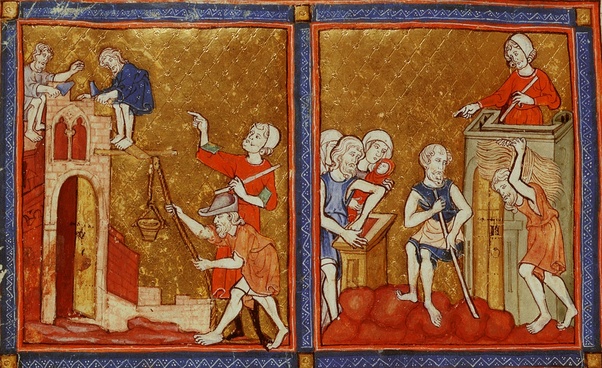
Enslavement of the Israelites

By faith Moses’ parents hid him for three months after he was born, because they saw he was no ordinary child, and they were not afraid of the king’s edict.

By faith Moses, when he had grown up, refused to be known as the son of Pharaoh’s daughter. He chose to be mistreated along with the people of God rather than to enjoy the fleeting pleasures of sin. He regarded disgrace for the sake of Christ as of greater value than the treasures of Egypt because he was looking ahead to his reward. By faith he left Egypt, not fearing the king’s anger; he persevered because he saw him who is invisible. By faith he kept the Passover and the application of blood, so that the destroyer of the firstborn would not touch the firstborn of Israel.

By faith the people passed through the Red Sea as on dry land; but when the Egyptians tried to do so, they were drowned. (NIV)

Faith looks ahead and sees as clearly as is right now in front of your face. Taking the long view of life, the mature person of faith can set aside temporary pleasure to attain a future hope. Moses, held up as such an example, refused to identify himself as the daughter of Pharaoh. He chose to be mistreated in solidarity with his fellow Israelites, instead of having a good time with his high position in the most powerful empire of its day. Moses knew that the treasures of Egypt were not as wonderful as what he would receive from suffering for the Messiah, and he looked forward to his reward.

It is an understatement to say that our contemporary society assumes practicing instant gratification. We want to feel good, and we want it now. Impulse control may just be one of the best life skills that kids (and adults!) need to learn today. A Psychology Today article effectively demonstrates through some classic and current research that “one of the most effective ways to distract ourselves from a tempting pleasure we don’t want to indulge is by focusing on another pleasure.”

For the Christian who desires to follow Jesus in all things, looking ahead to a future heavenly reward which will be shared along with all God’s people needs to be kept at the forefront of our thinking. If we only consider today, there are scant resources for responding to the temptations and fluctuations of life. However, if we will put some energy into clarifying and embracing our most cherished values, we will then let those values inform everything we do, or not do. In the scope of eternity, suffering a bit now is nothing compared to what Christ has yet in store for his people.

Deferred gratification causes us to live differently. In a twist of irony, folks who orient themselves toward the next world are able to effectively impact and change the world they currently reside within – whereas those who focus solely on this present world find themselves falling woefully short with their short view of life. We need the wisdom which faith provides us:

We are always confident, because we know that while we are living in the body, we are away from our home with the Lord. We live by faith and not by sight. We are confident, and we would prefer to leave the body and to be at home with the Lord. So, our goal is to be acceptable to him, whether we are at home or away from home. We all must appear before Christ in court so that each person can be paid back for the things that were done while in the body, whether they were good or bad. (2 Corinthians 5:6-10, CEB)

Future hope, fueled by faith, gives shape to how we live today. It enables us to live in solidarity with those who suffer and are mistreated. It ennobles us to live above short-sighted desires and act on behalf of the common good of all persons in the here-and-now.

Lord God Almighty, the One who is and was and is to come, may we, along with your servant Moses, see the plight of all those who suffer in our midst. Give us courage and compassion to live in solidarity with the poor, the oppressed, the forgotten, and all who live with misfortune and misery. May our hearts, burning with love, bear the burdens of all in our care. And may our loving example ignite the hearts of others to accompany the vulnerable in their affliction. We ask this in the gracious name of Jesus through the power of your Holy Spirit. Amen.

Matthew 16:21-28 – The Need for Sacrifice

Welcome, friends. Simply click the video below and let us consider together the words of Jesus.

You may also view this video at TimEhrhardtYouTube

For a response in song, click Take My Life and Let It Be arranged by Hymn Charts.

And, also click Jesus, I My Cross Have Taken sung by RYM Worship.

May the Lord bless you
    and keep you.
May the Lord smile down on you
    and show you his kindness.
May the Lord answer your prayers
    and give you peace. Amen.

Matthew 15:32-39 – Feeding the Four Thousand

Jesus Feeds the 4000
Jesus Feeds the 4000 by Laura James

Jesus called his disciples to him and said, “I have compassion for these people; they have already been with me three days and have nothing to eat. I do not want to send them away hungry, or they may collapse on the way.”

His disciples answered, “Where could we get enough bread in this remote place to feed such a crowd?”

“How many loaves do you have?” Jesus asked.

“Seven,” they replied, “and a few small fish.”

He told the crowd to sit down on the ground. Then he took the seven loaves and the fish, and when he had given thanks, he broke them and gave them to the disciples, and they in turn to the people. They all ate and were satisfied. Afterward the disciples picked up seven basketfuls of broken pieces that were left over. The number of those who ate was four thousand men, besides women and children. After Jesus had sent the crowd away, he got into the boat and went to the vicinity of Magadan. (NIV)

Through the event of Christ miraculously feeding more than four-thousand people, the Christian tradition embraces a living, ascended, and glorified Jesus who still looks to feed those in need. Furthermore, just as Christ had his disciples participate in the miracle, so he still wants to use us today in feeding the world. It is therefore necessary that we work on aligning our resources – our emotional energy, our money, our service – toward reaching out to people who are hungry, both physically and spiritually.

Jesus did just that in feeding thousands of people. He organized his disciples for a miracle even though they failed to understand what he was doing until he did it. The disciples, bless their head scratching, wondered how the vast throng of people were going to be fed, even though they had already participated in the feeding of the five thousand (Matthew 14:13-21). The disciples sarcastically responded to Jesus, “Where could we get enough bread in this remote place to feed such a crowd?”  Maybe they were less thick-headed and more hard-hearted. You see, unlike the previous feeding miracle, this one took place in the Gentile territory of Tyre and Sidon.

It appears the disciples were having a hard time with Jesus using his efforts, compassion, and miracles for Gentiles (non-Jewish people) instead of Jews. It could be that they were thinking Jesus should stand for holiness by being as far apart from pagans as they can get. Besides, it wasn’t as if there weren’t any hungry people among their own Jewish people. Maybe they were thinking: “Shouldn’t the miraculous and divine resources be better utilized in keeping them within the Jewish community? After all, the gentile Romans oversee the land. Couldn’t they take care of the needy? Is this really our responsibility?”

Jesus would have none of that kind of thinking. Christ most certainly could have avoided the Gentiles if he wanted to; but he didn’t. Jesus could have fed the people and done a miracle without the involvement of his Jewish disciples, but he didn’t. Jesus wanted his disciples to be part of the miracle through distributing the bread and fish for the people to eat.  Jesus would have nothing to do with his Jewish disciples avoiding the Gentile people.  He wanted the disciples to meaningfully connect with the hungry people.

I wonder whom Jesus wants us to meaningfully connect with. I am curious if Christ is looking to align his divine resources for people in our lives – and to use us as the means of a miracle. Perhaps the people who are quite different from us are the ones we are to feed. I am wondering how we view such persons. If we tend to freight our language about them in sarcasm, perhaps that is a clue to our own implicit or unconscious bias.

Back in the 1980’s and 1990’s, I had many conversations and dialogues with Christians about AIDS and the gay community. I am saddened that the pervasive attitude I encountered at the time was how gays and lesbians were ruining our society (among other attitudes not worth repeating). Instead of seeing them through the eyes of the compassionate Jesus and seizing an opportunity to love an entire community of people, the discussions were more about how to keep “homosexuality” and the “gay disease” out of church. The hospitals at that time had wards of persons dying from HIV, and few Christians present to bring the compassionate resources of Jesus to them. Withholding spiritual or physical food from people in need, no matter who they are, is not the way of the Lord Jesus – the One who feeds and heals. However, giving the grace of food and fellowship to all in need emulates the compassion of Jesus. Indeed, there is always room at the Table.

Table of Hope by Joey Velasco
“Table of Hope” by Joey Velasco

Jesus not only meets the needs of all kinds of people, he also gives lavishly so that the supply is more than enough. The resources of grace will never run out; there is always enough. I hope our legacy to the people of this earth is that there is always enough grace from us because we have ourselves received grace from the Lord Jesus.

Most folks, especially the poor, rarely have their needs met through rational ethereal arguments and pious pronouncements of truth. And their needs cannot be met if available resources are placed on the outside of their access to them due to existing attitudes about poverty and/or particular people groups. The needs of people are met through non-judgmental compassion which finds a way to connect them with food, both physical and spiritual, even if it takes a miracle to happen.

God Almighty, the One who sustains all, we ask you to pour your powerful Spirit into all who are empty this day. Fill the hearts of persons who are troubled. Fill the minds of people who are confused. Fill the stomachs of your children who are hungry. Fill the souls of people who are feeling lost. Fill the lives of all who need you, but do not know you. May your Spirit fill us all to overflowing, dear Lord, and may we be inspired to share our abundance with others so that there will be no more empty hearts and minds, stomachs, and souls. We pray all this in the name of Jesus Christ, who fills lives with your endless grace. Amen.