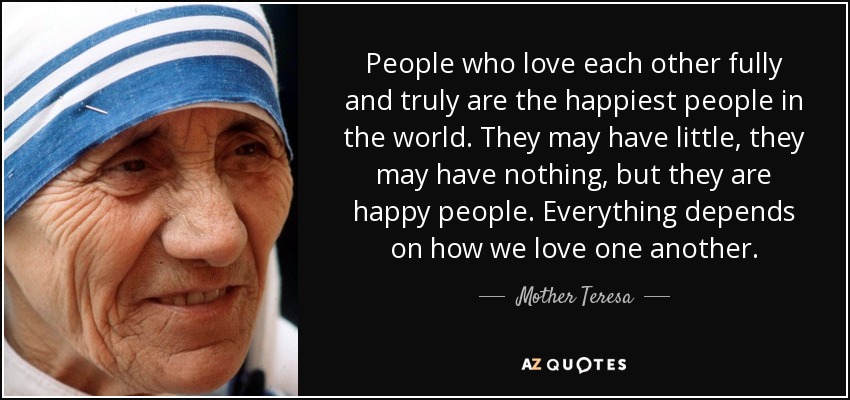
1 John 2:12-17 – Where Is Your Love Aimed?

I am writing to you, dear children,
    because your sins have been forgiven on account of his name.
I am writing to you, fathers,
    because you know him who is from the beginning.
I am writing to you, young men,
    because you have overcome the evil one.

I write to you, dear children,
    because you know the Father.
I write to you, fathers,
    because you know him who is from the beginning.
I write to you, young men,
    because you are strong,
    and the word of God lives in you,
    and you have overcome the evil one.

Do not love the world or anything in the world. If anyone loves the world, love for the Father is not in them. For everything in the world—the lust of the flesh, the lust of the eyes, and the pride of life—comes not from the Father but from the world. The world and its desires pass away, but whoever does the will of God lives forever. (New International Version)

The true measure of one’s Christian belief and commitment is the direction of their love.

We all love. Its part of being a human. Where our love is oriented is the real issue. The trajectory of love is the best measurement of faith and belief.

To love our fellow humanity, our brothers and sisters in Christ, and the neighbors around us, is to live in the light. It is the distinguishing mark of following Jesus. To hate humanity, to downplay love and dismiss it amongst believers, and to ignore the neighbors God placed us around, is to live in darkness.

A Christian is one who has received the love of God in Christ. Because of Divine Love, they know they are forgiven and have eternal life. They know, experience, and feel the permanence of godly love flowing powerfully in and through them to the glory of God.

Christians trust their gut, informed by the conscience testifying to the importance of love, and the Spirit sanctifying them with the primary tool of love.

So, when some folks come along and place a heavy emphasis on cognitive belief, eschewing the heart and the gut, it ought to raise some saved and sanctified eyebrows. To merely affirm a doctrinal statement, then turn around and aim love in the wrong direction, is to affirm a wrong belief. To hate people and love the world is just plain heretical.

The term “world” in the New Testament has differing meanings according to the context. Jesus stated that God so loved the “world” that he gave his only Son. That’s a reference to people, the entire mass of humanity on this planet. John, however, typically uses “world” as the antonym to the church, as if it were an evil opposite.

In our New Testament lesson for today, the term “world” are the patterns, systems, and operations of the world which are in direct contrast to how God operates and how the church ought to function. To love humanity is to hate the world and do God’s will. To love the world is to hate others and adopt a devilish agenda. For example:

  • The world engages in revenge and payback when wronged, whereas the Christian learns to believe God as the Judge, loves the person who has offended them through prayer for their enemy, and obeys God through good works that seeks the welfare of the other. 
  • The world uses other people as either objects of their pleasure or to get ahead in life, whereas the Christian believes God will take care of their needs, will seek to love the other person instead of use them, and would rather obey God than be selfish. 
  • The world thinks nothing of lying, cheating, and stealing, if they can get away with it, whereas the Christian believes Jesus is the way, the truth, and the life, loves being a person of integrity, and obeys God even when it hurts.

Love in the Bible always begins with God’s love for people. This is the fundamental starting point for love because without God’s love, our love doesn’t get very far.

The world hates. God loves. Many people in this cruel and calloused world are unloving and unkind because they lack knowing that God loves them. If we do not believe or know that God infinitely loves us, then our words and our actions will reflect more hate than love.

The Lord your God is with you, he is mighty to save. He will take great delight in you, he will quiet you with his love, he will rejoice over you with singing.”  (Zephaniah 3:17, NIV)

Christianity does not come into existence by knowing some belief statements about Jesus. Rather, Christianity exists when individuals experience the white-hot burning love of God in Jesus Christ. Jesus came not only for those who skip church and only occasionally read their Bibles, but also came for the hard-hearted prick, the immoral adulterer, the strung-out addict, the terrorist, the murderer, and for all those caught up in bad choices and failed relationships. 

God’s love is not based on our performance, how good we look to others, nor conditioned by our moods. The love of God only looks longingly at you and me with the potential of what we can become in Christ and cares for us as we are.

God demonstrates his own love for us in this: While we were still sinners, Christ died for us. (Romans 5:8, NIV)

Christianity never begins with what we do for God to make ourselves lovely for him. Instead, Christianity always starts with what God has done for us, the great and wonderful love that exists for us in Christ Jesus.

But when the kindness and love of God our Savior appeared, he saved us, not because of righteous things we had done, but because of his mercy. (Titus 3:4, NIV)

All the wrong turns in the past, the mistakes and the moral lapses, everything that is ugly or painful all melts in the light of God’s acceptance and love for us. It makes loving the world seem distasteful, like trying to eat sand. Love for God and neighbor is the true source of doing God’s will and the true measure of Christian belief.

In what direction is your love aimed today?

O Lord, you have taught us that without love, whatever we do is worth nothing. Send your Holy Spirit and pour into my heart your greatest gift, which is love, the true bond of peace and of all virtue, without which whoever lives is accounted dead before you. Grant this for the sake of your only Son Jesus Christ, who lives and reigns with you and the Holy Spirit, one God, now and forever. Amen.

Where Will We Do Our Ministry?

Welcome, friends! The Great Commission of Jesus is to go and make other disciples. To “go” doesn’t exclusively mean to travel to another place or overseas. It mostly involves the willingness to get up, go, and walk across the street, or even just across the room. Click the videos below and let us consider together how we can be the heart, hands, and feet of Jesus to the folks around us….

Pastor Tim Ehrhardt, Matthew 28:18-20

Now to him who is able to do immeasurably more than all we ask or imagine, according to his power that is at work within us, to him be glory in the church and in Christ Jesus throughout all generations, for ever and ever! Amen.

Matthew 28:18-20 – Where Will We Do Our Ministry?

Then Jesus came to them and said, “All authority in heaven and on earth has been given to me. Therefore, go and make disciples of all nations, baptizing them in the name of the Father and of the Son and of the Holy Spirit, and teaching them to obey everything I have commanded you. And surely I am with you always, to the very end of the age.” (New International Version)

We will do our ministry by going and jumping into the people’s lives who are in our neighborhood and community. To “go” doesn’t exclusively mean to travel to another place. It mostly involves the willingness to get up, go, and walk across the street, or even just across the room.

Tony Campolo is a Christian preacher, professor emeritus, and author. He tells of once being in a city doing some business and could not sleep. So, he found a greasy spoon diner that was open all night. He retells his experience this way:

“As I sat munching on my donut and sipping my coffee at 3:30 in the morning, the door of the diner suddenly swung open and, to my discomfort, in marched eight or nine boisterous prostitutes. It was a small place, and they sat on either side of me. Their talk was loud and crude. I felt completely out of place and was just about to make my getaway when I overheard the woman beside me say:

“Tomorrow’s my birthday. I’m going to be 39.”  Her “friend” responded in a nasty tone, “So what do you want from me, a birthday party?”

“I’ve never had a birthday party in my whole life. Why should I have one now?”

I sat and waited until the women had left. Then I called over the large man behind the counter named Harry, and I asked him, “Do they come in here every night?”

“Yeah!” he answered.

“The one right next to me, does she come here every night?”

“Yeah!” he said. “That’s Agnes. Yeah, she comes in here every night. Why do you want to know?”

“Because I heard her say that tomorrow is her birthday,” I told him. “What do you say you and I do something about that? What do you think about us throwing a birthday party for her—right here—tomorrow night?”

Calling to his wife, who did the cooking in the back room, Harry shouted, “Hey! Come out here! This guy’s got a great idea. Tomorrow’s Agnes’s birthday. This guy wants us to go in with him and throw a birthday party for her—right here—tomorrow night!”

His wife came out of the back room all bright and smiley. She said, “That’s wonderful! You know Agnes is one of those people who is really nice and kind, and nobody does anything nice and kind for her.”

“Look,” I told them, “if it’s okay with you, I’ll get back here tomorrow morning about 2:30 and decorate the place. I’ll even get a birthday cake!”

“No way,” said Harry. “The birthday cake’s my thing. I’ll make the cake.”

At 2:30 the next morning, I was back at the diner. I had picked up some crepe-paper decorations at the store and had made a sign out of big pieces of cardboard that read, “Happy Birthday, Agnes!” I decorated the diner from one end to the other.

The woman who did the cooking must have gotten the word out on the street, because by 3:15 every prostitute in the city was in the place. It was wall-to-wall prostitutes and me!

At 3:30 on the dot, the door of the diner swung open, and in came Agnes and her friend. I had everybody ready, and when they came in, we all screamed, “Happy birthday!”

Her mouth fell open. As she was led to sit on one of the stools along the counter, we all sang “Happy Birthday”‘ to her. As we came to the end of our singing with “happy birthday, dear Agnes, happy birthday to you,” her eyes moistened. Then, when the birthday cake with all the candles on it was carried out, she lost it and just openly cried.

Harry gruffly mumbled, “Blow out the candles, Agnes! Come on! Blow out the candles!”  Agnes looked down at the cake. Then without taking her eyes off it, she slowly and softly said, “Look, Harry, is it all right with you if I keep the cake a little while? I mean, is it all right if we don’t eat it right away?”

Harry shrugged and answered, “Sure! It’s O.K. If you want to keep the cake, keep the cake. Take it home if you want to.”

“Can I?” she asked. Then, looking at me, she said, “I live just down the street a couple of doors. I want to take the cake home, okay? I’ll be right back. Honest!”

She got off the stool, picked up the cake, and carrying it like it was the Holy Grail, walked slowly toward the door. As we all just stood there motionless, she left.

When the door closed, there was a stunned silence in the place. Not knowing what else to do, I broke the silence by saying, “What do you say we pray?”

I prayed for Agnes. I prayed for her salvation. I prayed that her life would be changed, and that God would be good to her.

When I finished, Harry leaned over the counter and with a trace of hostility in his voice, he said, “Hey! You never told me you were a preacher. What kind of church do you belong to?” In one of those moments when just the right words came, I answered:

“I belong to a church that throws birthday parties for prostitutes at 3:30 in the morning.”

Harry waited a moment and then almost sneered as he answered, “No you don’t. There’s no church like that. If there was, I’d join it. I’d join a church like that!”

My friends, that’s the kind of church Jesus came to create!  We may not know any prostitutes, but there are people around us who need basic human kindness expressed in basic caring actions, no matter who they are.

Many people want nothing to do with church or Christians because they believe they’ll be given judgment instead of justice.

Its important where we are located. God has sovereignly placed us there. So, we need to be attentive and listen to the people and the neighbors God put around us, no matter who they are. To ignore them is to treat the Great Commission of Jesus as if it were the Great Omission.

One of the best ways to be missionally rooted in the place we are planted is to walk the community, be in it, and hang out. Developing an understanding of what’s going on and being connected to the issues a neighborhood is facing, is key to building neighborhood credibility and demonstrating that we really do care about the people, whomever they are.

Photo by Maria Orlova on Pexels.com

Discovering what people care about doesn’t necessarily mean we need to do something for them but with them. To go most often involves going where the people are – getting to know them and being a friend.

Whenever a pastor or parishioner becomes someone the community knows, neighborhood residents will share their hopes and concerns. The church can be the center of community life, going out and opening up to the neighborhood.

Often, we might focus on what’s lacking, what’s not there, the deficits within a person, family, or community – instead of looking for the assets, what is there already, and what is going right. It’s wise to begin with the good things already happening, the potential which already exists, and the dreams people have for the future of their place.

In focusing on what’s already there, here are some things we begin to see:

  1. Each person having a contribution to make, no matter who they are.
  2. Relationships building the community.
  3. People being active participants in developing what is good, right, and just, rather than passive recipients.
  4. Everyone can get involved because everyone has a meaningful place in the community.
  5. People caring and not apathetic about the neighborhood.
  6. Making decisions with everyone’s voice being valued.
  7. Asking for ideas is better than giving solutions.
  8. Folks doing the work are given authority and power.
  9. People mentoring others and building into their lives.

All of this requires getting to know local businesses, neighborhood associations, healthcare institutions, places of worship, schools, and cultural groups, as well as the individual talents of those within them.

We are to serve others, rather than imposing our own agendas on them. This is how we begin making disciples, that is, developing people who follow the words and ways of Jesus.

And it all begins with the command by our Lord to go….

Lord Jesus Christ, let your presence fill our hearts and overflow through our actions so that we may proclaim the good news of your Kingdom. Fill us with your compassion and insight to respond to human need with loving service. Let the fire of your goodness and justice burn into us and through us so that we may seek to transform the unjust structures of society. Guide us to renew and sustain the life of your creation.

Almighty God, in our baptism you adopted us for your own. Renew us by your Spirit in body, soul, and mind so that we may worship you in sincerity and truth, through Jesus Christ our Lord, who lives and reigns with you and the Holy Spirit, one God, now and forever. Amen.

1 Peter 1:17-2:1 – Real Love Is…

Since you call on a Father who judges each person’s work impartially, live out your time as foreigners here in reverent fear. For you know that it was not with perishable things such as silver or gold that you were redeemed from the empty way of life handed down to you from your ancestors, but with the precious blood of Christ, a lamb without blemish or defect. He was chosen before the creation of the world but was revealed in these last times for your sake. Through him you believe in God, who raised him from the dead and glorified him, and so your faith and hope are in God.

Now that you have purified yourselves by obeying the truth so that you have sincere love for each other, love one another deeply, from the heart. For you have been born again, not of perishable seed, but of imperishable, through the living and enduring word of God. For,

“All people are like grass,
    and all their glory is like the flowers of the field;
the grass withers and the flowers fall,
    but the word of the Lord endures forever.”

And this is the word that was preached to you.

Therefore, rid yourselves of all malice and all deceit, hypocrisy, envy, and slander of every kind. (New International Version)

Love makes the world go round. The cycle of life brings an end to all things. Yet, the permanence of love has always existed, and will never cease to exist. (1 Corinthians 13:8-13)

Biblical godly love comes not because we first loved God, but because God first loved us and gave his Son, Jesus Christ, as an atoning sacrifice for our sins. (1 John 4:7-12)

So, the Christian’s faith and hope are completely grounded in the person and finished work of Jesus. People are so valuable to God that we were purchased from the slavery auction block with the costliest price ever: the precious blood of Jesus. 

To know this love of God in Christ, to be thoroughly captured and enraptured by it, results in a profound and deep love for others. And I’m not just referring to a nice touchy-feely love, but also a steadfast love which is committed to love regardless of what another person says or does.

Love is wonderful. But that doesn’t mean its easy. Being on the receiving end of love is a beautiful thing. Giving love, however, can sometimes get dicey.

You see, although we Christians really do believe that everything in life and ministry centers around the grace and love of God in Christ, our boots-on-the-ground loving sometimes seems compromised and conditional. That’s because it’s easy to love those who love us back. Yet, what if our love is not reciprocated or requited?

This situation brings us face-to-face with our own selves. The painful reality is that we all discover that our love is sometimes, maybe oftentimes, dependent on an assurance that we will be loved in return.

There is perhaps no more transcendent and glorious thing than mutual love. However, what happens when only one of the persons is able to give love? What do we do when grace is our only option, when we must choose to love, knowing that love won’t have a response?

Christians everywhere must come to the point of giving the same kind of love that God shows to us in Christ. We need to decide that grace is going to be our lifestyle. It comes down to this: It simply doesn’t matter what condition the other person is in. It doesn’t matter what another is going to say, or not say. Nothing on the other party’s side doesn’t matter. It…just… doesn’t… matter.

What really matters is our own loving another person deeply from the heart, regardless and in spite of everything else. That, my friends, is real Christian love.

“Love your enemies. Let them bring out the best in you, not the worst. When someone gives you a hard time, respond with the supple moves of prayer, for then you are working out of your true selves, your God-created selves. This is what God does. He gives his best—the sun to warm and the rain to nourish—to everyone, regardless: the good and bad, the nice and nasty. If all you do is love the lovable, do you expect a bonus? Anybody can do that. If you simply say hello to those who greet you, do you expect a medal? Any run-of-the-mill sinner does that.”

Jesus (Matthew 5:43-47, MSG)

Since we are redeemed people; since we have acknowledged the truth of Christ’s redemptive events of crucifixion and resurrection; since we are recipients of God’s great love to us in Jesus; we all must make the decision to live our lives full of grace and love, no matter what.  As God’s redeemed people, purchased by the precious blood of Christ, we will love one another unconditionally.

Unfortunately, over time, many Christians slowly become disconnected from this fountain of grace and love. It is likely that, at some past point, they were deeply touched by a gracious encounter with Jesus Christ. They found peace, love, and joy. Minds were swept up in the awe and wonder of God. Hearts were deeply moved for a few hours, days, or weeks. 

But then, there was a return to the routine grind of daily existence. Gradually, the demands of work and family took over. Jesus began to be treated like some old friend from another town whom we dearly loved in years past but have just lost track of. 

Of course, it was unintentional.  We simply allowed circumstances to drift us apart. We became preoccupied with something else. Now, we find ourselves with a low level irritation, frustrated with others and unable to love as we ought. We become what the late author Brennan Manning called “Christian agnostics” – people who do not deny Jesus, but just ignore him.

If your days are trivial and hectic…

If the clock determines what you do…

If you are numb to the news and headlines around you…

If you are all jangled and jittered by life’s circumstances…

If phones and computers and gadgets rule your day…

If there is little room for responding to humanity humanely…

If you have settled into a comfortable piety and a well-fed virtue…

If you have grown complacent and lead a practical life…

Then you need to be touched again by the grace and love of God in Christ by treating Jesus as if he were your very best friend as well as the awesome Son of God.

We are all still here walking on this earth because none of our failures and lack of faith have proved terminal.  We are here today because of God’s radical grace. 

The forgiveness of God is a gratuitous liberation from guilt and regret. It is an extreme amnesty. Through looking in the mirror, and seeing personal sinfulness, we amazingly end up encountering the merciful love of the redeeming God. 

The grace of God says to us, “Hush, child, I don’t need to know where you’ve been or what you’ve been up to; just let me love you.” 

When we have experienced that kind of love, we are then finally able to love one another deeply from the heart.  It is a new life of love, the kind of love that comes from God – an unconditional love that is permanent and will never go away – it is imperishable.

Therefore, as Christians loved by Christ and belonging to God:

  • We will not just show love when we are assured that we will be loved in return.
  • We will not just wait for others to show love to us first.
  • We will not expect to reach some higher level of knowledge or spirituality in order to be gracious and loving.
  • We will simply love with the love given to us by Jesus.
  • We will love with a gracious, sacrificial, vulnerable, and desperate kind of love. 

It is the kind of love that is like the waiting room in a hospital burn unit. Many years ago, I spent some time with a person in such a waiting room after her brother had been severely burned in a farm accident. In the waiting room we were all strangers. Yet, there was a loving vulnerability to our being together. I sat watching and waiting with anguished people, listening to their urgent questions: Will my husband make it? Will my child walk again even she survives? How do you live without your companion of thirty years? 

The burn unit waiting room is different from any other place in the world. And the people who wait are different. They can’t do enough for each other. No one is rude. The distinctions of race and class melt away. Each person pulls for everyone else. Vanity and pretense vanish. No one is embarrassed about crying or asking tough questions. In that moment their whole world is focused on the doctor’s next report. If only it will show improvement.

Everyone intuitively knows that loving someone else is what life is all about. 

By God’s amazing grace we will all learn to live like that without having to learn it the hard way in a place of intense anxiety and suffering.

Christ’s resurrection is not some flash-in-a-pan – it has staying power – it is real and permanent. Christ is the Christian’s hope of living a new life of gracious unconditional love. 

Jesus actually expects more failure from you than you expect from yourself. And he gives grace. So, all of our failures to love as we ought can be laid before Jesus because there is grace that covers it all – a deep love that forgives, redeems, and makes new.

Hallelujah. Thank you, Jesus.