The Angels’ Candle of Peace (Luke 1:68-79)

“Praise be to the Lord, the God of Israel,
    because he has come to his people and redeemed them.
He has raised up a horn of salvation for us
    in the house of his servant David
(as he said through his holy prophets of long ago),
salvation from our enemies
    and from the hand of all who hate us—
to show mercy to our ancestors
    and to remember his holy covenant,
the oath he swore to our father Abraham:
to rescue us from the hand of our enemies,
    and to enable us to serve him without fear
in holiness and righteousness before him all our days.

And you, my child, will be called a prophet of the Most High;
    for you will go on before the Lord to prepare the way for him,
to give his people the knowledge of salvation
    through the forgiveness of their sins,
because of the tender mercy of our God,
    by which the rising sun will come to us from heaven
to shine on those living in darkness
    and in the shadow of death,
to guide our feet into the path of peace.” (New International Version)

Old Zechariah the Priest

Zechariah and his wife Elizabeth were old and well past childbearing years. In fact, Zechariah is portrayed earlier in Luke’s Gospel as something of a stereotypical grump. After being taken up to the temple in a golf cart because he couldn’t walk so well anymore, Zechariah was confronted by an angel and nearly lost his dentures out of fear. 

The angel Gabriel told him that his wife would bear a son who will prepare the way of Messiah. Zechariah then gave a sort of “Hmpff!  That’s not likely, Sonny. Look at me and my wife. Are you sure you have the right couple, and the orders in heaven didn’t get screwed up?”

The Angel Appears to Zechariah by William Blake, 1800

The angel Gabriel was not very keen on being doubted, and it earned Zechariah losing his voice until John the Baptist was born. It was after Zechariah had nine months to think about that encounter, and experience watching a child grow in his wife’s womb, that after John’s birth, Zechariah was a changed man. 

Zechariah then experienced peace. He went from just one of the old priests in Israel, to being inspired by the Spirit and singing the praises of God. We can almost imagine him acting like Fred Astaire, picking up his cane and dancing with joy.

The lack of peace

Our lives are not so different than Zechariah in this respect: We are a complex concoction of both fear and joy that could combust at any time in either direction. We sway back and forth from fear and anxiety to joy and gratitude. Certain words can swing us to one extreme or the other: finances, healthcare, politics, religion, the future. They can create in us either immediate tension or smiling happiness; tomorrow they might do just the opposite.  Zechariah went from anxious to elated, fearful to joyful, unsettled to peaceful.

We live in a toxic world filled with polarizing opposites and entrenched stereotypes of others.  We vacillate between love and hate, pursed lips of anger and dispositions of peace.  How are we going to deal with all the disharmony and vitriol that exists in our world?

By possessing the peace given to us in the prophecy and promise of Jesus.

Jesus gives peace

“Peace I leave with you; my peace I give you. I do not give to you as the world gives. Do not let your hearts be troubled and do not be afraid.”

Jesus (John 14:27, NIV)

Jesus came to give peace. All the words of Zechariah’s inspiration point toward the harmonious peace of salvation, rescue, and forgiveness. The time was finally coming when there would be peace in its fullest sense – wholeness and thriving in life which was unprecedented and unthinkable before Jesus. 

The presence of peace

“True peace is not merely the absence of some negative force, tension or war – it is the presence of some positive force, justice, good will, brotherhood.”

Martin Luther King, Jr.

We are to live the Christian life and have a ministry in the church and the world without fear and with peace. We must focus on what we are called to be and to do. Jesus rescues and delivers so that we will have forgiveness of sins. This enables us to serve the Lord with peace and without fear.

Few good things in life simply materialize out of thin air. Whether it’s losing weight, getting in shape, building trust and relationships, or reaching out to make a difference, a lot of blood, sweat, and tears go into just about everything of importance – including the Christian life.

The pursuit of peace

Peace rarely just happens. Peace was bought at a price – the blood of Jesus. And it must be pursued and engrafted into our lives if we are going to experience it on the daily practical level. Yes, obtaining peace is difficult; yet we instinctively know it’s worth it.

We can pursue peace by:

  • Avoiding chronic negativity and embracing the positive.
  • Reconciling and making things right with others.
  • Pursuing Jesus with heart, soul, mind, and strength.
  • Reframing our situations from only problem solving to a fresh vision of peace, wholeness, integrity, spiritual growth, and relational health.

Zechariah, by means of the Holy Spirit, gave us a vision of a future full of peace. The name “Zechariah” means in Hebrew “God remembered.” God has not forgotten divine promises. We must take hold of the vision God had from the very beginning to walk with humanity in continual fellowship and happiness in the garden, a place of abundant growth, beauty, and health.                      

Peace and happiness

Even with our vast resources, the United States of America, collectively speaking, is full of unhappy people. The World Happiness Report evaluates each nation on six criteria related to quality of life: gross domestic product (GDP); social support, healthy life expectancy, freedom, generosity, and an absence of corruption.

The Report consistently concludes that citizens of the happiest nations on earth continually find a steady stream of peace and joy in three sources: their families, their rituals/traditions, and their religion. The United States currently ranks 16th in the world as the happiest country to live in. Israel is 9th and Finland is 1st.

Each of the Reports six subjects can be found with abundance in Holy Scripture. And if we are attentive to them all, the result will be a peaceful people. It will be hard to find joy and happiness in our lives through our Christianity if we are not experiencing the peace of Jesus Christ. Christian liturgical rituals and observances of seasons like Advent help remind us we have peace with God through our Lord Jesus Christ. (Romans 5:1)

Practicing the peace of Christ

The birth of Jesus turned Zechariah’s world upside-down. Forgiveness of sins, spiritual peace, and human well-being can be found in Christ. Here are seven practical ways we can implement the peace we have in Jesus Christ today:

1. Slow down, pause, breathe, and pray.

Do not worry about anything; instead, pray about everything. Tell God what you need and thank him for all he has done. Then you will experience God’s peace, which exceeds anything we can understand. His peace will guard your hearts and minds as you live in Christ Jesus. (Philippians 4:6-7, NLT)

2. Exchange fear for the presence of God.

For I, the Lord your God, hold your right hand; it is I who say to you, “Do not fear, I will help you.” (Isaiah 41:13, NRSV)

3. Listen to music, sing, or make music yourself.

Encourage each other with psalms, hymns, and spiritual songs. Sing and make music in your hearts to the Lord. (Ephesians 5:19, ERV)

4. Have a “go to” word, phrase, or Scripture verse.

Such as:

The Lord is my shepherd. I lack nothing. (Psalm 23:1, CEB)

5. Close your eyes.

It reduces distractions and allows for better focus. Several studies have shown that closing the eyes is the simplest way to change your state of mind. 

We live by what we believe, not by what we can see. (2 Corinthians 5:7, NCV)

6. Smell the peace.

Use some aromatherapy. When you slow down to smell something, you breathe more deeply; this slows the heart rate and lowers blood pressure. It also allows us to give off a peaceful scent.

Through us, God brings knowledge of Christ. Everywhere we go, people breathe in the exquisite fragrance. Because of Christ, we give off a sweet scent rising to God, which is recognized by those on the way of salvation—an aroma redolent with life. (2 Corinthians 2:14-15, MSG)

7. Say “no.”

Set healthy boundaries.

Jesus went into a village. A woman named Martha welcomed him into her home. She had a sister named Mary. Mary sat at the Lord’s feet and listened to him talk. But Martha was upset about all the work she had to do. So, she asked, “Lord, don’t you care that my sister has left me to do the work all by myself? Tell her to help me.” The Lord answered her, “Martha, Martha! You worry and fuss about a lot of things. There is only one thing you need. Mary has made the right choice, and that one thing will not be taken away from her.” (Luke 10:38-42, GW)

May the peace of Christ guide you into the path of peace and be with you, now and forever. Amen.

A Testimony of Faith (John 3:31-36)

The one who comes from above is above all; the one who is of the earth belongs to the earth and speaks about earthly things. The one who comes from heaven is above all. He testifies to what he has seen and heard, yet no one accepts his testimony. Whoever has accepted his testimony has certified this, that God is true. He whom God has sent speaks the words of God, for he gives the Spirit without measure. The Father loves the Son and has placed all things in his hands. Whoever believes in the Son has eternal life; whoever disobeys the Son will not see life but must endure God’s wrath. (New Revised Standard Version)

I, personally, have found Jesus to be precisely whom he claims to be. 

I was raised in the church. But it didn’t stick. The most boring hour of every week for me was having to endure the Sunday morning worship service. It seemed like a major waste of my time. I could be reading the funnies (the comic strips in the Sunday morning newspaper), watching TV, or playing outside. I get a weekend off from school and I have to do this! Sheesh.

There is, I eventually discovered, often a difference between what we humans do in our lives and our institutions, and Jesus. That’s not necessarily a knock on the church. It’s just the observation that we sinful folk very often fall short of the glory of God – which is why we need Jesus in the first place.

We as people know how to love, yet we love imperfectly. We understand that kindness and compassion are needed, but we tend to withhold it from so many of our fellow humans. Jesus, on the other hand, as the divine/human figure who straddles between both heaven and earth, always loves consistently and perfectly; and demonstrates compassionate kindness in ways which connect deeply with us.

It took me a while to see this, but by God’s grace, I mercifully came to experience the love of God in Christ and the powerful enablement of God’s Spirit.

I have come to accept Christ’s enduring testimony as gracious, truthful, and life-giving. I have wholeheartedly embraced the New Testament Gospel accounts of his birth, life, teaching, death, resurrection, and ascension. This belief came neither quickly nor easily for me – it resulted from an honest straightforward reading of the Bible; and the patient wooing of the Holy Spirit.

Oh, I certainly could get quite cerebral and offer a Christian apologetic of the faith that gets down to the nitty gritty of theology, both historical and contemporary. But the older I get, the more I experience that when I get down, I can’t get back up again. There’s much more to Christianity than ideas and philosophical arguments.

Truth is, it really isn’t my job to convince you of Jesus Christ’s authenticity and trustworthiness. That’s the work of the Holy Spirit. Instead, it is my task to bear witness of the things I have seen and heard concerning Jesus. 

My life has been thoroughly turned upside-down because of Jesus. With Jesus, I have been invited into the very life of God. By the wounds of Jesus, I have experienced healing of damaged emotions and recovery from spiritual hurts inflicted by others. Through union with Christ, I have grace and forgiveness of things I have done and left undone. With Jesus as my Friend, I enjoy loving attention and am never dismissed by him, nor do I ever have my experiences and feelings invalidated by him.

For those who have not read the Gospel accounts and refuse Christ, then, for honesty’s sake, please have the integrity to give Jesus a hearing before you dismiss him with a slight of hand. It’s one thing to genuinely not know much about Jesus, and it is quite another thing to ignore him when you have knowledge about how to find out about him.

For those of us who have read the New Testament Gospels and accept the testimony of Jesus, we come back again and again to his life-giving words and seek continually to follow him in his way of mercy, purity, and peace. We bear witness to how Jesus has changed our lives and offers a life worth living.

Everyone with faith in Jesus has a life-giving connection with God. Those who don’t, don’t. If you disagree with this, then contend with Jesus himself. Give him a hearing. Watch him in action. Observe how he deals with people. See if he lives up to his words. Then, bear witness to what you have seen and heard.

In the power of the Spirit and in union with Christ, I pray to you, the God and Father of all:

For empowerment by the Spirit, that I may be a faithful witness

For those who wait on You, that they may find renewal

For all people, that they may acknowledge the kingdom of the ascended Christ

For all who are struggling with broken relationships

I commend myself and all for whom I pray, to Your mercy and protection through Jesus Christ, my Lord and Savior. Amen.

The Time Is Ripe (Galatians 4:1-7)

What I am saying is that as long as an heir is underage, he is no different from a slave, although he owns the whole estate. The heir is subject to guardians and trustees until the time set by his father. So also, when we were underage, we were in slavery under the elemental spiritual forces of the world. 

But when the set time had fully come, God sent his Son, born of a woman, born under the law, to redeem those under the law, that we might receive adoption to sonship. Because you are his sons, God sent the Spirit of his Son into our hearts, the Spirit who calls out, “Abba, Father.” So you are no longer a slave, but God’s child; and since you are his child, God has made you also an heir. (New International Version)

The three greatest persons in biblical history – Abraham, Moses, and Jesus – are connected. God entered into a covenant with Abraham and promised to bless everyone on the earth through his progeny. God gave Moses the Law as a sort of school teacher and guide, alongside Abraham’s covenant. God fulfilled the covenant promise in Jesus. Thus, everyone who is led and tutored toward Christ, inherits all of God’s promises.

Under the Law

The Apostle Paul, speaking to a group of new believers who were confused about the relation between the Law and Christ, helped them understand with a metaphor. It’s like a boy who is the heir to a great estate. Someday, it will all be his. But now, he’s too young to possess it. So, during his childhood, he’s subject to trustees who oversee the estate, and teachers who instruct him in how to actually use the wealth once he actually inherits it.

While the boy is in the middle of the guidance, he’s not in control of much, just like the servants on the estate. The child will remain in this state until his time comes, until the date in which his father says he can take possession of the inheritance.

Before Christ, people were under the Law. They were heirs to God’s great kingdom promises. Yet, they needed the Law to guide and instruct them until it was time for them to receive the inheritance. Much like a present day kid in school, they see themselves in a sort of bondage, even though it’s a necessary part of their lives.

It’s bondage in the sense that the Law, the schoolmaster, has no power or ability to give the inheritance nor to save them from their current condition. In other words, the Law is good, yet lacks the potency to actually deliver one from sin, death, and hell.

What’s more, the elemental spirits of the age, namely Satan and his wicked spirits, wormed their way into the process of guidance and twisted the Law for their own advantage, to keep people in bondage. Just as the guardian of the boy may mistreat him in ways his father never intended, so the devil has exploited the Law in order to have it be a tyrannical presence over people.

Whereas God intended the Law to reveal humanity’s sin and drive them to a Savior, evil uses the Law to shame people and drive them to despair. The Law was meant for good, to be a gracious leading of people to the Messiah; yet Satan co-opted the Law to bring condemnation to folks and keep them under his insidious thumb.

In Christ

But when the time was ripe, God sent the Son so that people would be done with their guardians and inherit divine promises. To use yet another metaphor, when the scaffolding on a building has served it’s intended purpose in construction, it’s taken down; it’s no longer needed. It would be weird if the shiny new building were erected, and the owner decided to keep the scaffolding beside the structure.

The Law of Moses had done its work of preparing people for Christ. So, God sent Jesus, the Son, to redeem humanity, to transform slaves into sons and daughters. The Lord adopted us and granted us full rights as children of the King.

Christ redeemed us from the curse of the Law by becoming a curse for us—because it is written, Everyone who is hung on a tree is cursed.

Galatians 3:13, CEB

Jesus is uniquely qualified to be such a Redeemer of humanity. He is God’s Son, born of a human mother. Therefore, as both divine and human – the God Man – Jesus is the person for whom all the covenant promises of God have their fulfillment.

In the past God spoke to our ancestors many times and in many ways through the prophets, but in these last days he has spoken to us through his Son. He is the one through whom God created the universe, the one whom God has chosen to possess all things at the end. He reflects the brightness of God’s glory and is the exact likeness of God’s own being, sustaining the universe with his powerful word. After achieving forgiveness for the sins of all human beings, he sat down in heaven at the right side of God, the Supreme Power. (Hebrews 1:1-3, GNT)

In Christian trinitarian theology, God is Three in One, the Holy Trinity. God sent the Son into the world, of which believers celebrate the incarnation of Christ each year at Christmas. God sent the Spirit into our hearts; and from that place we cry “Abba! Father!” The Spirit testifies with our own spirit that we are truly adopted children of God. (Romans 8:15-16)

The Spirit is like the seal on a document, proving that our inheritance papers are all in order. And, much more than that, the Spirit also does this sealing work with affection. Christianity is not merely a legal transaction; it’s an experience of grace and love in which we enter into a new life, free from bondage, and alive to all the possibilities that humanity was originally meant for.

Both our status and our sensibilities are changed. It happens because of God’s good grace and purpose, fulfilled in Christ and impressed on us by the Spirit.

Conclusion

The French philosopher and writer, Blaise Pascal (1623-1662), once said that there is a God-shaped vacuum in the heart of each person which needs to be filled:

“There was once in man a true happiness, of which all that now remains is the empty print and trace. This he tries in vain to fill with everything around him, seeking in things that are not there the help he cannot find in those that are, though none can help, since this infinite abyss can be filled only with an infinite and immutable object; in other words by God himself.” Blaise Pascal, Pensées

If we want to find happiness, satisfaction, and goodwill, then the empty void within us creatures and within the systems and the cultures we create, needs to be filled with our Creator.

The Christian season of Advent is an appropriate time to reconnect with the infinite and the immutable. The time is ripe to be filled not only with love and goodness, but with the very source of Love itself.

May it be so, to the glory of God.

Future Hope (Isaiah 29:17-24)

Soon the forest of Lebanon
will become a field with crops,
    thick as a forest.
The deaf will be able to hear
    whatever is read to them;
the blind will be freed
    from a life of darkness.
The poor and the needy
    will celebrate and shout
because of the Lord,
    the holy God of Israel.

All who are cruel and arrogant
    will be gone forever.
Those who live by crime
    will disappear,
together with everyone
    who tells lies in court
and keeps innocent people
    from getting a fair trial.

The Lord who rescued Abraham
has this to say
    about Jacob’s descendants:
“They will no longer
    be ashamed and disgraced.
When they see how great
    I have made their nation,
they will praise and honor me,
    the holy God of Israel.
Everyone who is confused
    will understand,
and all who have complained
    will obey my teaching.” (Contemporary English Version)

We, who have the first fruits of the Spirit, groan inwardly as we wait eagerly for our adoption to sonship, the redemption of our bodies. For in this hope we were saved. But hope that is seen is no hope at all. Who hopes for what they already have? But if we hope for what we do not yet have, we wait for it patiently.

Romans 8:23-25, NIV

There are better days ahead. And it is this hope which is to help sustain us in present – because the current reality for many people is hard and unforgiving. Malevolent and heartless people exist, and they wreak physical, mental, emotional, and even spiritual havoc on those around them.

When in the throes of difficulty, it is good to be reminded that basic human kindness will once again be exalted and valued. Yet, meanwhile, we must endure the evil of dehumanizing behavior. Until then, we must do our best to connect heaven and earth by rehumanizing every space and place within our sphere on influence. We are to be agents of hope for ourselves and for others.

Every person (and I do mean every person) on planet earth is created in the image and likeness of God. Each individual human being is worthy of basic human kindness and deserving of respect. 

Unfortunately, people do and say terrible things every day. Yet this never means that God’s image has left or has taken a vacation, or that someone deserves a pejorative label which stigmatizes and ostracizes them from the human family. 

For the Christian, the supreme ethic of life is love. We hold to the Great Commandment: Love God and neighbor; all other commands of Holy Scripture hang on these two bedrock commands, upheld by Jesus himself.

Therefore we must all ask ourselves if we are living our lives and loving others in this world as intended by our Creator and Redeemer. Hate speech, unsafe working conditions, political gerrymandering, apathy toward another’s injustice, a lack of empathy, and vilifying particular people groups are just a few examples of dehumanizing behavior.

If ever we move down the path of claiming to know whom God judges or ought to judge, then we have gone the way of extreme hubris and are germinating the seeds of a future holocaust of killing, not a future hope of peace and goodness. 

There is no biblical precedent or place to dehumanize another person or group of people, period. Instead, we must actively build relationships with a broad spectrum of groups and individuals – especially with the ones we least know and understand.

The injustice of dehumanization will not always be with us. Confusion and complaints will give way to clarity, understanding, humility, and obedience. Darkness and deafness, poverty and petulance shall melt away. In its place, love and grace will forever be ensconced upon a new earth, free from crime and shame. Hope will be realized.

Our future hope is a living hope.

We typically use the term “hope” in the wishful thinking sort of way. That’s because we aren’t quite sure if things will shake-out like we want. Biblical hope is not wishful thinking but a confident expectation that knows what is coming. 

Hope is like anticipating the seasons. In the dead of winter when it’s bitter cold with little sunshine, we hopefor Spring. It’s not wishful thinking. We know it’s coming. It might come in early March, maybe in late April. But it’s coming, and you can bet the farm on it. The trees will bud, the grass will turn green, and the temps will warm.

Hope in the Bible is a sure thing. Because of the person and work of Jesus Christ, there is hope, the confident expectation that deliverance from sin, death, and hell will be fully realized.

Hope, inheritance, and salvation are all words that describe nearly the same thing. They all point to Jesus. We are saved from the slavery of sin through the cross and resurrection of Christ. We are delivered into an inheritance which can never perish, spoil, or fade. But an inheritance isn’t activated until death. Someday, when this present life of earthly brokenness is over, we have the hope, the confident expectation, of a permanent inheritance with Jesus forever. (1 Peter 1:3-9)

Outwardly, we suffer in all kinds of earthly grief from others who don’t understand us. Inwardly, we have the silent pain and terrible wrestling of wanting to forgive but desiring revenge; of seeking to be gracious but seething with anger; of looking to express kind words but having hate speech blurt out instead.

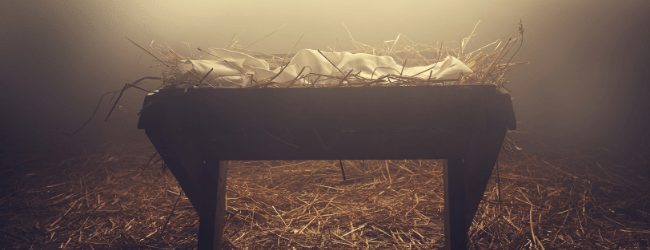
But it won’t always be this way. We have a future living hope. In this season of Advent, we are reminded that God shall break into this fallen world with all of its dehumanizing behaviors and hate speech. The hopes and fears of all the years are met in a humble feeding trough, in a little baby.

Hope is as real as anything you’ll ever know this side of heaven. You might not always find what you’re looking for in this life; but in the next life, you can find the life that is truly life. For Jesus Christ is our hope.

God of hope, we seek you. During this holy season of Advent, help us to see you in all whom we encounter. We seek you in the crude manger, a child born to save the world. May your hope be a comfort to all who long for justice; and may that hope overflow in our hearts and grace our lips so that we might reflect your hope for all the world. Amen.