The Struggle Within (Romans 7:15-25)

I do not understand what I do. For what I want to do I do not do, but what I hate I do. And if I do what I do not want to do, I agree that the law is good. As it is, it is no longer I myself who do it, but it is sin living in me. For I know that good itself does not dwell in me, that is, in my sinful nature. For I have the desire to do what is good, but I cannot carry it out. For I do not do the good I want to do, but the evil I do not want to do—this I keep on doing. Now if I do what I do not want to do, it is no longer I who do it, but it is sin living in me that does it.

So I find this law at work: Although I want to do good, evil is right there with me. For in my inner being I delight in God’s law; but I see another law at work in me, waging war against the law of my mind and making me a prisoner of the law of sin at work within me. What a wretched man I am! Who will rescue me from this body that is subject to death? Thanks be to God, who delivers me through Jesus Christ our Lord! So then, I myself in my mind am a slave to God’s law, but in my sinful nature a slave to the law of sin. (New International Version)

We can relate to the Apostle Paul. We, along with him, have said to ourselves many times, “I don’t understand why I act the way I do. I don’t do what I know is right. I do the things I hate.” 

Paul’s experience of uneasiness, his existential angst because of the struggle within, is a timeless description of our common human condition. There are times we seem completely unable to follow our conscience and do what’s right. It can be maddening, even to the point of experiencing a continual low-level discouragement or depression which underlies almost everything we do.

The prescription for dealing with this mental, emotional, and spiritual malady does not include the law. That’s right. Putting our willpower and effort into obeying commands gets us nowhere. Even if we obey laws and rules and commands for a time, our efforts eventually break down. We fail to do what we want, and end up doing just the opposite.

In all fairness, the law is good, not bad; it just doesn’t have the capacity to transform us. The law’s purpose is to show us how bad off we really are in this world, to give us an awareness of our true condition, so that we will seek help. 

We humans are a bundle of contradictions, doing good, then bad, and flip-flopping back and forth – all with great frustration. In such a miserable condition, what then shall we do? Who will help us? Is there anyone to save us from our plight?

Sheer willpower and obedience will not help us; it won’t work. It will only give us a false hope. Any success in using willpower only deludes one into believing they have the answer… until they yet fall again into the pit of their own inner darkness. But the good news is that there is a Savior, a Redeemer, a Rescuer who has the will and the power to deliver us from our predicament.

The grace of God in Christ is the operative power that changes lives, not the law. Freedom from the tyranny of our “should’s” and our misplaced desires comes from Christ’s forgiveness through the cross. 

Like a lover enamored with his beloved, our desires become oriented toward Jesus for his indescribable gift to us. That is the strength of grace. Transformation is relational; it is found in a person, not a program. And the only person and relationship which has the ability to change us is, I believe with all my heart and mind, the Lord Jesus Christ.

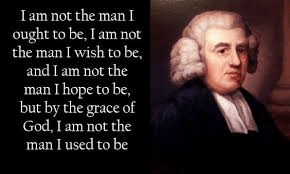
Why? Because I myself have been transformed and changed by such a relationship with Christ. I, along with the hymn writer John Newton, can say, “I once was lost but now am found, was blind but now I see.”
“Self-help” for all the good it really can do, is in many ways an oxymoron. We need a Savior to help us, and we need a community of people who encourage us. And even if we can do it ourselves today, that may not (and eventually will not) be true of us tomorrow. None of you got this far in life on your own – and you will continue to need God and others going forward.

Love must be completely sincere. Hate what is evil, hold on to what is good.Love one another warmly as Christians, and be eager to show respect for one another. Work hard and do not be lazy. Serve the Lord with a heart full of devotion. Let your hope keep you joyful, be patient in your troubles, and pray at all times. Share your belongings with your needy fellow Christians, and open your homes to strangers. (Romans 12:9-13, GNT)

We have an incredible capacity for good and vast internal resources within us. And yet, we too often lack awareness of this reality, for which we can tap into. When it comes to an outright metamorphosis, we need a new heart – and we can no more simply decide to change our lives any more than we can perform heart transplant surgery on ourselves.

People need the Lord.

Whenever the foundation of a house is about to crumble, it won’t do to rearrange the living room furniture and do a bit of spruce up painting. We deceive ourselves if we believe that all our efforts at landscaping the property and having a great curb appeal will do the trick. If the foundation crumbles, and the house implodes, all efforts at curb appeal won’t matter.

Jesus is our cornerstone. Without him, we are at risk, about to fall and without hope. With him, true restoration and renewal happens. And then, when the house is repaired and in order, we set about the task of being good stewards and maintaining and caring for the wonderful changes which were made.

Freedom from a dilapidated soul and misplaced energies to consistent times of peace and contentment, calmness and confidence, satisfaction and settled peace, comes by growing ever closer to the Savior who exudes all those qualities, and more. For the Lord not only saves and delivers; he also sanctifies and encourages.

In Christ, the uneasiness and unsettling experience – the existential angst – becomes a thing of the past because of the grace of merciful deliverance and continual help.

Saving God, I thank you for delivering me from sin, death, and hell through your Son, the Lord Jesus. May your Holy Spirit apply the work of grace to my life every day so that I can realize practical freedom from all that is damaging and destructive in my soul. Amen.

The Vision of Jesus (Luke 10:21-24)

Cristo de la Concordia (Christ of Peace) in Cochabamba, Bolivia

At that time Jesus was filled with joy by the Holy Spirit and said, “Father, Lord of heaven and earth! I thank you because you have shown to the unlearned what you have hidden from the wise and learned. Yes, Father, this was how you were pleased to have it happen.

“My Father has given me all things. No one knows who the Son is except the Father, and no one knows who the Father is except the Son and those to whom the Son chooses to reveal him.”

Then Jesus turned to the disciples and said to them privately, “How fortunate you are to see the things you see! I tell you that many prophets and kings wanted to see what you see, but they could not, and to hear what you hear, but they did not.” (Good News Translation)

A healthy view of Holy Scripture is to see it as an unfolding drama of redemption. Ever since the fall of humanity, God has been on a rescue mission to reclaim, redeem, and restore people. This human project has obviously taken several millennia; and, it still has not reached its fulfillment.

The Christian tradition understands that the climax of victory and final restoration to our true state as humans will occur when Christ returns. By warning us that divine mysteries are hidden to some, and revealed to others, is Christ’s way of cautioning us toward triumphalism and self-congratulation.

Redemption is a reality; and, it’s also not a reality. It is both. Redemption is here; and it’s also coming. We are delivered from sin, death, and hell – and we still labor against the evil machinations of systemic world problems, our own sinful nature, and a demonic realm which is looking for every opportunity to exploit sin’s residue upon the earth.

This all means, on a practical level, that the good old days for some were the bad old days for others. History is always written by the winners and those in power. The hidden voices are typically squelched.

The vision of Jesus is that all kinds of people, not just a certain segment of winners, should enjoy God’s favor.

There were ancient people who longed for spiritual and physical freedom. They looked forward into history and had the hope of Messiah and God’s promises being fulfilled. History is still unfolding. There are people who yet remain locked in personal bondage; large swaths of humanity still experience oppression and a longing to enjoy the blessings which others possess and take for granted.

It is vital that we hold together both the blessings of realized freedom, along with the limits of others’ freedom. This realization helps us continue to actively work for all people, and keep praying that God’s kingdom come, and God’s will be done, here on earth, as it is always done in heaven.

I lift a voice from history which exemplifies the struggle of the black experience in the United States. The following is a small portion from a speech by the ex-slave Frederick Douglass, orated on July 4, 1852, nine years before civil war, with President Millard Fillmore and many congressional politicians in attendance:

“The feeling of the nation must be quickened; the conscience of the nation must be roused; the propriety of the nation must be startled; the hypocrisy of the nation must be exposed; and its crimes against God and man must be proclaimed and denounced. What, to the American slave, is your 4th of July? I answer: a day that reveals to him, more than all other days in the year, the gross injustice and cruelty to which he is the constant victim. To him, your celebration is a sham; your boasted liberty, an unholy license; your national greatness, swelling vanity; your sounds of rejoicing are empty and heartless; your denunciations of tyrants, brass fronted impudence; your shouts of liberty and equality, hollow mockery; your prayers and hymns, your sermons and thanksgivings, with all your religious parade, and solemnity, are, to him, mere bombast, fraud, deception, impiety, and hypocrisy — a thin veil to cover up crimes which would disgrace a nation of savages. There is not a nation on the earth guilty of practices more shocking and bloodier than are the people of these United States, at this very hour.”

Frederick Douglass

Because history is forever unfolding, freedom and blessing develop over time and come more powerfully to some than others. True spiritual discernment, with the awareness to labor on behalf of the common good, does not ultimately come through astute observation and superior intellect; it comes by divine revelation.

God both conceals and reveals according to divine purposes and not human agendas.

Christian spirituality cannot be reduced to praying a sinner’s prayer, and then maintaining a holding pattern on earth until heaven. Rather, Jesus remains present in this world through the person of the Holy Spirit, and is continually interceding on behalf of those who need freedom and blessing.

As Christ’s Body, Christians are to be the hands and feet of Jesus, animated by the Spirit to bring God’s ethical and benevolent regime to those who need it most. If we are blessed, we are to pass blessing onto others without prejudice. For the kingdom of God belongs to the poor in spirit.

Dear God, Creator of the universe and all that inhabit it, we come as your Church, and as individuals, in humble submission to your word and your way.

God, you are the Alpha and Omega, The Almighty Judge and The Forgiver of All Sins, so we come with humility and contrition on behalf of generations past, present and those yet unborn. We ask that you forgive us and create in us a new spirit.

Bind our hearts and send forth the healing power that you and you alone can give to us and this sin-sick world. Bring us into reconciliation with one another and restore us to your righteous and holy path. Amen.

Free to Live a New Life (Romans 7:1-6)

You shouldn’t have any trouble understanding this, friends, for you know all the ins and outs of the law—how it works and how its power touches only the living. For instance, a wife is legally tied to her husband while he lives, but if he dies, she’s free. If she lives with another man while her husband is living, she’s obviously an adulteress. But if he dies, she is quite free to marry another man in good conscience, with no one’s disapproval.

So, my friends, this is something like what has taken place with you. When Christ died he took that entire rule-dominated way of life down with him and left it in the tomb, leaving you free to “marry” a resurrection life and bear “offspring” of faith for God. For as long as we lived that old way of life, doing whatever we felt we could get away with, sin was calling most of the shots as the old law code hemmed us in. And this made us all the more rebellious. In the end, all we had to show for it was miscarriages and stillbirths. But now that we’re no longer shackled to that domineering mate of sin, and out from under all those oppressive regulations and fine print, we’re free to live a new life in the freedom of God. (The Message)

The goal of salvation is to be delivered from oppressive bondage so that we are free to live a true and beautiful life – a holy life, set apart for good.

Romans chapters 6-8 are the Apostle Paul’s pointed discussion of how we become holy in a real and practical way. The theological word we typically use for this is “sanctification,” which means “to become holy,” and “set apart” for God. To be delivered from sin, death, and hell through the person and work of Jesus Christ is not the end of the story; it is just the beginning.

Becoming holy and good in our everyday lives boils down to this: identity and belonging.

One of the healthiest ways of looking at the entirety of the Bible’s message is that we belong to God. Our identities are thoroughly wrapped around Jesus. The process of realizing this, and coming to grips with it, is how we grow as people in holiness and righteousness.

Because of Christ’s finished work on the cross, we have been delivered from the realm of sin. Our change in status from condemned to accepted provides us the awareness to make daily affirmations of faith and live a new life.

Yet, the sinful nature (flesh) or the old person is still there. Although it is now toothless, our past can, and may often, exert a powerful influence on us. Even though there is a medium-rare T-bone steak on the table for us to enjoy, there are times we go back to the old bologna sandwich with stale white bread.

We no longer need to fall short of our true humanity. That’s because we belong to God. We are adopted into God’s family, having been orphaned by sin’s cruel influence.

However, just because we have been saved from the power of sin, sin itself is not extinct. We still must deal with it. We are alive to God and need to take up this great spiritual reality and live into it, for the force of sin still exerts a powerful influence in the world.

We deal with sin’s continued presence (the world, the flesh, and the devil) through embracing God’s grace versus trying to overcome it with the law.

Paul used an illustration from marriage to expand our understanding of grafting grace into our daily lives. By law, a married woman is bound to her husband (keeping in mind this sense of belonging was the predominant view of marriage in the Apostle’s day). But if the husband dies, the wife is released from the legal marriage. If she were to give herself to another man while her husband is still alive and they are married, then she becomes an adulteress. However, if she is a widow, then marries again, she is not an adulteress.

Paul applies this understanding to our relationship with the law. Death has separated us from the law. We died with Christ. Therefore, we have been set free from the law and have become alive to grace. As believers in Jesus, God’s grace and love changed our lives:

  • We now “belong to another, to him who was raised from the dead.” (Romans 7:4)
  • “When Christ’s body hung upon the cross, when God spared not his own Son but gave him up for us all.” (Romans 8:32)
  • “Christ took on himself for us all the curse of the law which inflicted all of us.” (Galatians 3:13)
  • We died to the law. God’s grace has made the death of Jesus the death of all from the realm of sin. (2 Corinthians 5:14)

As a married man, let me use Paul’s illustration to get down to the gist of his teaching. Yes, I am legally married and belong to my wife. I made vows to my wife on our wedding day which bind me legally to do what I said I would do. Yet, if I fulfill those vows in a strictly legalistic manner, I can vouch for my wife that this would not qualify as an acceptable situation for her. You see, my wife (and, me, too!) are freely bound to one another in love and grace. I care for my wife because I love her deeply, and not because it is my legal duty to do so.

The Christian life was neither designed nor meant to serve as a bare legal contract or covenant between us and God. God forbid such a thought! Jesus died to clear us from all the legality stuff so that we could freely love and serve God with joyful abundance and gratitude.

I am follower of Jesus because I love him deeply. What impels and motivates me is God’s grace. The law is there and has its place. However, it is not the law that causes me to be a Christian; it is the love of Christ which saved me from myself and compels me to live like Jesus.

May the God of peace make you pure, belonging only to him. May your whole self—spirit, soul, and body—be kept safe and blameless when our Lord Jesus Christ comes. The one who chose you will do that for you. You can trust him. Amen.

Both Body and Soul (1 John 4:1-6)

Dear friends, don’t believe everyone who claims to have the Spirit of God. Test them all to find out if they really do come from God. Many false prophets have already gone out into the world, and you can know which ones come from God. His Spirit says that Jesus Christ had a truly human body. But when someone doesn’t say this about Jesus, you know this person has a spirit that doesn’t come from God and is the enemy of Christ. You knew this enemy was coming into the world and now is already here.

Children, you belong to God, and you have defeated these enemies. God’s Spirit is in you and is more powerful than the one who is in the world. These enemies belong to this world, and the world listens to them, because they speak its language. We belong to God, and everyone who knows God will listen to us. But the people who don’t know God won’t listen to us. This is how we can tell the Spirit that speaks the truth from the one that tells lies. (Contemporary English Version)

Sometimes, it’s not what in someone says, but in what they don’t say.

The Apostle John gave some spiritually sage advice to a group of his disciples. They were being influenced by people who claimed Christian faith yet were not the real deal. Lots of people make claims, but the real muster of a Christian is in embracing an embodied spirituality that truly meets the holistic needs of others.

For John, affirming Christ’s deity, while denying Christ’s humanity, is unacceptable; he had no room for the Platonic Greek dualism of body and spirit. 

Jesus was a real man with a very real body. To deny this was to deny the faith. Ethereal musings about the insignificance of the body were flatly rejected by John. The apostle was concerned that the supreme Christian ethic of love be practiced through attention to both body and soul. 

Words are important; they’re also insufficient. Actual demonstrations of love are needed, as well. To downgrade or deny a bodily Jesus is to pay little attention to the real bodily needs of people. Christianity is a religion of both body and soul; it’s not a Greek philosophy of life.

I will be the first guy to insist on some deep theological reflection on the great spiritual, cultural, and social issues of our day. Yet, if our theology does not lead to tangible acts of love based on that reflection, then we have not yet been called God’s friend. 

Correct doctrine – embracing body and soul – leads to loving actions of faith. Ideally, we glorify God with both speech and service, physically and spiritually. Words and actions, heart and hands, must work together for an authentic Christian ministry.

The Word became a human being and lived here with us. (John 1:14)

The early church councils condemned the denigration of Christ’s full humanity for good reason. Not only did Jesus have a real flesh and body experience while on this earth, but Jesus also healed actual bodies and performed real physical miracles.

Jesus Christ met both the spiritual needs of forgiveness and reconciliation, and the needs of the body. What’s more, Jesus had no ranking system, as if the spiritual needs were the real commitments whereas tangible needs were just a means to the end of meeting intangible obligations.

The Gospel involves both body and soul; they are equally significant. To exalt one above the other is, frankly, heresy. So, let’s put this in more practical terms: Love is more than an expression of good feelings and goodwill toward others; love has skin on, using both physical actions and words formed from our vocal chords to bring goodness to others.

Jesus has always maintained the connection between spiritual and physical needs; it’s us who separate them. It’s the spiritual charlatan, and the huckster preacher, who speak out of one side of their mouth about spiritual salvation with no bodily human help or uplift.

Those who are against Jesus, the spirit of the antichrist, talk a good line but when push comes to shove, they have no intention of paying attention to both body and soul.

Our gut knows that feeling we cannot quite shake when we are around someone. It has real meaning. The spirit within us is greater than the spirit of the world. Just because we may not be able to respond very well to another, or give clear voice to what is inside us, does not necessarily mean that the other person is okay or right.

A proper Christian response to others incorporates head, heart, and gut. The interaction and alignment of all our faculties is needed. If we draw upon our entire selves, both body and soul, we will overcome the spirit of the antichrist through loving words and actions toward those who need it most.

The Antichrist wants us to get caught up in putting all our focus fighting theological battles and debating philosophical ideas – while our neighbor next door is dying of cancer; our co-worker is experiencing covert racism; and, our friend is stuck in poverty.

Since Jesus is fully human, that fact alone ought to impel us toward meeting the needs of the body – without wondering if it is the spiritual thing to do, or not. You already know this to be true. So, don’t let some esoteric preacher or teacher tell you otherwise.

Almighty God, Creator and Preserver of all humanity, I humbly ask: Make your ways known to everyone, and your saving health to all nations. May your church everywhere be guided and governed by your good spirit, so that all who profess and call themselves Christians may be led into the way of truth, and hold the faith in unity of spirit, in the bond of peace, and in righteousness of life.

Caring God, in your parental goodness, lift up those who are afflicted or distressed, in mind, body, or spirit. Comfort them and meet their every need, giving them patience under their sufferings, and a good outcome of all their afflictions. This we ask for the sake Jesus Christ your Son, our Lord, who with you and the Holy Spirit reign forever. Amen.