The Mediator and Leader (Psalm 110:1-4)

The Lord said to my lord,
    “Sit here at my right side
    until I put your enemies under your feet.”
From Zion the Lord will extend your royal power.
    “Rule over your enemies,” he says.
On the day you fight your enemies,
    your people will volunteer.
Like the dew of early morning
    your young men will come to you on the sacred hills.

The Lord made a solemn promise and will not take it back:
    “You will be a priest forever
    in the priestly order of Melchizedek.” (Good News Translation)

This is the most quoted psalm in the New Testament (twenty-four times) with the reason being that the apostles discerned Jesus as the messianic ruler of Psalm 110. The author of Hebrews purposed to highlight the superiority of Jesus Christ over everyone and everything. So, he went to this psalm, and used it early in his letter for the beginning of his argument:

In the past God spoke to our ancestors through the prophets at many times and in various ways, but in these last days he has spoken to us by his Son, whom he appointed heir of all things, and through whom also he made the universe. The Son is the radiance of God’s glory and the exact representation of his being, sustaining all things by his powerful word. After he had provided purification for sins, he sat down at the right hand of the Majesty in heaven. So, he became as much superior to the angels as the name he has inherited is superior to theirs….

But about the Son he says,

“Your throne, O God, will last for ever and ever;
    a scepter of justice will be the scepter of your kingdom.
You have loved righteousness and hated wickedness;
    therefore God, your God, has set you above your companions
    by anointing you with the oil of joy.”

He also says,

“In the beginning, Lord, you laid the foundations of the earth,
    and the heavens are the work of your hands.
They will perish, but you remain;
    they will all wear out like a garment.
You will roll them up like a robe;
    like a garment they will be changed.
But you remain the same,
    and your years will never end.”

To which of the angels did God ever say,

“Sit at my right hand
    until I make your enemies
    a footstool for your feet”? (Hebrews 1:1-13, NIV)

In Christianity, Jesus is the ultimate Mediator between God and humanity. Neither angel nor any other human can fill such a role. The author of Hebrews wanted to make it clear that Jesus is the rightful Ruler of all creation.

Christ’s authority is far and above all others. So, Christians are never defenseless in this world. Believers have a caring mediator, and a powerful sovereign, knowing that Jesus has the authority to back up his words of love and assurance toward us.

Jesus has the unique combination of being both a king and a priest; he intercedes for us and provides us with compassionate leadership. Again, in the middle of his argument, the author of Hebrews used Psalm 110 to emphasize this:

Every high priest is selected from among the people and is appointed to represent the people in matters related to God, to offer gifts and sacrifices for sins. He can deal gently with those who are ignorant and are going astray, since he himself is subject to weakness. Therefore, he has to offer sacrifices for his own sins, as well as for the sins of the people. And no one takes this honor on himself, but he receives it when called by God, just as Aaron was.

In the same way, Christ did not take on himself the glory of becoming a high priest. But God said to him,

“You are my Son;
    today I have become your Father.”

And he says in another place,

“You are a priest forever,
    in the order of Melchizedek.”

During the days of Jesus’ life on earth, he offered up prayers and petitions with fervent cries and tears to the one who could save him from death, and he was heard because of his reverent submission. Son though he was, he learned obedience from what he suffered and once made perfect, he became the source of eternal salvation for all who obey him and was designated by God to be high priest in the order of Melchizedek. (Hebrews 5:1-10, NIV)

Christ demonstrated and proved that he is qualified to be the rightful priest and king because of his obedient suffering. Therefore, Jesus is perfectly suited and able to help us. He is neither a detached nor an aloof priestly king.

The Lord Jesus knows exactly what it’s like to be a human in this broken and fallen world. Such divine empathy translates into solid emotional and spiritual support because, as the Christian tradition holds, Jesus has taken care of the sin issue once for all through the Cross.

The Messiah’s enemies – whose eventual and final defeat is certain – are not Gentile kingdoms or human institutions. Christ’s ultimate foes are the hostile and evil principalities and powers of this dark world, including death itself. The universal reign of Jesus, the exalted Son of David, brings deliverance from guilt, shame, and injustice as the unique God-Man.

In this unabashed Christian view of Psalm 110, Jesus is our perfected high priest who is able for all time to save those who approach God, since he always lives to make intercession for us (Hebrews 7:25). The appropriate response to such a great king and priest is submissive loyalty and eternal praise.

O Lord our God: Reign in power over us, through your Son, Jesus Christ – for he is exalted over all governments and authorities, all ideologies and creeds, and all human hearts and souls. King Jesus: Be enthroned in our lives, in all people everywhere, as our mediator and atoning sacrifice. Spirit of God: Reign in power over us through Jesus Christ and give us the victory over all the enemies of our souls, within and without, for the glory of your Name. Amen.

The Transfiguration of Jesus (Mark 9:2-9)

The Transfiguration of Jesus, by Armando Alemdar Ara, 2004

After six days Jesus took Peter, James and John with him and led them up a high mountain, where they were all alone. There he was transfigured before them. His clothes became dazzling white, whiter than anyone in the world could bleach them. And there appeared before them Elijah and Moses, who were talking with Jesus.

Peter said to Jesus, “Rabbi, it is good for us to be here. Let us put up three shelters—one for you, one for Moses and one for Elijah.” (He did not know what to say, they were so frightened.)

Then a cloud appeared and covered them, and a voice came from the cloud: “This is my Son, whom I love. Listen to him!”

Suddenly, when they looked around, they no longer saw anyone with them except Jesus.

As they were coming down the mountain, Jesus gave them orders not to tell anyone what they had seen until the Son of Man had risen from the dead. (New International Version)

It may be that reading this account of Christ’s transfiguration (metamorphosis) seems a bit strange, even confusing. Perhaps you have no categories of thought to explain such an encounter.

In a Peanuts cartoon, Charlie Brown, Lucy, and Linus were lying on their backs looking at the sky. Lucy says, “If you use your imagination you can see lots of things in the cloud formations. What do you think you see, Linus?” 

Linus replied, “Well, those clouds up there look to me like the map of the British Honduras on the Caribbean… That cloud up there looks a little like the profile of Thomas Eakins, the famous painter and sculptor… And that group of clouds over there gives me the impression of the stoning of Stephen… I can see the Apostle Paul standing there to one side…” 

Lucy responds, “Uh huh… that’s very good… what do you see in the clouds, Charlie Brown?”

To which Charlie Brown replied, “Well, I was going to say a ducky and a horsy, but I changed my mind.”

Maybe your spiritual life seems more like Charlie Brown than Linus. Compared to the experiences of others, you have not had any defining moments of ecstasy; no shining Jesus in front of you; or no spectacular vision of Christ.

Perhaps your life seems rather mundane and ordinary in light of the many stories we have in the Gospels of Jesus doing the miraculous. 

Most of life is lived in the daily grind. In the monotony of life, we need some hope, an occasional mountain top experience that helps us glimpse into the future of what it will be like someday when the kingdom of God comes in its fullness.

Christ’s transfiguration came after a hard frank discussion Jesus had with the disciples about his impending death. Jesus was up front with them, saying that he must suffer, be rejected, and killed. But in three days he will rise again. The disciples did not want to hear that; Peter even rebuked Jesus for saying it. In response, Jesus said:

“If anyone would come after me, he must deny himself and take up his cross and follow me. For whoever wants to save his life will lose it, but whoever loses his life for me and for the gospel will save it.”

Jesus (Mark 8:34-35, NIV)

Jesus identified himself as the Suffering Servant, the One who must suffer and die. Yet, he is also the One to be glorified. For Jesus, there has to be suffering before glory. And it is the same for us.

The Christian life includes walking through the valley of the shadow of death. But it is also punctuated with mountain top experiences that give us hope. The nature of the Christian journey is up and down, with both the mountain and the valley as spiritual realities of great importance.

We may have a lot of questions about Christ’s transfiguration. Jesus had a metamorphosis smack in front of the disciples’ eyes. Why? What’s the significance of this? Was it just a demonstration to get their attention? Why are Moses and Elijah there? What’s really going on?

Transfiguration, by Sadao Watanabe, 1971

Jesus intentionally took Peter, James, and John up the mountain to have this experience. Up to that point, a lot of rumors were circulating about Jesus – that maybe he was Elijah come back, or some other prophet, perhaps even Moses himself. But Moses and Elijah showing up next to Jesus, meant that Jesus is not them. 

In the Old Testament, Moses was used by God to deliver the Israelites out of slavery in Egypt and to bring them to the Promised Land. Centuries later, Elijah was used by God to bring about a great repentance of the people from the false god Baal, and a mighty revival to the exclusive worship of the Lord.

As good as Moses and Elijah were, having them with Jesus on the mountain meant that it gets even better with Christ. Jesus is the Messiah, the True Deliverer, who saves people from their sins. What’s more, Jesus is the ultimate revivalist, bringing truth, grace, and the love of God to people, calling them from legalistic religion back to the true worship of God.

Deliverance and revival were integral to Christ’s earthly ministry. And Jesus expects his followers to do the same. In Christian ministry, there will be suffering, because we must take up our cross. There will also be glory, experiencing and seeing deliverance from sin that comes with revival. 

When I was in college, a group of us Christians met each week for encouragement and prayer. For a two year period, at least one person a week was added to our group, having had a dramatic conversion to Christ. That was an incredible time of being on the mountain with Jesus, seeing him manifested in all his glory through changing people’s lives.

Yet, inevitably, we descend to the valley. What goes up must come down. And how we handle the valley is crucial. On the mountain, things seemed effortless; but in the valley, it’s all different.

Coming off the mountain may lead to various temptations, like wishing you were back on the mountain – looking back to some Golden Age where everything seemed so great, and people were enthused and excited about God and the group you were in. Yet, there are times when the revival fires wane, and the glory departs. Then what?…

God’s Word to us today, given by God the Father, is: “This is my Son, whom I love. Listen to him!”

A 12th century Mosaic of Christ’s Transfiguration

Here is what Jesus has said to us, as recorded by the Evangelist Mark:

“The time has come. The kingdom of God is near. Repent and believe the good news!” (Mark 1:15)

“Come, follow me, and I will make you fishers of men.” (Mark 1:17)

“It is not the healthy who need a doctor, but the sick. I have not come to call the righteous, but sinners.” (Mark 2:17)

“Why are you so afraid? Do you still have no faith?” (Mark 4:40)

“Everything is possible for him who believes.” (Mark 9:23)

“If anyone wants to be first, he must be the very last, and the servant of all.” (Mark 9:35)

“I tell you the truth, anyone who will not receive the kingdom of God like a little child will never enter it.” (Mark 10:15)

“…the Son of Man will be betrayed to the chief priests and teachers of the law. They will condemn him to death and will hand him over to the Gentiles, who will mock him and spit on him, flog him and kill him….” (Mark 10:33-34)

“For even the Son of Man did not come to be served, but to serve, and to give his life as a ransom for many.” (Mark 10:45)

“I tell you, whatever you ask for in prayer, believe that you have received it, and it will be yours. And when you stand praying, if you hold anything against anyone, forgive him, so that your Father in heaven may forgive you your sins.” (Mark 11:24-25)

“My God, my God, why have you forsaken me?” (Mark 15:34)

“Go into all the world and preach the good news to all creation.” (Mark 16:15)

If you have had a mountain top experience with Jesus, let that encounter give you the drive and the hope to keep carrying the bucket through the valley, without living in the past.

If you have never been on the mountain, then today, listen to Jesus and follow what he says.

If you are vexed in your spirit, go to Jesus. Listen to him. Do what he says.

Know the word of the Lord, and bank on it. For our light and momentary sufferings will result in praise, honor, and glory when Jesus Christ is revealed. Amen.

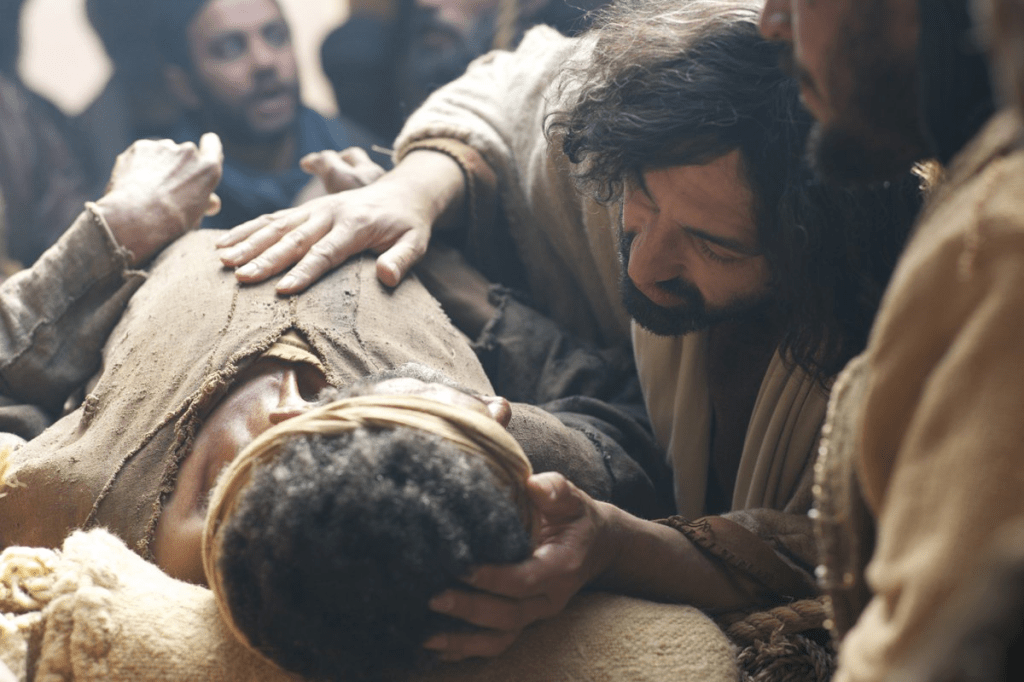
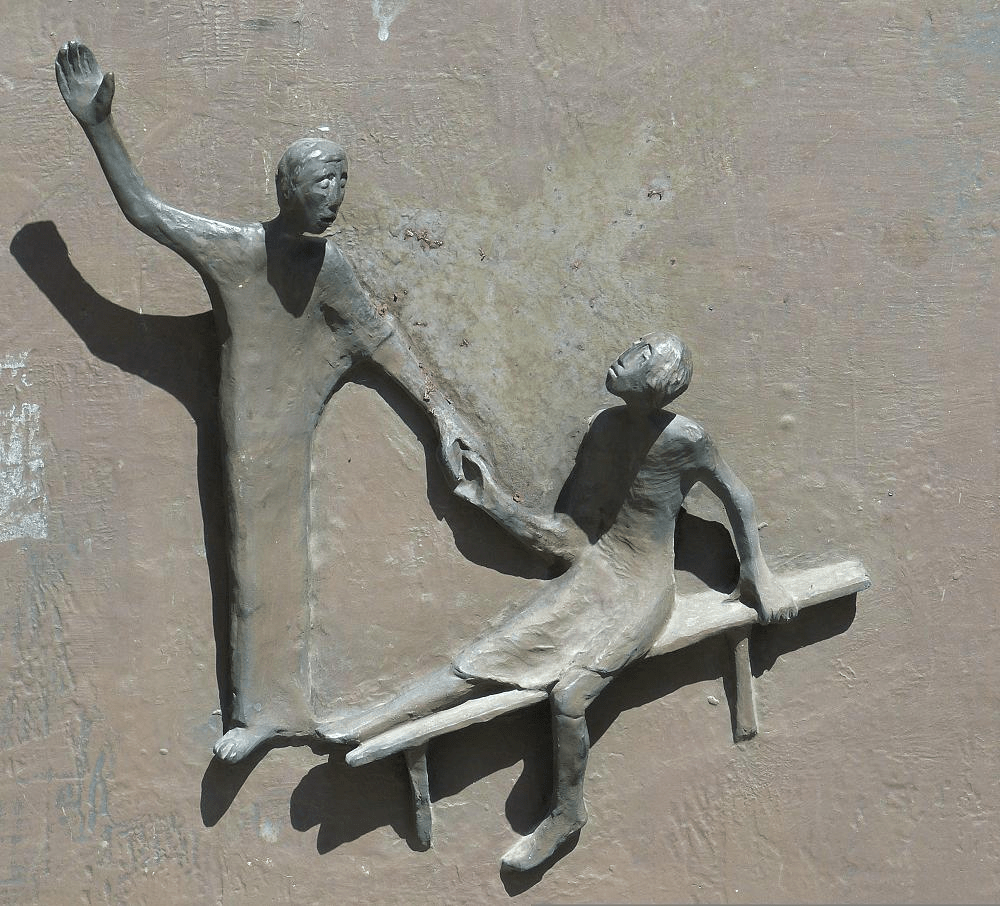
Are You Looking for Healing? (Mark 3:7-12)

Jesus departed with his disciples to the sea, and a great multitude from Galilee followed him; hearing all that he was doing, they came to him in great numbers from Judea, Jerusalem, Idumea, beyond the Jordan, and the region around Tyre and Sidon. He told his disciples to have a boat ready for him because of the crowd, so that they would not crush him, for he had cured many, so that all who had diseases pressed upon him to touch him. Whenever the unclean spirits saw him, they fell down before him and shouted, “You are the Son of God!” But he sternly ordered them not to make him known. (New Revised Standard Version)

A man’s shriveled hand was restored in full view of all the public. From then on, throngs of people came to check out what was happening. Jesus was well into his earthly ministry and created quite a buzz amongst everyone in Palestine. The ancient paparazzi even started following him around.

There were more fans rushing to see Jesus than Swiftys at a sighting of Taylor Swift. Like having the limousine ready after a concert to get away from the huge crowds, so Jesus instructed his disciples to have a boat ready for him in order to avoid the great crush of people.

Christ’s reputation of curing the sick and infirmed had reached such a critical mass that thousands were determined to at least touch him and experience long-awaited healing. And, really, you can’t really blame them, can you?

Maybe you’ve never experienced debilitating chronic pain – day after day not being able to get away from it’s awful effects in both body and soul. Or perhaps you have no idea what it’s like to live with depression constantly dogging you, just waiting to take a bite out of your life and devour you like some piece of meat.

A lot of people know what it’s like to live with infirmities that they don’t want and didn’t ask for. And they’ve tried everything to either get rid of it, or cope with it, somehow.

In fact, there are so many such persons living on planet earth, that when they had a snowball’s chance at getting to Jesus, they dropped everything and took it – going after him and not caring one bit if they themselves got crushed from all the other people trying to get help.

That, my friend, is how many people there are with great physical, mental, emotional, and spiritual needs on this planet.

We could go the route of playing arm chair observer and criticize the great crowd of people for being nothing but a bunch of fans who wanted to see the latest fad in Jesus. But, if you get up close with boots-on-the-ground, you will see a different picture: thousands of people looking for hope, health, and wholeness, wanting to be “normal” like everyone else.

The problem? Normal is nothing more than a social construct. For the infirmed, it’s likely not going to happen. For those believing they’re normal, in truth, they have a profound lack of awareness to their own great need.

No, we’re all abnormal; all of us are disordered, or diseased, or distressed in some sort of way. It turns out that we all need Jesus; some of us just know it much more profoundly than others.

Jesus was not only about to be crushed from physical bodies pressing in on him; he was going to be crushed by the sheer weight of the world’s tremendous need for healing.

But he was pierced for our transgressions,
    he was crushed for our iniquities;
the punishment that brought us peace was on him,
    and by his wounds we are healed.
We all, like sheep, have gone astray,
    each of us has turned to our own way;
and the Lord has laid on him
    the iniquity of us all. (Isaiah 53:5-6, NIV)

At this point in Christ’s ministry, a significant shift began. Rather than entering a synagogue and speaking only to Jews, Jesus started addressing Gentiles, as well. In fact, the crowds wanting to see him came not only from exclusively Jewish locations, but also from other places.

This ministry of Christ raised the attention of the demonic realm. It was a major threat to the demons’ influence on people. Identifying him as the Son of God and calling Jesus out by that name was a way for the demons to reassert their power and try to get some leverage. Names are actually a big deal. Which is why, for example, Jesus once asked a demoniac in the cemetery what his name is.

That’s one way a name is powerful. Yet, when it comes to you and me, the fact that Jesus knows your name, and my name, is a mighty thing in a very different way. Rather than having demons making the Son of God known, Christ grants us the authority to make the name of Jesus known throughout the world.

Even though the redemptive events of Jesus happened two thousand years ago, great crowds of people still come to Jesus, clamoring for but a touch of his grace. And the forces of darkness are still hanging around, knowing that their time is short.

Yes, there is still healing and wholeness to be found in Jesus, even today. And even though there remain some forces of darkness in opposition to it, the victory has already been achieved.

O God the Father, whose will for us and for all your people is health and salvation,

Have mercy on us.

O God the Son, who came that we might have life and have it in abundance,

Have mercy on us.

O God the Holy Spirit, whose indwelling makes our bodies the temples of your presence,

Have mercy on us.

O Triune God, we pray you to hear us, and that you will grant your grace to all who stand in need of healing both of body and spirit, and lead them to look with confidence in you;

We beseech you to hear us, O Lord.

That you will grant patience and perseverance to all who are disabled by injury or illness, and increase their courage,

We beseech you to hear us, O Lord.

That you will grant peace to all who are troubled by confusion or pain, and set their minds at rest,

We beseech you to hear us, O Lord.

That you will grant relief from suffering to all sick children, and give them a sure sense of your tender love and care,

We beseech you to hear us, O Lord.

That you will grant rest to all whose increasing years bring weariness, distress, or loneliness, and give them the abiding comfort of your presence,

We beseech you to hear us, O Lord.

That you will grant confidence to all about to undergo surgery or difficult procedures, and keep them free from fear,

We beseech you to hear us, O Lord.

That you will grant purpose to the church as it seeks to carry on Christ’s ministry of healing to suffering humanity, and keep it always true to the gospel of Christ,

We beseech you to hear us, O Lord.

That you will grant skill and compassion to doctors, nurses, technicians, aides, and all who are called to  practice medical arts, and make strong their dedication to help others,

We beseech you to hear us, O Lord.

That you will grant to all people the refreshment of quiet sleep and joy of resting in your everlasting arms, that we may rejoice in your care while we are on earth, and in the world to come, have eternal life.

We beseech you to hear us, O Lord.

O God, who in Jesus Christ called us out of darkness into your marvelous light; enable us always to declare your wonderful deeds, thank you for your steadfast love, and praise your with heart, soul, mind, and strength, now and forever.

Amen, and amen.

Believing Hearts vs. Poisoned Minds (Acts 14:1-7)

A Roman bridge between Iconium and Pisidian Antioch

The same thing occurred in Iconium, where Paul and Barnabas went into the Jewish synagogue and spoke in such a way that a great number of both Jews and Greeks became believers. But the unbelieving Jews stirred up the gentiles and poisoned their minds against the brothers. So they remained for a long time speaking boldly for the Lord, who testified to the word of his grace by granting signs and wonders to be done through them. 

But the residents of the city were divided: some sided with the Jews, and some with the apostles. And when an attempt was made by both gentiles and Jews, with their rulers, to mistreat them and to stone them, the apostles learned of it and fled to Lystra and Derbe, cities of Lycaonia, and to the surrounding region, and there they continued proclaiming the good news. (New Revised Standard Version)

The typical approach of the Apostles Paul and Barnabas was to enter a city and find the local Jewish synagogue. But their missionary efforts went well beyond attempting to reach fellow Jews; they also had the mind and heart to include non-Jewish persons, Gentiles, in the fledgling Church.

As a result of this apostolic ministry, a number of both Jews and Gentiles believed the message of God’s grace and became followers of Jesus. Thus, two ancient enemies came together to form one new society. Old animosities and prejudices came down. Jew and Gentile began worshiping together and embracing the words and ways of Jesus.

Yet, at the same time, there were also many Jews who refused to believe. Just as the new believers united together in faith, so the unbelievers banded together for a different purpose: to stir up the Gentiles by infecting their minds against this new union of people, centered around a common confession of Christ.

The unbelievers started a slander campaign against Paul and Barnabas, sowing mistrust and suspicion amongst the people in the street. But the sinful propaganda didn’t deter the apostles from spending considerable time in the city of Iconium and speaking confidently about the good news of Jesus.

What’s more, the message was confirmed by a demonstration of spiritual power. Paul and Barnabas were enabled by God to do many miraculous wonders in the city. This helped the gospel and the authority of the apostles to be established with the people.

The dynamic of belief and unbelief, cut right down the middle of the city. The people became divided and polarized. Some sided with the Apostles Paul and Barnabas, persuaded by their arguments and convinced by their actions; and others sided with the unbelieving Jews, having listened to their slanderous accusations and looking at the apostles as a threat to their existing society.

The climate in the city of Iconium became ripe for violence. Relations between believers and unbelievers deteriorated into planning harm against the new Christians. Even the city officials were becoming sympathizers with the planners to rid the city of the apostles once and for all. In other words, for Paul and Barnabas to remain in the city meant that they would likely get stoned and left for dead.

So, the apostles got out of Dodge and went to the cities of Lystra and Derbe. At least they could keep proclaiming the good news of grace to other people and avoid getting killed.

This story gets at a practical reality for many people of faith: How do people maintain their religious convictions and commitments in an environment that views them as harmful to society?

To be sure, not every person of faith faces this. But others around the world face it every day. And then there are perhaps the majority of the faithful, who sometimes find themselves in places and positions in which slander is rife and verbal violence abounds. What is a person of faith to do?

Not every situation is the same, so each circumstance will take some wisdom in handling it. Nevertheless, the following are some aspects to consider in dealing with the unbelief of others and the harmful effects it can bring:

  1. Persevere in your spiritual confidence. Paul and Barnabas did not cower in fear, but kept up their missionary efforts. The words of gossip and attitudes of hostility around them didn’t slow them down one bit. In fact, in other situations, the apostles who actually experienced harm, chose to view it as a privilege to suffer in the same sort of way Jesus did.
  2. Know when to walk away. Boldness doesn’t necessarily mean that one throws caution to the wind and simply keeps going, no matter the consequences. Paul and Barnabas knew when to leave the city and go somewhere else. They realized the shelf life of their ministry in Iconium was at an end. Neither one of them bemoaned the situation, but instead, looked ahead to the opportunity of gospel proclamation in other cities.
  3. Trust God in all things. Whenever we are slandered, or others actually make plans of harm against us, our initial desire may be to get them before they get us; or to fight back using the same tools of violence that were done against us. Paul and Barnabas did no such thing. Believers have spiritual tools of use that unbelievers don’t possess. So, use them. Pray for those who mistreat you. And let God handle the judgment end of things.

If Christians keep focusing on the words and ways of Jesus, they will consistently practice humility, not pride; confession of faith, not calling out in anger; meekness, not aggressiveness; righteousness, not wrongdoing; mercy, not judgment; purity, not dirty politics; and peacemaking, not war-mongering.

May it be so, to the glory of God. Amen.