Deuteronomy 9:6-14 – Remember and Learn

Moses and the Masks by Israel Tsvaygenbaum, 2002

So, understand this: It’s not because you’ve been living right that the Lord your God is giving you this good land to possess. You are impossible to deal with!

Never forget how you made the Lord your God angry in the desert. You’ve rebelled against the Lord from the day you left Egypt until you came here. Even at Mount Horeb you made the Lord so angry that he wanted to destroy you. When I went up on the mountain to get the stone tablets, the tablets of the promise that the Lord made to you, I stayed on the mountain 40 days and 40 nights without food or water. Then the Lord gave me the two stone tablets inscribed by God himself. On them were written all the words that the Lord spoke to you from the fire on the mountain on the day of the assembly.

At the end of the 40 days and 40 nights, the Lord gave me the two stone tablets with his promise on them. He told me, “Leave right away. Your people whom you brought out of Egypt have ruined everything. They’ve quickly turned from the way I commanded them to live. They’ve made an idol for themselves.”

The Lord also said to me, “I’ve seen these people, and they are impossible to deal with. Leave me alone! I’ll destroy them and wipe their name off the earth. Then I’ll make you into a nation larger and stronger than they are.” (God’s Word Translation)

Significant things happen on mountains in the Bible. In the anticipation of Transfiguration Sunday, in which Christ’s glory is revealed on a mountain top, today’s Old Testament lesson reminds us of a great mountain event. And it was not all bunnies and butterflies. 

The book of Deuteronomy is a restatement of the Law. Moses recalled and recounted an oral history of Israel. They were about to enter the Promised Land, and Moses wanted the people to remember and never forget God’s saving actions and God’s Law. 

Forty years earlier, God graciously met with Moses on the mountain and gave him the Ten Words (Ten Commandments). However, the ugly truth was that, while Moses was with God on the mountain, the people became impatient, insolent, and rebellious. They degenerated into a chaotic mass riot who quickly worshiped an idol. Definitely not Israel’s best moment.

In restating Israel’s Law and history, Moses wanted the people to remember the Mount Sinai event in all of its foulness and degradation. It was important for them to not forget how stubborn and pig-headed their parents and grandparents were in running from the one true God to a false god. The people needed to avoid the sins of the previous generation so that they could enjoy God and thrive in the new land being given to them.

It does no one any good to whitewash the past or to altogether ignore it. 

Whether it is one’s personal past, a previous generation, or even a national history, we must face the sins of our forebears, to remember and not forget. We must neither be so extremely individualistic that we disconnect ourselves from our generational moorings, nor be dismissive of past sins – as if they have no influence upon us today. 

Mountain experiences can either be glorious, turn very dark, or a bit of both. We are meant to learn from them all, to remember and not forget.

Yet not all remembered. Which is why, over a millennium later, the New Testament issued it’s own remembrance and warning so that we will learn and not forget – contrasting the two mountains of Sinai and Zion:

Unlike your ancestors, you didn’t come to Mount Sinai—all that volcanic blaze and earthshaking rumble—to hear God speak. The earsplitting words and soul-shaking message terrified them, and they begged him to stop. When they heard the words— “If an animal touches the Mountain, it’s as good as dead”—they were afraid to move. Even Moses was terrified.

No, that’s not your experience at all. You’ve come to Mount Zion, the city where the living God resides. The invisible Jerusalem is populated by throngs of festive angels and Christian citizens. It is the city where God is Judge, with judgments that make us just. You’ve come to Jesus, who presents us with a new covenant, a fresh charter from God. He is the Mediator of this covenant. The murder of Jesus, unlike Abel’s—a homicide that cried out for vengeance—became a proclamation of grace.

So don’t turn a deaf ear to these gracious words. If those who ignored earthly warnings didn’t get away with it, what will happen to us if we turn our backs on heavenly warnings? His voice that time shook the earth to its foundations; this time—he’s told us this quite plainly—he’ll also rock the heavens: “One last shaking, from top to bottom, stem to stern.” The phrase “one last shaking” means a thorough housecleaning, getting rid of all the historical and religious junk so that the unshakable essentials stand clear and uncluttered.

Do you see what we’ve got? An unshakable kingdom! And do you see how thankful we must be? Not only thankful, but brimming with worship, deeply reverent before God. For God is not an indifferent bystander. He’s actively cleaning house, torching all that needs to burn, and he won’t quit until it’s all cleansed. God himself is Fire! (Hebrews 12:18-29, MSG)

The old adage from the late philosopher, George Santayana, stated in his 1905 book, The Life of Reason, is true: “Those who cannot remember the past are condemned to repeat it!”

Winston Churchill, restating the phrase for the British House of Commons in 1948 said, “Those who fail to learn from history are condemned to repeat it.”

Let us, then, ascend the mountain with Jesus and learn from him. And let us descend into the valley of the world remembering Christ’s words and ways for ourselves and for the next generations of believers.

God of history, your sovereign reign and rule extends to all creation and has existed for all time. You know the sins of my past, the heart of my present, and the soul of my future. Do not let me forget my sins, not because you hold them over my head, but because your grace has saved me from them all through Jesus Christ, my Savior. Amen.

When Will We Engage Our Ministry?

Welcome, friends!

Acts 1:1-11 contains the final words of Christ on this earth. Jesus gave his followers a mandate, not to sit idly and wait for his return, but to embody their identity as witnesses to what they have seen and heard for a world in need of God’s deliverance and love. Click the videos below, and let us embrace our purpose and mission as the people of God….

Pastor Tim Ehrhardt, Acts 1:8

God of hope and courage, you call each of us to bear witness to your abundant love in a frightened world. All around us are signs the world is struggling and the future is unclear. Strengthen our confidence in your unfailing grace and grant us the courage to move onward even when we cannot see the way, knowing that you will guide our every step. Amen.

Acts 1:1-11 – When Will We Engage in Our Ministry?

In my former book, Theophilus, I wrote about all that Jesus began to do and to teach until the day he was taken up to heaven, after giving instructions through the Holy Spirit to the apostles he had chosen. After his suffering, he presented himself to them and gave many convincing proofs that he was alive. He appeared to them over a period of forty days and spoke about the kingdom of God. On one occasion, while he was eating with them, he gave them this command: “Do not leave Jerusalem, but wait for the gift my Father promised, which you have heard me speak about. For John baptized with water, but in a few days you will be baptized with the Holy Spirit.”

Then they gathered around him and asked him, “Lord, are you at this time going to restore the kingdom to Israel?”

He said to them: “It is not for you to know the times or dates the Father has set by his own authority. But you will receive power when the Holy Spirit comes on you; and you will be my witnesses in Jerusalem, and in all Judea and Samaria, and to the ends of the earth.”

After he said this, he was taken up before their very eyes, and a cloud hid him from their sight.

They were looking intently up into the sky as he was going, when suddenly two men dressed in white stood beside them. “Men of Galilee,” they said, “why do you stand here looking into the sky? This same Jesus, who has been taken from you into heaven, will come back in the same way you have seen him go into heaven.”

When will we engage in our ministry? The short answer: Now.

The angels in this story sound a lot like my mom when I was a kid: “Why are you just standing there looking into an empty sky?  You need to quit your gawking and get to work!”

But sometimes we can be confused about what it is we are supposed to be about or when we are supposed to do it. Jesus was quite clear about what the mission of his followers is to be: witnesses.  And the angels essentially tell the disciples to quite their gawking and get to work on being witnesses.

Being a Witness Now

The mission is not simply to do some sort of evangelical job of witnessing, but to be a witness. What we do flows from who we are and what we have seen. If we have seen and experienced the risen Lord, we are witnesses. We then tell of what we have seen and heard, not necessarily because it’s our job, but because we just cannot help it.

A mom nurtures her kids because she is a mom; it isn’t just a job – it’s who she is. To be a witness involves the kind of people we are. The word “witness” is literally the term “martyr.”  A martyr, as the term has been used throughout church history, is:

  • One who chooses to suffer death rather than deny the person and work of Jesus Christ.
  • One who bears testimony to the truth of what they have seen or have experienced with God.
  • One who sacrifices all things to further God’s kingdom.
  • One who is willing to endure anything from anyone to maintain their Christian witness. 

A martyr is someone we are, not a task that gets checked off a to do list.

There is a clear mandate and mission given by Jesus, the Head of the Church: We are witnesses. We are participants in service to Christ the King, and not fans of Jesus only cheering in the bleachers. It’s a very different experience being a fan in the stands than a player on the field.

In baseball, some fans think they know what all the right calls are, then graciously let the umpire know when he is wrong. Being a spectator is significant. Yet, for us here on this earth, it is not yet our time for that. Those who have gone before us, lived in faith, and were martyrs, are testifying to us….

Some faced jeers and flogging, and even chains and imprisonment. They were put to death by stoning; they were sawed in two; they were killed by the sword. They went about in sheepskins and goatskins, destitute, persecuted and mistreated—the world was not worthy of them. They wandered in deserts and mountains, living in caves and in holes in the ground. These were all commended for their faith, yet none of them received what had been promised, since God had planned something better for us so that only together with us would they be made perfect….

Therefore, since we are surrounded by such a great cloud of witnesses [martyrs], let us throw off everything that hinders and the sin that so easily entangles. And let us run with perseverance the race marked out for us, (Hebrews 11:36-40, 12:1, NIV)

The Christian fans in the heavenly stands are witnessing that they have participated in God’s mission. And they are not unruly – spilling their beer on people and getting kicked out of the stadium. Instead, they are encouraging us who are here, right now, on this earth, seeking to fulfill Christ’s mandate.

Those who have gone before us are passing the baton of leadership and the message of good news to us – and they expect us to run with it – not to try and sit in the stands as spectators because it is not yet our time.  They are cheering us on, letting us know it’s all worth it.

Now is the time to be witnesses of what God in Christ has done and is doing. God created a perfect world. Man and woman fell into disobedience and sin. Now, God is in the business of restoring and renewing all creation. So, we are to witness to what God has done, and is doing, because our identity is thoroughly in Jesus Christ. It is our heritage and our privilege.

“Let God be the Judge. Your job today is to be a witness.”

Warren Wiersbe

In the 1990s a Christian prisoner in Cuba was asked to sign a statement containing charges against fellow Christians that would lead to their arrest. He said, “The chain keeps me from signing this.” The communist officer protested, “But you are not in chains!” “I am,” said the Christian. “I am bound by the chain of witnesses who throughout the centuries gave their lives for Jesus Christ. I am a link in this chain. I will not break it.”

Christ’s words are directed to us: “You will be my witnesses,” you and me. If we look at this as merely a task, we will likely give up and whine, saying, “This is too hard. It takes too much time. There’s too much suffering. This isn’t for me!” 

If we understand our identity as being a witness, then we will love God with all our heart, soul, mind, and strength. We willingly abandon our own personal agendas and adopt the will of God for our lives. And the will of God is that we embrace our identity as witnesses to the redemptive events of Jesus – Christ’s incarnation, holy life, compassionate ministry, suffering and death, rising from the grave, and ascending to heaven.

What do you have to witness to? Here is a teenage girl’s witness when he stood glaring at her, his weapon before her face, asking, “Do you believe in God?” She paused because it was a life or death question. “Yes, I believe in God.” “Why?” asked her executioner. But he never gave her the chance to respond. The 17-year-old girl lay dead at his feet. 

This scene could have happened in the Roman coliseum, in the Middle Ages, or in any number of countries around the world today. People are still being imprisoned, tortured, and killed every day because they refuse to deny the name of Jesus. This particular story, though, did not happen in ancient times or in another country. It happened at Columbine High School in Littleton, Colorado on April 20, 1999.

Being a Witness Everywhere to Everyone Now

The original witnesses of Jesus Christ embraced the mandate of being witnesses. Not far into the New Testament book of Acts, 3,000 people in Jerusalem were converted to Christianity through one sermon from Peter’s witness. Philip broke all kinds of taboos by going to Samaria and being a witness to the half-breed Samaritans. Peter broke all convention by going into a Gentile’s house and seeing the Spirit come on them. Saul, who became Paul, was dramatically converted and went on three separate missionary journeys so that he could take the good news of Jesus Christ to the ends of the earth.

We are to be witnesses wherever we go with whomever we encounter. We will be witnesses in Jerusalem (our families); in Judea (our community); in Samaria (other races and people different from ourselves); and, to the ends of the earth (overseas).

Being a Witness Through the Spirit’s Empowerment Now

Only after giving the mission to his followers did Jesus ascend to heaven. The ascended Lord is to be our confidence and our hope. We are not alone. We possess Christ’s authority and the Spirit’s help. The power to be a witness is not generated from within us but comes from God’s Spirit.

Jesus will return. Until then, we are to be his witnesses. It’s not the time to sit in the bleachers. We have been given power to accomplish the mission before the end of this world comes, and before Jesus comes again to judge the living and the dead.

Being a witness is not a one-time, one-size-fits-all work. Our own witness is just that: ours. We all have our own stories of faith and experiences of the risen and ascended Christ. There’s really nothing flashy or sexy about being a witness. Rather, it mostly entails a consistent and patient witness of love. It’s a lifestyle and a way of life in which our love for God pours out of our heart and soul and is expressed with all our mind and strength.

Every Christian can witness to what God is doing in their life – to tell our story of what God has done and is doing with us.

Holy God, you are making all things new through your gracious reconciling and restorative work. Grant us, your people, the vision to see you at work in our world healing our brokenness and making us new. Grant us the wisdom to hear your voice through the noise that surrounds us. And grant us the courage to bring to fruition the world you are creating, through Jesus Christ our Lord, in the power of your Holy Spirit. Amen.

1 John 2:12-17 – Where Is Your Love Aimed?

I am writing to you, dear children,
    because your sins have been forgiven on account of his name.
I am writing to you, fathers,
    because you know him who is from the beginning.
I am writing to you, young men,
    because you have overcome the evil one.

I write to you, dear children,
    because you know the Father.
I write to you, fathers,
    because you know him who is from the beginning.
I write to you, young men,
    because you are strong,
    and the word of God lives in you,
    and you have overcome the evil one.

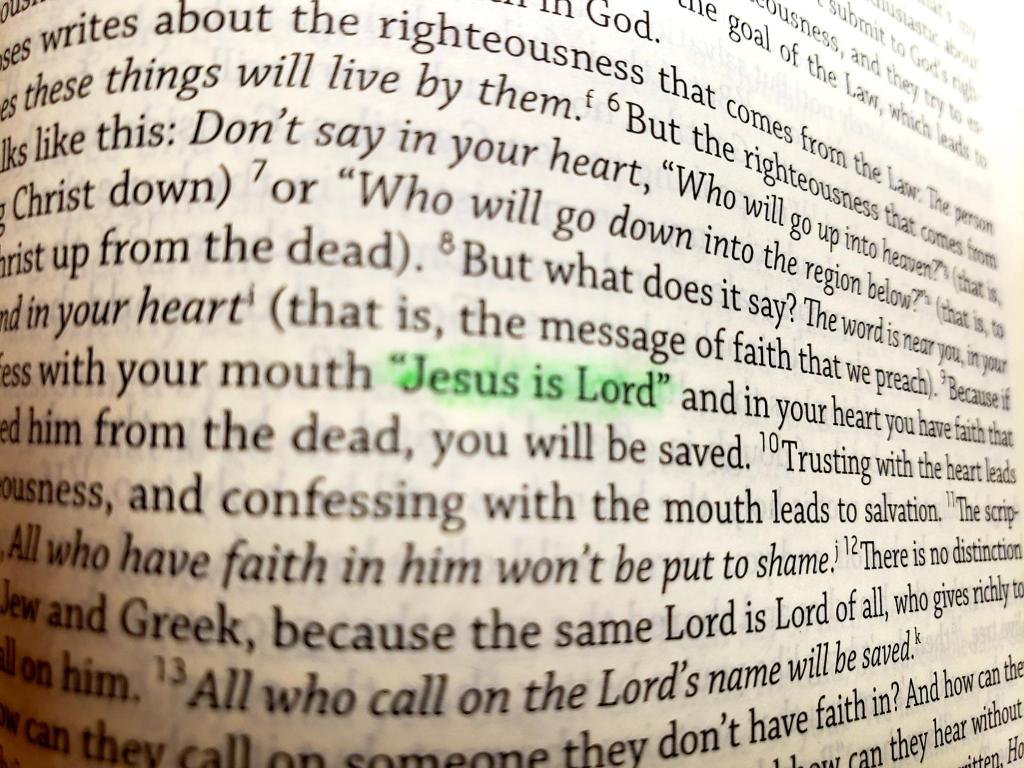
Do not love the world or anything in the world. If anyone loves the world, love for the Father is not in them. For everything in the world—the lust of the flesh, the lust of the eyes, and the pride of life—comes not from the Father but from the world. The world and its desires pass away, but whoever does the will of God lives forever. (New International Version)

The true measure of one’s Christian belief and commitment is the direction of their love.

We all love. Its part of being a human. Where our love is oriented is the real issue. The trajectory of love is the best measurement of faith and belief.

To love our fellow humanity, our brothers and sisters in Christ, and the neighbors around us, is to live in the light. It is the distinguishing mark of following Jesus. To hate humanity, to downplay love and dismiss it amongst believers, and to ignore the neighbors God placed us around, is to live in darkness.

A Christian is one who has received the love of God in Christ. Because of Divine Love, they know they are forgiven and have eternal life. They know, experience, and feel the permanence of godly love flowing powerfully in and through them to the glory of God.

Christians trust their gut, informed by the conscience testifying to the importance of love, and the Spirit sanctifying them with the primary tool of love.

So, when some folks come along and place a heavy emphasis on cognitive belief, eschewing the heart and the gut, it ought to raise some saved and sanctified eyebrows. To merely affirm a doctrinal statement, then turn around and aim love in the wrong direction, is to affirm a wrong belief. To hate people and love the world is just plain heretical.

The term “world” in the New Testament has differing meanings according to the context. Jesus stated that God so loved the “world” that he gave his only Son. That’s a reference to people, the entire mass of humanity on this planet. John, however, typically uses “world” as the antonym to the church, as if it were an evil opposite.

In our New Testament lesson for today, the term “world” are the patterns, systems, and operations of the world which are in direct contrast to how God operates and how the church ought to function. To love humanity is to hate the world and do God’s will. To love the world is to hate others and adopt a devilish agenda. For example:

  • The world engages in revenge and payback when wronged, whereas the Christian learns to believe God as the Judge, loves the person who has offended them through prayer for their enemy, and obeys God through good works that seeks the welfare of the other. 
  • The world uses other people as either objects of their pleasure or to get ahead in life, whereas the Christian believes God will take care of their needs, will seek to love the other person instead of use them, and would rather obey God than be selfish. 
  • The world thinks nothing of lying, cheating, and stealing, if they can get away with it, whereas the Christian believes Jesus is the way, the truth, and the life, loves being a person of integrity, and obeys God even when it hurts.

Love in the Bible always begins with God’s love for people. This is the fundamental starting point for love because without God’s love, our love doesn’t get very far.

The world hates. God loves. Many people in this cruel and calloused world are unloving and unkind because they lack knowing that God loves them. If we do not believe or know that God infinitely loves us, then our words and our actions will reflect more hate than love.

The Lord your God is with you, he is mighty to save. He will take great delight in you, he will quiet you with his love, he will rejoice over you with singing.”  (Zephaniah 3:17, NIV)

Christianity does not come into existence by knowing some belief statements about Jesus. Rather, Christianity exists when individuals experience the white-hot burning love of God in Jesus Christ. Jesus came not only for those who skip church and only occasionally read their Bibles, but also came for the hard-hearted prick, the immoral adulterer, the strung-out addict, the terrorist, the murderer, and for all those caught up in bad choices and failed relationships. 

God’s love is not based on our performance, how good we look to others, nor conditioned by our moods. The love of God only looks longingly at you and me with the potential of what we can become in Christ and cares for us as we are.

God demonstrates his own love for us in this: While we were still sinners, Christ died for us. (Romans 5:8, NIV)

Christianity never begins with what we do for God to make ourselves lovely for him. Instead, Christianity always starts with what God has done for us, the great and wonderful love that exists for us in Christ Jesus.

But when the kindness and love of God our Savior appeared, he saved us, not because of righteous things we had done, but because of his mercy. (Titus 3:4, NIV)

All the wrong turns in the past, the mistakes and the moral lapses, everything that is ugly or painful all melts in the light of God’s acceptance and love for us. It makes loving the world seem distasteful, like trying to eat sand. Love for God and neighbor is the true source of doing God’s will and the true measure of Christian belief.

In what direction is your love aimed today?

O Lord, you have taught us that without love, whatever we do is worth nothing. Send your Holy Spirit and pour into my heart your greatest gift, which is love, the true bond of peace and of all virtue, without which whoever lives is accounted dead before you. Grant this for the sake of your only Son Jesus Christ, who lives and reigns with you and the Holy Spirit, one God, now and forever. Amen.