Romans 7:14-25 – Our Existential Angst

We know that the law is spiritual; but I am unspiritual, sold as a slave to sin. I do not understand what I do. For what I want to do I do not do, but what I hate I do. And if I do what I do not want to do, I agree that the law is good. As it is, it is no longer I myself who do it, but it is sin living in me. For I know that good itself does not dwell in me, that is, in my sinful nature. For I have the desire to do what is good, but I cannot carry it out. For I do not do the good I want to do, but the evil I do not want to do—this I keep on doing. Now if I do what I do not want to do, it is no longer I who do it, but it is sin living in me that does it.
 
So, I find this law at work: Although I want to do good, evil is right there with me. For in my inner being I delight in God’s law; but I see another law at work in me, waging war against the law of my mind and making me a prisoner of the law of sin at work within me. What a wretched man I am! Who will rescue me from this body that is subject to death? Thanks be to God, who delivers me through Jesus Christ our Lord!
 
So then, I myself in my mind am a slave to God’s law, but in my sinful nature a slave to the law of sin. (New International Version)
 
We can relate to the Apostle Paul. We, along with him, have many times said to ourselves, “I don’t understand why I act the way I do. I don’t do what I know is right. I do the things I hate.” 
 
Paul’s existential angst is a timeless description of our common human condition. There are times we seem completely unable to follow our conscience and do what’s right. It can be maddening, even to the point of experiencing a continual low-level discouragement and/or depression which underlies almost everything we do.
 
The prescription for dealing with this mental, emotional, and spiritual malady does not include the law. That’s right. Putting our willpower and effort into obeying commands gets us nowhere. Even if we obey laws and rules and commands for a time, our efforts eventually break down. We fail to do what we want and do just the opposite.
 
The law isn’t bad. It just doesn’t have the capacity to transform us. The law’s purpose is to show us how bad off we really are in this world, to give us an awareness of our true condition so that we will seek help. 
 
We humans are a bundle of contradictions, doing good, then bad, and flip-flopping back and forth – all with great frustration.
 
In our abject misery, what then, shall we do? Who will help us? Is there anyone to save us from our plight?
 
Sheer willpower and obedience will not help us; it won’t work. It will only give us a false hope. Any success in using such willpower only deludes one into believing they have the answer… until they yet fall again into the abyss of their own inner darkness.
 
The good news is that there is a Savior, a Redeemer, a Rescuer who has the will and the power to deliver us from our predicament.
 
The grace of God in Christ is the operative power that changes lives, not the law. Freedom from the tyranny of our “should’s” and our misplaced desires comes from Christ’s forgiveness through the cross. 
 
Like a lover enamored with his beloved, our desires become oriented toward Jesus for his indescribable gift to us. That is the strength of grace. Transformation is relational; it is found in a person, not a program. And the only person and relationship which has the ability to change us is, I believe with all my heart and mind, the Lord Jesus Christ.
 
Why? Because I myself have been transformed and changed by such a relationship with Christ. I, along with the hymn writer John Newton, can say, “I once was lost but now am found, was blind but now I see.”
 
“Self-help” for all the good it really can do, is in many ways an oxymoron. There is no Bible verse which states that God helps those who help themselves.
 
Yes, we have an incredible capacity for good and vast internal resources within us which we lack awareness of for which we can tap into. Yet, when it comes to an outright metamorphosis, we need a new heart – and we can no more simply decide to change our lives any more than we can perform heart transplant surgery on ourselves.
 
People need the Lord.
 
Whenever the foundation of a house is about to crumble, it won’t do to rearrange the living room furniture and do a bit of spruce up painting. And we deceive ourselves if we believe that all our efforts at landscaping the property and having a great curb appeal will do the trick.
 
If the foundation crumbles, the house implodes, and nothing else will matter.
 
Jesus is our cornerstone. Without him, we are at risk, about to fall and without hope. With him, true restoration and renewal happens. And then, when the house is repaired and in order, we set about the task of being good stewards and maintaining and caring for the wonderful changes which were made.
 
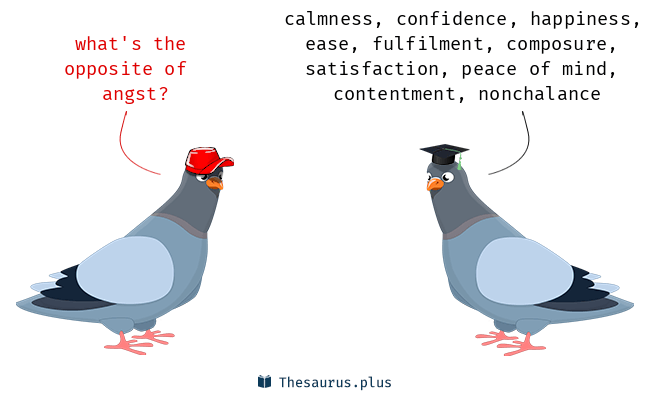
If we want freedom from self-loathing and to experience peace and contentment, calmness and confidence, satisfaction and settled peace, then we will grow ever closer to the Savior who exudes all those qualities, and more.
 
For the Lord not only saves and delivers; he also sanctifies and encourages. And the existential angst becomes forgotten.
 
Saving God, I thank you for delivering me from sin, death, and hell through your Son, the Lord Jesus. May your Holy Spirit apply the work of grace to my life every day so that I can realize practical freedom from all that is damaging and destructive in my soul. Amen.

Matthew 10:16-25 – The Place of Trouble

“I am sending you out like sheep among wolves. Therefore, be as shrewd as snakes and as innocent as doves. Be on your guard; you will be handed over to the local councils and be flogged in the synagogues. On my account you will be brought before governors and kings as witnesses to them and to the Gentiles. But when they arrest you, do not worry about what to say or how to say it. At that time, you will be given what to say, for it will not be you speaking, but the Spirit of your Father speaking through you.
 
“Brother will betray brother to death, and a father his child; children will rebel against their parents and have them put to death. You will be hated by everyone because of me, but the one who stands firm to the end will be saved. When you are persecuted in one place, flee to another. Truly I tell you, you will not finish going through the towns of Israel before the Son of Man comes.
 
“The student is not above the teacher, nor a servant above his master. It is enough for students to be like their teachers, and servants like their masters. If the head of the house has been called Beelzebub, how much more the members of his household! (New International Version)
 
Take a moment to let this statement from Jesus sink-in: “I am sending you out like sheep among wolves”… 
 
To name the obvious: A pack of wolves will attack a flock of sheep because a wolf is a hunter, and a sheep is the prey. In short, wolves eat sheep.
 
So, when Jesus said this to a group of guys who are familiar with rural metaphors, they clearly got the message: The Lord is putting us in a place of danger. We are at risk. We could lose our lives.
 
From the mere human perspective, Christ’s words to his disciples are outlandish. Here we have a group of people who are following Jesus. But they likely didn’t sign-up for this! Perhaps they began to think their Lord was a bit off his rocker. Maybe he ate a piece of moldy bread or a leftover fish that didn’t agree with him.
 
Sometimes, followers of Jesus Christ completely lose sight that he was a troublemaker and warned us about trouble in the world. 
 
It’s not that Jesus was intentionally pressing everyone’s buttons; he was just being himself, and that sent a whole lot of people, at the worst, gnashing their teeth and caballing to kill him; and, at the least, causing them to question why they are even paying attention to him. 
 
Then, when you throw into the mix that Jesus also tended to get all up into people’s grill and confront them with bold assertions that they can only be rightly related to God through himself, on his terms, there ends up being a large chunk of folks who simply walk away, believing Christian discipleship isn’t for them.
 
Yet, Jesus wasn’t presenting something brand new. He was lifting up a truth which has been with God’s people throughout the ages: God never promises to keep us from trouble.
 
In fact, the Lord does just the opposite: He promises we will face a great deal of trouble because of our spiritual commitments. However, there is a further promise: God will be with us through the trouble, and not apart from it. We don’t even need to worry about what to say because God’s very Spirit will speak for us.
 
This is one reason why Jesus describes himself as the Good Shepherd who cares for the sheep. Yes, Jesus is sending out his disciples like vulnerable sheep among ravenous wolves. However, he forever stands as the divine sentinel, watching over the flock, keeping them safe, going after the strays, and challenging the predators.
 
We may be in a difficult place of trouble, yet Jesus is present with us by means of the Holy Spirit. We do not fear and instead live with confidence in the middle of hard circumstances because God is with us. And if God is with us and God loves us, nothing can separate us from our Lord – no matter how cunning and intimidating that big old wolf is.
 
Therefore, we should expect opposition and trouble. There are going to be times that we unintentionally disrupt and upset our families, our co-workers, and those around us. 
 
It’s not that we are trying to be obnoxious or malicious; it’s just that by simply loving Jesus and seeking to follow him, we are going to upset some people – and, as Christians, we need to be okay with that reality. 
 
Facing trouble is really not the worst thing to be experienced; to be separated from God is the most terrible thing that could ever happen to us.
 
My friends, it is okay to rock the boat, shake the tree, upset the fruit basket, stir the pot, and make waves if you are doing it because you are committed to God’s will and you are truly living into the words and ways of Jesus. 
 
Because Jesus faced a great deal of trouble, opposition, and suffering, he is able to help us through our own overwhelming stuff.
 
So, count the cost. Give your life away. In doing so, you will actually find it – and find that you are saved and safe.
 
Holy God, you are jealous for your Name to be honored and adored. My life is yours. Use it for your glory in this fallen world. If trouble and persecution occur, I’ll consider it a privilege to suffer for Jesus and an opportunity for the Holy Spirit to show up. Amen.

1 John 2:7-11 – Love, Not Hate

Dear friends, I am not writing you a new command but an old one, which you have had since the beginning. This old command is the message you have heard. Yet I am writing you a new command; its truth is seen in him and in you, because the darkness is passing, and the true light is already shining.

Anyone who claims to be in the light but hates a brother or sister is still in the darkness. Anyone who loves their brother and sister lives in the light, and there is nothing in them to make them stumble. But anyone who hates a brother or sister is in the darkness and walks around in the darkness. They do not know where they are going, because the darkness has blinded them. (New International Version)

It ought to be abundantly clear that hate has absolutely no place in the Christian’s life. Hate is never justified for any individual or group of people. There are no exceptions.

Love, however, is the consummate Christian virtue. The highest of all truth in Christianity is the grace that is bestowed on us through the love of God in Christ. We, in turn, reflect our Lord’s grace by loving others, no matter their gender, race, creed, or ethnicity.

Yet, we are all familiar with hate. Everyone has hated another, and others have hated us. Unfortunately, hate is ubiquitous throughout the world.

Let’s face it: You and I have people we just don’t like. And maybe for good reason. After all, if you are being gaslighted by someone, or have been abused, mistreated, or oppressed by a person or group, then it takes no effort in disliking them, even to the point of despising them in your heart.

As much as other people need to change, the Apostle John places the burden of change to fall on us who claim the name of Christ. Love must begin somewhere. Let it begin with me.

The bald fact of the matter is that we cannot change another person. We can only control ourselves, and a lot of us don’t do a very good job with that. Christians are to learn to speak and act in the loving ways passed on to us through the gospel. We are to become skilled in the ways of Jesus, which is the way of love.

I fully understand this is not easy. In fact, it is downright hard. Forgiving another, even ourselves, can be a long painful process. Making the choice to love again, or love my enemy, is no small thing. Love must always be our default and de facto response to everyone. Otherwise, our hearts will grow cold and hard. And we will become the very people we despise.

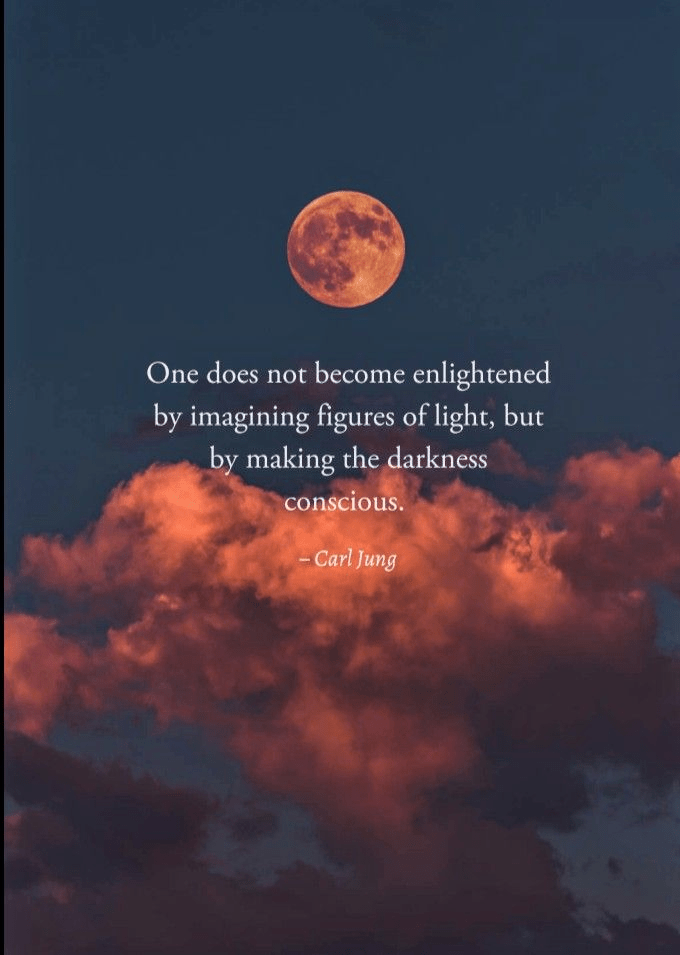
There is a shadow self, dwelling within us all. There are murky places in our hearts where darkness resides. We cannot afford to ignore those places. If we pretend there is no shadow self and keep up appearances, then we actually give the darkness power to come out of us through hateful speech and actions.

The “shadow” is a concept first coined by the Swiss psychiatrist, Carl Jung (1875-1961). Jung describes the shadow self as those aspects of our personality we choose to reject and/or repress. In other words, we all have parts of ourselves we don’t like—or that we think others won’t like—so we stuff those parts down into our unconscious psyche.

So then, the shadow self is a collection of things we toss into the closet of our hearts, lock the door, and forget about them. But they’re still there. And they still exert a great deal of influence from inside that dark closet.

We must be willing to face the shadowy parts of ourselves, to face the dark thoughts and feelings of secretly harming another (or ourselves), nursing a grudge, harboring bitterness, or holding onto an offense, as if it were a security blanket.

Whereas some may believe all our unwanted emotions, thoughts, feelings, and experiences are tightly hidden, they are not. Instead, the telltale sign of the darkness slipping out sideways into the world is hate. And that insidious hate typically takes the following forms:

  • Harshly judging or criticizing others by taking a superior posture over another. The critic, however, doesn’t know they are really castigating themselves.
  • Rebuking others as a common practice. Pointing out another’s “sins” is only a projection of one’s inner darkness onto the other.
  • Having a quick temper. Getting angry and belittling those who cannot fight back or respond is really self-loathing slathered onto someone else.
  • Being the victim in every bad situation. Victimization is a terrible thing. And when someone who isn’t really a victim claims to be one, it diminishes and invalidates the help that true victims need. This is the shadow self’s insecurity coming out – needing attention so that the incessant pounding from the inside of the heart is silenced.
  • Doing whatever is needed to get what you want. If that entails being mean, nasty, and hateful to achieve a desire outcome, then that is what is done.
  • Expressing implicit biases and prejudices. Anyone different is a threat to the shadow self. That other person might expose what’s inside me. So, the other gets treated with subtle digs, demeaning behaviors, and discouraging speech to keep them from getting close.

We need healing from this awful malady of hate.

The good news is that light is also available, and within us. Even in the blackest of hearts, there still remains the little spark of God’s image, way down in there. And it only takes a small Bic lighter to penetrate the darkness.

God’s glory is brighter than the brightest sun. A mere glimpse of such glory is more than enough to lay any heart bare and dispel the darkness.

The love of God in Christ is meant to be received, and then given to others. Fortunately, God has an inexhaustible storehouse of grace, mercy, and love – which means we can keep receiving and keep giving. We’ll never run out.

The shadow self sees only scarcity, so it holds onto resources in the belief there may not be enough. The true self, however, living into the grace and mercy of Christ, rightly discerns that God’s kingdom is a place of abundance. We are enhanced, not diminished, whenever we do the opposite behaviors of the shadow’s propensity to hate:

  • Encouraging and helping others. Pointing out another’s strengths and affirming their good behavior is a liberal practice in God’s kingdom.
  • Showing empathy. Being able to put oneself in another’s shoes, along with the willingness to sit with another’s pain, are common practices of the loving Christian person.
  • Doing whatever is needed to build up the community for the common good of all persons.
  • Including others, especially those who are different than me, by making room for them at the Table and giving them a voice.
  • Forgiving others, just as Christ forgave us.

The believer need not be blinded by hate but can love from a place of healthy self-awareness.

Loving heavenly Father, I thank you for looking beyond my faults and loving me unconditionally. Forgive me when I fail to love others in the same way. Give me eyes to see the needs of the difficult people in my life and show me how to meet those needs in a way that pleases you and glorifies the name of Jesus Christ. Amen. 

Luke 9:51-62 – The Cost of Following Jesus

As the time approached for him to be taken up to heaven, Jesus resolutely set out for Jerusalem. And he sent messengers on ahead, who went into a Samaritan village to get things ready for him; but the people there did not welcome him, because he was heading for Jerusalem. When the disciples James and John saw this, they asked, “Lord, do you want us to call fire down from heaven to destroy them?” But Jesus turned and rebuked them. Then he and his disciples went to another village.

As they were walking along the road, a man said to him, “I will follow you wherever you go.”

Jesus replied, “Foxes have dens and birds have nests, but the Son of Man has no place to lay his head.”

He said to another man, “Follow me.”

But he replied, “Lord, first let me go and bury my father.”

Jesus said to him, “Let the dead bury their own dead, but you go and proclaim the kingdom of God.”

Still another said, “I will follow you, Lord; but first let me go back and say goodbye to my family.”

Jesus replied, “No one who puts a hand to the plow and looks back is fit for service in the kingdom of God.” (New International Version)

“The will of God, to which the law gives expression, is that men and women should defeat their enemies by loving them.”

Dietrich Bonhoeffer, The Cost of Discipleship

In his earthly ministry, Jesus made it clear to the large crowds of people following him that the life of a disciple is of utmost importance. People are to discover what following Jesus truly entails. They are to count the cost of Christian discipleship.

Following Jesus in Christian discipleship requires radical obedience. 

Love of family must not stand in the way. Jesus insisted our primary loyalty must lie with following him over every earthly relationship. To follow Jesus means that we will not use family responsibilities to avoid obeying Christ or use other loyalties and commitments to work and/or school as a reason to lay down our cross. 

This talk of Christian discipleship might smack of being like a cult. I don’t believe it is. Whereas a cult typically requires a radical withdrawal from the world so that the leader has complete control over the group, Jesus requires a radical engagement with the world.

Following Jesus is meant to impact the world with grace and love. Jesus went out of his way to not be like other leaders who use power, control, and gaslighting as the means of ruling and leading. Instead, Jesus shares his power with others. Christians are to bless the world and be involved in it.

The call of Jesus to Christian discipleship not only takes precedence, but it also re-defines the other loyalties we have. 

This call involves some level of detachment in order to pursue following Jesus. All of life is to be infused with being a disciple of Jesus. If we insist on making other commitments and loyalties as high a priority as following Jesus, we will find ourselves torn between two masters. 

Several years ago, I took a trip with some other church leaders into the Canadian wilderness. We were so far out in the boonies that we needed special first aid training because, if someone got hurt, it would be hours before help could come. 

We canoed the lakes and carried our backpacks and canoes between lakes for an entire week. Whatever we took with us, we had to carry. Some people thought they needed all kinds of clothes and other accessories. Not far into the week, they quickly began to leave things along the trail and learned, over time, that what they thought was important in their life, wasn’t really important to what they were doing.

It’s good to get back to basics and do what is essential. And what is of most importance is following Jesus. 

An un-salty disciple is worthless. Making a profession of Christ, without counting the cost, is foolish. Christian discipleship was never designed to be easy; it was intended to be a public display that Jesus is Savior and Lord in every area of life. That means we will struggle with questions, such as: 

  • How do I be a faithful follower of Jesus in my family? 
  • How do I be a disciple, and do the work of discipleship at my job? 
  • How do I practice following Jesus in my neighborhood, and everywhere I go?

If we do not plan to follow Jesus at home, at work, in the neighborhood, and in the world, we won’t, because all kinds of competing loyalties will take over.

Christians need to be very intentional about being disciples who loyally follow the words and ways of Jesus.The going will get difficult. And that’s okay.

“Jesus has many who love his kingdom in heaven, but few who bear his cross. He has many who desire comfort, but few who desire suffering. He finds many to share his feast, but few his fasting. All desire to rejoice with him, but few are willing to suffer for his sake. Many follow Jesus to the breaking of bread, but few to the drinking of the cup of his passion. Many admire his miracles, but few follow him in the humiliation of the cross.”

Thomas à Kempis, The Imitation of Christ

“Anyone who does not carry his cross and follow me cannot be my disciple.”

Jesus (Luke 14:27)

Joy comes not by pursuing happiness; it comes through discovering that to live is to die to self. Until we come to grips with that reality, we will likely be frustrated with our circumstances and other people.  

So, rather than trying to fit Jesus into our calendar, we are to let our calendar fill-out around the center of following Jesus. If Christians feel too busy for prayer; or for daily reading of Holy Scripture; or for loving one another; or for making disciples, then they have lost their way and must listen to the call of Jesus to be his disciple.

How, then, shall we live? What shall we do?

“Jesus stands between us and God, and for that very reason he stands between us and all other people and things. Christ is the Mediator, not only between God and people, but between person to person, between humanity and reality.”

Dietrich Bonhoeffer, The Cost of Discipleship

Imagine that in our heart is a big conference room including a big table, leather chairs, coffee, bottled water, and a whiteboard. A committee sits around this table in your heart. There is the social self, the private self, the work self, the sexual self, the recreational self, the religious self, and others.

The committee is arguing, debating, and voting. They’re agitated and upset. Rarely can they come to a unanimous, wholehearted decision.

We tell ourselves we’re this way because of our many responsibilities or our high level of stress. Yet, the truth is that we are internally divided, unfocused, hesitant, and feeling trapped. 

One way of dealing with this situation is to invite Jesus to come sit as a committee member. Give him a vote, too. But then he becomes just one more complication.

A better way is to say to Jesus, “My life isn’t working. Please come in, become my CEO and fire my committee, every last one of them. I hand myself over to you. I am your responsibility now. Please run my whole life for me.” 

Being a disciple of Christ is not just adding Jesus; it is also subtracting the idols that are in my heart. 

Following Jesus is not for the faint of heart; it is for those who humbly acknowledge that Jesus is the way, the truth, and the life. This is the path of Christian discipleship. Let’s give Jesus his due: our very lives.

Gracious and almighty God, all hearts are open to you, all desires known, and no secrets are hid. Cleanse the thoughts of our hearts by the inspiration of your Holy Spirit so that we may perfectly love the Lord with all our hearts and magnify the holy Name of Jesus Christ our Lord. Amen.