Matthew 24:15-27 – Everything Will Change

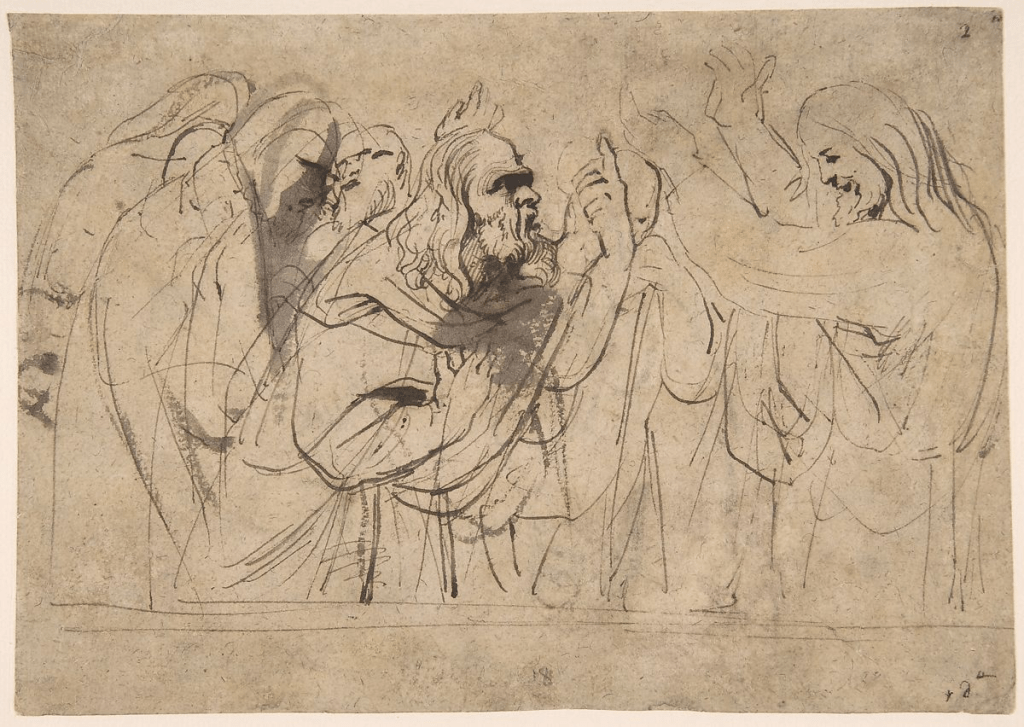
“The prophet Daniel said that the disgusting thing that will cause destruction will stand in the holy place. When you see this (let the reader take note), those of you in Judea should flee to the mountains. Those who are on the roof should not come down to get anything out of their houses. Those who are in the field should not turn back to get their coats.

“How horrible it will be for the women who are pregnant or who are nursing babies in those days. Pray that it will not be winter or a day of rest, a holy day, when you flee. There will be a lot of misery at that time, a kind of misery that has not happened from the beginning of the world until now and will certainly never happen again. If God does not reduce the number of those days, no one will be saved. But those days will be reduced because of those whom God has chosen.

“At that time don’t believe anyone who tells you, ‘Here is the Messiah!’ or ‘There he is!’ False messiahs and false prophets will appear. They will work spectacular, miraculous signs and do wonderful things to deceive, if possible, even those whom God has chosen.Listen! I’ve told you this before it happens. So, if someone tells you, ‘He’s in the desert!’ don’t go out looking for him. And don’t believe anyone who says, ‘He’s in a secret place!’ The Son of Man will come again just as lightning flashes from east to west.” (God’s Word Translation)

Midwest American summers can be brutally hot and humid. And the winters can be terribly frigid and full of snow. 

Having lived in various university towns and worked with many college students, every Fall there are always new international students, and students from the American Deep South, that have never experienced a Midwest winter and snow. 

I might tell them, repeatedly, of the need for a sturdy winter coat before the snow flies. Yet, having never known sub-freezing, let alone sub-zero temperatures, it’s difficult to imagine such cold when the weather is warm. 

There is little belief that everything around them will change in a few short months to the point that it will be felt down to the bone.

At the coming of winter, I, or someone else, helped ensure they had a suitable coat. Even then, those students often bodily shake all winter and never take their scarves off.

Since none of us have yet experienced it, it might be difficult to imagine that someday Christ will return to judge the living and the dead. 

So, in order to help the disciples to grasp the coming future, Jesus told them to use discernment. Although it may seem improbable now, a time is coming which will be loaded with cosmic and cataclysmic changes. 

Sometimes, even for myself who has lived through many hard winters, it’s incredible to know that the landscape, as it is right now, will be completely different in another six months.

Seasons come and go. Eventually, the sky and the earth as we know it now will pass away. However, the words and ways of Jesus Christ will endure for all time. 

If we are attentive and alert, we will be ready. We will have a warm winter parka on hand.

For now, it means taking off the old clothes of fear, insecurity, hopelessness, and hate; and putting on the new clothes of righteousness, peace, and love in the Holy Spirit. 

You may not think winter is coming. But it is. It may even be here sooner than you believe.

Do you feel that chill in the air?

Almighty and everlasting Father, we long for the coming of your kingdom in Jesus Christ our Lord. We lament before you the signs that your kingdom has not yet come in its fullness. The signs of brokenness and divisions, oppression and abuse, poverty and loneliness, are everywhere present in this present world.

So, we cry out from the depths of our being for you to come and bring us humility, wisdom, discernment, comfort, and hope. Dispel the shadows of the night and turn our darkness into light, through Jesus Christ, your Son, our Lord who with you and the Holy Spirit reign as one God, now and forevermore. Amen.

Hebrews 10:32-39 – Don’t Throw Away Your Confidence

Remember those earlier days after you had received the light, when you endured in a great conflict full of suffering. Sometimes you were publicly exposed to insult and persecution; at other times you stood side by side with those who were so treated. You suffered along with those in prison and joyfully accepted the confiscation of your property, because you knew that you yourselves had better and lasting possessions. So, do not throw away your confidence; it will be richly rewarded.

You need to persevere so that when you have done the will of God, you will receive what he has promised. For,

“In just a little while,
    he who is coming will come
    and will not delay.”

And,

“But my righteous one will live by faith.
    And I take no pleasure
    in the one who shrinks back.”

But we do not belong to those who shrink back and are destroyed, but to those who have faith and are saved. (New International Version)

Confidence is necessary for the Christian life. It’s not optional. One can only persevere through trouble with some confident hope.

It’s one thing to bear up under a hard circumstance for a few days or weeks. It’s altogether another thing for that same hardship to continue for months, even years.

Living with such adversity everyday makes one tired… really tired. Feelings of hopelessness slowly creep within. And, after a while, the person or group of people just want the madness to end. So, they simply give up, being lost in their troubles, feeling alone and bereft of options.

Without the confident expectation of better days ahead, while in the throes of difficulty, a failure of faith can too easily happen.

To realize better days, it’s important to remember the earlier days. I’m not talking about living in the past and wishing it were the 1950s again with Beaver Cleaver across the street. This is not about believing that the past was the good old days, and that the present is bad.

Instead, we can recall and remember the ways we endured and persevered with joy in past experiences.

The original Christian recipients of the message of Hebrews needed to recall the various ways they stood firm and tall in their faith, despite the adversity.

In earlier times, they were insulted and persecuted. Yet, they showed solidarity with others in similar situations. The believers were attentive to prisoners and sought to meet their needs. And they responded to the confiscation of their property with joy because they knew there was so much more than this present life and it’s possessions.

But the persecution and the insults continued… day after day… with no apparent end….

The Christians began to lose their grip on faith. They needed to reconnect with their purpose, with why they were Christians to begin with.

Originally, the reason they had such incredible attitudes while enduring hard things is because they were pursuing heavenly treasure. Their earthly possessions were merely temporary things, not of eternal value. They understood that people have eternal value, not stuff, so the believers willingly focused their efforts in helping others.

However, over time, the band of believers lost their focus. All they could see was the pain and the difficulty. They became disconnected with their purpose. And so, they were in danger of losing their faith and becoming utterly hopeless.

What to do? Give up? Renege on faith? Adopt a “whatever will be, will be,” sort of philosophy?

No. Instead,

Remember what God has done for you.

Affirm what is right, just, and true.

Embrace faith and patience.

That’s what the prophet Habakkuk did. And his resilience helped to bring proper perspective to present troubles.

“Nothing that is worth doing can be achieved in a lifetime; therefore, we must be saved by hope.”

Reinhold Niebuhr (1892-1971)

Habakkuk was distressed over the corruption of his fellow Israelites. Things were askew and not right. So, he complained to God about it. 

God responded by informing Habakkuk that judgment was coming to Israel through the Babylonians. This was neither what Habakkuk expected nor wanted. The prophet grumbled even more because the Babylonians were more corrupt than the Israelites. 

The prophet was having a hard time, and it seemed God was only making things worse, not better.

Habakkuk struggled to come to terms with what God was doing, and not doing. Finally, he concluded the matter by reconnecting with his faith: 

Even though the fig trees have no blossoms,
    and there are no grapes on the vines;
even though the olive crop fails,
    and the fields lie empty and barren;
even though the flocks die in the fields,
    and the cattle barns are empty,
yet I will rejoice in the Lord!
    I will be joyful in the God of my salvation!
The Sovereign Lord is my strength!
    He makes me as surefooted as a deer,
    able to tread upon the heights. (Habakkuk 3:17-19, NLT)

Perhaps the most significant faith experience we can have, is to come to the point of complete trust in God so that our happiness is not dependent upon good circumstances. 

The truth we all must eventually come around to is that joy and security is independent of what’s going on around us. 

Even though we face difficulty, and even evil, confidence can still exist and thrive within us. We can still rejoice because we don’t need everything to go our way in order to be happy.

Faith, patience, and joy are neither cheap, nor easy. For them to remain rooted within us, we must affirm our commitment to Christ daily. And that requires remembering.

What’s more, there is a reward ahead if we persevere to the end.

We can remain patient, express faith, kindle hope, and remember necessary things whenever we stop doing unimportant things which do not add value to our ultimate goals.

So, be mindful of the things which are most important to you; and move through life at a pace of hope, not anxiety. Don’t throw away your spiritual confidence, just because things are continually hard.

God, give us grace to accept with serenity
the things that cannot be changed,
Courage to change the things
which should be changed,
and the Wisdom to distinguish
the one from the other.

Living one day at a time,
Enjoying one moment at a time,
Accepting hardship as a pathway to peace,
Taking, as Jesus did,
This sinful world as it is,
Not as I would have it,
Trusting that You will make all things right,
If I surrender to Your will,
So that I may be reasonably happy in this life,
And supremely happy with You forever in the next.

Amen. – The Serenity Prayer by Reinhold Niebuhr

Isaiah 24:1-13 – Dehumanization Pollutes the Earth

The Lord is going to turn the earth into a desolate wasteland.
He will mar the face of the earth and scatter the people living on it.
The same will happen to people and priests,
male slaves and masters,
female slaves and masters,
buyers and sellers,
lenders and borrowers,
debtors and creditors.
The earth will be completely laid waste and stripped
because the Lord has spoken.

The earth dries up and withers.
The world wastes away and withers.
The great leaders of the earth waste away.

The earth is polluted by those who live on it
because they’ve disobeyed the Lord’s teachings,
violated his laws,
and rejected the everlasting promise.
That is why a curse devours the earth,
and its people are punished for their guilt.
That is why those who live on the earth are burned up,
and only a few people are left.

New wine dries up, and grapevines waste away.
All happy people groan.
Joyful tambourine music stops.
Noisy celebrations cease.
Joyful harp music stops.
People no longer drink wine when they sing.
Liquor tastes bad to its drinkers.
The ruined city lies desolate.
The entrance to every house is barred shut.
People in the streets call for wine.
All joy passes away,
and the earth’s happiness is banished.
The city is left in ruins.
Its gate is battered to pieces.

That is the way it will be on earth among the nations.
They will be like an olive tree which has been shaken
or like what’s left after the grape harvest. (God’s Word Translation)

A lot of people shy away from biblical passages, like today’s Old Testament lesson from Isaiah. Too negative, not enough positivity.

Like it, or not, Isaiah 24, along with many other texts of a similar vein, exist in Holy Scripture. And I insist we must pay attention to such texts of doom and gloom. For if we only choose to deal with the encouraging and inspirational texts of the Bible, we will have a severely truncated faith which will not stand in the hard times.

The voice I offer, however, isn’t a beat-you-up tone. I seek to have a pastoral voice that upholds the best of biblical ethics and human dignity. 

Because every person (and I do mean every person) on planet earth is created in the image and likeness of God, each individual human being is a person of worth and deserves respect and kindness.

People do and say terrible things every day. Because of that reality, it doesn’t mean God’s image has left or taken a vacation, or that someone deserves a pejorative label which stigmatizes and ostracizes them from the human family. 

For the Christian, the supreme ethic of life is love. We hold to the Great Commandment: Love God and love neighbor. All other commands of Holy Scripture hang on the commands to love, upheld by Jesus himself.

Jesus answered, “‘Love the Lord your God with all your heart, with all your soul, and with all your mind.’ This is the greatest and the most important commandment. The second most important commandment is like it: ‘Love your neighbor as you love yourself.’ The whole Law of Moses and the teachings of the prophets depend on these two commandments.” (Matthew 22:37-40, GNT)

It is because of the presence of God and Love that difficult biblical texts occur in Scripture. When people, in God’s image, defile that image through oppressing fellow image-bearers and turning from commands to live ethically and lovingly in the world, God has something to say about it. And we get texts like today’s from the prophet Isaiah.

Therefore, we must all ask ourselves if we are loving others in this world as intended by our Creator and Redeemer. 

We routinely hear, through social media posts, political pundits, religious prognosticators, and daily interactions around the water cooler, opinions laced with profound hate, disrespect, and misunderstanding.

Whenever disasters occur – whether yet another act of gun violence, a natural calamity, or economic ruin – there are a host of stories which surround them all. Some of those stories are heartwarming tales of people rushing in to bring comfort, solace, and support. And there are far too many stories of abject fear, ignorance, and calloused behavior directed at others, even victims, with selfish and misguided tools of wrath.

There is such a constellation of issues and problems to unpack and deal with in this world that I do not nor cannot even begin to try to do such a task. I only want to bring a small bit of light to the shadows of the human heart which inevitably tries to dehumanize others who do not agree with his/her opinion and group-think.

For example, there is no lack of people who persist in dehumanizing LGBTQ individuals and gay communities.  One man told me recently, in a matter-of-fact manner, that the Orlando, Florida shooting from 2016 was most likely a judgment from God upon homosexuals because of our government’s straying from godliness. 

Those in LGBTQ circles are quite familiar with this kind of speech. To label it correctly: It is hate speech – dehumanizing speech – the kind of attitude and talk which pollutes the world and raises the hackles of a holy and loving God. 

When people of any particular kind of group, whether gay or straight, Democrat or Republican, Christian or non-Christian, are verbally (and actually) mowed-down like animals, it is because they are being looked at as nothing but animals, or monsters, or anything but a human being.

The apple does not fall far from the tree of the knowledge of good and evil.

We must come to grips with the fact that every person killed on this planet is a destruction of God’s image. And we are not the judges of whether any loss of life is God’s judgment, or not. To make any sort of claim to knowing this is, at best, extreme hubris, and, at worst, germinating the seeds of a future holocaust of killing. 

Whenever any one person or group places a superimposed label upon another person or subculture of people of being monstrous, hateful, and undeserving of justice, then that person or group must come to grips with their own poverty of spirit and embrace the real love which Jesus has demonstrated and offers. And, if they don’t, they ought not be surprised when their tree gets shaken by God, or even cut down and thrown into the fire.

No matter what side one falls on, there is no biblical precedent or place to dehumanize another person or group of people, period. 

Christians and churches, especially, need to stop acting and reacting to the parts of culture and society they don’t like and start living and loving like Jesus by building relationships with a broad spectrum of groups and individuals.

It falls to the faith communities of this land to initiate love and to live above hate speech. And the onus is on Christians to model a supremely loving ethic toward all people.

I admit that many Christians do not have a good track record on this. And I further admit that I have observed an eerie silence from far too many of them in the face of great human tragedy, as if nothing of particular consequence has happened. 

This post is a very small and meager attempt on my part to offer something of the loving Christ to others. For, the church is nothing at all, if it isn’t all about Jesus and his gospel of grace.

Gracious Father, lead us from death to life, from falsehood to truth, from despair to hope, from fear to trust. Let peace fill our hearts and our world. Let us dream together, pray together and work together, to build one world of peace and justice for all, through the One who made peace possible, Jesus Christ, your Son, our Lord, who with you and the Holy Spirit reign as one God, now and forever. Amen.

Hebrews 11:1-7 – Live By Faith

The Mackinac Bridge, joining the upper and lower peninsulas of Michigan

Now faith is confidence in what we hope for and assurance about what we do not see. This is what the ancients were commended for.

By faith we understand that the universe was formed at God’s command, so that what is seen was not made out of what was visible.

By faith Abel brought God a better offering than Cain did. By faith he was commended as righteous when God spoke well of his offerings. And by faith Abel still speaks, even though he is dead.

By faith Enoch was taken from this life, so that he did not experience death: “He could not be found, because God had taken him away.” For before he was taken, he was commended as one who pleased God. And without faith it is impossible to please God because anyone who comes to him must believe that he exists and that he rewards those who earnestly seek him.

By faith Noah, when warned about things not yet seen, in holy fear built an ark to save his family. By his faith he condemned the world and became heir of the righteousness that is in keeping with faith. (New International Version)

“Faith does not eliminate questions. But faith knows where to take them.” Elisabeth Elliot

Faith is dynamic, not static. Faith is both knowledge and mystery. Faith encompasses past, present, and future.

The Mackinac Bridge is the longest suspension bridge in the Western hemisphere at 26,372 feet long. At its highest, the roadway is 200 feet above the strait that separates the upper and lower peninsulas of Michigan in the United States. 

All suspension bridges are designed to move to accommodate wind, change in temperature, and weight. It is possible that the deck at center span could move as much as 35 feet either east or west, due to severe wind conditions.

It’s one thing to know facts about the bridge, and it’s another thing to actually drive on it and cross the strait. 

Some people don’t try it. I’ve driven the Mackinac Bridge many times, and it’s a hoot! In order to cross the bridge, we need to know it will hold us up above the water. And then, we actually need to drive on it.

True biblical faith is neither an existential leap into darkness, nor a simple recognition of certain facts. 

Rather, Christian faith is a reliance upon and commitment to Jesus that results in taking a risk. 

Faith is knowledge that God exists. Faith is stepping out and acting. Faith requires both knowledge and action. 

One can read all the facts about the Mackinac Bridge, but it isn’t the same thing as crossing it. Conversely, one can cross the bridge, even daily, and have no real appreciation for its true magnificence and structural wonder.

The New Testament of the Bible wants us to know Jesus, both intellectually and experientially. Only through those two elements of faith will anyone have a sustainable faith which perseveres throughout life. 

A lack of high-level commitment from professing Christians points to the reality that many believers are missing a crucial part of faith. There are those who rush into situations half-cocked without a solid base of understanding. And then, there are others who talk an issue to death and never act. 

A full-orbed biblical faith seeks knowledge and understanding so that it may respond in loving action.

Faith is important. It’s part of us. We are all people of faith – maybe not sharing the same faith – but it is faith, none-the-less.

“Never be afraid to trust an unknown future to a known God.” Corrie ten Boom

Belief transcends time. Faith is rooted in the past, experienced in the present, and future-oriented. In Christianity, faith is historically moored to the redemptive events of Christ’s incarnation, life, death, resurrection, and ascension. This historic faith has continuing ramifications into the present time. And it is a faith which believes Christ is coming again to judge the living and the dead.

All of this means our salvation encompasses past, present, and future. So, it is appropriate and accurate to say the Christian has been saved, is being saved, and will be saved.

Deliverance from sin, death, and hell was achieved on the cross. We are presently in the process of being delivered from our sinful nature and the effects of a fallen world. And we will be completely delivered at the end of the age from disease, disaster, and death.

The New Testament brings out all these dimensions of time. Whereas the Apostle Paul tended to continually look back to the past of God’s action in history, the author of Hebrews consistently looks ahead and brings out the future orientation of our faith.

And that is what the great Hall of Faith in chapter eleven of Hebrews is about – giving repeated examples of individuals who transcended their present hard circumstances through realizing what will be eventually coming. All of them acted particular ways in the present time because of what they believed would happen in the future.

People of faith allow their belief in what is coming to shape how they live now in daily life.

Abel took the absolute best of his flock and made it an offering, with the intent of giving God an appropriate gift. Whereas his brother Cain cobbled together some of the leftovers from his vegetable harvest and gave them a nonchalant toss to God. Then, he got upset when God looked with disfavor on it.

Abel’s actions demonstrated the attitude of his heart. His knowledge and action worked together. The gift he gave to God cost him his life, as Cain was inflamed with anger and killed his brother. Only by looking ahead and seeing that God’s reward is better than anything this world can offer, can we endure hardship.

Enoch focused on pleasing God through his three-hundred year life, knowing he would then enjoy an eternity with the Lord who provides good rewards. Enoch displayed his faith through obedience to God. He believed God existed and that God is good, and then proceeded to live a life of goodness.

Noah, despite the jeering of his neighbors, took one-hundred years of his life to build a big ark, believing without a doubt that God’s judgment was coming. The daily grind of constructing an ark for such a long time was made possible because Noah was looking ahead. His present actions were shaped by his forward thinking faith.

In each individual’s life, their daily actions were a result of their unshakable belief in what was to come.

Faith enables us to persevere patiently through any kind of adversity.

Knowing we have a better reward ahead; realizing our present trouble will not last forever; and believing Christ will eventually make all things right in this world – forms the foundation of our faith. Such a faith buoys us so that we do not drown in a sea of injustice, microaggressions, unhealthy power dynamics, as well as plain old meanness and insensitivity from others.

So, when we face those times which tempt us to get lost or stuck in an ever-enclosing existential angst, take a pause, check the facts, and then confidently cross the bridge.

Live by faith. You’ll be glad you did.

Christ be with me, Christ within me,

Christ behind me, Christ before me,

Christ beside me, Christ to win me,

Christ to comfort and restore me.

Christ beneath me, Christ above me,

Christ in quiet, Christ in danger,

Christ in hearts of all that love me,

Christ in mouth of friend and stranger.

Amen. – A Prayer of St. Patrick