All Saints Day (Psalm 34:1-10, 22)

I will praise the Lord at all times;
my mouth will continually praise him.
I will boast in the Lord;
let the oppressed hear and rejoice.
Magnify the Lord with me.
Let us praise his name together.
I sought the Lord’s help and he answered me;
he delivered me from all my fears.
Look to him and be radiant;
do not let your faces be ashamed.
This oppressed man cried out and the Lord heard;
he saved him from all his troubles.
The angel of the Lord camps around
the Lord’s loyal followers and delivers them.
Taste and see that the Lord is good.
How blessed is the one who takes shelter in him.
Fear the Lord, you chosen people of his,
for those who fear him lack nothing.
Even young lions sometimes lack food and are hungry,
but those who seek the Lord lack no good thing…

The Lord rescues his servants;
all who take shelter in him escape punishment. (New English Translation)

In all times and every place throughout history God has specialized in taking imperfect and broken people and transforming their lives. On the Christian Calendar, November 1 is the day each year to remember the saints who have gone before us. This day is meant to be an intentional way of not forgetting the people, friends, and family – as well as long-dead historical saints – who made a significant impact in our spiritual lives.

All Saints Day is more than a focus on extraordinary persons; it highlights the work of ordinary Christians who faithfully lived their lives. We give thanks for the gift of how they lived their faith every day. We also remember that all believers in Jesus are united and connected through the cross.

Remembering is a prominent theme in Holy Scripture. Over one-hundred times we are told to remember God’s covenant and actions on behalf of people; to remember the needy and those less fortunate; and to remember the important people who influenced us in our journey of faith.

Remember your leaders, who spoke the word of God to you.  Consider the outcome of their way of life and imitate their faith. (Hebrews 13:7, NIV)

We are to be inspired now in the present with the actions of faithful saints of the past. They serve as a model of faithfulness, so that we will persevere in our Christian lives and not give up. Through biblical stories of very human persons being used of God, as well as reading biographies of godly people, we can gain motivation for patience and perseverance until Jesus returns.

Who were the people in your life that went out of their way to communicate God’s love to you with both words and actions? Who were those persons who labored behind the scenes in prayer so that you and others would know Jesus? 

If any of those persons are still around, and you know where they are, remember them. Drop them a note. Express to them a simple thank you for their influence in your life. You will not only encourage that person – it will help you remember and re-engage with something in your life you may have forgotten or have just taken for granted for too long.

We are not to live our Christian lives in isolation from others, as if we do not need them. You and I are here today because someone influenced us in the way of Jesus. And we will continue to persevere and thrive in the faith when we remember those who have gone before us and allow those here in the present to journey with us along this road of faith.

Today is all about remembrance. We remember answered prayer and salvation. We recollect the people who gave us the life-giving gospel message in both word and deed. We remember the death of Christ and recall that he said he is coming back.

The psalmist recalled his rescue and pulled it forward into the present so that all God’s worshipers could taste and see that the Lord is good. This is exactly what the Apostle Peter did for a church which needed to recall and remember the mighty acts of God:

Like newborn babies, crave pure spiritual milk, so that by it you may grow up in your salvation, now that you have tasted that the Lord is good. As you come to him, the living Stone—rejected by humans but chosen by God and precious to him—you also, like living stones, are being built into a spiritual house to be a holy priesthood, offering spiritual sacrifices acceptable to God through Jesus Christ. (1 Peter 2:2-5, NIV)

Our memories are accessed through symbols and with taste and sight. God uses symbols to reveal himself to us.  For example, when God wanted to show us the ugliness of sin and the cost of forgiveness, the Lord told the Israelites to kill an animal and sprinkle its blood on their clothing and on the altar.

That sounds awful. Yet, worshipers never walked away from the experience scratching their heads and wondering what it was all about. That’s because they encountered and tasted the drama of sin and redemption. Their senses saw it, felt it, smelled it, and tasted the meat from it. 

Symbols have power. We cannot know God with only our minds; we’re more than brains on a stick. People need ordinary events, like shared meals, that include symbols and rituals. 

Every year faithful Jews gather to remember and re-enact the Passover – the story of how they were enslaved in Egypt, oppressed by Pharaoh, and set free by God.  To this day pious Jews still remember the Passover by eating and drinking together and telling stories.

We need both words and sacraments. Therefore, holidays like Thanksgiving and Christmas involve both verbal expressions of gratitude and love, and particular actions of love in giving gifts and sharing food. Together, it all connects us to God, to one another, and to a history of God’s people. 

Jesus met his disciples in the Upper Room to celebrate Passover together. Jesus energized their time together by filling it with words and symbols of love and redemption. Christ told the disciples about his upcoming death and acted symbolically. “Take and eat – this is my body….  Take this cup – drink from it, all of you.” (Luke 22:7-20)

Rather than sitting around, analyzing the bread, and discussing the wine’s vintage, the disciples ate and drank.  They tasted real food and drink. They also tasted real spiritual food. It’s one thing to speak of God’s presence, and it’s another thing to experience that presence through an ordinary shared ritual of bread and cup.

God is good. Jesus is our Emmanuel, God with us. Christ is present with us through our ritual of fellowship and food. When the sixteenth-century Reformer John Calvin was asked how Jesus is present to us at the Lord’s Supper he explained: “Now if anyone asks me how this takes place I shall not be ashamed to confess that it is a secret too lofty for either the mind to comprehend or my words to declare….  I rather experience it than understand it.”

The taste of bread reminds us of the incarnation of Christ, and Christ’s humiliation and death. The taste of drinking the cup reminds us of the sacrifice of Christ, the drops of blood which Jesus sweated in Gethsemane, and the beatings, floggings, nails, and crown of thorns that caused the bleeding.

Tasting the bread and cup when we celebrate communion reminds us that our sins are forgiven, we are united to Christ, and we are united together. 

There are historical events which are just that. Then, there are past actions which linger with continual results into the present. The incarnation, life, death, resurrection, ascension, and glorification of the Lord Jesus are past redemptive events which continue to exert powerful force into the here and now.

Saints throughout church history have moved the message of Christ along and demonstrated for us that the past lives in the person of Jesus Christ.

Along with them, we proclaim that Christ has died, Christ has risen, Christ is coming again. And God has something planned for those who have gone before us, along with us, so that together we will experience the perfect righteousness of Christ forever. (Hebrews 11:39-40)

We are encouraged through word and sacrament to proclaim the good news of Jesus Christ until he comes again. Let us respond to God’s wooing invitation to eat and drink, to taste and see that the Lord is good through faith, hope, and love. Let us find in God our refuge and strength, our ever-present help.

Soli Deo Gloria

Be Real, Not Fake (Titus 1:5-16)

The reason I left you in Crete was that you might put in order what was left unfinished and appoint elders in every town, as I directed you. 

An elder must be blameless, faithful to his wife, a man whose children believe and are not open to the charge of being wild and disobedient.Since an overseer manages God’s household, he must be blameless—not overbearing, not quick-tempered, not given to drunkenness, not violent, not pursuing dishonest gain. 

Rather, he must be hospitable, one who loves what is good, who is self-controlled, upright, holy and disciplined. He must hold firmly to the trustworthy message as it has been taught, so that he can encourage others by sound doctrine and refute those who oppose it.

For there are many rebellious people, full of meaningless talk and deception, especially those of the circumcision group. They must be silenced, because they are disrupting whole households by teaching things they ought not to teach—and that for the sake of dishonest gain. One of Crete’s own prophets has said it: “Cretans are always liars, evil brutes, lazy gluttons.” This saying is true.

Therefore rebuke them sharply, so that they will be sound in the faith and will pay no attention to Jewish myths or to the merely human commands of those who reject the truth. To the pure, all things are pure, but to those who are corrupted and do not believe, nothing is pure. In fact, both their minds and consciences are corrupted. They claim to know God, but by their actions they deny him. They are detestable, disobedient and unfit for doing anything good. (New International Version)

Everything in life needs some decency and order – including the church. The bulk of the Apostle Paul’s letter to Titus gives needed instructions about structuring the life of the church, along with some warnings about those who would attempt to disrupt that good order.

One of the most important aspects of church life and organization is to appoint competent persons with good character and sound doctrine to oversee and serve the congregation. The leaders of the church are to be mature, unselfish, concerned for the common good of all the parishioners, and able to handle Holy Scripture by strengthening the faithful and rebuking the faithless.

It takes solidly worthy leaders to counter people who are opposed to doing and believing things that are inconsistent with apostolic teaching. Paul had neither the tolerance nor the patience for rebellious folk who sought to deceive the faithful. So, he told Titus to silence, rebuke, and put a stop to such persons.

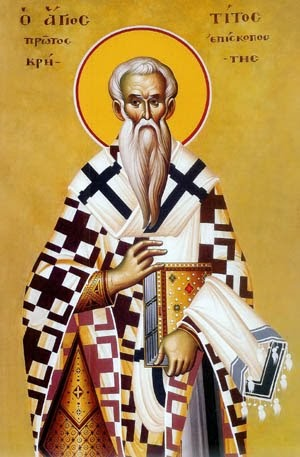
Orthodox icon of St. Titus the Apostle, the first Bishop of Crete

The rebellious persons, however, were not so easy to spot for many in the church – which is why Paul instructed Titus to deal with false teachers forcefully. They were not the real article, but came across as genuine.

Sometimes, you cannot tell a fake by the external appearance. In Christianity, and within the church, a person might give a good outward performance, but actually not be the real deal because they are full of bitterness and death on the inside with a heart far from God.

A sobering reality for devoted believers in God is that the church and Christianity can have people who are religious on the outside but not really Christ followers on the inside. Claiming to know God isn’t the same as actually knowing the Lord. It’s like putting perfume in a vase – it might smell like flowers but the flowers aren’t really there.  

The Apostle was pointed about how to handle those of the “circumcision group” because they were legalists who put heavy spiritual loads on people and were unwilling to help them carry those burdens. Paul, following the example of the Lord Jesus, was always laboring and challenging people into a genuine, real righteousness from the heart that would submit to God’s kingdom. 

And, much like Jesus before him, Paul kept having the Judaizers in the church undermining him, talking behind his back, and stirring up resentment against him. 

The rebellious people of the circumcision group were not helping believers know God better through active service, but only tried to talk a good line. Paul pointed them out to Titus because such persons were not strengthening the faith of others and enabling them to live a sound spiritual life.

The Judaizers did not practice what they preached – and even what they taught was neither gentle, nor had any grace. People need one another in the church to truly live for God; but if there are double standards, then heavy loads aren’t getting carried because some individuals think they are above helping, or think too little of themselves and believe God could not use them. 

In both cases the person declares, “Someone should do something!” Someone should give, someone should pray, someone should visit, someone should tell that person about Christ, someone should help. To which Paul (and Jesus) would say that someone is you.

We may believe we are genuine and think we are being helpful when we really are not. Whenever we plaster on fake smiles, only obey and serve when others are looking, and/or pretend like everything is just peachy keen when we are dying inside, then we are in the same category as the Judaizers. We have become in need of putting aside how we look to others and ask the God of grace to have mercy on us. 

It’s possible to be so obsessed about the right thing to say that we never say what is really on the inside because we think it isn’t spiritual enough and we fear looking bad. We then put up a spiritual façade, live into a false self, thereby and eventually becoming a false teacher.

The rebellious in the church are those who seek power, status, authority, and prestige. Respect and honor from others is everything to them, so they want the positions of prominence and insist on being recognized for whatever they say or do in the church.

But facades will not work for Christianity. The church is about integrity, mission, worship, and service – and not about acting with the spectator in mind, and seeking to elicit praise and respect from others. For such persons, it does not matter what’s on the inside as long as the outside looks good. 

Instead of being a liar (one whose outward actions and inner dispositions don’t match) and an evil brute (not acting with anyone else’s needs in mind or at heart) and a lazy glutton (always receiving but never giving) instead be a servant of others with a good character, a basic understanding of Holy Scripture, and a heart to know and love God. 

If there is a job that no one wants to do, I’ll do that job.

If there’s a lonely person, I’ll be with them.

If there’s a parking space up close, I’ll park in the back of the lot.

If there’s a need is someone’s life, I’ll meet that need.

If there’s a hardship someone has to endure, I’ll help carry that hardship.

If there’s a sacrifice to be made, I’ll make that sacrifice. Amen.

A New Outlook on Life (2 Corinthians 5:17-22)

Therefore, if anyone is in Christ, the new creation has come: The old has gone, the new is here! All this is from God, who reconciled us to himself through Christ and gave us the ministry of reconciliation: that God was reconciling the world to himself in Christ, not counting people’s sins against them. And he has committed to us the message of reconciliation. We are therefore Christ’s ambassadors, as though God were making his appeal through us. We implore you on Christ’s behalf: Be reconciled to God. God made him who had no sin to be sin for us, so that in him we might become the righteousness of God. (New International Version)

Everyone sees things (and people) only in part. We all have our own unique perspective and take on life. And we interpret life from that particular angle.

God has brought us new life, and with it, a new outlook on life, made possible by the person and work of Jesus Christ.

The Apostle Paul gained a new orientation on his life because he encountered God’s love through Jesus Christ. And his experience of love caused Paul to live for Christ and not for himself. He gained a new perspective.

Conversion to Christ and following Jesus brings a new outlook on life that enables us to live a good and beautiful existence on this earth for the sake of the church and the world.

God brings a new outlook to us in three major ways. The way we look at ourselves, others, and God:

  • No longer do we need to compulsively demean ourselves, nor think of ourselves as better than we really are. Instead, encountering a new life in Christ, we see that we are truly loved by God and worthy of giving and receiving love. See what great love the Father has lavished on us, that we should be called children of God! And that is what we are!… This is how we know what love is: Jesus Christ laid down his life for us. (1 John 3:1, 16, NIV)
  • No longer do we view others as tools to take advantage of; and neither do we look merely at one’s outward appearance. Instead, experiencing new life helps us to see other people as spiritual persons, important to God and needing divine love, just like us. This is love: not that we loved God, but that he loved us and sent his Son as an atoning sacrifice for our sins. Dear friends, since God so loved us, we also ought to love one another. No one has ever seen God; but if we love one another, God lives in us and his love is made complete in us. (1 John 4:10-12, NIV)
  • No longer do we view Christ as merely a good teacher or a moral man. Instead, our new life gives us the lenses of seeing Jesus as Savior and Lord. This is how we know that we live in him and he in us: He has given us of his Spirit. And we have seen and testify that the Father has sent his Son to be the Savior of the world. If anyone acknowledges that Jesus is the Son of God, God lives in them and they in God. And so we know and rely on the love God has for us. God is love. Whoever lives in love lives in God, and God in them. This is how love is made complete among us so that we will have confidence on the day of judgment: In this world we are like Jesus. There is no fear in love. But perfect love drives out fear because fear has to do with punishment. The one who fears is not made perfect in love. (1 John 4:13-18, NIV)

With new life comes a new perspective that results in a new way of life. I was once walking with my late mother-in-law through an art museum. We came upon a piece of art that didn’t necessarily speak to me; and I really didn’t understand it. But my mother-in-law happened to know the artist who painted the picture. And she told me about the person, why she painted it, and what she was trying to convey with her art. This information completely changed the way I saw the painting.

As we progressively get to know God, it really ought to transform how we view the Lord and look at Holy Scripture. And when we discover God in Christ, we see a caring Lord who went out of the way to become one of us, become the pioneer of our salvation, and bring about redemption and reconciliation through an ignominious death on a cross.

God has deliberately sought us and brought us back into the divine dance through Christ – which is why we celebrate. And the highest form of celebration is imitation, that is, becoming ambassadors representing who Jesus is by being just like him.

We imitate Christ through our relationships. Whenever we act with humility, mourn over the world’s sin, deal with others according to grace and gentleness, seek right relationships and keep everything above board, are pure, merciful, and peacemaking in all our dealings, and love and pray for our enemies – then we are encountering God, imitating Christ, and living a new life from a new vantagepoint.

Because Christians have been reconciled to God through Jesus, it transforms how we see people and our desires in our relationships with them; and it changes our stance and perspective on the God who initiated and brought salvation and reconciliation to us. I want to:

  • Grow in a relationship with God through worship, prayer, and scripture reading
  • Grow in relationships with other Christians in fellowship, service, and love
  • Grow in relationships with my neighbors and everyone I encounter, to be an ambassador for Jesus, as if God were working through me to accomplish the compassionate loving of the world and demonstrating how to live a blessed and peaceful life.

In finding our true spiritual home, we find life. There’s nothing quite like being able to live a peaceful existence because of God’s reconciling work in Christ on our behalf.

Lord God, bring us together as one, reconciled with you and reconciled with each other. You made us in your likeness, and you gave us your Son, Jesus Christ. Enable us to know you and one another in the spirit of grace and love. Amen.

Who Is Jesus? (John 7:40-52)

The Light of the World, by William Holman Hunt, c.1853

On hearing his words, some of the people said, “Surely this man is the Prophet.”

Others said, “He is the Messiah.”

Still others asked, “How can the Messiah come from Galilee? Does not Scripture say that the Messiah will come from David’s descendants and from Bethlehem, the town where David lived?” Thus the people were divided because of Jesus. Some wanted to seize him, but no one laid a hand on him.

Finally the temple guards went back to the chief priests and the Pharisees, who asked them, “Why didn’t you bring him in?”

“No one ever spoke the way this man does,” the guards replied.

“You mean he has deceived you also?” the Pharisees retorted. “Have any of the rulers or of the Pharisees believed in him? No! But this mob that knows nothing of the law—there is a curse on them.”

Nicodemus, who had gone to Jesus earlier and who was one of their own number, asked, “Does our law condemn a man without first hearing him to find out what he has been doing?”

They replied, “Are you from Galilee, too? Look into it, and you will find that a prophet does not come out of Galilee.” (New International Version)

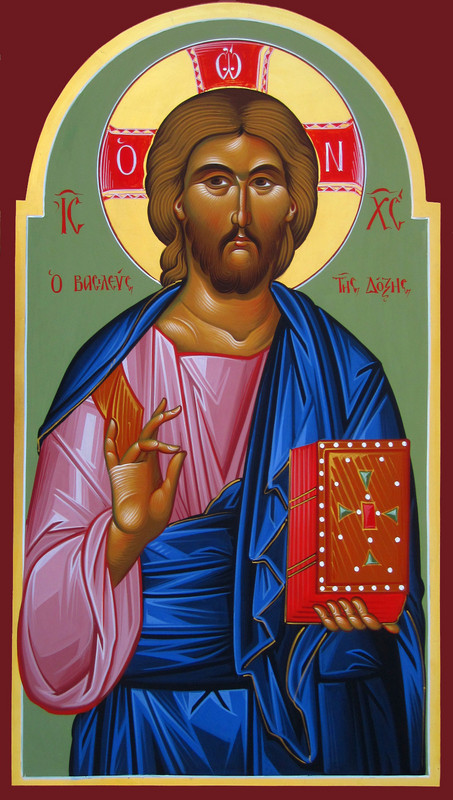
Orthodox Christian icon of Jesus Christ

There was a lot of buzz in Christ’s day of who Jesus really was. Prophet? Messiah? And, if Jesus really is a big deal, would he really come from Hicksville Nazareth? What about his credentials? His class? His pedigree?

Opinions on Jesus haven’t really changed all that much from the ancient world. They are still just as diverse now as when he was on this earth.

Unlike today, ancient people could not simply “Google” Jesus and find out where he was born and grew up. And they had no access to doing background checks in a matter of minutes to find out all kinds of things about him. Had the religious authorities bothered to do their homework and investigated Jesus, they would have found that, indeed, he was born of the Davidic line and in Bethlehem.

The short of it is that a chunk of the people simply assumed they knew Jesus wasn’t of proper Messiah credentials. They assumed and did not investigate because they did not want to know. No one can be faulted for ignorance. However, purposeful ignorance is perhaps the greatest of all sins, betraying a deep egoism of pride and prejudice.

In their hubris, the religious leaders sent the temple guards to bring Jesus in. Yet, in a clear demonstration of heavenly authority, the guards actually listened to Jesus and saw for themselves who he really is. Their simple confession testifies to Christ’s credibility. If one would but just see and listen for themselves, and engage in a genuine investigation, they could walk away finding truth.

6th-Century Byzantine mosaic of Jesus

Opponents of Jesus for the past two thousand years assume that Christians have been duped into taking the opiate of the people. Many think that followers of Christ were manipulated by religious hacks trying to gain power over others. But that’s a curious opinion, considering Jesus continually did just the opposite of that and was a champion for the poor, the powerless, and the marginalized persons of society.

When professional people with recognized degrees and competence do not believe you, nor take your own experience and learning seriously, what do you do?

Well, you could listen to them, or you could listen to your own gut telling you that you’re being gaslighted by a bunch of highly intelligent simpletons who are unfamiliar – are ignorant – of the faith you are familiar with.

What’s more, there are always smart and experienced people in the room who know better. Nicodemus was such a person. He was a serious scholar, and chose to speak up about these things. Authorities and credentials matter, yet of first importance is to know how to go about any sort of inquiry – rather than just passing over an objective investigation and assuming you know better.

Ethiopian artist depiction of Jesus teaching

For decades, I have (graciously) challenged others who do not believe in Jesus to actually read the Gospel accounts and at least engage in some minimal investigation – rather than giving opinions based on limited knowledge and secondary sources.

After all, as Nicodemus pointed out so long ago, shouldn’t we first give Jesus a fair hearing before we start dismissing him as nothing more than a religious figure that a bunch of people follow?

And I must also point out that this applies to us Christians, as well. Rather than waving aside Buddha or Muhammad or any other religious figure as false, don’t you owe their followers the basic respect of hearing them out before you dismiss them as fake, or in some cases, worse than that?

If you accuse another point of view, which is different than your own, as wrong or not real, without first hearing the accused and gathering objective evidence, then we really have no business getting uppity when another person accuses or dismisses our own faith.

Sadly, the colleagues of Nicodemus chose not to answer him but to instead engage in the age old practice of ad hominem argumentation by attacking the person, thereby deflecting having to give an answer.

People attack other people out of fear. And, in this case, it seems to me the religious leaders were downright afraid of investigating Jesus and giving him an honest hearing. Because if they did, they just might have their world turned upside-down; and they wanted the status quo to be maintained, at all costs, even if it meant ignoring the truth.

Jesus Washing the Feet of His Disciple, by Japanese artist Sadao Watanabe (1913-1996)

You don’t have to take my word on any of these things about Christ or Christianity. Read the Gospel of John for yourself – in one sitting if possible. Ingest the words. Drink in the experiences. Then, come and have a conversation with me.

Jesus, Lamb of God, have mercy on us.

Jesus, Bearer of our sins, have mercy on us.

Jesus, Redeemer of the world, give us your peace.

Jesus, Light of the world, shine in our hearts.

Jesus, Hope of all, be our companion on our way.

Jesus, Great Physician, heal our broken lives.

Jesus, Beloved Son of God, kindle within us the fire of your love. Amen.