Let the Little Children Come (Luke 18:15-17)

People were also bringing babies to Jesus for him to place his hands on them. When the disciples saw this, they rebuked them. But Jesus called the children to him and said, “Let the little children come to me, and do not hinder them, for the kingdom of God belongs to such as these. Truly I tell you, anyone who will not receive the kingdom of God like a little child will never enter it.” (New International Version)

I happen to believe that kids are closer to the kingdom of God than most adults.

Us big people have developed a lot of baggage over the years. And all that stuff tends to obscure God’s kingdom and the light of Christ within us.

Kids, however, especially small children, still haven’t discerned any veil between the seen and unseen worlds. They freely move between them both without any problem.

So, of course, Jesus wanted to be around children. If he had any homesickness at all, I’m sure the presence of kids made him feel at home more than anywhere else on this earth.

Jesus is our Immanuel, God with us.

The kingdom of God is here within us.

The disciples of Jesus had some difficulty with Christ’s branding of the message because it was not exclusive enough for them. They wanted limits on the us part.
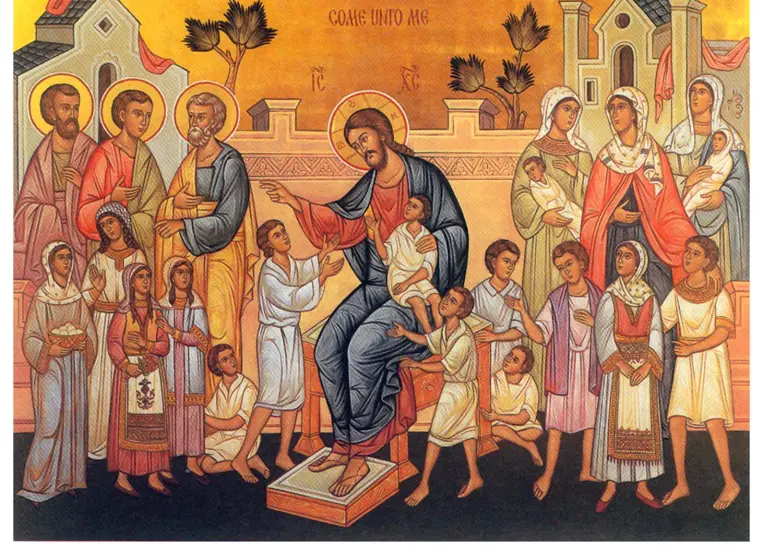
Kids are part of that mass of people that God is with. Children deserve as much or more attention than adults. More than simply saying that we care about kids, we need to be like Jesus. He let the children come to him and was intolerant of anyone preventing kids from doing so.

Since the disciples were, ironically, still living in a small world, they rebuked those who brought little children to Jesus.

We aren’t specifically told why the disciples rebuked the adults bringing children to Jesus. Maybe the children were making a lot of noise and were being a nuisance in the middle of Jesus’ teaching. Perhaps the disciples had Jesus on a tight time schedule and this bringing kids to Christ thing was causing a delay. It could be that the disciples simply saw children as an interruption to the “important” work of ministry. 

I tend to think that the disciples simply failed to appreciate the children. The dominate view of kids in the ancient world was to see them as potential adults. Kids were pretty low on the ladder of society. The disciples likely saw no reason for children to be involved in what was happening.

The babies and toddlers and small children were brought so that Jesus might place his hands on them and pray for them. That still seems to me to be the best reason to bring kids to Jesus. 

“This story teaches us that Christ does not receive only those who voluntarily come to Him of a holy desire and moved by faith, but also those who might not yet be old enough to realize how much they need His grace….  From this we gather that His grace reaches to this age of life also….  It would be cruel to exclude that age from the grace of redemption.”

John Calvin

“Jesus does not only save repentant adults; he also saves dependent children and all those whom we think are incompetent to respond to Jesus.”

Frederick Dale Bruner

Jesus flat out rebuked his disciples for hindering the little children from coming to him. He wanted just the opposite of what was taking place. Why? Because the kingdom of heaven belongs to such little people as these. 

As mentioned, children were at the bottom of the societal pecking order in the ancient world. Their place in that society was to be respectful and quiet, to speak only when spoken to, and to never interrupt an adult.

Yet, Jesus took the time to touch them and pray for them. He invited this interruption to his schedule. Christ bluntly told his disciples that they were the ones being the hindrance, not the kids.

I baptize all sorts of people, including kids and babies. Why? Because in baptism, I recognize that the smallest ones among us can come to this holy sacrament. I understand that in baptism the Holy Spirit begins and initiates the process of salvation that will take that little one from infancy to adulthood and eventual death. I discern that, ideally, the child grows to live into their baptism by recognizing by faith that Jesus died and rose from the dead and grants grace and forgiveness to all who come to him. 

In that process of salvation, of coming to know Jesus, we have the sacrament of the Lord’s Table to strengthen our faith and demonstrate to us that the saving work of Jesus that has been accomplished. It is a Table of grace for all the members of Christ’s Church. 

In my Reformed Christian tradition, we believe that Jesus is not physically, but spiritually present at the Table.  Because Jesus is present, we are able to receive the grace available to us as Christ’s members. So why, in light of this reality, and the words and practice of Jesus toward children, would we ever hinder and prevent the smallest members among us from participating at the Table?
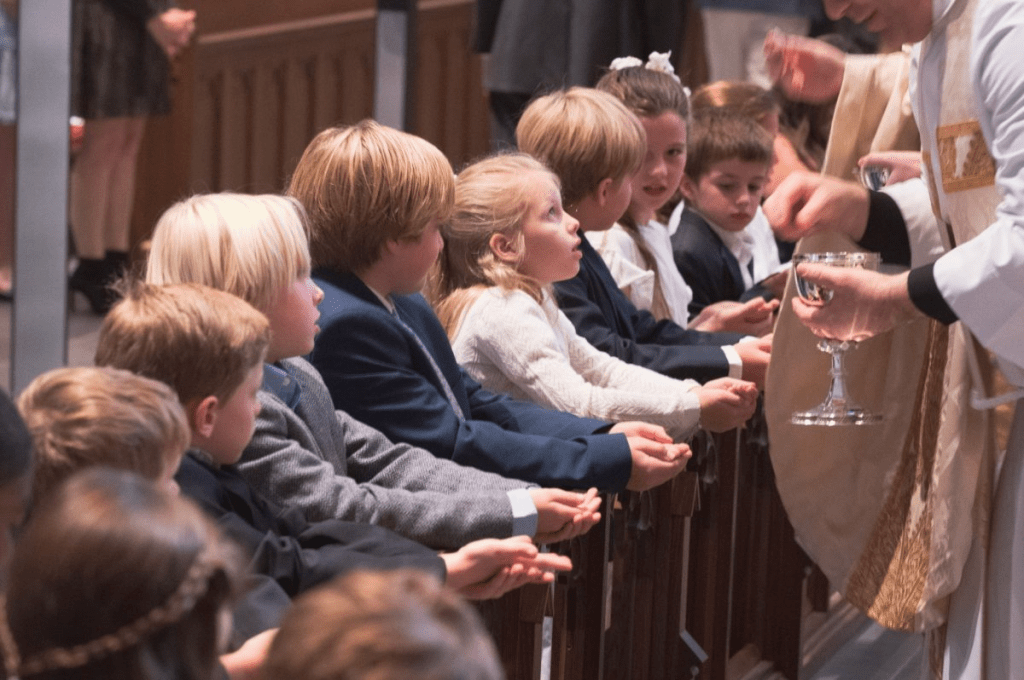
Here’s a thought: If Jesus himself were serving communion in a church, and a group of 2-year-old children came toddling up to the Table to see Jesus, would you stop them from doing so? Or much like the disciples, would you rebuke those bringing children to Jesus?

As for me, I’d rather not be rebuked by my Lord.

Jesus gave children the three gifts they most need: time, touch, and prayer. Parenting and teaching are holy vocations, and we have the wonderful privilege of bestowing these same gifts on our children, grandchildren, and students.

Time, touch, and prayer are ways we bless children. And, what’s more, as God’s children, we are all to approach Jesus and spend time with him, allow him to touch us, and interact with him through prayer. 

May we all have the humility to bend down at eye level to the littlest among us so that we and others will know that the kingdom of God is among us.


Think of the Needs of the Group (1 Corinthians 10:23-11:1)

Looking at it one way, you could say, “Anything goes. Because of God’s immense generosity and grace, we don’t have to dissect and scrutinize every action to see if it will pass muster.” But the point is not to just get by. We want to live well, but our foremost efforts should be to help others live well.

With that as a base to work from, common sense can take you the rest of the way. Eat anything sold at the butcher shop, for instance; you don’t have to run an “idolatry test” on every item. “The earth,” after all, “is God’s, and everything in it.” That “everything” certainly includes the leg of lamb in the butcher shop. If a nonbeliever invites you to dinner and you feel like going, go ahead and enjoy yourself; eat everything placed before you. It would be both bad manners and bad spirituality to cross-examine your host on the ethical purity of each course as it is served. On the other hand, if he goes out of his way to tell you that this or that was sacrificed to god or goddess so-and-so, you should pass. Even though you may be indifferent as to where it came from, he isn’t, and you don’t want to send mixed messages to him about who you are worshiping.

But, except for these special cases, I’m not going to walk around on eggshells worrying about what small-minded people might say; I’m going to stride free and easy, knowing what our large-minded Master has already said. If I eat what is served to me, grateful to God for what is on the table, how can I worry about what someone will say? I thanked God for it, and he blessed it!

So eat your meals heartily, not worrying about what others say about you—you’re eating to God’s glory, after all, not to please them. As a matter of fact, do everything that way, heartily and freely to God’s glory. At the same time, don’t be callous in your exercise of freedom, thoughtlessly stepping on the toes of those who aren’t as free as you are. I try my best to be considerate of everyone’s feelings in all these matters; I hope you will be, too.

It pleases me that you continue to remember and honor me by keeping up the traditions of the faith I taught you. (The Message)

“To know how to free oneself is nothing; the arduous thing is to know what to do with one’s freedom.”

Andre Gide

Extreme individualism wants what it wants and doesn’t give a thought about anyone else – which is why we always have such a peck of trouble in the world all the time.

We need to get a phrase into our language which will become a continual mantra we say and observe:

Think of the needs of the group.

Christianity is a religion of community, of being attentive to and meeting one another’s needs, and of caring about the common good of all persons throughout the world. Christians dishonor their Lord and buck their spiritual tradition whenever they go rogue and base everything they say and do on what sort of advantage it is for them without considering others.

Yes, believers in Jesus have freedom in Christ. The cross has released the shackles that kept us in sin’s bondage. But, no, that doesn’t mean we get to do whatever we want, whenever we want. That’s the way individualism looks at it. That’s not how a communal people, the church, are to look at it.

Freedom hinges on two very important and seemingly small grammar prepositions: from and to.

Freedom always involves two elements:

  1. Freedom from what hinders or oppresses us.
  2. Freedom to become who we are meant to be.

In Christianity, believers are saved from sin, death, and hell – released from guilt and shame. There is redemption from the pit of despair. The bonds that hindered are now broken through the cross of Christ. The power of the world, the sinful nature, and the devil are taken away.

Yet, in no way does that now mean that we now get to do whatever we want, as if we’ve finally outgrown childhood and parental authority.

The extreme individualist Christian looks at freedom solely from this vantage. As a result, such a person considers the church as nonobligatory, involvement in issues of justice as optional, the use of personal funds and resources as discretionary, and accountability to others as arbitrary.

Such individualism sees Christianity as a fire insurance policy from hell, and a ticket punched for heaven. Until Christ returns, the reasoning goes, I can do whatever the heck I want. It’s my life, not yours.

Christians, however, are still servants. Whereas we were once enslaved to the dark forces of this world, now we are slaves to Christ. We exchanged masters. Satan is no longer the deceitful and lying task master over us. We are now under new management and have a new Master, the Lord Jesus. We’ve changed allegiances.

And now, submitted to Christ, we embrace our mandate of freedom to become whom we were always meant to be: At peace with our Creator and in harmony with all creation. We are now free to enjoy right relationships with God and others, to walk in faith, hope, and love, and to bless both the church and the world.

The Christian’s freedom came at a price: the very blood of Christ Jesus. Therefore, we are not to abuse that freedom by focusing solely on our freedoms from all that once bound us. We are also responsible and accountable for using that freedom in going to the world and proclaiming the gospel in word and sacrament, as well as loving God and neighbor.

Freedom is only freedom when it has the well-being of everyone in mind.

Think of the needs of the group.

Lord God, almighty and everlasting Father: Help us to live into the freedom you have brought to us. May we exercise our freedom, with the heart of a faithful disciple of Jesus Christ, to serve your purposes. Unite us, protect our sacred liberties and rights, and defend us from every evil. Strengthen your people as a foundation of moral clarity, justice, love, and gospel proclamation. Grant all this by the power of your Holy Spirit and in the Name of Jesus Christ, your Son, our Lord. Amen.

What’s the Point of All This Suffering? (2 Thessalonians 1:3-12)

We ought always to thank God for you, brothers and sisters, and rightly so, because your faith is growing more and more, and the love all of you have for one another is increasing. Therefore, among God’s churches we boast about your perseverance and faith in all the persecutions and trials you are enduring.

All this is evidence that God’s judgment is right, and as a result you will be counted worthy of the kingdom of God, for which you are suffering. God is just: He will pay back trouble to those who trouble you and give relief to you who are troubled, and to us as well. This will happen when the Lord Jesus is revealed from heaven in blazing fire with his powerful angels. He will punish those who do not know God and do not obey the gospel of our Lord Jesus. They will be punished with everlasting destruction and shut out from the presence of the Lord and from the glory of his might on the day he comes to be glorified in his holy people and to be marveled at among all those who have believed. This includes you because you believed our testimony to you.

With this in mind, we constantly pray for you, that our God may make you worthy of his calling, and that by his power he may bring to fruition your every desire for goodness and your every deed prompted by faith. We pray this so that the name of our Lord Jesus may be glorified in you, and you in him, according to the grace of our God and the Lord Jesus Christ. (New International Version)

There are 66 books in the Bible. Every one of them, without exception, addresses human suffering. What’s the point of all this suffering? Isn’t salvation supposed to deliver me from all that mess? Why should I even read this dumb blog post?

All of the Apostle Paul’s epistles (a fancy way of saying “letters”) contain a perspective on suffering. And Paul’s reasoning and understanding of suffering goes like this:

  1. Jesus suffered. Throughout his earthly ministry, Christ endured opposition, trouble, and malevolence, especially in a cruel crucifixion and death. Yet, his suffering was the means of redeeming the world.
  2. Christians suffer. Throughout our earthly ministry, we will endure opposition, trouble, and malevolence; especially in a commitment to live the words and ways of Jesus. Yet, our suffering is the means of participating with Christ in redeeming the world.
  3. Suffering is mandatory. It is a significant means of spiritual growth for the Christian. And it is an important way of displaying Christianity’s virtues to a spiritually lost world.
  4. Misery is optional. There’s no solid biblical reason to become miserable or nihilistic with all the seemingly random suffering of the world. It’s hubris to think that my perspective on the subject of suffering and God is the right one.
  5. God is just. And Jesus is the rightful Judge of malevolent troublemakers.
  6. Christians, too, are to be just. Christians, however, are not the rightful judges; thus, there is to be neither executing of judgment on troublemakers nor any judgmentalism in Christ’s church.
  7. Suffering before glory. We are not above our Lord. Jesus rose from death, ascended to heaven, and is glorified. It had to happen that way. It has to happen that way for us, too. There must be suffering before there is glory.
  8. Suffering is temporary. Just like their Lord, Christians, too, shall rise from death, ascend to heaven, and participate in God’s glory. The suffering is for but a moment, but the glory is everlasting.

This reality of suffering and its purpose begs several questions of us. If this is all true (which it is) then:

  • Why do Christians spend so much of their spiritual energy praying and working toward avoiding suffering at any and all costs?
  • What does this tell us about ourselves?
  • Where do we feel the pull to resist change?
  • Will we allow suffering to be our teacher, or not?
  • How might our suffering bring justice and righteousness to a lost world?

Suffering is the mechanism by which spiritual growth is activated. If Christians never faced suffering, there would be no need for faith. That’s because faith is not static but active; it is meant to be regularly used, and if it is not, then belief atrophies and is worth nothing. Much like a muscle, faith needs daily exercise.

Furthermore, the Christian’s exercise of faith is not only for personal spiritual wellness but also for the benefit of others. To put the matter another way, Christians put blood, sweat, and tears into justice for the common good of everyone – thereby putting themselves in a position to be leveled with unjust vitriol. Whenever we challenge the power of another’s unjust actions, the inevitable consequence is fireworks in the form of catching some suffering.

This is why suffering for the right reasons is a sign of God’s grace in one’s life. We aren’t supposed to suffer because of our own stupidity and bad decisions; we are to suffer by our advocacy of the  powerless and the voiceless, thus redeeming time, energy, and resources for God’s kingdom. And it won’t be just a little bit of suffering; it will be a lot.

“If we are to enter God’s kingdom, we must pass through many troubles.”

Acts 14:22, CEB

We may get rather impatient with all this suffering. Yet, it’s also a sign and demonstration of God’s great patience – not wanting anyone to perish but all to enter eternal life. The least we can do is endure hardship for the sake of another’s life.

The Lord isn’t slow to do what he promised, as some people think. Rather, he is patient for your sake. He doesn’t want to destroy anyone but wants all people to have an opportunity to turn to him and change the way they think and act. (2 Peter 3:9, GW)

And if we persevere to the end, we will be vindicated; and malevolent troublemakers will have to contend with God. When we see the injustice of evil winning and good people suffering, it’s easy to get discouraged. But it won’t always be this way. Evil is temporary. Love is eternal.

There must be suffering. Yet, there will also be glory. Our trials and tribulations are but for a moment. But God’s favor lasts forever.

So then, earnest and heartfelt prayer is in order and always in season:

Great God of justice and righteousness, we pray that you will make us perfectly fitted for what you have called us to be. We ask that you fill our good ideas and acts of faith with divine energy so that it all amounts to something. May you cause our lives to honor the name of Jesus; and may we soon experience the day when Christ honors us. Your grace is sufficient for us – whether in good times or bad, through Jesus Christ our Lord in the power of the Holy Spirit. Amen.

Pay Attention to the Word (2 Peter 1:16-21)

For we did not follow cleverly devised stories when we told you about the coming of our Lord Jesus Christ in power, but we were eyewitnesses of his majesty. He received honor and glory from God the Father when the voice came to him from the Majestic Glory, saying, “This is my Son, whom I love; with him I am well pleased.” We ourselves heard this voice that came from heaven when we were with him on the sacred mountain.

We also have the prophetic message as something completely reliable, and you will do well to pay attention to it, as to a light shining in a dark place, until the day dawns and the morning star rises in your hearts. Above all, you must understand that no prophecy of Scripture came about by the prophet’s own interpretation of things. For prophecy never had its origin in the human will, but prophets, though human, spoke from God as they were carried along by the Holy Spirit. (New International Version)

The Bible is a set of living documents. It breathes with a revitalizing and reliable message about Jesus Christ.

Rather than being merely an ancient book to be displayed as some sort of museum artifact on a coffee table, Holy Scripture has demonstrated amazing resilience of use and pertinence throughout the ages.

Millions of people have discovered it’s riches; and have found the Bible’s message of knowing Christ and him crucified, died, risen, and coming again as their hope and salvation. Indeed, God’s Word to people is a gracious revealing of God to humanity so that all persons may reconnect with divinity.

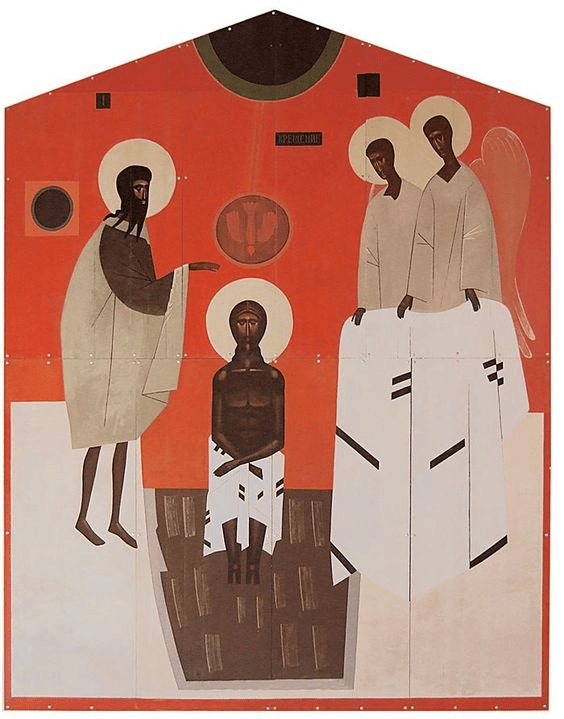
The earthly ministry of Christ had eyewitnesses and earwitnesses. The witness above all witnesses was the Most High who audibly affirmed Jesus with a voice from heaven:

“This is my dearly loved Son, who brings me great joy.” (Matthew 3:17, NLT)

Baptism of Christ, by Vitaly Melnichuk, 2009

Christianity is a religion of the book. Scripture unites us with believers across the world and throughout history. The Bible is to the Christian what weights and barbells are to a bodybuilder. 

The people of God need Holy Scripture, God’s Word, in order to spiritually grow and become mature. Christian character formation cannot truly occur apart from the continuous repetitions of reading the text of Scripture, and letting it build strength into the muscles of the soul.

Scripture is a powerful unifying force within the life of God’s people. We may not all explain every Bible verse in exactly the same way (hence the many different Christian traditions) but believers share a common desire to honor, apply, and obey God’s Word. Ultimately, a passion to listen, talk about, and apply God’s Word brings believers in Jesus together, rather than separates us. 

Perhaps because the average American household today has at least three or four Bibles, we take for granted the availability of God’s Word. It is always at our fingertips, on our smartphones and computers. Yet, because it is always present and available, we may let the busyness and business of life keep us from paying attention to it. 

A commitment to reading and listening to Holy Scripture ought not be done quickly or mechanically, and certainly not half-heartedly. For the Word to penetrate and seep into our souls, we must take the time to listen carefully and slowly.

A first century rabbi, Akiva, once noticed a tiny stream trickling down a hillside, dripping over a ledge on its way toward the river below. Below was a massive boulder. The rock bore a deep impression. The drip, drip, drip of water over the centuries had hollowed away the stone. Rabbi Akiva commented, “If mere water can do this to hard rock, how much more can God’s Word carve a way into my heart of flesh?”

Water flowing over a rock, all at once, leaves it unchanged. It is the slow but steady impact of each small droplet, year after year, decade after decade, that completely reforms the stone.

O how we desire quick answers to our questions! Yet we must take the time to prayerfully listen and reflect on God’s Word and allow it to do it’s work on us and in us. Truth is revealed over many days, months, and years. Big splashes aren’t usually God’s way of doing things. Instead, the slow drip of careful study, contemplative prayer, and meditative reflection, day after day, year after year, shapes us and spiritually forms us into the likeness of Christ.

Thus, a patient, humble, and teachable spirit is necessary. Sometimes the Bible is not apparently relevant. We oftentimes need others to help us and to encourage one another to stick with reading and learning, even when we aren’t sure about what it is saying. 

Rightly interpreting Scripture happens in community, both in present local churches and small groups and in the community of saints who have gone before us. It doesn’t occur in isolation.

Always an appropriate response to hearing God’s Word is to address and the problems of others and the issues of our day. That’s because God is not just concerned about you and me, but about other people, as well. 

What do you suppose would happen if we all committed to carefully reading and listening and meditating, even memorizing God’s Word on a daily basis? Would it transform our worship? Make a difference in our relationships? Change how we do life together?

Attention, people of God and of the Book! God is our God, the One and only!

Love the Lord your God with your whole heart:

Love God with all that is in you; love the Lord with all you’ve got! 

Write these foundational commands I’ve given you on your hearts. Get them inside of you. Then, get them inside your children. 

For this to happen, talk about God’s Word at home when you are eating supper together and when you are working or playing with each other. Start your day with God’s Word when you get up in the morning and end your day with God’s Word when you go to bed at night. 

Put God’s Word on your refrigerator and your car’s dashboard; have it on your smartphones and let it be available to you anywhere and anytime. Use every opportunity you have to incessantly chatter about God’s Holy Word.

(Deuteronomy 6:4-9, contemporary paraphrase)

Pay attention to the Word made flesh and the written Word proclaimed. It makes all the difference.

Our Great Physician, Your Word is like alcohol – when poured on an infected wound, it burns and stings, but only then can it kill germs. If it doesn’t burn, it doesn’t do any good. 

Father, we are all hungry baby birds this morning. Our heart-mouths are gaping wide, waiting for you to fill us. A cold wind seems to have chilled us. Wrap us in the blanket of your Word and warm us up. 

Lord, we find your Word like cabbage. As we pull down the leaves, we get closer to the heart. And as we get closer to the heart, it is sweeter.

–Daily Prayers of Haitian Christians, translated by Eleanor Turnbull (1924-2020) missionary to Haiti for over 50 years