Seek the Least and the Lost (Matthew 18:1-14)

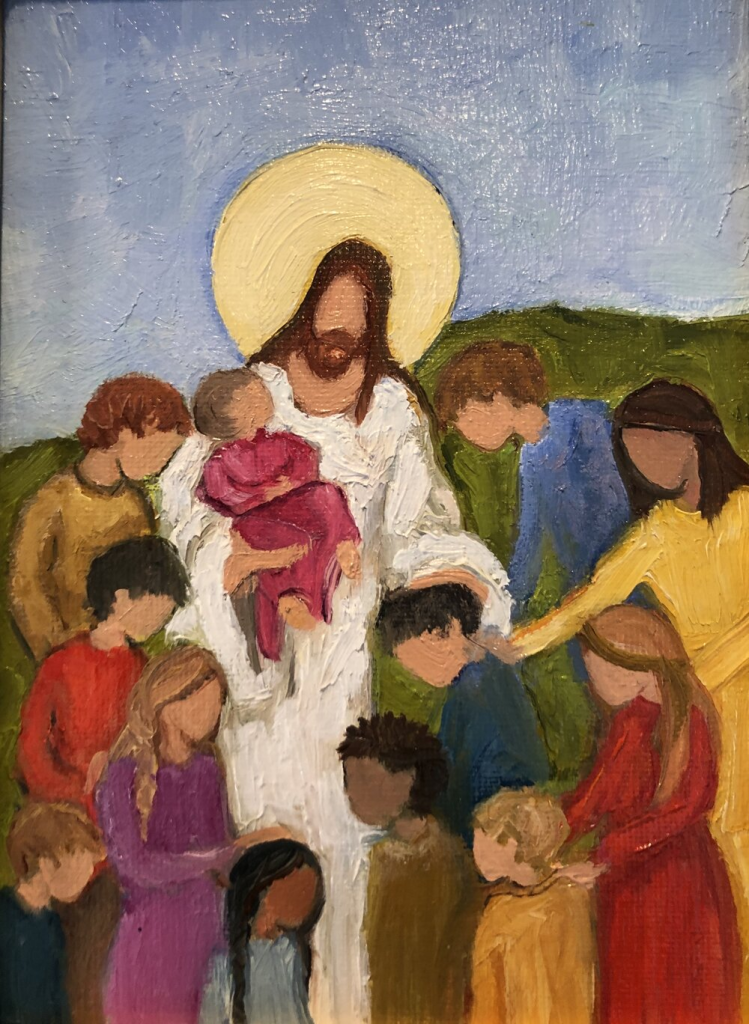
Child of God by Suzi Olson

At that time the disciples came to Jesus and asked, “Who, then, is the greatest in the kingdom of heaven?”

He called a little child to him and placed the child among them. And he said: “Truly I tell you, unless you change and become like little children, you will never enter the kingdom of heaven. Therefore, whoever takes the lowly position of this child is the greatest in the kingdom of heaven. And whoever welcomes one such child in my name welcomes me.

“If anyone causes one of these little ones—those who believe in me—to stumble, it would be better for them to have a large millstone hung around their neck and to be drowned in the depths of the sea. Woe to the world because of the things that cause people to stumble! Such things must come, but woe to the person through whom they come! If your hand or your foot causes you to stumble, cut it off and throw it away. It is better for you to enter life maimed or crippled than to have two hands or two feet and be thrown into eternal fire. And if your eye causes you to stumble, gouge it out and throw it away. It is better for you to enter life with one eye than to have two eyes and be thrown into the fire of hell.

“See that you do not despise one of these little ones. For I tell you that their angels in heaven always see the face of my Father in heaven.

“What do you think? If a man owns a hundred sheep, and one of them wanders away, will he not leave the ninety-nine on the hills and go to look for the one that wandered off? And if he finds it, truly I tell you, he is happier about that one sheep than about the ninety-nine that did not wander off. In the same way your Father in heaven is not willing that any of these little ones should perish. (New International Version)

“A person’s a person no matter how small.”

Horton Hears a Who! By Dr. Seuss

Jesus sees, honors, and protects little people. 

Horton the elephant spoke to people completely unconcerned for all the residents of Who Ville that lived on a clover. Dr. Seuss chose to make Horton an elephant, a large creature able to hear with big ears and be attentive to the small. Bigness can only come from becoming small.

Little people, the ones others fail to notice, matter to Jesus. And so, they ought to matter to us, too. Since Jesus sees and hears them, we should, too. 

Jesus often mingled with little people – children, women who had no rights, social misfits like lepers, the chronically ill, religious outsiders, tax collectors, and prostitutes. 

Our world is filled with similar people – angry adolescents, unwanted babies, forgotten old people, the mentally ill, moral failures, immigrants and refugees. If we have eyes to see and big ears to hear, we will notice the poor whom no one else hears. They are around us, even if they are invisible to us.

We’re all just little people before God. So, let’s be humble enough to see the little people around us. 

Who’s the greatest in the kingdom of heaven?

That question drips with a desire to position and posture oneself in a place of prominence and power. In other words, the questions really is, “How do I climb the ladder in God’s kingdom to be the most important person?”

In response, Jesus graciously and calmly called a child to him and answered that unless we become like a little child, we have no future with God. There’s only one way to have what you want, and it’s through humility.

Children had no status or rights in the ancient world. Ancient culture was not remotely youth or kid oriented. Kids were generally viewed as just potential adults. They were seen as weak, small, and unable to contribute much of anything until they grew up. 

Disciples of Jesus are to become like children, that is, lowly. Followers of Christ must give up their status and desire to be important. They can only be big if they become small.

Only by getting on the same level as little people can we ever welcome Jesus.

Why become like a little child?

Because a person who is attentive to the lowly is actually attentive to Jesus himself. 

We are not to welcome people because they are great, wise, rich, powerful, good-looking, and just like you and me – but because they are noticed by Jesus.

The proud person who seeks prominence is always looking for greener pastures and things to do that will impress people who will help advance them up the ladder of success. They do not care who gets stepped on along the way. 

The Christian, however, is to give all people, including the little ones and the marginal ones, the time of day and treat them as important.

How does one become humble and avoid sin?

Those who receive these little ones receive Jesus; those who reject these little ones reject Jesus, and by their lack of loving them cause them to sin. This, according to Jesus, is damnable behavior, and, so, must be dealt with in a radical manner because hell is worth avoiding at any cost. 

So then, the proud person must hack off part of themselves because it is better to be maimed for the rest of your life than enter hell. This is just one reason why a lot of folks stopped following Jesus.

Yet, Jesus insists that if, for example, your pursuit of money consumes you and you hold onto it and avoid the poor, give it away! If you hold onto your time like a clock miser and let it become your “precious” then you must get rid of it, you must give it away! It is better for you to have nothing than to have plenty of time and money and be thrown into hell fire!

In short, we should seek the lost.  

Instead of waiting for them to show up, or to seek us out, we must go get them.

The lost matter to God.

Those who are on the fence and are half-hearted in their devotion to Jesus and the mission of the church, matter to God. So are the spiritually indifferent and the not very committed. 
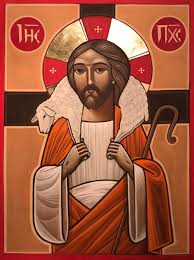
Coptic Church icon of Jesus the Good Shepherd

The temptation for spiritually serious persons is to look down on these lukewarm people. Jesus knew how easy it is to berate and despise such persons in our hearts:

To some who were confident of their own righteousness and looked down on everyone else, Jesus told this parable: “Two men went up to the temple to pray, one a Pharisee and the other a tax collector. The Pharisee stood by himself and prayed: ‘God, I thank you that I am not like other people—robbers, evildoers, adulterers—or even like this tax collector. I fast twice a week and give a tenth of all I get.’

“But the tax collector stood at a distance. He would not even look up to heaven, but beat his breast and said, ‘God, have mercy on me, a sinner.’

“I tell you that this man, rather than the other, went home justified before God. For all those who exalt themselves will be humbled, and those who humble themselves will be exalted.” (Luke 18:9-14, NIV)

If we are willing to humble ourselves, we can learn the hard practice of not hating others for what we hate in ourselves. 

We hate it when we are lax in our devotion to Christ; fail to accomplish what we want; miss opportunities to do good; and neglect to pray, give, or serve. So, when we see this as a pattern in someone else’s life, we may easily despise them in our hearts.

Turns out that many serious Christians must be converted as well – to seeing God’s heart for these despised little people.

What should be done about lost people?

Human reasoning might say, “Ah, let that one go; we have 99.” But God’s reasoning is, “I really care for that one.” Jesus wants to convert us to the statistically unimportant. 

If a person does not contribute to the life of the flock, do we care?

The parable contained within today’s Gospel lesson has become so familiar that it no longer shocks us. What kind of shepherd would be so stupid to abandon the entire flock and expose them to the dangers of wild animals and the harsh environment in order to search, maybe even unsuccessfully for one stinky, messed up, knurly, ugly, eats-too-much, sheep? 

And then, what’s more, when finding such a sheep, that shepherd rejoices more about this one sheep found than over the more dependable and attractive members of the flock? 

Only such a “foolish” shepherd can represent God’s concern for each one straying child.

Our Father in heaven is not willing that any of these little people should be lost. Therefore, we are to seek the lost.

Conclusion

Antonio Stradivarius (1644-1737) was an Italian violin maker. His violins are now the most prized violins ever made because of the rich and resonating sound they produce. The unique sound of a Stradivarius violin cannot be duplicated.

Surprisingly, these prized violins were not made from treasured pieces of wood, but instead were carved from discarded lumber. Stradivarius, who was very poor and could not afford fine materials like his contemporaries, got much of his wood from the dirty harbors where he lived. He would take those waterlogged pieces of wood to his shop, clean them up, and from those pieces of trashed lumber, he created instruments of rare beauty.

It has since been discovered that while the wood floated in those dirty harbors, microbes went into the wood and ate out the center of those cells. This left just the fibrous infrastructure of the wood that created resonating chambers for the music. From wood that nobody wanted, Stradivarius produced violins that everybody wants.

God has a plan. It is a plan to build a benevolent realm using not just the big and important, but the lowly and despised. 

May we all participate with the Lord and humble ourselves for kingdom purposes.

Repent! (Luke 3:1-18)

John the Baptist Preaching by Frank Brangwyn (1867-1956)

In the fifteenth year of the reign of Tiberius Caesar—when Pontius Pilate was governor of Judea, Herod tetrarch of Galilee, his brother Philip tetrarch of Iturea and Traconitis, and Lysanias tetrarch of Abilene—during the high-priesthood of Annas and Caiaphas, the word of God came to John son of Zechariah in the wilderness. He went into all the country around the Jordan, preaching a baptism of repentance for the forgiveness of sins. As it is written in the book of the words of Isaiah the prophet:

“A voice of one calling in the wilderness,
‘Prepare the way for the Lord,
    make straight paths for him.
Every valley shall be filled in,
    every mountain and hill made low.
The crooked roads shall become straight,
    the rough ways smooth.
And all people will see God’s salvation.’”

John said to the crowds coming out to be baptized by him, “You brood of vipers! Who warned you to flee from the coming wrath? Produce fruit in keeping with repentance. And do not begin to say to yourselves, ‘We have Abraham as our father.’ For I tell you that out of these stones God can raise up children for Abraham. The ax is already at the root of the trees, and every tree that does not produce good fruit will be cut down and thrown into the fire.”

“What should we do then?” the crowd asked.

John answered, “Anyone who has two shirts should share with the one who has none, and anyone who has food should do the same.”

Even tax collectors came to be baptized. “Teacher,” they asked, “what should we do?”

“Don’t collect any more than you are required to,” he told them.

Then some soldiers asked him, “And what should we do?”

He replied, “Don’t extort money and don’t accuse people falsely—be content with your pay.”

The people were waiting expectantly and were all wondering in their hearts if John might possibly be the Messiah. John answered them all, “I baptize you with water. But one who is more powerful than I will come, the straps of whose sandals I am not worthy to untie. He will baptize you with the Holy Spirit and fire. His winnowing fork is in his hand to clear his threshing floor and to gather the wheat into his barn, but he will burn up the chaff with unquenchable fire.” And with many other words John exhorted the people and proclaimed the good news to them. (New International Version)

John the Baptist was the sort of guy that people either loved or hated. When I think of John, I picture a hippy driving a Volkswagen bus with bumper stickers plastered everywhere with sayings like, “Get Right or Get Left,” “Turn or Burn,” “Repent or Regret,” “Jesus Is Coming to Take Over,” “Here Comes the Judge,” “Armageddon Outta Here!” and “Axe Me What’s Next.”

He tended toward seeing things as black and white. John wasn’t much of a gray area sort of dude.

Yet, no matter what one things of John the Baptist, he was affirmed by Jesus as doing exactly what he was supposed to do: Prepare for the coming of the Lord. (Matthew 3:13-17, 11:1-19)

And the best way to prepare, as John pointed out, is to repent.

Repentance is one of those big biblical words that sometimes gets lost as being archaic and out of touch – sort of like a hippy John the Baptist. Yet, without repentance, nobody becomes a Christian and no one lives a fruitful life following Jesus. 

To “repent” simply means to change our minds – to stop doing one thing, and to start doing another. 

Orthodox icon of John the Baptist

Throughout Holy Scripture, repentance means to stop sinning and start worshiping God. “Sin” and “worship” are also words that don’t get used a lot and tend to get relegated as antiquated language.

To “sin” is to say and do things which harm others, or to fail to say and do things which are helpful. (Deuteronomy 15:9; Proverbs 10:19; Romans 14:23; James 4:17; 1 John 3:4, 5:17)

To “worship” means to bend the knee, to submit and honor a deity. (Psalm 95:6; Matthew 4:8-10; Revelation 4:10, 5:14, 7:11, 11:16, 19:10,

The prophet Isaiah saw a vision of God in the temple, a self-revealing of the One true God that caused him to be completely unraveled with repentance.

The Apostle Peter saw the Lord Jesus in his immensity and power through a miraculous catch of fish. He then fell at the Lord’s feet and said, “Go away from me, Lord; I am a sinful man.” (Luke 5:8) 

John the Apostle had a vision of Jesus Christ in all his glory and heard his voice. John fell at the Lord’s feet as though dead. (Revelation 1:12-17) 

Ezekiel the prophet had a vision of God and saw the appearance of God’s glory. Then, he fell facedown. (Ezekiel 1:25-28) 

Even Daniel, perhaps the most righteous person of all time, saw a vision of God in all his glory and fell prostrate with his face to the ground, totally overwhelmed with God’s holiness and human sinfulness. (Daniel 8:15-18)

Methinks there is so much sin in the world and so much indifference in the church because people are not seeing a vision of a glorious and holy God. Because if they did, they would be completely beside themselves and see sin’s terrible foulness and degradation; they would repent from all the ways in which they have been apathetic and complacent in living their lives.

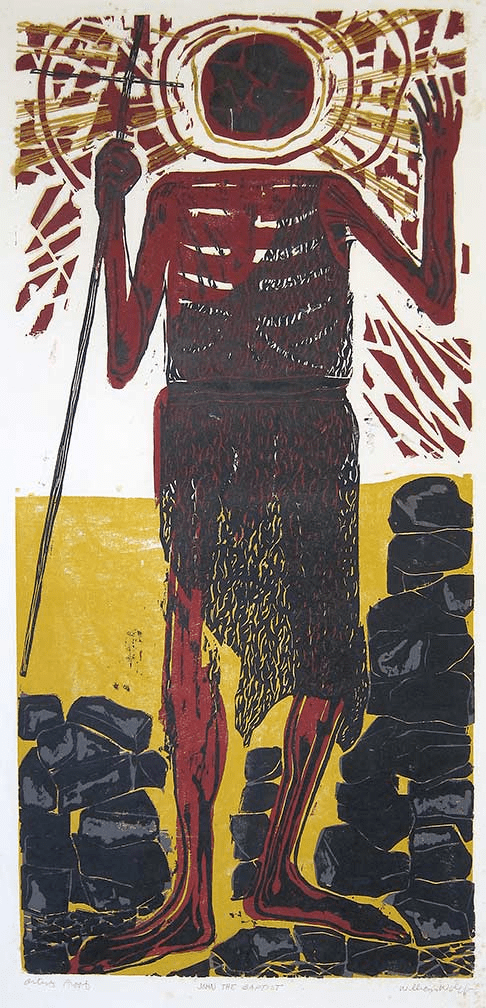
John the Baptist by William Wolff, 1968

We must, therefore, put ourselves in a position to see and hear God so that we can turn from all the obstacles that prevent us from experiencing Father, Son, and Spirit. 

And those hindrances to experiencing God are legion, including: 

  • Passiveness toward God’s Word and God’s creation, thus causing a lack of mindfulness and attention to the Holy Spirit.
  • Preoccupations and daydreams that prevents availability to the words and ways of Jesus.
  • Poverty of sleep, healthy habits, and an overall poor well-being that dulls the spiritual senses and prevents awareness of God.
  • Paucity of spiritual practices and disciplines that would put us in a position to experience a vision of God.

We must repent of all the ways we do not pay attention to God. The Lord is coming but we don’t perceive it.

  1. What, then, must we do to put ourselves in a position to see and hear God?
  2. In what ways might we corporately foster a sense of the holy God? 
  3. How will repentance fit into both our personal and corporate worship? 
  4. Have we identified and named the things that grieve the heart of God so that we can repent of them? 
  5. What is one action step you will take in response to this blog post?

None of us need to be like John the Baptist in order to be godly. We don’t have to eat locusts and be black-and-white thinkers. But we do all have to repent of the ways we make the road difficult by placing obstacles in the way of experiencing Jesus.

Most merciful God, we confess that we have sinned against you in thought, word, and deed, by what we have done, and by what we have left undone. We have not loved you with our whole heart; we have not loved our neighbors as ourselves. We are truly sorry and we humbly repent. For the sake of your Son Jesus Christ, have mercy on us and forgive us; that we may delight in your will, and walk in your ways, to the glory of your Name. Amen.

Are You Ready for Advent? (Matthew 24:36-44)

Advent Starry Night #5 by Virginia Wieringa

Jesus said, “But about that [judgment] day or hour no one knows, not even the angels in heaven, nor the Son, but only the Father. As it was in the days of Noah, so it will be at the coming of the Son of Man. For in the days before the flood, people were eating and drinking, marrying and giving in marriage, up to the day Noah entered the ark; and they knew nothing about what would happen until the flood came and took them all away. That is how it will be at the coming of the Son of Man. Two men will be in the field; one will be taken and the other left. Two women will be grinding with a hand mill; one will be taken and the other left.

“Therefore keep watch because you do not know on what day your Lord will come. But understand this: If the owner of the house had known at what time of night the thief was coming, he would have kept watch and would not have let his house be broken into. So you also must be ready, because the Son of Man will come at an hour when you do not expect him. (New International Version)

The best way of observing the first advent of Christ, his incarnation, is by preparing ourselves for his second advent, his return to the earth.

Just because there is sun today doesn’t mean everyday will be that way. The storm clouds are gathering; the Day of the Lord is at hand. Will you be ready?

Satan once called to him some demons of hell and said he wanted to send one of them to earth to aid women and men in the ruination of their souls. He asked which one would want to go.

One creature came forward and said, “I will go.” Satan said, “If I send you, what will you tell the children of men?” He said, “I will tell the children of men that there is no heaven.” Satan said, “They will not believe you, for there is a bit of heaven in every human heart. In the end everyone knows that right and good must have the victory. You may not go.” 

Then another came forward, darker and fouler than the first. Satan said, “If I send you, what will you tell the children of men?” He said, “I will tell them there is no hell.” Satan looked at him and said, “Oh, no; they will not believe you, for in every human heart there’s a thing called conscience, an inner voice which testifies to the truth that not only will good be triumphant, but that evil will be defeated. You may not go.” 

Then one last creature came forward, this one from the darkest place of all. Satan said to him, “And if I send you, what will you say to women and men to aid them in the destruction of their souls?” He said, “I will tell them there is no hurry.” Satan said, “Go!” (C.S. Lewis, The Screwtape Letters)

Most people’s crime in not some gross sin, but indifference, without much thought to a coming judgment. It seems we are all spiritual procrastinators. Why do today what we can put off till tomorrow? 

But the spiritually indifferent won’t know what hit them. 

So we need to be deeply concerned for the coming Day of the Lord, which may be very soon. 

The question for us is not, “When will Christ return?” Rather, the question is, “Are you ready for Christ’s return?” We must:

  • Keep watch, stay alert, and be ready, like a watchman on an ancient city wall scanning the horizon for an advancing army.
  • Remain vigilant and not forget that Jesus is coming again. 
  • Live every moment of our lives in light of the promise of Christ’s return. 
  • Be busy (not busybodies) because we don’t know the day of Christ’s second advent.

What does it mean to keep watch, be ready, and stay alert? 

In between these two advents of Christ, believers are to bear witness to a world going about their merry way unaware of the judgment that is about to overtake them. Like Noah, we actively build the ark of the church instead of living as if Jesus weren’t coming.

Noah was a preacher of righteousness in both word and deed, building an ark in a place and around a people who had never seen rain. What’s more, constructing the massive ark took a solid one-hundred years. This was no easy feat.

Like Noah, we must plug away and be faithful stewards, doing the tedious and patient work given to us. We aren’t supposed to be like the irresponsible teenager who, when given the responsibility of watching over the house while the parents are gone for the weekend, throws a big party and trashes the place. The parents will come home at a time that the teenager does not expect, and then there will certainly be weeping and gnashing of teeth. 

When the Lord returns, we don’t know who will be taken and who will be left. Two different people might look the same on the outside, doing the same work, but each of those persons working side by side can really be very different on the inside. So, let us be patient as we await the coming of Christ and avoid losing sight of what is truly important.

One day a man named Denis Waitley was trying to catch a flight but running late. So he literally ran through the airport terminal and got to the gate the split second the flight attendant closed the door. Denis explained his situation, that he had a speaking engagement and needed to be on that flight, but the attendant didn’t budge. 

Denis stormed out of the boarding area and back to the ticket counter to register a complaint and reschedule his flight. His anger intensified as he waited for more than twenty minutes in a line that barely moved. Just before he got to the counter an announcement over the intercom changed his life. 

The plane he missed getting on, Flight 191 from Chicago to Los Angeles, crashed on takeoff and killed every person on board the plane. Denis Waitley never registered his complaint. In fact, he never returned his invalidated ticket.

He took the ticket home and pinned it on a bulletin board in his office to remind him whenever he got frustrated or upset that life is more than day to day impatience and worry and complaints. It’s about serving a lost world destined to slide away from God apart from the grace that can turn judgment into blessing.

It could be today. Every day we must live with the reality that Christ’s return is imminent. Until that happens, we are to be faithful servants of God by serving a world that is tremendous need of getting on the ark and being saved from the judgment that will come. 

Almighty God, give us grace to cast away the works of darkness, and put on the armor of light, now in the time of this mortal life in which your Son Jesus Christ came to visit us in great humility; that in the last day, when he shall come again in his glorious majesty to judge both the living and the dead, we may rise to the life immortal; through him who lives and reigns with you and the Holy Spirit, one God, now and forever. Amen.

I Was (Not) Glad When They Said, “Let’s Go to Best Buy” (Psalm 122)

I was glad when they said to me,
    “Let us go to the Lord’s house.”
And now we are here,
    standing inside the gates of Jerusalem!

Jerusalem is a city restored
    in beautiful order and harmony.
This is where the tribes come,
    the tribes of Israel,
to give thanks to the Lord
    according to his command.
Here the kings of Israel
    sat to judge their people.

Pray for the peace of Jerusalem:
    “May those who love you prosper.
    May there be peace inside your walls
    and safety in your palaces.”
For the sake of my relatives and friends
    I say to Jerusalem, “Peace be with you!”
For the sake of the house of the Lord our God
    I pray for your prosperity. (Good News Translation)

I am confident, on this Black Friday, that the vast majority of Americans are on a different pilgrimage than the type described by David. They’re singing an alternative song and reading a secular psalm:

When they said, “Let’s go to Best Buy,”
    my heart leaped for joy.
And now we’re here, O Circuit City,
    inside the walls of electronic heaven!

The gaming systems! The glorious computer firewalls,
    all built as a place for unceasing worship!
Sin City, er, I mean Sim City, to which the gamers ascend,
    allows us to build a New Jerusalem in our own image.

Give thanks to all the Skylines and Rimworlds—
   
 this is what it means to be master of a small world.
Game of Thrones is the righteous judgment in my petty kingdom,
    a Kingdom at War with me as sovereign.

Pray for the peace of Wal-Mart!
    Prosperity to all you Target-lovers!
Friendly insiders, get along!
    Hostile outsiders, keep your distance!

For the sake of my family and friends,
    I say it again: live in peace, once I conquer you all!
For the sake of Amazon sales,
    I’ll do my very best to land the best deal on this holy Black Friday.

It’s not my purpose to try and be a prude (but I’m clearly not above doing some parody!) I just like how my spiritual forebears have chosen to mark time, events, and seasons – instead of how corporate and secular America chooses to. And I’m convinced I have a better life because of it.

As for me, I’ll stick with the ancient and historic way of pilgrimage, not the secular liturgy of Black Friday, Cyber Monday, etc. I’m going to sojourn through the year, as I do every year, marking my calendar with the rhythms of Christ’s incarnation, life, ministry, death, resurrection, ascension, and glorification.

We have now entered the new Christian liturgical year. Whereas most of Western society is holding to all sorts of holidays, mostly centering around a market economy and past political events, I’m choosing to build my year around the person and work of Jesus Christ.

If you’d like to participate in the movement of seasons and events along with me, then this is what we will be observing in this next liturgical year:

Advent (November 27–December 24, 2022)

Nativity of the Lord, Christmas Eve: December 24

The Christian Year begins not on January 1, but four Sundays before Christmas Day and up to Christmas Eve.  The purpose of Advent is to anticipate Christ’s incarnation and prepare Christians to celebrate the coming of Jesus. We are also reminded during the season of Advent that Jesus will return again at the end of the age.

Christmas (December 25, 2022–January 5, 2023)

Christmas Day: December 25

Yes, Christmas is more than just a day on the Church Calendar and encompasses the “12 Days of Christmas”.  Christmas is a full twelve days of celebrating the birth of Christ.

Epiphany (January 6–February 21, 2023)

Epiphany of the Lord: January 6

Baptism of the Lord: January 8

Transfiguration of the Lord: February 19

Epiphany follows Christmas up to the day before Ash Wednesday. The term Epiphany means “manifestation.”  This is a celebration of God’s revelation, his manifestation to the entire world, not just to the Jews, but to the Gentiles, as well. Epiphany emphasizes Jesus Christ’s earthly ministry of teaching, healing, and preaching.

Lent (February 22–April 8, 2023)

Ash Wednesday: February 22

Holy Week: April 2-8

Palm Sunday: April 2

Maundy Thursday: April 6

Good Friday: April 7

There are forty days (not including Sundays) in the season of Lent, from Ash Wednesday to Holy Saturday. Lent is a time to recall Christ’s temptation, conflict, suffering, and death. It is a season to contemplate Christian discipleship through the light of Christ’s Passion, engage in repentance, and put deliberate focus on spiritual disciplines that connect the penitent with Jesus.

Easter (April 9–May 27, 2023)

Resurrection of the Lord, Easter Sunday: April 9

Ascension of the Lord: May 18

As with Christmas, Easter is not just one Sunday; it is a season of fifty days up to the day of Pentecost. Easter, or “Eastertide,” celebrates the resurrection of Jesus; helps believers recognize new life in Christ; and includes celebrating the Ascension of the Lord.

Pentecost (May 28–December 2, 2023)

Day of Pentecost: May 28

Trinity Sunday: June 4

This season runs from Eastertide to the Sunday before Advent. Pentecost celebrates the gift of the Holy Spirit, the birth of the church, acknowledges personal and communal spiritual power, and calls Christians to rejoice in receiving God’s power.

Ordinary Time (May 28–December 2, 2023)

All Saints Day: November 1

Christ the King Sunday: November 26

This is the same season as Pentecost. Ordinary time (also known as Proper Time) refers to the ongoing work of the church to spread the gospel of Jesus Christ, which is the typical, expected, proper and ordinary work of ministry that Christ’s followers are to do.

Everybody likes a good deal, which is why everyone ought to love the good news of grace and forgiveness. It’s free but not cheap, and wildly generous while being, at the same time, costly, but definitely worth it.

Journeying with Jesus throughout the Christian Year helps us to receive the gospel of grace, especially when our post-holiday budget begins judging us.