Hang In There (1 Corinthians 7:17-24)

Nevertheless, each person should live as a believer in whatever situation the Lord has assigned to them, just as God has called them. This is the rule I lay down in all the churches. Was a man already circumcised when he was called? He should not become uncircumcised. Was a man uncircumcised when he was called? He should not be circumcised. Circumcision is nothing and uncircumcision is nothing. Keeping God’s commands is what counts. Each person should remain in the situation they were in when God called them.

Were you a slave when you were called? Don’t let it trouble you—although if you can gain your freedom, do so. For the one who was a slave when called to faith in the Lord is the Lord’s freed person; similarly, the one who was free when called is Christ’s slave. You were bought at a price; do not become slaves of human beings. Brothers and sisters, each person, as responsible to God, should remain in the situation they were in when God called them. (New International Version)

Whenever a person converts to Christianity and becomes a follower of Jesus, they experience new life. They don’t, however, experience reincarnation. They’re still the same person – not a different one altogether.

If the convert was married, it doesn’t matter if their spouse is a convert, or not; they’re still married and need to hang in there and remain married, albeit with a new way of being with them.

There is no magical wiping away of situations, circumstances, jobs, family, and relationships with becoming a Christian. Hopefully, a new orientation of grace, truth, and love begins to permeate it all. But all those people and situations are still there, and need to be dealt with.

So, the Apostle Paul gave some very practical social instruction to the Corinthian converts to Christ. He was rather pointed in communicating to them in not using the occasion of conversion to go someplace else and/or be with someone else. Nor is it proper to daydream of a reincarnated life; stick with the new redeemed life you have received.

The place where you became a Christian is the place to start living the Christian life. Obey God, follow the Lord’s words and ways, live out your redemption right there. Why? Because your new identity as belonging to God – not your marital status, vocation, or anything else – defines your life and determines how you are to live. And Paul was consistent on that instruction in all of the churches he established.

For the Jew in Paul’s day, circumcision was the defining mark of religion and identity. To marry an uncircumcised non-Jewish person was unthinkable; it defiled a relationship and made it impure. But the Apostle insisted that Jewishness (or non-Jewishness) isn’t actually the point of living the Christian life. What’s really important is obeying God’s call and following Christ’s commands, period.

Therefore, the convert ought to stay where they are – no matter what their marital status or social position is. Believing in Christ and following Jesus transcends all of it. Whether one is a slave, or not, faith obliterates any and all obstacles to God. If a person comes to faith and converts to Christianity, they still might be in human bondage; but they have freedom in Christ.

Hopefully, the slave’s spiritual freedom will work itself out in actual physical freedom. The point, however, is that – whether slave or free – the person belongs to God and neither bondage nor freedom will ever hinder the individual from realizing spiritual redemption.

In many different ways, we are all both slaves and free persons. The best situation is to be a bondservant of Christ and a slave to no one else. Yet, if circumstances are not ideal, the reality is that one’s union with Christ can never be severed by any human institution or authority.

Once we convert, and enter into a life-giving free relationship with God in Christ, Paul exhorts all believers to be vigilant: Don’t slip back into old ways of spiritual bondage and capitulate to a shameful society. After all, Christ – whom the convert serves – has paid the true ultimate sacrifice of himself on the cross for the sake of all humanity.

So, hang in there, stay in the place and position where you were called by God, and reorient your life with Christ in the middle of it. In doing this, every believer can persevere through adversity, hold onto the gift of faith, and make a difference in the society to which one belongs.

Blessed and holy God, grant us the Spirit of wisdom and discernment so that we may know Christ better and love you more. Give us an understanding heart so that we may be open to hear your divine voice, and the courage to walk in the way of your commands.

Use us, your people who belong to Christ, to be your hands and feet – your voice and heart, so that we may be a channel through which you pour out your grace to help others – may we decrease and Christ increase, so that Jesus is seen in our lives, through the power of the Holy Spirit. Amen.

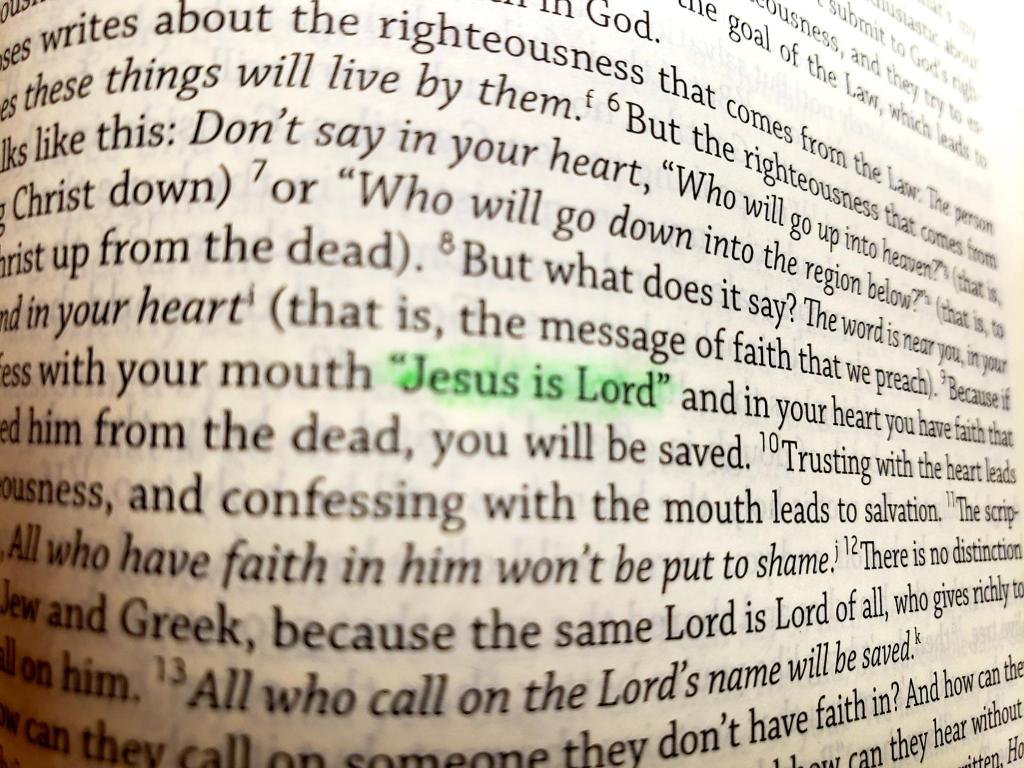
Romans 10:8b-13 – Believe and Confess

“The word is near you; it is in your mouth and in your heart,” that is, the message concerning faith that we proclaim: If you declare with your mouth, “Jesus is Lord,” and believe in your heart that God raised him from the dead, you will be saved. For it is with your heart that you believe and are justified, and it is with your mouth that you profess your faith and are saved. As Scripture says, “Anyone who believes in him will never be put to shame. ”For there is no difference between Jew and Gentile—the same Lord is Lord of all and richly blesses all who call on him, for, “Everyone who calls on the name of the Lord will be saved.” (New International Version)

Confess with the Mouth

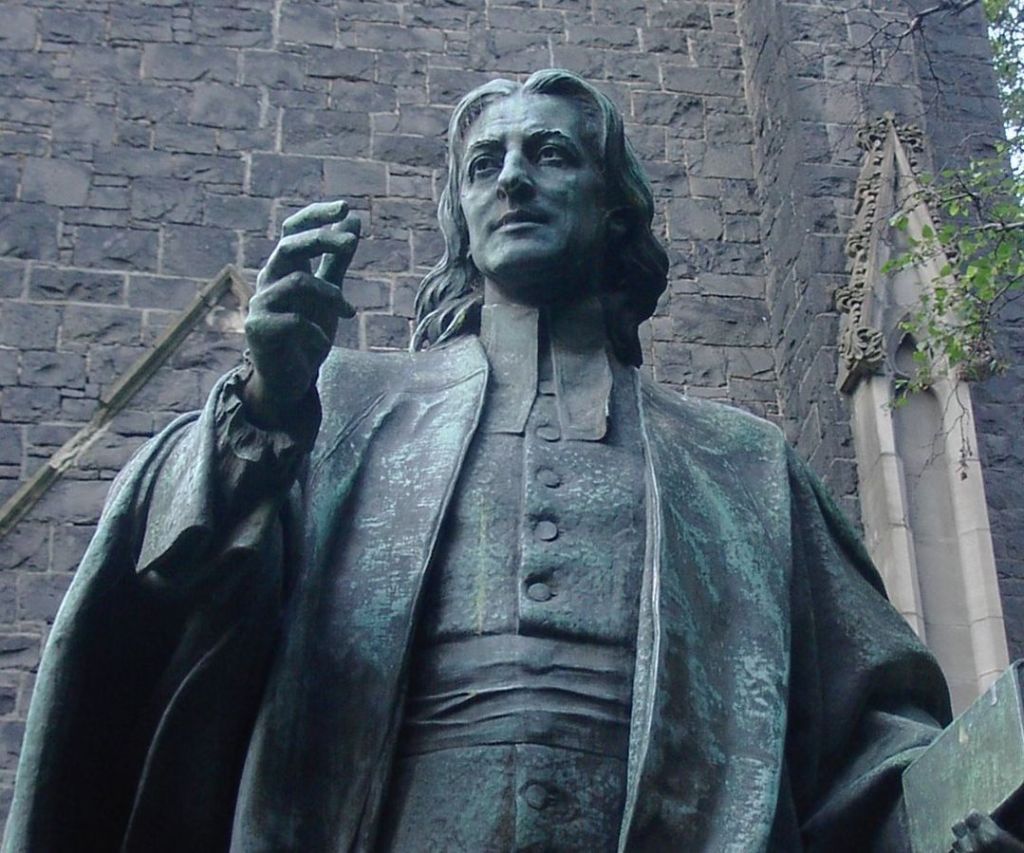
John Wesley (1703-1791) was an Oxford don who became an Anglican priest. He had all the intellectual tools to rightly handle the intricacies of theology and teach the Bible. Yet, when he first started out, there was no heart behind it. 

On a voyage across the Atlantic to America, Wesley spent much of the time on the ship with a group of German pietists – men and women who had a heart behind their practice of Christianity. The Germans deeply impressed Wesley, and he realized there was something important missing from his own religion. 

The ship encountered a storm and Wesley was afraid for his life. But the German believers seemed unfazed, having a heart-faith that John could not explain. He wanted what they had. Wesley was fearful and found little comfort in his religion. So, he confessed to one of them his growing misery and decision to give up the ministry. One of the Pietists advised, “Preach faith till you have it. And then, because you have it, you will preach faith.”

John Wesley acted on the advice. He led a prisoner to Christ by preaching faith in Christ alone for forgiveness of sins. He was astonished. Here was a man transformed instantly. Wesley cried out, “Lord, help my unbelief!” However, he still felt dull inside and little motivation even to pray for his own salvation. 

Statue of John Wesley as a young preacher, by Adam Carr, located in Melbourne, Australia

Having returned back to England, Wesley was in a church service listening to Romans expounded by the preacher. He recalled the experience years later: “While he was describing the change which God works in the heart through faith in Christ, I felt my heart strangely warmed. I felt I did trust in Christ, Christ alone for salvation; and an assurance was given me that He had taken away my sins, even mine, and saved me from the law of sin and death.”

Believe with the Heart

Simply uttering the words with our mouths, “Jesus is Lord,” by itself does not create deliverance and salvation. The heart needs to be involved. Yet, we must also consider the reality that only focusing on the heart, without having the mouth involved, is an insufficient faith. Christian belief has a solid objective real historical base from which our hearts can tether themselves. Christian confession affirms that Jesus is, indeed, risen from death and is Lord of all, having secured salvation for us through his shed blood on the cross.

Consider two hypothetical men at the time of the Passover in Egypt: Eleazar Ben Macaroni and Yakov Yarmulke. Eleazar and Yakov are talking together on the night the angel of death is about to pass through Egypt and the firstborn son in every family would be killed – that is, unless the blood from a sacrificial lamb was over the door of the house so that the angel would “pass over” the house and no one would be killed. 

Passover Angel of Death, by Arthur Hacker (1858-1919)

Yakov says to Eleazar, “Can you believe all that has been happening around here?  It’s all very scary!  All of those plagues, the disaster around us, and now this night!”  Eleazar asks, “Well, haven’t you put the blood over the door?”  “Yes, I’ve done all that – but it all is still disturbing.  My heart is troubled.  What do think will happen?” “Will we be okay?” asks Yakov nervously.  Eleazar responds, “I trust in the promises of God; let the angel come!”

So, when the angel of death came, which house do you suppose lost his firstborn son: Eleazar ben Macaroni, or Yakov Yarmulke?  The answer: neither of them. The angel of death did not come to either man’s house because deliverance is determined by the blood of the lamb and not by the quality or intensity of faith of the person. 

“For me His precious blood he shed – for me His life He gave. I need no other argument, I need no other plea; it is enough that Jesus died, and that he died for me.”

My Faith Has Found a Resting Place, hymn by Eliza Edmunds Hewitt (1851-1920)

If we only focus on the heart, our hearts will condemn us. We need to say the words of our faith, to confess them with our mouths, repeatedly, again and again, until we believe them. We are not to wait for our hearts to feel like having faith and living for God, because our hearts can be desperately wicked, and they will keep deceiving us. The heart needs to be informed by God’s Word and accept the words of Holy Scripture by faith:

“If we confess our sins, he is faithful and just to forgive us our sins, and to purify us from all unrighteousness.” (1 John 1:9, NIV)

Have the Heart and Mouth Work Together

We need both a right confession with our mouths and a right confession in our hearts for saving faith. When the heart receives grace, and the mouth expresses the beauty of faith – when heart and mouth work in concert with each other – something beautiful and gracious happens: 

“Everyone who calls on the name of the Lord will be saved.”

Romans 10:13

When Holy Scripture says “everyone,” it means “everyone.” All who cry out to God with their mouths, from a heart desiring God, will be saved. It does not matter whether that call is melodious, sweet, and in tune; or whether the call is a jumbled off-key joyful noise. It makes no difference; both will be saved. 

Only uttering the right words like some magical incantation does not save us. Only sincerity of heart does not save us. One does not achieve salvation through self-effort or trying to be worthy. No one is saved by finding the right combination of words in prayer or having a nice feeling.

Calling on the name of the Lord with both mouth and heart, trusting in the redemptive events of Jesus Christ, is what saves us.

Whether Jew or Gentile, rich or poor, American or Arab, famous or infamous, it is no matter – because salvation isn’t dependent on our looks, our past, or our zeal in doing good works. Salvation is completely from God and freely given to all who call upon the name of the Lord.

Make No Room for Shame

What’s more, all who trust in Jesus Christ will never be put to shame. In ancient Roman society, nearly three-fourths of all the people in the Empire were slaves to the other one-fourth. It was a culture built around the concept of honor and shame. It was shameful to be a slave, and honorable to be privileged, wealthy, and influential with a good Roman pedigree and citizenship. It was beneath such people to interact with those who served them because dealing with shameful people would make them shameful, as well.

Jesus forsook his honorable position in order to hob-nob with us rabble. He became one of us to save us and lift us up with him.

“For you know the grace of our Lord Jesus Christ, that though he was rich, yet for your sakes he became poor, so that you, through his poverty, might become rich.” 

2 Corinthians 8:9, NIV

Jesus embraced the shame of the cross. Therefore, we need never live in a state of shame ever again. Our hearts need not condemn us. Jesus has already taken care of shame, once for all.

“Let us fix our eyes on Jesus, the author and perfecter of our faith, who for the joy set before him endured the cross, scorning its shame, and sat down at the right hand of the throne of God.  Consider him who endured such opposition from sinful men, so that you will not grow weary and lose heart.” (Hebrews 12:2-3, NIV)

Put a Focus on Lent

The season of Lent lets us know we are neither brains-on-a-stick nor walking-headless-hearts. We have both heart and mouth, both deep feeling and real intellectual knowledge. Together, they form belief and confession. Lent is an invitation to prepare our hearts for Christ’s passion and resurrection. It includes an examination of our hearts so that we can deepen our piety and devotion to Jesus. And it incorporates confession of Jesus with the mouth.

The good news is this: Jesus is Savior and Lord; he has risen from death; and there is forgiveness of sins and deliverance from guilt and shame through is cross. When all is said and done, people need the Lord.

“I have not come to call the righteous, but sinners,” said Jesus. (Matthew 9:13)

Repentance involves both heart and mouth. And Lent is just the season for it, to turn from everything we have previously been living for other than Jesus. It’s an opportunity to start afresh with new life in Christ. It’s enough to make old John Wesley smile from the grave.

Have mercy on me, O God, according to your unfailing love; according to your great compassion blot out my transgressions. Wash away all my iniquity and cleanse me from my sin. 

Create in me a pure heart, O God, and renew a steadfast spirit within me. Restore to me the joy of your salvation and grant me a willing spirit, to sustain me.

Save me from guilt and shame and my tongue will sing of your righteousness. Open my lips, and my mouth will declare your praise. You do not delight in sacrifice, or I would bring it; you do not take pleasure in burnt offerings. The sacrifices of God are a broken spirit; a broken a contrite heart, O God, you will not despise. Amen.