The Necessity of Mentoring Relationships: Paul, Tom, and Timothy (2 Timothy 3:10-15)

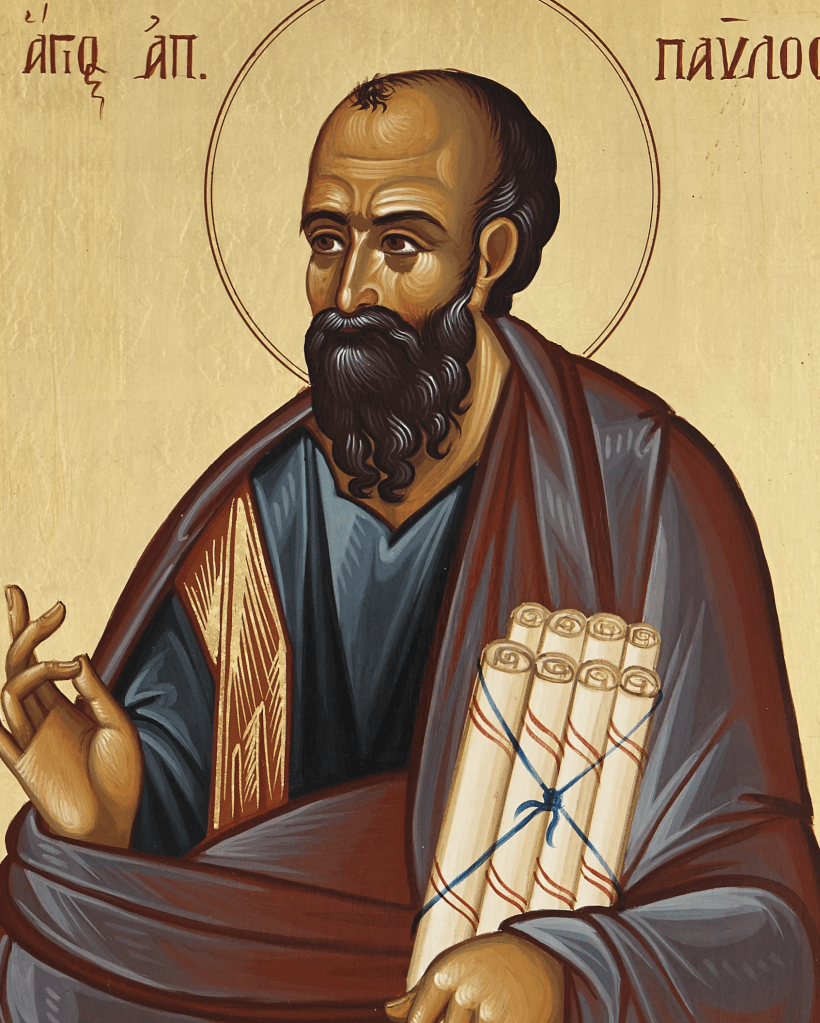
Orthodox icon of St. Paul
Orthodox icon of St. Timothy

You’ve been a good apprentice to me, a part of my teaching, my manner of life, direction, faith, steadiness, love, patience, troubles, sufferings—suffering along with me in all the grief I had to put up with in Antioch, Iconium, and Lystra. And you also well know that God rescued me! Anyone who wants to live all out for Christ is in for a lot of trouble; there’s no getting around it. Unscrupulous con men will continue to exploit the faith. They’re as deceived as the people they lead astray. As long as they are out there, things can only get worse.

But don’t let it faze you. Stick with what you learned and believed, sure of the integrity of your teachers—why, you took in the sacred Scriptures with your mother’s milk! There’s nothing like the written Word of God for showing you the way to salvation through faith in Christ Jesus. (The Message)

Paul and Timothy had a special relationship. Paul, the Apostle and mentor in the faith; and Timothy, the apprentice.

Together, they saw it all – and experienced it all. And through it all, the Christian tradition was passed on because of Paul’s purposeful mentoring of others, especially Timothy, by both verbal teaching and life example. In this, Paul helped set Christianity on a trajectory of modeling the words and ways of Jesus.

Faith is a gift given by God through Scripture and faithful people – and then received by us. Christianity is designed for community; it is not merely a solitary affair between the individual and God. Anyone trying to go it alone in the Christian life will soon discover they are overwhelmed and in over their heads with trouble.

Contemporary pastoral ministry still needs to follow in the footsteps of the Apostle Paul. Just one of the many reasons why churches in the West are in such decline is that Christian leaders are not intentionally focused to passing-on a solid body of teaching, along with a consistent example of how to put it into practice, through close relationships.

Anyone who has been in the pastoral ministry gig for a long time, remaining consistent and faithful, has most certainly had a good spiritual teacher and guide shepherding them through their Christian experience. A good long ministerial life isn’t happenstance; it’s the result of a solid foundation through a Paul-and-Timothy sort of relationship.
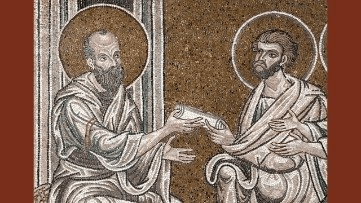
Mosaic of Paul and Timothy, Cathedral of Monreale, Sicily, Italy

By God’s grace, I’ve had several persons influence my life in profound ways in such a relationship. One of the earliest and longest was with Tom – a campus minister on my university who built into my life as an undergraduate and a very young Christian. We remained connected and became good friends for nearly four decades until his untimely death.

Tom knew what he was doing with me. To this day, even with multiple academic degrees and many professional ministry experiences, I attribute most of what I know about Christian faith and practice as simply saying and doing what I saw Tom say and do. And, I might add, Tom consistently saw my true self, even when I didn’t see it myself.

A good model in the faith has the same qualities and insights as the Apostle Paul of old. For example, here are just a few of the important things I learned from Tom:

  • Christian ministry is interpersonal; time must be spent with others, getting to know them and building relationships. Doing pastoral ministry from afar is an oxymoron. From what we know of Paul, at times he had a team of up to seventy persons following him around on missionary endeavors.
  • There are always going to be charlatans and bad apples around. Don’t simply ignore them. Confront them in grace and truth. I still remember a time when I went along with Tom, not knowing where we were going or what he was up to. In retrospect, he probably knew I would bolt if I caught wind of what he was about to do. We went to the dorm room of a believer whom Tom flat-out confronted on his talking and living being inconsistent with his professed Christianity. My eyes got huge when Tom said, “In the name of Jesus Christ I rebuke you and I call you to repent.” This was said in a gracious and conversational tone, not in anger, which communicated concern and love for this individual student.
  • Develop relationships. And the best way of doing this is by having the Timothy tag along with the Paul. Tom continually brought me along to whatever he was doing, whether it was a weekend retreat he was leading, or going to the grocery store. We cannot learn from others if we aren’t around them, and Tom understood this better than most. As a result, I learned more than lessons; I learned a life.
  • It’s not about me. Tom never took himself too seriously. And because of that, I observed him never becoming overwhelmed or obsessing over the trouble he would sometimes get into. In fact, he typically welcomed the trouble whenever he saw it was not of his own making.
  • Openness and vulnerability are necessary. More than once, Tom strolled into a bible study with me and some other guys, flopped down and said, “Man, I really blew it today…” and then went on to explain some boneheaded thing he did. We unpacked the entire situation together. Not once do I ever recall Tom trying to look like the perfect Christian leader. He embraced who he was and was always willing to shine the light on the shadowy places of his heart.
  • Holy Scripture is central to Christian life and ministry. Inevitably, Tom’s question to us, after describing his bonehead move, was to ask, “What are you learning in God’s Word? Do you have any encouragement for me?” On a daily basis, without fail, Tom asked this question of me: “So, what is God teaching you in the Word?”

Through both Holy Scripture and the significant relationships I’ve had throughout my life, I can confidently state that there are two indispensable elements to effective Christian ministry:

  1. It must be firmly grounded in objective theory derived from God’s Word.
  2. It must be intentionally practiced with subjective experience derived from interpersonal relationships.

Objective theory without lived practice leads to being puffed-up with knowledge and no love – because love requires people. And subjective experience without a grounded theory is nothing but a form of spiritual A.D.D. in which whatever shiny thing we see grabs our attention.

I always considered Tom as my spiritual father (and his wife as a dear spiritual mother!). They have shown me not only how to live the faith, but also how to be a spiritual father myself. And as a result, my own dear wife and I have many spiritual children scattered throughout the country.

This is the consummate Christian: Coming to faith by God’s grace, mediated to us through actual flesh-and-blood people; being taught and mentored in that faith by proven Christians; and then, simply saying and doing what you have seen and heard from holy leaders and Holy Scripture.

It’s not rocket science. It’s not abstract art. It’s a life. It’s relationships. And it’s absolutely necessary in order for both the church and the world to be blessed.

But he’s already made it plain how to live, what to do,
    what God is looking for in men and women.
It’s quite simple: Do what is fair and just to your neighbor,
    be compassionate and loyal in your love,
And don’t take yourself too seriously—
    take God seriously. (Micah 6:8, MSG)

Soli Deo Gloria. Amen.

Overwhelming Victory in Overcoming Suffering (Romans 8:31-39)

What shall we say about such wonderful things as these? If God is for us, who can ever be against us? Since he did not spare even his own Son but gave him up for us all, won’t he also give us everything else? Who dares accuse us whom God has chosen for his own? No one—for God himself has given us right standing with himself. Who then will condemn us? No one—for Christ Jesus died for us and was raised to life for us, and he is sitting in the place of honor at God’s right hand, pleading for us.

Can anything ever separate us from Christ’s love? Does it mean he no longer loves us if we have trouble or calamity, or are persecuted, or hungry, or destitute, or in danger, or threatened with death? (As the Scriptures say, “For your sake we are killed every day; we are being slaughtered like sheep.”) No, despite all these things, overwhelming victory is ours through Christ, who loved us.

And I am convinced that nothing can ever separate us from God’s love. Neither death nor life, neither angels nor demons, neither our fears for today nor our worries about tomorrow—not even the powers of hell can separate us from God’s love. No power in the sky above or in the earth below—indeed, nothing in all creation will ever be able to separate us from the love of God that is revealed in Christ Jesus our Lord. (New Living Translation)

There is a way to overcome suffering; there’s a path you can follow, leading to the overcoming of your struggle.

That struggle with suffering comes in many forms:

  • Wrestling with guilt and shame;
  • Dealing with the meanness of others
  • Chronic physical pain
  • Continual financial trouble
  • Ongoing estranged relationships
  • Past bad decisions that keep coming up to bite you in the present
  • Constant feelings of angst about the state of the world’s great needs and problems
  • A crippling Anfechtung (spiritual oppression and depression)

These and a hundred other reasons for suffering in this broken old world can discourage and debilitate us.

I invite you to consider that the road ahead will likely be counter-intuitive to how you may currently be thinking about overcoming suffering. In fact, it might be so far off your radar that you might simply discard what I’m about to say to you.

But before I get to that, I’ll say first, that suffering is endemic to the human condition. Everyone suffers. Since we live in a fallen world, there is not one person who hasn’t suffered in some way, whether it is physical, spiritual, mental, or emotional. 

None of us will ever be immune to affliction. There is no way to insulate yourself from pain. If you are not currently suffering in some way, it means that you are either coming off a time of hardship or are about to enter a new period of distress.

Holiness and godliness don’t keep suffering at bay. Just the opposite. The Lord Jesus promised us that following him will involve suffering: 

“While you are in this world, you will have to suffer.” (John 16:33)

The Apostle Peter, who was part of Christ’s inner circle of followers, came to understand the reality of suffering. Peter understood that all Christians are not above their Lord.  If Christ suffered, his followers shall suffer, as well.

“Dear friends, don’t be surprised or shocked that you are going through testing that is like walking through fire. Be glad for the chance to suffer as Christ suffered.” (1 Peter 4:12-13, CEV) 

James, the Lord’s brother, wisely discerned that suffering could become a teacher for the Christian; all the adversity the believer faces are the means of producing maturity, strengthening faith, and developing patience.

“My friends, be glad, even if you have a lot of trouble. You know that you learn to endure by having your faith tested.” (James 1:2-3, CEV) 

The Apostle Paul was more acquainted with suffering than any follower of Jesus; he continually faced terrible circumstances. His reflections on the matter are sage and true:

“Anyone who belongs to Christ Jesus and wants to live right will have trouble from others.” (2 Timothy 3:12, CEV) 

“Suffering helps us to endure. And endurance builds character, which gives us a hope that will never disappoint us.” (Romans 5:3-5, CEV)

“It has been granted to you on behalf of Christ not only to believe in him, but also to suffer for him.” (Philippians 1:29, NIV)

The New Testament writers have a perspective on suffering which is very different than how we typically think of it. Although suffering is a part of being in the world, yet Jesus said:

“In this world you will have trouble. But take heart! I have overcome the world” (John 16:33, NIV)

Now, let’s wheel back around to the overcoming of suffering. Here is the truth and the practice we must adopt when it comes to suffering: 

The truth about overcoming suffering comes not from us, but through Christ; and the practice of overcoming suffering doesn’t come from fighting against it but by sitting with it and learning from it.

Stated a different way: Jesus has overcome the world through his death, resurrection, and ascension. On the cross, he absorbed all the sin and suffering of everyone. Your suffering, then, may hurt and it might be senseless; yet no matter it’s source, that suffering will always rule over you unless you invite it to take a seat with you and have a conversation with it.

More pointedly: Quit fighting against your suffering. Stop kicking and screaming long enough to look your suffering square in the face and learn from it.

Your suffering is trying to tell you something. 

If you keep taking the stance of a pugilist trying to punch it away, it will just keep moving forward at you. You can’t beat suffering. You can only learn from it. And you’ll only learn from it, even overcome it, when you embrace it. 

So, here’s the counter-intuitive, counter-cultural practice that you might not like and might think I’m off my rocker for suggesting: Submit to suffering.

Don’t hear what I’m not saying. I’m not trying to sanitize your troubles or trauma. Evil is evil, and no amount of saying otherwise will change the leopard’s spots. However, only through submitting to the process of what suffering teaches us will we ever have power over it.

Perhaps an illustration is in order. Let’s liken suffering to encountering a bear in the wilderness. The National Park Service gives us this advice if facing a bear while out hiking:

“Once a bear has noticed you and is paying attention to you, these strategies can help prevent the situation from escalating:”

  • Identify yourself by talking calmly so the bear knows you are a human and not a prey animal. Remain still; stand your ground but slowly wave your arms. Help the bear recognize you as a human. It may come closer or stand on its hind legs to get a better look or smell. A standing bear is usually curious, not threatening.
  • Stay calm and remember that most bears do not want to attack you; they usually just want to be left alone. Bears may bluff their way out of an encounter by charging and then turning away at the last second. Bears may also react defensively by woofing, yawning, salivating, growling, snapping their jaws, and laying their ears back. Continue to talk to the bear in low tones; this will help you stay calmer, and it won’t be threatening to the bear. A scream or sudden movement may trigger an attack. Never imitate bear sounds or make a high-pitched squeal.
  • Hike and travel in groups. Groups of people are usually noisier and smellier than a single person. Therefore, bears often become aware of groups of people at greater distances, and because of their cumulative size, groups are also intimidating to bears.
  • If the bear is stationary, move away slowly and sideways; this allows you to keep an eye on the bear and avoid tripping. Moving sideways is also non-threatening to bears. Do not run, but if the bear follows, stop and hold your ground. Bears can run as fast as a racehorse both uphill and down. Like dogs, they will chase fleeing animals. Do not climb a tree. Both grizzlies and black bears can climb trees.

Fighting suffering is about as useful as taking on a bear. Both bears and suffering can be dangerous. We don’t blame bears if they act like bears. Likewise, we ought not be surprised when suffering hurts. But we can learn a lot about suffering and even come to the point of oddly admiring it for its large ability to teach us things we would not learn otherwise.

Face suffering like facing a bear in the wilderness of trouble. Calmly identify yourself. Talk in low tones to your suffering. Speak to it. Remember who you are. You belong to God. Treat suffering as if it is curious about you. Stay calm. Freaking-out only encourages suffering to attack. 

If you’re alone, that’s not good. Walking with others in Christian community is one of the best practices of the Christian life. Suffering is intimidated by groups of people encouraging one another and showing hospitality to each other. Keep your eye on suffering. Don’t ignore it, or pretend it isn’t there. 

Don’t run. The Lord is with you. Face suffering. Keep it in front of you. It will pass, but you must be patient and calm. Once it is gone, then you can reflect on what happened and debrief with others about the experience.

The path to overcoming suffering is to acknowledge it, respect it, submit to it, and let it pass. Then, you will be able to consider it joy whenever you face various struggles, knowing that your faith is being exercised, and perseverance developed. (James 1:2-4)

Stop fighting. Stop going it alone. Don’t be a martyr. Be silent. Listen. Change suffering from an adversary to fight to a companion to learn from.

You and I have nothing to lose. For nothing can separate us from the love of God in Christ Jesus our Lord. Amen.

Ephesians 2:11-22 – Included

Therefore, remember that formerly you who are Gentiles by birth and called “uncircumcised” by those who call themselves “the circumcision” (which is done in the body by human hands)—remember that at that time you were separate from Christ, excluded from citizenship in Israel and foreigners to the covenants of the promise, without hope and without God in the world. But now in Christ Jesus you who once were far away have been brought near by the blood of Christ.

For he himself is our peace, who has made the two groups one and has destroyed the barrier, the dividing wall of hostility, by setting aside in his flesh the law with its commands and regulations. His purpose was to create in himself one new humanity out of the two, thus making peace, and in one body to reconcile both of them to God through the cross, by which he put to death their hostility. He came and preached peace to you who were far away and peace to those who were near.For through him we both have access to the Father by one Spirit.

Consequently, you are no longer foreigners and strangers, but fellow citizens with God’s people and also members of his household, built on the foundation of the apostles and prophets, with Christ Jesus himself as the chief cornerstone. In him the whole building is joined together and rises to become a holy temple in the Lord. And in him you too are being built together to become a dwelling in which God lives by his Spirit. (New International Version)

There is perhaps no better explanation in the entire New Testament about what the Church truly is than here in today’s lesson.

The redemptive events of Jesus – especially the crucifixion of Christ – has completely changed everything. The cross is the mid-point of history, the fulcrum in which all things in heaven and on earth hinge.

The cross has totally transformed our status from being:

  • in Adam (fallen and separated from God) to being in Christ (now lifted and in union with God)
  • in the flesh (driven by our immoral and unethical impulses) to being in the Spirit (now driven by moral and ethical desires)
  • a Jew or a Gentile (defined by race, ethnicity, etc.) to being one people of God, a new egalitarian society, the community of the redeemed, the Church.

We were once far from God. Now we are brought near through the blood of Christ.

We are included, not excluded; graced and loved, not shamed and shunned.

And our status isn’t based on physical circumcision but on circumcision of the heart, that is, by faith.

There was a time when we were estranged from God, as if we were migrants from another country, or aliens from another world. We were strangers with no visible hope in anything or anyone.

But now, because of Christ’s cross, we have become near to God, gained an inheritance in Christ, and are seated in the heavens as royalty. Everything has mercifully changed. All is incredibly different – a good different.

Jesus Christ himself is our peace. He is the superglue who has bonded us to God and to one another as the one people of God. Because of this gracious union, there is no more anger and malice toward each other. There is, instead, peace.

The Lord Jesus has torn down the walls of separation between people, stripped the armor off of those who used it to keep a distance, and obliterated all obstacles to genuine relational connection – including the obstacle of the Law.

By his crucifixion, death, and resurrection, Christ Jesus fulfilled all the demands of the Law. Therefore, the Law of Moses is no longer needed. Those who love one another and carry one another’s burdens are the ones who fulfill the Law of Christ.

The reason for abolishing all the laws and layers of separation is so that Christ could create one new people from the disparate groups – thus making peace through the cross.

Just as two people come together in marriage and create an entirely new relationship – one new person from the two – so Christ has joined Jew and Gentile together and formed an entirely new society of unity and one-ness.

We are, then, on equal footing with one another. One group is no longer privileged over another. There is no such thing as an underprivileged people-group in God’s new society.

The Church is to be the one place on earth where all are privileged, all are included, and none are left behind.

There is reconciliation. The situation isn’t of people simply not fighting with each other, not at one another’s throats and sitting with a grumpy affect and arms folded. Quite the opposite. It is a restored relationship, harmonious interactions, and working together in loving fellowship.

Christianity is distinct from all other religions and all other ethical systems because everything is based, tethered, and moored in Christ’s crucifixion and resurrection. In Christianity, enmity, hate, and rage aren’t managed; they’re put to death – nailed to the cross and done away with.

Unfettered access to God, through Christ and the Spirit, means that we have an open channel to receiving the faith, hope, and love needed to address the darkness of this world and those still stuck in chaos, disconnection, and shame.

Christ himself is the cornerstone to the superstructure of peace and love which has been erected – the very things we have longed for throughout our personal lives and throughout history.

Jesus is the King who brought radical amnesty and hospitality to the entire country by making us all fellow citizens, enjoying all the rights and privileges thereof.

The Lord Jesus Christ is the Son who welcomed us into God’s family, embracing our adoption and making us full-blooded brothers and sisters, and giving us a prominent place at the Table.

All of these things about Christians and the Church aren’t ideals; they’re reality.

Anytime we are spiteful, ignorant, prejudiced, or unkind, we are not living in reality – we’re living in an old evil world that isn’t ours.

Therefore, we are called to fully live into God’s new society – a community of equals – loving and leading like Jesus, living into his words and ways, embracing our new status as children of God, offering radical mercy and grace because that’s exactly what our Lord did for us.

Creator God, who made us different from one another in myriad ways, yet all made in your image: Fill our hearts with your love and our minds with your wisdom so that we may truly become brothers and sisters of your only Son, our Savior Jesus Christ our Lord; who lives and reigns with you in the unity of the Holy Spirit, one God, now and forever. Amen.

Galatians 3:23-29 – A Ministry of Equals

Before the coming of this faith, we were held in custody under the law, locked up until the faith that was to come would be revealed. So, the law was our guardian until Christ came that we might be justified by faith. Now that this faith has come, we are no longer under a guardian.

So, in Christ Jesus you are all children of God through faith, for all of you who were baptized into Christ have clothed yourselves with Christ. There is neither Jew nor Gentile, neither slave nor free, nor is there male and female, for you are all one in Christ Jesus. If you belong to Christ, then you are Abraham’s seed, and heirs according to the promise. (New International Version)

So far, this year…

we have journeyed through Advent to see the Christ child…

followed the light of Epiphany with Jesus as the light of the world…

traveled in Lent to see ourselves in the light of Christ…

experienced Holy Week with the crucifixion, death, and resurrection of Jesus Christ…

exulted in the spiritual victory of Easter(tide)…

observed the Lord’s ascension to heaven…

and celebrated the incredible giving of the Holy Spirit to us as believers in and followers of Jesus.

Now…

we have entered the longest Christian season of the year: Ordinary Time or Proper Time.

Armed with the redemptive events of Jesus and with the Spirit as our Teacher, Guide, and Advocate, it is the ordinary ministry and proper life of every Christian to utilize our identity and belonging to spiritually grow and mature in Christ – and spread the seeds of the Gospel everywhere we go. This is simply the normative behavior of every Christian.

We are to bring…

faith, hope, and love to a world in need of God’s grace and peace – a world so often characterized by the chaos of hate, conflict, war, and unrest…

connection where there is disconnection, restoration where there is fragmentation, and inclusion wherever there is exclusion.

Ever since…

the fall of humanity, people have had the predilection to organize themselves in groups that keep them distinct from other groups. Whether it is high school peer groups or office politics; whether class warfare or church cliques; there has always existed a tendency to think better about the groups we identify with, and to look down and believe the worst about those we don’t understand or just don’t like.

But Jesus…

is the person who changes it all. Faith in Christ makes each of us equal with each other, whether Jew or a Greek, in bondage or in freedom, a man or a woman. The cross of Christ not only brought deliverance from sin, death, and hell; the work of Jesus Christ ushered-in a new egalitarian society.

I’m not sure the English translations of the Apostle Paul’s phrasing to the Galatian Church truly capture his passion about this issue. For Paul, Christ’s cross has done so much more than bring personal salvation; it has completely eradicated prejudice, discrimination, and division. 

Therefore…

the Church is to be the one place on earth where divisions no longer exist. It is to be a foretaste of heaven. The Church is to be a new society, a community of the redeemed, based in equity, diversity, and inclusion, from every people group, race, ethnicity, and gender.

Together as one, just as God is One, the Church lives the kingdom values of Christ’s words and ways in a fragmented and chaotic world.

Since then…

the ground is level at the cross, we are to live into our Christian unity with humble attitudes and loving actions. To do otherwise is to be immature. We (hopefully) expect kids to be kids and not be like adults. They need teaching, training, and tutoring to learn. When kids grow up and get into adulthood, we then expect them act like an adult. If they continue in childish behavior, they are immature.

Many adult Christians are still stuck in spiritual childhood. The evidence of this is seen in trying to stratify church society into insiders and outsiders, those who have always been in the church and newcomers who haven’t, or the committed servants and the lax pew sitters, or the givers and the takers, or the theological conservatives and theological liberals.

Rather than…

all of that dividing of people, our spiritual energy, powerfully given to us by the Spirit, is to be placed with living into the egalitarian society inaugurated by Jesus (and Paul). Not taking women’s leadership seriously, or avoiding relationships with the poor, or being xenophobic, or excluding gays, all come from a place of immaturity. It is childish behavior. And Jesus expects better.

Embracing an egalitarian society neither means we are all the same nor should act alike. The diverse backgrounds and experiences of people help make a rich mosaic of support for one another in the Body of Christ.

Being egalitarian means…

all people are created in the image and likeness of God – no exceptions. All persons, therefore, deserve morally equal treatment, respect, and justice. A just and good Christian ethic ensures all believers are handled with love, given sound instruction, and are free to explore their gifts and abilities within the church.

Pursuing equality means more than acknowledging our differences and saying we include others. We need the further step of becoming curious about other cultures, ethnicities, races, and peoples of all kinds.

We need curiosity…

about class differences, health disparities, and political views. It is good for us to actively seek to learn about things like gerrymandering and why its so important; or about what white privilege is and why that’s a big deal; or about mental illness or poverty or crime or any issue that impacts the human condition around us.

In other words, we become curious simply because, as Christians, we care about people.

The Church is…

at its heart, is a community of equals. Thus, the Church, as an egalitarian community, must actively reject racism, sexism, and all forms of discrimination while purposefully seeking ways to create and maintain a unified community without divisions.

Jesus reached out…

to the misfits and marginalized in society who were suffering from political, cultural, gender, and religious oppression and discrimination. The community of persons Christ formed included people of all ages and backgrounds. Children were welcome. Women sat down with men to learn and became active participants alongside one another.

Christ’s conversation with the Samaritan woman at the well, the parable of the good Samaritan, and the healing of the Canaanite woman’s daughter, all illustrate that ministry is to reach beyond our own familiar group. In short, Jesus practiced a radical hospitality. He loved and welcomed the stranger.

We Christians…

would do well to emulate our Lord, as well as take our cues on ministry from Paul, who grounded both his theory and practice of Christian mission and service in a Trinitarian theology of equals.

Gracious God, you have abolished barriers through the redemption of Christ. Prevent me from erecting walls that would divide and use me to be a bridge so that others may experience equality in Jesus. Amen.