Christ the King Sunday (Ephesians 1:15-23)

The 118 feet high Christ the King statue in Świebodzin, Poland

For this reason, ever since I heard about your faith in the Lord Jesus and your love for all God’s people, I have not stopped giving thanks for you, remembering you in my prayers. I keep asking that the God of our Lord Jesus Christ, the glorious Father, may give you the Spirit of wisdom and revelation, so that you may know him better. I pray that the eyes of your heart may be enlightened in order that you may know the hope to which he has called you, the riches of his glorious inheritance in his holy people, and his incomparably great power for us who believe.

That power is the same as the mighty strength he exerted when he raised Christ from the dead and seated him at his right hand in the heavenly realms, far above all rule and authority, power and dominion, and every name that is invoked, not only in the present age but also in the one to come. And God placed all things under his feet and appointed him to be head over everything for the church, which is his body, the fullness of him who fills everything in every way. (New International Version)

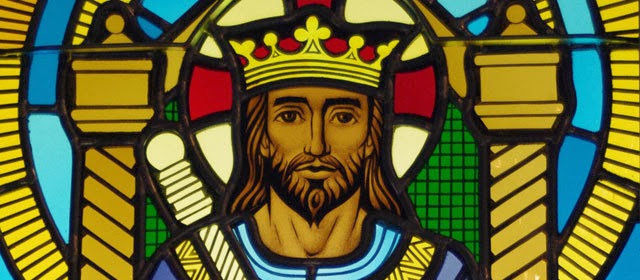
Christ the King Sunday is intended to help us see the cosmic reality that Jesus reigns over all creation as the only rightful Sovereign of the universe. This day always comes just before Advent so that we remember to anticipate both a baby and a king.

Christ as Lord of all exposes three problems humanity faces:

  1. Building our own petty kingdoms and setting ourselves up as masters over our own small worlds.  People who have been hurt may attempt to seize power for themselves in order to avoid ever being hurt again; or in the belief that if they had power, the could stop others from being hurt. Instead of submitting to Christ’s rule, they will seek to control their little end of the world, to protect themselves from pain.
  2. Bowing to other kings besides King Jesus. When distressed, some people may rely on another ruler to address their hard circumstances – thereby expecting another to give only what Jesus can provide.  Instead of running to God, they run to politicians or pastors to fix whatever is going on.
  3. Lacking awareness of the power possessed in Christ the King. Christians reign with Jesus Christ, and therefore can exercise authority over every dominion that exists, especially the dominion of darkness.

The Apostle Paul’s letter to the Ephesian believers provides God’s design for the church. It’s a plan for Christians to know their spiritual blessings and exercise the power they have being united to Christ. God wants us to understand this power and authority, and to actively use it.

We have a clear understanding in Ephesians of how to pray: To know Jesus better.  There is probably no higher prayer, according to the Apostle Paul, than to pray to know Jesus better – so that we will know the hope to which we have been called, and the incomparably great power for us who believe.

The word for “power” is where we get the English word “dynamite.” When I was a kid we had a neighbor who had a fondness for playing with dynamite (especially when he drank too much!). Even though he lived a mile down the road, when he blew up a tree stump or anything else on his property, it shook our house and felt like the windows were going to break. Yet, one stick of dynamite is nothing compared to God’s power.
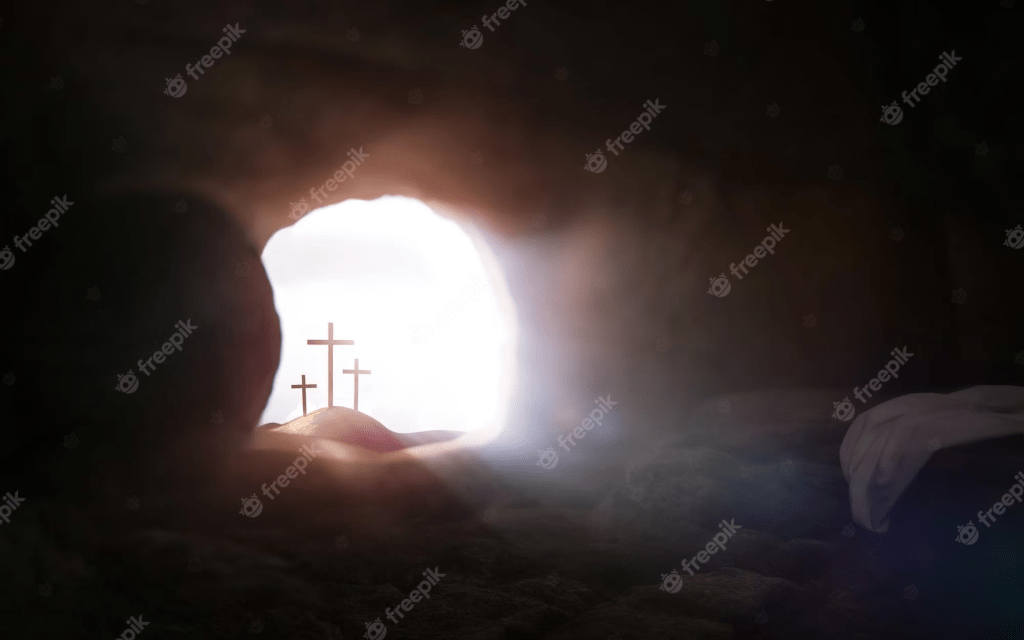
This divine power is for us who believe in Christ the King. It’s the same power used to raise Jesus from death, and which exalted Christ as Lord of the universe. The rule and reign of Jesus is far above any other existing authority – including powers of the dark domain.

Concerning dealing with the powers of darkness, we possess the authority of Jesus Christ. Because of Christ’s resurrection, ascension, and glorification, Christians therefore have a vital and inseparable union with Jesus.  Jesus redeemed us; we belong to God as adopted children. 

Since all earthly and spiritual powers are subject to Christ, they are also subject to us. The imagery of Jesus as Head, and Christians as the Body, means that we have an inseparable union together. Since we are united with Christ, we share his authority over all spiritual powers.

It’s one thing to know this information; it’s another to use it. We are to experience Christ’s power through exercising our authority as believers. We can link faith and knowledge together in a confident use of spiritual authority because we have rights as blood-bought children of God.

All the pronouns used by Paul in Ephesians are plural. This means that tackling the forces of darkness needs to be a communal activity; going it alone is dangerous. The following is a prayer we can pray together, that boldly exercises our authority in Christ:

Almighty God, we bow in worship and praise before you, and thank you that the Lord Jesus Christ is King over all creation, and the rightful Sovereign of the universe. We are grateful that we have power together with Jesus.  We therefore surrender ourselves completely in every area of our lives to You. 

Since Christ’s authority extends over every dominion, including the dominion of darkness, we take a stand against all the work of Satan that would hinder us in prayer. We address ourselves only to the True and Living God, and refuse any involvement of Satan in our prayers.

Therefore, Satan, we command you, in the Name of the Lord Jesus Christ, to leave our presence with all your demons. We bring the blood of Jesus Christ between us.

Sovereign God, we recognize you are worthy to receive all glory, honor, and praise. We renew our allegiance to you and ask the Holy Spirit to help us pray. You have loved us from eternity past; and you sent the Christ into the world to die for us. So, we are thankful for complete forgiven; for adoption into your family; for eternal life; and for your daily help and strength.

Glorious God, open our eyes so that we will see how great you are, and how complete your provision is for today. The victory of Christ’s cross and resurrection has given us a seat in heaven. We take our place with Jesus, and recognize by faith, that all wicked spirits and Satan himself are under our feet.

Thank you, gracious God, for the spiritual armor you have provided. Therefore, we put on the belt of truth, the breastplate of righteousness, the sandals of peace, and the helmet of salvation. We lift up the shield of faith against all the fiery arrows of the enemy; and we take in our hands the sword of the Spirit, the Word of God. We use your powerful Word against all the forces of evil, living and praying in complete dependence upon you, Holy Spirit.

Lord Jesus, we are thankful that you disarmed all power and authorities, triumphing over them by the cross. So, we claim victory for our lives today by rejecting all the insinuations, accusations, and temptations of Satan; affirming that the Word of God is true; living in the light of God’s Word; and choosing to obey you. 

Open our eyes, blessed God, and show us the areas of our lives that do not please you. Cleanse us from anything that would give Satan a foothold against us. We stand into all that it means to be your adopted children; we welcome all the ministry of the Holy Spirit in our lives today.

By faith, and in complete dependence upon you, we put off the old sinful person and stand into all the victory of the crucifixion where the Lord Jesus Christ provided cleansing from the sinful nature. We put on the new person and stand into the victory of the resurrection and the provision Christ has made for us to live above sin. We put off the old sinful nature with its selfishness and put on the new nature with its love.  We put off the old nature with its fear and deceit; and instead put on the new nature with its courage and righteousness.

We are thankful, mighty God, that you have blessed us with every spiritual blessing in Christ; and with new life into a living hope by the resurrection of Jesus from the dead, so that today we can live filled in the Holy Spirit with love, joy, peace, patience, kindness, goodness, gentleness, and self-control. Since we recognize and affirm that this is your will for us, we therefore reject and resist all the attempts of Satan and his demons to rob us of God’s will.   

We are thankful, blessed Holy Trinity, that our spiritual weapons have divine power to demolish demonic strongholds, arguments, and every pretention that sets itself up against the knowledge of God. We therefore take captive every thought to make it obedient to Christ; we tear down the strongholds and smash the plans of Satan that have been formed against us; we affirm that you have not given us a spirit of fear but a spirit of power, love, and self-discipline; and we choose to make right decisions of faith. 

Powerful God, show us the ways Satan is hindering, tempting, lying, and distorting the truth in our lives. Help us to be aggressive in prayer and faith; and to think rightly, and actively practice Your Word. We cover ourselves with the blood of the Lord Jesus Christ and pray that you, Holy Spirit, would bring all the work of Christ’s crucifixion, resurrection, ascension, and all your work of Pentecost into our lives today.

In the name of Christ the King, we surrender ourselves to you, O God; and we refuse to be discouraged because you are the God of all hope. You have proven your power by resurrecting Jesus from the dead. Therefore, we claim this victory over all satanic forces in our lives, our families, our neighborhoods, our workplaces, and our faith communities; through the blood of the Lord Jesus Christ with thanksgiving, we pray. Amen.

Who Is Jesus? (John 7:40-52)

The Light of the World, by William Holman Hunt, c.1853

On hearing his words, some of the people said, “Surely this man is the Prophet.”

Others said, “He is the Messiah.”

Still others asked, “How can the Messiah come from Galilee? Does not Scripture say that the Messiah will come from David’s descendants and from Bethlehem, the town where David lived?” Thus the people were divided because of Jesus. Some wanted to seize him, but no one laid a hand on him.

Finally the temple guards went back to the chief priests and the Pharisees, who asked them, “Why didn’t you bring him in?”

“No one ever spoke the way this man does,” the guards replied.

“You mean he has deceived you also?” the Pharisees retorted. “Have any of the rulers or of the Pharisees believed in him? No! But this mob that knows nothing of the law—there is a curse on them.”

Nicodemus, who had gone to Jesus earlier and who was one of their own number, asked, “Does our law condemn a man without first hearing him to find out what he has been doing?”

They replied, “Are you from Galilee, too? Look into it, and you will find that a prophet does not come out of Galilee.” (New International Version)

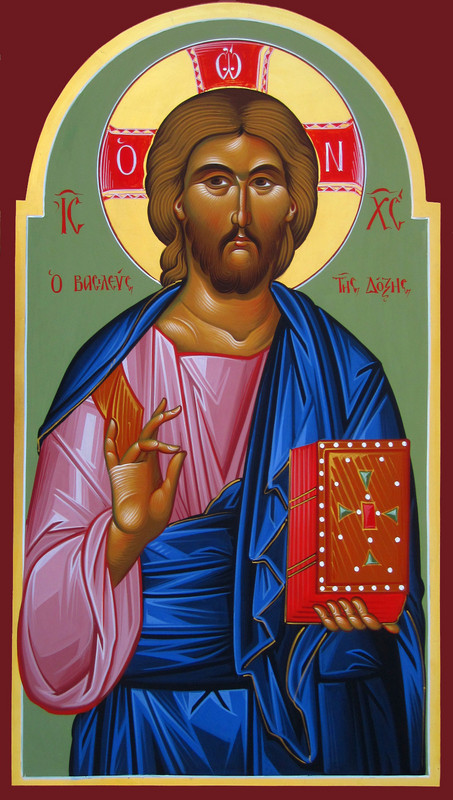
Orthodox Christian icon of Jesus Christ

There was a lot of buzz in Christ’s day of who Jesus really was. Prophet? Messiah? And, if Jesus really is a big deal, would he really come from Hicksville Nazareth? What about his credentials? His class? His pedigree?

Opinions on Jesus haven’t really changed all that much from the ancient world. They are still just as diverse now as when he was on this earth.

Unlike today, ancient people could not simply “Google” Jesus and find out where he was born and grew up. And they had no access to doing background checks in a matter of minutes to find out all kinds of things about him. Had the religious authorities bothered to do their homework and investigated Jesus, they would have found that, indeed, he was born of the Davidic line and in Bethlehem.

The short of it is that a chunk of the people simply assumed they knew Jesus wasn’t of proper Messiah credentials. They assumed and did not investigate because they did not want to know. No one can be faulted for ignorance. However, purposeful ignorance is perhaps the greatest of all sins, betraying a deep egoism of pride and prejudice.

In their hubris, the religious leaders sent the temple guards to bring Jesus in. Yet, in a clear demonstration of heavenly authority, the guards actually listened to Jesus and saw for themselves who he really is. Their simple confession testifies to Christ’s credibility. If one would but just see and listen for themselves, and engage in a genuine investigation, they could walk away finding truth.

6th-Century Byzantine mosaic of Jesus

Opponents of Jesus for the past two thousand years assume that Christians have been duped into taking the opiate of the people. Many think that followers of Christ were manipulated by religious hacks trying to gain power over others. But that’s a curious opinion, considering Jesus continually did just the opposite of that and was a champion for the poor, the powerless, and the marginalized persons of society.

When professional people with recognized degrees and competence do not believe you, nor take your own experience and learning seriously, what do you do?

Well, you could listen to them, or you could listen to your own gut telling you that you’re being gaslighted by a bunch of highly intelligent simpletons who are unfamiliar – are ignorant – of the faith you are familiar with.

What’s more, there are always smart and experienced people in the room who know better. Nicodemus was such a person. He was a serious scholar, and chose to speak up about these things. Authorities and credentials matter, yet of first importance is to know how to go about any sort of inquiry – rather than just passing over an objective investigation and assuming you know better.

Ethiopian artist depiction of Jesus teaching

For decades, I have (graciously) challenged others who do not believe in Jesus to actually read the Gospel accounts and at least engage in some minimal investigation – rather than giving opinions based on limited knowledge and secondary sources.

After all, as Nicodemus pointed out so long ago, shouldn’t we first give Jesus a fair hearing before we start dismissing him as nothing more than a religious figure that a bunch of people follow?

And I must also point out that this applies to us Christians, as well. Rather than waving aside Buddha or Muhammad or any other religious figure as false, don’t you owe their followers the basic respect of hearing them out before you dismiss them as fake, or in some cases, worse than that?

If you accuse another point of view, which is different than your own, as wrong or not real, without first hearing the accused and gathering objective evidence, then we really have no business getting uppity when another person accuses or dismisses our own faith.

Sadly, the colleagues of Nicodemus chose not to answer him but to instead engage in the age old practice of ad hominem argumentation by attacking the person, thereby deflecting having to give an answer.

People attack other people out of fear. And, in this case, it seems to me the religious leaders were downright afraid of investigating Jesus and giving him an honest hearing. Because if they did, they just might have their world turned upside-down; and they wanted the status quo to be maintained, at all costs, even if it meant ignoring the truth.

Jesus Washing the Feet of His Disciple, by Japanese artist Sadao Watanabe (1913-1996)

You don’t have to take my word on any of these things about Christ or Christianity. Read the Gospel of John for yourself – in one sitting if possible. Ingest the words. Drink in the experiences. Then, come and have a conversation with me.

Jesus, Lamb of God, have mercy on us.

Jesus, Bearer of our sins, have mercy on us.

Jesus, Redeemer of the world, give us your peace.

Jesus, Light of the world, shine in our hearts.

Jesus, Hope of all, be our companion on our way.

Jesus, Great Physician, heal our broken lives.

Jesus, Beloved Son of God, kindle within us the fire of your love. Amen.

I Am the Gate (John 10:1-10)

“Very truly I tell you Pharisees, anyone who does not enter the sheep pen by the gate, but climbs in by some other way, is a thief and a robber. The one who enters by the gate is the shepherd of the sheep. The gatekeeper opens the gate for him, and the sheep listen to his voice. He calls his own sheep by name and leads them out. When he has brought out all his own, he goes on ahead of them, and his sheep follow him because they know his voice. But they will never follow a stranger; in fact, they will run away from him because they do not recognize a stranger’s voice.” Jesus used this figure of speech, but the Pharisees did not understand what he was telling them.

Therefore Jesus said again, “Very truly I tell you, I am the gate for the sheep. All who have come before me are thieves and robbers, but the sheep have not listened to them.I am the gate; whoever enters through me will be saved. They will come in and go out, and find pasture. The thief comes only to steal and kill and destroy; I have come that they may have life, and have it to the full. (New International Version)

In an idyllic world, we would never have to contend with thieves and interlopers within the flock of God. But, as you well know, we live in a less than perfect world. The spiritual robber-baron is the one who poses as a religious figure, yet is really around to fleece the sheep.

Obviously, anyone who has to jump the fence, instead of entering through the gate, has something nefarious up their dastardly sleeve. In fact, these interlopers feel they have a right to get in, by any means, because of their inflated sense of self-importance.

Jesus, of course, is using metaphor and figure of speech to communicate something important: The thieves are robbing God’s honor for themselves and bringing harm to God’s people. By trying to take away the way, the truth, and the life, the religious leaders were spiritual burglars attempting to be both gate and gatekeeper.

In short, the religious leaders believed they were more important than Jesus; and they tried to keep Christ and the people from connecting with each other.

And that is the insidious form of all religious quackery – to keep people separated from what can help them the most so that the charlatan can soak up all the attention, authority, and accolades.

But a faithful and true shepherd enters through the gate with confidence and care. Such a person has no other agenda and no other concern than Jesus and what Christ has said, has done, and will do.

The pastoral ministers amongst us help lead the flock through the gate so that they might enjoy safety, security, and succulence. The shepherd calls people by name, and doesn’t generically yell at nameless folk, to bring them alongside the Good Shepherd.

Thus, we are to have a faithful concentration and commitment to Christ; a voice which is discernibly oriented toward pointing people’s attention to Christ; and a teaching and leadership which moves into the world in order to bring Christian speech and action that blesses the world.

One of the problems many persons experience is that they listen to strange voices, instead of the familiar voice of their trusted pastor and the voice of Scripture, reason, and history. They follow a pet preacher’s or person’s interpretation of everything without reservation, rather than seeking to hear the voice of God in everything which is said.

Big churches, large ministries, and eloquent people are not necessarily the vocal chords of God. We must be discerning and wise. Not everyone who says, “Lord, Lord,” will enter the kingdom of heaven. It’s only the person and the faith community which does the will of God that’s able to get in.

Wolves in sheep’s clothing exist. So, we must beware.

Idioms, figures of speech, and metaphors get lost on some folk. That’s what happened for Christ’s original hearers. A lot of head-scratching was happening because they couldn’t figure out what in the world Jesus was talking about. “They” are the people who interpret all of life through personal agendas and selfish means. Their self-absorption prevented them from seeing the person right in front of them, who he really was, and what he was actually saying to them.

I Am the Gate of the Sheepfold, by Kathrin Burleson

So, Jesus plainly told them that he himself is the gate of the sheep. “I am” the gate. Deliverance, reconciliation, freedom, and protection all come together in Christ to provide a good life, a life of abundance that is worth living. We have peace with God through the Lord Jesus.

In today’s Gospel lesson, we learn from Jesus the following:

  • The key to being a good shepherd is being faithful to Jesus Christ
  • The concerns of a good shepherd are to attract, bring in, protect, free, feed, and lead God’s people into a good life through Jesus Christ
  • The way for a good shepherd is to love the sheep, care for them, and be with them through thick and thin, as Christ does
  • The preoccupations of those who ignore entering through the gate, which is Jesus, are to gain for themselves what rightly belongs to God: glory, honor, praise, power, authority, accolades, and devotion.

Everything hinges on Jesus as the gate of life. In centering ourselves completely around Christ, and by giving up the false self of keeping up appearances to others, we find our true self, connected to God in which all our needs are fully met and satisfied.

Merciful Father, you gave your Son Jesus Christ to be the Good Shepherd. In his love for us, he laid down his life and rose again. Keep us always under his protection, and give us grace to follow in his steps, in the strength and enablement of the Holy Spirit. Amen.

Jesus Is the Cornerstone (Psalm 118:1-2, 14-24)

Give thanks to the Lord, for he is good;
    his love endures forever.

Let Israel say:
    “His love endures forever….”

The Lord is my strength and my defense;
    he has become my salvation.

Shouts of joy and victory
    resound in the tents of the righteous:
“The Lord’s right hand has done mighty things!
    The Lord’s right hand is lifted high;
    the Lord’s right hand has done mighty things!”
I will not die but live,
    and will proclaim what the Lord has done.
The Lord has chastened me severely,
    but he has not given me over to death.
Open for me the gates of the righteous;
    I will enter and give thanks to the Lord.
This is the gate of the Lord
    through which the righteous may enter.
I will give you thanks, for you answered me;
    you have become my salvation.

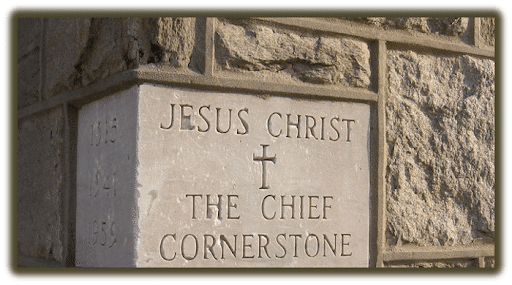
The stone the builders rejected
    has become the cornerstone;
the Lord has done this,
    and it is marvelous in our eyes.
The Lord has done it this very day;
    let us rejoice today and be glad. (New International Version)

Jesus The Cornerstone, by Gloria Ssali, 2016

Indeed, today we rejoice with gladness and celebrate that Christ is risen! Christians have a firm foundation of faith that gives us strength and stability.

Everyone’s life is constructed on some sort of foundational support. If we consider a building, it’s foundation has four cornerstones. For us as people, those stones consist of the body, the mind, the emotions, and the spirit. Each of these stones is holding up the one building of our life, and so therefore, they each need our attention in order to be well maintained.

Physical

Jesus is the

Mental Spiritual

Cornerstone

Emotional

We can neither treat them as if they are different sizes (which then would never hold up the building of our life) nor as of different importance.

For example, if we get a crack in the physical stone of our life, it is insufficient to examine the mental stone and try to repair the crack through positive thinking or mindfulness. Or, if our emotional stone is damaged, it won’t get fixed by focusing on the spirit stone by only praying.

These days, a lot of people have had bad, even traumatic, religious experiences, and so they’ve jettisoned the spirit cornerstone altogether. And as their building begins to collapse, they wonder why this is all happening.

The spirit cornerstone is Jesus. We need him. We need his whole entire life – not just parts of it. Christ is not a tool that we can use and then store in the garage for next time; he’s the whole garage, and the entire hardware store. We can no more set him aside than we can set aside our lungs or our heart.

So, why do so many resist facing the cracked and damaged stones? Why resist, or even reject, Jesus? Why do so many Christians want the victory of this Resurrection Day without the hard suffering of Good Friday?

Because we are still coming to grips with what it takes to live into the victory of the Cross – yes, the Cross. There’s no new life without a death. If we want a miracle, we need to die – die to our expectations, dreams, desires, and anything we believe we need, other than Jesus.

The builders rejected the stone because it was too hard. But the reality is that you cannot build on a foundation of marshmallows. Love isn’t actually soft, but hard; it’s permanent, like solid marble; it’s not going anywhere. We need that firm base of love to construct a soul that’s worth living.

Christ’s earthly life had incredible times of miraculous healings, provisions of food and necessities, and relational connections. But that’s only part of it. There was also hardship, adversity, rejection, mockery, torture, abuse, and death. When the Apostle Paul considered it all, he said:

But whatever were gains to me I now consider loss for the sake of Christ. 

What is more, I consider everything a loss because of the surpassing worth of knowing Christ Jesus my Lord, for whose sake I have lost all things.

I consider them garbage, that I may gain Christ and be found in him, not having a righteousness of my own that comes from the law, but that which is through faith in Christ—the righteousness that comes from God on the basis of faith. 

I want to know Christ—yes, to know the power of his resurrection and participation in his sufferings, becoming like him in his death, and so, somehow, attaining to the resurrection from the dead. (Philippians 3:7-11, NIV)

Both suffering and resurrection go together for a spiritually sound life, free of cracks and damage. A new life is fresh, hopeful, and full of promise – and it’s downright hard; there is nothing easy about it. We don’t get to pick and choose which parts of Jesus we want – we must take him wholesale just as he is, the entire thing.

It’s from the person and work of Jesus Christ as our cornerstone – both his cross and resurrection – that a new building is being built into a spiritual house which is the place of hospitality for the entire world.

As you come to him, the living Stone—rejected by humans but chosen by God and precious to him—you also, like living stones, are being built into a spiritual house to be a holy priesthood, offering spiritual sacrifices acceptable to God through Jesus Christ. For in Scripture it says:

“See, I lay a stone in Zion,
    a chosen and precious cornerstone,
and the one who trusts in him
    will never be put to shame.”

Now to you who believe, this stone is precious. But to those who do not believe,

“The stone the builders rejected
    has become the cornerstone,”

and,

“A stone that causes people to stumble
    and a rock that makes them fall.”

They stumble because they disobey the message—which is also what they were destined for.

But you are a chosen people, a royal priesthood, a holy nation, God’s special possession, that you may declare the praises of him who called you out of darkness into his wonderful light. Once you were not a people, but now you are the people of God; once you had not received mercy, but now you have received mercy. (1 Peter 2:4-10, NIV)

Jesus is our cornerstone, the center of life and worship. Our priority as believers, is allowing God to build us into a community of faith that worships Jesus with lives dedicated to knowing him and making him known.

Christian worship is the expression of a relationship in which God the Father reveals himself and his love in Christ, and by his Holy Spirit gives grace, to which we respond in faith, gratitude, obedience, and love to one another and the world. 

People, at their core, exist for worship. Firmly built on Christ the cornerstone, worship becomes less about gaining truth, and more about letting truth gain us and capture us. The more we pay attention to the presence of Jesus Christ through song, prayer, Scripture, and sacrament, the more we will experience the centrality and power of God. Jesus becomes very precious to us when we align ourselves to him as the cornerstone of our faith and worship.

I urge you, brothers and sisters, in view of God’s mercy, to offer your bodies as a living sacrifice, holy and pleasing to God—this is your true and proper worship (Romans 12:1, NIV)

Jesus, as the cornerstone upon which all is supported, means that acceptable worship can happen anywhere. Everywhere can become a sanctuary and a sacred space – home, neighborhood, and marketplace – as well as church. In all these locations, Christian discipleship will prove itself.

Several years ago, a man named Matt had an aunt who had struggled for years to make ends meet. When her health started to decline, she was forced to sell her fifty acres of property to pay for health care. As an act of kindness, Matt traveled to Massachusetts and bought the land from his aunt for the appraised value of $50,000. While exploring the land to see about building a house, he discovered outcroppings of stone ledges.

Matt contracted a geologist, who surveyed the land and informed him the stone was actually Goshen stone, a type of mica used for sidewalks, patios, and landscapes. At the time, it sold for $100 a ton – and Matt had about 24 million tons on the land. The appraised value on the surface was $50,000, but experts estimated that the land was worth up to $2 billion.

Jesus is the precious cornerstone. He is much too valuable to be left in on a piece of property undiscovered. And he’s also much too needed to merely remain in a church building. He’s the cornerstone who has the resurrection power to be the foundation for all the world. So, let’s let him.

Almighty God, who through your only Son Jesus Christ overcame death and opened to us the gate of everlasting life: Grant that we, who celebrate with joy the day of the Lord’s resurrection, may be raised from the death of sin by your life-giving Spirit; through Jesus Christ our Lord, who lives and reigns with you and the Holy Spirit, one God, now and forever. Amen.