Be Open-Minded (Acts 17:10-15)

That same night the believers sent Paul and Silas to another city named Berea. When they arrived there, they went to the Jewish synagogue. The people in Berea were more open-minded than those in Thessalonica. They were so glad to hear the message Paul told them. They studied the Scriptures every day to make sure that what they heard was true. The result was that many of them believed, including many important Greek women and men.

But when the Jews in Thessalonica learned that Paul was telling people God’s message in Berea, they came there too. They upset the people and made trouble. So, the believers immediately sent Paul away to the coast, but Silas and Timothy stayed in Berea. Those who went with Paul took him to the city of Athens. They returned with a message for Silas and Timothy to come and join him as soon as they could. (Easy-to-Read Verson)

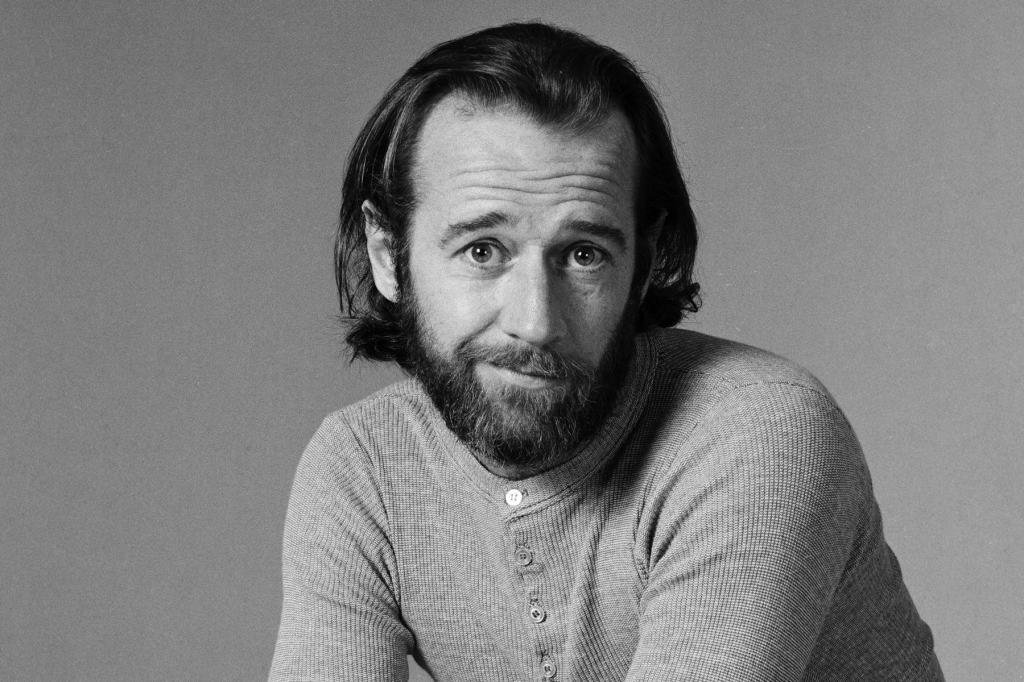
Sometimes it’s not you but the audience. The Apostle Paul was, at times, treated like Rodney Dangerfield (getting no respect) and, at other times, like George Carlin (causing people to think and listen without even knowing it).

Everywhere Paul went on his missionary journeys he experienced both acceptance and opposition. Determined to spread the good news of Christ’s redeeming work, Paul found a receptive audience and was able to establish churches.

Yet, Paul also upset the religious status quo wherever he went. As a result, there were times when he and his colleagues needed to steal out of town before an angry mob could get their hands on him. Sometimes, the furious cabal got ahold of Paul; and he forever carried the scars of those beatings on his body. Talk about no respect!

So, it must have been a refreshing experience for Paul to arrive in the city of Berea (located at the base of the Olympian Mountains in southwestern Macedonia) and discover a different spirit than he typically found in other places – a willingness to investigate, scrutinize, and grapple with the message presented. A receptive audience is a beautiful thing.

To spiritually thrive and flourish in this life we all must embrace the noble character of remaining open-minded with a teachable spirit. Just as the body grows, changes, and matures over time, so the human spirit does the same, and needs continual spiritual development. To become closed-minded and believe all questions are answered and settled, is to cut off oneself from truth and reality.

The Apostle Paul, I believe, is a good model of what it takes to be open-minded and a lifelong learner. The following are some ways he kept alive to spiritual truth:

Paul found his motivation. He went on missionary journeys because he wanted to make Christ known in places where he wasn’t. “It doesn’t matter if people are civilized and educated, or if they are uncivilized and uneducated. I must tell the good news to everyone. That’s why I am eager….” (Romans 1:13-14, CEB)

Paul went to new places and met new people. Getting stuck in a rut comes from never doing anything new or going to new places. We don’t have to be missionaries like Paul to do some movement and discover personally unexplored places, both literally and spiritually. Habits and routines are good. Sometimes we just need to create new ones so that we see a different perspective and have new experiences. The inability to see another’s viewpoint comes from an unwillingness to entertain any kind of change.

Paul avoided speculation. He did not superimpose his own experiences onto others. Paul was remarkably open to people everywhere he went, instead of being afraid and expecting trouble and/or abuse. The Bereans were open to Paul because Paul was open to them. Paul avoided looking at them as Thessalonians or Philippians; both were places where he got into loads of trouble just before coming to Berea. A contemporary way of stating Paul’s attitude and practice is that he was free of prejudice and discrimination.

Furthermore, notice the intellectual characteristics of the Berean people:

  • They were curious to hear what Paul thought.
  • They were able to have their ideas challenged.
  • They didn’t get angry when new ideas were presented.
  • They practiced both intellectual humility and mental empathy.
  • They believed Paul had a right to share his arguments, beliefs, and thoughts.

Today, in our intellectually and politically polarized world, far too many people are uncomfortable with uncertainty and ambiguity. So, they are unwilling to wrestle with spirituality by eliminating all mystery from their religion. When that happens, oppression is born. Those were the folks who could not tolerate Paul’s ideas and gave him such a hard time.

By rejecting alternative ideas that might challenge the status quo, people may be able to minimize uncertainty and risk – or at least their perception of risk – yet, the closing of their minds to other’s thoughts opens them to abusing the bodies of those same people.

When people are intellectually and spiritually proud, they wrongheadedly believe that they already know all there is to know, and so, they refuse to listen. At best, this limits the potential for learning; at worst, it forms a cognitive bias which blinds them to their own ignorance and blunts their ability for compassion.

It is, therefore, imperative that we be humble about our knowledge, understanding that there is always more to learn.

Almighty God, in you are hidden all the treasures of wisdom and knowledge. Open our eyes that we may see the wonders of your Word; and give us grace that we may clearly understand and freely choose the way of your wisdom. As the source of all light, enlighten our spirits. Pour out on us the spirit of understanding so that our hearts and minds may be opened. Amen.

It’s Time for a Change (Matthew 12:38-42)

Later a few religion scholars and Pharisees cornered him. “Teacher, we want to see your credentials. Give us some hard evidence that God is in this. How about a miracle?”

Jesus said, “You’re looking for proof, but you’re looking for the wrong kind. All you want is something to titillate your curiosity, satisfy your lust for miracles. The only proof you’re going to get is what looks like the absence of proof: Jonah-evidence. Like Jonah, three days and nights in the fish’s belly, the Son of Man will be gone three days and nights in a deep grave.

“On Judgment Day, the Ninevites will stand up and give evidence that will condemn this generation, because when Jonah preached to them they changed their lives. A far greater preacher than Jonah is here, and you squabble about ‘proofs.’ On Judgment Day, the Queen of Sheba will come forward and bring evidence that will condemn this generation, because she traveled from a far corner of the earth to listen to wise Solomon. Wisdom far greater than Solomon’s is right in front of you, and you quibble over ‘evidence.’ (The Message)

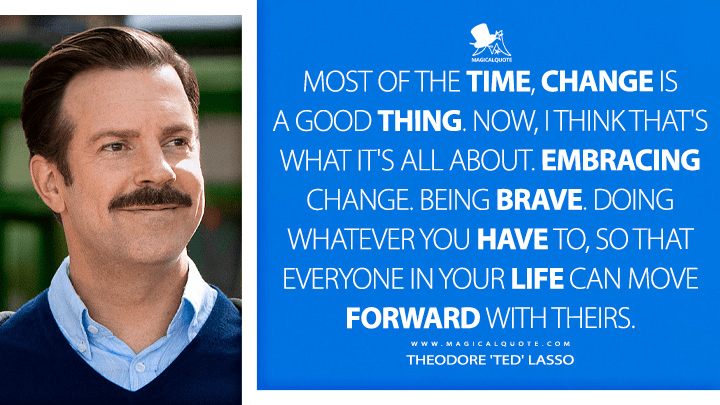
I believe the greatest miracle and the best evidence of God’s work in the world is a changed life.

I’m not talking about rearranging a few things or tweaking some habits – but a wholesale renovation of the heart. A transformed life is a new life, and not a reconstituted life.

Far too many people put their focus on others changing. They’ve bought into the belief that other people need to see things how they seem them – that everyone else must bend their lives to how they believe things ought to be. But this is really nothing more than sinful pride and hubris, as if the world revolves around me.

Change is for everyone, not just a select few, or for others for whom we believe need to get right or get left. Jesus made a lot of waves with the religious establishment by hobnobbing with the least, the lost, and the lowly of society.

Christ actively sought out the marginal folks, healing many of them from sickness, disease, and sin so that they could be united with God and no longer remain on the fringes of society.

If you’re not in the transformation business, then healing a bunch of low-life people means nothing to you. For the religious leaders of Christ’s day, Jesus was not flexing any real Messiah muscle for them; he was not beating up Roman gentiles and kicking them out of Palestine. So, they wanted a sign from heaven that would authenticate the proper Messiah credentials of Jesus.

But a sign already exists: The sign of Jonah. As Jonah was three days and three nights in the belly of a big fish, so Jesus would be in the earth for three days and nights. The death and resurrection of Jesus is needed, and when faced with this information, the only appropriate response is to change, to do a complete U-turn in life.

Jonah was all but dead. But God caused the great fish to belch up Jonah onto the land. He went forth a changed man. The experience of having stomach fluids work on a person for three days and nights will certainly change you! Jonah was spiritually and physically different – bleached completely white and an incredible sight to see.

Yet another sign exists: The Queen of Sheba’s sign. When she encountered King Solomon, she was overwhelmed with the experience. It changed her. So therefore, how much more ought we to change when encountering Jesus?

The appropriate response to Jesus is a changed life. Jesus was looking for status quo malcontents, for a desire to change. The process of change is hardwired into creation – from seasons of the year to the seasons of people’s lives – all are designed for a sustained process of time to revolutionize us.

Jesus modeled this for us. He switched his address of heaven and moved into our neighborhood in order to bring us new life. Jesus continually extends the invitation to change. All he asks is to let God do the work of change within us, to be patient with the construction of the soul he is doing, and to persist with daily routines of faith.

Yes, it’s time for a change. But change for change’s sake is not the point. Change that reflects godly values is the point. And in order to realize this good sort of change, we must be attentive and hear Holy Scripture, seek the mind and heart of God, and be willing to let Jesus come and have the run of the house.

We must unlearn before we learn. We need to let go so that we can take up. Change involves the humility to admit when we are lost, ask for help, and go in a different direction. New life is not rebranding oneself but is akin to being born again.

Almighty God, we desire to be transformed by you and allow the life of Jesus to be expressed in and through us. We desire to walk in the light of your Spirit. Reveal to us those things in our lives that need to change. Allow us to discern between flesh and spirit so that we can choose a healthy holy path.

Continue to give us spiritual awareness. Transform us into something new altogether. May our old life and old ways disappear, and may new life emerge that will bless both the church and the world, through Jesus Christ our Lord, in the power of the Holy Spirit. Amen.

The Struggle Within (Romans 7:15-25)

I do not understand what I do. For what I want to do I do not do, but what I hate I do. And if I do what I do not want to do, I agree that the law is good. As it is, it is no longer I myself who do it, but it is sin living in me. For I know that good itself does not dwell in me, that is, in my sinful nature. For I have the desire to do what is good, but I cannot carry it out. For I do not do the good I want to do, but the evil I do not want to do—this I keep on doing. Now if I do what I do not want to do, it is no longer I who do it, but it is sin living in me that does it.

So I find this law at work: Although I want to do good, evil is right there with me. For in my inner being I delight in God’s law; but I see another law at work in me, waging war against the law of my mind and making me a prisoner of the law of sin at work within me. What a wretched man I am! Who will rescue me from this body that is subject to death? Thanks be to God, who delivers me through Jesus Christ our Lord! So then, I myself in my mind am a slave to God’s law, but in my sinful nature a slave to the law of sin. (New International Version)

We can relate to the Apostle Paul. We, along with him, have said to ourselves many times, “I don’t understand why I act the way I do. I don’t do what I know is right. I do the things I hate.” 

Paul’s experience of uneasiness, his existential angst because of the struggle within, is a timeless description of our common human condition. There are times we seem completely unable to follow our conscience and do what’s right. It can be maddening, even to the point of experiencing a continual low-level discouragement or depression which underlies almost everything we do.

The prescription for dealing with this mental, emotional, and spiritual malady does not include the law. That’s right. Putting our willpower and effort into obeying commands gets us nowhere. Even if we obey laws and rules and commands for a time, our efforts eventually break down. We fail to do what we want, and end up doing just the opposite.

In all fairness, the law is good, not bad; it just doesn’t have the capacity to transform us. The law’s purpose is to show us how bad off we really are in this world, to give us an awareness of our true condition, so that we will seek help. 

We humans are a bundle of contradictions, doing good, then bad, and flip-flopping back and forth – all with great frustration. In such a miserable condition, what then shall we do? Who will help us? Is there anyone to save us from our plight?

Sheer willpower and obedience will not help us; it won’t work. It will only give us a false hope. Any success in using willpower only deludes one into believing they have the answer… until they yet fall again into the pit of their own inner darkness. But the good news is that there is a Savior, a Redeemer, a Rescuer who has the will and the power to deliver us from our predicament.

The grace of God in Christ is the operative power that changes lives, not the law. Freedom from the tyranny of our “should’s” and our misplaced desires comes from Christ’s forgiveness through the cross. 

Like a lover enamored with his beloved, our desires become oriented toward Jesus for his indescribable gift to us. That is the strength of grace. Transformation is relational; it is found in a person, not a program. And the only person and relationship which has the ability to change us is, I believe with all my heart and mind, the Lord Jesus Christ.

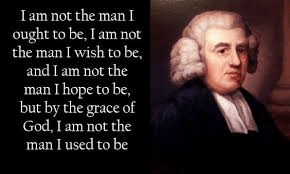
Why? Because I myself have been transformed and changed by such a relationship with Christ. I, along with the hymn writer John Newton, can say, “I once was lost but now am found, was blind but now I see.”

“Self-help” for all the good it really can do, is in many ways an oxymoron. We need a Savior to help us, and we need a community of people who encourage us. And even if we can do it ourselves today, that may not (and eventually will not) be true of us tomorrow. None of you got this far in life on your own – and you will continue to need God and others going forward.

Love must be completely sincere. Hate what is evil, hold on to what is good.Love one another warmly as Christians, and be eager to show respect for one another. Work hard and do not be lazy. Serve the Lord with a heart full of devotion. Let your hope keep you joyful, be patient in your troubles, and pray at all times. Share your belongings with your needy fellow Christians, and open your homes to strangers. (Romans 12:9-13, GNT)

We have an incredible capacity for good and vast internal resources within us. And yet, we too often lack awareness of this reality, for which we can tap into. When it comes to an outright metamorphosis, we need a new heart – and we can no more simply decide to change our lives any more than we can perform heart transplant surgery on ourselves.

People need the Lord.

Whenever the foundation of a house is about to crumble, it won’t do to rearrange the living room furniture and do a bit of spruce up painting. We deceive ourselves if we believe that all our efforts at landscaping the property and having a great curb appeal will do the trick. If the foundation crumbles, and the house implodes, all efforts at curb appeal won’t matter.

Jesus is our cornerstone. Without him, we are at risk, about to fall and without hope. With him, true restoration and renewal happens. And then, when the house is repaired and in order, we set about the task of being good stewards and maintaining and caring for the wonderful changes which were made.

Freedom from a dilapidated soul and misplaced energies to consistent times of peace and contentment, calmness and confidence, satisfaction and settled peace, comes by growing ever closer to the Savior who exudes all those qualities, and more. For the Lord not only saves and delivers; he also sanctifies and encourages.

In Christ, the uneasiness and unsettling experience – the existential angst – becomes a thing of the past because of the grace of merciful deliverance and continual help.

Saving God, I thank you for delivering me from sin, death, and hell through your Son, the Lord Jesus. May your Holy Spirit apply the work of grace to my life every day so that I can realize practical freedom from all that is damaging and destructive in my soul. Amen.

What Is Your View of God? (Psalm 86:1-10)

God’s Love… by Hope G. Smith

Incline your ear, O Lord, and answer me,
    for I am poor and needy.
Preserve my life, for I am devoted to you;
    save your servant who trusts in you.
You are my God; be gracious to me, O Lord,
    for to you do I cry all day long.
Gladden the soul of your servant,
    for to you, O Lord, I lift up my soul.
For you, O Lord, are good and forgiving,
    abounding in steadfast love to all who call on you.
Give ear, O Lord, to my prayer;
    listen to my cry of supplication.
In the day of my trouble I call on you,
    for you will answer me.

There is none like you among the gods, O Lord,
    nor are there any works like yours.
All the nations you have made shall come
    and bow down before you, O Lord,
    and shall glorify your name.
For you are great and do wondrous things;
    you alone are God. (New Revised Standard Version)

What is your view of God? 

For some, God is up there, somewhere, like some white-bearded old guy who is aloof to what is going on down here – there is neither anything personal nor personable about him, at all. If he gets involved, at all, it’s just to get out his divine BB gun and shoot a few sinners in the backside.

For others, God is a force which binds all things together; God is there, but you’re never quite sure how to get in touch with him – it’s like a crap shoot trying to connect with God. So, you might do all sorts of things to get God’s attention, like be especially good – and if that doesn’t work, maybe you’ll go the other way and be especially bad, just to get any sort of attention.

For yet others, God is perpetually perturbed about something; he’s got a bee in his divine bonnet and it’s our job to figure out what he’s sullen and upset about all the time, that we might appease God in some way. So, you might double-down on being self-sacrificial, try not to swear in front of the Pastor, and help others so that God will, in turn, help you.

The psalmist David, however, sees God in a very different way than all the aforementioned. God is not aloof and distant, nor angry. Instead, David understands and views God as personal, knowable, and reachable.

What characterizes God?

Reading today’s psalm tells us a great deal of how David thought and felt about God. Notice what we learn about God from David’s description: good and forgiving; abounding in steadfast love; listens and answers; and, does great and wondrous things.

Now this is a God you can sink your teeth into. This God is attentive, engaged, and is anything but upset all the time – which is why David has no problem asking God to listen and answer his prayer.

David put his trust in God to save him and make his heart glad. With this kind of God, David can willingly affirm his devotion. With a God of steadfast love and support, the worshiping and praying person’s heart forever belongs to the Lord.

If your view of God cannot support and bear the weight of your life’s hardest circumstances, then you need a different view of God!

Rather than God being the problem, it could be that your understanding of God is off. And if your understanding of God is off, then it’s likely that your own understanding of yourself is skewed – which is why many persons who have darker views of God are down on themselves and possess little self-worth.

I invite you to see the God of David. This God has both the ability and the willingness to satisfy your life’s greatest needs.

What will you do with your view of God?

In humility and brokenness, we call out in our misery. God responds in steadfast love and abundant mercy. With God, we can move from trouble to confidence.

And sometimes, we discover that our troubles and our circumstances change very little. But we ourselves have changed a great deal. Our compulsions for solid answers to our questions give way to a settled confidence in divine mystery. And our obsessions with a pain-free and problem-free life are replaced with a curiosity for what the hard situations in our lives will teach us.

The poor and needy cry out to God, knowing that grace and mercy characterizes the Lord. Life on this earth may not treat us well, but God gives us much more than we deserve.

The faithful trust in the Lord, fully confident that their preservation and protection are in God’s hands – and not in political leaders or padded bank accounts.

The miserable pray, constantly persevering in prayer, because their hope is in the name of the Lord who made heaven and earth. They have learned to pray expectantly, understanding that sometimes the greatest miracle of all is being delivered from the need to have a miracle.

Those who lift their faces to heaven, looking for the bright sunshine of grace, will know joy, down deep in their soul – and not simply a fleeting happiness from temporary reprieve of trouble.

The ones calling on the name of the Lord, banking their lives on God’s love, discover forgiveness and a good peaceful life of peace – rather than the anxiety of constantly worrying about tomorrow.

The spiritually devoted are confident that God will answer in their day of trouble – and they are patient, knowing full well that God’s sense of timing is much better than their own. So, they learn to hold all things loosely, knowing that God gives and God takes away. Blessed be the name of the Lord.

All those taking the time and effort to find the God who is truly characterized by kindness and compassion know in their gut, without a shadow of a doubt, that there is no one like the Lord – a God who does wondrous things and is attentive to justice and righteousness.

What is your view of God? Listen closely to the psalmist, and he will tell you what the Lord has done for him because of God’s basic nature of love and goodness.

Great God of David, you are above all things and beside all things and with all things. You are uniquely positioned and powerful to walk with me through all the situations of my life. Thank you for sending the Son of David to make your promises real to me. Amen.