Reframe the Situation (Exodus 4:1-9)

But Moses protested again, “What if they won’t believe me or listen to me? What if they say, ‘The Lord never appeared to you’?”

Then the Lord asked him, “What is that in your hand?”

“A shepherd’s staff,” Moses replied.

“Throw it down on the ground,” the Lord told him. So Moses threw down the staff, and it turned into a snake! Moses jumped back.

Then the Lord told him, “Reach out and grab its tail.” So Moses reached out and grabbed it, and it turned back into a shepherd’s staff in his hand.

“Perform this sign,” the Lord told him. “Then they will believe that the Lord, the God of their ancestors—the God of Abraham, the God of Isaac, and the God of Jacob—really has appeared to you.”

Then the Lord said to Moses, “Now put your hand inside your cloak.” So Moses put his hand inside his cloak, and when he took it out again, his hand was white as snow with a severe skin disease. “Now put your hand back into your cloak,” the Lord said. So Moses put his hand back in, and when he took it out again, it was as healthy as the rest of his body.

The Lord said to Moses, “If they do not believe you and are not convinced by the first miraculous sign, they will be convinced by the second sign. And if they don’t believe you or listen to you even after these two signs, then take some water from the Nile River and pour it out on the dry ground. When you do, the water from the Nile will turn to blood on the ground.” (New Living Translation)

“When we are no longer able to change a situation, we are challenged to change ourselves.”

Victor Frankl

Moses needed a big-time reframing of his situation.

Reframing is a way to help see a situation from a different perspective.

For example, Moses seemed to say to himself, “I’m going to do horrible at communicating to the Israelites that God appeared to me. They’re never going to believe me that I saw God in a burning bush!”

Instead, Moses could reframe the circumstance by saying, “I saw God. I know God is going to deliver the Israelites from their slavery to the Egyptians. I’ve been thinking about this in the backside of the desert for the past 40 years. And God’s got my back to use me here. So, I’ve got this. I can do this!”

But, of course, Moses didn’t say that. He needed a reframing from God that came from some powerful illustrations of the Lord’s ability to change things.

The big reframe for Moses was this: If God can change a staff into a snake, and then turn it back again; and if God can change my hand to be white with leprosy, then turn it back to a healthy hand; then God can certainly change the minds and hearts of the Israelites to accept that I am the Lord’s chosen deliverer from Egyptian bondage.

Whenever we put the onus on our abilities, or lack thereof, in order to alter a situation, then we are likely to have little confidence and a negative outlook.

Yet, when we can do some reframing, and rightly put the emphasis on God’s power and God’s promise, then our faith is placed rightly and we can step forward with courage, knowing it’s ultimately about God, not me.

Moses contends with God about facing the Israelites and convincing them he’s the deliverer. He sees himself as a tongue-tied hick who is only good for moving sheep around. And yet, all these millennia later, we now remember Moses as the one who boldly and repeatedly spoke to Pharaoh and moved an entire nation from Egypt to the Promised Land.

The Lord helped reframe the situation for Moses. Instead of a backward shepherd who was no good at talking, Moses was a magnificently resilient person who was able to reinvent his life multiple times and thrive in each new situation.

Moses survived a murderous decree as a baby, grew up in the Egyptian court, moved to Midian in a completely different existence, and then became perhaps the greatest leader in Jewish history. All of that is the very definition of resilience.

I am willing to surmise that you also need some reframing of your circumstance or even your life. After all, you’ve made it this far in life, and you’re still here. That means you have some significant things going for you. No matter the situation you find yourself in, it’s likely that a good reframe may be needed.

In his book, From Death Camp to Existentialism, Victor Frankl writes of being in a Nazi concentration camp for three years. Everything was taken from him. Frankl’s wife, family, and most of his fellow inmates died. Yet, he survived. And, after the war, he became one of the great psychological healers of our time.

Victor Frankl kept reframing his horrible situation and using his mind for worthy purposes. He survived by using his suffering to help others find hope, to know that no other person or nation can steal his mind from him. Frankl could continually choose his attitude and mindset, irrespective of the circumstances.

“Everything can be taken from a man but one thing: the last of the human freedoms—to choose one’s attitude in any given set of circumstances, to choose one’s own way.”

Victor Frankl

There are always opportunities to experience life more fully, to become a more integrated and whole person, and to transform what seems daunting into a chance to improve one’s life or the lives of others.

Reframing is neither denial nor positive thinking. Rather, it is an invitation in learning to trust God, in the presence, promise, and power of the divine.

We all discover, like Moses, that life can turn out very differently than we might expect. And along the way, we also find that we reinvent ourselves more than once; and that we are transformed by the seasons of life which we all must pass through.

When we learn to trust the Lord, evermore with each and every adverse situation, we are less likely to be controlled or overcome by moods of pessimism, hopelessness, or resentment. Our prevailing attitude becomes optimistic, as our faith is exercised and proven in the difficult trials of life.

Through his several encounters with God – and then with the people and with Pharaoh – Moses found resources he didn’t know he had. By experiencing a reframe of his life, Moses became the sort of person and leader that we are still talking about 3,500 years later.

So, don’t close your heart and mind to the adversity in front of you. That only leads to bitterness and unhappiness. Instead, open yourself to God and trust the spiritual reality and resources you possess.

Inclusion vs. Exclusion (Acts 15:1-21)

Certain people came down from Judea to Antioch and were teaching the believers: “Unless you are circumcised, according to the custom taught by Moses, you cannot be saved.” This brought Paul and Barnabas into sharp dispute and debate with them. So Paul and Barnabas were appointed, along with some other believers, to go up to Jerusalem to see the apostles and elders about this question. The church sent them on their way, and as they traveled through Phoenicia and Samaria, they told how the Gentiles had been converted. This news made all the believers very glad. When they came to Jerusalem, they were welcomed by the church and the apostles and elders, to whom they reported everything God had done through them.

Then some of the believers who belonged to the party of the Pharisees stood up and said, “The Gentiles must be circumcised and required to keep the law of Moses.”

The apostles and elders met to consider this question. After much discussion, Peter got up and addressed them: “Brothers, you know that some time ago God made a choice among you that the Gentiles might hear from my lips the message of the gospel and believe. God, who knows the heart, showed that he accepted them by giving the Holy Spirit to them, just as he did to us. He did not discriminate between us and them, for he purified their hearts by faith. Now then, why do you try to test God by putting on the necks of Gentiles a yoke that neither we nor our ancestors have been able to bear? No! We believe it is through the grace of our Lord Jesus that we are saved, just as they are.”

The whole assembly became silent as they listened to Barnabas and Paul telling about the signs and wonders God had done among the Gentiles through them. When they finished, James spoke up. “Brothers,” he said, “listen to me. Simon has described to us how God first intervened to choose a people for his name from the Gentiles. The words of the prophets agree with this, as it is written:

“‘After this I will return
    and rebuild David’s fallen tent.
Its ruins I will rebuild,
    and I will restore it,
that the rest of mankind may seek the Lord,
    even all the Gentiles who bear my name,
says the Lord, who does these things’—
    things known from long ago.

“It is my judgment, therefore, that we should not make it difficult for the Gentiles who are turning to God. Instead we should write to them, telling them to abstain from food polluted by idols, from sexual immorality, from the meat of strangled animals and from blood. For the law of Moses has been preached in every city from the earliest times and is read in the synagogues on every Sabbath.” (New International Version)

The Council of Jerusalem, by Franz Mayer of Munich, 1883

What happens when new people come into a group who are different? How does any church or faith community deal with long time members alongside new ones? Is there a way to work through differences without becoming like the Borg, trying to make others to be just like me? (“Prepare to be assimilated. Resistance is futile.”)

Differences of thought, opinion, and practice are inevitable. Conflict cannot (and should not) always be avoided. Anyplace there’s people, conflict eventually happens. Put a bunch of sinners together in one place (like in a church), add a few grumpy old people, a few know-it-alls, then sit back and watch the fireworks. 

It seems to me that every church is about one or two good fights away from being non-existent. It’s a miracle that more congregations don’t call it quits every year, especially after their annual congregational meetings! I myself have a long resume of handling ornery folks, family squabbles, and cantankerous curmudgeons that could make your head swim – or just get you downright angry.

What is the source of conflict among you? What is the source of your disputes? Don’t they come from your cravings that are at war in your own lives? You long for something you don’t have, so you commit murder. You are jealous for something you can’t get, so you struggle and fight. You don’t have because you don’t ask. You ask and don’t have because you ask with evil intentions, to waste it on your own cravings. (James 4:1-3, CEB)      

Within the church there are expectations, whether they are reasonable or not. If those expectations are not fulfilled, people feel unfulfilled. So, they look to put unnecessary burdens on those entering the faith – to make them pay their dues by observing rules that they themselves aren’t even able to keep.

Conflict begins with some kind of desire. If unmet, it becomes a demand. And demanding something usually leads to judging other people. After all, if you really care about me and my group, you will meet these demands (desires). If left unchecked and unresolved, the progression ends in trying to punish others by simply withdrawing from a relationship with the intent of hurting another.

A focus on reaching out, on rebuilding and restoring lives, puts our efforts where they need to be – and puts us on the same page together, acting out of a sense of purpose, not preservation.

Today’s New Testament lesson deals with the conflict and debate surrounding gentile inclusion into the family of God. The success of Paul’s missionary journeys in reaching non-Jewish peoples and establishing churches, created tension as to whether these new believers ought to become Jewish in order to be Christian.

This question was at the heart of why the Council at Jerusalem was convened. Those who believed that Gentiles need to become Jews, demanded that the they be circumcised and observe the Law of Moses. Others, including Paul and Barnabas, believed that sort of thinking and approach was contrary to the gospel.

The Apostle Peter was there and gave his own experience of observing God work among Cornelius, a Gentile. Peter’s story was more than personal testimony; it was a powerful theological argument about what God was doing and what God is up to with all people, not just the Jews.

Peter’s story demonstrated that God (and not Paul or anybody else) is responsible for including Gentiles among God’s people without making them Jewish. It was God who called and cleansed Gentiles – making no distinction between them and Jews.

People are justified and made right by God’s grace, and not by human judgments of who can be in or out. The upshot of the whole thing is this: We believe that we will be saved through the grace of the Lord Jesus, both Jew and Gentile. Period.

The only thing needed from Gentiles is to believe, because salvation is an act of God’s grace, and not the result of human effort.

What’s more, the inclusion of non-Jewish persons as the people of God is nothing new; it has always been there in the Old Testament Scriptures. And they were never called to become just like Jews in order to be the people of God. (Amos 9:11-12)

This is instructive for all contemporary faith communities. Our mission is not to make followers of me or you or of a particular faith tradition, but to make disciples of Jesus Christ. Grace brings us in, grace keeps us in, and grace will lead us home.

Our focus is to be on openness, connection, and inclusion, and not in seeking to be closed-minded and closed-hearted – separating from those different from us and practicing exclusion. The following ways may be helpful in fostering a more generous gospel:

Talk less, listen more. Don’t interrupt. Do give focused attention. Use respectful language. Ask how others prefer to be addressed and how they refer to themselves. Asking is a sign of care and respect for the person you are talking to, and is also a way to help them feel safe and comfortable.

Be open. Don’t stereotype. One person doesn’t represent an entire group of people. There are different Christian traditions throughout the world. And there are also different traditions and ways within all major religions, as well as within all people groups, institutions, organizations, communities, races, ethnicities, and genders. Seek to learn, rather than superimpose what you think onto someone else.

Become self-aware. Understand that, although all persons are created in the image of God and are equal before the Lord, there is not equity in human organizations and systems. Being aware of our own privileges is a crucial first step to adopting a more inclusive attitude.

Stay curious. To remain curious means to seek people and situations that allow us to challenge (both in a positive and negative way) our beliefs and our cultural and personal patterns of thinking, worshiping, working, and living.

Generally speaking, exclusion creates conflict, whereas inclusion gives space for others to explore and discover what it means to live into their faith and spirituality.

Loving Lord, give us strength so that we can build places of belonging: To create a community for all to share their gifts, to know that each of us is loved, to help us to see the light of Christ in all that we serve. Help us remember that each of us is loved and important. Amen.

Good News Is for Everyone (Isaiah 56:1, 6-8)

This is what the Lord says:

“Maintain justice
    and do what is right,
for my salvation is close at hand
    and my righteousness will soon be revealed….

And foreigners who bind themselves to the Lord
    to minister to him,
to love the name of the Lord,
    and to be his servants,
all who keep the Sabbath without desecrating it
    and who hold fast to my covenant—
these I will bring to my holy mountain
    and give them joy in my house of prayer.
Their burnt offerings and sacrifices
    will be accepted on my altar;
for my house will be called
    a house of prayer for all nations.”
The Sovereign Lord declares—
    he who gathers the exiles of Israel:
“I will gather still others to them
    besides those already gathered.” (New International Version)

Issues of identity

Ever since the Jewish people existed – for the past 4,000 years – there have been other people and other nations who have conquered them, displaced them, and have even tried to annihilate them altogether, several times throughout history.

A seminal experience for ancient Israel was when God’s temple was destroyed and the people taken into exile in Babylon. Generations later, many faithful Jews returned to Jerusalem to rebuild and reform under Nehemiah and Ezra.

Undergoing defeat, occupation, and oppression can and will do a great deal of psychological, emotional, and spiritual harm. And when it happens repeatedly, it’s easy to understand how any group of people might wonder: “Are we still God’s people? Have so many years of being in other places made us different? Who are we right now?”

These are questions of identity. For many Jews, since God allowed them to be conquered, because they did not obey the covenant, then now is the time to double-down on following the rules and proving they are truly God’s chosen people. So much so, that some (not all) insisted that their identity can only be maintained by radically separating themselves from everyone and everything foreign that is not Jewish. 

We can understand how a vulnerable people who have been attacked and conquered would be suspicious about welcoming outsiders. In fact, any sort of hospitality could be seen as a betrayal of their own struggle, and a deviation from their sense of community, identity, and integrity. 

Diversity and inclusion isn’t warm and fuzzy

So, when God comes along and shares a plan of bringing foreigners to the holy mountain, it’s scandalous. The people don’t see this as a wonderful moment of everybody getting to together, singing kumbaya, and letting bygones be bygones. Nobody in Israel is saying, “Lord, please let us gather together with a bunch of foreigners, strangers, aliens, and gentiles!”

Quite the opposite. Instead, they start circling the wagons to survive and maintain and preserve their Jewish identity. Isaiah’s message challenged the people to their core. It was not a popular idea – even coming from God – of including the other. Such change was a threat.

Welcoming strangers can be upsetting

Whenever I walk through neighborhoods in major cities and see banners in yards that say, “All Are Welcome!” and churches that emblazon that message on their signage, I wonder if they really understand what they’re saying. There are many folks who expect welcoming the stranger to feel good, to be rewarding and connect us to one another. There may be romantic notions of connecting with others with idyllic visions of new people folding seamlessly into who we already are.

The reality is typically much different than that. We are surprised and disheartened when others don’t think or act like we do, and having them around feels awkward. They’re upsetting the status quo and making the group into something I don’t like. It might be something like your crazy uncle who shows up on holidays and makes everything weird. 

The thing we must face and contend with is this: Strangers, foreigners, immigrants, and anyone different from ourselves, often bring God’s own message to us, coming in amongst us to disrupt and transform. Strangers bring strange practices; foreigners bring foreign worldviews; and different people bring different practices and ideas we aren’t familiar with. But why in the world would we ever be surprised that strangers are strange!? 

What in God’s name is going on?

On God’s holy mountain, people are gathered around values, ethics, and obedience. Community and being together with the Lord is defined by faith, and not by simply signing off on a list of approved beliefs and doctrinal statements. God makes it clear that faithfulness, even of foreigners, will determine who is brought into the house of prayer for all people. Deliverance is offered to those who walk the walk and don’t just talk the talk.

What’s more, deliverance does not involve revenge, nor assurances that bad things will never happen again. Instead, salvation means freedom to pray and be connected to God. This is what God wants. And so, the Lord will bring and gather faithful people from all over – both Jew and Gentile. They will all dwell together in God’s house with much joy.

An invitation for belonging

We find words in today’s text having to do with a sense of belonging: house, accepting, prayer, gather. Isaiah puts forth a compelling vision of life with God, where we belong and have community. At the heart of God is a hospitality which invites all kinds of people to come and enjoy the divine presence and being with one another.

At the time of Christ’s incarnation, the angels showed up and announced good news of great joy to all people. And yet, far too many persons, perhaps out of sense to guard against outsiders hurting them, turn this gracious message on it’s head by announcing bad news of great judgment to all people that aren’t like me and don’t think like me.

Christ’s Church has struggled through its history to invite and include the other, and to uphold this basic message of gracious good news for everyone.

From the Council of Jerusalem that met to decide whether one ought to become a Jew first in order to be a Christian (Acts 15), to withholding membership to African Americans in certain churches in the 20th century, to the just plain ignoring of the poor and marginalized in many places, we must be intentional and deliberate about reaching and ministering to all people.

The joy of salvation is that I do not need to jump through certain spiritual hoops to enter into Christianity, nor be a certain kind of person. The church is not an exclusive club of one particular sort of people based in race, gender, ethnicity, class, spiritual pedigree, or even certain preferences on issues. Through repentance and faith in Jesus, all may come to God.

All people have intrinsic worth as individuals created in the image of God, and therefore need the attention of Christians in bringing the gospel to them. It is much too easy to ignore people we do not understand and who are different from us, or to look down on those who do not agree with me on disputable matters.

When it comes to the good news of Jesus, having people out of sight does not mean we keep them out of mind. Too many people are often off the radar of many churches for a variety of reasons, not the least of which is because the poor and needy have to compete with the wealthy and powerful for attention. To intentionally reach and minister to a different class or generation or race requires much love and many resources.

How big is your inner space?

Jesus had a big enough inner space to accommodate prostitutes, drunks, tax collectors, and a whole variety of sinners. Do you and I have a big enough space to allow people in our lives who are not like us, without feeling threatened or insecure? The Pharisees feared being contaminated if having table fellowship with such people; the Sadducees were afraid of losing their religious power if the status quo was changed to focus on others; and the Zealots feared continued Roman domination if Jesus kept up spending his time in graciousness to all kinds of sinners. So, all the religious people killed him.

The gospel of Jesus is good news of great joy for everyone. We are to work together to propagate this message by having the shared purpose of evangelism to everyone without discrimination. When we engage in this critical endeavor together, there is tremendous joy. We are meant to gather on God’s holy mountain and share with all sorts of people.

Blessed Lord God, through your Son you commanded us to go into all the world and proclaim good news to every creature. Increase our faith and zeal, that we may more earnestly desire the salvation of all people.

We confess that our hearts are often indifferent and dull to your cry of mission. Forgive our callousness and judgmentalism toward others, and by your Holy Spirit fill us with a burning zeal to bring light into darkness. Give us loving hearts, sincerity of speech, and holiness of life.

Knowing that this world, as it is now, will not last forever, drawing to a close, may we by your Spirit’s prompting, support the mission of this church with our personal witness, our earnest prayers, and our sacrificial gifts. Grant that through us many may be included on your holy mountain, through Jesus Christ, your Son, our Lord, who with you and the Holy Spirit reign as one God, now and forever. Amen.

Be Open-Minded (Acts 17:10-15)

That same night the believers sent Paul and Silas to another city named Berea. When they arrived there, they went to the Jewish synagogue. The people in Berea were more open-minded than those in Thessalonica. They were so glad to hear the message Paul told them. They studied the Scriptures every day to make sure that what they heard was true. The result was that many of them believed, including many important Greek women and men.

But when the Jews in Thessalonica learned that Paul was telling people God’s message in Berea, they came there too. They upset the people and made trouble. So, the believers immediately sent Paul away to the coast, but Silas and Timothy stayed in Berea. Those who went with Paul took him to the city of Athens. They returned with a message for Silas and Timothy to come and join him as soon as they could. (Easy-to-Read Verson)

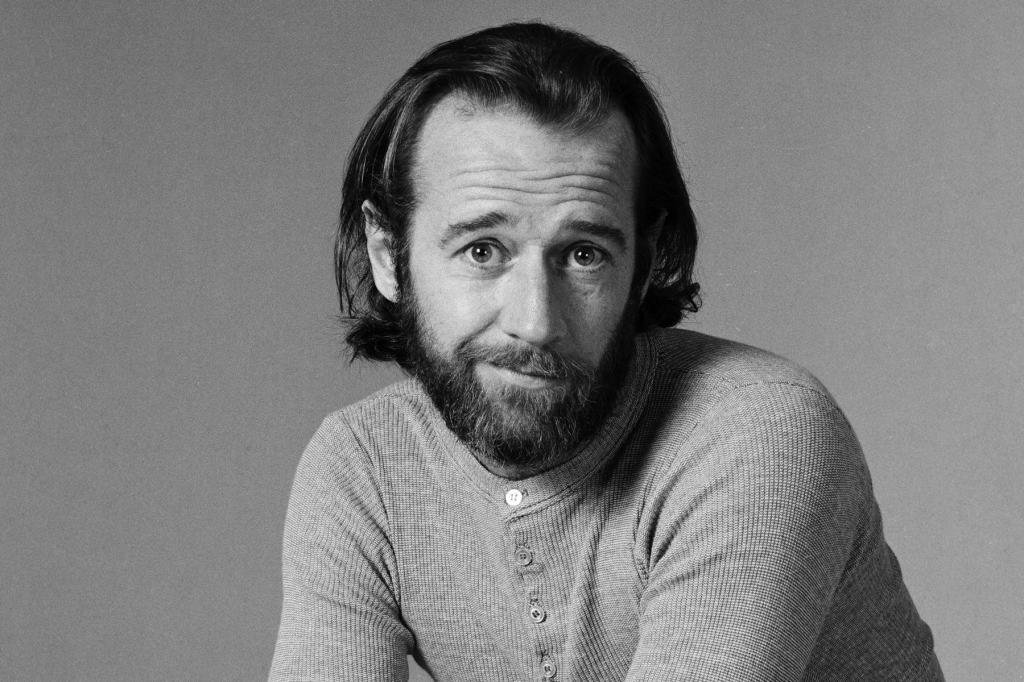
Sometimes it’s not you but the audience. The Apostle Paul was, at times, treated like Rodney Dangerfield (getting no respect) and, at other times, like George Carlin (causing people to think and listen without even knowing it).

Everywhere Paul went on his missionary journeys he experienced both acceptance and opposition. Determined to spread the good news of Christ’s redeeming work, Paul found a receptive audience and was able to establish churches.

Yet, Paul also upset the religious status quo wherever he went. As a result, there were times when he and his colleagues needed to steal out of town before an angry mob could get their hands on him. Sometimes, the furious cabal got ahold of Paul; and he forever carried the scars of those beatings on his body. Talk about no respect!

So, it must have been a refreshing experience for Paul to arrive in the city of Berea (located at the base of the Olympian Mountains in southwestern Macedonia) and discover a different spirit than he typically found in other places – a willingness to investigate, scrutinize, and grapple with the message presented. A receptive audience is a beautiful thing.

To spiritually thrive and flourish in this life we all must embrace the noble character of remaining open-minded with a teachable spirit. Just as the body grows, changes, and matures over time, so the human spirit does the same, and needs continual spiritual development. To become closed-minded and believe all questions are answered and settled, is to cut off oneself from truth and reality.

The Apostle Paul, I believe, is a good model of what it takes to be open-minded and a lifelong learner. The following are some ways he kept alive to spiritual truth:

Paul found his motivation. He went on missionary journeys because he wanted to make Christ known in places where he wasn’t. “It doesn’t matter if people are civilized and educated, or if they are uncivilized and uneducated. I must tell the good news to everyone. That’s why I am eager….” (Romans 1:13-14, CEB)

Paul went to new places and met new people. Getting stuck in a rut comes from never doing anything new or going to new places. We don’t have to be missionaries like Paul to do some movement and discover personally unexplored places, both literally and spiritually. Habits and routines are good. Sometimes we just need to create new ones so that we see a different perspective and have new experiences. The inability to see another’s viewpoint comes from an unwillingness to entertain any kind of change.

Paul avoided speculation. He did not superimpose his own experiences onto others. Paul was remarkably open to people everywhere he went, instead of being afraid and expecting trouble and/or abuse. The Bereans were open to Paul because Paul was open to them. Paul avoided looking at them as Thessalonians or Philippians; both were places where he got into loads of trouble just before coming to Berea. A contemporary way of stating Paul’s attitude and practice is that he was free of prejudice and discrimination.

Furthermore, notice the intellectual characteristics of the Berean people:

  • They were curious to hear what Paul thought.
  • They were able to have their ideas challenged.
  • They didn’t get angry when new ideas were presented.
  • They practiced both intellectual humility and mental empathy.
  • They believed Paul had a right to share his arguments, beliefs, and thoughts.

Today, in our intellectually and politically polarized world, far too many people are uncomfortable with uncertainty and ambiguity. So, they are unwilling to wrestle with spirituality by eliminating all mystery from their religion. When that happens, oppression is born. Those were the folks who could not tolerate Paul’s ideas and gave him such a hard time.

By rejecting alternative ideas that might challenge the status quo, people may be able to minimize uncertainty and risk – or at least their perception of risk – yet, the closing of their minds to other’s thoughts opens them to abusing the bodies of those same people.

When people are intellectually and spiritually proud, they wrongheadedly believe that they already know all there is to know, and so, they refuse to listen. At best, this limits the potential for learning; at worst, it forms a cognitive bias which blinds them to their own ignorance and blunts their ability for compassion.

It is, therefore, imperative that we be humble about our knowledge, understanding that there is always more to learn.

Almighty God, in you are hidden all the treasures of wisdom and knowledge. Open our eyes that we may see the wonders of your Word; and give us grace that we may clearly understand and freely choose the way of your wisdom. As the source of all light, enlighten our spirits. Pour out on us the spirit of understanding so that our hearts and minds may be opened. Amen.