Beginnings and Endings

Forest Sunset, by James Naughton

I’ve always thought it strange that we have New Year’s celebrations on January 1 at midnight when the year begins. The year hasn’t even happened yet, and we’re celebrating it. I understand celebrating a live birth and all the possibilities of a new baby in a family; but having worldwide blowouts about an upcoming New Year just strikes me as weird.

For some reason, we don’t celebrate the year we’ve just lived. We “take a look back” at the significant events and happenings. But there’s certainly no party around it. I suppose it’s because a lot of terrible things happen in a year. Yet, a lot of good things happen, too, that we could center some joy around.

What I’m getting at, in a round about way, is that we humans don’t do well with endings. And then we quickly become discouraged with our new beginnings – likely because we put little to no thought and preparation into how important and necessary our endings really are.

This is yet another roundabout way of saying that I (and we together) are experiencing something of an ending. For the past 1,750 days, I have provided a daily reflection upon a text from Holy Scripture. And those reflections haven’t been just a few sentences of devotional drivel, nor a measly daily crumb. I’ve written thousand-word-posts which I believe have been thoughtful and truly reflective on the text and our human condition.

However, all things must end. And this is my last post – at least for a while. I won’t be posting every day, as I’ve done for nearly 5 years! Yet, in order for me to have a proper new beginning of my own (one that I neither wanted nor asked for) I must let go of my daily blog posts.

Although I have been blogging for the past 15 years, I started doing the daily reflections at the beginning of COVID, as a way of remaining connected with my then church congregation, and with others. My thought was to give up doing it every day, once things got back to some sort of normalcy – whatever the heck that is.

Yet, when the masks initially came off and we all began seeing one another again, I found that the daily routine of writing biblical reflections had gotten into my spiritual bones. I was no longer simply writing for others; I was writing for myself. It buoyed my own faith to rise early in the morning and put some intentional focus upon crafting some scriptural thoughts on the Bible.

But that is no longer possible. My life can no longer sustain the practice. I intend to keep up the occasional post of maybe once a week. I might not even be able to do that. It might be once or twice a month. I don’t yet know.

Yet, what I do know is that I want to take the opportunity to celebrate the reality that I spent 1,750 straight days writing and posting impactful blog posts! Many of you were gracious to send me private notes of appreciation and encouragement. I especially treasure the ways some of you explained your story of how your own relationship with God has been helped.

When you boil down life to its essence, all any of us really have is our stories. Behind every event, each encounter, and all of the numbers which get crunched and the stuff that gets done and achieved, there is a story.

Stories bring just as much healing to us as modern medicine and surgeries. And they encourage, inspire, and change us in ways we cannot imagine.

The Bible, at its core, is a collection of stories. It seems God has created us as story-driven people, and so, in order to reveal something of God’s personhood and nature, we were given a grand and unfolding story of redemption.

I love reading and meditating on Holy Scripture, mainly because I love the Holy God of whom I belong and gladly serve.

I’ll continue writing the occasional post, but I will miss the daily meetings I’ve had with the Lord and with you in these past few years. Thank you for your faith, and for listening to God’s Word. What’s more, you can always avail yourselves of the nearly 2,700 blog posts on the website.

I pray that we all may learn to end things well, so that we might begin new things with some needed wisdom, humility, and grace.

May you live this day compassionate of heart, gentle in word, gracious in awareness, courageous in thought, and generous in the love of God through Jesus Christ our Lord and in the strength of the Holy Spirit. Amen.

The Holy Name of Jesus (Luke 2:15-21)

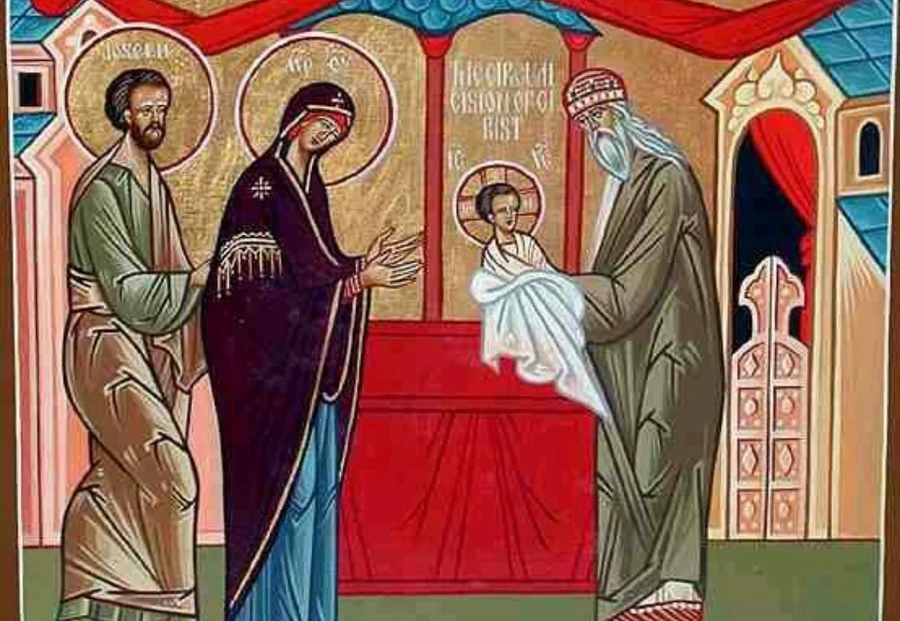
Orthodox depiction of the circumcision and naming of Jesus

When the angels had left them and gone into heaven, the shepherds said to one another, “Let us go now to Bethlehem and see this thing that has taken place, which the Lord has made known to us.” So they went with haste and found Mary and Joseph and the child lying in the manger. When they saw this, they made known what had been told them about this child, and all who heard it were amazed at what the shepherds told them, and Mary treasured all these words and pondered them in her heart. The shepherds returned, glorifying and praising God for all they had heard and seen, just as it had been told them.

When the eighth day came, it was time to circumcise the child, and he was called Jesus, the name given by the angel before he was conceived in the womb. (New Revised Standard Version)

“The Holy Name of Jesus” is a celebration, observed by some Christian traditions, each year on January 1 – which is the eighth day after the birth of Jesus, when he was named and circumcised at the temple in Jerusalem.

An angel of the Lord appeared to him in a dream and said, “Joseph, son of David, do not be afraid to take Mary as your wife, for the child conceived in her is from the Holy Spirit. She will bear a son, and you are to name him Jesus, for he will save his people from their sins.” (Matthew 1:20-21, NRSV)

In the Law of Moses, all male infants are to be circumcised on the eighth day after their birth (Leviticus 12:3). Throughout most of the history of the Christian Church, January 1 has been celebrated as a feast day devoted to the naming of Jesus.

The name “Jesus” comes from the Hebrew Yeshuah (Joshua) which means “Yahweh will save.” It is a name fitting for the person and work of Christ.

Therefore God exalted him even more highly
    and gave him the name
    that is above every other name,
so that at the name given to Jesus
    every knee should bend,
    in heaven and on earth and under the earth,
and every tongue should confess
    that Jesus Christ is Lord,
    to the glory of God the Father. (Philippians 2:9-11, NRSV)

Faith is always followed by obedience. So, the faith of Joseph and Mary in believing the words of the angel Gabriel, translated into the obedient naming of their son as “Jesus.” (Luke 1:31-32)

Jesus, bearing the name of savior, is holy in every way. Not only does the name of Jesus point to his divinity – because of his miraculous conception by the Holy Spirit – but it also directs us toward the special mission for which he entered this world.

Jesus Christ, the Son of God, and Son of Humanity, is God’s agent of deliverance for both Israel and the whole world.

“Do not be afraid, for see, I am bringing you good news of great joy for all the people: to you is born this day in the city of David a Savior, who is the Messiah, the Lord….” (Luke 2:10-11, NRSV)

The Gospel writer Luke provides us with a birth narrative “pregnant” with theological information and importance:

  • Jesus has divine sonship, and possesses the status of king (Luke 1:31-35)
  • Jesus comes from the city of David, which is Bethlehem, not Jerusalem (Luke 2:4, 11)
  • Jesus is described by the angel Gabriel as Son of the Most High, Son of God, Savior, Messiah, and Lord; each of these titles direct us to his identity and mission (Luke 1:32, 35; 2:11)

I like the collective response of the shepherds, after they received heavenly good news from a group of angels.

They could have dismissed the entire thing as having drunk too much brandy on a brisk winter night. They could have kept the whole affair to themselves, reasoning that nobody would believe a bunch of stinky shepherds.

Instead, much like Mary who hurried off to Elizabeth after receiving the angelic message, the shepherds dropped everything to go and see the feeding trough with a newborn baby wrapped in swaddling cloth.

In other words, the shepherds belief in what they heard and experienced, quickly translated into action. It was only appropriate that it was shepherds who discovered the newborn king, the Son of David, himself a shepherd who was anointed by God.

The shepherds went and followed the signs given to them by the angel. And they believed. A motley group of shepherds returned to their fields, kicking up their heels, praising and glorifying God. They knew that things would never be the same again.

The name of Jesus is holy, simply because the Lord Jesus Christ is the Holy One. Christians recognize Jesus as Savior, the fulfillment of all God’s promises. His singular birth, life, death, resurrection, and ascension is exactly, I believe, what this old fallen world is most in need of.

It is never too late to resolve knowing Jesus. At the beginning of this year, there is perhaps no better resolution to make, again and again, of knowing Jesus Christ and honoring his holy name.

Eternal Father, you gave to your incarnate Son the holy name of Jesus to be the sign of our salvation. Plant in our hearts the love of Jesus, truly God and truly human, and grant that we may praise and bless your Holy Name with our whole mind, heart, body, and spirit, that we may know your boundless compassion and mercy. In Christ’s name, we pray. Amen.

Stay Awake (Mark 13:32-37)

“But about that day or hour no one knows, neither the angels in heaven nor the Son, but only the Father. Beware, keep alert, because you do not know when the time will come. It is like a man going on a journey, when he leaves home and puts his slaves in charge, each with his work, and commands the doorkeeper to be on the watch. 

“Therefore, keep awake, for you do not know when the master of the house will come, in the evening or at midnight or at cockcrow or at dawn, or else he may find you asleep when he comes suddenly. And what I say to you I say to all: Keep awake.” (New Revised Standard Version)

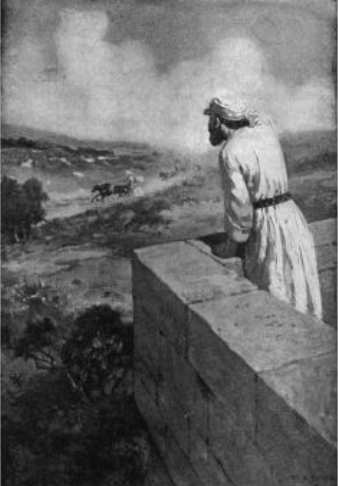
I would make a terrible night watchman. If I lived in the ancient world, and had to keep watch and stay awake at night (or even during the day) on the top of some city wall, I’d give myself 5 minutes; maybe 10 minutes top, then I’d be asleep.

It would clearly be on me if the enemy scaled the wall. I’d probably even sleep through the battle going on all around me. And nobody would kill me, because everyone would think I’m already dead.

But thank the Lord that this is not the sort of keeping watch that Jesus was talking about to his disciples. Today’s lesson is all about staying alert, remaining vigilant, and being savvy to the spiritual realities unfolding in front of us, so that we are not caught off guard.

By Unknown Artist

We must stay ready so that we don’t have to get ready. We need to be prepared. So, what exactly are we to be on our guard about and be ready for? Here is what Jesus has also said:

“Keep awake and pray that you may not come into the time of trial; the spirit indeed is willing, but the flesh is weak.” (Mark 14:38, NRSV)

“Take care! Be on your guard against all kinds of greed, for one’s life does not consist in the abundance of possessions.” (Luke 12:15, NRSV)

“Be on your guard! If a brother or sister sins, you must rebuke the offender, and if there is repentance, you must forgive.” (Luke 17:3, NRSV)

“Be on guard so that your hearts are not weighed down with dissipation and drunkenness and the worries of this life and that day does not catch you unexpectedly.” (Luke 21:34, NRSV)

“See, I am coming like a thief! Blessed is the one who stays awake and is clothed, not going about naked and exposed to shame.” (Revelation 16:15, NRSV)

Stay awake and stay alert so that we can be on guard for Christ’s return.

Jesus issued a call to a particular way of life. This sort of life is germinated in the soil of Christ’s imminent return. Our Christian discipleship is an urgent undertaking, because we aren’t sure how much time we actually have before our Lord comes back.

Today’s Gospel lesson may seem a bit confusing, coming to us in the season of Christmastide, in which we are to be joyful and celebrate the coming of Christ.

Yet, always in the back of our minds, while we are appropriately partying because of Christ’s incarnation, we are to remain vigilant that Christ’s return is inevitable, and likely imminent.

We have to be ready, at all times, no matter what the occasion is.

Today is today. Tomorrow is tomorrow. You and I have enough on our plate to try and figure out for today. Tomorrow has enough worries of its own, so leave it alone.

Putting energy into trying to predict the future, or control upcoming events, seems to me like an old man walking around with a white civil defense pith helmet on his head. He’s doing a lot of effort directing people for nothing that’s actually helping anyone today, and for something that might not even happen at all.

It’s no good to keep yourself in a continual state of stress and tension about the future. Dumping a bunch of adrenaline into your system for a situation we are not even in yet, is a one way road to burnout, or burning up in a place you won’t like.

Staying awake and remaining alert is more akin to praying continually, or always maintaining a clear conscience. (1 Thessalonians 5:17; Acts 24:16)

Jesus said to them, “My time has not yet come, but your time is always here.

John 7:6, NRSV

We manage to stay awake spiritually by giving ourselves to one another (and God!) and working together toward our shared purpose of preparing for Christ’s return.

Everyone has their job to do, their spiritual gift to exercise, and their help to offer. The household is ready for the master’s return, simply because each person is working together so that they can collectively receive him when he shows up.

We can do a lot of things individually. But most things require the entire community’s effort.

In this Christmastide, we stay awake by celebrating together, and sharing our joy with one another. When the seasons change, our approach will change with it, in order to stay alert, yet our need for the community of the redeemed never changes.

Nobody has to figure out anything alone. We’ll figure it out together. We will find a way to deal with today while preparing for tomorrow.

As for me, I’ll need a nap, before I’m of any help to anyone.

Direct me, O Lord, with your grace and mercy in everything I do this day. Help me to persevere with your great benevolence, so that in all my work today I may glorify your holy name; through Jesus Christ our Lord. Amen.

‘Tis the Season For Praise (Psalm 148)

By Stushie Art

Praise the Lord!
Praise the Lord from the heavens;
    praise him in the heights!
Praise him, all his angels;
    praise him, all his host!

Praise him, sun and moon;
    praise him, all you shining stars!
Praise him, you highest heavens
    and you waters above the heavens!

Let them praise the name of the Lord,
    for he commanded and they were created.
He established them forever and ever;
    he fixed their bounds, which cannot be passed.

Praise the Lord from the earth,
    you sea monsters and all deeps,
fire and hail, snow and frost,
    stormy wind fulfilling his command!

Mountains and all hills,
    fruit trees and all cedars!
Wild animals and all cattle,
    creeping things and flying birds!

Kings of the earth and all peoples,
    princes and all rulers of the earth!
Young men and women alike,
    old and young together!

Let them praise the name of the Lord,
    for his name alone is exalted;
    his glory is above earth and heaven.
He has raised up a horn for his people,
    praise for all his faithful,
    for the people of Israel who are close to him.
Praise the Lord! (New Revised Standard Version)

By Bible Art

God is sovereign – which means that the Lord has complete power, dominion, and authority over everything that exists. God has supremacy because the Lord is the Creator God, the One who brought all things into existence.

Ideally, God and all creation exist harmoniously together. People coexist with God and recognize the Lord’s sovereignty through offering praise, adoration, and thanksgiving to the Lord.

That is what today’s psalm calls us to do, especially in this season of Christmastide. Christians are to offer their praise to God, despite whatever circumstances may be happening in their lives, and around them.

The psalmist was not telling people to simply forget their sorrows. He was exhorting everyone, including all creation, to praise the Lord in the middle of their distress.

When Christ was born, circumstances were not good for the Jews in Judea. Roman occupation had a firm authoritative hold upon them. Throughout their history, Jews have been often marginalized and oppressed. They know what suffering is.

Even though Christianity is a sizable world religion, Christians in many parts of the world today experience ostracization and discrimination. Christians everywhere are not immune to world events with situations like dictators, disasters, and diseases.

Yet, there is always an opportunity for praise to God. And the psalmist summons the faithful to do so. Praise and adoration of God shape us and form us spiritually, so that, even if we do not feel like doing it, the very act of offering the praise trains our spirits to bend in a good direction.

We could simply give-in to the status quo of things through constant complaining; or keep offering our woes. But that doesn’t negate the importance of praise.

Today we have the opportunity (and responsibility) to praise God for the incarnation of Christ. To remember that God loved us enough to become one of us. To adore the Christ child, and choose to give thanks, even though there might be oppression all around us.

We can celebrate, along with all creation, the nature of God and the Lord’s good purposes for humanity and all the earth. Adverse situations may stop us from many things we want to do, yet no circumstance can ever prevent us from praising God for divine attributes and divine sovereignty.

All of creation praises God by being exactly what God created it to be. A tree doesn’t try and be a star in the sky. It simply takes root and grows, branching out and becoming a haven for many creatures. Squirrels do what squirrels do, just like flowers, rocks, wind and weather do what they do.

It’s us people who tend to go rogue and try to be something or someone we’re not.

We can best praise God by living as God created us to live. We were designed to live in a divine/human cooperation of caring for all creation. We best exist alongside God by being good stewards of all that God has given to us – including the earth, our families and neighborhoods, and especially ourselves.

Praise is the job description of everything which exists. We will do that well as we honor our mandate to care, and not to harm; to serve others, and not be self-serving.

All things are connected on this planet. The ecosystems of the earth, and the economies of people, are all meant to live in harmony with each other, so that all of creation is blessed.

You and I have a sacred trust of relating well with each other, and everything around us.

The human condition is one of ongoing ups and downs. We experience a full range of tragedy, division, and hardship; along with joy, wonder, and happiness. In all things, no matter what, we are called to praise the Lord.

Each of us needs to find that place and that way of orienting and reorienting ourselves to what is important and why we are here.

For me, that happens whenever I hug my dear wife. Sometimes, I even go out in my backyard and hug my oak tree. The very act of hugging helps ground me to what is here and real, what is important and necessary.

If we can but touch one another, not just literally, but with well-placed words and helpful actions, then we can recall why harmony with all things is so important.

I’m in no way saying this is easy. It isn’t. There are many days when either the world seems as if it is a big collective ball of grumpy; or you yourself can hardly do the barest of responsibilities.

Yet, we can still find a way to praise, to be grateful, to offer what little care there may be to give.

Because it’s not so much about the amount of what we do, but rather how we are able to do it. A smidge of something done with love is infinitely better than lots of accomplishment without any care behind it.

The holidays are some of the hardest days for some folks. Christmas and the New Year are associated with grief for various reasons. It can bring isolation, not connection. The last thing such a person may want to do is praise the Lord, especially with a community of folks. And yet, that may just be the best activity.

There is no one-dimensional way of praising God; our offerings to the Lord can be multi-faceted. It can be achieved according to what we have to offer, and why we are offering it. It will not look the same for everyone.

Whatever you really need to do for an offering of praise this year, then do it. It’s okay if it’s a bit avant-garde, or off the beaten path. You are, after all, talking to a guy who hugs trees, for God’s sake.

Maybe this is the time to re-establish an old tradition that has fallen by the wayside. It could be the right opportunity to pick up that old musical instrument or to stretch your voice in singing again.

The exhortation we have from the psalmist is to praise. How you go about it, is up to you, my friend.

May almighty God, who sent his Son to take our nature upon him, encourage you in this holy season, scatter the darkness of sin, and brighten your heart with the light of his holiness. And may the blessing of God – Father, Son, and Spirit – be upon you and remain with you forever. Amen.