Welcome, friends, on this second Sunday in Lent. During his earthly ministry, Jesus had no intention of halting his travels because of all the unrest in the world. Christ assured his listeners that the work he is doing will be done today, and the next, and the day after that—building ultimately to his greatest work of securing redemption through his crucifixion and resurrection. Click the videos below and let us say together, “Blessed is he who comes in the name of the Lord!”…
Pastor Tim Ehrhardt, Luke 13:31-35
Lord, grant us simplicity of faith and a generosity of service that gives without counting cost. A life overflowing with Grace poured out from the One who gave everything, that we might show the power of love to a broken world, and share the truth from a living Word. Lord, grant us simplicity of faith, and a yearning to share it. Amen.
Praise be to the God and Father of our Lord Jesus Christ, who has blessed us in the heavenly realms with every spiritual blessing in Christ. For he chose us in him before the creation of the world to be holy and blameless in his sight. In love he predestined us for adoption to sonship through Jesus Christ, in accordance with his pleasure and will— to the praise of his glorious grace, which he has freely given us in the One he loves. In him we have redemption through his blood, the forgiveness of sins, in accordance with the riches of God’s grace that he lavished on us. With all wisdom and understanding, he made known to us the mystery of his will according to his good pleasure, which he purposed in Christ, to be put into effect when the times reach their fulfillment—to bring unity to all things in heaven and on earth under Christ.
In him we were also chosen, having been predestined according to the plan of him who works out everything in conformity with the purpose of his will, in order that we, who were the first to put our hope in Christ, might be for the praise of his glory. And you also were included in Christ when you heard the message of truth, the gospel of your salvation. When you believed, you were marked in him with a seal, the promised Holy Spirit, who is a deposit guaranteeing our inheritance until the redemption of those who are God’s possession—to the praise of his glory. (New International Version)
God has blessed us. The word “blessing” comes from the same word for “giving thanks.” So, when, we consider the ways God has spiritually blessed us, it leads us to effusive gratitude and praise. And this was exactly the case for the Apostle Paul.
In writing these words, Paul was so excited to share with the church at Ephesus about the blessings of God that he could not stop. In our English translations we have broken these verses up into several sentences and two paragraphs. But Paul originally penned this as one sentence!
More than anything, Paul wanted the church to know the wonderful blessings of God to them. Throughout the book of Ephesians, Paul’s constant theme to the church is reconciliation and restoration. In fact, that is the end game for God. God has cares about reconciling people to himself, and others. The Lord deeply cares about restoring the entire world to the lordship of Jesus Christ.
To accomplish this gigantic feat, God intervened into humanity by giving the church three main blessings: election, redemption, and inheritance.
Election
The word “chose” and “chosen” in some English translations is the Greek word ἐκλεκτός (eklektos) or “election.” This is where it all begins for us. Even before the creation of the world, God had the end of the story in mind. Divine decisions were made about outcomes and results.
This approach, by the way, is how we are to engage ministry in the church. That is, we begin with the end in mind of what we want to accomplish. Then, we gather the people and begin making the needed decisions to see that end purpose realized. Too often, churches begin with a group of people and wonder about what they should do – which is backwards from how God does it.
In eternity past, in love, God predestined us to be adopted as his children. You and I are so loved by God that we were special to him before we were even ever born! Election means God has a purpose for us. On the human level, we elect candidates so that they may serve the common good and put their energies into accomplishing some noble cause.
Likewise with God. We were not elected or chosen by God solely to go to heaven when we die. Although that is true and shall happen, the reason we were chosen by God was for us to be holy and blameless, to be for the praise of God’s glory. We are not in some sort of holding pattern on earth, impatiently waiting for the afterlife. Rather, we are to be active in accomplishing God’s purposes for our election. And what is that purpose?
We are to participate with God in the grand scheme of reconciling and restoring all of creation back to the original design. Therefore, every act of forgiveness, grace, love, and kindness; every overture of faith and communication of the gospel to others; and all steps of obedience are small movements toward the great restoration story God is writing.
For example, the book of Acts ends on a dramatic note with no resolution to it. That’s because the story is still being written. We are chosen to be a part of it.
Redemption
To be redeemed means to be delivered by a payment of a price. In the ancient world, slavery was an entrenched part of the society. The picture of the slave market provided a means for Paul to communicate a spiritual blessing: We have been redeemed from the slave market of sin through the payment of Christ’s blood, and so now, we enjoy the freedom from and forgiveness of sin.
This is not just redemption from something (sin, death, and hell); it is also redemption to reconciliation and restoration. God elected us to receive redemption so that the grand design of bringing all the earth under the lordship of Christ will happen. God has and is creating a new society, the community of the redeemed, that will realize the original design of unhindered connection with God and others.
Inheritance
We are receiving an inheritance. It will be put into effect when God’s timing and purpose is accomplished – and Paul spells the purpose out: To bring all things in heaven and on earth together under one head, Jesus Christ.
Here is how Paul envisions what is coming: The chosen and redeemed of God will one day die, then they will go to be with Christ. But that is not yet the end because the entire world still needs redemption. This is why the preacher of Hebrews could say about the great heroes of the faith:
These were all commended for their faith, yet none of them received what had been promised. God had planned something better for us so that only together with us would they be made perfect. (Hebrews 11:39-40, NIV)
There is not just life after death; there is life after life-after-death. All those people of faith, including our believing friends and relatives who have gone before us to be with Jesus, are waiting. They, along with us, have not yet received all the promised blessings of our inheritance.
We are waiting for the reconciliation and restoration of all things, a new heaven and a new earth in which we will be together as sons and daughters in the kingdom of God with Jesus as King over us. The possession of the Holy Spirit is the guarantee that this is the case, and it will happen.
Conclusion
Our blessings of election, redemption, and inheritance are all activated by faith. Belief is the switch that turns on the blessings to us in a real and actual way. The electricity is there in the person of the Holy Spirit. The light bulb is there, and it is us.
So, the question for us today is: Are we turned on and shining brightly, or is the switch off? We must access our blessings by belief in the Son of God who loved us and gave himself for us.
God is on a mission to reconcile and restore the world. Our salvation is part of God’s plan to make that happen. God is a missionary. The Lord has chosen us to be emissaries to a world that needs redemption and restoration.
The church is like no other institution on earth – existing for the life of the world, and not for itself. Like a mighty army, we are to train ourselves for godliness so that we can engage an invisible enemy and see the kingdom of God come and the will of God done here on earth as it is always done in heaven.
The camaraderie we enjoy as fellow soldiers is not the end purpose – restoring enemy territory back to its original government is. So, we care for our wounded and do everything we can for them. There are yet more spiritual battles to be won and hearts captured for King Jesus.
May you and I, then, give thanks with grateful hearts for the great spiritual blessings of election, redemption, and inheritance so that God’s benevolent and merciful rule might spread everywhere to everyone.
God our Savior, you desire that none should perish, and you have taught us through your Son that there is great joy in heaven over every sinner who repents: Grant that our hearts may ache for a lost and broken world. May your Holy Spirit work through our words, deeds, and prayers, that the lost may be found and the dead made alive, and that all your redeemed may rejoice around your throne, through Jesus Christ our Lord. Amen.
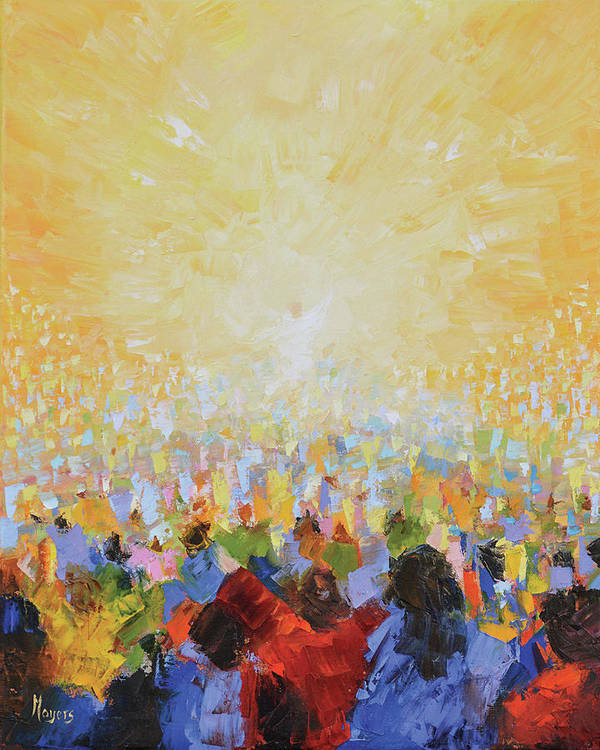
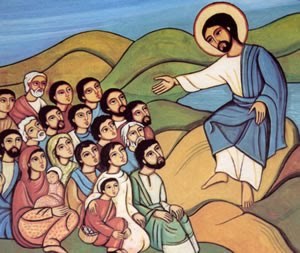
Now when Jesus saw the crowds, he went up on a mountainside and sat down. His disciples came to him, and he began to teach them.He said:
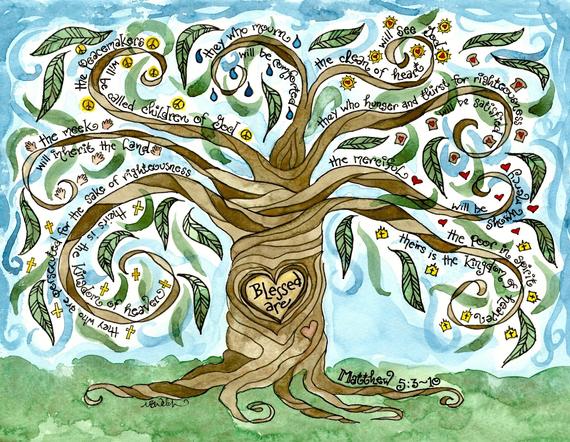
“Blessed are the poor in spirit, for theirs is the kingdom of heaven. Blessed are those who mourn, for they will be comforted. Blessed are the meek, for they will inherit the earth. Blessed are those who hunger and thirst for righteousness, for they will be filled. Blessed are the merciful, for they will be shown mercy. Blessed are the pure in heart, for they will see God. Blessed are the peacemakers, for they will be called children of God. Blessed are those who are persecuted because of righteousness, for theirs is the kingdom of heaven.
“Blessed are you when people insult you, persecute you and falsely say all kinds of evil against you because of me. Rejoice and be glad, because great is your reward in heaven, for in the same way they persecuted the prophets who were before you.(Matthew 5:1-12, NIV)
The human brain is hard-wired, in such a way, that it works its best when healthy rhythms of giving and receiving occur. God created us to thrive and flourish when we pay attention to particular ways of being with one another as people.
Jesus used the term “blessed” not in a financial sense, as if having lots of money is what it means to experience blessing. The word “blessed” means to have God’s stamp of approval, his favor, with the emotional and spiritual response of joy or happiness.
Real and lasting joy comes from a right relationship with God, defined according to what Jesus says – different from the false righteousness of the religious establishment which is based on outward appearance rather than inner attitudes. We need to know how to relate to our God, instead of simply conforming to an outward form of Christianity that everybody is doing.
Our entire selves are blessed when we engage in consistent rhythms of practicing humility before the Lord; sitting with grief; putting ourselves in another’s shoes; seeking right relationships with both God and others; pursuing mercy, purity, and peace-making in all our affairs; and allowing persecution to form us in ways the good times cannot.
Jesus preached the Beatitudes to clarify what it means to be approved by God. He wanted to gain true disciples who follow God for the right reasons. The crowd was following Jesus physically, but not necessarily spiritually. They all followed for different reasons: for healing, curiosity, or a genuine desire to be a disciple. So, Jesus sat them down to communicate what a true follower and disciple is.
Imagine we are part of the crowd originally hearing Christ’s Sermon on the Mount (Matthew 5-7). The world in which the people lived, and the religious system which they took for granted, was highly restrictive.
In order to approach God, enter the kingdom, and be a good citizen, one had to be Jewish, male, a faithful Law-keeper, physically whole, healthy, and able; and, if not wealthy, able to make a good living.
Yes, this reality meant that Gentiles, women, those who struggled to keep the Law, the diseased and disabled, and the poor had no shot whatsoever in the kingdom of God. To be blessed and have God’s stamp of approval on your life meant you were a healthy and wealthy Jewish man who practiced a legalistic form of righteousness.
Not a single one of us here would have any shot at the kingdom of God. Yet, we have heard something about this guy, Jesus. There seems to be something very compelling about him. We go seek him out, sit down on a mountainside and hear him say the most refreshing and scandalous words we have ever heard…
God approves of the spiritually bankrupt who realize they’ve got no leverage to make any deals. They shall be given the riches of God’s grace.
God approves of those who grieve over personal sin and lament the presence of sin in the world. They are the ones who will experience God’s forgiveness and comfort.
God approves of the powerless and those who use their authority to champion others. They will inherit God’s power and take up authority to command dark forces and put them in their place.
God approves of those who have a voracious appetite for right relationships and doing everything for the right reasons. Their growling spiritual stomachs will be stuffed with God’s righteousness.
God approves of those who liberally extend grace to others, being always considerate of everyone’s needs, showing neither prejudice nor favoritism. They shall receive God’s grace at the end of the age when Christ comes to judge the living and the dead.
God approves of the spiritually clean who have bathed in the waters of divine mercy. They will see Jesus face to face.
God approves of those who facilitate and negotiate peace. Because that is precisely what God’s children do.
God approves of those who are persecuted for living by these counter-cultural Beatitudes. They have an inheritance that will never perish, spoil, or fade.
Grant us, Lord God, a vision of our world as your love would make it: a world where the weak are protected, and none go hungry or poor; a world where the benefits of abundant life are shared, and everyone can enjoy them; a world where different races and cultures live in tolerance and mutual respect; a world where peace is built with justice, and justice is guided by love. And give us the inspiration and courage to build it, through Jesus Christ our Lord. Amen.
Blessed is the one who does not walk in step with the wicked or stand in the way that sinners take or sit in the company of mockers, but whose delight is in the law of the Lord, and who meditates on his law, day and night. That person is like a tree planted by streams of water, which yields its fruit in season and whose leaf does not wither— whatever they do prospers.
Not so the wicked! They are like chaff that the wind blows away. Therefore the wicked will not stand in the judgment, nor sinners in the assembly of the righteous.
For the Lord watches over the way of the righteous, but the way of the wicked leads to destruction. (Psalm 1:1-6, NIV)
The Righteous and the Wicked
This psalm presents two ways we can choose to shape our lives: the way of the righteous and the way of the wicked, blessed or cursed. The way of the righteous leads to human blessing, flourishing, and living. The way of the wicked leads to human cursing, degenerating, and dying.
Distinguishing between the righteous and the wicked is not always as easy as it looks. Only at the end of the age, when Judgment Day comes, will we know for certain the righteous and the wicked.
To discern the difference between the two, let’s refer to the Reformer, Martin Luther, to help us. You might be familiar with Luther’s 95 Theses posted on the door of the Wittenberg castle church, sparking the Reformation of Christianity. Less familiar is the theological meat of Luther’s reforming spirit, his Heidelberg Disputation of 1518, written the year following the 95 Theses.
Theology of the Cross and Theology of Glory
Like Psalm 1, Luther contrasts two opposing ways. He calls these two ways the theology of the cross and the theology of glory. The cross, as expressed by Luther, is God’s attack on human sin. It is the death of Christ which is central to Christianity. Therefore, one must embrace the cross and rely solely upon Christ’s finished work on the cross to handle human sin. It is through being crucified with Christ we find the way to human flourishing and life. In other words, righteousness is gained by grace through faith in Christ.
The theology of glory is the opposing way of the cross. It’s important to understand Luther because he has a key which helps us unlock Scripture by not walking in the way of the wicked, as expressed in Psalm 1. For Luther, the wicked person, and the vilest offender of God, is not the person who has done all kinds of readily observable outward sinning. You, perhaps like me, have an idea in your head of what the worst of sinners is like. My guess is that it probably has something to do with certain lifestyles or evil acts.
“Good” Works?
Luther, however, insisted the worst of sinners are people who do good works. Specifically, the wicked person is one who has clean living and does nice things but does them disconnected from God by wanting others to see their good actions. Another way of putting it: The wicked person seeks to gain glory for themselves rather than give glory to God.
Our good works can be the greatest hindrance to righteousness and living the way of the cross. It is far too easy to place faith in our good works, done apart from God, rather than placing complete trust in Christ alone. It can be too easy, doing good things, for the primary purpose of having others observe our goodness, rather than do them out of the good soil of being planted in God’s Word.
The remedy for sin is the cross, and the sinner lives life apart from that cross, trusting in self, so that people will give personal recognition, respect, and accolades.
“It is impossible for a person not to be puffed by his good works unless he has first been deflated and destroyed by suffering and evil until he knows that he is worthless and that his works are not his but God’s.”
Martin Luther
Delight, or Not
The answer to this problem of doing good works to gain glory for self is not to avoid good works, but to do them from the good soil of being planted in God’s law and connected to Christ’s vine. The psalmist uses the word “law” in referring to Scripture as a whole, to all the acquired wisdom about how life is supposed to be lived in God’s world.
People who yield juicy abundant fruit have immersed themselves in the law. Because they delight in God; secretly rise early to meditate on God’s Word; privately read the Bible’s message; and pray to put that message into practice. They will be blessed.
The wicked are too busy to notice the law. They serve to be seen and desire public recognition for their charity and works. But those works will not stand in the Judgment. Jesus described them this way:
“You are like white-washed tombs, which look beautiful on the outside, but on the inside are full of dead men’s bones and everything unclean…. On the outside you appear to people as righteous, but on the inside, you are full of hypocrisy and wickedness.” (Matthew 23:27, NIV)
Which is Which?
Identifying the righteous and the wicked is not as simple as saying the wicked are “those people” out there, and the righteous people are in here. The truly righteous person delights in God through the law. They have the humble sense they could easily drift from God if not staying connected, rooted in Jesus, and grounded in the way of the cross.
The wicked, in contrast, are like chaff – worthless. They are arrogant and annoying – wanting all the attention which God rightly deserves. When I was a kid, I always wore a mask during the corn harvest because of the chaff and corn dust. Every year, from the time I was seven years old, I had the job of taking the tractor out and hitching up the wagons of corn and bringing them back. Then, I unloaded the wagon of corn into the auger which sent it up and into the corn bin. The corn dust flew everywhere. It was annoying and could easily take over my lungs if I weren’t masked up.
The wicked have nothing of substance to contribute to God’s kingdom – they add no value to what is going on. In fact, they are a hindrance to the harvest of souls God is trying to accomplish. Conversely, the righteous do good works which sprout from rich Iowa-type soil, producing a harvest of righteousness.
The righteous person takes the time to know God’s law; satisfies the needs of those who are not able to pay them back or give them proper recognition; and cultivates relationships with those they help. The righteous are relational.
Righteous Job
The biblical character, Job, is an example of a righteous person. Job did all kinds of good works. And he did them because of his close walk with God. Job persevered through intolerable suffering and grief because he knew God. Job assisted the needy; helped others no matter their situation; championed the less fortunate; and gave glory to God even amid terrible trouble. Job did not throw in the towel when his reputation, his family, and his wealth were completely taken away. Instead, he said:
“Naked I came from my mother’s womb, and naked I will depart. The Lord gave and the Lord has taken away; may the name of the Lord be praised.” In all this, Job did not sin by charging God with wrongdoing. (Job 1:21-22, NIV)
Generosity marks the righteous because God is generous. Grace defines the righteous because God is gracious. Gentleness is the way of the righteous because Christ is gentle. Spiritual prosperity is born of a righteous relationship with Jesus Christ. The Lord watches over the way of the righteous.
Injustice and Judgment
However, the wicked perish. There are sixteen prophetic books in the Old Testament, all given to a single message: Judgment is coming because of wickedness. And the wicked turn out to be some of God’s covenant people. That’s because they selectively did their good works to gain glory for themselves. And they withheld the good they could have done because it did not add any value to their reputation or personal goals.
For example, prophesying to those who fasted so that others would see their spirituality, the prophet Isaiah communicated God’s message:
“Is not this the kind of fasting I have chosen: to loosen the chains of injustice and untie the cords of the yoke, to set the oppressed free and break every yoke? Is it not to share your food with the hungry and to provide the poor wanderer with shelter— when you see the naked, to clothe them, and not to turn away from your own flesh and blood? (Isaiah 58:6-7, NIV)
God desires genuine spiritual growth. That happens when we eschew a theology of glory, and embrace a theology of the cross, which delights in God and God’s law, meditating on it day and night.
A Choice
We always have a choice between the way of the righteous and the way of the wicked, to embrace a theology of the cross or a theology of glory. Here is how that choice is framed in the book of Deuteronomy when the ancient Israelites were about to enter the Promised Land:
See, I set before you today life and prosperity, death and destruction. For I command you today to love the Lord your God, to walk in obedience to him, and to keep his commands, decrees and laws; then you will live and increase, and the Lord your God will bless you in the land you are entering to possess….
I have set before you: life and death, blessings and curses. Now choose life, so that you and your children may live and that you may love the Lord your God, listen to his voice, and hold fast to him. For the Lord is your life, and he will give you many years in the land he swore to give to your fathers, Abraham, Isaac and Jacob.” (Deuteronomy 30:15-20, NIV)
The idolatry which can easily seduce us are our own good works done for a human audience who will recognize and affirm. Jesus said we must play to the audience of one:
“But when you give to the needy, do not let your left hand know what your right hand is doing, so that your giving may be in secret. Then your Father, who sees what is done in secret, will reward you.” (Matthew 6:3-4, NIV)
Our daily choice must be to love God supremely and give God glory for everything good in our lives. Perhaps Christianity needs another Reformation – one in which we do not just uphold the authority of Scripture, but reform our habits by loving God through basic disciplines of Bible-reading and simple obedience; and by loving our neighbor through giving them time and attention, the gift of relationship and friendship.








 Rev. Tim Ehrhardt