


In those days a decree went out from Caesar Augustus that all the world should be registered. This was the first registration and was taken while Quirinius was governor of Syria.
All went to their own towns to be registered. Joseph also went from the town of Nazareth in Galilee to Judea, to the city of David called Bethlehem, because he was descended from the house and family of David. He went to be registered with Mary, to whom he was engaged and who was expecting a child.
While they were there, the time came for her to deliver her child. And she gave birth to her firstborn son and wrapped him in bands of cloth and laid him in a manger, because there was no place in the guest room.
Now in that same region there were shepherds living in the fields, keeping watch over their flock by night. Then an angel of the Lord stood before them, and the glory of the Lord shone around them, and they were terrified.
But the angel said to them, “Do not be afraid, for see, I am bringing you good news of great joy for all the people: to you is born this day in the city of David a Savior, who is the Messiah, the Lord. This will be a sign for you: you will find a child wrapped in bands of cloth and lying in a manger.”
And suddenly there was with the angel a multitude of the heavenly host, praising God and saying,
“Glory to God in the highest heaven,
and on earth peace among those whom he favors!”
When the angels had left them and gone into heaven, the shepherds said to one another, “Let us go now to Bethlehem and see this thing that has taken place, which the Lord has made known to us.”
So they went with haste and found Mary and Joseph and the child lying in the manger. When they saw this, they made known what had been told them about this child, and all who heard it were amazed at what the shepherds told them, and Mary treasured all these words and pondered them in her heart.
The shepherds returned, glorifying and praising God for all they had heard and seen, just as it had been told them. (New Revised Standard Version)
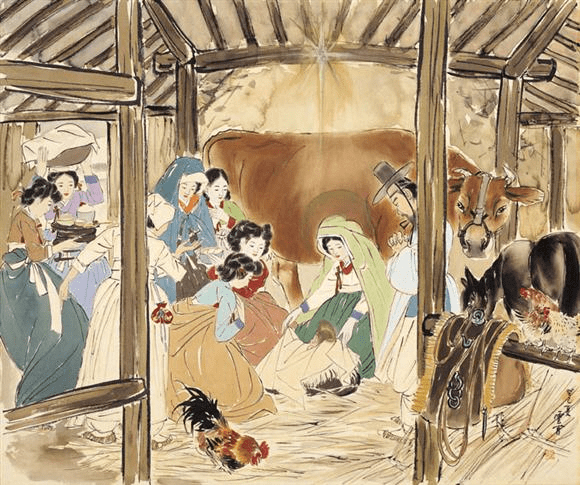
Overwhelmed. That’s the word I imagine the characters in this story had, for various reasons.
To have spiritual or emotional overwhelm is to feel overpowered by several circumstances at once. It’s experiencing a lot of emotions all at the same time.
The sense of overwhelm can come from many different things, including complicated grief, relational distance, and too many responsibilities. Depending upon why we are overwhelmed, it will likely either leave us stuck and chronically tired, or free and forever rejoicing.
A good sense of overwhelm is awe and wonder. A bad sense of overwhelm is despondency and dejection.
Mary probably experienced the full range of overwhelm. An angel showed up and announced to her that she would give birth to a son and name him Jesus, meaning that God will save the people. He will fulfill the promise of being the Son of the ancient King David who has a permanent reign.
In other words, Mary would give birth to the Messiah. That sounds like the very definition of overwhelm, in both its good and bad sense.
Despite the temporal worldly power of the Roman Empire, Mary’s child would have a kingdom without end. And in spite of the Romans, God’s will and purpose would prevail.
And yet, Mary and Joseph were still subject to Roman authority. That meant they needed to be registered, along with everyone else in the Empire, so that the government knew about their tax base, and who was going to pay it.
The decree from Ceasar meant that, even though Mary was quite pregnant, she and Joseph would have to travel to Bethlehem, the family’s ancestral town, in order to be properly registered.
Jesus would not be born in the city of overwhelming power and control in Jerusalem. Rather, Bethlehem, a small non-descript town south of the city, is the place for an overwhelming birth experience to happen.
It’s appropriate that from the beginning, the life and ministry of Jesus would be more about the smaller and less powerful place and people.
And so, the new king, from the line of David, is born in the most humble of circumstances. It is fitting that the humblest of persons were the first to receive the birth news.
Shepherds were literally out on the margins of society. Their typical reputation was not good. They stink. They drink too much. They’re on the lower rung of cultural power.
Yet, a huge angelic delegation was sent from heaven to shepherds to announce the birth. It was an overwhelming experience, no matter how you view it.

Angels showed up, and the shepherds were nearly paralyzed with fear. But their terror turned on a dime to awe, wonder, and joy.
What’s more, the good news shared with the lowliest of persons, is for everyone. All the overwhelm and awe is contained in a savior who has been born, Christ the Lord.
Overwhelming feelings were a regular experience of people in the Gospel of Luke who encountered angels – fear being the initial response. But it’s then followed by an assurance that God is extending grace to them, not judgment. No one need be afraid, because God is with them.
It’s not a new message; but it is a message that is newly focused in this savior of a baby. He is Immanuel, God with us. The presence of God is here, because the attention and love of God are here.
Out of my distress I called on the Lord;
the Lord answered me and set me in a broad place.
With the Lord on my side I do not fear.
What can mortals do to me?
The Lord is on my side to help me;
I shall look in triumph on those who hate me. (Psalm 118:5-7, NRSV)
The real genuine authentic power of the universe is here – not found within political empires or governments, nor with the wealthy and influential – but discovered in the arrival of the actual savior, who holds all power and authority, and wields it according to proper justice and righteousness.
All along, God is the true deliverer who backs up the needy and oppressed. It is demonstrated in the angelic proclamations of good news about this Savior, the Christ, the One anointed and chosen by God, the son of David, the deliverer from ancient enemies.
The angel’s proclamation erupts with the sudden appearance of a multitude of God’s heavenly messengers praising God, declaring God’s glory, favor, and blessing of peace on the earth. The emphasis is upon God’s grace rather than human action.
In response to the announcement they received, the shepherds went to see if what they had heard was true, and indeed, it all was. When they saw the sign for themselves, they could not keep silent about all they had heard and seen.
The shepherds praised God, out of an overwhelming sense of amazement that the Lord had paid attention to them.
Praise is still the reaction in the life of the person touched by all that they have seen and heard.
Creator God, by your greatness you became small; by your power you became powerless; and by your limitlessness you became limited. Through the birth of your son, we can live in the divine light that shines on a world transformed by the limitless power of your love. Amen. Praise the Lord!




 Rev. Tim Ehrhardt