


There was a Benjamite, a man of standing, whose name was Kish son of Abiel, the son of Zeror, the son of Bekorath, the son of Aphiah of Benjamin. Kish had a son named Saul, as handsome a young man as could be found anywhere in Israel, and he was a head taller than anyone else.
Now the donkeys belonging to Saul’s father Kish were lost, and Kish said to his son Saul, “Take one of the servants with you and go and look for the donkeys.” So he passed through the hill country of Ephraim and through the area around Shalisha, but they did not find them. They went on into the district of Shaalim, but the donkeys were not there. Then he passed through the territory of Benjamin, but they did not find them.
When they reached the district of Zuph, Saul said to the servant who was with him, “Come, let’s go back, or my father will stop thinking about the donkeys and start worrying about us.”
But the servant replied, “Look, in this town there is a man of God; he is highly respected, and everything he says comes true. Let’s go there now. Perhaps he will tell us what way to take.”
Saul said to his servant, “If we go, what can we give the man? The food in our sacks is gone. We have no gift to take to the man of God. What do we have?”
The servant answered him again. “Look,” he said, “I have a quarter of a shekel of silver. I will give it to the man of God so that he will tell us what way to take.” (Formerly in Israel, if someone went to inquire of God, they would say, “Come, let us go to the seer,” because the prophet of today used to be called a seer.)
“Good,” Saul said to his servant. “Come, let’s go.” So they set out for the town where the man of God was.
As they were going up the hill to the town, they met some young women coming out to draw water, and they asked them, “Is the seer here?”
“He is,” they answered. “He’s ahead of you. Hurry now; he has just come to our town today, for the people have a sacrifice at the high place. As soon as you enter the town, you will find him before he goes up to the high place to eat. The people will not begin eating until he comes, because he must bless the sacrifice; afterward, those who are invited will eat. Go up now; you should find him about this time.”
They went up to the town, and as they were entering it, there was Samuel, coming toward them on his way up to the high place. (New International Version)
“He who seeking asses, found a kingdom.”
John Milton, Paradise Regained
We are introduced to Saul, who eventually became the infamous first king of Israel. And he is described in almost a kingly sort of tone; his stature and pedigree are impressive. Saul looks the part of someone who could be important, do things, and go places.
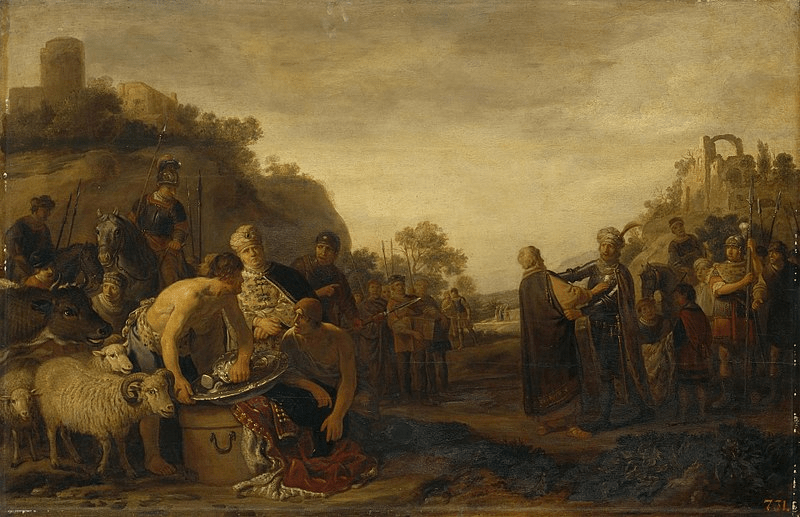
In today’s story, we find Saul to be an obedient and responsible son, going out to find some lost donkeys. By all appearances, Saul was an upright, law-abiding, faithful Jew from the tribe of Benjamin. However, appearances can be rather deceitful. The outward presentation of someone is not always congruent with what is on the inside; and vice versa.
These were the days when Samuel the priest would make a circuit through the country. He made regular rounds as Israel’s judge. Saul and Samuel would encounter each other in a divine appointment. The contrast between the two of them would become ever more pronounced and obvious. But to the point at hand, Saul was simply out looking for some lost animals.
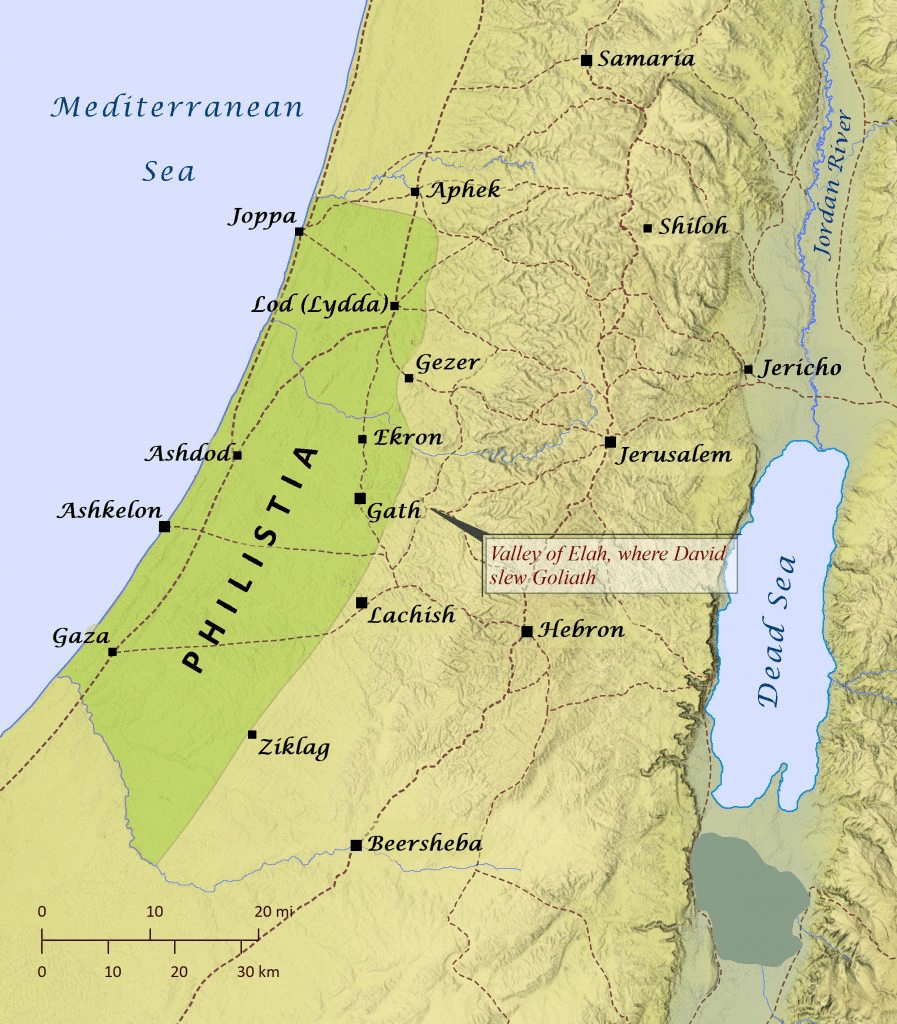
At that time, Israel was facing yet another Philistine military threat. The Philistines were not indigenous to Palestine. The Egyptians referred to them as “sea people;” they originally came from somewhere around the Aegean Sea area and settled in Canaan along the coastal plain between Gaza and Jaffa.
The Philistines expanded their territory, which continually put them at odds with Israel their neighbor. Militarily, the Israelites looked like bumpkins compared to the Philistines – who were skilled warriors with state of the art weapons.
Israel had no king. Instead, they were led by a series of judges who gave rulings throughout the land. Samuel was the last of them because the Israelite tribes determined and demanded that they must have a king in order to face the Philistine threat. (1 Samuel 8:1-21)
Samuel wisely perceived that asking for a king was not going to go well for the people. And he had warned them appropriately. Yet, Israel persisted in wanting to be like all the other nations in having a king to lead an army and fight Israel’s battles.
Although the people loved and appreciated the priest and prophet Samuel, his leadership was regarded as insufficient for the constant anxiety of dealing with the Philistines. It seems the people did not realize or consider what they were asking for, because they got it, and it wasn’t always victory and celebration.
If Israel wanted a king – and someone who looked the part – then that is exactly what they would receive. Saul was tall, strong, and seemed qualified to wage war on the pesky Philistines. Frankly, Saul was a putz who lacked the internal character needed to govern God’s people and ensure God’s will would be done in Israel.
But, again, I get ahead of myself. Reading the account of Saul for the first time, it’s easy for one to not see the signs of a coming personal implosion of the soul.
Sometimes whenever circumstances have been challenging for so long, and difficulty just keeps showing up, we begin to lose our good judgment and start wanting easy solutions for complex problems. And that is what I believe happened to Israel.
The Israelites got tired of the constant Philistine threat – to the point of believing that the grass is greener on the other side of the fence. They thought they needed a king and that everything would be better. And initially it was. But, over the long haul, it proved to be fatal.
For us today, it is good to remember that sound self-discipline through proven spiritual practices, and development of the soul by means of humility, patience, and wisdom, accomplish what is most needed in life.
Becoming weary and tired, we may slowly lose faith. Yet, the ability to persevere, stay the course, and listen well to wise people, can begin to erode and decay through the discouragement of constant adversity.
There is, however, a way to keep going when things are hard. Encourage one another daily. Avoid a critical spirit which drains the energy from others. Be careful who you listen to and take advice from. Become ever more familiar with Holy Scripture and that which is right, just, and good. Rely upon the Lord.
Living a faithful and devoted life to the divine covenant, instead succumbing to human culture, may not be easy; but it will serve us well in the long run.
Father of mercy, alone we have no power in ourselves to help ourselves. When we are discouraged by our weakness, strengthen us to follow Christ, our pattern and our hope; who lives and reigns with you and the Holy Spirit, one God, now and forever. Amen.










 Rev. Tim Ehrhardt