


Then the high priest and all his associates, who were members of the party of the Sadducees, were filled with jealousy. They arrested the apostles and put them in the public jail. But during the night an angel of the Lord opened the doors of the jail and brought them out. “Go, stand in the temple courts,” he said, “and tell the people all about this new life.”
At daybreak they entered the temple courts, as they had been told, and began to teach the people.
When the high priest and his associates arrived, they called together the Sanhedrin—the full assembly of the elders of Israel—and sent to the jail for the apostles. But on arriving at the jail, the officers did not find them there. So, they went back and reported, “We found the jail securely locked, with the guards standing at the doors; but when we opened them, we found no one inside.” On hearing this report, the captain of the temple guard and the chief priests were at a loss, wondering what this might lead to.
Then someone came and said, “Look! The men you put in jail are standing in the temple courts teaching the people.” At that, the captain went with his officers and brought the apostles. They did not use force, because they feared that the people would stone them. (New International Version)
Celebration and success have their own challenges. Whenever things are going well, there are inevitably others who become jealous. And when jealousy takes root in a person or a group of people, it can result in harming and hurting others.
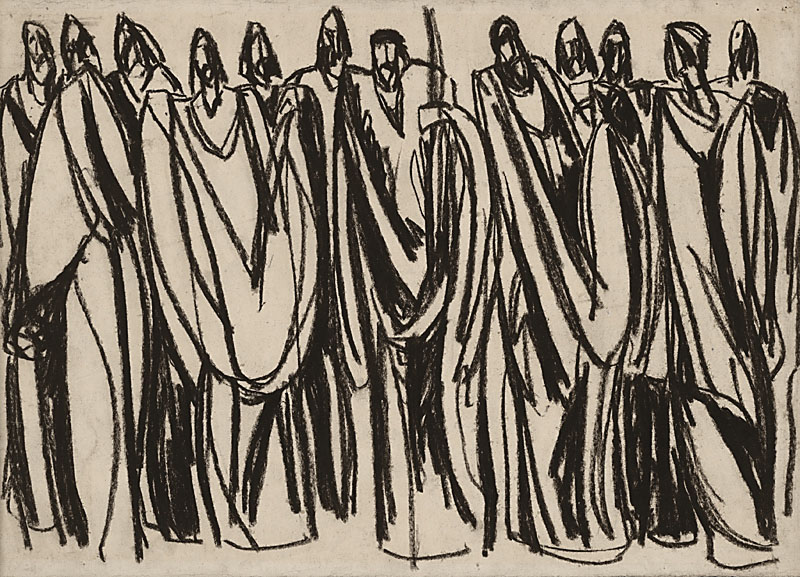
Indeed, persecution broke out against the apostles. Their ministry was flourishing. Thousands of people were being added to the Church. Miraculous healings abounded. And, standing in the shadows, were a group of jealous religious leaders. Since their power was diminishing, the ruling council had the apostles arrested – seeking to contain their influence and stop the spread of the Church.
Jealousy is one of the places we go whenever we play the comparison game with others. Whereas envy is wanting something that someone else has, jealousy is a deep-seated fear of losing someone or a group of people.
The reason jealousy can be so damaging and insidious is because of the anger and sadness behind it. In the case of the religious leaders, they saw the success of the apostles, the popularity of the burgeoning church, and the attention being diverted from themselves onto the apostles – and they were angry. The loss of religious power was just too much for them, so they became jealous.
Jealousy, much like anger, is neither good nor bad. It is an emotion. It’s what we do with the feeling that matters. In our anger we might turn it inward on ourselves, direct it onto another with verbal or even physical violence, or just get downright snarky and passive-aggressive. Also, with jealousy, it too often gets worked out on others by attacking them in some way.
God feels both anger and jealousy. Yet, those divine emotions are used to bring justice, establish what is right, and help the disadvantaged. God as a jealous God means that the Lord is saddened and hurt by people trying to find satisfaction in all the wrong places through idolatry.
Israel soon became fat and unruly;
the people grew heavy, plump, and stuffed!
Then they abandoned the God who had made them;
they made light of the Rock of their salvation.
They stirred up his jealousy by worshiping foreign gods;
they provoked his fury with detestable deeds.
They offered sacrifices to demons, which are not God,
to gods they had not known before,
to new gods only recently arrived,
to gods their ancestors had never feared. (Deuteronomy 32:15-17, NLT)
God desires that people discover healthy ways of coping and acknowledge their jealous feelings. The Apostle Paul did just that:
I hope you will put up with me in a little foolishness. Yes, please put up with me! I am jealous for you with a godly jealousy. I promised you to one husband, to Christ, so that I might present you as a pure virgin to him. But I am afraid that just as Eve was deceived by the serpent’s cunning, your minds may somehow be led astray from your sincere and pure devotion to Christ. (2 Corinthians 11:1-3, NIV)
The feeling of jealousy is meant to tell us something. Instead of pushing it aside, listen to what it has to say. Perhaps it is leading us to acknowledge our grief and lament our loss. It could be alerting us to our great loneliness or deep sadness.
For whatever reason the jealousy arises, stuffing it or pushing it aside may cause harm to ourselves or others. A profound lack of self-awareness will always come back to bite us in the behind.
So, how do I handle those feelings of jealousy when they come?
- Seek to understand. Trace the feeling back to its true source. Whether the jealousy stems from insecurity, fear, or past relationship patterns, knowing more about the causes can help us figure out how to confront it and deal with it.
An understanding heart seeks knowledge; but fools feed on folly. (Proverbs 15:14, CEB)
- Talk to someone. Give voice to your concern. Discuss the feelings of jealousy with a trusted friend, family member, or faith leader.
Carry one another’s burdens, and in this way you will fulfill the law of Christ. (Galatians 6:2, NET)
- Express your grief. With jealousy there is a loss or a worry of losing someone or something. Prayer is a good idea when we are losing someone.
God, listen! Listen to my prayer, listen to the pain in my cries. (Psalm 102:1, MSG)
- View another perspective. Try and take a big picture approach and consider other angles to the situation which is producing the jealousy.
“My thoughts are nothing like your thoughts,” says the Lord. “And my ways are far beyond anything you could imagine. (Isaiah 55:8, NLT)
- Practice gratitude. Be thankful for the people, circumstances, and things you have in your life right now. Thankfulness is often a powerful antidote to strong feelings of jealousy.
Tell the Lord how thankful you are, because he is kind and always merciful. (Psalm 118:29, CEV)
- Explore underlying issues. Sometimes jealousy has to do with insecurity or low self-worth. Addressing your value as a person and the unique contribution to others you bring to the world has the effect of kicking jealousy to the curb.
God created humanity in God’s own image, in the divine image God created them, male and female God created them. (Genesis 1:27, CEB)
- Be patient. Give it time. Most people don’t get over their jealous feelings overnight. It’s a process. So be kind to yourself and stick with acknowledging and discovering what jealousy has to teach you.
Be patient when you have troubles. (Romans 12:12, ERV)
May you find satisfaction, peace, and joy in the Holy Spirit. Amen.





 Rev. Tim Ehrhardt