Romans 13:1-7 – Good Citizenship

1960 Elementary Classroom

Be a good citizen. All governments are under God. Insofar as there is peace and order, it’s God’s order. So live responsibly as a citizen. If you’re irresponsible to the state, then you’re irresponsible with God, and God will hold you responsible. Duly constituted authorities are only a threat if you’re trying to get by with something. Decent citizens should have nothing to fear.

Do you want to be on good terms with the government? Be a responsible citizen and you’ll get on just fine, the government working to your advantage. But if you’re breaking the rules right and left, watch out. The police aren’t there just to be admired in their uniforms. God also has an interest in keeping order, and he uses them to do it. That’s why you must live responsibly—not just to avoid punishment but also because it’s the right way to live.

That’s also why you pay taxes—so that an orderly way of life can be maintained. Fulfill your obligations as a citizen. Pay your taxes, pay your bills, respect your leaders. (MSG)

Back in the day (way back!) when I was in elementary school every student received a grade on their report card for “citizenship.”  Even further back, my Dad’s report cards had grades for “deportment.” Both citizenship and deportment were words used by the public-school system to gauge how well individual students conducted themselves with the teacher’s authority, behaved with fellow students, and handled the responsibilities of their studies. It was a grade given for the overall obedience and submission of students with their duties and obligations, or the lack thereof.

Today’s New Testament lesson is one of those Scripture texts which has been used and abused throughout history. Since we no longer give grades on citizenship and deportment, a careful consideration of both what this biblical passage is, and is not, must be observed.

What Citizenship is Not: Irresponsible and Disobedient Injustice

Advocating a favored political philosophy or party to the point of avoiding a rival party or power and resisting their government through lack of submission, being uncivil and disrespectful, and stubbornly disobedient is poor deportment and will earn an “F” from God on the report card of life.

Picking-and-choosing which laws I will obey and which ones I will not is extremely far from the biblical teaching given. Rebellion against laws I do not like will only result in getting punished from the principal for being shortsighted and stupid.

On the other hand, blind and unthinking adherence to a government is irresponsible and can be unethical. Unjust leaders and immoral laws which merely champion certain people and not the common good of all need to be dislodged and dismantled. When one simply says, “I’m just doing my job,” or “I don’t want to get in trouble,” in the face of unjust laws and leadership, then we are complicit in the perpetuating of the evil person or system. Blind obedience keeps abusive people in the classroom.

Vigilante-ism is a form of “recess justice.” It is a refusal to accept what is taking place and takes matters into one’s own hands. Just before explaining citizenship, the Apostle Paul said, “Do not take revenge but leave room for God’s wrath,” and, “Do not be overcome by evil but overcome evil with good” (Romans 12:19, 21). There is no place for vigilante justice in the kingdom of God. At its basest form, vigilantes are resisting God’s justice and being extremely impatient with the divine plan.

Good Citizenship

What Citizenship is: Responsible and Submissive Justice

Submission is a choice. The word “submit” in the New Testament means “to place oneself under authority.” In other words, to submit to another person, group, system, or government is a human volitional choice. Obedience through coercion, as in totalitarian regimes, is not submission – it is oppression.

Good citizenship begins with humble submission to governing authorities who are trying to do their best and have everyone’s best interests at mind with responsible laws which benefit the common good of all. Most parents and school boards would do well to remember that.

Justice is primarily about provision, and not about being punitive. I realize that many, if not most, people use the term justice in the penal sense – wanting convictions and incarcerations when someone has committed a crime against the state and/or humanity. And, although this is a very important work of government, the biblical sense of justice is about provision – giving people their rights to life and liberty and ensuring that we all exist in an equitable form of union together as one people.

When people fall through the cracks of bureaucracy and do not have what they need to survive, let alone thrive, then this is an injustice which needs remedy sooner than later – without putting it off to another election cycle. So, put the spanking paddles of shame away (yes, kids at school got the paddle in my day) and instead find ways to uplift and support one another.

Responsible citizenship involves a proper deportment of volitional submission, careful obedience, proper payment of taxes for the benefit of all, and providing due respect to public servants. Keep in mind that the Apostle Paul originally wrote about how to conduct ourselves with government smack in the middle of a Roman Empire which was often fickle and careless about the rights of Christians, Jews, and others.

We submit not because we must, but because it is the right thing to do. To do otherwise is to not only violate the law but our consciences, as well.

Our consciences also need to be clear and clean about the need for justice in this old fallen world of ours. Christians have a continuing and outstanding debt to love one another. Having justice for some and injustice for others is not going to cut it with a Just God. Our Creator and Sustainer desires that every single individual on planet earth – regardless of race, gender, ethnicity, sexual orientation, class, or any other human contrived social construct – have their needs met without prejudice, favoritism, or cronyism.

God’s original plan for the world includes an egalitarian society, so we must be careful to remember and work toward the ideal, while at the same time dealing graciously and resolutely with the realities of injustice all around us. I wonder what grade Jesus would give us so far this year for our deportment.

Lord Jesus Christ, Son of God, just as you welcome us into your kingdom, help us to love each other deeply,
offer hospitality to one another without grumbling, encourage each to use the gifts we have received to serve others, and submit to the governing authorities with the good citizenship you have provided us so that every one of us will be a faithful steward of God’s grace in its various forms. Amen.


Ephesians 5:1-6 – Follow the Way of Love

Love sculpture

Follow God’s example, therefore, as dearly loved children and walk in the way of love, just as Christ loved us and gave himself up for us as a fragrant offering and sacrifice to God. But among you there must not be even a hint of sexual immorality, or of any kind of impurity, or of greed, because these are improper for God’s holy people. Nor should there be obscenity, foolish talk, or coarse joking, which are out of place, but rather thanksgiving. For of this you can be sure: No immoral, impure, or greedy person—such a person is an idolater—has any inheritance in the kingdom of Christ and of God. Let no one deceive you with empty words, for because of such things God’s wrath comes on those who are disobedient. (NIV)

Humanity is loved and is therefore meant to love one another as the ultimate rule and guide of life. Just as God loves, so we are to do the same. We are to mimic divine love in our daily lives. The healthiest of relationships are characterized by a continual dynamic of giving love and receiving love. Failing to submit to this basic rule of life leaves one exposed to the gravity of God’s wrath – which exists as the extension of God’s love to put a stop to unloving words and actions in the world.

Unfortunately, as a hospital chaplain and church pastor, I daily see the sad effects of individuals who have experienced a paucity of love and, so, have taken on a false self to try and find love in all the wrong places – with damaging consequences.

Three inappropriate unloving ways of acting are mentioned in today’s New Testament lesson:

  • Sexual immorality is the illegitimate attempt to get the legitimate need for erotic love met without any strings attached. It is a misguided belief that one-night stands and clandestine trysts will protect against being too committed to another and getting hurt.
  • Impurity is any other illicit, illegal, or improper kind of behavior toward others which tries to do the same thing as immorality: Seeking to meet legitimate needs in an illegitimate way – to turn a trick for love, trying to avoid emotional, spiritual, or even physical pain.
  • Greed is an insatiable pursuit of addictive behavior meant to numb or stuff all the unwanted emotions which reside deep in the soul because of engaging in the immoral or impure actions.

Three inappropriate unloving words of speaking are mentioned:

  • Obscenity is filthy speech which is a cover for the agonizing unmet needs of love deep within the human heart. Obscene words are nothing more than verbal sexual immorality. They are a twisted attempt at trying to give and get loving words in an illicit manner.
  • Foolish talk, much like impurity, is any other illicit or improper words crafted to manipulate or cajole another. It is the hustle for love. The original Greek word means literally “to talk like a moron,” that is, a person who lacks sound judgment.
  • Coarse joking is crude and addictive speech, much like greed, envy, and coveting, which verbally trolls for love without unveiling any real feelings.

The antidote to all these baseless actions and distasteful words is to realize the true self, created by God, through receiving the love of God and of others with thanksgiving. Within genuine loving relationships, people can express their legitimate needs to each other and satisfy one another. Yet, with the false self, there is secrecy, hiding, and massive amounts of shame.

Love opens us to all that is good and beautiful. Love also opens us to the possibility of devastating hurt and loss. It is when we try to obtain the good and beautiful while trying to build walls of protection against potential pain that we get in trouble. The sinister tools we must use to try and get that impossible job done are manipulation and control with both verbal and physical immorality.

There is no true and authentic love apart from openness and vulnerability. Cheap imitations of love will only lead to hopeless despair. The late C.S. Lewis once wrote:

“To love at all is to be vulnerable. Love anything and your heart will be wrung and possibly broken. If you want to make sure of keeping it intact you must give it to no one, not even an animal. Wrap it carefully round with hobbies and little luxuries; avoid all entanglements. Lock it up safe in the casket or coffin of your selfishness. But in that casket, safe, dark, motionless, airless, it will change. It will not be broken; it will become unbreakable, impenetrable, irredeemable. To love is to be vulnerable.”

The way of love is the way of Christ. Imitating his example of a holy life, compassionate service, helpful speech, and healing actions with a humble heart of gratitude is to be our guide, rule, and direction in life. It is to realize our true selves and nudge the world just a bit closer back to Eden.

O Lord, in the name of Jesus Christ your Son our God, give us the love which never ceases so that our hearts will be enlightened and always burning with holy passion for the common good of all. O Christ, our loving Savior, set our souls aflame so that they may shine brightly with the warmth and glow of unquenchable divine love, and lessen the darkness of the world. Lord Jesus, we pray, give us the light of your love so that we might always see you, desire you, look on you in love, and long after you. Blessed Holy Spirit, send the fire of your love and empower us for loving service so that we may emulate and follow the example of our loving Lord, for the sake of Jesus Christ. Amen.

Romans 12:1-8 – Healthy Group Dynamics

Transformed

Therefore, I urge you, brothers, and sisters, in view of God’s mercy, to offer your bodies as a living sacrifice, holy and pleasing to God—this is your true and proper worship. Do not conform to the pattern of this world but be transformed by the renewing of your mind. Then you will be able to test and approve what God’s will is—his good, pleasing, and perfect will. 

For by the grace given me I say to every one of you: Do not think of yourself more highly than you ought, but rather think of yourself with sober judgment, in accordance with the faith God has distributed to each of you. For just as each of us has one body with many members, and these members do not all have the same function, so in Christ we, though many, form one body, and each member belongs to all the others. We have different gifts, according to the grace given to each of us. If your gift is prophesying, then prophesy in accordance with your faith; if it is serving, then serve; if it is teaching, then teach; if it is to encourage, then give encouragement; if it is giving, then give generously; if it is to lead, do it diligently; if it is to show mercy, do it cheerfully. (NIV) 

Every person is important. Everyone is needed. Each one, according to this New Testament lesson, is to offer their entire lives to God through worship and the exercise of their spiritual giftsPeople are designed to be active in building up one another. 

When I was growing up, we had a fine china set that my parents kept in a beautiful china cabinet.  The set and the cabinet are old and were a prominent part of our living room. However, we almost never used it. I can only remember once or twice that my Mom got the china out to use. God is not looking for fine china that sits unused. He is looking for rough-and-tumble clay pots—the kind that can be used every day. God wants ordinary table-wear that can be handled in a crash-and-bang world.  

Followers of Jesus Christ were never meant to be a china cabinet, where precious pieces are safely stowed out of harm’s way. Instead, humanity is to be like a working kitchen, where well-worn pots are filled again and again to dispense their life-giving contents to a thirsty world; and, where common plates and cups are used again and again to provide a hungry population with the Bread of Life. 

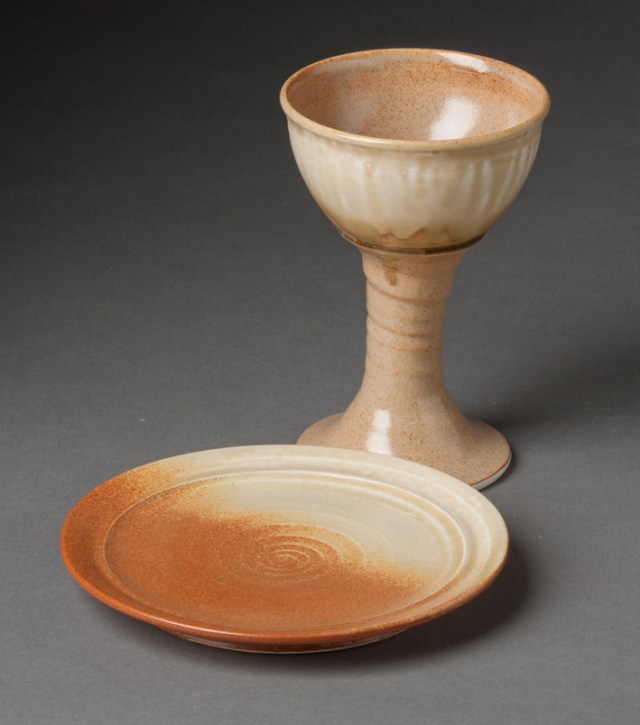
Cup and Plate

Within the ancient Roman Church were both Jews and Gentiles – two groups vastly different from each other.  They tended to keep to themselves and only operate within their familiar and comfortable circles of friends and relatives.  But the Apostle Paul wanted them to be united by exercising their spiritual gifts for the benefit of the entire congregation, and not just certain persons. 

We are strongly encouraged to give ourselves in service to one another because of God’s mercy in Christ.  Since God has saved us from sin, we are to gratefully respond to him in worship that is dedicated to serving everyone.  The word “worship” in today’s text is where we get the word “liturgy.”  That is, Paul’s vision for the church was to have a daily liturgical rhythm of spiritual worship, not just on Sunday when we might pull out the fine china and impress people. 

Paul’s appeal was not to guilt people into serving but is an exhortation for all Christians to appropriately respond to God’s grace by offering their lives in sacrificial service. This is a form of saying “thanks” to God. To be oriented in a sacred liturgy that is fit for the daily will of God, our minds must be renewed. Through saturation in Scripture we discern our spiritual gifts, know what God wants us to do with those gifts, and use them effectively in the church and the world.   

Grace has been given to every believer in Jesus, not just a select few. We all have different gifts and have been graced with abilities for the benefit of others. When everyone collectively uses these spiritual gifts, there is the ability to know the will of God in any situation for any group of people. All the pronouns used in today’s verses are plural. There is to be a group dynamic which seeks to give minds and bodies completely to God in worship, using our spiritual gifts for building up one another, and discovering the will of God together. 

All believers in Jesus must share and work together by utilizing God’s grace, instead of getting burned-out because others are not serving. Grumbling about what others are not doing begs the question of whether we are over-functioning, or not. It could be that we have succumbed to the danger the Apostle Paul warned us about: thinking so highly of ourselves that we believe our gifts are superior to others, so we need to maintain our control and hegemony in the group. This is a terribly misguided notion.   

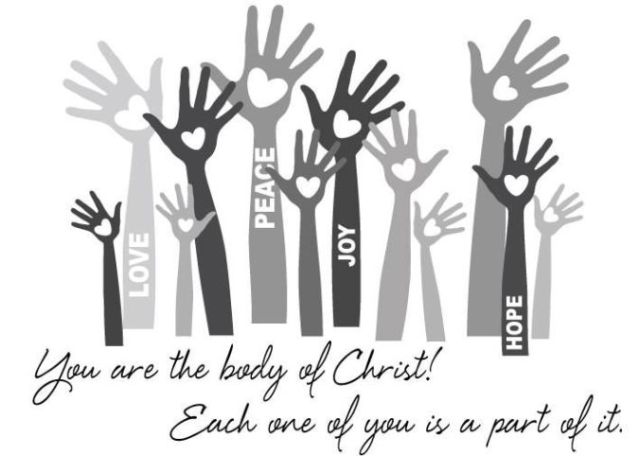
Body of Christ

We belong to one another.  Therefore, one major way of giving to God is through offering ourselves to each other with equity and without favoritism.  We must not separate Christ from his church.  To say that we need God, but do not need the church is to really say that we do not need God because the two are inseparable. Nowhere in Holy Scripture do we find individual Christians doing their own thing, isolated from a committed group of people, the church.  

When Jesus called people to follow him in service to God and a world in need, some gave him excuses that they were busy and had other pressing matters to attend to before they could follow him. Jesus simply left them and told them they were not fit for the kingdom of God. (Luke 9:57-62) 

When people were preoccupied with building wealth, or gaining power, or jockeying for influence, Jesus told them to stop it, exercise some faith, and seek first the kingdom of God.  Build your treasure in heaven, Jesus said, because it will be permanent; and, not on earth where it is temporary. (Matthew 6:19-34)  

We are graced by God with abilities which God fully expects us to use. “Cheap grace” is merely embracing Christ as a personal Savior but not welcoming him as the Lord in whom we must sacrificially give our lives to service in the church and the world. Spiritual health and vitality cannot exist apart from every person using God’s given grace to contribute to the functioning of the Body of Christ.   

spiritual gifts

The list of spiritual gifts Paul provided is not exhaustive but represents a combination of speaking and serving gifts necessary to bless humanity. Paul exhorted the church to not restrain people’s exercise of gifts but let them go at it, full bore:  

  • “Prophesying” is not foretelling the future but a word meaning “inspired speech” from God that addresses what God’s people are to do considering his Word.   
  • “Serving” is a generic word referring to all types of hands-on service.   
  • “Teaching” is needed to instruct the faithful in all the revealed will of God.   
  • “Encouraging” involves both speaking and serving, as the one gifted in encouragement comes alongside others and helps them to do something with both verbal coaching and tangible help.   
  • Giving” specifically refers to the person who lives a simple life to be able to give generously and contribute to the needs of others.   
  • “Leading” is the ability to get out in front and show the way in obtaining the will of God.   
  • “Mercy” is the much-needed ability to see down-and-out hurting people and be a conduit of God’s grace to them. 

Here is a simple observation: There is no one person who possesses all these gifts. That is why everyone must work together to have a spiritually healthy community.  A spiritually toxic community is the inevitable result of only a few people using their gifts. 

The Apostle Paul communicated some important truth about what faithful Christians must do to be transformed by a renewal of the mind: exercise godly sacrifice; commitment to worship; intentional unity; and, an awareness of our spiritual gifts. The following are some thoughts on becoming aware of our spiritual gifts:   

  1. Pay attention.  Every spiritual gift reflects God’s grace and character, and so, you will find joy and satisfaction in expressing it. Your spiritual gift will be a place of deep spiritual formation and growth in your life, as God uses it both to powerfully connect you to him and to expose areas of your soul that need his forgiveness and redemption.   
  2. Try.  Give it a whirl.  Take the step to connect with a service or ministry, or just try doing what you feel might be something God wants you to do.  Gifts are discovered more from others observing and affirming your gift and less than going through a research process.  The encouragers among us will be happy to affirm the gifts of others. 
  3. Develop.  All spiritual gifts must be cultivated and developed.  Paul told his young protégé, Timothy, to fan into flame the gift of God.  Put yourself in a position to be taught and mentored. 

We were designed by God for worship and service. We will find our greatest delight in life through engaging those two activities. The result is a spiritually healthy and thriving Christian community that loves God, loves one another, and loves the world. 

God of grace, I come before you today praying for your Holy Spirit to stir up the gifts already placed inside your people. God Almighty, I pray that whatever gifts your Holy Spirit has decided to give and put within me and those around me that those gifts be activated and used for your glory and the edification of others.  I pray for peace and joy in the community, that no one will be jealous or covetous about anyone else’s gifts. Lord God, I pray also as these gifts grow and develop that the fruit of the Spirit will be manifested, to ensure the gifts are ministered in love. May you receive all praise honor and glory from the gifts you give, through Jesus Christ, our Lord.  Amen. 

Romans 11:13-29 – Pruning and Grafting

olive tree

I [Apostle Paul] am talking to you Gentiles. Inasmuch as I am the apostle to the Gentiles, I take pride in my ministry in the hope that I may somehow arouse my own people to envy and save some of them. For if their rejection brought reconciliation to the world, what will their acceptance be but life from the dead? If the part of the dough offered as first fruits is holy, then the whole batch is holy; if the root is holy, so are the branches.

If some of the branches have been broken off, and you, though a wild olive shoot, have been grafted in among the others and now share in the nourishing sap from the olive root, do not consider yourself to be superior to those other branches. If you do, consider this: You do not support the root, but the root supports you. You will say then, “Branches were broken off so that I could be grafted in.” Granted. But they were broken off because of unbelief, and you stand by faith. Do not be arrogant, but tremble. For if God did not spare the natural branches, he will not spare you either.

Consider therefore the kindness and sternness of God: sternness to those who fell, but kindness to you, if you continue in his kindness. Otherwise, you also will be cut off. And if they do not persist in unbelief, they will be grafted in, for God is able to graft them in again. After all, if you were cut out of an olive tree that is wild by nature, and contrary to nature were grafted into a cultivated olive tree, how much more readily will these, the natural branches, be grafted into their own olive tree!

I do not want you to be ignorant of this mystery, brothers and sisters, so that you may not be conceited: Israel has experienced a hardening in part until the full number of the Gentiles has come in, and in this way all Israel will be saved. As it is written:

“The deliverer will come from Zion;
he will turn godlessness away from Jacob.
And this is my covenant with them
when I take away their sins.”

As far as the gospel is concerned, they are enemies for your sake; but as far as election is concerned, they are loved on account of the patriarchs, for God’s gifts and his call are irrevocable. (NIV)

The letter to the Romans reminds me of two siblings going at it, always at odds with each other. Gentile and Jew both together in one church and constantly arguing, bickering, and never stopping to listen to the other. The Apostle Paul, their spiritual parent, had enough of it. So, he wrote a lengthy tome, often alternating between speaking directly to Brother Gentile and then to Brother Jew.

Wisely, Paul never took sides and avoided favoritism even though he himself was Jewish. In today’s New Testament lesson, Paul speaks forthrightly to the Gentiles in the church. He gets to the issue of Brother Gentile’s attitude and view toward Brother Jew. Father Paul’s instruction to Brother Gentile is also instructive for us, as we navigate a pluralistic world and diverse church.

Brother Gentile tended to look down on Brother Jew as stuck in the past, too concerned for tradition, and unwilling to change. Brother Gentile thought it was high time Brother Jew understood that all that Jewish stuff is no longer needed and that the Gentiles were the future of the church. For Brother Gentile, God has accepted him, and Brother Jew has been rejected. But Father Paul would have none of that kind of talk; he was not going to allow Brother Gentile to eviscerate Brother Jew of his identity.

Notice Father Paul’s reasoning to his son, Brother Gentile, utilizing the lesser to the greater argument:

  • Brother Jew’s stumbling and bumbling has already caused Brother Gentile to come to faith in Christ.
  • Brother Gentile’s deliverance and acceptance will cause Brother Jew’s jealousy to kick in.
  • Brother Jew’s response will bring even greater spiritual blessing to the world.

Paul insisted that Brother Jew still has a prominent place in the family, and that a time is coming when the entire human family will have their socks blessed off because of him. Just as an olive tree can and does experience pruning and grafting of branches, so Brother Gentile needs to understand he was not originally part of the tree but was grafted in later. There is no place for arrogant pride. Grafted branches can and do get broken off and pruned; and, pruned branches can and do get grafted back on the tree, too.

brothers

So, Father Paul wanted his sons to understand and appreciate one another as the one tree in God’s family. There is room for neither Brother Gentile’s complacency nor Brother Jew’s despair. Both brothers share together in one equitable tree of life, enjoying the blessings of renewal and restoration.

It is imperative we take these lessons to heart in our interactions with folks who are different from ourselves. There is no room in God’s rule and reign for simpletons who fail to see beyond the end of their noses. Instead, we are to appreciate our brother who looks, thinks, and lives differently. It seems the only things God does not tolerate is intolerance and injustice toward those distinctly offbeat from our own path. Just because Jesus is the way, the truth, and the life, this does not give any follower of Christ a license to misinterpret, misrepresent, and mistreat another group of people who subscribe to various jots and tittles other than me.

Neither you nor I are the Gardener. We do not get to do the pruning and grafting. That is God’s job, not ours. Love is our business, while the Lord will show both his kindness and sternness when and to whom he will. Simply assuming we are always on the right side of things only produces a lack of listening, a lack of like-mindedness, and a lack of love. It creates a worldly system of demagoguery, inattention to suffering, and narrow policies, procedures, and laws which benefit only one brother, not all the siblings.

As Father Paul said earlier in his letter, “God doesn’t have any favorites!” (Romans 2:11, CEV)

As Father James said in his letter, “Don’t treat some people better than others.” (James 2:1, ERV)

As Father Peter said, “I really am learning that God doesn’t show partiality to one group of people over another. Rather, in every nation, whoever worships him and does what is right is acceptable to him.” (Acts 10:34-35, CEB)

As the witness of the Old Testament says, “Cut away the thick calluses from your heart and stop being so willfully hardheaded. God, your God, is the God of all gods, he is the Master of all masters, a God immense and powerful and awesome. He doesn’t play favorites, takes no bribes, makes sure orphans and widows are treated fairly, takes loving care of foreigners by seeing that they get food and clothing.” (Deuteronomy 10:17-18, MSG)

For our failure to realize that the whole world is a family, that Christ is all and in all: O Lord, forgive.

For our prejudice and self-consciousness of race, color, or language: O Lord, forgive.

For our indifference and lack of concern for our neighbors living in poverty and unemployment and for children who are ill-clothed, illiterate, and ill: O Lord, forgive.

For our unwillingness to understand the needs and problems of other people, the bitterness of those without power, and the groans of the oppressed: O Lord, forgive.

For our readiness to acquiesce in the ways of the majority, to seek the path of least resistance, and to prefer popularity to fairness: O Lord, forgive. Christ have mercy on us all. Amen.