Welcome, friends! It is a privilege to be with you on this World Communion Sunday. We gather around Jesus, our highest joy, as Christians unite in the surpassing value of knowing Christ. Click the video below and let us discover together the heartbeat of the Church everywhere…
Let us partake of Christ together in heartfelt worship.
I pray that the Lord Jesus Christ will bless you and be kind to you! May God bless you with his love, and may the Holy Spirit join all your hearts together. Amen.
The ancient Philippian church had lost sight of their purpose, of what is the primary reason for their being in existence. Simply put, they needed to unify around what is the central and most valuable core of Christianity: knowing Jesus Christ. For the Apostle Paul, in his letter to the Church at Philippi, Jesus was so valuable that he literally gave up everything to become a Christian and follow Jesus. (Philippians 3:4-14)
It was no little thing that Paul did, converting in such a completely life-altering way to Christ. Paul had everything going for him. He was the up and coming star in Judaism. Paul had the Jewish pedigree, the intelligence, the personality, and the drive to become one of the greatest Pharisees of all time. And yet he forsook it all to pursue and know Christ.
It might be hard for us to imagine just how significant Paul’s turn around was. On a much smaller scale, it would be like Green Bay Packer quarterback, Aaron Rodgers, at the height of his career, leaving football altogether to become a missionary to some remote place few people have ever heard of. Most might likely think he lost his marbles and was throwing away (pun intended) something valuable and important. So, it was with Paul. Everyone thought he was nuts for becoming a Christian.
However, this would be to misunderstand what is really of greatest value. There are plenty of people in our society telling us what we need. With all the noisy rhetoric, from political pundits to commercial marketers, the person and work of Jesus can easily get lost in an ocean of competing voices. On a practical level, it can be far too easy to simply toss Christian discipleship on the smorgasbord of good ideas we get handed each day. Jesus might get misplaced and forgotten on our plate of life because of the mass of other food that is piled alongside him.
World Communion Sunday (always the first Sunday in October each year) reminds Christians that Jesus is our surpassing greatness, the highest and most worthy asset we possess. When we come to the Lord’s Table, there is nothing else to feast upon except Jesus, and Jesus alone. In the act of receiving the common elements of bread and cup, we proclaim that we need no one else and no other thing to make us happy in this life. Jesus is enough for us. What is more, we stand united with our brothers and sisters in Christ throughout the world in a common purpose and value of knowing Jesus Christ, and him crucified.
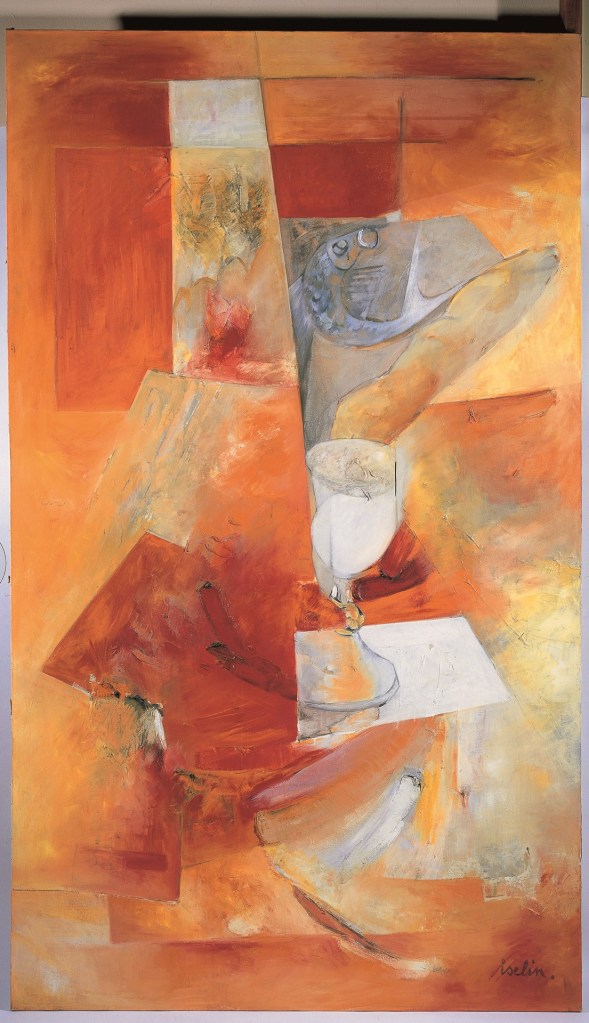
The Elements of Holy Communion by Jacques Iselin
The core value and heart of Christianity is a faith and love relationship with Jesus, to know him. This was the heartfelt cry of the Apostle Paul, and it was so meaningful to him that he gave up everything to pursue Christ and follow Jesus. If we ever strip Christianity of this core value and stray from knowing Christ, the vacuum will be quickly filled with all kinds of other stuff, like the sheer duty of perfunctory prayers, clean living, and dispassionate robotic service.
Paul longed to know Christ better. There are two words in the Greek language for “know.” One word refers to information; the other refers to an experiential knowledge – and that is the word Paul used with the Philippians. He deeply desired an intimate experience of Jesus. And Paul craved this so much that literally everything, when compared to Jesus, was “rubbish” to him.
In the ancient world there were no landfills and dumps – the street served as the place people threw their garbage. The trash then got trampled into the ground, along with the generous amounts of animal dung. That is how Paul thought of even the best things in life as compared to knowing Jesus.
There is no comparison between a freshly grilled T-bone steak and microwaved liverwurst. There is no comparison between a billion dollars and a penny. There is no comparison between the Green Bay Packers and the Chicago Bears (sorry Chi-Town). And there is no comparison between Jesus and anyone or anything else, no matter whom or what it is.
Saint Augustine, Bishop of Hippo, in the fifth century, described life apart from Jesus as “disordered love.” By that he meant we pursue whatever our affections are set upon. One might love family, friends, job, and hobbies, yet if Jesus is absent or must compete for our affections in the middle of those things, then it is a disordered love. The solution, for Augustine, is to rightly order our love by having Jesus as the premier object of our affection. The New Testament frames it this way: Repent and believe the gospel.
To have “disordered love” is a nicer way of saying “spiritual adultery.” Using this metaphor, the appropriate response is to return to our first love. “You have forsaken your first love,” said Jesus to the church in Ephesus. “Remember the height from which you have fallen! Repent and do the things you did at first” (Revelation 2:4-5).
Christianity is not some religion in which we strike a deal with God to go to heaven if we accept Jesus. Rather, Christianity centers all of life in the person and work of Jesus. The Lord is a jealous God, feeling slighted when Christians moonlight with the world at night while acknowledging Jesus during the day.
Specifically, Paul wanted to know the power of Christ’s resurrection. He yearned to experience a supernatural change from the inside-out – to be a new person in Christ. Paul did not simply turn over a new leaf; he did a dramatic 180 degree turn and went hard after Jesus. A desire and/or decision to know Christ is to be more than a milquetoast “I’ll try to do better.” Christianity, at its core, is dying to self and being reborn in Jesus with new life.
Furthermore, Paul wanted to know Christ and the fellowship of sharing in his sufferings. Paul ached to know Jesus so much that he embraced suffering, just as his Lord did. Paul was not some spiritual masochist; he rightly recognized that spiritual growth and intimacy with Jesus largely comes from the harsh realities of life’s trials and difficulties, as faith is stretched. We would not know Christ the healer if we were not broken; Christ the provider if we were not in want; and, Jesus Christ and him crucified unless we were aware of sin in the world along with our own personal sin.
Each time a Christian approaches the Lord’s Table, they set aside competing voices and forsake rival gods to have Jesus. For us who believe, let the ingesting of the elements be an act of fellowship with God. May we, along with Paul, Augustine, and all past saints desire to have Jesus completely take over our lives because he is so valuable to us. We never need to be perfect to partake of bread and cup. Instead, we only need to strive toward what is ahead and decide that today we will press on toward the higher goal of knowing Christ.
Do everything without grumbling or arguing, so that you may become blameless and pure, “children of God without fault in a warped and crooked generation.” Then you will shine among them like stars in the sky as you hold firmly to the word of life. And then I will be able to boast on the day of Christ that I did not run or labor in vain. But even if I am being poured out like a drink offering on the sacrifice and service coming from your faith, I am glad and rejoice with all of you. So, you too should be glad and rejoice with me….
Further, my brothers and sisters, rejoice in the Lord! It is no trouble for me to write the same things to you again, and it is a safeguard for you. Watch out for those dogs, those evildoers, those mutilators of the flesh. For it is we who are the circumcision, we who serve God by his Spirit, who boast in Christ Jesus, and who put no confidence in the flesh— though I myself have reasons for such confidence. (NIV)
Here is a simple observation: Complaining and rejoicing cannot come out of the same mouth at the same time. The two of them mix about as well as toasters and bathtubs. Everything is to be done without grumbling or arguing. Sheer willpower is insufficient for the task. No, instead, you and I need to replace words of complaint with words of joy. Rejoicing is the antidote to murmuring. The world already has more than enough curmudgeons who crank on about everything from politics and religion to the weather and social media. Grumblers seem to always find the negative in just about everything.
Any fool can complain. It is easy. Joy, however, takes some work. The sage person practices gratitude and joy so that it becomes the default response to most situations. We need more folks like this in the world. For all the talk we hear about how important it is to be positive, it is negativity that sells, wins elections, and moves people. The irony of it all is that a large chunk of people continually grumbles, complains, and argues about all the negativity in the world. *Sigh*
Complaining and arguing are nasty practices because they breed disunity and division within groups and families. Murmuring only warps the ones who do it and infects others with spiritual disease. Grumbling is always the first building block of a crooked and depraved generation. Conversely, being blameless and pure is winsomely attractive and unites folks together as a cohesive force for the world. Joy inoculates people from divisive pathogens. A people who rejoice together produce generations of individuals who impact their culture with delight and satisfaction.
Not even suffering and hard circumstances can curtail the comfort and cheer of the joyful. Rejoicing is a way of life – a path which no one and nothing can take away from us. Unwanted situations can be imposed on us, yet a person’s joy cannot be dislodged. Eleanor Porter’s 1913 storybook character, Pollyanna, learned to take such a look upon life from her parents. Even after losing them and being orphaned, she honored their memory by saying, “… there is something about everything that you can be glad about, if you keep hunting long enough to find it.” Pollyanna went on to teach an entire community about her way of life:
“What people need is encouragement. Their natural resisting powers should be strengthened, not weakened…. Instead of always harping on a person’s faults, tell them of their virtues. Try to pull them out of their rut of bad habits. Hold up to them their better self, the real self that can dare and do and win out! … The influence of a beautiful, helpful, hopeful character is contagious, and may revolutionize a whole town…. People radiate what is in their minds and in their hearts. If a person feels kindly and obliging, their neighbors will feel that way, too. But if a person scolds and scowls and criticizes—their neighbors will return scowl for scowl and add interest! … When you look for the bad, expecting it, you will get it. When you know you will find the good—you will get that…”
I wonder what our world would look like if we all took such an approach of finding joy in our lives. We are meant to guard ourselves from those who boast and brag, who belligerently bully others with their bellicose blustering and bellyaching.
We are designed by our Creator for better things. Joy is more than the spice of life; it is life itself. Moving mindfully and without rush through our days, setting aside times for contemplation and rest, offering gratitude to God and encouragement to others, and exploring our own heart’s desire are all ways we can tap into the large hidden reservoir of joy within each of us.
Complaining is cheap and easy. Joy is rich, full, satisfying, and takes practice to master. Rejoice in the Lord, take joy in the presence of the Spirit, and exult in Christ our Savior. In doing so, we shoo the devil away and create a better society.
God is good all the time. And all the time God is good.
O Lord, you have searched me out and known me; you know my sitting down and my rising up; you discern my thoughts from afar. You mark out my journeys and my resting place and are acquainted with all my ways. Lord of creation, whose glory is around and within us: Open our eyes to your wonders so that we may serve you with reverence and know your peace and joy in our lives, through Jesus Christ our Lord. Amen.
It is true that some preach Christ out of envy and rivalry, but others out of goodwill. The latter do so out of love, knowing that I am put here for the defense of the gospel. The former preaches Christ out of selfish ambition, not sincerely, supposing that they can stir up trouble for me while I am in chains. But what does it matter? The important thing is that in every way, whether from false motives or true, Christ is preached. And because of this I rejoice.
Yes, and I will continue to rejoice, for I know that through your prayers and God’s provision of the Spirit of Jesus Christ what has happened to me will turn out for my deliverance. I eagerly expect and hope that I will in no way be ashamed but will have sufficient courage so that now as always Christ will be exalted in my body, whether by life or by death. For to me, to live is Christ and to die is gain. (NIV)
It was the late U.S. President Ronald Reagan who said, “There is no limit to the amount of good you can do if you don’t care who gets the credit.” The ability to have disinterested attention from others and freedom from selfishness comes from a place of humility and strength – the power to know oneself well and be secure in that knowledge, as well as the humility to care more about an important cause than self.
The Apostle Paul had so learned humility from his Lord and was so thoroughly convinced of the gospel’s centrality that he did not care who got the credit when it came to proclaiming Jesus. Paul was quite aware of the varied motives of preachers other than himself. And much to the astonishment of many, he cared little about receiving personal credit even though recognition went to others who likely did not deserve it.
Paul had such a disinterested stance toward receiving accolades from his preaching because his burning, driving, constant, and passionate pursuit was the proclamation of Christ – and he cared little who did it, so long as it got done. He wanted the entire world to know Jesus Christ crucified, risen from death, ascended, and coming again. It seems Paul would have done anything toward this overarching purpose and dream, draining himself of every drop of self-centeredness in order to champion the cause of seeing people repent and believe the gospel of forgiveness and realize new life in Christ.
I freely admit that my own heart resonates deeply with Paul’s – I am absolutely enamored with the person and work of Jesus. Along with Paul, my desire is ardent to see God’s grace in Christ transform the world with a collective and miraculous enlargement of heart toward our fellow humanity. In fact, my longings for this are such that I sometimes lay awake at night wondering how to introduce Jesus to others through basic kindness and altruism. I want the great cause of my life to meet the world’s deep need with the deep love of Jesus Christ.
From decades of personal and anecdotal experience, I can say that attention and recognition are far too overrated – and giving up one’s life for a cause greater than oneself is much too underrated. If you and I really want to find our lives, we must give them up. For to live is Christ, and to die is gain. Thus, we have nothing to lose.
Gracious God, thank you for the example of your servant Paul. I rejoice in what you did in and through his life. I am available for your purposes. Use me in the advance of your gospel of grace so that I might fully participate in your grand forgiveness mission. Amen.






 Rev. Tim Ehrhardt