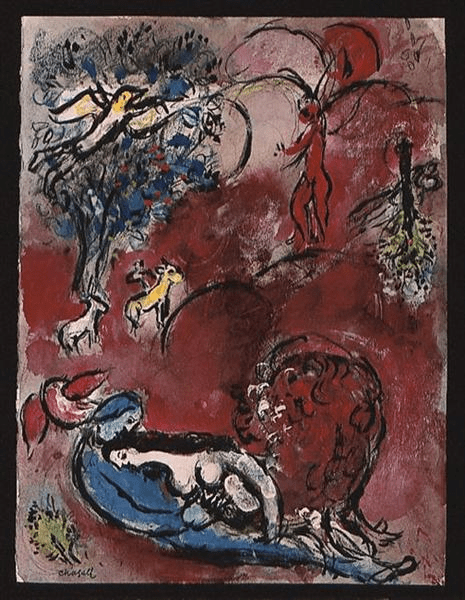
A Spiritual Wedding (Psalm 45:1-2, 6-9)

My thoughts are filled
with beautiful words
    for the king,
and I will use my voice
as a writer would use
    pen and ink.

No one is as handsome as you!
    Your words are always kind.
That is why God
    will always bless you…

You are God, and you will rule
    forever as king.
Your royal power
    brings about justice.
You love justice and hate evil.
    And so, your God chose you
and made you happier
    than any of your friends.
The sweet aroma of the spices
myrrh, aloes, and cassia
    covers your royal robes.
You enjoy the music of harps
in palaces decorated
    with ivory.
Daughters of kings are here,
and your bride stands
    at your right side,
wearing a wedding gown
    trimmed with pure gold. (Contemporary English Version)

A Royal Wedding?

Today’s psalm is a love song meant to be used for a wedding. Whether it was designed only for royal weddings, or for ordinary couples to be a king and queen for a day, the psalm’s overall challenge is for the groom to exercise a right use of power.

Back in biblical times, within a patriarchal society, men held the power and authority within every aspect of the culture, especially in the family.

If the psalm is meant for only royal weddings, it communicates that, in effect, the king has been placed on the throne by God, and acts as God’s extension of justice and righteousness to the people.

And if the psalm is intended for any leader, or anyone who possesses power and authority, then being in such a position requires great responsibility. Power is to be wielded for good, with an eye toward doing what is just and right for all of the people in which the leader exercises authority over.

So, whether one is in a hierarchical or an egalitarian structure, all persons in authority are to give themselves to being faithful.

Symbolism and Allegory

There is a symbolic and allegorical aspect to the psalm. Just as the royal robe or wedding clothes of the groom emit sweet aromatic spices, so the leader who loves justice and acts with integrity is pleasing to all those under their authority.

But thanks be to God, who always leads us as captives in Christ’s triumphal procession and uses us to spread the aroma of the knowledge of him everywhere. For we are to God the pleasing aroma of Christ among those who are being saved and those who are perishing. To the one we are an aroma that brings death; to the other, an aroma that brings life. And who is equal to such a task? (2 Corinthians 2:14-16, NIV)

Those in responsible positions – and those sharing authority with one another – are to do what is life-giving for people; and not do things which are death-dealing. Promoting connection and being encouraging are vital. Causing division and being critical are destroyers of people’s welfare.

The psalmist praises a king who loves righteousness and hates wickedness. Such a ruler defends the cause of truth and upholds justice. These are ideals which have a pertinent message for public servants in every age.

Christ the Bridegroom, and the Church as Bride

For most of church history, Christian interpreters took a committed Christ-centered approach to the psalm. They saw Jesus as the beautiful king who reigns in justice and righteousness, faithfully ruling the people.

Through this view, every psalm, in some way, points to Jesus. In Psalm 45, the wedding poem directs believers to the coming wedding of Christ and the Church. The king is Jesus, who is worthy of praise and adoration. The bride is Christ’s Church.

Whether one discerns the psalm as literal or allegorical, the Christian understands that Jesus Christ is the ultimate fulfillment of all God’s promises. So, in that sense, everything in Holy Scripture – including the Old Testament and all of the Psalms – have to do with Christ.

All good earthly kings, rulers, and leaders hold an office which points forward to Christ, who rules over a kingdom to end all kingdoms. In looking at Psalm 45, the author of the New Testament Book of Hebrews takes such a view, since he looks back to this very psalm in speaking about Jesus:

But about the Son he [God] says,

“Your throne, O God, will last for ever and ever;
    a scepter of justice will be the scepter of your kingdom.
You have loved righteousness and hated wickedness;
    therefore God, your God, has set you above your companions
    by anointing you with the oil of joy.” (Hebrews 1:8-9, NIV)

The Reformer John Calvin (1509-1564) stated the reason we know the Psalm is about Jesus, because neither Jew nor Gentile talks this way about any human king – therefore, it is a reference to Messiah.

From St. Augustine to Martin Luther, scholars and interpreters saw in Psalm 45 a praise to Christ, who is the betrothed king.

The psalm’s celebration exalts the union of Christ and the Church. The song of love anticipates the great wedding feast at the end of the age, sung in honor of Jesus the bridegroom and the Church as the bride of Christ.

Weddings Are About Love

The psalmist unabashedly loves the king, and wants everyone to know it. Indeed, it is love which makes life worth living. It’s love that animates our words and actions. Apart from love, we are lost and lonely – languishing without an object of love to orient life around.

An affectionate love for Jesus Christ drives the Christian to live into goodness, justice, and righteousness. And we become what we love – which is why Christianity has the power to change the world for the better (and not in the weird sense of trying to conquer the world through politics and Christendom).

Such love elicits praise and adoration. Love brings about God’s good purposes. And God is determined to bring a spouse for his Son.

“God created the world to provide a spouse and a kingdom for His Son: and the setting up of the kingdom of Christ, and the spiritual marriage of the spouse to Him, is what the whole creation labors and travails in pain to bring to pass.” Jonathan Edwards (1703-1758)

It is far too easy for one’s love to fade in the Christian life. Living an ethical life, and maintaining doctrinal purity, may be kept up; and yet, it all can be done without love behind it.

Jesus said to the Church at Ephesus:

I know your deeds, your hard work and your perseverance. I know that you cannot tolerate wicked people, that you have tested those who claim to be apostles but are not, and have found them false. You have persevered and have endured hardships for my name, and have not grown weary. Yet I hold this against you: You have forsaken the love you had at first. (Revelation 2:2-4, NIV)

Let’s allow today’s Psalm to evoke and stir up our love for God by reminding us of God’s great love for us in Christ, and the love we have, or once had, for Jesus.

Let us see what great lengths God went to love us through Christ. And let us retain and maintain the joyous passion of life with God in Christ, by means of the Spirit.

Amen.

It’s All About Love (Song of Songs 2:1-7)

I am a rose of Sharon,
a lily growing
in the valleys.

[ GROOM ]

Like a lily among thorns,
so is my true love among the young women.

[ BRIDE ]

Like an apple tree among the trees in the forest,
so is my beloved among the young men.
I want to sit in his shadow.
His fruit tastes sweet to me.
He leads me into a banquet room
and looks at me with love.
Strengthen me with raisins
and refresh me with apples
because I am weak from love.
His left hand is under my head.
His right hand caresses me.

Young women of Jerusalem, swear to me
by the gazelles
or by the does in the field
that you will not awaken love
or arouse love before its proper time. (God’s Word Translation)

Notice how the flowers grow in the field. They never work or spin yarn for clothes. But I say that not even Solomon in all his majesty was dressed like one of these flowers. (Matthew 6:28-29)

Love the Lord your God with all your heart, with all your soul, and with all your strength. (Deuteronomy 6:5)

As long as I have you, I don’t need anyone else in heaven or on earth.

Psalm 73:25

There is nothing quite like a field of flowers. Along the coastal plain of the Mediterranean Sea, south of Mount Carmel, is Sharon. In the ancient world, there was found crocuses, tulips, and hibiscus.

These days, in the Spring of the year, one can see bindweed and pimpernel, sage and iris, as well as orchids and poppies. In addition, lilies bloom throughout the valleys of the Middle East. In the Spring, flowers are commonplace in the valleys and countryside.

In today’s Old Testament lesson, the bride in this poetic ode to love and beauty, is saying there is nothing special about her. There are many women, and she in no way stands amongst them all.

Love says otherwise. Love picks out the individual. In the Song, the groom views the bride as if a flower among thorns. There is a beauty that attracts him to her. She may be a commoner, yet her beautiful qualities stand out and are attractive. All others pale in comparison to her.

Likewise, the bride basks in the security of the groom, finding all others tasteless compared to him. He is like an apple tree that provides shade, and whose fruit is delicious.

There is a mutual attraction that is life-giving and beautiful. It is more than a fleeting infatuation. They see within each other the qualities which will bind and sustain them when there are rough times and hard roads.

Beauty is much more than outward appearance. It is the endearing inner qualities of a good and right spirit, which is outwardly seen in a visage of compassion and caring, gentleness and humility, purity and peace.

Such beauty, in and out, causes one to swoon with love – hence, making one love-sick. Love is powerful. It is not to be corrupted by the lust which only views another as an object to be gained.

We are to let the beauty and power of love develop, grow, and mature. The flowers of the field may seem to spring up overnight. However, the seeds and the bulbs have been awaiting the right time to take root, break the ground, grow up, and flower.

Love is both endearing and enduring. Love is to be nurtured and cultivated. It cannot be hurried. Love is an attention to the whole person, and seeks to endure for the long haul. It maintains a beautiful commitment into the growing coldness of autumn, and holds vigil through the season of winter. Love isn’t going anywhere.

But I am talking about Christ the groom, and Church the bride. Spiritual commitment is not really measured in doctrinal statements and dogmatic theology. It is shown and known by embracing Love with a capital “L.”

God is Love. Yes, God does loving deeds and actions. Yet, we are told that the very nature and character of God is Love. Jesus is Love incarnate, the embodiment of what Love sees and does in this world.

I am, of course, taking a decidedly Christian approach to the Song, and an allegorical view of it. This is why, if we delight in knowing and enjoying the Song, we discover the way to genuine spirituality, and the key which unlocks the whole of Holy Scripture.

Not everyone, of course, will agree with me or choose to go down this allegorical path. Perhaps this is why we have so much religion nowadays which is devoid of love, and chooses to focus on sterile doctrinal checklists to which we must ascribe.

Please don’t hear what I am not saying. Doctrine is important. Theology is a must. But if our doctrine and theology has no beauty, and has no thoughts of love, and is not basically oriented in the direction of love, then I strongly argue that it isn’t doctrine or theology at all!

“And what is proper love? One should love the Lord with an exceeding great and very strong love so that the soul be tied to the love of the Lord, finding itself totally absorbed in it, as if he were suffering of lovesickness, when his mind is never free because of love for that woman, and he is obsessed with her, whether sitting down, or standing up, even when he is eating and drinking. More than this should the love for the Lord be in the heart of those who love him, meditating on it constantly, even as God has commanded us: ‘With all your heart and with all your soul.’” – Maimonides, Jewish Rabbi and philosopher (1138-1204, C.E.)

We were created by God for love. God longs to love us; and we are to love God with our entire self – heart, soul, mind, and strength. What’s more, our own love for one another is shaped by the love we receive from God.

Indeed, the biblical book, Song of Songs, is not only in the literal middle of the Old Testament; it is also in the very heart of it. It is all about Love.

Bless us with Love, O Merciful God;
That we may Love as you Love!
That we may show patience, tolerance,
Kindness, caring and love to all!
O Compassionate One, grant compassion unto us;
That we may help all fellow souls in need!
Bless us with your Love, O God.
Bless us with your Love. Amen.

The Beauty of Love (Song of Songs 1:1-17)

Song of Songs I, by Marc Chagall, 1960

The Song of Songs, which is for Solomon.

[Woman]

If only he would give me some of his kisses . . .

Oh, your loving is sweeter than wine!
Your fragrance is sweet;
        your very name is perfume.
        That’s why the young women love you.
Take me along with you; let’s run!

My king has brought me into his chambers, saying,
“Let’s exult and rejoice in you.
Let’s savor your loving more than wine.
        No wonder they all love you!”

Dark am I, and lovely, daughters of Jerusalem—
        like the black tents of the Kedar nomads,
        like the curtains of Solomon’s palace.
Don’t stare at me because I’m darkened
        by the sun’s gaze.
My own brothers were angry with me.
        They made me a caretaker of the vineyards—
        but I couldn’t care for my own vineyard.

Tell me, you whom I love with all my heart—
        where do you pasture your flock,
        where do you rest them at noon?—
            so I don’t wander around with the flocks of your companions.

[Man]

If you don’t know your way,
    most beautiful of women,
        then follow the tracks of the herds
            and graze your little goats
            by the tents of the shepherds.

I picture you, my dearest,
        as a mare among Pharaoh’s chariots!
Lovely are your cheeks, adorned with ear hoops;
        your neck, with beads.
Let’s make hoops of gold beaded with silver for you!

[Woman]

With my king close by,
        my perfume filled the air.
A sachet of myrrh is my love to me,
        lying all night between my breasts.
A cluster of henna flowers is my love to me
        in the desert gardens of En-gedi.

[Man]

Look at you—so beautiful, my dearest!
        Look at you—so beautiful! Your eyes are doves!

[Woman]

Look at you—so beautiful, my love!
        Yes, delightful! Yes, our bed is lush and green!
The ceilings of our chambers are cedars;
        our rafters, cypresses. (Common English Bible)

The Song of Songs is an unabashedly sensuous biblical book. It is, throughout its contents, an erotic paean to love. In eight chapters, a man and a woman pursue each other through verdant fields and lush valleys. The excitement they have, being together, is palpable.

For most of church history, the Song of Songs has been viewed as an allegory, a love poem between Christ and the Church. And in the case of Hebrew Scripture, the covenant love which exists between God and Israel, has been the predominant interpretive lens.

Seen from this perspective, the Song of Songs reflects that we ought to love the Lord with overpowering commitment, as if we were love-sick for our Beloved. Our thoughts are constantly on the object of our love – how we can please our beloved one.

And yet, there still seems to be room to read the Song in the very down-to-earth realness of physical love between two lovers. Since we are embodied people, such love ought to be celebrated, and is anything but base or to be refused. Sex is a gift from the Creator, and encouraged by God.

I think that the Song of Songs is not an either/or; it is a both/and; it’s both literal and allegorical. That’s not a weird thing. On the allegorical level, the Song is a beautiful poem describing the Divine Eros for God’s people, and the faithful’s heartfelt love for the God whose very name is Love.

Concerning a literal view, the Song celebrates the sanctity of human love, seeing within it the symbol of God’s love for us. Our very real bodies are themselves sacred, just as much as our souls.

Yet, however one chooses to look at the Song of Songs, it remains a statement of mutual admiration, of committed love and affection. It is indeed a poetic lifting of love above all else.

Indeed, if love isn’t the answer, we are not asking the right question.

Believe it or not, the Song of Songs was once viewed as an important key, capable of unlocking the entirety of Holy Scripture.

In fact, C.H. Spurgeon, the Prince of Preachers, in the nineteenth century, preached 59 sermons from this book; in Victorian England, no less. Spurgeon discerned the Song as central to the whole of the Bible. Reflecting on Song of Songs 1:7, he said:

“These words express the desire of the believer after Christ, and his longing for present communion with Him…. Tell me where Thou feeds, for wherever Thou stands as the Shepherd, there will I lie down as a sheep; for none but Thyself can supply my need. I cannot be satisfied to be apart from Thee. My soul hungers and thirsts for the refreshment of Thy presence….

“Satan tells me I am unworthy; but I always was unworthy, and yet Thou hast long loved me; and wherefore my unworthiness cannot be a bar to my having fellowship with Thee now. It is true I am weak in faith, and prone to fall, but my very feebleness is the reason why I should always be where Thou feeds Thy flock, that I may be strengthened, and preserved in safety beside the still waters.

“Why should I turn aside? There is no reason why I should, but there are a thousand reasons why I should not, for Jesus beckons me to come. If He withdraw Himself a little, it is but to make me prize His presence more. Now that I am grieved and distressed at being away from Him, He will lead me yet again to that sheltered nook where the lambs of His fold are sheltered from the burning sun.” Charles Haddon Spurgeon

The Song, in history past, once functioned as a beautiful path to deep intimacy with God. Methinks it behooves us to recover this.

The two lovers in the Song see beauty everywhere. They see it in each other, in the fields where the sheep are pastured, in the orchards where love is consummated, in the seasons, in the animals, trees, and hills. Beauty is all around them, and it is they themselves.

All things which God has created are lovely. Nothing is too small or too insignificant when the eyes of love look upon them. Beauty is designed to be noticed, celebrated, and praised. Love is meant to be expressed out loud, with flavor.

Each time love is stated, every exhalation of adoration, and all of the instances when beauty is acknowledged and affirmed, the ones who speak bind themselves more deeply to God and God’s big world. Together, they call all of it good.

Today’s Old Testament lesson is a wondrous reminder that beauty and love will have its way. Regardless of class, race, family, or societal norms, lovers will continue to seek and find one another and claim their relationship.

While the daughters may stare, and the brothers may be angry, the lovers will yet affirm the beauty of their love. And they will find contentment with each other.

You and I are no accident on this earth; we were created by a loving Creator who has an eye for beauty. And no matter how separated we may get from our divine source, God will seek us out; and if we seek the Lord, he will be found.

O God, you have prepared for those who love you such good things as surpass our understanding: Pour into our hearts such love towards you, so that we, loving you in all things and above all things, may obtain your promises, which exceed all that we can desire. Amen.

Injustice Makes Everything Weird (Zechariah 11:4-17)

This is what the Lord my God says: “Shepherd the flock marked for slaughter. Their buyers slaughter them and go unpunished. Those who sell them say, ‘Praise the Lord, I am rich!’ Their own shepherds do not spare them. For I will no longer have pity on the people of the land,” declares the Lord. “I will give everyone into the hands of their neighbors and their king. They will devastate the land, and I will not rescue anyone from their hands.”

So I shepherded the flock marked for slaughter, particularly the oppressed of the flock. Then I took two staffs and called one Favor and the other Union, and I shepherded the flock. In one month I got rid of the three shepherds.

The flock detested me, and I grew weary of them and said, “I will not be your shepherd. Let the dying die, and the perishing perish. Let those who are left eat one another’s flesh.”

Then I took my staff called Favor and broke it, revoking the covenant I had made with all the nations. It was revoked on that day, and so the oppressed of the flock who were watching me knew it was the word of the Lord.

I told them, “If you think it best, give me my pay; but if not, keep it.” So they paid me thirty pieces of silver.

And the Lord said to me, “Throw it to the potter”—the handsome price at which they valued me! So I took the thirty pieces of silver and threw them to the potter at the house of the Lord.

Then I broke my second staff called Union, breaking the family bond between Judah and Israel.

Then the Lord said to me, “Take again the equipment of a foolish shepherd. For I am going to raise up a shepherd over the land who will not care for the lost, or seek the young, or heal the injured, or feed the healthy, but will eat the meat of the choice sheep, tearing off their hooves.

“Woe to the worthless shepherd,
    who deserts the flock!
May the sword strike his arm and his right eye!
    May his arm be completely withered,
    his right eye totally blinded!” (New International Version)

Injustice makes everything weird. Leaders who treat others with dishonor and disrespect are only looking to take advantage of people for their own selfish purposes. Unfortunately, such leaders try and make their leadership appear as if they care about the people they lead – even though they really don’t. This is what makes a group of people led by a charlatan feel insecure, confused, and unsure about things.

Today’s Old Testament lesson is a rather confusing allegory of ancient Israel’s history. Despite God’s desire to lead the people in righteousness and justice, many (if not most) of the leaders oppressed them.

As a sign of what was going on, and what was about to happen, the prophet himself was called to lead the people. He shepherded a flock that was marked for slaughter. The shepherds before him were only concerned about their financial bottom line and fleecing the sheep.

When the prophet took over, he used the shepherd crooks of “Favor” and “Union,” indicating that he was concerned to extend grace and form unity around what is right and just. Although the wicked shepherds were forced out from their leadership, the prophet became exasperated in caring for the sheep.

Thus, he destroyed the shepherd staffs – symbolizing God’s rejection of the flock. The owners of the flock paid the prophet thirty shekels of silver, which were then thrown into the potter’s field. New Testament readers will immediately connect this to Judas Iscariot. All of this is a demonstration of the wealthy trying to try pay off God for them not properly shepherding the sheep.

God, however, raised up another worthless and evil leader who shepherds the flock through oppression and injustice. For which the Lord then curses such leadership.

Yes, it’s all a convoluted affair – which is typically what sin does to everything and everyone it touches. Sin messes with and mucks up people to the point that they don’t know which way is up.

What makes it all even more complicated is the reality that the sheep are just as bad as their shepherds. The people got the leaders they deserved. So, the prophet had the unenviable task of watching over a group of people marked for divine judgment.

But, of course, not every single individual is guilty. Some are true victims who don’t deserve any of the injustice that was happening. And that is the very sad thing about the presence of unrighteousness, wickedness, and injustice – that good people, trying to do the right thing, have to endure such suffering of both body and soul.

And the prophet became a victim of the flock. No amount of money can make up for people who treat their leader poorly by refusing to accept the shepherd’s genuine care, clear warnings, and true counsel.

It’s a sad situation whenever people become so stubborn and self-centered that they are unable to receive good things when offered to them. The only thing people have to look forward to, in such a situation, is divine rebuke and retribution.

There are things much more valuable than money. Honor, respect, dignity, listening, obedience, wisdom, humility, righteousness, justice, and salvation are vitally important and needed – and of greater worth than any sort of financial sum.

Wolves are kept at bay by faithful shepherds who are concerned for the flock. This is how God leads and cares for people. So, evil shepherds who fleece the flock, as well as wicked sheep who oppress their shepherds, are especially heinous to God.

A flock who detests a good shepherd will end up getting a predatory tyrant for a leader, as a means of both divine judgment, and as a way of weaning people back to good leadership. Suffering at the hands of bad shepherds has its root cause in a failure to value and respond properly to the loving care and discipline of the ultimate and true Good Shepherd of the sheep.

It is impossible to be in right relation with God apart from listening to and obeying God’s Word. No matter who we are – whether leader or follower, shepherd or sheep – all must consider the worth of justice and the evil of injustice in navigating the world we live in. For injustice, indeed, makes everything and everyone a creepy sort of weird.

O God:
Give me strength to live another day;
Let me not turn coward before its difficulties or prove recreant to its duties;
Let me not lose faith in other people;
Keep me sweet and sound of heart, in spite of ingratitude, treachery, or meanness;
Preserve me from minding little stings or giving them;
Help me to keep my heart clean, and to live so honestly and fearlessly that no outward failure can dishearten me or take away the joy of conscious integrity;
Open wide the eyes of my soul that I may see good in all things;
Grant me this day some new vision of your truth;
Inspire me with the spirit of joy and gladness;
and make me the cup of strength to suffering souls;
in the name of the strong Deliverer, our Lord and Savior, Jesus Christ. Amen.