
Tussling with Trouble (Matthew 10:24-39)

“The student is not above the teacher, nor a servant above his master. It is enough for students to be like their teachers, and servants like their masters. If the head of the house has been called Beelzebul, how much more the members of his household!

“So do not be afraid of them, for there is nothing concealed that will not be disclosed, or hidden that will not be made known. What I tell you in the dark, speak in the daylight; what is whispered in your ear, proclaim from the roofs. Do not be afraid of those who kill the body but cannot kill the soul. Rather, be afraid of the One who can destroy both soul and body in hell. Are not two sparrows sold for a penny? Yet not one of them will fall to the ground outside your Father’s care. And even the very hairs of your head are all numbered. So don’t be afraid; you are worth more than many sparrows.

“Whoever acknowledges me before others, I will also acknowledge before my Father in heaven. But whoever disowns me before others, I will disown before my Father in heaven.

“Do not suppose that I have come to bring peace to the earth. I did not come to bring peace, but a sword. For I have come to turn

“‘a man against his father,
    a daughter against her mother,
a daughter-in-law against her mother-in-law—
    a man’s enemies will be the members of his own household.’

“Anyone who loves their father or mother more than me is not worthy of me; anyone who loves their son or daughter more than me is not worthy of me. Whoever does not take up their cross and follow me is not worthy of me. Whoever finds their life will lose it, and whoever loses their life for my sake will find it. (New International Version)

We can expect opposition and trouble from the world

Those who follow the words and ways of Jesus will experience hardship at the hands of others, because Christ’s values are often different than how the world’s systems typically operate. 

Being called the Devil (Beelzebul) isn’t exactly a term of endearment. There were those so upset with Jesus that they equated him with Satan. So, since Christ got this kind of verbal treatment, how much more will we be the brunt of false accusations, slander, and gossip? 

We are not above our Lord – we will be treated as he was. We cannot expect that we are above getting into trouble. Believers are promised deliverance from sin, death, and hell – and not from the meanness and ignorance of people in this present life.

Because of this reality, we need to be savvy to our situation of trouble and practice common sense, as well as have a mental disposition that thinks the best of people, and does not immediately judge and condemn others.

All of this requires us to avoid the two extremes of either simple assimilation into the culture, or rejection of the culture as evil. Both the blending into culture, and the separating from it, each share the same preferred outcome of trying to avoid opposition and trouble. 

Instead, there is a third way of being faithful to following the way of Jesus: Interact with and engage the culture as salt and light. (Matthew 5:13-16)

Assimilation causes us to lose our saltiness; and isolation hides our light. So, let’s find wise ways to understand truth and apply it in the concrete situations of life in this world. 

For example, we can discuss life issues about our jobs and school from a Christian perspective, so that we might speak into others’ lives, instead of just standing against something and complaining about it: How might we show both grace and truth in a particular situation? Are there ways we can give support without condoning something we oppose, and how?

We can expect that we are going to disrupt and upset our families and experience opposition from them
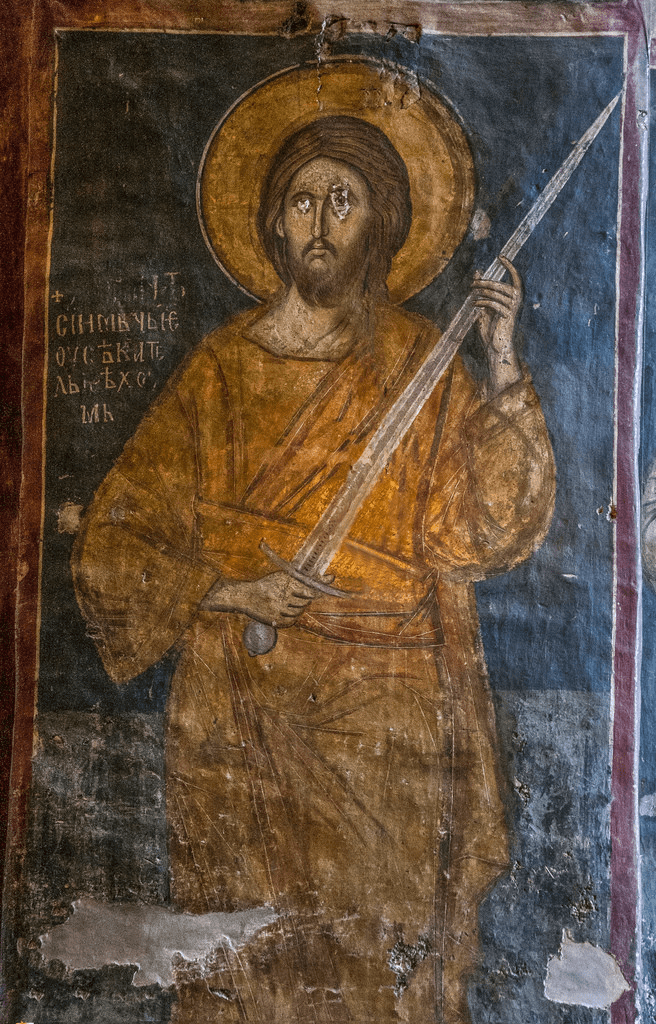
14th century fresco of Christ with a sword, in the Sacred Monastery of the Ascension of Christ Church, Kosovo

Unfortunately, opposition does not just come from the world, but within the very families and communities we love and rub shoulders with every day. Most persecution, hardship, and trouble for believers in Jesus come from family and those closet to us. 

Although I grew up in a church-going family, we never really discussed faith or Christianity. When I became serious about walking with Jesus, I faced a lack of support. I was often the brunt of teasing and verbal jabbing. My commitment to Christ had butted up against the family value of never rocking the boat. 

There was once a woman who experienced new life in Christ. When God grabbed ahold of her life, she had been on track to becoming the next Barbara Walters. But her newfound values of embracing the Beatitudes of Jesus rubbed the television broadcast world too much. 

So, she went into radio. Instead of looking toward a lucrative life on screen, she settled for less money and no fame behind the microphone of a Christian radio station. Her family didn’t understand this. And marrying a preacher didn’t help the situation any for her. To this day she still faces hardship and resentment for making decisions that did not get her the American dream.

Jesus said that anyone who wants to take the path of least resistance by not rocking the family boat with Christian love is not worthy of him. Anyone who does not take up their cross and follow Jesus in the way of trouble is not worthy of following him. 

We must die to self – which often means dying to avoidance of conflict – and become alive to the wonder of God’s mercy and love in the world.

We don’t need to be afraid of getting into trouble

Why? Because…

  1. Fear has to do with the unknown. So since we know opposition and trouble is expected, we will not live in dread of what might happen. The early Christians actually rejoiced in their suffering because they considered it a privilege to be walking in the way of Jesus. (Acts 5:27-42)
  2. You will receive special help. In times of persecution, we have a Helper, the Holy Spirit, given to us for such times as these. (John 3:34; 16:1-15)
  3. God isn’t surprised by your hardship. The Lord will eventually deal with all that is wrong in this world.
  4. The wrath of God is to be more feared than the wrath of people.
  5. God is watching over all the details of my life. If God cares for all the small details, how much more will the Lord take care of the big issues in my life?

Conclusion

It is a privilege to follow Jesus into trouble. This is what is called “upside-down” theology: 

  • In giving my life away to Jesus, I find it. 
  • In getting into trouble, I find peace. 
  • In serving and taking up our cross, there is happiness, not depression. 

Sometimes, things in the kingdom of God seem upside-down; and that is as it should be. Facing trouble is really not the worst thing to be experienced – being separated from God is. 

We are to expect opposition from the world, and from family. Yet, we need not be afraid, because tussling with trouble is part of what it means to follow Jesus – it is the way of the cross.

So, count the cost. Give your life away. In doing so, you will certainly not lose your reward from God.


Be Brave, Not Afraid (Deuteronomy 31:1-13)

Then Moses went out and spoke these words to all Israel: “I am now a hundred and twenty years old and I am no longer able to lead you. The Lord has said to me, ‘You shall not cross the Jordan.’ The Lord your God himself will cross over ahead of you. He will destroy these nations before you, and you will take possession of their land. Joshua also will cross over ahead of you, as the Lord said. And the Lord will do to them what he did to Sihon and Og, the kings of the Amorites, whom he destroyed along with their land. The Lord will deliver them to you, and you must do to them all that I have commanded you. Be strong and courageous. Do not be afraid or terrified because of them, for the Lord your God goes with you; he will never leave you nor forsake you.”

Then Moses summoned Joshua and said to him in the presence of all Israel, “Be strong and courageous, for you must go with this people into the land that the Lord swore to their ancestors to give them, and you must divide it among them as their inheritance. The Lord himself goes before you and will be with you; he will never leave you nor forsake you. Do not be afraid; do not be discouraged.”

So Moses wrote down this law and gave it to the Levitical priests, who carried the ark of the covenant of the Lord, and to all the elders of Israel. Then Moses commanded them: “At the end of every seven years, in the year for canceling debts, during the Festival of Tabernacles, when all Israel comes to appear before the Lord your God at the place he will choose, you shall read this law before them in their hearing. Assemble the people—men, women and children, and the foreigners residing in your towns—so they can listen and learn to fear the Lord your God and follow carefully all the words of this law. Their children, who do not know this law, must hear it and learn to fear the Lord your God as long as you live in the land you are crossing the Jordan to possess.” (New International Version)

The Old Testament book of Deuteronomy is all about remembering and being reminded of what we already know. There’s really nothing new under the sun. So, our task as people is mostly to recall and bring to our minds and heart those things which we need to remember.

We humans have this tendency to remember the things we need to forget, and to forget the things we must remember. And what is to be continually remembered and recalled is that there is no basis to be afraid when God is with us and will fulfill divine promises.

For Christians, the resurrection of Christ from death has changed everything – especially when it comes to fear. In this Christian season of Eastertide, we discover and explore the vast implications of what it means to possess a new life. 

Because Christians serve a risen Savior, this newfound reality brings courage and confidence. Fear isn’t something we simply dismiss with willpower. Rather, fear begins to loosen and diminish whenever there is an awareness of God’s presence among us. Consider just a few of the many references to this in Holy Scripture, in addition to the statements in today’s Old Testament lesson:

Remember, I commanded you to be strong and brave. Don’t be afraid because the Lord your God will be with you wherever you go.” (Joshua 1:9, ERV)

 Don’t fear, because I am with you;
    don’t be afraid, for I am your God.
    I will strengthen you,
    I will surely help you;
    I will hold you
    with my righteous strong hand. (Isaiah 41:10, CEB)

Be happy with what you have because God has said, “I will never abandon you or leave you.” So we can confidently say,

“The Lord is my helper.
I will not be afraid.
What can mortals do to me?” (Hebrews 13:5-6, GW)

Believe it, or not, the Bible tells us 365 times to not be afraid. Maybe that’s not a coincidence that we can quote a verse every day of the year about our own fearfulness in the face of all life’s challenges.

When it comes to fear and bravery, God does not so much command us to be courageous, as he wants us to draw from the great reservoir of bravery within. That is, God has already created us strong, as creatures in the divine image. We just need to get in touch with what is already there. And, for the Christian, the reality of Easter awakens and calls forth that life.

We can act with boldness and overcome fear because Jesus is the pioneer of our salvation. Christ is the One who enables us to draw from the deep well of courage:

So then, since we have a great High Priest who has entered heaven, Jesus the Son of God, let us hold firmly to what we believe. This High Priest of ours understands our weaknesses, for he faced all the same testing we do, yet he did not sin. So, let us come boldly to the throne of our gracious God. There we will receive his mercy, and we will find grace to help us when we need it most. (Hebrews 4:14-16, NLT)

You and I can do this; we can do hard things. We really can face the fears in front of us. You can surmount the adversity you are in the middle of – not because of some words I say, but because Christ has risen from death. He’s alive, and his presence makes all the difference.

Ever-present God: Give me strength to live another day;
Let me not turn coward before its difficulties or prove recreant to its duties;
Let me not lose faith in other people;
Keep me sweet and sound of heart, in spite of ingratitude, treachery or meanness;
Help me to keep my heart clean and to live so honestly and fearlessly that no outward failure can dishearten me or take away the joy of conscious integrity;
Open wide the eyes of my soul that I may see good in all things;
Grant me this day some new vision of your truth;
Inspire me with the spirit of joy and gladness and make me the cup of strength to suffering souls; in the name of the strong Deliverer, our only Lord and Savior, Jesus Christ. Amen.

Jesus Shows Up (John 20:19-31)

Jesus shows himself to Thomas, by Rowan and Irene LeCompte

On the evening of that first day of the week, when the disciples were together, with the doors locked for fear of the Jewish leaders, Jesus came and stood among them and said, “Peace be with you!” After he said this, he showed them his hands and side. The disciples were overjoyed when they saw the Lord.

Again Jesus said, “Peace be with you! As the Father has sent me, I am sending you.” And with that he breathed on them and said, “Receive the Holy Spirit. If you forgive anyone’s sins, their sins are forgiven; if you do not forgive them, they are not forgiven.”

Now Thomas (also known as Didymus), one of the Twelve, was not with the disciples when Jesus came. So the other disciples told him, “We have seen the Lord!”

But he said to them, “Unless I see the nail marks in his hands and put my finger where the nails were, and put my hand into his side, I will not believe.”

A week later his disciples were in the house again, and Thomas was with them. Though the doors were locked, Jesus came and stood among them and said, “Peace be with you!” Then he said to Thomas, “Put your finger here; see my hands. Reach out your hand and put it into my side. Stop doubting and believe.”

Thomas said to him, “My Lord and my God!”

Then Jesus told him, “Because you have seen me, you have believed; blessed are those who have not seen and yet have believed.”

Jesus performed many other signs in the presence of his disciples, which are not recorded in this book. But these are written that you may believe that Jesus is the Messiah, the Son of God, and that by believing you may have life in his name. (New International Version)

When Jesus shows up, there is peace. Wherever Jesus goes, the Spirit of God is there. When Jesus appears, people believe.

The Meeting

After the crucifixion of Christ, the disciples were huddled together, mostly in fear of being found out and put out by the religious authorities. Out of nowhere, Jesus showed up, smack in the middle of the anxious group of men.

Christ in the center makes all the difference. From this central place, Jesus bestowed to the disciples his peace. The very first word the risen Christ spoke to his disciples was neither a command to stop being afraid, nor a rebuke for sitting around and doing nothing, or disappointment that they all ran away in the final hour of need at the crucifixion; instead, the first word of Christ was a gift of peace.

The presence and peace of Christ melted the disciples’ fear. Christ-centered peace is graciously given; so let us gratefully receive it.

The Reality

Jesus showed up, then showed off his hands and his side. He was not fabricated out of the disciples’ imagination; he was not some ghostly apparition. Rather, Christ was standing in the middle of them, very real, very physical, and very alive.

Christ gave his disciples real truth: actual wounded hands and side on a real body. Christ is risen and alive – not just spiritually, but physically. Since the resurrection of Jesus really happened, then nothing else matters; our joy is complete. We have what we need.

The Mission

As Jesus was sent by the Father, so Jesus sent his disciples; and is still sending us out into the world. And as Jesus came not to condemn the world but to save it, so we go out with words of grace and peace. The church exists for the life of the world – to bless it with the presence and peace of Christ.

“Whoever believes in me does not believe in me only, but in the one who sent me. The one who looks at me is seeing the one who sent me. I have come into the world as a light, so that no one who believes in me should stay in darkness.” (John 12:44-46, NIV)

Our spiritual DNA makes us little Christ’s walking around, doing the will of God, for the benefit of a world in darkness. We bear the name of Christ: Christians, proclaiming a message of life, delighting in God and creation; and not destroying the earth and its inhabitants.

The Gift

Right now, we are not alone. The Holy Spirit has been graciously given to us by Jesus. Although our mission is a big one, our resource for accomplishing it is even bigger. Jesus gives the Spirit in the same way he gives himself – as a sheer gift with no strings attached. Just as God breathed life into the very first people on earth, so Jesus breathes on the disciples and gives them new life and a new heart.

I will give you a new heart and put a new spirit in you; I will remove from you your heart of stone and give you a heart of flesh. And I will put my Spirit in you and move you to follow my decrees and be careful to keep my laws… and you will be my people, and I will be your God. (Ezekiel 36:26-28, NIV)

The Privilege

Christ has redeemed us, forgave us of our guilt and shame. Now, we have the privilege of passing the forgiveness to others. The special mission of the Church is giving Jesus to others with grace and peace, so that they may believe he is truly the risen Lord; and so, receive Jesus, the Spirit, forgiveness, and purpose in life, with Christ at the center of all things.

For the one whom God has sent speaks the words of God, for God gives the Spirit without limit. The Father loves the Son and has placed everything in his hands. Whoever believes in the Son has eternal life, but whoever rejects the Son will not see life, for God’s wrath remains on them.” (John 3:34-36, NIV)

The Risen Lord, by He Qi

The Appearance

When Jesus appears, its good if we also show up to see him. It seems Thomas was late for church and missed the beginning of the service. He wasn’t with the other gathered disciples. Nobody knows where he was or what he was doing. But the important thing is that he did eventually show up, because showing up is the beginning of a changed life.

The Witness

After Jesus showed up, the disciples bore witness to what they saw and heard to Thomas. Yet Thomas, bless his doubting heart, wasn’t having it. He’s a realist. He wants proof, some actual physical evidence. Thomas was clearly a tactile learner because he needs some touch to believe any of this crazy talk of his disciple brothers.

Sometimes Thomas gets a bad rap, but he is really our Everyman. Doubt and skepticism are an important part of a full-orbed and honest faith. Jesus gave Thomas some space, time, and respect to begin wrapping his head and heart around this new reality of resurrection. I wonder if we all can do the same with others.

The Middle

A second time, Jesus shows up in the middle of the disciples. The Word became flesh and dwelt among us – and didn’t become a ghost and hang out in secret places. Once again, peace is given by Jesus to his followers.

Both appearances happen on a Sunday (which is why Christians have always worshiped on Sundays); and both meetings are literally Christ-centered (which every Christian meeting is supposed to be). Every Sunday. Christ always in the middle. Keep those two, and keep them together, and you can’t go wrong.

Jesus appears to Thomas with the Latin words, “See my hands,” in Notre-Dame-du-Rosaire Church, Saint-Ouen, France 

The Invitation

There’s no beating around the bush with Jesus. He immediately engaged Thomas and invited him to touch the wounds on his very real body. Christ knew Thomas’ hang-up, and went right to it. Thomas wanted evidence; Jesus offered it. If we get anything out of this encounter, it is that risen Christ honors honest doubt.

The evidence is here. Now believe it, and stop disbelieving. We have documentary evidence of the Old and New Testaments; the Church’s witness in Creeds, Confessions, and contemporary narratives of changed lives; and the internal testimony of the Holy Spirit. Therefore, look into them carefully and draw a sound conclusion.

The Confession

“My Lord and my God!” That’s the confession and the conclusion Thomas drew from the evidence – not only that Jesus is real, alive, existed, a good teacher; or other people’s Lord and God – but that he is my Lord and my God.

Jesus cared enough for Thomas to specifically meet him personally at his point of need. The grace of God keeps coming and never runs out. Jesus is filled up to the full in both grace and truth.

The Believer

Thomas had the physical evidence. But it doesn’t take that to truly believe. God blesses those who’ve never seen nor touched, but still believe. Jesus was thinking of you and me, and not only the people in front of him at the time. The Lord Jesus blesses us with the gift of peace, grace, and faith.

Though you have not seen him, you love him; and even though you do not see him now, you believe in him and are filled with an inexpressible and glorious joy, for you are receiving the end result of your faith, the salvation of your souls. (1 Peter 1:8-9, NIV)

The Conclusion

All this is for our benefit, so that we, too, may believe that Jesus is the Christ, the Son of the living God. Since Jesus is alive, he continues to bless us with his presence, power, and peace.

Jesus is with us:

  • through the Word of God, giving us his peace, showing up and meeting needs people.
  • at the Table in the sacrament of communion, bringing grace and forgiveness
  • in the person of the Holy Spirit, enabling and energizing us for mission and ministry to the world

It’s a life worth living, a Christ-centered life, full of God’s blessing.

O God and Father of our Lord Jesus Christ, in whom we receive the legacy of a living hope, born again not only from his death but also from his resurrection. May we who have received forgiveness of sins, set others free, until we enter the inheritance that is imperishable and unfading, where Christ lives and reigns with you and the Holy Spirit, one God, now and forever. Amen.

Expressing Grief (Lamentations 3:55-66)

An engraving of the prophet Jeremiah lamenting, 1937

I called on your name, Lord,
    from the depths of the pit.
You heard my plea: “Do not close your ears
    to my cry for relief.”
You came near when I called you,
    and you said, “Do not fear.”

You, Lord, took up my case;
    you redeemed my life.
Lord, you have seen the wrong done to me.
    Uphold my cause!
You have seen the depth of their vengeance,
    all their plots against me.

Lord, you have heard their insults,
    all their plots against me—
what my enemies whisper and mutter
    against me all day long.
Look at them! Sitting or standing,
    they mock me in their songs.

Pay them back what they deserve, Lord,
    for what their hands have done.
Put a veil over their hearts,
    and may your curse be on them!
Pursue them in anger and destroy them
    from under the heavens of the Lord. (New International Version)

Over the years of ministry, I’ve encountered a host of confessing Christians who did not know the book of Lamentations even existed in the Bible. Even more people, I have discovered, are unfamiliar with the word “lament.”

This anecdotal evidence is quite telling: It tells me that a large chunk of people in society don’t know what to do with themselves whenever they experience or encounter trauma, abuse, unwanted circumstances, death, or overwhelming situations.

It’s no wonder that so many of us are anxious, depressed, and emotionally struggling. To be overwhelmed means that we don’t have enough internal resources to match what’s going on with us externally. Being overwhelmed means being devastated or overpowered by several circumstances at once; and experiencing several emotions at once, including the feeling of estrangement from God and/or others.

The book of Lamentations is the prophet Jeremiah’s public expression of grief over the destruction of his home city of Jerusalem. King Nebuchadnezzar and the Babylonian army invaded the land, broke down the city walls, razed the temple, killed many people, and took most of the rest into captivity. The experience, along with the atrocities committed, were overwhelming.

On top of all that, Jeremiah had proclaimed a message of judgment, prophesying what would happen – and it did. And after the Babylonians took over, the remaining people put much of their misplaced anger and grief on Jeremiah, making his situation even worse.

Lamentations of Jeremiah, by Marc Chagall, 1956

What would you do if you were Jeremiah?

In whatever way you might respond, I believe Jeremiah did precisely what was most needed: He called on the name of the Lord, he expressed his lament, and it was all more than a private affair – because we are able to still read his lamentation all these many centuries later.

To lament is to express our feelings and story of grief to another. Without doing so, we are spiritually and emotionally stuck. And if we remain stuck for too long, our grief comes out sideways, either hurting others or ourselves.

The general populace of the people didn’t deal with their grief, and didn’t lament their loss. Instead, they mocked Jeremiah, plotted against him, and insulted him. That’s what happens when we don’t grieve and lament.

Jeremiah, however, left the people in God’s hands, and didn’t take matters into his own hands. He did what he was supposed to do instead of lashing out on others: Crafted this book of Lamentations, which we have access to, and can read.

So, why don’t we?

There’s lots of reasons we don’t examine the book of Lamentations (and explore our own lament). The primary reason is fear:

  • Fear of our own emotions – getting lost in them and afraid we’ll never get out of them – so we construct elaborate thoughts and words of positivity, believing that it will shoo the difficult feelings away. But the truth is, it won’t. It only makes it worse. We can choose to courageously tell our story, to whomever we want, in as much or as little detail as we want.
  • Fear of getting hurt. We’ve already experienced a level of hurt we never thought was possible. It’s only human to want to keep as far away from hurt as we can. So, we keep tight-lipped, tell others that we’re fine (when we’re not), all in the belief that if we can shut others out, we can keep any more hurt from touching us. The problem is that when we do that, we also keep the love out that could and would come to us.
  • Fear of connection. Examining myself and exploring relationships with others sounds too risky. It’s fraught with emotion. Besides, we might reason, I don’t want to put my burdens onto someone else. So, we don’t face our grief. The feelings get buried and, over time, become gangrene of the soul, poisoning us. Like a nasty boil, our grief needs to be lanced, and plenty of peroxide put on the wound. And the right medicine is doing what Jeremiah did: lament our loss.
  • Fear of losing control. I might cry in front of others. I may get really angry and yell. I could go absolutely ape and do weird stuff around people. If I open up, it will be a Pandora’s box of releasing myself. In reality, this is a fear of vulnerability, of letting others see the true self. And since we may not like our true self to begin with, this makes things quite complicated. However, there is not another way. Yet, if we go down the narrow path of lament, we will find many comforters who are able to empathize with us in our suffering.

“Sometimes you have to get your behind in the past before you can put your past behind you.”

Mit Tdrahrhe

The place to begin is in offering our feelings of grief, and our emotional words of lament, to the God who is always ready and available to hear it. And, from there, we reach out to a trusted friend, relative, or faith leader and tell them our story. Eventually, we discover enough healing that we can then comfort others with the comfort we ourselves have received. (2 Corinthians 1:3-11)

You can do this.

Almighty God, Father of mercies and giver of comfort: Deal graciously, we pray, with all who mourn; that, casting all their care on you, they may know the consolation of your love; through Jesus Christ our Lord. Amen.