How To Get Through Difficulty (Psalm 119:105-112)

Your word is a lamp
that gives light
    wherever I walk.
Your laws are fair,
and I have given my word
    to respect them all.
I am in terrible pain!
Save me, Lord,
    as you have promised.
Accept my offerings of praise
    and teach me your laws.
I never forget your teachings,
although my life is always
    in danger.
Some merciless people
    are trying to trap me,
but I never turn my back
    on your teachings.
They will always be
my most prized possession
    and my source of joy.
I have made up my mind
to obey your laws forever,
    no matter what. (Contemporary English Version)

Attitude. Affection. These are the two qualities that stand out to me in today’s Psalm lesson. The psalmist is a person who is determined to hold onto God’s Law because it is his heart’s delight.

Our attitudes and our affections are meant to fit together like a hand in a glove. Our attitudes help us push through suffering to realize better days. And our affections drive us forward, allowing us to experience joy in the present moment as we await our hope of ultimate deliverance.

Commitments are fluid, always moving – so they need to be continually rehearsed and refreshed. We are constantly either fulfilling our promises or reneging on them. There is really no such thing as a one-time vow.

Vows need reinforcement from our attitudes and our affections. Otherwise, they languish on the trash heap of good intentions. This is one reason why the Psalms are designed for constant use.

Spiritually healthy habits must be embedded in our lives, well before any suffering and hard times roll in.

If our normal daily routines involve regular sustenance of God’s Word, then we have a breadth and a depth of robust theology to draw upon when the going gets rough. Furthermore, the sheer force of habit brings us back again and again to the treasure chest of divine instruction, informing our decisions and illuminating the treacherous road ahead.

The psalter is designed to reframe our difficult situations. Especially when a person’s life hangs in the balance, we can view hard and awkward circumstances through the window of the Psalms. Although circumstances change, and we never quite know what to expect, God’s Law remains our ballast and our rock.

Circumstances may change but divine love and morality are unchanging. Jesus Christ is the same yesterday, today, and forever. The Spirit is always with us, through each wave of hardship.

Life is a journey, an exploration into the unknown of the future. The path is shadowy and unclear. We are unsure of what is around the bend. God’s instructions and promises are like a forever energized flashlight, helping us navigate forward. Maybe Jesus had today’s Psalm in mind when he said:

“I am the light of the world. Whoever follows me will never walk in darkness but will have the light of life.” (John 8:12, NRSV)

In Christianity, the Word is embodied in Jesus Christ; he is both the example and fulfillment of all God’s good promises.

A sequence of four metaphors runs through our verses for today:

  1. My feet. With Jesus as Word and Light, we have a constant companion walking alongside us for the journey.
  2. My mouth. There is an intercessor who takes our wordy or malformed prayers and presents them before our heavenly Father
  3. My hands. We do God’s will, despite adverse circumstances, by observing the Master who washed the feet of others.
  4. My heart. In desiring God’s decrees and commands, our hearts find their rest in the One who loved us and gave himself for us.

Our attitudes and affections are transformed into sustainable faith for the long journey.

Our hope is made sure through the promises of God.

Our love finds a resting place in the person of Jesus.

Faith, hope, and love are the shoes enabling us to walk the long uphill road, as well as absorbing the shock as we run with abandon downhill – into the loving arms of God.

I encourage you to find what works best for you in developing helpful spiritual habits. In reading the Bible, I often take the following approach using the acronym S.O.A.P:

Scripture

• Open your Bible and slowly, meditatively, read the portion of Scripture in your reading plan for today.

• Write the reference of what you read in a journal along with the date.

• As you read, ask God’s Spirit to highlight the verse(s) that speak to your life and write it in your journal.

Observation

• Make observations about what you just read and write them in your journal.

• Think about: What is going on? What is the context?  Who are the people being spoken to? What is the background or setting for this verse?

• Paraphrase and write this scripture down in your journal, in your own words.

• What do you think God is saying to you in this scripture?

Application

• Personalize what you have read by asking yourself how it relates to your life right now.

• Ask yourself how you can apply what you just read to your own life and write it in your journal.

• Ask yourself how your life will be different or changed as a result of God speaking to you in this Scripture.

Prayer

• Write out a prayer to God in your journal.

• Your prayer should relate to the verse that you highlighted. It could be asking for help, thanking God, etc. Write down what your heart desires to say to God in response to his Word.

May the words of your mouth, the meditations of your heart, the work of your hands, and the movement of your feet be to the glory of Jesus Christ. Amen.

On Knowing Christ

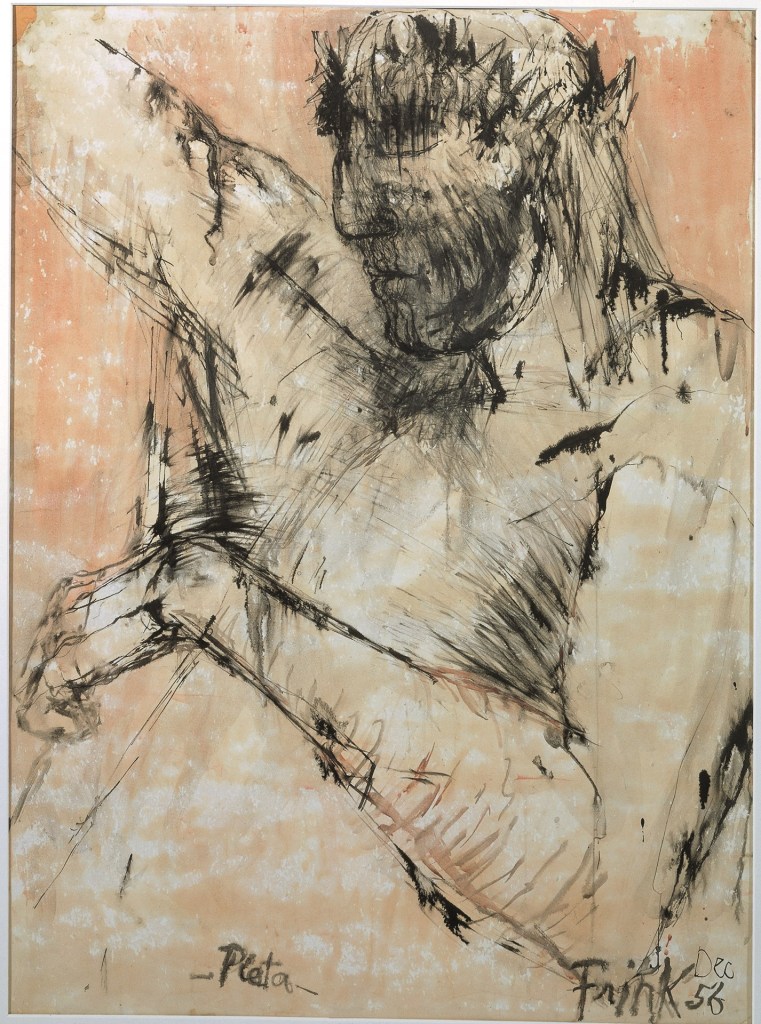
Pietà by Elisabeth Frink

The ancient Philippian church had lost sight of their purpose, of what is the primary reason for their being in existence. Simply put, they needed to unify around what is the central and most valuable core of Christianity: knowing Jesus Christ. For the Apostle Paul, in his letter to the Church at Philippi, Jesus was so valuable that he literally gave up everything to become a Christian and follow Jesus. (Philippians 3:4-14)

It was no little thing that Paul did, converting in such a completely life-altering way to Christ. Paul had everything going for him. He was the up and coming star in Judaism. Paul had the Jewish pedigree, the intelligence, the personality, and the drive to become one of the greatest Pharisees of all time. And yet he forsook it all to pursue and know Christ. 

It might be hard for us to imagine just how significant Paul’s turn around was. On a much smaller scale, it would be like Green Bay Packer quarterback, Aaron Rodgers, at the height of his career, leaving football altogether to become a missionary to some remote place few people have ever heard of. Most might likely think he lost his marbles and was throwing away (pun intended) something valuable and important. So, it was with Paul.  Everyone thought he was nuts for becoming a Christian.

However, this would be to misunderstand what is really of greatest value. There are plenty of people in our society telling us what we need. With all the noisy rhetoric, from political pundits to commercial marketers, the person and work of Jesus can easily get lost in an ocean of competing voices. On a practical level, it can be far too easy to simply toss Christian discipleship on the smorgasbord of good ideas we get handed each day. Jesus might get misplaced and forgotten on our plate of life because of the mass of other food that is piled alongside him.

World Communion Sunday (always the first Sunday in October each year) reminds Christians that Jesus is our surpassing greatness, the highest and most worthy asset we possess. When we come to the Lord’s Table, there is nothing else to feast upon except Jesus, and Jesus alone. In the act of receiving the common elements of bread and cup, we proclaim that we need no one else and no other thing to make us happy in this life. Jesus is enough for us. What is more, we stand united with our brothers and sisters in Christ throughout the world in a common purpose and value of knowing Jesus Christ, and him crucified.

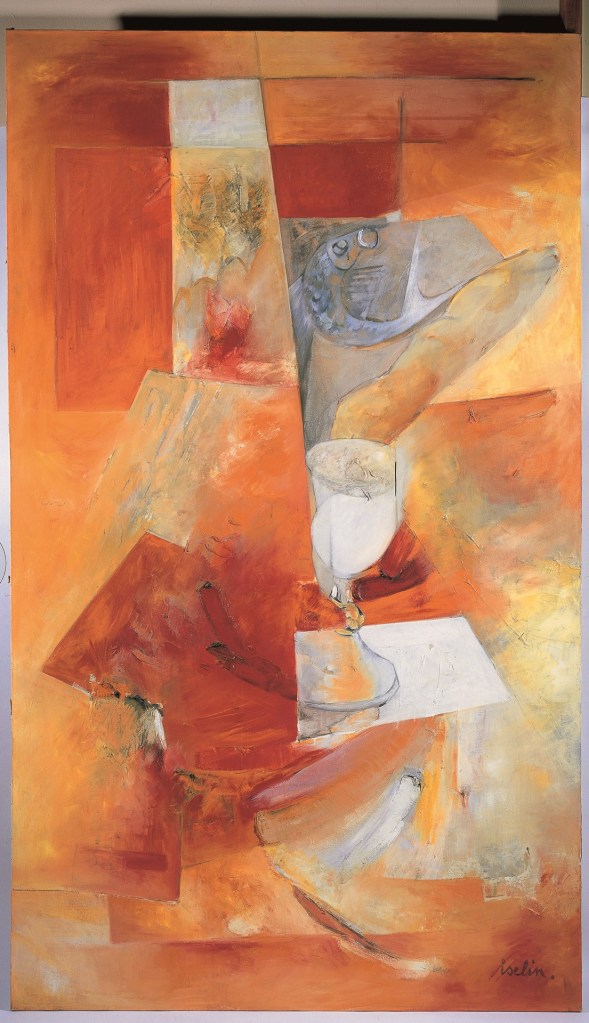
The Elements of Holy Communion by Jacques Iselin

The core value and heart of Christianity is a faith and love relationship with Jesus, to know him. This was the heartfelt cry of the Apostle Paul, and it was so meaningful to him that he gave up everything to pursue Christ and follow Jesus.  If we ever strip Christianity of this core value and stray from knowing Christ, the vacuum will be quickly filled with all kinds of other stuff, like the sheer duty of perfunctory prayers, clean living, and dispassionate robotic service. 

Paul longed to know Christ better. There are two words in the Greek language for “know.” One word refers to information; the other refers to an experiential knowledge – and that is the word Paul used with the Philippians. He deeply desired an intimate experience of Jesus. And Paul craved this so much that literally everything, when compared to Jesus, was “rubbish” to him. 

In the ancient world there were no landfills and dumps – the street served as the place people threw their garbage. The trash then got trampled into the ground, along with the generous amounts of animal dung. That is how Paul thought of even the best things in life as compared to knowing Jesus. 

There is no comparison between a freshly grilled T-bone steak and microwaved liverwurst. There is no comparison between a billion dollars and a penny. There is no comparison between the Green Bay Packers and the Chicago Bears (sorry Chi-Town). And there is no comparison between Jesus and anyone or anything else, no matter whom or what it is. 

Saint Augustine, Bishop of Hippo, in the fifth century, described life apart from Jesus as “disordered love.” By that he meant we pursue whatever our affections are set upon. One might love family, friends, job, and hobbies, yet if Jesus is absent or must compete for our affections in the middle of those things, then it is a disordered love. The solution, for Augustine, is to rightly order our love by having Jesus as the premier object of our affection. The New Testament frames it this way: Repent and believe the gospel.

To have “disordered love” is a nicer way of saying “spiritual adultery.” Using this metaphor, the appropriate response is to return to our first love. “You have forsaken your first love,” said Jesus to the church in Ephesus.  “Remember the height from which you have fallen!  Repent and do the things you did at first” (Revelation 2:4-5). 

Christianity is not some religion in which we strike a deal with God to go to heaven if we accept Jesus. Rather, Christianity centers all of life in the person and work of Jesus. The Lord is a jealous God, feeling slighted when Christians moonlight with the world at night while acknowledging Jesus during the day.

Specifically, Paul wanted to know the power of Christ’s resurrection. He yearned to experience a supernatural change from the inside-out – to be a new person in Christ. Paul did not simply turn over a new leaf; he did a dramatic 180 degree turn and went hard after Jesus. A desire and/or decision to know Christ is to be more than a milquetoast “I’ll try to do better.” Christianity, at its core, is dying to self and being reborn in Jesus with new life.

Furthermore, Paul wanted to know Christ and the fellowship of sharing in his sufferings. Paul ached to know Jesus so much that he embraced suffering, just as his Lord did. Paul was not some spiritual masochist; he rightly recognized that spiritual growth and intimacy with Jesus largely comes from the harsh realities of life’s trials and difficulties, as faith is stretched.  We would not know Christ the healer if we were not broken; Christ the provider if we were not in want; and, Jesus Christ and him crucified unless we were aware of sin in the world along with our own personal sin.

Each time a Christian approaches the Lord’s Table, they set aside competing voices and forsake rival gods to have Jesus. For us who believe, let the ingesting of the elements be an act of fellowship with God. May we, along with Paul, Augustine, and all past saints desire to have Jesus completely take over our lives because he is so valuable to us. We never need to be perfect to partake of bread and cup. Instead, we only need to strive toward what is ahead and decide that today we will press on toward the higher goal of knowing Christ.