You Have Inherent Worth (Genesis 2:4b-7)

Elohim Creating Adam, by William Blake, 1795

In the day that the Lord God made the earth and the heavens, when no plant of the field was yet in the earth and no vegetation of the field had yet sprung up—for the Lord God had not caused it to rain upon the earth, and there was no one to till the ground, but a stream would rise from the earth and water the whole face of the ground—then the Lord God formed man from the dust of the ground and breathed into his nostrils the breath of life, and the man became a living being. (New Revised Standard Version)

The word “Genesis” comes from the Septuagint, an ancient Greek translation of the Old Testament, and means “origin.” The first book of the Bible does indeed have to do with origins. And in the early chapters, Genesis addresses the origins of the earth and all it’s life and systems, including humans.

Genesis 1 is a poetic account of those origins. Genesis 2-3 provide a complementary narrative account of creation and the beginning of the world. These three chapters together affirm the inherent goodness of all creation, as well as how complex it all truly is.

God is the Creator of the earth and humanity. The original man, Adam, is a name transliterated from the Hebrew adamah, which means ‘ground’ or ‘dirt/dust.’ This relationship between Adam and the literal dirt of the planet is the basis for humanity’s special relationship with the land and taking good care of it as a proper steward of the earth. In the beginning, working the actual ground was set up as a blessing.

We are living creatures, having been given breath (Hebrew nephesh). Along with all the living breathing animals on this earth, we share a basic creaturehood and are thus connected with each other. In addition, only people are formed in God’s likeness and enjoy a special relationship with the Lord in being God’s image-bearers. (Genesis 1:27)

God created you and me as good. The Lord has made provision for us to glorify God, and to be successful in doing the Lord’s will. People who are ineffective in living out their spiritual lives are persons who do not know the truth about themselves. 

Both truth and error are powerful. If people are misguided about who they are, then they become like empty wells with no water to draw from. Many of our problems, failures, and shortcomings are largely due to a misunderstanding of our basic personhood. 

A profound result of this misunderstanding is a lack of self-worth. Whenever we are in error about who we really are, we have automatically limited ourselves to what we can do in our lives. Comparing ourselves to others is not helpful; nor is trying to simply gin-up good feelings about ourselves. 
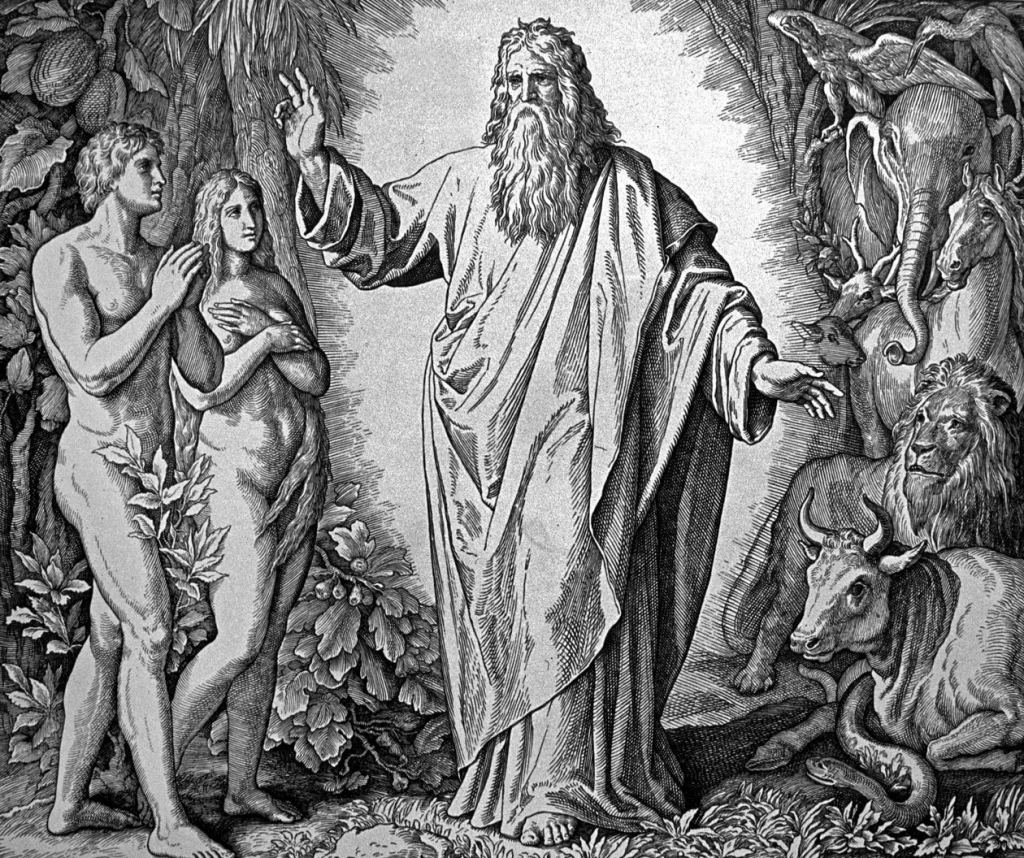
God Creates Adam and Eve, by Julius Schnorr von Carolsfeld (1794-1872)

Only by accepting who we truly and really are, can we actually be helped, and discover human fulfillment in this life. Let us consider that it is vitally important what the Holy Scriptures say about us; and also equally significant to respond in faith to the recognition of our great worth on this earth.

An important bedrock truth we must understand is that people been created in the image and likeness of God (Genesis 1:16-17). We can only begin to understand ourselves if we begin with creation. Since God is a Person of infinite perfection and goodness, to be created in God’s image means we are persons of great potential and value.

To be a person means that we are self-conscious and can make decisions. We also have inherent rights to know, to be heard, to feel, to have an opinion, to be honored, to develop potential, to assume responsibility, and to enjoy life and all creation. In other words, God treats us as persons; therefore, we may not treat ourselves any less than that.

People were created to know God, to understand spiritual truth, and to perform spiritual functions. 

Because we are created by God, we are sacred individuals. We commit a profound shortcoming when we do not develop our potential and live as though life and fulfillment were graciously given by God for our good. 

Accepting erroneous thoughts about ourselves (and we all have) leads us to misinterpret our circumstances, relationships and opportunities. Without even realizing it, we bring confusion and failure into many, if not all, areas of our life.

One of the clearest evidences that we may not know, accept, and practice the biblical truth of our self-worth, is seen in our response to Holy Scripture. Too often we observe altruistic people and say, “I can’t be like that!” Or we read scriptural promises and commands and say, “I can’t do that!” Living with that kind of unbelief and error in our lives results in discouragement and/or criticism of others who seem to be successful in their spiritual lives.

Here is the truth about you:

You are loved by God (John 15:9; 17:23). This means that God recognizes us as persons, gives us our rightful place in the divine life, and will do right by us. God has our back. Therefore, let us accept this truth.

You are called to live in fellowship with God (1 Corinthians 1:9). No greater honor could be bestowed on us than the invitation to interact with the Living God. As we do, the door is open, so that God can minister to us and lead us into the knowledge and practice of the divine will.

You have been given divine revelation (Hebrews 1:1-3). Having the Bible available to us (in our own language!) is one of the greatest possessions we could ever receive. There is nothing more powerful than the truth about God and divine desires for our daily life. Therefore, let us pay attention to divine revelation and obey it, since God has so graciously given it to us.

You are the object of divine redemption (Romans 5:8-9). The great evidence of our human worth is the reality that Jesus Christ has secured our redemption from guilt, shame to himself. Jesus, the Son of God, loved us and gave himself for us. (Galatians 2:20)

You are the temple of the Holy Spirit (1 Corinthians 6:19-20). The actual physical temple of the Old Testament was filled with the glory of God. Today, through Christ’s redeeming love on the cross, every believer in Jesus is God’s temple. Therefore, God wants to work in us and through us for the Lord’s glory and honor.

The conclusion to the matter is that the way to know our true self-worth is to accept what Holy Scripture says about us; and then respond by faith and love to its loving and redeeming message. 

According to the book of Genesis, you are no accident. You are a person of infinite worth to God. So live into this wonderful truth.

Soli Deo Gloria

Impatient (Genesis 16:1-6)

Sarai and Hagar, by Cody F. Miller

Now Sarai, Abram’s wife, had borne him no children. But she had an Egyptian slave named Hagar; so she said to Abram, “The Lord has kept me from having children. Go, sleep with my slave; perhaps I can build a family through her.”

Abram agreed to what Sarai said. So after Abram had been living in Canaan ten years, Sarai his wife took her Egyptian slave Hagar and gave her to her husband to be his wife. He slept with Hagar, and she conceived.

When she knew she was pregnant, she began to despise her mistress. Then Sarai said to Abram, “You are responsible for the wrong I am suffering. I put my slave in your arms, and now that she knows she is pregnant, she despises me. May the Lord judge between you and me.”

“Your slave is in your hands,” Abram said. “Do with her whatever you think best.” Then Sarai mistreated Hagar; so she fled from her. (New International Version)

In a convoluted series of decisions, mostly outside of her control, Hagar became pregnant with Abraham’s son. Although it may seem strange to us today, the practice of building a family line through a surrogate – in this case the slave of the household’s mistress Sarai – was not an unusual way of handling infertility in the ancient world.

Yet, things went awry with that approach. God had promised that a son of Abram’s own flesh and blood would inherit the divine covenant. But it wasn’t happening quickly enough for his wife Sarai. And this impatience led to the worldly approach of trying to gain an heir.

Impatience

Throughout Holy Scripture, patience is a virtue, as well as a spiritual practice to be cultivated. Impatience is the ants-in-your-pants response of wanting something now, without all the fuss and effort of planting and cultivating. The inability to wait is the desire for an instant harvest of righteousness.

The spiritual life of patience, however, like every other virtue, requires progressive growth over a long period of time. That is the only way of attaining any sort of spiritual maturity in this life. To go with shortcuts, or ingenious plans for quickness and efficiency, will not end well.

And it only short circuits the spiritual growth and formation of the believer. Like a farm-factory-raised animal who has been given growth hormones to speed things along, the fallout is the mistreatment of creatures – both animal and human – in shortened lifespans and poor quality of life.

Perhaps the original ancestor of Sarai, Eve, also had a bit of impatience in wanting to gain wisdom, now, from the tree of the knowledge of good and evil. And maybe the original ancestor of Abram, Adam, was okay with letting Eve follow through with an impatient plan.

It could be that both Adam and Abram just wanted to keep their spouses happy; and so, they let them do whatever the heck they wanted in order to keep the peace. It certainly wouldn’t be the only time this ever happened in history.

A commitment to submitting to the process of developing patience is a must – otherwise, the believer will give up and retreat into half-baked ideas for getting what they want, without all the hard work. We also need to realize that patience itself is a great reward, and worth all the energy it takes to possess it.

Be patient, then, brothers and sisters, until the Lord’s coming. See how the farmer waits for the land to yield its valuable crop, patiently waiting for the autumn and spring rains. You too, be patient and stand firm, because the Lord’s coming is near.

James 5:7-8, NIV

What’s more, the effects of impatience are murmuring and complaining to God and others, leading to depression and anxiety. That’s what happened to the ancient Israelites in the desert when it was taking too long to get to the Promised Land:

They traveled from Mount Hor along the route to the Red Sea, to go around Edom. But the people grew impatient on the way; they spoke against God and against Moses, and said, “Why have you brought us up out of Egypt to die in the wilderness? There is no bread! There is no water! And we detest this miserable food!” (Numbers 21:4-5, NIV)

Worldliness

If we give the attainment of patience it’s due attention, then a lot of ungodly worldliness can be avoided. In Holy Scripture, “the world” is many times used not as a reference to the people of the earth, but as an inordinate interest in, concern with, or devotion to the systems, organizations, and institutions of this world that operate by unjust means.

Do not love the world or anything in the world. If anyone loves the world, love for the Father is not in them. For everything in the world—the lust of the flesh, the lust of the eyes, and the pride of life—comes not from the Father but from the world. The world and its desires pass away, but whoever does the will of God lives forever. (1 John 2:15-17, NIV)

Worldliness, then, is an obstacle to that which is good, right, and just; it is in opposition to and independence from God. In short, worldliness isn’t some sort of sophisticated intelligence, but is a way to get what we want apart from virtue and godliness. But God’s grace can be our teacher to a better way of life:

For the grace of God has appeared that offers salvation to all people. It teaches us to say “No” to ungodliness and worldly passions, and to live self-controlled, upright and godly lives in this present age, while we wait for the blessed hope—the appearing of the glory of our great God and Savior, Jesus Christ.

Titus 2:11-13, NIV

Conclusion

Patience is one of the hardest lessons in life to learn. Yet, a devotion to becoming skilled in the art of patience, and of forsaking the practice of impatience, can reap both existential and eternal rewards. And it will keep us from going down the path of worldly temptation; and delivered from the machinations of the evil one.

Perhaps with patience, Sarai could have avoided mistreating her servant; and maybe Abram could have stood up and held her accountable. Together, they would eventually embrace faith in it’s fullness and enjoy the blessing of a son from Sarai’s own womb. Yet, today’s Old Testament lesson would always serve as part of their history to learn from. And, thankfully, we can learn from it, as well.

Almighty God, support your people and grant us patience in all our circumstances and miseries.
Lord, when in the midst of trials and temptations, suffering and injustice, give us patience.
When wracked with pain, illness, and lack of sleep, give us patience.
When burdened with afflictions, wonderings, and loneliness, give us patience.
When overcome by fear, and all our spiritual energy is dried up, give us patience.
When distractions grab our attention, bring us back, and grant us patience, O Lord. Amen.

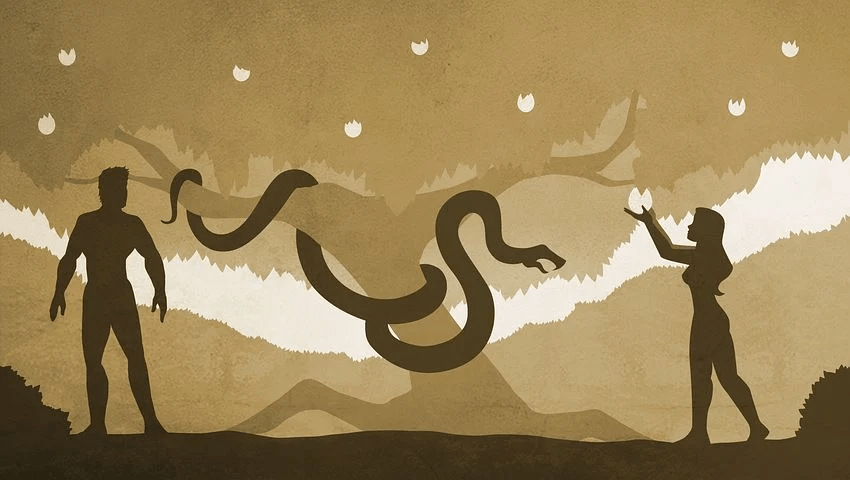
The Fall of Humanity (Genesis 2:15-17, 3:1-7)

The Lord God took the man and put him in the Garden of Eden to work it and take care of it. And the Lord God commanded the man, “You are free to eat from any tree in the garden; but you must not eat from the tree of the knowledge of good and evil, for when you eat from it you will certainly die….”

Now the serpent was more crafty than any of the wild animals the Lord God had made. He said to the woman, “Did God really say, ‘You must not eat from any tree in the garden’?”

The woman said to the serpent, “We may eat fruit from the trees in the garden, but God did say, ‘You must not eat fruit from the tree that is in the middle of the garden, and you must not touch it, or you will die.’”

“You will not certainly die,” the serpent said to the woman. “For God knows that when you eat from it your eyes will be opened, and you will be like God, knowing good and evil.”

When the woman saw that the fruit of the tree was good for food and pleasing to the eye, and also desirable for gaining wisdom, she took some and ate it. She also gave some to her husband, who was with her, and he ate it. Then the eyes of both of them were opened, and they realized they were naked; so they sewed fig leaves together and made coverings for themselves. (New International Version)

Lent is a 40-day season of preparation and repentance for Christians anticipating Good Friday’s cross of Christ and the victory over sin in Easter’s celebration of Christ’s resurrection. To understand why there is a need for repentance, let’s turn to where disobedience, shame, and guilt first entered the world.

Ever since humanity’s fall into sin, our human nature tends to look at the one thing we can’t do, instead of seeing all the range of possibilities that we can do.  The serpent (the devil) was successful in getting Adam and Eve to focus on that one tree they needed to avoid. In our fallen condition, just tell us what we can’t do and we’ll probably be sure to do it – rather than enjoy all the vast prospects we presently have and can actually do with God. 

What’s more, the devil subtly planted a terrible and untruthful idea in the heads of Adam and Eve – that God was somehow holding out on them and was not providing everything they really needed and wanted in life.

Sin may look attractive, and even initially taste good. Yet, disobedience has an awful aftertaste and damages our insides. Indeed, sin always over-promises and under-delivers.

Perhaps the greatest and deepest effect of sin is the shame of disobedience which causes us to hide from God, one another, and even ourselves. All this hiding causes spiritual blindness. We end up sleepwalking through hell, unaware of our awful spiritual plight. 

Because of this reality, we need deliverance; we need a Savior to intervene and save us from our ignorance and guilt. As mere dust, we need God’s Spirit to breathe new life into us so that we may again enjoy the Lord in Paradise.

Our fallen spiritual condition does not want to acknowledge our need for the sheer grace of God. Sewing some fig leaves together is symbolic of Adam and Eve’s new independence from God; from now on, they’re going to operate on their own.  The introduction of sin into the world causes people to look for ways to cope and deal with life apart from God.

We want to return to Paradise. We don’t want to hurt and struggle and be overburdened anymore. So, we devise all kinds of ideas and ways of doing that. And the Paradise we seek always seems to be “out there” somewhere, just out of our reach. 

In our fallen condition, we are plagued with the “if only” syndrome:

If only I had _____ (fill-in the blank) then I would be happy and be in Paradise.

If only I could meet the right person, then that special someone could meet my needs and complete me.

If only the people in my life were better, then everything would be okay and I could enjoy Paradise.

If only I had more money, a bigger house, another car, more power and influence.

If only other people would stop being jerks, care more, serve more, love more. If only my family would listen to me.

If only I could have my way, then there would surely be a restoration to Paradise.

The point to all the “if only” is that it twists us all up into believing that I’m either unlovable or that everyone else is the problem. If they would just change, then the world would be a better place. Or if only I was better, then I wouldn’t have so many problems.

The truth, however, is that we already have what we are so desperately looking for. And since we are unaware that God is with us, and wants to provide for us, we sew fig leaves together and look love in all the wrong places.

No man or woman is going to complete you because no person can fix what is broken in your heart. If you had your ideal relationship, perfect family, and dream job, you would still be empty. Why? Because you and I need a Savior to deliver us from our sin.

We all need deliverance from our disordered loves and misguided attempts to find Paradise in this life apart from God. The temptation after The Fall is to try and manufacture happiness outside of God through perfect relationships and ideal circumstances. 

What to do? Repent. Turn from the shame and guilt of disobedience and deal with the brokenness in our own lives. And that is what the season of Lent is all about.

Without God there are hidden feelings of mistrust, alienation, conditional love, selfishness, greed, and injustice. But with God there is forgiveness, grace, and unconditional love – the very kind of love that we need.

In this season of Lent, we must repent of our hiding and wishing for everything and everyone else to be different without any cost to myself. 

What do you need to repent of in this season? 

Who are the people that you look to do for you what only God can do? 

Have you forsaken your first love of Jesus Christ? 

How is the state of your relationship with God? Has it been stale, dull, and lacking passion, desire, and energy?  Has distance replaced intimacy between you and God? 

Do you avoid the spiritual disciplines of bible reading and prayer because you believe something else will satisfy the real needs of your heart? 

Are you keeping up appearances and hiding, while on the inside you have doubt, depression, and despair that things will never change? 

The prayers of this season are to be prayers of repentance:

Merciful God, we confess that we have hungered after things which do not satisfy.  We have doubted your ability to provide for us. Forgive our lack of faith. Restore in us such trust and love that we may again walk with you in Paradise. 

Loving God, we admit that we’ve given ground to Satan by believing his deception that we can find ultimate happiness in things other than you. So, in the name of the Lord Jesus Christ, we resist all of the devil’s strategies to hold us in spiritual blindness and darkness. 

Blessed Holy Spirit, we invite you to bring the fullness of your power to convict us and lead us into faith in Jesus. We humbly ask that you bring all the power of Christ’s crucifixion and resurrection directly against all forces of darkness seeking to destroy us. Set us free from all that blinds us and keeps us in bondage. 

Grant us, O God, the grace to be faithful and persistent in our walk with you.  Amen.

The Effects of the Fall (Genesis 6:11-22)

The Flood of Noah by Majd Ramadan, 2014

In God’s sight, the earth had become corrupt and was filled with violence. God saw that the earth was corrupt because all creatures behaved corruptly on the earth.

God said to Noah, “The end has come for all creatures, since they have filled the earth with violence. I am now about to destroy them along with the earth, so make a wooden ark. Make the ark with nesting places and cover it inside and out with tar. This is how you should make it: four hundred fifty feet long, seventy-five feet wide, and forty-five feet high. Make a roof for the ark and complete it one foot from the top. Put a door in its side. In the hold below, make the second and third decks.

“I am now bringing the floodwaters over the earth to destroy everything under the sky that breathes. Everything on earth is about to take its last breath. But I will set up my covenant with you. You will go into the ark together with your sons, your wife, and your sons’ wives. From all living things—from all creatures—you are to bring a pair, male and female, into the ark with you to keep them alive. From each kind of bird, from each kind of livestock, and from each kind of everything that crawls on the ground—a pair from each will go in with you to stay alive. Take some from every kind of food and stow it as food for you and for the animals.”

Noah did everything exactly as God commanded him. (Common English Bible)

The entire world is profoundly broken. 

Everywhere, people are messed-up. In one breath they can tell you they’re sorry for another’s abuse or violence against you, then turn right around and say some irrational nonsense and terribly insensitive things to you.

It doesn’t matter where you go – whether school, work, home and even church, there is institutional brokenness. Individual persons, and the human structures and systems they put in place, all contain elements of bondage instead of freedom. It doesn’t take a religious person to observe that there’s such a thing as sin.

Holy Scripture’s description of this sad reality goes all the way back to a story about the fall of humanity into sin and rebellion. Satan, the devil, led the original persons, Adam and Eve, into disobedience of God. Satan tempted Eve to doubt whether God really had her best interests at mind; to question the truthfulness of God’s Word; and, to wonder about the wisdom of listening to God (Genesis 3:1-5). Adam just flat out chose to disobey God, and, so, the entire world changed (Genesis 3:16-17). 

Immediately, everything was different in the world and with people. The choice to disobey God brought feelings of fear and shame; a loss of fellowship with God; hiding from God; a bent to pervert the truth; the propensity for the genders to try and dominate each other; expulsion from the garden; and physical death (Genesis 3:7-24). 

And the unholy tools people used against one another were violent and corrupt. People thought nothing of oppressing each other, abusing one another, attacking others – both verbally and physically. Rape, assault, theft, and murder became daily experiences. That’s some downright icky stuff. 

No wonder the world is messed up.

God saw that human evil was out of control. People thought evil, imagined evil—evil, evil, evil from morning to night. God was sorry that he had made the human race in the first place; it broke his heart. God said, “I’ll get rid of my ruined creation, make a clean sweep: people, animals, snakes and bugs, birds—the works. I’m sorry I made them.” (Genesis 6:5-7, MSG)

Noah was the only guy on the face of the earth for whom the Lord saw any good. And it was enough good worth saving. Yet, people are still in the nasty habit of turning on each other, like a bunch of sharks with blood in the water.

Unfortunately, the fall of humanity still affects us all. It has brought not only physical death, but spiritual death. That means we are alienated from God, in rebellion, and enslaved to our own passions and desires (Isaiah 1:2-6; Romans 2:14-15; Ephesians 2:1-3). 

We are also alienated from one another by having continual bents toward discord, suspicion, and jealousy instead of love and trust (Romans 1:29-31; James 3:14-16). 

We are even alienated and totally out of touch with ourselves by either loving ourselves as gods or hating ourselves with an inordinate emotional masochism (Philippians 2:21; 2 Timothy 3:2-4). In short, we are selfish people who experience separation from God, others, and self.

If this is the true reality of humanity, then it is awfully depressing, discouraging, and damaging. And we know it’s true because we’ve all been both victims and victimizers. So, who then, will rescue us from this horrific death? 

Thanks be to God who has given us the victory through our Lord Jesus Christ (Romans 7:24-25; 1 Corinthians 15:57). 

The good news is that, through the death and resurrection of Jesus, the curse has been reversed. Christ has restored us to our original place of fellowship with God. He is the way, the truth, and the life. In Christ, there is hope for humanity (John 14:6). 

To live in freedom, therefore, involves knowledge, honesty, and sincere decisions of faith and love whereby truth is applied to life.

Just as the world needed a thorough purging of evil through a cleansing worldwide flood, so we need a bath of grace, to be completely awash with the love of God in Christ, to have all the crud of evil scrubbed from our soul. And this is precisely what Christian baptism symbolizes.

Jesus offered himself for us so that we might live without violence and no longer be separated from God, others, and self. He has brought us reconciliation. In him we have been blessed with every spiritual blessing (2 Corinthians 5:16-19; Ephesians 1:3; 2 Peter 1:3).

In Christianity, the purpose of ministry is to come alongside people trapped in their awful cycles of brokenness and communicate good news of grace and forgiveness with both words and actions.

Although the world is terribly askew, God has demonstrated his love for us in that, while we were still violent and corrupt sinners, Christ died for us (Romans 5:8). 

We needed a Savior. God provided One. 

Are you in touch with the ways you are separated from God, others, and self? 

Are you aware of the ways in which your church or faith community has an unhealthy separation from the world? 

In what ways can you apply the love of God to broken people and systems in your community? What will it take to reach them?

Sin, guilt, shame, rebellion, disobedience, and violence need not define us. We can do better.

Almighty God, we have sinned against you, through our own fault, in thought, and word, and deed, and in what we have left undone. For the sake of your Son, our Lord Jesus Christ, forgive us all our offenses; and grant that we may serve you in newness of life, to the glory of your Name. Amen.