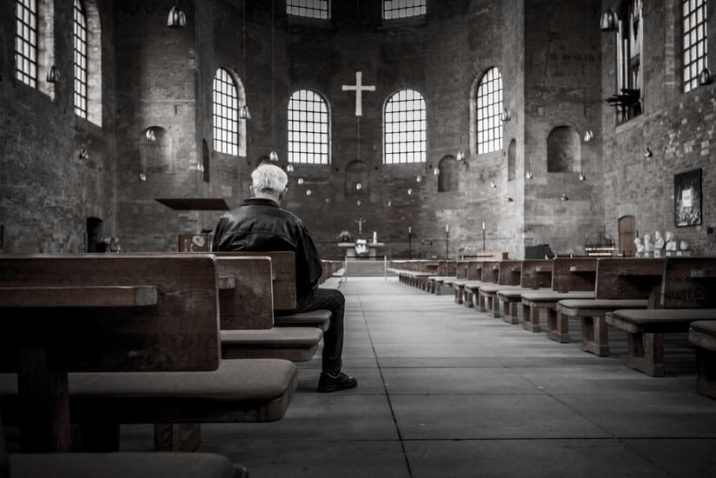
Accept One Another (Romans 15:7-13)

Christian Unity, by Gisele Bauche

Accept one another, then, just as Christ accepted you, in order to bring praise to God. For I tell you that Christ has become a servant of the Jews on behalf of God’s truth, so that the promises made to the patriarchs might be confirmed and, moreover, that the Gentiles might glorify God for his mercy. As it is written:

“Therefore I will praise you among the Gentiles;
    I will sing the praises of your name.”

Again, it says,

“Rejoice, you Gentiles, with his people.”

And again,

“Praise the Lord, all you Gentiles;
    let all the peoples extol him.”

And again, Isaiah says,

“The Root of Jesse will spring up,
    one who will arise to rule over the nations;
    in him the Gentiles will hope.”

May the God of hope fill you with all joy and peace as you trust in him, so that you may overflow with hope by the power of the Holy Spirit. (New International Version)

Anyone who desires to follow the pattern of Christ, actively seeks and promotes the acceptance of one another.

Jesus is the Christian’s model: Christ did not seek to be served, but to serve, and give himself for the benefit of others. The ministry of Christ was meant for the whole world, and not just for some persons. Christ’s mission and ministry included non-Jews, and not only his own Jewish people.

The person and work of Jesus Christ confirmed the promises made to the original Jewish patriarchs of Abraham, Isaac, and Jacob. Jesus did nothing brand new; he was simply upholding and actively seeking to accept Gentiles and bring them to God. This has always been true of God’s plan and purpose – which is why the Apostle Paul cited four different Old Testament passages.

All four references are to the Gentiles, to non-Jewish persons. And this is why Paul himself had a ministry to Gentiles. The biblical verses mentioned by the Apostle include Gentiles who offer praise to God; Gentiles engrafted alongside Jews as God’s people; and Gentiles who put their hope in the root of Jesse, the Messiah.

The good news of Jesus Christ is an inclusive – not exclusive – message. Thus, Christian ministry is designed to include others, to bring them into the fold of those who are redeemed by God.

Christian community is made up of all kinds of people from every race and ethnicity – without exception, and without favoritism.

The Apostle Paul made it clear to the Roman Church of both Jew and Gentile that his bedrock Christian ethic was one of inclusion and care for others. He supported his ethical understanding from Holy Scripture.

Paul was concerned that the Church include all sorts of Christ followers who may have some differing understandings and practices in living out their own Christian faith.

The Body of Christ is designed and meant to be big enough, strong enough, and resilient enough to handle all sorts of people who together want to follow Christ and serve others, like Jesus did.

The Apostle’s prayer is one of hope, having everyone in the church be accepting of one another. Paul wanted all Christians to work and worship together as the one people of God who live according to the pattern of Christ.

The Christian model of living is based not upon dietary laws or special days; it instead has it’s foundation in the example of Christ’s earthly ministry. All Christians are to:

  • glorify God together for the divine mercy shown to them
  • rejoice together as a unified voice expressing faith, hope, and love
  • share together in the hope that God’s promises are and will be fulfilled completely in Christ

God fills us with joy and peace, and causes us to overflow with hope by the power of the Holy Spirit – made possible because of the person and work of Jesus Christ.

Since God grants faith to whomever God wants to grant faith; and since the Holy Spirit fills whomever the Spirit wants to fill, we are, therefore, to accept those whom God has already accepted – without exception, and without prejudice.

For the Apostle Paul, the church’s identity was at stake. Paul was concerned for two questions:

  1. Will the church be, at its core, a community of redeemed persons by the grace of God who center all their lives around the person and work of Jesus?
  2. Or will the church be a community of opinionated individuals and groups all jockeying for position to have their way on how they believe things should go?

You can tell what a person’s identity is by their “identity markers.”

For the Jewish Christians, Sabbath-keeping, circumcision, food laws, and holding to certain days on the calendar marked their identity as God’s people. Those issues were so important that if you took them away, there would be an identity crisis; the people felt totally lost without their traditions.

For Gentile Christians, their identity was built around being more free-thinking. So, if you take away their freedom and ability to choose, the Gentiles will go nuts and have an identity meltdown. 

Paul’s answer was for both Jew and Gentile to accept one another and build their unity around Jesus, period. They needed to be sensitive to each other and focus on their shared identity of Jesus as the center of the Christian life.

It is very difficult to have hope, peace, and spiritual power, whenever there is disunity. The lack of acceptance is typically like a cancer which invades the Body and destroys it, unless there is a spiritual intervention.

Acceptance of others is more than a nice idea; and it doesn’t mean that we overlook differences of convictions or dogma. It just means that we choose to focus on what is most important. And for the Apostle Paul, that meant having a unity around the pattern of Christ.

Loving Lord, you came not to be served but to serve. Empower us to bless one another and our neighbors, so that your spirit of generosity, compassion, and selfless action transform us and the people in our midst. We pray together, as the one people of God, that you will guide us in your way; through Jesus Christ our Savior, in the strength of the Holy Spirit. Amen.


Stop Passing Judgment on Each Other (Romans 14:13-5:2)

Therefore let us stop passing judgment on one another. Instead, make up your mind not to put any stumbling block or obstacle in the way of a brother or sister. I am convinced, being fully persuaded in the Lord Jesus, that nothing is unclean in itself. But if anyone regards something as unclean, then for that person it is unclean. If your brother or sister is distressed because of what you eat, you are no longer acting in love. Do not by your eating destroy someone for whom Christ died. Therefore do not let what you know is good be spoken of as evil. For the kingdom of God is not a matter of eating and drinking, but of righteousness, peace and joy in the Holy Spirit, because anyone who serves Christ in this way is pleasing to God and receives human approval.

Let us therefore make every effort to do what leads to peace and to mutual edification. Do not destroy the work of God for the sake of food. All food is clean, but it is wrong for a person to eat anything that causes someone else to stumble. It is better not to eat meat or drink wine or to do anything else that will cause your brother or sister to fall.

So whatever you believe about these things keep between yourself and God. Blessed is the one who does not condemn himself by what he approves. But whoever has doubts is condemned if they eat, because their eating is not from faith; and everything that does not come from faith is sin.

We who are strong ought to bear with the failings of the weak and not to please ourselves. Each of us should please our neighbors for their good, to build them up. (New International Version)

It’s one thing to have opposing views with each other; it’s another thing altogether to pass judgment on the person(s) for whom you have a difference of opinion, practice, or theology.

I once had a man come to me about his daughter. She was getting married, and this father told me he was not going to her wedding. The issue? The father had raised his daughter a Christian, yet she had become a Wiccan and was going to have a pagan ceremony.

What would you do if you were the father? What would you say to him if you were the pastor?

I’m confident what most of my fellow Christian pastors would say – they would affirm the man’s position. Me, however, sensed some judgmentalism emanating from my parishioner. So, I asked him some questions:

What do you know about Wicca?

Why did your daughter convert to being a Wiccan?

Do you have a decent relationship with her?

How much do you love your daughter?

Do you think you could find a way of being with her when she gets married that doesn’t compromise your convictions?

As I asked the questions to the father, it quickly became evident that he was condemning her without a shred of evidence or accurate information to support such a judgment.

He believed that Wiccans were blatant devil worshipers (which they are not). So, I simply invited him to learn some basics of Wicca. I pointed him to some resources that might be helpful for him – ones that I believed he could be okay with reading. (Note: The resources were not written by Christians. If one wants to know what a particular group or individual believes, then you must go to the source)

The man had no idea why his daughter turned Wiccan. It turns out, he had never even asked her, or was at all curious as to why she would make such a different religious decision from her upbringing. I simply suggested that he just ask her, then not talk, and listen to the answer.

This father had an estranged relationship with his daughter because he had pulled away from her. She had actually continued to try and remain connected to her dad. But the man thought he was doing the right thing by ostracizing her and refusing to go to her wedding. He believed he needed a separation, to both teach her a lesson and to keep away from evil.

My parishioner, whom I had never seen cry, did so when I asked if he loved his daughter. The problem was that she didn’t know that.

There was a lot of internal struggle with the man in the next weeks and months. To his credit, he took me up on learning about his daughter and connecting with her, rather than cutting her off. And he ended up attending her wedding, albeit in the very back of the gathering.

The father discovered a lot of things he didn’t know, things which he made assumptions about in the past which were untrue and unfounded. He and his daughter’s relationship didn’t change overnight, but they were in a much better position than when the man first came to see me.

So, here is my question for you, my friend: If a Christian and a Wiccan can find a way to be together and love one another, despite their religious views and practices, then how much more can we, as Christians together, find ways to connect with each other, love one another, and stop passing judgment on the other?

It’s time for us to make up our minds and settle in our hearts whether we are going to create separations with other people, or whether we are going do what we can to foster relational connections with others.

Perhaps if we seek to embody today’s New Testament lesson, the ripple effect might just change the world.

O Holy God, we know we have fallen short.
We turn our backs when we could embrace.
We remain silent when we could speak.
We speak when we could listen.
We judge when we could seek understanding.
We cling when we could give.
Forgive us, O God, for focusing solely on ourselves and help us to continue to grow into the people you created us to be, through Christ our Lord. Amen.

Dealing with Opposing Views (Romans 14:1-12)

Accept the one whose faith is weak, without quarreling over disputable matters. One person’s faith allows them to eat anything, but another, whose faith is weak, eats only vegetables. The one who eats everything must not treat with contempt the one who does not, and the one who does not eat everything must not judge the one who does, for God has accepted them. Who are you to judge someone else’s servant? To their own master, servants stand or fall. And they will stand, for the Lord is able to make them stand.

One person considers one day more sacred than another; another considers every day alike. Each of them should be fully convinced in their own mind. Whoever regards one day as special does so to the Lord. Whoever eats meat does so to the Lord, for they give thanks to God; and whoever abstains does so to the Lord and gives thanks to God. For none of us lives for ourselves alone, and none of us dies for ourselves alone. If we live, we live for the Lord; and if we die, we die for the Lord. So, whether we live or die, we belong to the Lord. For this very reason, Christ died and returned to life so that he might be the Lord of both the dead and the living.

You, then, why do you judge your brother or sister? Or why do you treat them with contempt? For we will all stand before God’s judgment seat. It is written:

“‘As surely as I live,’ says the Lord,
‘every knee will bow before me;
    every tongue will acknowledge God.’”

So then, each of us will give an account of ourselves to God. (New International Version)

Within the church at Rome were Jewish believers who had come to faith in Christ from their background steeped in the Old Testament. They had a rich two-thousand year history of a covenant with God that included ritual food laws, the keeping of certain feast days, and observing a calendar of events, especially the Sabbath.

Also within the Roman church were Gentiles (non-Jewish people) having come to faith in Christ from a background of paganism. They had no history with the God of the Bible. There were no previous generations of faithful believers in God. They were first generation Christians and basked in their newfound freedom.

The Apostle Paul’s vision was for one church, unified together around Jesus. And this unity would need to be worked on. Jew and Gentile were very different from one another; and here they were in the same church together, not understanding each other. 

The Jewish believers were appalled at Gentile thinking and behavior. Even though the Jewish Christians had come to embrace Jesus, they did not abandon their two-thousand year history of being with God. They still held to their food laws and special days. The Jewish members believed the Gentiles should be like them; the Jews wanted the Gentiles to embrace the same ritualistic behavior that they had done for centuries.

But the Gentiles did not comply. So, the Jewish believers passed judgment and condemnation on them for not being sensitive to the things of God.

On the other hand, the Gentile believers felt no compulsion to have such rules and regulations concerning their Christian lives. They ate what they pleased and saw no need to hold to special days. They could not understand why the Jewish Christians were so stuck in their traditions. So the Gentiles looked down on the Jews as hopelessly misguided. This was a potentially explosive situation that Paul was deeply concerned about.

The Apostle Paul’s message was to accept the person whose faith is weak without passing judgment on disputable matters. Sounds like easy counsel to follow. But the problem was that the people did not distinguish between what is a non-negotiable matter and what was a disputable matter. 

The guiding principle is that Christ died and returned to life so that he might be the Lord of both the dead and the living. The non-negotiable matter is Jesus Christ, his person and work.  Jesus is our core belief. Nothing else is to be in the center except him.

Therefore, we are to celebrate our unity around Jesus, our center. Anything outside of that center is a “disputable matter” and not worthy of Christians condemning each other or looking down on one another.

The root problem of any church conflict is the de-throning of Jesus and setting up our particular views as the center of Christianity.

The church has struggled with this teaching for its long two-thousand year history. Every church I have served had their particular issues that they felt so strongly about that it crowded Jesus out of the center. 

In one church, education was the big issue. Some believed in Christian schools as the only way to educate their kids. Others felt that home-schooling was the way to go because of the culture. Yet others thought public education needed the light of Christians participating in it, and sent their kids to public schools. The problem was that each group sincerely believed they were right and everyone else was wrong.

In another church I served, there were hard feelings about the place of men and women in the church who had been divorced and remarried. In yet another church, the issue was about whether church members could drink alcohol or not. And yet another church’s issue dealt with how we dress and what our attire is at church. 

I still remember one lady in that church talking with a woman who had recently given her life to Christ out of a life of prostitution. The woman was wearing jeans and a t-shirt. The church lady was giving her a lecture about how she should be “dressing up for Jesus.” As I heard this, I thought to myself, “Lady, I’m not sure you are going to like the woman’s idea of dressing up for Jesus….”

Whenever we want to place disputable matters on people’s “must-do” list, then there will be trouble. We will judge others who do not think as we think, and do as we do, because of the mistaken notion that our way is equal to the death and resurrection of Christ. If it isn’t done my way, the church will be lost.

We do not necessarily need to change our views on disputable matters; but we do need to change our attitude and our behavior toward those we disagree with.

Intolerance of others’ views and behaviors causes a lack of dialogue, to create special interest groups and cabals against others, to stereotype others, and to seek to get their way no matter what. Such intolerance moves church members from a concern for the Great Commission of Jesus to the Great Commode of Satan’s bathroom.

For the Apostle Paul, the issues that divide Christians are very important, not because he championed one over the other, but because the church’s identity was at stake. Paul was concerned for two questions:

  1. Will the church be, at its core, a community of redeemed persons by the grace of God who center all their lives around the person and work of Jesus?
  2. Or will the church be a community of opinionated individuals and groups all jockeying for position to have their way on how they believe things should go?

This is really a heart issue: humility versus pride, and gentleness versus stubbornness. You can tell what a person’s identity is by their “identity markers.”

For the Jewish Christians, Sabbath-keeping, circumcision, food laws, and holding to certain days on the calendar marked their identity as God’s people. Those issues were so important that if you took them away, there would be an identity crisis; the people felt totally lost without their traditions.

For Gentile Christians, their identity was built around being more free-thinking. So, if you take away their freedom and ability to choose, the Gentiles will go nuts and have an identity meltdown. 

Paul’s answer was for both Jew and Gentile to accept each other and build their unity around Jesus, period. They needed to be sensitive to one another and focus on their shared identity of Jesus as the center of the Christian life.

Both the church and the society need some civility. In a nation where we feel free to say whatever we want, we do. In doing so, we elevate self-expression and our opinions over self-control and the mission of the church.

We need some generous spaciousness which allows room for us to discuss issues and disputable matters in an atmosphere of generosity, hospitality, and acceptance, seeking to first listen and understand, before responding. 

The goal of the Christian is not to win an argument or have our way, but to uphold Jesus as Lord of everything and maintain our center in him. On that basis alone, we will be held accountable by God. So, let us live wisely and well, knowing and pursuing Jesus with heart, soul, mind, and strength.

Gracious God, it’s both settling and centering to focus on the assurance of your acceptance. You know everything about us, and despite our failures, fickleness, foolishness, and faithlessness, yet still we are fully and eternally accepted. As you have accepted us, help us to accept others. Grant us grace to love those whom we disagree with.

Merciful and mighty God, enlarge our hearts. Enable us to show kindness without compromising our convictions. Teach us the difference between essential and non-essential matters. Free us from the limitations of our individual perspectives, the prejudices of our heritage, the insecurities of our comfort zone, insincere niceness,and the need to be right. 

Blessed Holy Spirit, burn your holy Word indelibly into us so that we accept all things and everyone you give us, through Jesus Christ our Lord. Amen.