It’s All About Grace (Acts 1:1-5)

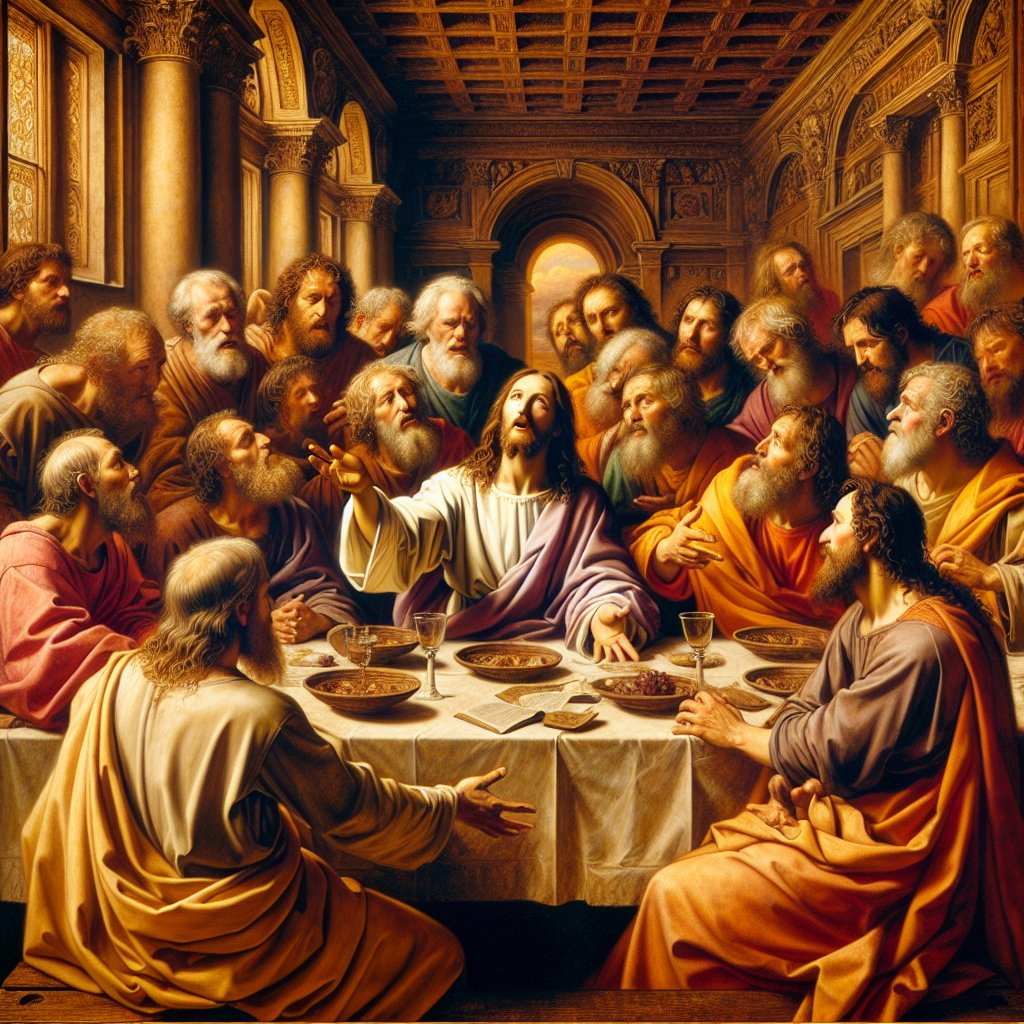
Jesus and the Apostles, by Bible Art

Theophilus, I first wrote to you about all that Jesus did and taught from the very first until he was taken up to heaven. But before he was taken up, he gave orders to the apostles he had chosen with the help of the Holy Spirit.

For 40 days after Jesus had suffered and died, he proved in many ways that he had been raised from death. He appeared to his apostles and spoke to them about God’s kingdom. While he was still with them, he said:

Don’t leave Jerusalem yet. Wait here for the Father to give you the Holy Spirit, just as I told you he has promised to do. John baptized with water, but in a few days you will be baptized with the Holy Spirit. (Contemporary English Version)

One of the unshakable and foundational convictions I have is that the earth revolves on an axis of grace. Apart from grace, we wouldn’t even exist.

If God’s grace in Christ was only an undeserved gift, that would be incredibly wonderful and more than enough for us. Yet, it is even more.

The word “grace” doesn’t need to be in every verse of the Bible for the reality of grace to be embedded within every verse of the Bible.

Grace is the answer to every question that humankind can ask. Grace not only forgives and loves unconditionally, but it also infuses us with freedom and power within our souls.

Grace is the ultimate game-changer. And grace is evident everywhere in Holy Scripture, powering its message and mission. It’s evident in today’s New Testament lesson…

The Grace of God Choosing People

In this biblical passage of Christ’s imminent ascension to heaven, Jesus intentionally made gracious provision so that his apostles could carry on without his bodily presence.

First of all, and priority above the ability to be and to do anything, is the gracious reality that Jesus chose his apostles; they did not choose him. In fact, every disciple of Christ was chosen by God before we made our choice. That, my friend, is grace.

Christ deliberately chose twelve Jewish men to be his intimate followers on this earth during his ministry. No follower and disciple of Christ is ever self-appointed to anything, nor are they really appointed by any committee or by some human means.

What’s more, every church pastor, elder, deacon, and leader of any sort is providentially chosen and appointed by Christ himself well before being chosen by a body of believers in a church, synod, or board.

The Lord’s intentions in choosing people for a specific purpose (and especially for salvation) is first of all a tremendous act of divine grace. This ought to be of great encouragement to us, that Christ who builds the Church, sees us and chooses us.

The Grace of Seeing Jesus

Second, God showed his infinite grace by having Jesus shown to his apostles after his resurrection. The twelve, along with many other disciples, were eyewitnesses to the bodily resurrection of Christ.

After his sufferings, the risen Lord revealed his presence to his apostles. He gave them many convincing and decisive proofs that he was truly alive. And if that wasn’t enough, Jesus kept it up for 40 days until his ascension.

Jesus talked to them about the kingdom of God, about God’s gracious rule and reign upon this earth. He prepared them for the ascension, and helped them make sense of all the nonsensical things happening in their lives. Jesus showed them that he was no ghost, but could be touched, hugged, and enjoy a meal with.

The entire post-resurrection experience was a time of amazing grace in getting to see, feel, and listen to Jesus.

The Grace of Christ’s Commissioning

Third, Jesus not only spoke with his apostles, but he also commissioned them by giving them instructions to proclaim gracious good news of forgiveness and new life with God.

The word “apostle” means to be a herald, an envoy or messenger; being an ambassador sent out with the authority to boldly proclaim good news for the nations. Disciples  are to have a ministry of proclaiming peace and reconciliation between God and humanity, and between one another. Indeed, it is all about grace.

Therefore, if anyone is in Christ, the new creation has come: The old has gone, the new is here! All this is from God, who reconciled us to himself through Christ and gave us the ministry of reconciliation: that God was reconciling the world to himself in Christ, not counting people’s sins against them. And he has committed to us the message of reconciliation. 

We are therefore Christ’s ambassadors, as though God were making his appeal through us. We implore you on Christ’s behalf: Be reconciled to God. God made him who had no sin to be sin for us, so that in him we might become the righteousness of God. (2 Corinthians 5:17-21, NIV)

The Grace of Having the Holy Spirit

Finally and ultimately, Jesus promised his apostles the greatest grace gift of all: the very Holy Spirit of God. The Advocate, the Spirit of Truth, would remind them and teach them of all things concerning God’s gracious and benevolent kingdom. (John 16:12ff)

The Holy Spirit is the battery, the power source, of the Christian life. Apart from the Spirit we can do nothing.

The Need For Grace Today

It is imperative that we continually remember grace, and keep grace in the forefront of our minds and our hearts. It’s especially needed in this day and age.

We live in a time in which ungracious and unjust words and actions are in front of our faces continually. The biblical witness is adamant that life is not about having earthly power and wielding it for our own earthly purposes.

Grace is what gives and sustains life. Grace is the real power operative in the world. And if we fail to realize this, and do not tap into grace, then we are truly doomed and are to be pitied above all persons.

So, let us keep bearing in mind that:

  • God’s grace is why we have Jesus and the Holy Spirit
  • The purpose of Jesus is to alert people the presence and eventual fulfillment of God’s gracious realm and reign
  • The Spirit’s presence among us equips us to be Salt to ICE by melting injustice and a lack of mercy; and Light to those blinded by greed by showing the world how to live a different way.

Lord, we pray that your grace may always precede and follow us, so that we may continually be given to good works; through Jesus Christ our Lord, who lives and reigns with you and the Holy Spirit, one God, now and forever. Amen.

The Arrogant Leader Will Be Deposed (Isaiah 22:15-25)

This is what the Lord, the Lord Almighty, says:

“Go, say to this steward,
    to Shebna the palace administrator:
What are you doing here and who gave you permission
    to cut out a grave for yourself here,
hewing your grave on the height
    and chiseling your resting place in the rock?

“Beware, the Lord is about to take firm hold of you
    and hurl you away, you mighty man.
He will roll you up tightly like a ball
    and throw you into a large country.
There you will die
    and there the chariots you were so proud of
    will become a disgrace to your master’s house.
I will depose you from your office,
    and you will be ousted from your position.

“In that day I will summon my servant, Eliakim son of Hilkiah. I will clothe him with your robe and fasten your sash around him and hand your authority over to him. He will be a father to those who live in Jerusalem and to the people of Judah. I will place on his shoulder the key to the house of David; what he opens no one can shut, and what he shuts no one can open. I will drive him like a peg into a firm place; he will become a seat of honor for the house of his father. All the glory of his family will hang on him: its offspring and offshoots—all its lesser vessels, from the bowls to all the jars.

“In that day,” declares the Lord Almighty, “the peg driven into the firm place will give way; it will be sheared off and will fall, and the load hanging on it will be cut down.” The Lord has spoken. (New International Version)

The nation of Judah was in a pickle. The Babylonian Empire loomed over them to the East as a mighty army about to swallow them whole. What’s more, the prophets were proclaiming judgment against Judah, with Babylon as the instrument.

Although we don’t always know why hard circumstances come about, in the case of ancient Judah, the prophet Isaiah made it clear what was going on. Isaiah wasn’t afraid to name the names of those responsible for Judah’s situation. Particular government officials were the objects of blame, as well as punishment.

Shebna, the palace administrator or master of the household, held a position somewhat like the prime minister of today. He had a great deal of power, and was second only to King Hezekiah. Isaiah identified and called out Shebna for misusing his administrative office.

The specific offense Isaiah spoke of was that Shebna made arrangements to ensure his personal grave-sight would have all of the grandeur of a royal tomb. Shebna – the conniving rascal that he was – arrogantly put himself on the same level of the royal king, Hezekiah, who was a righteous man.

The God of Judah, the Lord God Almighty, observed what was happening. And God was not okay with what Shebna was doing, and how he was going about his duties. Shebna was failing to discharge his responsibilities. Instead, he was finagling to make sure his own name would be remembered as great.

Shebna was a disgrace to his king, Hezekiah. So, the Lord would have him violently dislodged from his position, and exiled. In that place he would die and never see his country again. Because Shebna was so taken up with selfish concerns, he failed to do the job of preparing his nation for the growing threat of Babylon.

In place of Shebna, Eliakim son of Hilkiah would become the administrator, the prime minister. He would use his authority for the common good of the nation, and not for making his own name significant, and his own tomb big.

God promised security and honor for Eliakim and his family. Yet, even Eliakim would feel the weight of severe consequences along with the entire nation of Judah.

Although a change in leadership brought hope for peace and prosperity, it never materialized. Future leaders would sink lower than Shebna. And future kings would go to the lowest depths of depravity. All of it anticipated the Babylonian army’s invasion and the people’s exile.

Does any of today’s Old Testament lesson sound familiar in today’s governmental workings in the world, including and especially in the United States?

Being concerned and enamored with putting one’s name on places one does not deserve; being unconcerned with the plight of the poor, the immigrant, and the powerless; and being unprepared to use authority for just and right purposes, puts one in the legacy of Shebna, not Eliakim. The selfish politician ought only to expect eventual divine judgment, and not any sort of praise from neither the people, nor God.

If the God of the universe takes notice of a prime minister’s intended creation of a permanent mausoleum, then how much more will the Lord take note of a president’s abuse of authority and the tearing down and erecting of buildings which benefit his own name, and not the concerns of the needy in the land?

Whenever talk of compassion and practice of humility is replaced with petty arrogance and unmerciful arrest of citizens, then we really ought to expect nothing less than what happened to the selfish persons and governmental officials of old who came to an ignominious end.

Most merciful God, we confess that we have sinned against you in thought, word, and deed, by what we have done, and by what we have left undone. We have not loved you with our whole heart; we have not loved our neighbors as ourselves. We are truly sorry and we humbly repent. For the sake of your Son Jesus Christ, have mercy on us and forgive us; that we may delight in your will, and walk in your ways, to the glory of your Name. Amen.

Remember Your Baptism (Matthew 3:13-17)

Then Jesus came from Galilee to John at the Jordan, to be baptized by him. John would have prevented him, saying, “I need to be baptized by you, and do you come to me?” But Jesus answered him, “Let it be so now, for it is proper for us in this way to fulfill all righteousness.” Then he consented. And when Jesus had been baptized, just as he came up from the water, suddenly the heavens were opened to him and he saw God’s Spirit descending like a dove and alighting on him. And a voice from the heavens said, “This is my Son, the Beloved, with whom I am well pleased.” (New Revised Standard Version)

Today is the Sunday on the Christian Calendar in which the baptism of Jesus is annually remembered. It also marks the first Sunday of the season of Epiphany – a celebration of God’s salvation being extended not only to Jews, but also to Gentiles. In other words, everyone on planet earth is within the scope of Christ’s work of deliverance.

Baptism is important. Remembering is important. Put together, remembering our baptism is highly important. Here’s why….

Baptism is important to Jesus

Baptism is the distinguishing mark or symbol of being a Christian. 

The New Testament knows nothing of an unbaptized Christian – it’s biblically oxymoronic. That’s because baptism is tied to our identity as believers. Each individual baptism is based in the baptism of the Lord who, in his Great Commission, told us to baptize in the name of the Father, Son, and Spirit. 

The absence of baptism is like a bride without a wedding ring; or a football player not wearing a uniform; or a motorcycle gang without tattoos; or like an Iowa farmer without a Pioneer seed corn hat!

Baptism is the outward sign that we belong to God. It is the distinguishing symbol that we have been adopted by God and will receive all the promises of salvation in Christ.

Christ’s baptism fulfilled all righteousness through identification with repentant people

John the Baptist was understandably hesitant to baptize Jesus; he knew Jesus had no need of repentance. Although Jesus had no sin to confess, his baptism is a powerful symbol of his humility. It anticipates his ministry to people who recognize their need for God. 

It was necessary for Jesus to be baptized in order to communicate solidarity with people who are coming to God. “Righteousness” means having a right relationship with both God and other people. By being baptized, Jesus is proclaiming that a renewed and right relationship with God will become a reality through himself.

Baptism is the sign that we belong to God and that our righteousness is tied to our union with Jesus.

It was important for Jesus to identify with sinners; and so, it is important for us, as well. We remember our baptism – that we belong to God – by identifying with “sinners.” We do this by:

  1. Practicing hospitality (love of strangers)
  2. Using our spiritual gifts of speaking and serving on their behalf
  3. Getting to know people very different from ourselves
  4. Meeting people on their turf (not just ours)
  5. Showing respect and upholding dignity
  6. Asking thoughtful and caring questions
  7. Listening with focused attention

It isn’t what we “do” for people that’s as important as affirming our shared humanity with them. We thus lead folks to the ultimate person who can address the needs of their heart: Jesus.

Christ’s baptism fulfilled all righteousness through the affirmation of witnesses

Before Jesus began his ministry, it was necessary to receive validation of what he was about to teach and do. In ancient Judaism, one of the protections guaranteeing that Scripture would be taught according to the way of God, was through an ordination, of sorts. In order for a new rabbi to become a new rabbi, he needed the laying on of hands from two other rabbis who had authority to do so. 

That’s why Christ’s baptism is important. John the Baptist was a powerful teacher and prophet who was recognized by the people as such. John publicly said he wasn’t worthy to carry Jesus’s sandals, that Jesus is the Lamb of God that takes away the sin of the world. So, a baptism by John validated Jesus and inaugurated his ministry. 

And a second voice – another witness from heaven – affirmed Jesus: “This is my Son, the Beloved, with whom I am well pleased.” Then, the Holy Spirit, in the form of a dove, came upon Jesus. This further affirmed that Jesus would save people, not through arm-twisting and great shows of power, but through humility and gentleness.

Baptism was Christ’s first recorded act as an adult. In some ways, it was his first miracle – the miracle of humility in identifying with sinners.

Remember your baptism

Baptism” by American artist Ivey Hayes (1948-2012)

Baptism is a sign and a seal of God’s grace. Just as Christ’s baptism focused all the promises of God in salvation as being fulfilled in one person, so in our baptism we claim all the promises of God as found in Jesus. Water symbolizes new life, God identifying with us – Immanuel, God with us.

In baptism, God promises and seals to us our union with Jesus so that identity is not found in my past and my profession of faith, but in Christ’s past of bringing redemption to us. Baptism does not so much express faith as call one to a life of faith and sets us apart as belonging to God.

Baptism is a visible declaration of an invisible reality: union with Christ. Just as circumcision was the outward visible sign of the old covenant, so baptism is the sign of the new covenant in Christ – available to both male and female – thus opening the way for women to participate fully in the ministry of the gospel.

In particular, infant baptism confirms that salvation is not initiated by us, but by God. It affirms that one is betrothed to God. As a child, then an adult, grows into the faith, it is our task to remember our baptism, to be reminded that God’s mark is upon us, that we belong to the Lord. 

God has set us apart to be a holy people, given to Jesus to live as he did. We must never forget that baptism is God’s identifying mark upon us; that our union and solidarity with Jesus is affirmed through this practice.

We are not solitary Christians; we belong to Christ and to one another. Baptism is the initiation rite that takes a lifetime to complete. Therefore, we must struggle together in working out our salvation.

Because of our union with Jesus Christ, we must remember:

  • I do not belong to the world. So, I will not live selfishly, only seeking my own comfort agenda. Instead, I will give and serve others from a pure and humble heart.
  • I do not belong to sin. So, I will not give myself over to shameful words or actions, to bullying or manipulating people, to throwing fits and pity parties to get my way, nor using my tongue to speak gossip, slander, or suck-up to others. Instead, I will use my speech wisely, building up others through thoughtful and heartfelt encouragement.
  • I do not belong to the devil. So, I will not seek his agenda of lying, cheating, stealing, and being bitter. 

I belong to Jesus, so therefore:

  • I will uphold biblical justice by championing the cause of the fatherless and the widow, the poor and the needy, the least and the lost among us.
  • I will love others with all the grace God gives me.
  • I will forgive others because Christ has forgiven me.
  • I will consider others better than myself by embracing the humility of Christ.
  • I will hunger and thirst for righteousness by seeking and maintaining right relations with others.
  • I will seek peace and pursue it.
  • I will, give myself to my Lord and Savior Jesus Christ my Savior and Lord – completely and thoroughly, unabashedly and unreservedly.
  • I will live into my baptism and remember it always, because I belong to Jesus!

Creator God, our soul’s delight, your voice thunders over the waters, liberating the future from the past. In the Spirit’s power and the waters of rebirth, Jesus was declared your blessed and beloved Son; may we recall our baptism, and be disciples of the Anointed One. Amen.

Called To a Way of Being – Fourth Sunday of Advent (Romans 1:1-7)

Paul, a servant of Christ Jesus, called to be an apostle, set apart for the gospel of God, which he promised beforehand through his prophets in the holy scriptures, the gospel concerning his Son, who was descended from David according to the flesh and was declared to be Son of God with power according to the spirit of holiness by resurrection from the dead, Jesus Christ our Lord, through whom we have received grace and apostleship to bring about the obedience of faith among all the gentiles for the sake of his name, including you who are called to belong to Jesus Christ,

To all God’s beloved in Rome, who are called to be saints:

Grace to you and peace from God our Father and the Lord Jesus Christ. (New Revised Standard Version)

To be a Christian is to be a servant of Jesus, called to a specific way of being in the world, and set apart for the gospel of God.

Concerning this gospel, this good news, it is all about God the Son, Jesus Christ, who is also fully human. Jesus is the singular person – both God and human at the same time, all the time. His human credentials are linked to the genealogy of the ancient King David, who was promised by God that one of his descendants would sit on throne forever. And as for Christ’s divinity, it was confirmed and established through his resurrection from death.

It is through Christ that we are called to belong to him; we have received the grace to be called children of God; and we are called to holiness for God. We all, therefore, have a calling. Every one of us is important. All of us receive the grace of God to fulfill that calling in this world.

In our contemporary society, we put a lot of stock into what we do, to the point of identifying ourselves primarily by our job titles and positions. But in God’s society, our primary identification is that we belong to God, and specifically to Jesus Christ.

Belonging to Christ means we are to have a certain way of being – not just doing – on this earth. We are first and foremost human beings, and not human doings. What we do is to flow from our being, and not the other way around. We do not gain identity through actions and accomplishments.

Our way of being has a lot to do with the Advent season. Christ’s coming into this world as a vulnerable baby was a deliberate way of being for Jesus in this world. He would go through all the human travails and trials that we do. He would know both joy and suffering, and would know them as coming together into one:

For the joy set before him he endured the cross, scorning its shame, and sat down at the right hand of the throne of God. (Hebrews 12:2, NIV)

It’s normal for us to wonder about the nature of our own personal sufferings. Its hard for us to make sense out of all the nonsensical things in this world, especially when it pertains to us personally.

Indeed, it is hard for us to accept the reality that humble suffering is not only a part of living in this world, but is also an important part of being a Christian who belongs to Jesus.

Whenever we lose something or someone important to us, we struggle with why. We may wonder where God was. We might think there is something wrong with us, as if God is punishing us for some unknown sin we’ve done in the past.

But we would be barking up the wrong tree. Methinks we wrestle so much with adversity and hardship because of our predilection for doing instead of being.

Perhaps our life situations are more about our way of being in this world, rather than what we do on this earth.

Maybe my life is meant primarily to be about being a person who is always loving, kind, compassionate, just, good, righteous, and holy – a saint, set apart as one who belongs to God.

Maybe it has a lot less to do with our vocations and only seeing things through what I’m able to do, or not do.

It could be that I am meant to see God’s grace operating through me by means of love, not hate; kindness, not meanness; compassion and comfort, not indifference and annoyance; justice, not injustice; goodness, not bad attitudes; and holiness, not unrighteousness.

It is quite possible that today (and every day) my Christian life has been about, is about, and will continue to be about my suffering for the sake of Jesus, who suffered for me.

“Why be disturbed of things that do not succeed according to your plans and desires? Who gets everything according to his likes? Neither I, nor you, nor anyone else on this earth. No one in this world is without some trial or illness or affliction, not even a king or a pope. Who, then, has it the best? The one who is willing to suffer for God’s sake.” Thomas à Kempis, The Imitation of Christ

The believers in the Roman Church, for whom the Apostle Paul wrote his letter, were focused primarily on what they had and what they did as Jews and as Gentiles. Because of their understanding of identity, they kept wrangling with each other and looking down on one another – namely, because they failed to each other as belonging equally to God as the one people of God. Jews were too hung up on how they kept the Law for centuries without any Gentiles. And Gentiles were too myopic to see that they were not replacing Jews out of some superior activity.

To love one another, and to simply love, is to suffer. Apart from love there is no suffering. Without love, there is no peace, no grace; and there is no belonging to God and having a way of being in the world which pleases God.

Furthermore, one can never have possessions or wealth without a great deal of anxiety and apprehension. Our happiness does not consist in temporal things, but in the permanence of relationships, because relationships are the only things we take with us in the end.

In the spirit and practice of the Lord Jesus whom the Christian serves, we must pass through the fire before we arrive at redemption and be at peace with God and humanity.

To reach the joy of Christmas, we must endure the weeks of Advent, of anticipating the hope to come, of waiting to see the Christ child who humbly comes into the world for us and for our salvation. And that means we may likely have to endure any current adverse and hard circumstances.

We are called – not for selfish gain, and not to look down on others who are different – but for a way of being in this world which emulates the Lord whom we serve, Jesus Christ our Savior.

Shepherd of Israel: May Jesus, Emmanuel and son of Mary, be more than just a dream in our hearts. With the apostles, prophets, and saints, save us, restore us, and lead us in the way of grace and peace, so that we may bear your promise into the world. Amen.